Teriyaki Salmon Rice Bowls: A Flavorful Fusion of Sweet, Savory, and Umami
The History
The origins of teriyaki salmon rice bowls can be traced back to traditional Japanese cuisine, where “teri” means luster and “yaki” refers to grilling or broiling. Teriyaki as a cooking technique dates back to the Edo period (1603–1868), when fish—especially salmon and other fatty fish—were glazed with a mixture of soy sauce, mirin, and sugar to create a glossy finish while enhancing flavor. Originally used as a preservation method, this sweet-savory glaze evolved into one of Japan’s most beloved culinary signatures.
While salmon wasn’t traditionally native to Japanese coastal waters in large quantities, its popularity grew globally during the 20th century, especially with the rise of aquaculture and international seafood trade. The fusion of wild-caught or farmed Atlantic salmon with Japanese teriyaki techniques became a hallmark of modern Asian-inspired dishes, particularly in North America. Enter the teriyaki salmon rice bowl—a harmonious blend of protein, carbohydrates, and vegetables that embodies both comfort and nutrition.
This dish gained widespread popularity in the 1990s and early 2000s as bento-style meals and fast-casual dining concepts like sushi bars and poke shops emerged. Today, teriyaki salmon rice bowls are celebrated not only for their bold umami flavor but also for their balance and ease of preparation, making them a favorite among home cooks and health-conscious eaters alike.
Ingredients Breakdown
The magic of a perfect teriyaki salmon rice bowl lies in its well-balanced ingredients, each contributing distinct flavors, textures, and nutritional benefits. Let’s break them down:
For the Teriyaki Sauce:
- Soy Sauce: Provides saltiness and depth of umami. Use low-sodium soy sauce if you’re watching your salt intake.
- Mirin: A sweet Japanese rice wine that adds subtle sweetness and gloss to the sauce.
- Sake (optional): Enhances flavor complexity; can be substituted with dry white wine or omitted.
- Brown Sugar or Honey: Balances the saltiness with natural sweetness. Brown sugar offers a deeper molasses note, while honey brings floral tones.
- Fresh Ginger: Grated ginger infuses warmth and zing, cutting through richness.
- Garlic: Minced garlic adds aromatic pungency that complements the salmon beautifully.
- Cornstarch Slurry: A mix of cornstarch and water helps thicken the sauce to a syrupy consistency ideal for coating.
For the Salmon:
- Fresh Salmon Fillets: Skin-on, center-cut fillets are preferred for even cooking and crisp skin. Wild-caught Alaskan salmon is rich in omega-3s and has a firmer texture than farmed varieties.
- Olive Oil or Avocado Oil: High smoke point oils are best for searing without burning.
- Lemon Juice: A splash enhances freshness and brightens the overall flavor profile.
For the Rice Base:
- Short-Grain White Rice: Sticky and slightly sweet, it pairs perfectly with savory sauces. Alternatives include brown rice, jasmine, or cauliflower rice for lower-carb options.
- Rice Vinegar (optional): A small amount mixed into cooked rice gives it a sushi-rice-like tang.
For the Vegetable Toppings:
- Steamed Broccoli: Adds crunch and vibrant green color, packed with fiber and vitamin C.
- Sliced Cucumbers: Cool, refreshing contrast to warm salmon and rice.
- Shredded Carrots: Provide sweetness and beta-carotene; great raw or lightly sautéed.
- Snap Peas or Snow Peas: Crisp and mildly sweet, excellent for texture.
- Green Onions: Sliced thinly for garnish, adding sharpness and visual appeal.
- Avocado (optional): Creamy slices add healthy fats and mellow richness.
- Sprouts or Microgreens: For an extra nutrient boost and gourmet touch.
Optional Garnishes:
- Toasted Sesame Seeds: Nutty flavor and crunchy texture.
- Crushed Red Pepper Flakes: For heat lovers.
- Sriracha or Chili Oil: Drizzle on top for spicy kick.
- Nori Strips: Dried seaweed adds oceanic umami and authenticity.
Step-by-Step Recipe
Ingredients
- 4 salmon fillets (about 6 oz each), skin on
- ½ cup soy sauce (low-sodium recommended)
- ¼ cup mirin
- 2 tbsp sake (or dry white wine)
- 3 tbsp brown sugar (or honey)
- 1 tbsp fresh ginger, grated
- 2 cloves garlic, minced
- 1 tsp cornstarch
- 2 tbsp water
- 2 cups uncooked short-grain white rice (or 4 cups cooked)
- 2 tbsp neutral oil (avocado or olive)
- Juice of half a lemon
- 2 cups broccoli florets
- 1 cup shredded carrots
- 1 cucumber, thinly sliced
- ½ avocado, sliced (optional)
- 4 green onions, sliced
- 1 tbsp sesame seeds, toasted
Directions
- Prepare the Rice: Rinse the rice under cold water until the water runs clear. Combine rice and water in a 1:1.25 ratio (e.g., 2 cups rice + 2.5 cups water). Cook in a rice cooker or on the stovetop: bring to a boil, reduce heat, cover, and simmer for 18 minutes. Let rest for 10 minutes, then fluff with a fork. Optionally stir in 1 tsp rice vinegar for added brightness.
- Make the Teriyaki Sauce: In a small saucepan, combine soy sauce, mirin, sake, brown sugar, grated ginger, and minced garlic. Bring to a gentle simmer over medium heat, stirring until sugar dissolves. In a separate bowl, mix cornstarch with water to make a slurry. Slowly whisk slurry into the sauce. Continue simmering for 3–5 minutes, stirring constantly, until thickened to a syrupy consistency. Remove from heat and set aside.
- Marinate the Salmon (optional but recommended): Place salmon fillets in a shallow dish and pour ¼ cup of the prepared teriyaki sauce over them. Let marinate for 15–30 minutes in the refrigerator. Reserve remaining sauce for glazing and serving.
- Cook the Vegetables: Steam broccoli for 4–5 minutes until bright green and tender-crisp. Shock in ice water to stop cooking and preserve color. Set aside. Keep carrots and cucumbers raw unless preferred roasted or sautéed.
- Sear the Salmon: Pat salmon dry with paper towels. Heat oil in a non-stick or cast-iron skillet over medium-high heat. Place salmon skin-side down and cook for 5–6 minutes until skin is crispy and golden. Flip carefully and cook for another 3–4 minutes depending on thickness, until internal temperature reaches 125°F–130°F for medium doneness. Squeeze lemon juice over the top after removing from heat.
- Glaze the Salmon: During the last minute of cooking, brush both sides of the salmon generously with warm teriyaki sauce. Allow the glaze to caramelize slightly without burning.
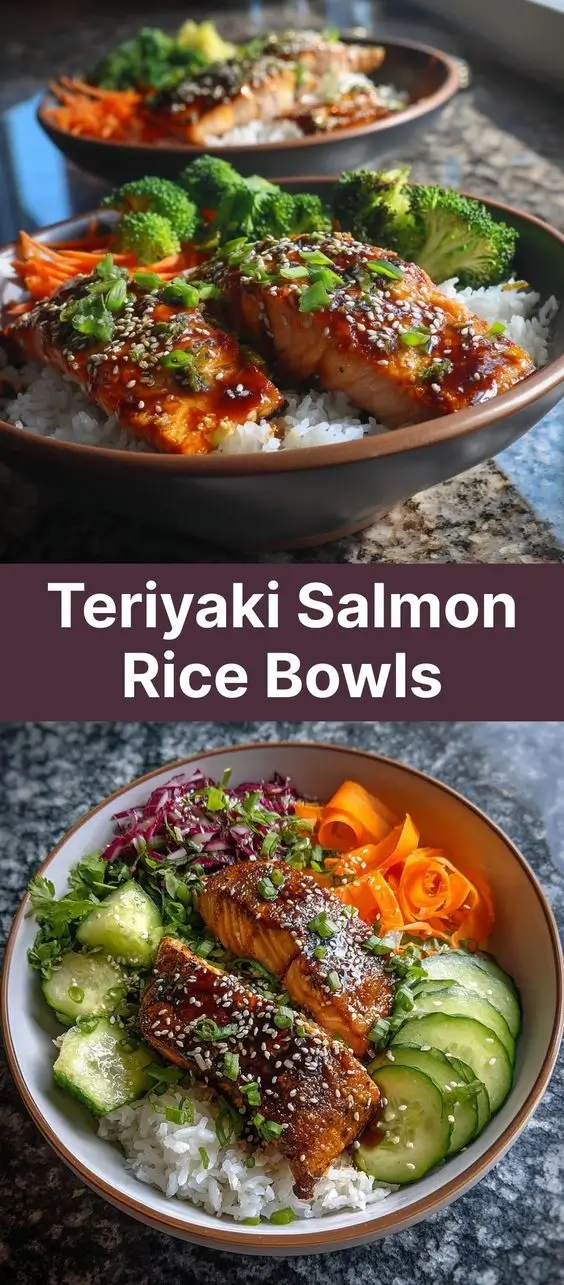
- Assemble the Bowls: Divide warm rice among four bowls. Arrange steamed broccoli, shredded carrots, cucumber slices, and avocado around the edges. Place a glazed salmon fillet in the center of each bowl.
- Garnish and Serve: Drizzle additional teriyaki sauce over the salmon and rice. Sprinkle with sliced green onions, toasted sesame seeds, and optional nori strips or chili flakes. Serve immediately while hot.
Tips
- Don’t Overcook the Salmon: Salmon continues to cook slightly after removal from heat (carryover cooking). Aim for slightly translucent in the very center when checking with a fork—it will finish cooking as it rests.
- Crispy Skin Secret: Ensure the skin is completely dry before placing it in a hot pan. Press gently with a spatula for the first 30 seconds to prevent curling.
- Double the Sauce: It’s always better to have extra teriyaki sauce for drizzling. Store leftovers in a jar in the fridge for up to two weeks.
- Batch Cooking Friendly: Cook rice and sauce ahead of time. Marinate salmon the night before for deeper flavor infusion.
- Use Fresh Ginger and Garlic: Avoid powdered versions for the sauce—they lack the vibrant, aromatic punch of fresh.
- Balance Textures: Include at least one crunchy (carrots), one creamy (avocado), and one fresh (cucumber) element per bowl for maximum satisfaction.
- Customize Heat Levels: Add sriracha to the sauce or serve on the side for those who enjoy spice.
Variations and Customizations
One of the greatest strengths of teriyaki salmon rice bowls is their adaptability. Here are some creative twists to keep your meals exciting:
Protein Swaps:
- Chicken Teriyaki: Substitute salmon with boneless chicken thighs or breasts. Adjust cooking time accordingly.
- Shrimp or Tofu: Great vegetarian or pescatarian alternatives. Pan-sear shrimp or press and bake tofu before glazing.
- Beef (Yakiniku Style): Thinly sliced ribeye or flank steak works well with teriyaki marinade.
Rice Alternatives:
- Quinoa or Cauliflower Rice: Lower glycemic index options for keto or paleo diets.
- Forbidden Black Rice: Adds dramatic color and antioxidants.
- Sushi Rice with Furikake: Season with Japanese rice seasoning for extra flavor.
Vegetable Variations:
- Roasted Bok Choy: Sautéed with garlic and sesame oil.
- Grilled Asparagus: Elegant and seasonal.
- Mango Salsa: Replace cucumbers with diced mango, red onion, cilantro, and lime for a tropical twist.
- Kale or Spinach: Massage kale with a bit of oil and lemon for tenderness.
Sauce Twists:
- Pineapple Teriyaki: Blend in fresh pineapple juice for natural sweetness and enzymes that tenderize meat.
- Spicy Teriyaki: Add gochujang, sambal oelek, or chili garlic paste to the sauce base.
- Orange-Ginger Teriyaki: Add orange zest and juice for citrusy brightness.
- Sugar-Free Version: Use monk fruit sweetener or erythritol instead of sugar.
Dietary Modifications:
- Gluten-Free: Use tamari or coconut aminos instead of soy sauce.
- Low-Sodium: Opt for reduced-sodium tamari and limit added salt.
- Whole30/Paleo: Use compliant coconut aminos, omit sugar (use date paste sparingly), and skip grains.
Health Considerations and Nutritional Value
Teriyaki salmon rice bowls are not only delicious but also highly nutritious when balanced properly. Let’s examine the key health aspects:
Salmon – A Superfood Powerhouse:
- Omega-3 Fatty Acids: Essential for heart and brain health, reducing inflammation and supporting cognitive function.
- High-Quality Protein: Promotes muscle repair and satiety, helping maintain lean body mass.
- Vitamin D: Crucial for immune support and bone health, especially in winter months.
- Selenium and B Vitamins: Support metabolism, thyroid function, and antioxidant defense.
Rice – Energy Source with Caveats:
- Provides complex carbohydrates for sustained energy. However, white rice has a high glycemic index, which may spike blood sugar levels. Opt for brown rice, black rice, or limit portions if managing diabetes or insulin resistance.
Vegetables – Micronutrient Boosters:
- Broccoli, carrots, and cucumbers contribute fiber, vitamins A, C, K, folate, and potassium. They promote digestive health and help reduce chronic disease risk.
Teriyaki Sauce – Moderation is Key:
- Traditional teriyaki sauce can be high in sodium and sugar. A quarter-cup serving may contain 8–12g of sugar and 900mg+ of sodium. To improve nutritional profile:
- Reduce sugar by 25–50% and rely more on mirin’s natural sweetness.
- Use low-sodium soy sauce or tamari.
- Thicken with arrowroot instead of cornstarch for a more natural option.
Portion Control & Balance:
- Aim for a plate composition of: 50% vegetables, 25% protein (salmon), 25% whole grains or alternative carbs.
- Limit sauce to 2–3 tablespoons per serving to avoid excess sugar and salt.
Estimated Nutritional Value (per serving, with white rice and full sauce):
- Calories: ~650–750 kcal
- Protein: 35–40g
- Fat: 25–30g (mostly healthy unsaturated fats)
- Carbohydrates: 60–70g
- Sugar: 15–20g (depending on sauce)
- Sodium: 900–1200mg (can be reduced significantly with modifications)
Note: Values vary based on ingredient choices, portion sizes, and sauce quantity.
FAQ
- Can I bake the salmon instead of pan-searing?
- Yes! Preheat oven to 400°F (200°C). Place marinated salmon on a lined baking sheet and bake for 12–15 minutes. Brush with sauce halfway through.
- How do I store leftovers?
- Store components separately in airtight containers: rice up to 5 days, cooked salmon up to 3 days, vegetables up to 4 days. Reheat salmon gently to avoid drying out.
- Can I freeze teriyaki salmon?
- Yes, though texture may soften slightly. Freeze in single portions with sauce. Thaw overnight and reheat in oven or air fryer for best results.
- Is this recipe kid-friendly?
- Absolutely! Children often love the sweet-savory flavor. Serve with mild veggies like steamed carrots or peas. You can even dice the salmon for younger eaters.
- What can I use instead of mirin?
- Substitute with 1 tbsp rice vinegar + 1 tbsp sugar + 1 tbsp water. Avoid dry sherry unless adjusted for saltiness.
- Why is my teriyaki sauce too thin/thick?
- If too thin, simmer longer or add more slurry (½ tsp cornstarch + 1 tbsp water). If too thick, whisk in warm water, 1 tsp at a time.
- Can I make this in an air fryer?
- Yes! Cook salmon at 375°F for 8–10 minutes, flipping halfway. Glaze in the last 2 minutes.
Summary
Teriyaki salmon rice bowls are a nutritious, flavorful, and versatile meal that combines succulent salmon glazed in a glossy sweet-savory sauce with fluffy rice and vibrant vegetables. Easy to customize and perfect for meal prep, they deliver restaurant-quality taste in the comfort of your kitchen.