Introduction
Welcome to the ultimate guide for creating a delectable, satisfying, and nutritious meal: Crispy Sesame Tofu Bowls. Whether you’re a seasoned vegan chef or simply looking to incorporate more plant-based meals into your diet, this dish is a game-changer. Combining the rich umami of perfectly crisped tofu with the nutty depth of sesame and a vibrant medley of fresh vegetables, this bowl delivers on flavor, texture, and nutrition. It’s not just a meal—it’s an experience that tantalizes the taste buds while nourishing the body. From its roots in East Asian culinary traditions to its modern fusion adaptations, the Crispy Sesame Tofu Bowl has earned its place as a staple in health-conscious kitchens around the world.
The History
Tofu itself has a storied past stretching back over 2,000 years to ancient China, where it was discovered by accident during soy milk production. Legend attributes its invention to Prince Liu An of the Han Dynasty, who sought a way to preserve soybeans. Over centuries, tofu spread across Asia—adopted and adapted in Japan, Korea, Vietnam, and beyond—becoming a cornerstone of vegetarian and Buddhist cuisines due to its versatility and high protein content. The technique of frying tofu to achieve a crispy exterior likely emerged as a method to enhance its otherwise mild flavor and improve shelf life. Sesame seeds and oil have also been treasured in Asian cooking for millennia, prized for their rich aroma and nutritional benefits.
The concept of the “bowl meal” gained popularity in the West during the early 21st century, influenced by grain bowls from Japanese donburi, Korean bibimbap, and Hawaiian poke. Chefs and home cooks alike began combining proteins, grains, vegetables, and sauces into single-serving, balanced meals. The Crispy Sesame Tofu Bowl evolved naturally from this trend—a harmonious fusion of traditional ingredients and contemporary eating habits. Today, it’s celebrated in vegan cafes, meal prep blogs, and gourmet restaurants, symbolizing the global embrace of plant-forward cuisine rooted in cultural heritage.
Ingredients Breakdown
To craft the perfect Crispy Sesame Tofu Bowl, every ingredient plays a crucial role. Let’s break them down:
- Firm or Extra-Firm Tofu: The star of the show. Its dense texture allows it to hold up during pressing, marinating, and frying without crumbling. Pressing removes excess water, enabling better absorption of flavors and achieving maximum crispiness.
- Cornstarch (or Arrowroot Powder): Coating the tofu in cornstarch before frying creates a light, crunchy crust that locks in moisture and enhances browning through the Maillard reaction.
- Soy Sauce or Tamari: Adds savory umami depth. Tamari is a gluten-free alternative with a smoother, richer taste.
- Rice Vinegar: Provides a gentle acidity that balances the saltiness of the soy sauce and brightens the overall flavor profile.
- Maple Syrup or Agave Nectar: Natural sweeteners that caramelize slightly when cooked, adding complexity and helping the sauce cling to the tofu.
- Sesame Oil: A small amount goes a long way. Its intense, nutty aroma elevates both the tofu and sauce. Use toasted sesame oil for maximum flavor.
- Fresh Garlic and Ginger: Essential aromatics that infuse the marinade with warmth and pungency, forming the backbone of the sauce’s character.
- Sesame Seeds (White and/or Black): Toasted sesame seeds add crunch and visual appeal, while black sesame seeds contribute a slightly earthier note and striking contrast.
- Vegetables: Typically includes broccoli, bell peppers, carrots, snap peas, or bok choy—chosen for color, texture, and nutrient density. They can be stir-fried, roasted, or served raw for freshness.
- Grains: Brown rice, white rice, quinoa, or cauliflower rice serve as the base, offering complex carbohydrates and a neutral canvas for bold flavors.
- Garnishes: Green onions, cilantro, lime wedges, chili flakes, and pickled vegetables add brightness, heat, and tang to finish the bowl.
- Optional Add-ons: Avocado slices, edamame, kimchi, nori strips, or crushed peanuts for extra richness and variety.
Step-by-Step Recipe
- Press the Tofu: Remove the tofu from its packaging and drain the liquid. Wrap it in a clean kitchen towel or paper towels and place it on a plate. Set a heavy object (like a cast-iron skillet or books) on top. Press for at least 30 minutes, preferably up to 1 hour, to extract excess moisture. This step is essential for achieving crispiness.
- Prepare the Marinade: In a medium bowl, whisk together 3 tablespoons soy sauce, 1 tablespoon rice vinegar, 1 tablespoon maple syrup, 1 teaspoon sesame oil, 2 minced garlic cloves, and 1 tablespoon grated fresh ginger. Set aside.
- Cut and Coat the Tofu: Once pressed, cut the tofu into 1-inch cubes. Place in a large bowl and gently toss with ¼ cup cornstarch until evenly coated. Shake off any excess.
- Fry the Tofu: Heat 2–3 tablespoons of neutral oil (like avocado or vegetable oil) in a non-stick or cast-iron skillet over medium-high heat. Add tofu in a single layer, ensuring pieces aren’t touching. Cook for 3–4 minutes per side, turning gently with tongs, until golden brown and crispy on all sides. Transfer to a paper towel-lined plate to absorb excess oil.
- Glaze the Tofu: Return the tofu to the skillet over low heat. Pour the prepared marinade over the tofu and stir gently to coat. Cook for 2–3 minutes, allowing the sauce to reduce and cling to the tofu. Sprinkle with 1–2 tablespoons of toasted sesame seeds and remove from heat.
- Prepare the Base: While the tofu cooks, prepare your grain of choice according to package instructions. Fluff with a fork and keep warm.
- Prepare the Vegetables: In the same skillet (or a separate wok), stir-fry your chosen vegetables with a splash of oil, 1 minced garlic clove, and a dash of soy sauce for 5–7 minutes until tender-crisp. Alternatively, roast or steam them based on preference.
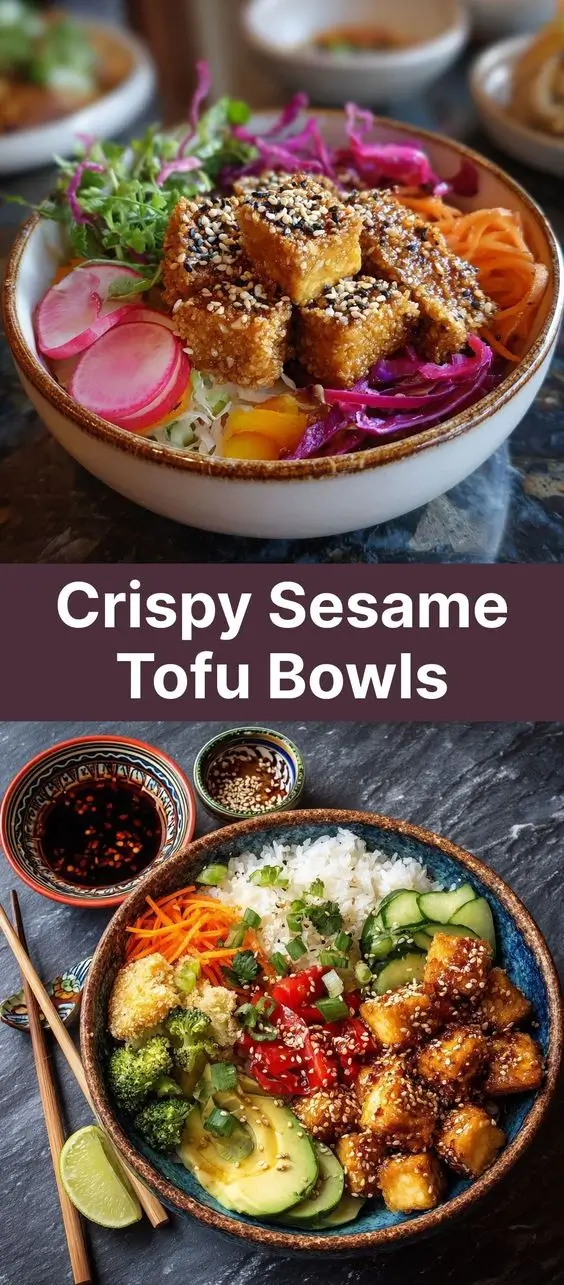
- Assemble the Bowls: Divide the cooked grains among four bowls. Top with the glazed tofu, sautéed vegetables, and any additional toppings like avocado, edamame, or pickled radishes.
- Garnish and Serve: Finish each bowl with sliced green onions, fresh cilantro, a squeeze of lime juice, red pepper flakes, and an extra sprinkle of sesame seeds. Serve immediately while hot and crispy.
Tips
- Double Press for Extra Crispiness: After pressing, pat the tofu dry again before coating with cornstarch to ensure no surface moisture remains.
- Air Fryer Option: For a healthier version, skip pan-frying. Toss cornstarch-coated tofu with 1 tablespoon oil and air fry at 400°F (200°C) for 12–15 minutes, shaking halfway, until golden and crisp.
- Baking Alternative: Spread coated tofu on a parchment-lined baking sheet and bake at 425°F (220°C) for 25–30 minutes, flipping halfway, for even browning.
- Marinate Longer: Let the pressed tofu sit in half the sauce for 15–30 minutes before coating for deeper flavor infusion.
- Don’t Crowd the Pan: Frying tofu in batches prevents steaming and ensures a proper sear.
- Prevent Sogginess: Glaze the tofu just before serving to maintain its crisp texture. If meal prepping, store components separately and assemble when ready to eat.
- Toast Your Sesame Seeds: Lightly toast sesame seeds in a dry pan over medium heat for 2–3 minutes until fragrant and golden. This intensifies their flavor dramatically.
- Balanced Bowls: Aim for a mix of colors, textures, and macronutrients—include a grain, protein, veggies, healthy fat, and garnish for a complete meal.
Variations and Customizations
The beauty of Crispy Sesame Tofu Bowls lies in their adaptability. Here are some creative twists to suit different tastes and dietary needs:
- Spicy Version: Add sriracha, chili garlic sauce, or gochujang to the marinade. Garnish with sliced jalapeños or crushed red pepper.
- Teriyaki Twist: Replace maple syrup with brown sugar and increase soy sauce and rice vinegar slightly for a classic teriyaki glaze.
- Peanut-Sesame Fusion: Stir 1–2 tablespoons of natural peanut butter into the sauce for a creamy, nutty variation reminiscent of satay.
- Mediterranean-Inspired: Swap sesame for za’atar, use lemon-tahini dressing, and include cucumber, cherry tomatoes, and olives.
- Low-Carb/Keto: Use cauliflower rice as the base and increase healthy fats with avocado and extra sesame oil.
- Gluten-Free: Use tamari instead of soy sauce and ensure all other ingredients (like vinegar) are certified gluten-free.
- Protein Boost: Add edamame, chickpeas, or hemp seeds to increase protein content.
- Seasonal Swaps: In spring, use asparagus and peas; in fall, try roasted squash and Brussels sprouts; in winter, kale and mushrooms work beautifully.
- Umami Bomb: Add a splash of mushroom soy sauce or a pinch of MSG (optional) to deepen savory notes.
- Raw & Fresh: Skip cooking the veggies entirely—use shredded cabbage, bean sprouts, and mango for a refreshing, crunchy bowl.
Health Considerations and Nutritional Value
Crispy Sesame Tofu Bowls are not only delicious but also packed with nutrients that support a balanced lifestyle. Let’s explore the health aspects:
- High-Quality Plant Protein: Tofu is made from soybeans and provides all nine essential amino acids, making it a complete protein. A ½-cup serving contains about 10 grams of protein, ideal for muscle repair and satiety.
- Heart Health: Soy consumption has been linked to reduced LDL (“bad”) cholesterol levels. Sesame seeds contain lignans and antioxidants like sesamin, which may support cardiovascular function.
- Rich in Minerals: Tofu is a good source of calcium (especially if set with calcium sulfate), iron, magnesium, and phosphorus. Sesame seeds are exceptionally high in copper, manganese, and calcium.
- Healthy Fats: Sesame oil and seeds provide monounsaturated and polyunsaturated fats, including omega-6 fatty acids. While beneficial in moderation, balance with omega-3 sources like flax or walnuts.
- Digestive Benefits: The fiber from whole grains and vegetables aids digestion and promotes gut health. Fermented options like kimchi add probiotics.
- Low in Saturated Fat: Naturally free of cholesterol and low in saturated fat, this dish supports weight management and metabolic health when portion-controlled.
- Phytonutrients: Garlic and ginger offer anti-inflammatory and immune-boosting properties. Broccoli and bell peppers are rich in vitamins C and K, plus antioxidants like beta-carotene.
- Considerations: Soy remains a topic of debate, though current research shows moderate consumption is safe and potentially protective against certain cancers. Individuals with thyroid conditions should consult a healthcare provider, as soy may interfere with iodine uptake if consumed in excess without adequate iodine intake. Also, monitor sodium levels—opt for low-sodium soy sauce if needed.
- Nutritional Estimate (per serving, approx. 1 bowl): Calories: 450–550 | Protein: 18–22g | Carbohydrates: 50–60g | Fiber: 8–10g | Fat: 18–22g (mostly unsaturated) | Sugar: 10–12g (natural from maple syrup and veggies).
Ingredients
- 1 block (14–16 oz) extra-firm tofu, pressed and drained
- ¼ cup cornstarch
- 3 tbsp soy sauce (or tamari for gluten-free)
- 1 tbsp rice vinegar
- 1 tbsp pure maple syrup
- 1 tsp toasted sesame oil
- 3 cloves garlic, minced (divided)
- 1 tbsp fresh ginger, grated
- 2–3 tbsp neutral cooking oil (avocado, grapeseed, or vegetable)
- 2 cups cooked brown rice, quinoa, or grain of choice
- 2 cups mixed vegetables (broccoli, bell peppers, carrots, snap peas)
- 1 tbsp sesame seeds (toasted)
- 2 green onions, thinly sliced
- ¼ cup fresh cilantro, chopped
- Lime wedges, for serving
- Optional: avocado, edamame, chili flakes, pickled vegetables
Directions
- Press tofu for 30–60 minutes. Cut into 1-inch cubes.
- In a bowl, whisk together soy sauce, rice vinegar, maple syrup, sesame oil, 2 cloves garlic, and ginger. Reserve ¼ cup for glazing; optional to marinate tofu in remaining sauce for 15–30 minutes.
- Roll tofu cubes in cornstarch until fully coated. Shake off excess.
- Heat 2 tbsp oil in a large skillet over medium-high heat. Add tofu in a single layer and cook 3–4 minutes per side until golden and crisp. Work in batches if needed. Transfer to a paper towel-lined plate.
- In the same skillet, add 1 tsp oil and remaining garlic. Stir-fry vegetables for 5–7 minutes until tender-crisp. Season with a splash of soy sauce if desired.
- Return tofu to the skillet. Pour reserved sauce over and simmer for 2–3 minutes, stirring gently, until sauce thickens and coats the tofu. Sprinkle with sesame seeds.
- Divide grains among four bowls. Top with tofu, vegetables, and any additional toppings.
- Garnish with green onions, cilantro, lime juice, and chili flakes. Serve immediately.
FAQ
Can I make this ahead of time?
Yes! Press and cube tofu, prepare sauce, and chop vegetables up to 2 days in advance. Store separately in airtight containers. Cook tofu fresh for best texture, or re-crisp in an air fryer or oven if reheating.
How do I store leftovers?
Keep components separate in the fridge for up to 4 days. Reheat grains and veggies in the microwave; re-crisp tofu in a toaster oven or air fryer to restore crunch.
Can I freeze crispy sesame tofu?
While possible, freezing may compromise crispiness. Freeze unglazed tofu after frying for up to 3 months. Thaw and reheat in oven or air fryer before glazing.
Is tofu healthy?
Yes, when consumed as part of a balanced diet. Tofu is low in calories, high in protein and minerals, and linked to various health benefits, including improved heart health and bone density.
Why didn’t my tofu get crispy?
Common causes: insufficient pressing, overcrowding the pan, using soft tofu, or skipping the cornstarch. Ensure the tofu is very dry and the oil is hot before adding.
Can I use silken or soft tofu?
No—only firm or extra-firm tofu holds up to frying. Silken tofu is better suited for soups, smoothies, or desserts.
What can I substitute for cornstarch?
Arrowroot powder, potato starch, or tapioca starch work similarly. All-purpose flour can be used but yields a less crispy result.
Is this recipe gluten-free?
Yes, if you use tamari instead of soy sauce and verify all other ingredients (e.g., rice vinegar) are gluten-free.
Can I bake instead of pan-fry?
Absolutely. Bake at 425°F (220°C) for 25–30 minutes on a lined baking sheet, flipping halfway. Spray or brush with oil for crispness.
Are sesame seeds necessary?
They add signature flavor and texture, but you can omit if allergic. Try sunflower or pumpkin seeds as alternatives, though the sesame essence will be missing.
Summary (in two lines)
Crispy Sesame Tofu Bowls deliver a symphony of textures and flavors—crunchy, savory, sweet, and aromatic—all wrapped in a nutritious, plant-powered package. Easy to customize and rich in protein, this bowl is a wholesome, satisfying meal that celebrates the best of global cuisine in every bite.