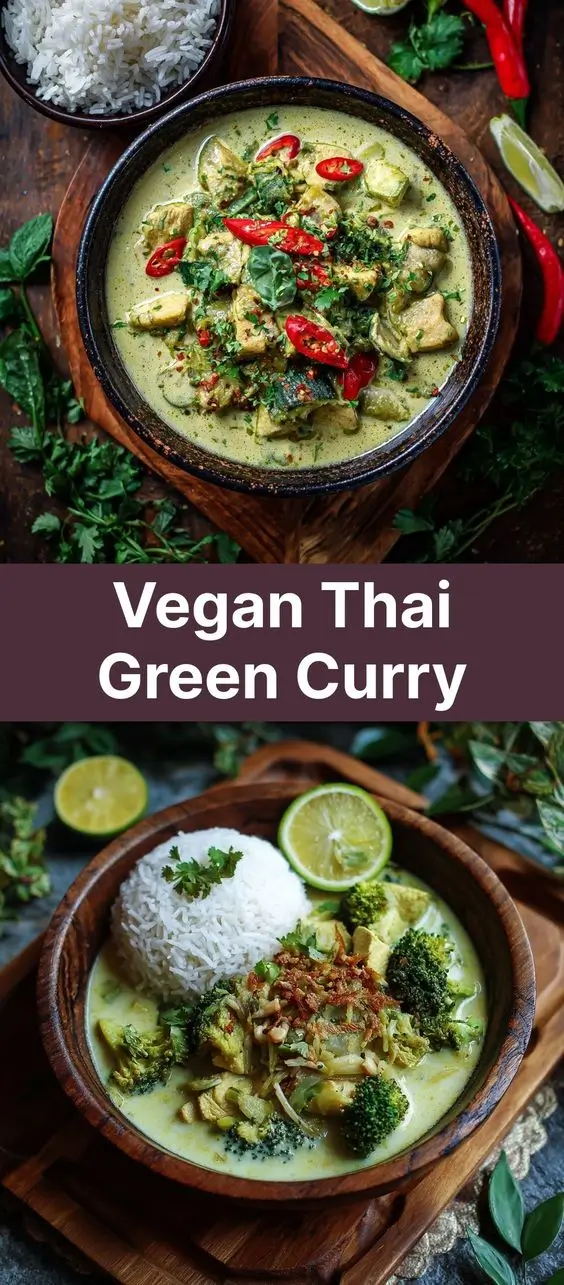
Vegan Thai Green Curry: A Flavorful Plant-Based Delight
Introduction
Vegan Thai Green Curry is a vibrant, aromatic dish that brings the bold and refreshing flavors of Thailand into your kitchen—without any animal products. Known for its bright green color and complex blend of spicy, sweet, salty, and tangy notes, this plant-based version of a classic Thai favorite offers all the richness and depth you love, with the added benefits of being compassionate, cruelty-free, and environmentally sustainable. Whether you’re a long-time vegan or simply exploring meatless meals, this curry is a showstopper that satisfies both the palate and the soul.
The History
Thai Green Curry, or kaeng khiao wan in Thai, has roots dating back to the Ayutthaya period (1351–1767), though its modern form evolved during the Rattanakosin era in Bangkok. Unlike many traditional curries that originated in India, Thai curries developed independently, influenced by Indian, Chinese, and Malay culinary traditions. The “green” in green curry comes from the fresh green chilies used in the curry paste, which give it both color and heat. Historically, the dish was made with coconut milk, meat (usually chicken or fish), and fragrant herbs. Over time, as global palates diversified and dietary preferences shifted toward plant-based eating, chefs and home cooks began adapting the recipe using vegetables, tofu, and legumes. Today, vegan versions are not only common but celebrated for their ability to maintain authenticity while embracing compassion and health.
Ingredients Breakdown
The magic of Vegan Thai Green Curry lies in its layered ingredients, each contributing to its signature taste and texture:
- Green Curry Paste: The heart of the dish, traditionally made from green chilies, lemongrass, galangal, kaffir lime peel, garlic, shallots, cilantro roots, and shrimp paste. For the vegan version, shrimp paste is substituted with miso paste, soy sauce, or salt to retain umami depth.
- Coconut Milk: Full-fat canned coconut milk provides creaminess and balances the spice. It’s essential for creating the luscious base of the curry.
- Tofu: Extra-firm tofu, pressed and cubed, serves as the primary protein. It absorbs the curry flavors beautifully and adds satisfying texture.
- Vegetables: Common choices include Thai eggplant, bamboo shoots, bell peppers, zucchini, baby corn, mushrooms, and green beans. These add color, nutrition, and variety in mouthfeel.
- Fresh Herbs: Thai basil, kaffir lime leaves, and cilantro are indispensable for finishing the dish with aromatic brightness.
- Sweetener: Palm sugar or brown sugar adds subtle sweetness to balance the heat and acidity.
- Soy Sauce or Tamari: For saltiness and depth; tamari is preferred if gluten-free is needed.
- Lime Juice: Freshly squeezed lime juice enhances tanginess and lifts the entire flavor profile.
Step-by-Step Recipe
- Prepare Ingredients: Press tofu for at least 30 minutes to remove excess water, then cut into 1-inch cubes. Chop all vegetables uniformly for even cooking. Measure out coconut milk, herbs, and spices.
- Sauté the Curry Paste: Heat 1 tablespoon of coconut oil in a large pot or wok over medium heat. Add 3–4 tablespoons of vegan green curry paste (store-bought or homemade) and sauté for 2–3 minutes until fragrant. This step “blooms” the spices and intensifies the flavor.
- Add Coconut Milk: Pour in one can (about 400 ml) of full-fat coconut milk. Stir well to combine with the paste, allowing the mixture to simmer gently for 5 minutes until slightly thickened and oily sheen appears on the surface.
- Incorporate Tofu: Gently add the tofu cubes and simmer for 8–10 minutes, allowing them to absorb the curry flavors. Be careful not to break the tofu.
- Add Vegetables: Stir in harder vegetables first (like carrots or green beans), followed by softer ones (bell peppers, zucchini, mushrooms) after 3–4 minutes. Simmer until vegetables are tender-crisp—about 10–12 minutes total.
- Season the Curry: Add 1–2 tablespoons palm sugar, 2 tablespoons soy sauce or tamari, and the juice of half a lime. Taste and adjust seasoning—more sugar for sweetness, lime for sourness, or curry paste for heat.
- Add Aromatics: Tear 4–5 kaffir lime leaves into pieces and add to the curry. Stir in a handful of Thai basil just before turning off the heat—the residual warmth will release their fragrance without wilting them completely.
- Serve Hot: Ladle the curry into bowls over steamed jasmine rice or brown rice. Garnish with fresh cilantro, red chili slices, and a lime wedge.
Tips
- Bloom the Paste: Always sauté the curry paste in oil first—it unlocks essential oils and deepens the flavor dramatically.
- Use Full-Fat Coconut Milk: Light coconut milk will result in a thinner, less creamy curry. Shake the can well before opening, or stir thoroughly if using stirred coconut milk.
- Don’t Overcook Vegetables: Add vegetables in stages based on cooking time to preserve texture and color.
- Press Tofu Well: Properly pressed tofu holds its shape and soaks up more flavor. For extra crispness, pan-fry or bake tofu separately before adding.
- Taste as You Go: Balance is key in Thai cuisine. Adjust sweetness, saltiness, sourness, and spice gradually.
- Make Ahead Paste: Prepare a large batch of vegan green curry paste and freeze in ice cube trays for quick future use.
- Fresh Herbs Are Key: Dried substitutes won’t deliver the same aroma. If Thai basil is unavailable, use regular basil with a few mint leaves for complexity.
Variations and Customizations
This recipe is highly adaptable to suit different tastes, seasonal produce, and dietary needs:
- Protein Swaps: Replace tofu with tempeh, seitan, chickpeas, lentils, or edamame for variety.
- Vegetable Rotations: Use seasonal vegetables—kabocha squash in fall, cherry tomatoes in summer, bok choy in winter. Even cauliflower or sweet potato works well.
- Creamier Version: Blend a portion of silken tofu or cashew cream into the curry for extra richness.
- Low-Sodium Option: Use reduced-sodium soy sauce or coconut aminos, and limit added salt.
- Spice Level Control: Reduce the amount of curry paste or remove seeds from chilies when making homemade paste for a milder dish. Add bird’s eye chilies at the end for extra heat lovers.
- Nut-Free Version: Ensure no nut-based ingredients are used—most curry pastes are nut-free, but always check labels.
- Gluten-Free: Use tamari instead of soy sauce and confirm that the curry paste is gluten-free (some store-bought versions contain wheat).
- Curry Bowls: Serve over quinoa, rice noodles, or zucchini noodles for different textures.
- Coconut-Free? While unconventional, you can try coconut milk alternatives like oat or almond milk blended with a bit of raw cashew, though the flavor will differ.
Health Considerations and Nutritional Value
Vegan Thai Green Curry is not only delicious but also packed with nutrients when prepared thoughtfully:
- Healthy Fats: Coconut milk contains medium-chain triglycerides (MCTs), which may support metabolism and heart health in moderation.
- Plant-Based Protein: Tofu and legumes provide complete proteins, including all essential amino acids, aiding muscle repair and satiety.
- Fiber-Rich: A variety of vegetables boosts fiber intake, promoting digestive health and stable blood sugar levels.
- Antioxidants: Ingredients like green chilies, garlic, ginger, and herbs are rich in antioxidants and anti-inflammatory compounds.
- Vitamins & Minerals: Bell peppers offer vitamin C, leafy greens contribute iron and calcium, while kaffir lime leaves have antimicrobial properties.
- Low Cholesterol & Saturated Fat (when balanced): Naturally cholesterol-free and lower in saturated fat than meat-based curries—especially if light coconut milk is used sparingly.
Considerations:
- Coconut milk is high in calories and saturated fat—enjoy in moderation, especially if managing weight or heart health.
- Store-bought curry pastes can be high in sodium—making your own allows better control.
- Balance the meal with fiber-rich sides like steamed greens or a cucumber salad to offset richness.
Ingredients
- 3–4 tbsp vegan Thai green curry paste (homemade or certified vegan store-bought)
- 1 can (400 ml) full-fat coconut milk
- 1 block (14 oz) extra-firm tofu, pressed and cubed
- 2 tbsp coconut oil
- 1 cup Thai eggplants or regular eggplant, chopped
- 1 cup bamboo shoots, drained
- 1 red bell pepper, sliced
- 1 yellow bell pepper, sliced
- 1 cup green beans, trimmed
- 1 cup mushrooms (shiitake or oyster), sliced
- 4–5 kaffir lime leaves, torn
- 1–2 tbsp palm sugar or brown sugar
- 2 tbsp soy sauce or tamari (gluten-free if needed)
- Juice of ½ lime
- 1 handful Thai basil leaves
- Fresh cilantro, for garnish
- Red chili slices, for garnish
- Lime wedges, for serving
- Cooked jasmine rice or brown rice, for serving
Directions
- Press tofu for 30 minutes, then cut into 1-inch cubes.
- In a large pot or wok, heat coconut oil over medium heat. Add green curry paste and sauté for 2–3 minutes until aromatic.
- Pour in half the can of coconut milk and stir vigorously to mix with the paste. Simmer for 5 minutes until the oil begins to separate slightly.
- Add the remaining coconut milk, stirring to create a smooth, creamy base.
- Gently add tofu cubes and simmer for 10 minutes, stirring occasionally.
- Add harder vegetables like green beans and eggplant. Cook for 5 minutes.
- Add softer vegetables—bell peppers, mushrooms, bamboo shoots—and cook for another 5–7 minutes until tender but still vibrant.
- Stir in soy sauce, palm sugar, and lime juice. Taste and adjust seasoning.
- Add torn kaffir lime leaves and simmer for 2 more minutes.
- Turn off heat and stir in Thai basil.
- Serve immediately over rice, garnished with cilantro, chili slices, and lime wedges.
FAQ
Is Thai green curry paste vegan?
Not always. Many commercial brands contain shrimp paste or fish sauce. Always check the label or make your own to ensure it’s vegan.
Can I freeze Vegan Thai Green Curry?
Yes! It freezes well for up to 3 months. Store in airtight containers. Reheat gently on the stove, adding a splash of water or coconut milk if needed.
What can I use instead of kaffir lime leaves?
While they’re hard to replace exactly, you can use a strip of lime zest (avoid white pith) or a few drops of lime essential oil (food-grade). Dried kaffir leaves are also acceptable in a pinch.
Is this curry spicy?
Traditionally, yes. The heat comes from green chilies. You can reduce the amount of paste or deseed the chilies when making your own to tone it down.
Can I make it oil-free?
Yes—use water or vegetable broth to sauté the curry paste instead of oil, though the flavor will be less intense.
Where can I find Thai basil?
Asian grocery stores, farmers markets, or specialty herb sections in supermarkets. You can also grow it at home.
Can I use canned coconut cream instead?
Absolutely. Coconut cream is thicker and richer—dilute with a little water if the curry becomes too dense.
Summary
Vegan Thai Green Curry is a harmonious fusion of spicy, sweet, savory, and tangy flavors, crafted entirely from plant-based ingredients. Creamy, aromatic, and deeply satisfying, it’s a must-try dish for anyone seeking a healthy, ethical, and delicious meal rooted in Thai culinary tradition.