Introduction
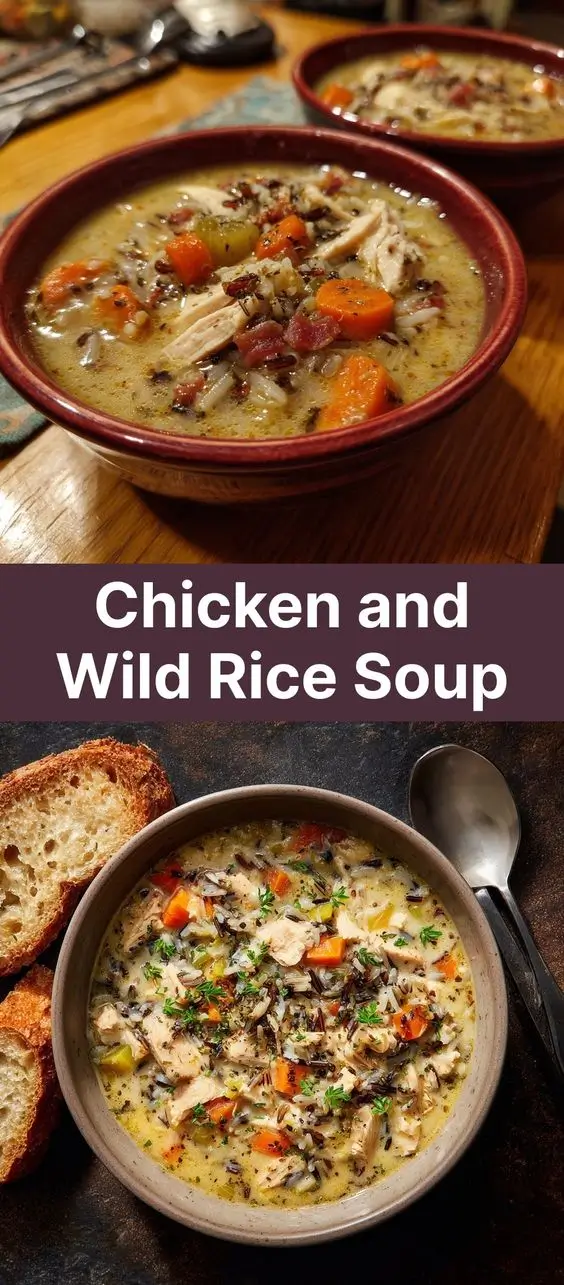
Chicken and Wild Rice Soup is a beloved classic in American comfort cuisine, cherished for its rich, savory flavor and hearty texture. This nourishing soup combines tender chunks of chicken with earthy wild rice, aromatic vegetables, and a creamy broth that warms the soul on cold winter days or any time you’re craving something wholesome. Whether served as a starter at a holiday dinner or enjoyed as a weeknight meal, this soup delivers a perfect balance of elegance and homeliness. It’s not just delicious—it’s also packed with protein, fiber, and nutrients, making it a satisfying choice for families and health-conscious eaters alike.
The beauty of Chicken and Wild Rice Soup lies in its versatility. While traditionally made with a creamy base, variations can include dairy-free, gluten-free, or vegan adaptations to suit different dietary needs. The use of wild rice—a grain native to North America—adds a nutty depth and chewy texture that sets this soup apart from other chicken soups like chicken noodle or chicken dumpling. Over the years, this dish has evolved from regional recipes into a staple found in home kitchens, gourmet restaurants, and even commercial frozen food aisles. But nothing compares to a homemade version simmered slowly with love and fresh ingredients.
The History
The origins of Chicken and Wild Rice Soup are deeply rooted in Native American culinary traditions, particularly among the Ojibwe and other tribes in the Great Lakes region. Wild rice—known as manoomin in the Ojibwe language—has been harvested by Indigenous peoples for centuries using traditional canoes and hand-gathering methods. It was considered both a sacred food and a vital source of sustenance during long winters.
When European settlers arrived in North America, they encountered wild rice and began incorporating it into their own cooking. However, it wasn’t until the 20th century that wild rice gained popularity beyond local communities. In the 1950s, advancements in cultivation techniques allowed for more consistent harvesting and commercial production, bringing wild rice into mainstream American pantries.
Chicken and Wild Rice Soup emerged as a fusion dish combining European-style soup-making with indigenous ingredients. Its rise in popularity was further boosted by restaurants such as The Forum Cafeteria in Minneapolis, which famously served a creamy version of the soup. By the 1970s and 80s, boxed versions began appearing in grocery stores, and today, countless variations exist—from minimalist stovetop recipes to slow-cooker and Instant Pot adaptations.
The soup also became associated with Midwestern American cuisine, where it is often featured at church suppers, Thanksgiving tables, and family gatherings. Its enduring appeal reflects not only its taste but also its cultural significance as a bridge between ancient tradition and modern comfort food.
Ingredients Breakdown
To make an authentic and flavorful Chicken and Wild Rice Soup, selecting high-quality ingredients is key. Each component contributes to the overall richness, texture, and nutritional value of the dish. Here’s a detailed breakdown:
- Chicken Breast or Thighs: Boneless, skinless chicken breasts are most commonly used for their lean texture and mild flavor. However, boneless thighs offer more moisture and richness, especially if you prefer a deeper taste. Some recipes call for poaching the chicken separately before adding it to the soup, while others cook it directly in the broth.
- Wild Rice Blend: True wild rice is often mixed with cultivated varieties or blended with brown rice to enhance texture and reduce cost. A wild rice blend typically includes black, brown, and sometimes red rice, offering visual appeal and layered flavors. Always rinse wild rice before use to remove excess starch.
- Vegetables: Onions, carrots, and celery form the “holy trinity” of mirepoix, providing a fragrant base. Garlic adds pungency, while mushrooms (especially cremini or white button) deepen umami notes. Fresh parsley is used for garnish and brightness.
- Broth: Chicken broth forms the liquid foundation. For best results, use low-sodium broth so you can control the salt level. Homemade bone broth enhances flavor and nutrition significantly.
- Dairy (Optional): Heavy cream, half-and-half, or whole milk add creaminess. For a lighter version, evaporated milk works well. To keep the soup dairy-free, substitute with coconut milk or cashew cream.
- Thickening Agent: All-purpose flour or cornstarch is often used to thicken the soup. Flour is typically combined with butter to make a roux, which prevents lumping and enriches the mouthfeel.
- Fats: Butter or olive oil sauté the vegetables and develop flavor. Butter enhances richness, while olive oil offers a healthier fat profile.
- Herbs and Spices: Dried thyme is essential for its earthy aroma. Bay leaves, black pepper, salt, and optional rosemary or sage round out the seasoning. Fresh herbs added at the end elevate freshness.
Step-by-Step Recipe
Ingredients
- 1 cup wild rice blend, rinsed
- 1½ pounds boneless, skinless chicken breasts or thighs
- 2 tablespoons unsalted butter or olive oil
- 1 medium yellow onion, diced
- 3 medium carrots, peeled and sliced
- 3 celery stalks, sliced
- 8 ounces mushrooms, sliced (optional)
- 3 cloves garlic, minced
- ⅓ cup all-purpose flour (or cornstarch for gluten-free)
- 6 cups low-sodium chicken broth
- 1 teaspoon dried thyme
- 2 bay leaves
- Salt and freshly ground black pepper, to taste
- ½ cup heavy cream, half-and-half, or whole milk
- ¼ cup fresh parsley, chopped
Directions
- Prep the Rice: In a medium saucepan, combine the rinsed wild rice with 2½ cups water. Bring to a boil, then reduce heat to low, cover, and simmer for 45–55 minutes until tender and kernels have popped open. Drain any excess water and set aside. (Alternatively, cook according to package instructions.)
- Cook the Chicken (Optional Method): Place chicken in a pot and cover with water or broth. Simmer for 15–20 minutes until cooked through. Remove, let cool slightly, then shred with forks. Reserve 1 cup of cooking liquid to add to soup later. (Or skip this step and cook chicken directly in the soup.)
- Sauté Vegetables: In a large Dutch oven or heavy-bottomed pot, melt butter over medium heat. Add onions, carrots, celery, and mushrooms. Cook for 8–10 minutes, stirring occasionally, until softened and lightly golden.
- Add Garlic and Flour: Stir in minced garlic and cook for 1 minute until fragrant. Sprinkle flour over the vegetables and stir continuously for 2–3 minutes to create a roux, ensuring no lumps form.
- Pour in Broth: Gradually whisk in chicken broth to avoid clumping. Add thyme, bay leaves, salt, and pepper. Increase heat to bring to a gentle boil.
- Add Chicken and Simmer: Add raw chicken pieces (if not pre-cooked) or shredded cooked chicken. Reduce heat and simmer uncovered for 20–25 minutes, allowing flavors to meld and chicken to cook fully (if raw).
- Incorporate Rice and Cream: Stir in the cooked wild rice. Pour in the cream or milk and stir gently. Heat through for another 5–7 minutes, but do not boil vigorously after adding dairy to prevent curdling.
- Final Adjustments: Remove bay leaves. Taste and adjust seasoning with additional salt, pepper, or herbs. If soup is too thick, thin with extra broth or reserved chicken cooking liquid.
- Serve: Ladle into bowls and garnish with fresh parsley. Serve hot with crusty bread or oyster crackers.
Tips
- Rinse Wild Rice: Always rinse wild rice under cold water before cooking to remove dust, debris, and excess starch that can make the soup gummy.
- Don’t Overcook the Rice: Cooking wild rice separately allows better control over its texture. Adding uncooked rice directly to the soup may result in uneven doneness or overly soft grains.
- Use Low-Sodium Broth: This gives you full control over the salt content, especially important since cream and chicken contribute natural sodium.
- Avoid Boiling After Adding Dairy: High heat can cause cream to separate or curdle. Keep the temperature moderate once dairy is added.
- Enhance Flavor with Umami: Boost depth by adding a splash of soy sauce, Worcestershire sauce, or a Parmesan rind while simmering (remove rind before serving).
- Make Ahead Friendly: This soup tastes even better the next day! Store components separately if possible—keep rice, chicken, and broth portions apart and combine when reheating to maintain optimal texture.
- Freeze Smartly: Freeze without dairy for best results. Add cream when reheating to preserve smoothness.
- Skim Fat: If using homemade chicken stock, chill briefly and skim off excess fat for a cleaner-tasting soup.
Variations and Customizations
One of the greatest strengths of Chicken and Wild Rice Soup is its adaptability. Whether catering to dietary restrictions or simply experimenting with new flavors, here are some popular variations:
- Creamy Version: Use heavy cream or half-and-half for a luxurious texture. Some bolder versions even incorporate cream cheese or sour cream for tang and thickness.
- Dairy-Free/Vegan Option: Replace chicken with chickpeas or tofu, use vegetable broth, and substitute cream with coconut milk or blended silken tofu. Nutritional yeast can mimic cheesy depth.
- Gluten-Free: Swap all-purpose flour with cornstarch, arrowroot powder, or gluten-free flour blend to thicken the soup safely.
- Slow Cooker Method: Sauté vegetables first, then transfer to a slow cooker with broth, raw chicken, seasonings, and uncooked wild rice. Cook on low for 6–8 hours. Add cream and cooked rice (if already prepared) in the last 30 minutes.
- Instant Pot/Pressure Cooker: Use sauté function to cook veggies, then add broth, chicken, rice, and seasonings. Pressure cook on high for 22 minutes, natural release for 10 minutes. Stir in cream afterward.
- Smoky Twist: Add smoked paprika, chipotle powder, or diced roasted red peppers for a bold, smoky dimension.
- Herb Variations: Try tarragon for a French twist, dill for Eastern European flair, or rosemary for a piney note.
- Extra Veggies: Boost nutrition with spinach, kale, leeks, parsnips, or sweet potatoes. Add leafy greens in the last few minutes of cooking.
- Lemon Zest Finish: Brighten the soup with a sprinkle of lemon zest or a squeeze of juice just before serving.
- Wild Game Version: Substitute chicken with venison, pheasant, or duck for a gourmet wilderness-inspired take.
Health Considerations and Nutritional Value
Chicken and Wild Rice Soup is not only comforting but also nutritionally balanced when prepared thoughtfully. Here’s a closer look at its health benefits and considerations:
- High-Quality Protein: Chicken provides complete protein essential for muscle repair, immune function, and satiety. A 1-cup serving contains approximately 25–30 grams of protein.
- Whole Grain Benefits: Wild rice is a whole grain rich in fiber, antioxidants, and minerals like magnesium, zinc, and manganese. Unlike white rice, it has a lower glycemic index, supporting stable blood sugar levels.
- Fiber Content: With about 3–4 grams of fiber per cup (from wild rice and vegetables), this soup supports digestive health and helps keep you full longer.
- Low in Saturated Fat (When Prepared Wisely): Using skinless chicken, minimal butter, and low-fat dairy reduces saturated fat. Opting for olive oil increases heart-healthy monounsaturated fats.
- Vitamins and Minerals: Carrots provide beta-carotene (vitamin A), celery and parsley offer vitamin K and C, while mushrooms contribute B vitamins and selenium.
- Hydration and Immunity: Broth-based soups help maintain hydration and may soothe sore throats or congestion, similar to chicken noodle soup’s cold-fighting reputation.
- Sodium Watch: Store-bought broths and canned soups can be high in sodium. Making it at home allows precise control—aim for less than 600 mg per serving.
- Dairy Sensitivity: Lactose-intolerant individuals should use lactose-free milk or non-dairy alternatives. Those avoiding dairy altogether can rely on roux or pureed vegetables (like cauliflower) for creaminess.
- Keto-Friendly? Not Naturally: Due to wild rice’s carbohydrate content (~35g per cooked cup), this soup isn’t keto-compliant. However, substituting rice with cauliflower rice creates a low-carb alternative.
- Calorie Range: Depending on preparation, one serving ranges from 250–400 calories. Light versions (using skim milk, less butter, and more veggies) fall on the lower end.
FAQ
Q: Can I use instant wild rice?
A: Yes, but check the label. Instant wild rice is pre-cooked and dehydrated, so it rehydrates quickly. Add it toward the end of cooking to prevent mushiness.
Q: How long does Chicken and Wild Rice Soup last in the fridge?
A: Properly stored in an airtight container, it lasts 4–5 days. Reheat gently on the stove, adding a splash of broth if needed.
Q: Why did my soup turn out too thick or too thin?
A: Too thick? Thin with additional broth or water. Too thin? Simmer longer to reduce, or mix 1 tbsp cornstarch with 2 tbsp cold water and stir in, then heat until thickened.
Q: Can I freeze this soup?
A: Yes, but omit cream before freezing. Freeze for up to 3 months. Thaw overnight in the fridge and reheat gently, adding fresh cream when warming.
Q: Is wild rice really rice?
A: Technically no—it’s the seed of an aquatic grass (Zizania) native to North America. It’s gluten-free and botanically distinct from Asian rice species.
Q: Can I use leftover rotisserie chicken?
A: Absolutely! It’s a great time-saver. Just shred the meat and add it near the end of cooking to warm through.
Q: What makes this soup different from chicken and rice soup?
A: Wild rice has a stronger, nuttier flavor and chewier texture than white or brown rice. The soup is typically cream-based and includes more robust seasonings and vegetables.
Q: Can I make it in a crockpot?
A: Yes! Combine all ingredients except cream and fresh herbs in the slow cooker. Cook on low for 6–7 hours or high for 3–4. Stir in cream and herbs before serving.
Summary (in two lines)
Chicken and Wild Rice Soup is a hearty, nutritious, and deeply flavorful dish that blends tender chicken, nutty wild rice, and garden vegetables in a creamy, aromatic broth. Timeless yet adaptable, it satisfies comfort cravings while offering wholesome nourishment for every season.