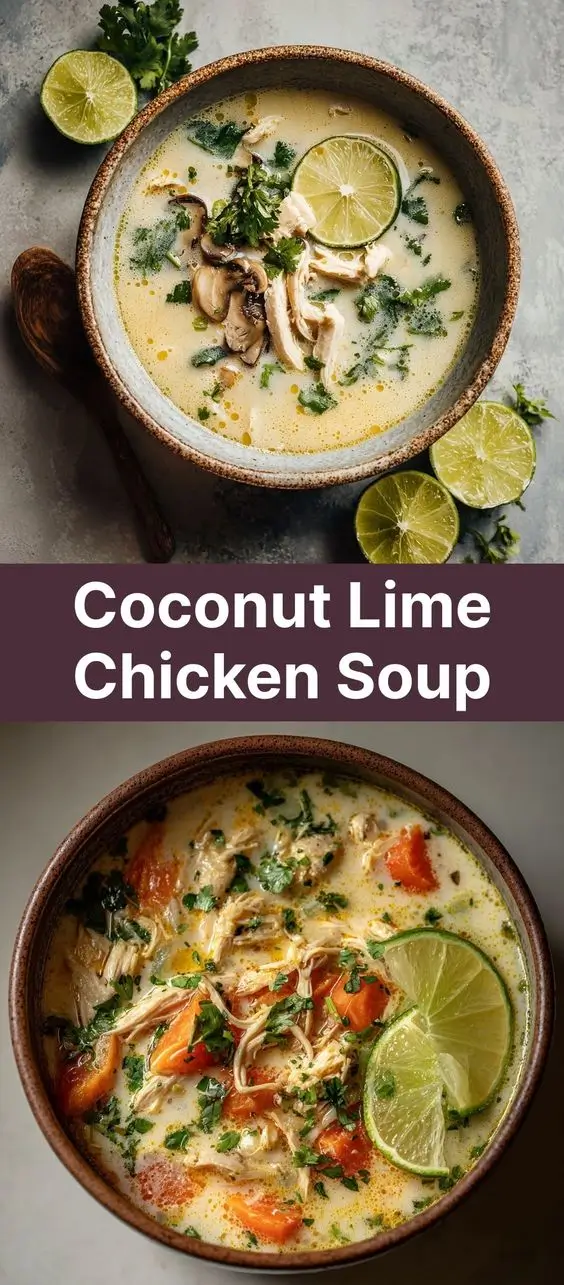
Coconut Lime Chicken Soup: A Zesty, Creamy Delight from Tropical Kitchens
Introduction
Coconut Lime Chicken Soup is a vibrant, aromatic dish that captures the essence of tropical cuisine. With its creamy coconut base, zesty lime tang, and tender pieces of chicken, this soup is both comforting and invigorating. Whether you’re recovering from a cold, seeking a light yet satisfying meal, or simply craving bold flavors, this soup delivers on every front. The harmony of sweet, sour, savory, and spicy notes makes it a standout recipe in any home cook’s repertoire. Light enough for summer days yet warm and nourishing for winter nights, Coconut Lime Chicken Soup bridges seasons and cultures with ease.
The History
The origins of Coconut Lime Chicken Soup can be traced back to Southeast Asian culinary traditions—particularly Thai, Indonesian, and Vietnamese cuisines—where coconut milk and citrus are staple ingredients in soups and curries. In Thailand, dishes like Tom Kha Gai (coconut galangal chicken soup) bear striking similarities, featuring coconut milk, lime, lemongrass, and aromatic herbs. Over time, as global palates embraced fusion cooking, Western adaptations began incorporating more accessible ingredients while preserving the soul of the original recipes. The addition of lime juice for acidity instead of tamarind, and the use of common vegetables like bell peppers or spinach, reflect these modern evolutions. Today, Coconut Lime Chicken Soup enjoys international acclaim, appearing in restaurant menus, food blogs, and wellness circles alike for its balance of flavor and nutrition.
Ingredients Breakdown
Understanding each ingredient helps elevate your cooking experience and ensures optimal flavor development:
- Chicken Breast or Thighs: Boneless, skinless chicken breasts offer lean protein, while thighs provide richer flavor and tenderness due to higher fat content.
- Coconut Milk: Full-fat canned coconut milk creates a luxuriously creamy texture and carries the fat-soluble flavors of spices. Light coconut milk can be used for a lower-calorie version but may result in a thinner broth.
- Lime Juice: Freshly squeezed lime juice adds essential brightness and balances the richness of the coconut. Bottled juice lacks the same vibrancy.
- Lemongrass: This fibrous stalk imparts a citrusy, floral aroma. Bruising it before adding enhances flavor release.
- Ginger and Garlic: Both add warmth and depth. Freshly minced provides superior taste over powdered forms.
- Shallots or Yellow Onion: Shallots offer a sweeter, milder base; onions bring more pungency. Either works well depending on preference.
- Fish Sauce: A traditional umami booster that enhances savoriness without making the dish taste fishy when used in moderation.
- Vegetable or Chicken Broth: Forms the liquid foundation. Low-sodium versions allow better control over salt levels.
- Red Bell Pepper: Adds color, sweetness, and crunch. Can be substituted with other vegetables like mushrooms or bok choy.
- Spinach or Kale: Leafy greens contribute nutrients and texture. Spinach wilts quickly, making it ideal for last-minute additions.
- Chili Flakes or Fresh Chilies: Introduce heat. Adjust quantity based on spice tolerance.
- Cilantro and Lime Zest: Used as garnishes, they amplify freshness and citrus notes right before serving.
Step-by-Step Recipe
- Prepare Ingredients: Slice chicken into thin strips. Mince garlic and ginger. Finely chop shallot or onion. Cut red bell pepper into thin strips. Bruise lemongrass by smashing it with the flat side of a knife and cut into 2-inch pieces.
- Sauté Aromatics: In a large pot or Dutch oven, heat 1 tablespoon of coconut oil over medium heat. Add chopped shallots/onion and sauté until translucent (about 3–4 minutes). Stir in minced garlic and ginger; cook for another minute until fragrant.
- Add Lemongrass: Place bruised lemongrass pieces into the pot and stir briefly to coat with oil, releasing their essential oils.
- Incorporate Liquids: Pour in 4 cups of chicken or vegetable broth, followed by 1 can (13.5 oz) of full-fat coconut milk. Stir well to combine.
- Simmer Base: Bring the mixture to a gentle simmer. Let it cook uncovered for 10–12 minutes to allow flavors to meld. Skim off any foam if necessary.
- Cook Chicken: Add sliced chicken to the pot. Simmer gently for 6–8 minutes, or until chicken is cooked through and no longer pink inside. Avoid boiling vigorously to prevent toughening the meat.
- Add Vegetables: Stir in red bell pepper strips and let them soften slightly for about 3–4 minutes.
- Season the Soup: Add 1–2 tablespoons of fish sauce (to taste), 1/2 teaspoon chili flakes (or more for heat), and the juice of 1–2 fresh limes (start with one, adjust later).
- Incorporate Greens: Add a couple handfuls of fresh spinach or chopped kale. Stir until wilted—this takes just 1–2 minutes.
- Taste and Adjust: Remove lemongrass pieces using a spoon. Taste the soup and adjust seasoning: more lime for acidity, fish sauce for saltiness, chili for heat, or a touch of honey to balance sharpness.
- Finish and Serve: Turn off heat. Stir in lime zest and garnish each bowl with fresh cilantro, additional lime wedges, and optional toppings like sliced green onions, crushed peanuts, or crispy fried shallots.
Tips
- Bruise Lemongrass Properly: Use the back of your knife to crush the stalk—it breaks down fibers and releases more flavor during cooking.
- Use Fresh Citrus: Never substitute bottled lime juice. Freshly squeezed lime juice has volatile oils that enhance aroma and taste significantly.
- Don’t Boil Coconut Milk: High heat can cause coconut milk to separate or curdle. Keep the soup at a gentle simmer after adding it.
- Remove Lemongrass Before Serving: It’s too fibrous to eat. Use a slotted spoon to fish out pieces before ladling soup into bowls.
- Let Flavors Rest: For deeper flavor, make the soup ahead and refrigerate overnight. Reheat gently before serving—the taste improves over time.
- Bloom Spices: Sautéing garlic, ginger, and shallots in oil first extracts maximum flavor compared to adding them directly to liquid.
- Balance Is Key: Aim for equilibrium between creamy (coconut), sour (lime), salty (fish sauce), and spicy (chili). Taste frequently and adjust gradually.
Variations and Customizations
This versatile soup lends itself beautifully to personalization:
- Vegetarian/Vegan Version: Omit chicken and use tofu or chickpeas for protein. Substitute vegetable broth and ensure fish sauce is replaced with soy sauce or tamari (for gluten-free) or vegan fish sauce alternatives.
- Seafood Twist: Replace chicken with shrimp, scallops, or white fish. Add delicate seafood in the last 3–4 minutes of cooking to avoid overcooking.
- Curry-Infused: Stir in 1–2 teaspoons of red curry paste or green curry paste for an extra layer of complexity and spice.
- Noodle Addition: Turn it into a heartier meal by adding rice noodles, vermicelli, or glass noodles soaked and added at the end.
- Different Greens: Swap spinach with Swiss chard, bok choy, mustard greens, or even cabbage for varied textures and nutritional profiles.
- Herb Swaps: Try Thai basil instead of cilantro for a licorice-like note, or mint for a refreshing twist.
- Citrus Variations: Combine lime with lemon or yuzu for nuanced acidity. Some chefs use kaffir lime leaves (1–2 torn leaves simmered with broth) for authentic fragrance.
- Low-Carb/Keto-Friendly: This soup is naturally low in carbs. Boost healthy fats by adding avocado slices on top or increasing coconut milk ratio.
Health Considerations and Nutritional Value
Coconut Lime Chicken Soup is not only delicious but also packed with health benefits:
- Immune Support: Ginger and garlic are natural anti-inflammatories with antimicrobial properties. They may help reduce symptoms of colds and respiratory infections.
- Hydration: As a broth-based soup, it contributes to daily fluid intake, especially helpful during illness or hot weather.
- Lean Protein: Chicken provides high-quality protein essential for muscle repair and satiety.
- Healthy Fats: Coconut milk contains medium-chain triglycerides (MCTs), which are metabolized differently than long-chain fats and may support energy and metabolism.
- Vitamins and Minerals: Spinach brings iron, calcium, and vitamins A, C, and K. Bell peppers are rich in vitamin C and antioxidants. Limes add vitamin C and flavonoids.
- Digestive Aid: The combination of ginger, lime, and warm liquid can soothe digestion and ease bloating.
- Low Sugar: When prepared without added sugar, this soup is suitable for diabetic diets and blood sugar management.
- Cautions: Those sensitive to histamines should moderate fermented ingredients like fish sauce. Individuals watching sodium intake should use low-sodium broth and limit fish sauce. Coconut milk is calorie-dense—portion control is advised for weight-loss goals.
Ingredients
- 1 lb (450g) boneless, skinless chicken breast or thighs, thinly sliced
- 1 can (13.5 oz / 400ml) full-fat coconut milk
- 4 cups (950ml) low-sodium chicken or vegetable broth
- 2 stalks lemongrass, trimmed, outer layers removed, bruised and cut into 2-inch pieces
- 1 tbsp fresh ginger, finely minced
- 3 cloves garlic, minced
- 1 medium shallot or small yellow onion, finely chopped
- 1 tbsp coconut oil or neutral oil
- 1 red bell pepper, thinly sliced
- 2–3 cups fresh baby spinach or chopped kale
- Juice of 1–2 fresh limes (about 1/4 to 1/3 cup)
- 1–2 tbsp fish sauce (adjust to taste)
- 1/2 tsp red chili flakes (or 1 fresh red chili, sliced)
- Zest of 1 lime
- 1/4 cup fresh cilantro leaves, chopped
- Optional garnishes: sliced green onions, crushed peanuts, extra lime wedges, crispy shallots
Directions
- Heat coconut oil in a large pot over medium heat. Add shallot (or onion) and sauté for 3–4 minutes until soft and translucent.
- Add minced garlic and ginger; stir constantly for 1 minute until fragrant.
- Bruise lemongrass with the back of a knife, then add to the pot. Stir for 30 seconds to coat with oil.
- Pour in chicken broth and coconut milk. Stir well to combine.
- Bring to a gentle simmer and cook for 10–12 minutes to infuse the broth with aromatics.
- Add sliced chicken to the pot. Simmer gently for 6–8 minutes, stirring occasionally, until chicken is fully cooked.
- Stir in red bell pepper and cook for 3–4 minutes until slightly softened.
- Add fish sauce, chili flakes, and the juice of one lime. Stir to incorporate.
- Add spinach (or kale) and stir until wilted, about 1–2 minutes.
- Taste and adjust: add more lime juice for tartness, fish sauce for saltiness, or chili for heat.
- Turn off heat. Remove lemongrass pieces with a spoon.
- Stir in lime zest and half of the chopped cilantro.
- Ladle soup into bowls and garnish with remaining cilantro, green onions, crushed peanuts, and lime wedges on the side.
- Serve hot, ideally with steamed jasmine rice, quinoa, or enjoyed on its own.
FAQ
Can I make this soup in a slow cooker?
Yes! Sauté aromatics first, then transfer to a slow cooker. Add all ingredients except spinach, lime juice, and garnishes. Cook on low for 6 hours or high for 3–4 hours. Shred chicken if desired, then stir in spinach and lime juice during the last 15 minutes.
How long does it keep in the fridge?
Properly stored in an airtight container, the soup lasts 3–4 days in the refrigerator. Flavor often deepens the next day.
Can I freeze Coconut Lime Chicken Soup?
Yes, though coconut milk may separate slightly upon thawing. Freeze without garnishes and reheat gently on the stove, stirring frequently. Add fresh lime juice and herbs after reheating.
Is this soup spicy?
It depends on how much chili you add. By default, it has mild heat. You can increase spiciness with extra chili flakes, fresh chilies, or curry paste.
Can I use frozen chicken?
It’s best to thaw chicken before cooking for even texture and food safety. However, you can cook from frozen—just extend simmering time by 5–7 minutes and ensure internal temperature reaches 165°F (74°C).
Why did my coconut milk curdle?
High heat or sudden temperature changes can cause separation. To prevent this, avoid boiling after adding coconut milk and always bring liquids to a simmer gradually.
What can I substitute for fish sauce?
Soy sauce, tamari, or coconut aminos work as substitutes. For a closer match, mix soy sauce with a pinch of anchovy paste or use commercially available vegan fish sauce.
Can I make this dairy-free and gluten-free?
Absolutely! This recipe is naturally dairy-free. For gluten-free, confirm that your broth and fish sauce (or substitute) are certified gluten-free—some brands contain wheat.
Summary
Coconut Lime Chicken Soup blends creamy coconut milk, zesty lime, tender chicken, and fragrant herbs into a nourishing, globally inspired bowl of comfort. Packed with flavor, easy to customize, and rich in nutrients, it’s a go-to recipe for weeknight dinners, meal prep, or soothing meals when under the weather.