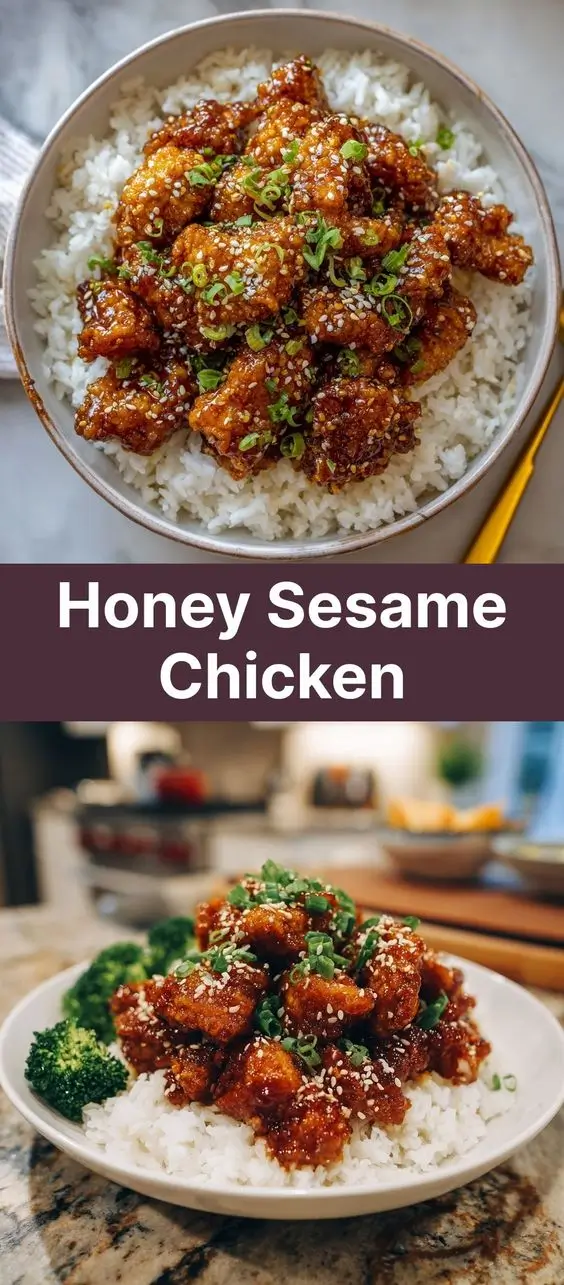
Honey Sesame Chicken
Honey Sesame Chicken is a beloved dish that brings together the perfect balance of sweet, savory, and nutty flavors. With its glossy glaze, tender chicken pieces, and aromatic sesame notes, this recipe has become a staple in both home kitchens and Chinese-American restaurants across the globe. Whether you’re cooking for family dinner, preparing a weeknight meal, or impressing guests at a gathering, this dish delivers bold taste and satisfying texture with every bite.
The History of Honey Sesame Chicken
While Honey Sesame Chicken may seem like a traditional Chinese dish, it actually emerged from the fusion cuisine developed by Chinese immigrants in North America during the 20th century. Unlike many classic Chinese recipes rooted in centuries-old culinary traditions, dishes like honey sesame chicken were created to cater to Western palates—specifically those who favored sweeter, richer, and more approachable flavors.
Sesame seeds have long been used in Chinese cooking for their aroma and texture, appearing in everything from sauces to dim sum. However, combining them with honey as a dominant glazing agent is a modern innovation. The use of honey instead of sugar or corn syrup offers a deeper, floral sweetness that complements soy sauce and ginger beautifully. Over time, this dish evolved with various regional tweaks, incorporating ingredients like garlic, rice vinegar, and chili for added complexity.
By the 1980s and 1990s, honey sesame chicken gained widespread popularity through takeout menus and food delivery services. Its vibrant appearance—glistening golden-brown chicken coated in a sticky amber sauce—and ease of pairing with rice or noodles made it a go-to favorite. Today, countless variations exist, from oven-baked versions to slow-cooker adaptations, but the essence remains the same: succulent chicken drenched in a luxurious honey-sesame sauce.
Ingredients Breakdown: What Makes This Dish Shine?
The magic of honey sesame chicken lies not just in its flavor profile but also in the thoughtful combination of ingredients that contribute to its texture, aroma, and nutritional balance. Let’s break down each component:
- Chicken Breast or Thighs: Boneless, skinless chicken breasts are most commonly used due to their lean texture and ability to absorb marinades well. However, chicken thighs offer more moisture and richness, making them an excellent alternative for juicier results.
- Honey: Raw or pure honey acts as the star sweetener. It provides natural sugars, antioxidants, and a floral depth unmatched by processed syrups. Opt for high-quality honey for the best taste.
- Soy Sauce (Low-Sodium Preferred): Adds saltiness and umami while balancing the sweetness. Low-sodium soy sauce helps control overall salt content without sacrificing flavor.
- Rice Vinegar: A touch of acidity cuts through the richness of the sauce, enhancing brightness and preventing the dish from feeling overly heavy.
- Garlic and Ginger: Freshly minced garlic and grated ginger lend pungency and warmth, forming the aromatic backbone of the sauce.
- Sesame Oil: Used sparingly, toasted sesame oil intensifies the nutty character of the dish. It’s potent, so a little goes a long way.
- Cornstarch: Essential for coating the chicken before frying, cornstarch creates a crisp outer layer that holds up against the thick sauce. It’s also used to thicken the glaze.
- Vegetable Oil: A neutral oil with a high smoke point (like canola or peanut) ensures even browning when pan-frying or deep-frying the chicken.
- Toasted Sesame Seeds: Sprinkled on top for garnish, these add crunch and visual appeal. White or black sesame seeds—or a mix of both—work wonderfully.
- Green Onions: Sliced thinly and added at the end, they bring freshness and color contrast.
- Optional Add-ins: Pineapple chunks, bell peppers, carrots, or broccoli can be stir-fried alongside for a colorful, nutrient-dense twist.
Step-by-Step Recipe: How to Make Perfect Honey Sesame Chicken at Home
Follow this detailed guide to recreate restaurant-quality honey sesame chicken in your own kitchen. With careful attention to technique, you’ll achieve crispy, flavorful chicken bathed in a luscious, glossy sauce.
Ingredients
- 1.5 lbs (680g) boneless, skinless chicken breasts or thighs, cut into 1-inch cubes
- 3 tablespoons cornstarch, divided
- 1/2 teaspoon salt
- 1/4 teaspoon black pepper
- 2 large egg whites, lightly beaten
- 3 tablespoons vegetable oil (for frying)
- 1/3 cup honey (preferably raw)
- 3 tablespoons low-sodium soy sauce
- 1 tablespoon rice vinegar
- 1 tablespoon toasted sesame oil
- 3 cloves garlic, minced
- 1 tablespoon fresh ginger, grated
- 2 tablespoons water
- 1 teaspoon cornstarch mixed with 2 teaspoons cold water (slurry)
- 2 tablespoons sesame seeds (toasted)
- 2 green onions, sliced diagonally
- Steamed white or brown rice (for serving)
- Optional: Steamed vegetables or stir-fried broccoli
Directions
- Prepare the Chicken: In a large bowl, season the chicken pieces with salt and pepper. Toss with 2 tablespoons of cornstarch until evenly coated. Then dip each piece into the beaten egg whites, allowing excess to drip off. Place on a plate lined with parchment paper.
- Fry the Chicken: Heat vegetable oil in a large skillet or wok over medium-high heat. Once shimmering (about 350°F), carefully add the chicken in a single layer, avoiding overcrowding. Cook for 3–4 minutes per side, turning occasionally, until golden brown and cooked through (internal temperature should reach 165°F). Remove and drain on a wire rack or paper towels.
- Make the Sauce: In the same pan, reduce heat to medium. Add 1 tablespoon of vegetable oil if needed, then sauté garlic and ginger for 30 seconds until fragrant. Stir in honey, soy sauce, rice vinegar, and toasted sesame oil. Mix well and bring to a gentle simmer.
- Thicken the Glaze: In a small bowl, combine 1 teaspoon cornstarch with 2 teaspoons cold water to make a slurry. Slowly pour into the simmering sauce while stirring constantly. Continue cooking for 1–2 minutes until the sauce thickens to a syrupy consistency.
- Coat the Chicken: Return the fried chicken to the pan. Gently toss to coat every piece in the glossy sauce. Cook for another 1–2 minutes to allow the flavors to meld. Avoid over-stirring to prevent breaking the chicken apart.
- Garnish and Serve: Remove from heat. Sprinkle with toasted sesame seeds and sliced green onions. Serve immediately over steamed rice with optional stir-fried vegetables on the side.
Tips for the Best Honey Sesame Chicken
- Don’t Skip the Cornstarch Coating: It creates a protective barrier around the chicken, sealing in juices and giving it a delicate crispness that stands up to the sauce.
- Fry in Batches: Overcrowding the pan lowers the oil temperature and leads to soggy chicken. Fry in two batches if necessary, keeping the first batch warm in a 200°F oven while finishing the second.
- Use Fresh Garlic and Ginger: Pre-minced or powdered versions lack the bright zing that fresh ingredients provide. Grate ginger using a microplane for smooth integration into the sauce.
- Balance Sweetness: If the sauce tastes too sweet, add a splash of rice vinegar or a dash of sriracha for tang and heat. For a less sweet version, reduce honey by 1–2 tablespoons and replace with low-sodium chicken broth.
- Toast Your Sesame Seeds: Lightly toast sesame seeds in a dry skillet over medium heat for 2–3 minutes until golden and fragrant. This enhances their nutty flavor significantly.
- Double the Sauce (Optional): If you love extra glaze, double the sauce ingredients and serve some on the side for drizzling.
- Rest Before Serving: Let the dish sit for 2–3 minutes after tossing with sauce. This allows the glaze to set slightly and adhere better to the chicken.
Variations and Customizations
Honey sesame chicken is incredibly versatile and can be adapted to suit dietary preferences, flavor cravings, or ingredient availability. Here are some creative ways to personalize your dish:
- Gluten-Free Version: Replace soy sauce with tamari or a certified gluten-free soy sauce alternative. Ensure all other ingredients (especially honey and vinegar) are labeled gluten-free.
- Keto/Low-Carb Adaptation: Swap honey with a keto-friendly sweetener like monk fruit syrup or erythritol-based honey substitute. Use almond flour instead of cornstarch for coating (note: texture will differ slightly).
- Spicy Honey Sesame Chicken: Add 1–2 teaspoons of sambal oelek, gochujang, or red pepper flakes to the sauce for a fiery kick. Garnish with sliced jalapeños for extra heat.
- Baked Option (Healthier): Skip frying altogether. Coat chicken in cornstarch and egg white, place on a greased baking sheet, and bake at 400°F for 20–25 minutes, flipping halfway. Then toss with prepared sauce and broil for 2 minutes to caramelize.
- Air Fryer Method: Toss coated chicken pieces with 1 tbsp oil. Air fry at 375°F for 10–12 minutes, shaking halfway, until crispy and fully cooked. Finish with sauce in a pan.
- Pineapple Addition: Stir in 1 cup of fresh or canned pineapple chunks during the last minute of cooking for a tropical twist reminiscent of Hawaiian-inspired cuisine.
- Veggie-Packed Stir-Fry: Add bell peppers, snap peas, carrots, and mushrooms to the sauce after removing the chicken. Sauté for 3–4 minutes, then return chicken to combine.
- Noodle Bowl Style: Serve over lo mein noodles, rice noodles, or soba instead of rice. Toss everything together for a cohesive, saucy meal.
- Mediterranean Fusion: Add chopped cilantro, lime juice, and a sprinkle of sumac for a Middle Eastern flair.
Health Considerations and Nutritional Value
While honey sesame chicken is undeniably delicious, it’s important to consider its nutritional content—especially if you’re managing calorie intake, blood sugar levels, or sodium consumption.
Nutrition Facts (Per Serving – Approx. 1 cup with rice):
- Calories: ~450–550 kcal
- Protein: 30–35g (excellent source)
- Fat: 12–18g (mostly from healthy oils and sesame)
- Carbohydrates: 50–60g (primarily from honey, cornstarch, and rice)
- Sugar: 25–30g (natural from honey; no refined sugar added)
- Sodium: 600–800mg (can be reduced with low-sodium soy sauce)
Health Benefits:
- Honey: Contains antioxidants, antibacterial properties, and may support immune function. Choose raw, unfiltered honey for maximum benefits.
- Chicken: High-quality lean protein supports muscle repair, satiety, and metabolic health.
- Sesame Seeds: Rich in calcium, iron, magnesium, and healthy fats. They also contain lignans, which may help regulate cholesterol.
- Ginger and Garlic: Both possess anti-inflammatory and antimicrobial qualities. Ginger aids digestion, while garlic supports cardiovascular health.
Dietary Notes:
- Diabetic-Friendly Adjustments: Reduce honey quantity or use a diabetic-safe sweetener. Pair with cauliflower rice to lower glycemic load.
- Heart-Healthy Tips: Use minimal oil, opt for air-frying, and increase vegetable content. Limit portion size to maintain balance.
- Weight Management: Control portions—stick to 4 oz chicken and ½ cup rice per serving. Load up on non-starchy veggies to increase volume without excess calories.
- Allergen Information: Contains eggs (in batter), soy (soy sauce), and sesame. Can be modified for allergies with substitutes like chickpea flour, coconut aminos, and sunflower seeds.
Frequently Asked Questions (FAQ)
- Can I make honey sesame chicken ahead of time?
- Yes! You can prepare the sauce and chop ingredients up to one day in advance. Cooked chicken can be stored separately and reheated gently in a skillet with a splash of water to revive the sauce.
- How do I reheat leftovers without drying out the chicken?
- Reheat in a skillet over low heat with a tablespoon of water or broth. Cover and steam for 3–4 minutes. Microwaving is faster but may soften the crust—cover with a damp paper towel to retain moisture.
- Why is my sauce too thin or too thick?
- If too thin, mix additional cornstarch slurry (1 tsp cornstarch + 2 tsp water) and stir into simmering sauce. If too thick, whisk in warm water or chicken broth, 1 tablespoon at a time, until desired consistency is reached.
- Can I freeze honey sesame chicken?
- Yes, though texture may change slightly upon thawing. Freeze in an airtight container for up to 3 months. Thaw overnight in the refrigerator and reheat in a pan for best results.
- Is honey sesame chicken the same as orange chicken?
- No. While both are sweet and popular Chinese-American dishes, orange chicken uses citrus (orange zest and juice) as the primary flavor, giving it a tangy, bright profile. Honey sesame chicken emphasizes floral sweetness and nuttiness from honey and sesame.
- Can I use maple syrup instead of honey?
- You can, but the flavor will shift. Maple syrup has earthier tones and lacks the floral notes of honey. The final dish will still be tasty but distinctly different.
- What sides go well with honey sesame chicken?
- Excellent pairings include steamed jasmine rice, brown rice, quinoa, fried rice, stir-fried bok choy, broccoli, cabbage slaw, or Asian cucumber salad.
- How can I make this dish spicier?
- Add crushed red pepper flakes, sriracha, chili garlic sauce, or fresh sliced chilies to the sauce. You can also marinate the chicken with a pinch of cayenne before cooking.
Summary
Honey Sesame Chicken is a harmonious blend of sweet honey, savory soy, and rich sesame flavors, delivering a restaurant-quality meal right from your kitchen. With tender, crispy chicken smothered in a glossy, aromatic sauce, it’s comfort food elevated to gourmet status.
Easy to customize, packed with protein, and adaptable to various diets, this dish satisfies cravings while offering room for creativity—whether you’re making it spicy, healthy, gluten-free, or loaded with vegetables.