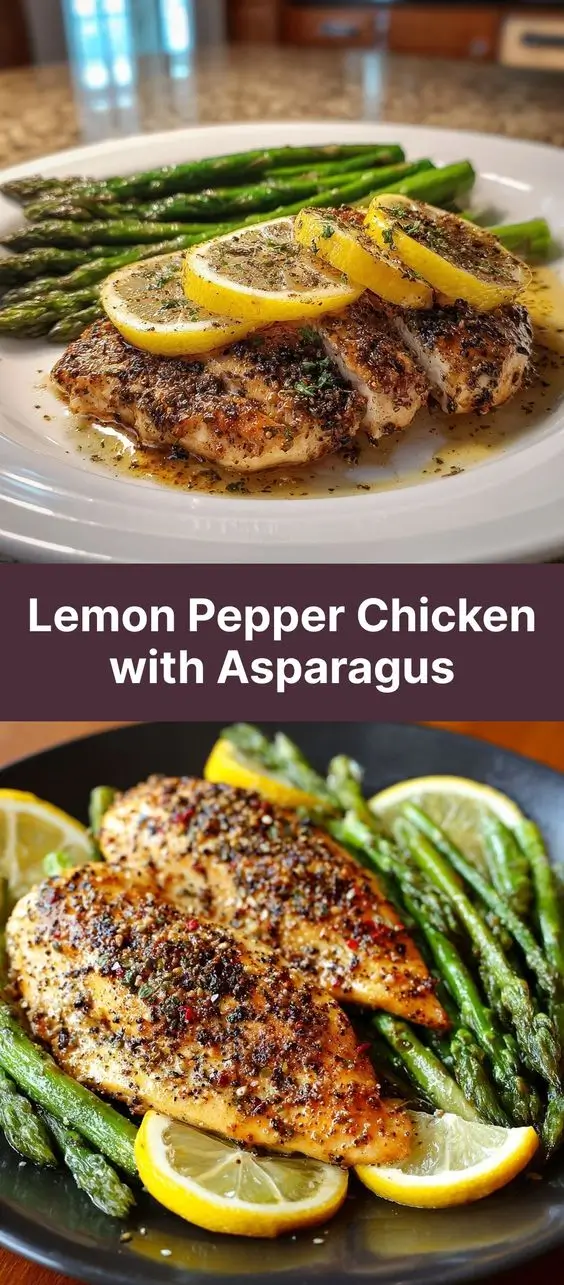
Lemon Pepper Chicken with Asparagus
Introduction
Lemon Pepper Chicken with Asparagus is a vibrant, flavorful dish that perfectly balances zesty citrus, bold pepper, and tender chicken with crisp-tender asparagus. This one-pan meal is not only delicious but also healthy, quick to prepare, and ideal for busy weeknights or elegant enough for weekend dinners. Packed with protein and vegetables, it’s a wholesome recipe that satisfies the palate while supporting a balanced diet. Whether you’re a seasoned home cook or just starting your culinary journey, this dish offers simplicity without sacrificing taste.
The History
While Lemon Pepper Chicken with Asparagus may seem like a modern fusion dish, its roots trace back to classic American and Mediterranean cooking traditions. The use of lemon in savory dishes has long been a hallmark of Mediterranean cuisine—particularly in Greek, Italian, and Middle Eastern cooking—where citrus enhances flavor without overpowering ingredients. Black pepper, one of the world’s oldest and most widely used spices, complements lemon by adding warmth and depth.
The combination of lemon and pepper as a seasoning blend gained popularity in the United States during the 1970s and 1980s, becoming a staple in steakhouses and seafood restaurants. It wasn’t long before home cooks began applying this versatile seasoning to chicken, leading to the rise of lemon pepper chicken as a household favorite. Asparagus, a springtime vegetable celebrated for its earthy-sweet taste and nutritional value, naturally paired well with the bright flavors of lemon and pepper. Over time, recipes evolved to combine these ingredients into a single skillet dish, minimizing cleanup and maximizing flavor infusion.
Today, Lemon Pepper Chicken with Asparagus stands as a symbol of contemporary healthy cooking—merging tradition with convenience, elegance with ease, and taste with nutrition.
Ingredients Breakdown
To create the perfect Lemon Pepper Chicken with Asparagus, each ingredient plays a crucial role in building layers of flavor, texture, and aroma. Let’s explore them in detail:
- Chicken Breast (boneless, skinless): The star protein of this dish, chicken breast provides lean, tender meat that absorbs seasonings beautifully. Its mild flavor makes it an ideal canvas for bold seasonings like lemon and pepper.
- Fresh Asparagus: Choose firm, bright green stalks with tightly closed tips. Asparagus adds fiber, vitamins A, C, E, and K, and antioxidants. When sautéed, it develops a crisp-tender texture that contrasts nicely with the juicy chicken.
- Lemons (both zest and juice): Fresh lemon is essential—not only does its juice add tanginess, but the zest contains aromatic oils that intensify the citrus flavor throughout the dish.
- Freshly Cracked Black Pepper: More than just heat, freshly ground pepper delivers floral, piney notes that elevate the entire dish. Pre-ground pepper lacks the same vibrancy.
- Garlic: Adds depth and pungency. Minced fresh garlic sautés quickly and blends seamlessly into the sauce.
- Olive Oil: Used for searing and roasting, extra virgin olive oil contributes heart-healthy fats and a smooth mouthfeel.
- Butter (unsalted): Enhances richness and helps emulsify the lemon-garlic sauce. It also promotes browning and adds a silky finish.
- Salt: Balances flavors and enhances natural tastes. Use kosher salt for even distribution.
- Dried Herbs (optional – thyme or oregano): Complements the lemon-pepper profile with herbal undertones.
- White Wine (optional): Deglazes the pan, lifting browned bits and adding complexity to the sauce. Substitute with chicken broth if preferred.
- Parsley (fresh, chopped): For garnish—adds color, freshness, and a subtle peppery note.
Step-by-Step Recipe
- Prep Ingredients: Begin by trimming the ends off the asparagus (snap or cut where the stems naturally break). Pat the chicken breasts dry with paper towels—this ensures better browning. Cut chicken into even-sized pieces if desired, or leave whole for a more elegant presentation. Zest one lemon and squeeze both lemons to yield about ⅓ cup of juice. Mince the garlic.
- Season the Chicken: Place chicken on a clean surface and generously season both sides with salt, freshly cracked black pepper, and optional dried herbs. For extra flavor, rub the chicken with half the lemon zest.
- Preheat Pan: Heat a large oven-safe skillet (like cast iron or stainless steel) over medium-high heat. Add 2 tablespoons of olive oil. Once shimmering, carefully place the chicken in the pan without overcrowding.
- Sear the Chicken: Cook for 5–6 minutes per side, depending on thickness, until golden brown and cooked through (internal temperature should reach 165°F). Remove chicken to a plate and tent loosely with foil.
- Sauté the Asparagus: In the same skillet, reduce heat to medium. Add 1 tablespoon butter and the remaining olive oil. Toss in asparagus and sauté for 4–5 minutes, stirring occasionally, until bright green and slightly tender.
- Add Garlic and Aromatics: Stir in minced garlic and cook for 30 seconds to 1 minute—just until fragrant. Be careful not to burn it.
- Optional Deglaze: Pour in ¼ cup white wine or chicken broth, scraping the bottom of the pan to release any flavorful browned bits (fond). Let simmer for 1–2 minutes until slightly reduced.
- Finish the Sauce: Reduce heat to low. Stir in lemon juice, remaining lemon zest, and another tablespoon of butter. Swirl until melted and glossy.
- Reintroduce Chicken: Return the chicken and any accumulated juices to the skillet. Nestle it among the asparagus. Spoon sauce over the top. Optional: transfer the entire skillet to a preheated 375°F (190°C) oven for 5 minutes to meld flavors and ensure chicken stays moist.
- Garnish and Serve: Sprinkle with chopped fresh parsley. Taste and adjust seasoning with additional salt or pepper if needed.
Tips
- Use Fresh Lemon: Bottled lemon juice lacks the brightness and essential oils found in fresh lemons. Always opt for freshly squeezed juice and grated zest.
- Don’t Skip the Zest: Most of the lemon’s fragrance resides in the peel. Zesting amplifies the citrus experience without adding extra acidity.
- Pat Chicken Dry: Moisture prevents proper browning. Drying the chicken thoroughly ensures a golden crust and better flavor development.
- Use an Oven-Safe Skillet: Cooking everything in one pan saves time and builds deeper flavor. If you don’t have an oven-safe pan, simply keep the chicken warm while finishing the vegetables and sauce separately.
- Avoid Overcooking Asparagus: Asparagus continues to cook slightly after removal from heat. Aim for crisp-tender—not mushy—to preserve texture and nutrients.
- Let Chicken Rest: After searing, letting the chicken rest briefly helps retain moisture when reintroduced to the sauce.
- Adjust Pepper Level: Lemon pepper seasoning varies in intensity. Start with 1 teaspoon cracked pepper and add more to taste.
- Baste for Flavor: Spooning the hot lemon-butter sauce over the chicken during the final minutes infuses every bite with flavor.
Variations and Customizations
This recipe is highly adaptable to suit different tastes, dietary needs, and available ingredients. Here are some creative twists:
- Creamy Version: Stir in 2–3 tablespoons of heavy cream or crème fraîche at the end for a richer, velvety sauce.
- Dairy-Free Option: Replace butter with additional olive oil or vegan butter alternative.
- Gluten-Free Friendly: Naturally gluten-free—just confirm all added ingredients (like broth) are certified GF.
- Add Mushrooms: Sauté sliced cremini or white mushrooms with the asparagus for an umami boost.
- Incorporate Cherry Tomatoes: Add halved cherry tomatoes during the last 2 minutes of cooking for bursts of sweetness and acidity.
- Spicy Kick: Add red pepper flakes or a dash of cayenne along with the garlic for a hint of heat.
- Herb Swap: Try rosemary instead of thyme for a woodsy, pine-like flavor, or basil for a fresher, summery twist.
- Protein Alternatives: Substitute chicken with turkey cutlets, pork tenderloin, shrimp, or firm tofu for a vegetarian version.
- Ratatouille Twist: Include diced zucchini and bell peppers alongside asparagus for a Provençal-inspired medley.
- Grilled Option: Marinate chicken in lemon juice, olive oil, garlic, and pepper, then grill alongside asparagus on skewers or a grilling basket.
- Sheet Pan Bake: Toss chicken and asparagus with oil and seasonings, spread on a sheet pan, and roast at 400°F (200°C) for 20–25 minutes for a hands-off approach.
- Pasta Addition: Serve over angel hair pasta, quinoa, or risotto to make it a heartier entrée.
Health Considerations and Nutritional Value
Lemon Pepper Chicken with Asparagus isn’t just tasty—it’s a nutritionally balanced meal that supports overall wellness. Here’s what makes it a smart choice:
- Lean Protein Source: Chicken breast is low in fat and high in protein, promoting muscle repair, satiety, and metabolic health. A 6-ounce serving provides approximately 43 grams of protein.
- Low in Carbohydrates: With minimal carbs (mainly from vegetables), this dish fits well within low-carb, keto-friendly, and diabetic diets when prepared without added sugars.
- Rich in Vitamins and Minerals: Asparagus is loaded with vitamin K (important for blood clotting and bone health), folate (crucial for cell function and pregnancy), vitamin C (an immune booster and antioxidant), and vitamin A (supports vision and skin health).
- Fiber Content: Asparagus contributes dietary fiber, aiding digestion and helping maintain stable blood sugar levels.
- Antioxidant Powerhouse: Lemons contain flavonoids and vitamin C, which combat oxidative stress and inflammation in the body.
- Heart-Healthy Fats: Olive oil is rich in monounsaturated fats, known to support cardiovascular health when consumed in moderation.
- Low Sodium Option: By controlling the amount of added salt, this dish can easily be adapted for those managing hypertension or following a low-sodium diet.
- Calorie-Conscious: A full serving (chicken + asparagus + sauce) typically ranges between 300–400 calories, making it suitable for weight management plans.
- Allergen-Friendly: Naturally free from common allergens like nuts, dairy (if substituted), soy (check broth labels), eggs, and gluten—ideal for sensitive eaters.
Note: To maximize health benefits, avoid charring the chicken excessively during searing, as high-temperature cooking can produce harmful compounds. Also, limit butter usage if monitoring saturated fat intake.
Ingredients
- 4 boneless, skinless chicken breasts (about 6 oz each)
- 1 bunch fresh asparagus (about 1 lb), ends trimmed
- 2 large lemons (zested and juiced)
- 3 cloves garlic, minced
- 3 tablespoons extra virgin olive oil (divided)
- 2 tablespoons unsalted butter (divided)
- 1½ teaspoons kosher salt (or to taste)
- 1½ to 2 teaspoons freshly cracked black pepper (adjust to preference)
- ½ teaspoon dried thyme (or oregano)
- ¼ cup dry white wine (or low-sodium chicken broth)
- 2 tablespoons fresh parsley, chopped (for garnish)
Directions
- Preheat oven to 375°F (190°C) if using the oven-finish method. Prepare all ingredients as listed above.
- Pat chicken breasts dry with paper towels. Season both sides evenly with salt, cracked black pepper, dried thyme, and half the lemon zest.
- Heat 2 tablespoons olive oil in a large oven-safe skillet over medium-high heat. Once hot, add chicken and cook for 5–6 minutes per side, until golden brown and internal temperature reaches 165°F. Transfer to a plate and cover with foil.
- Reduce heat to medium. Add 1 tablespoon olive oil and 1 tablespoon butter to the same skillet. Add asparagus and sauté for 4–5 minutes, rolling occasionally, until bright green and tender-crisp.
- Add minced garlic and cook for 30 seconds until fragrant. Pour in white wine or broth, scraping up any browned bits. Simmer for 1–2 minutes until slightly reduced.
- Stir in lemon juice, remaining lemon zest, and second tablespoon of butter. Swirl until sauce becomes glossy.
- Return chicken and juices to the skillet, nestling pieces among the asparagus. Spoon sauce over chicken.
- Transfer skillet to preheated oven and bake for 5 minutes to meld flavors (optional but recommended). Alternatively, keep on stovetop over low heat for same duration.
- Remove from heat. Garnish with fresh parsley. Taste and adjust seasoning.
- Serve immediately, optionally with rice, potatoes, or a fresh salad.
FAQ
Can I use frozen asparagus?
While possible, fresh asparagus yields superior texture and flavor. Frozen asparagus tends to become soggy when thawed. If using frozen, partially thaw and pat dry before cooking, and reduce sauté time.
Can I make this ahead of time?
Yes, you can prep ingredients in advance—slice garlic, zest and juice lemons, trim asparagus, and season chicken up to 24 hours ahead. Store separately in airtight containers in the refrigerator. However, it’s best cooked fresh for optimal texture.
How do I store leftovers?
Cool completely and store in an airtight container in the refrigerator for up to 3–4 days. Reheat gently in a skillet over low heat or in the microwave, adding a splash of water or broth to refresh the sauce.
Can I freeze Lemon Pepper Chicken with Asparagus?
Freezing is possible but not ideal due to the delicate texture of asparagus and chicken, which may become watery upon thawing. If freezing, omit the butter sauce and freeze plain chicken and veggies; reheat and remake the sauce fresh.
Why is my sauce separating?
Sauces can break if butter is added too quickly or over high heat. To prevent this, remove from direct heat when incorporating butter and stir slowly. If separation occurs, whisk vigorously or add a teaspoon of cold water to re-emulsify.
Is lemon pepper seasoning the same as using fresh lemon and pepper?
No. Commercial lemon pepper seasoning often includes salt, sugar, and preservatives. Using fresh lemon and cracked pepper gives you control over flavor intensity and sodium content.
What side dishes pair well with this meal?
Excellent pairings include wild rice, quinoa, mashed potatoes, roasted baby potatoes, couscous, or a simple arugula salad with shaved Parmesan. Crusty bread is great for soaking up the sauce.
Can I cook this entirely on the stovetop?
Absolutely. After returning the chicken to the skillet, simply simmer everything together over low heat for 5 minutes instead of using the oven.
How do I know when asparagus is done?
It should be bright green, slightly tender when pierced with a fork, but still firm—a “crisp-tender” texture. Overcooked asparagus turns dull and mushy.
Can I use chicken thighs instead?
Yes! Boneless, skinless chicken thighs work well and offer a juicier, more flavorful option. Adjust cooking time as needed—they may take slightly longer to cook through.
Summary
Lemon Pepper Chicken with Asparagus is a harmonious blend of zesty citrus, robust pepper, tender chicken, and crisp seasonal vegetables—all prepared in one pan for maximum flavor and minimal cleanup. Healthy, satisfying, and bursting with freshness, it’s a go-to recipe for nutritious weeknight dinners that never compromise on taste.