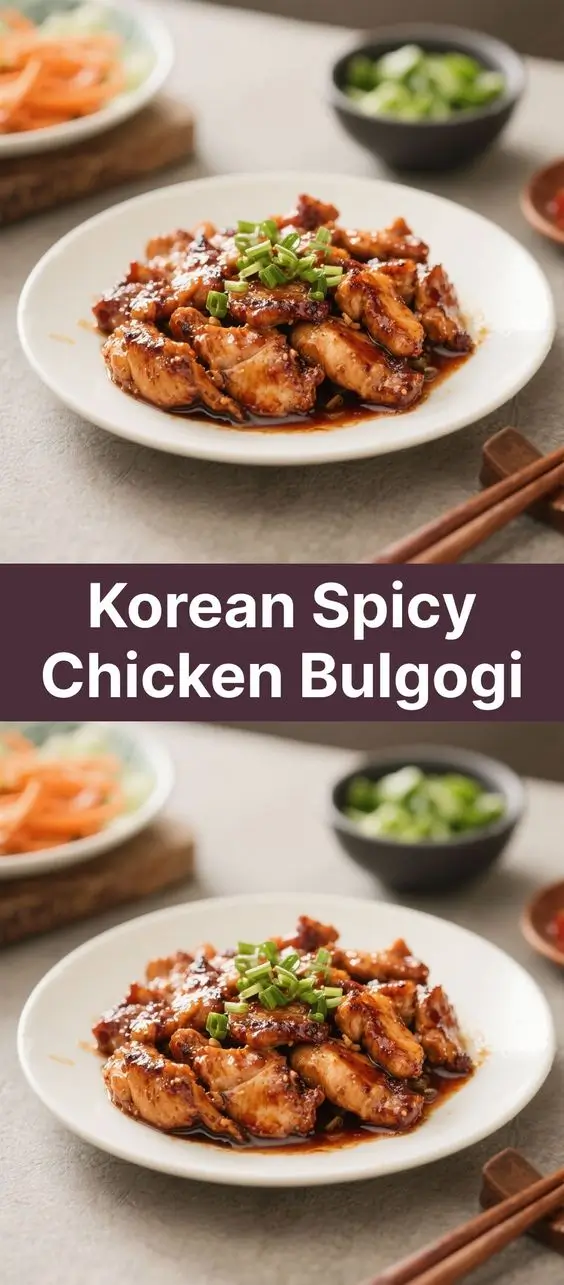
Korean Spicy Chicken Bulgogi: A Fiery Twist on a Classic Favorite
Introduction
Korean Spicy Chicken Bulgogi, known locally as “Dak Bulgogi” (닭불고기), is a bold and flavorful dish that has taken the world by storm. Unlike traditional beef bulgogi, this version features tender pieces of chicken marinated in a rich, spicy-sweet sauce made with gochujang (Korean red chili paste), garlic, soy sauce, and aromatic spices. The result is a sizzling, smoky, and satisfying meal perfect for any occasion—whether enjoyed over steaming rice, wrapped in lettuce leaves, or paired with kimchi and side dishes. This recipe blends Korea’s deep culinary heritage with modern tastes, offering a fiery kick that delights spice lovers while remaining approachable for those new to Korean cuisine.
The History
The origins of bulgogi trace back to the Goguryeo era (37 BCE–668 CE), where it was originally known as “maekjeok” and prepared by grilling thin slices of meat over open flames. The term “bulgogi” itself means “fire meat” in Korean, derived from “bul” (fire) and “gogi” (meat). Historically reserved for the elite due to the high cost of meat, bulgogi evolved during the 20th century into a beloved national dish, especially after the widespread availability of beef and modernization of cooking methods.
While beef remained the traditional choice, post-Korean War economic shifts and dietary preferences led to adaptations using more accessible proteins like pork and chicken. Dak Bulgogi emerged as a popular alternative, particularly among health-conscious eaters and families seeking affordable, nutritious meals. The addition of spiciness—via gochujang and gochugaru (Korean chili flakes)—reflects the broader trend in Korean cuisine toward bolder, more complex flavors influenced by regional variations and global palates. Today, Korean Spicy Chicken Bulgogi stands as a vibrant symbol of culinary innovation, blending ancient techniques with contemporary taste profiles.
Ingredients Breakdown
The magic of Korean Spicy Chicken Bulgogi lies in its marinade—a harmonious blend of savory, sweet, spicy, and umami-rich components. Each ingredient plays a vital role in building layers of flavor:
- Chicken Breast or Thighs: Boneless, skinless chicken breasts offer a lean option, while thighs provide juicier, more flavorful meat due to higher fat content. Both should be sliced thinly against the grain for tenderness.
- Gochujang (Korean Red Chili Paste): The heart of the heat and depth, gochujang delivers a fermented, slightly sweet, and intensely spicy flavor. It’s made from red chili powder, glutinous rice, fermented soybeans, and salt.
- Soy Sauce: Provides saltiness and umami. Use low-sodium soy sauce if you prefer better control over salt levels.
- Dark Brown Sugar or Honey: Adds sweetness to balance the heat and helps create a caramelized glaze when cooked.
- Minced Garlic: Essential for pungency and aroma; fresh garlic is strongly recommended.
- Fresh Ginger (grated): Offers a zesty warmth that complements the spiciness without overpowering.
- Sesame Oil: Imparts a nutty fragrance and enhances mouthfeel. Always use toasted sesame oil for maximum flavor.
- Rice Vinegar or Mirin: Adds a touch of acidity to brighten the sauce and cut through richness.
- Sesame Seeds (toasted): Used both in the marinade and as garnish for crunch and nuttiness.
- Green Onions: Sliced diagonally for freshness and color contrast.
- Gochugaru (Korean Chili Flakes): Optional for extra heat and vibrant red color.
- Pear or Asian Pear Puree: Often used as a natural meat tenderizer due to enzymes that break down proteins.
- Black Pepper: For subtle heat and complexity.
Optional additions include grated onion, pineapple juice (for sweetness and tenderizing), or a splash of sake for depth.
Step-by-Step Recipe
- Prepare the Chicken: Slice 1.5 lbs (700g) of boneless chicken breast or thighs into thin, bite-sized strips about ¼ inch thick. Place in a large mixing bowl.
- Make the Marinade: In a separate bowl, combine ¼ cup gochujang, 3 tablespoons soy sauce, 2 tablespoons dark brown sugar (or honey), 4 cloves minced garlic, 1 tablespoon grated ginger, 1 tablespoon toasted sesame oil, 1 tablespoon rice vinegar or mirin, 1 teaspoon black pepper, 1 teaspoon gochugaru (optional), 2 tablespoons finely grated pear, and 1 tablespoon toasted sesame seeds. Mix well until smooth.
- Marinate the Chicken: Pour the marinade over the chicken and mix thoroughly to coat every piece. Cover and refrigerate for at least 30 minutes, but ideally 2–4 hours (or overnight for maximum flavor penetration).
- Preheat Cooking Surface: Heat a large skillet, wok, or grill pan over medium-high heat. Add 1 tablespoon of neutral oil (like vegetable or canola).
- Cook the Chicken: Remove chicken from the marinade (shake off excess) and add to the hot pan in a single layer. Cook for 5–7 minutes, stirring occasionally, until chicken is fully cooked through and edges are slightly charred or caramelized.
- Add Aromatics: Toss in sliced green onions during the last minute of cooking for freshness.
- Final Glaze (Optional): If desired, return any leftover marinade to the pan and simmer for 2–3 minutes until thickened into a glossy sauce. Pour over the chicken and stir to coat.
- Serve Immediately: Plate hot with steamed white rice, ssamjang (spicy dipping paste), lettuce leaves, and banchan (Korean side dishes).
Tips
- Slice Against the Grain: This ensures tender bites. Look for the direction of muscle fibers and cut perpendicular to them.
- Don’t Overcrowd the Pan: Cook in batches if necessary to avoid steaming instead of searing, which prevents proper caramelization.
- Use Fresh Gochujang: Older paste may lose potency or develop off-flavors. Store opened jars in the fridge for up to 1 year.
- Balancing Heat: Adjust gochujang and gochugaru amounts based on your spice tolerance. Start with less and add more gradually.
- Enhance Umami: Add 1 teaspoon of doenjang (Korean soybean paste) to the marinade for deeper umami complexity.
- Grill Option: For authentic smoky flavor, cook on a barbecue grill or Korean tabletop grill. Skewer chicken pieces for easy flipping.
- Rest Before Serving: Let the cooked chicken rest for 2–3 minutes to retain juices before serving.
- Double the Batch: This dish reheats well and makes excellent leftovers for rice bowls, wraps, or noodle stir-fries.
Variations and Customizations
- Vegetarian/Vegan Version: Substitute chicken with king oyster mushrooms, tofu, or seitan. Use maple syrup instead of honey and ensure gochujang is vegan (some contain fish products).
- Spicy Chicken & Cheese Bulgogi: Top with shredded mozzarella or process cheese just before serving for a melty, indulgent twist popular in Korean fusion cafes.
- Pineapple or Peach Buldak: Add diced pineapple or peaches to the marinade for a tropical sweetness that contrasts the heat.
- Noodle Bowl Style: Serve over japchae (sweet potato noodles), udon, or ramen for a hearty meal.
- Kimchi Bulgogi Fusion: Stir in ½ cup chopped kimchi during the final minutes of cooking for tangy, fermented flair.
- Low-Carb/Keto Adaptation: Replace sugar with erythritol or monk fruit sweetener and serve over cauliflower rice.
- Gluten-Free Option: Use tamari or coconut aminos instead of soy sauce and confirm gochujang is gluten-free (some brands contain wheat).
- Seafood Bulgogi: Try with squid, shrimp, or scallops for a coastal variation with quicker cook time.
Health Considerations and Nutritional Value
Korean Spicy Chicken Bulgogi can be a nutritious part of a balanced diet when prepared mindfully. Here’s a nutritional snapshot per serving (approximately 1 cup, without rice):
- Calories: ~280 kcal
- Protein: 30g – High-quality protein supports muscle repair and satiety.
- Fat: 10g – Mostly unsaturated fats from sesame oil and chicken; lower with breast meat.
- Carbohydrates: 15g – Primarily from sugar and gochujang; moderate glycemic impact.
- Sodium: ~900mg – Relatively high due to soy sauce and gochujang; reduce by using low-sodium versions.
- Vitamins & Minerals: Rich in B vitamins (especially B6 and niacin), selenium, phosphorus, and small amounts of iron and zinc.
Health Benefits:
- Gochujang’s Fermentation: Contains beneficial probiotics that may support gut health.
- Garlic and Ginger: Known for anti-inflammatory and immune-boosting properties.
- Selenium and Antioxidants: Found in chicken and sesame seeds, aiding cellular protection.
Considerations:
- Spiciness Sensitivity: May trigger acid reflux or stomach discomfort in sensitive individuals.
- Sodium Content: Monitor intake if managing hypertension or kidney issues.
- Allergens: Contains soy, sesame, and potentially gluten; always check labels on condiments.
- Balanced Meal Pairing: Serve with fiber-rich vegetables and whole grains to improve digestion and nutrient absorption.
Ingredients
- 1.5 lbs (700g) boneless, skinless chicken breast or thighs, thinly sliced
- ¼ cup gochujang (Korean red chili paste)
- 3 tbsp soy sauce (low-sodium preferred)
- 2 tbsp dark brown sugar or honey
- 4 cloves garlic, minced
- 1 tbsp fresh ginger, grated
- 1 tbsp toasted sesame oil
- 1 tbsp rice vinegar or mirin
- 1 tsp black pepper
- 1 tsp gochugaru (Korean chili flakes, optional for extra heat)
- 2 tbsp Asian pear or regular pear, finely grated (natural tenderizer)
- 1 tbsp toasted sesame seeds
- 4 green onions, sliced diagonally
- 1 tbsp neutral oil (for cooking)
Directions
- In a large bowl, slice the chicken into thin, uniform strips about ¼ inch thick.
- In a separate mixing bowl, whisk together gochujang, soy sauce, brown sugar, minced garlic, grated ginger, sesame oil, rice vinegar, black pepper, gochugaru, grated pear, and sesame seeds until a smooth, thick marinade forms.
- Pour the marinade over the chicken and toss thoroughly to coat all pieces evenly.
- Cover the bowl with plastic wrap or transfer to a sealed container and refrigerate for at least 30 minutes, or preferably 2 to 4 hours. For best results, marinate overnight.
- Heat a large skillet, wok, or grill pan over medium-high heat. Add 1 tablespoon of neutral oil.
- Remove chicken from the marinade, letting excess drip off, and arrange in a single layer in the hot pan.
- Sear for 3–4 minutes on one side without stirring to allow browning, then flip and stir-fry for another 3–4 minutes until chicken is fully cooked (internal temperature of 165°F/74°C) and slightly caramelized.
- Add sliced green onions during the last minute of cooking and stir to combine.
- (Optional) Return any remaining marinade to the pan and simmer for 2–3 minutes until reduced and thickened into a glaze. Coat the chicken evenly.
- Remove from heat and let rest for 2–3 minutes.
- Serve immediately with steamed rice, lettuce leaves, kimchi, and your favorite banchan.
FAQ
Q: Can I make this ahead of time?
A: Yes! Marinate the chicken up to 24 hours in advance. You can also fully cook and reheat gently in a pan with a splash of water to prevent drying.
Q: Is gochujang very spicy?
A: Gochujang has a moderate heat level with a deep, fermented sweetness. It’s less fiery than raw chili flakes but contributes significant warmth. Adjust quantity to taste.
Q: Can I freeze Korean Spicy Chicken Bulgogi?
A: Absolutely. Freeze cooked and cooled bulgogi in airtight containers for up to 3 months. Thaw in the fridge and reheat on the stove or microwave.
Q: What can I substitute for pear?
A: Pineapple juice, kiwi puree, or even a small amount of baking soda (¼ tsp) can tenderize meat. Alternatively, omit it—the dish will still be delicious.
Q: Is this dish authentic Korean?
A: While traditional bulgogi uses beef, dak bulgogi is a widely accepted and popular variation across Korea, especially in home cooking and casual dining.
Q: How do I store leftovers?
A: Store in an airtight container in the refrigerator for up to 4 days. Reheat with a bit of oil or broth to restore moisture.
Q: Can I use frozen chicken?
A: It’s best to thaw completely before slicing and marinating to ensure even absorption of flavors and safe cooking.
Summary
Korean Spicy Chicken Bulgogi is a vibrant, flavor-packed dish that combines tender marinated chicken with a bold gochujang-based sauce, delivering the perfect balance of heat, sweetness, and umami. Easy to customize and ideal for weeknight dinners or festive gatherings, it brings the fiery soul of Korean cuisine straight to your table.