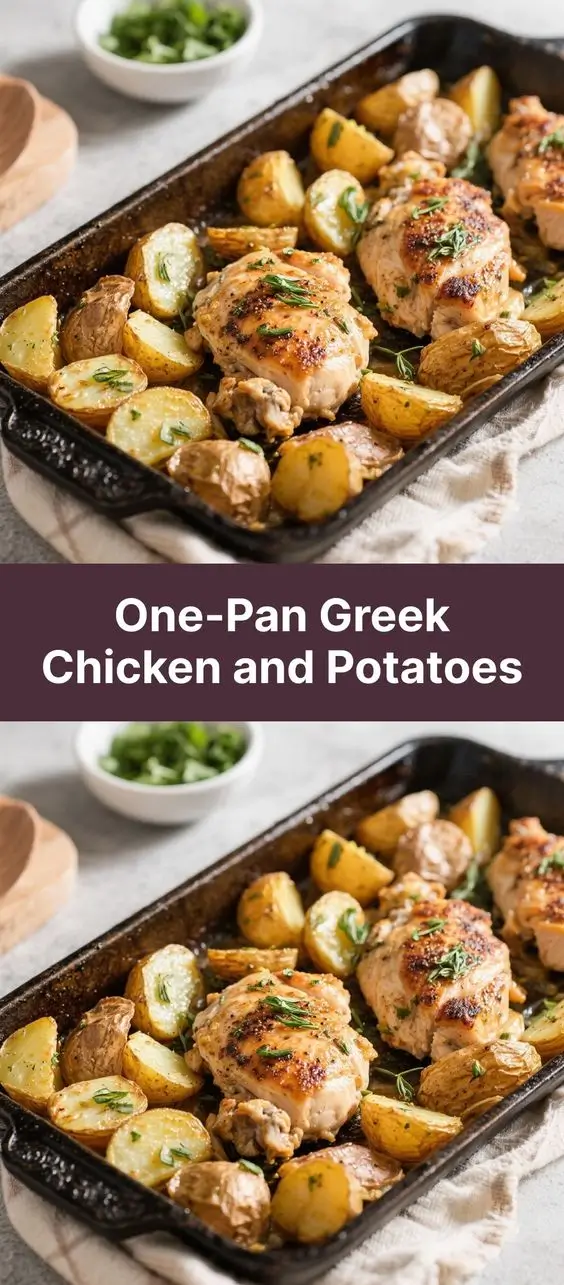
One-Pan Greek Chicken and Potatoes: A Flavorful Mediterranean Feast
The History of One-Pan Greek Chicken and Potatoes
One-Pan Greek Chicken and Potatoes is a beloved dish that traces its roots to the sun-kissed islands and coastal villages of Greece, where rustic cooking methods have long emphasized simplicity, fresh ingredients, and bold flavors. This dish embodies the essence of traditional Greek home cooking—where meals are prepared with minimal fuss but maximum taste, often using seasonal produce and high-quality olive oil. Historically, Greeks relied on communal ovens and clay pots for slow-cooked meals, but as kitchen technology evolved, so did the techniques. The modern version of this recipe emerged as a convenient yet authentic way to recreate classic flavors using just one pan in a conventional oven.
The concept of roasting chicken and vegetables together dates back centuries in Mediterranean cuisine. In ancient Greece, meals were centered around grains, legumes, olives, fish, and occasionally meat, all seasoned with aromatic herbs like oregano, thyme, and rosemary. Over time, potatoes—introduced to Europe from the Americas in the 16th century—became a staple in Greek households by the 19th century, eventually finding their way into iconic dishes such as lemonato kotopoulo me patates, or lemon chicken with potatoes. This particular preparation gained popularity not only for its deliciousness but also for its practicality, making it ideal for family dinners, festive occasions, and even church gatherings.
Today, One-Pan Greek Chicken and Potatoes stands as a symbol of Greek culinary heritage—a harmonious blend of citrus, garlic, olive oil, and fresh herbs that celebrates the bounty of the Mediterranean diet. It’s commonly served during Easter celebrations alongside magiritsa (a traditional soup), but it’s enjoyed year-round due to its comforting warmth and vibrant taste. Its global appeal has grown significantly in recent decades, thanks to food bloggers, celebrity chefs, and the increasing popularity of healthy, plant-forward diets rich in heart-healthy fats and lean proteins.
Ingredients Breakdown: What Makes This Dish Shine
The magic of One-Pan Greek Chicken and Potatoes lies in its carefully balanced combination of simple, wholesome ingredients that come together to create an explosion of flavor. Each component plays a crucial role in building layers of aroma, texture, and nutrition. Let’s take a closer look at what goes into this Mediterranean masterpiece:
- Chicken (bone-in, skin-on thighs or drumsticks): These cuts are preferred because they remain juicy and tender during the long roasting process. The skin crisps up beautifully while the bone adds depth to the overall flavor profile. You can use breasts, but they tend to dry out more easily unless monitored closely.
- Potatoes (Yukon Gold or red potatoes): These varieties hold their shape well when roasted and offer a naturally buttery texture. Their thin skins crisp up nicely without needing to be peeled, adding both visual appeal and fiber content.
- Fresh lemon juice and zest: Lemon is quintessential in Greek cooking. It brightens the entire dish, cuts through the richness of the olive oil, and enhances the natural savoriness of the chicken. Freshly squeezed juice ensures optimal tartness and fragrance.
- Extra virgin olive oil: High-quality EVOO forms the base of the marinade and helps conduct heat evenly across the ingredients. It also contributes polyphenols and monounsaturated fats, known for their anti-inflammatory properties.
- Garlic (freshly minced): Garlic brings pungency and complexity. When roasted, it mellows into a sweet, nutty flavor that infuses every bite of potato and chicken.
- Dried oregano: A hallmark herb of Greek cuisine, oregano imparts earthy, slightly floral notes that pair perfectly with lemon and garlic. For best results, crush it between your fingers before adding to release its essential oils.
- Onion (yellow or red, sliced): Adds sweetness and body to the pan juices. As it roasts, the onion caramelizes slightly, contributing to the sauce-like consistency that develops at the bottom of the pan.
- Salt and black pepper: Essential seasonings that enhance all other flavors. Kosher salt is recommended for better control over sodium distribution.
- Optional additions: Bell peppers, cherry tomatoes, kalamata olives, and feta cheese can elevate the dish further, turning it into a complete meal bursting with color and variety.
Every ingredient serves a purpose—not just in taste, but in how they interact chemically during cooking. The acid from the lemon denatures proteins in the chicken, acting as a mild tenderizer. Olive oil carries fat-soluble flavor compounds from the herbs and garlic, distributing them throughout the dish. And the starch in the potatoes absorbs the savory juices, becoming infused with umami-rich goodness.
Step-by-Step Recipe: How to Make Perfect One-Pan Greek Chicken and Potatoes
Creating this mouthwatering dish couldn’t be easier—with just one pan, a few prep steps, and some patience in the oven, you’ll have a restaurant-quality meal ready in under an hour. Follow these detailed instructions for foolproof results every time:
- Preheat the oven: Set your oven to 400°F (200°C). Position the rack in the center to ensure even heat circulation.
- Prepare the chicken: Pat the chicken pieces dry with paper towels—this step is crucial for achieving crispy skin. Place them in a large mixing bowl.
- Make the marinade: In a separate bowl, whisk together 1/3 cup extra virgin olive oil, juice of 2 lemons (about 1/3 cup), 1 tablespoon lemon zest, 4 cloves of minced garlic, 1½ teaspoons dried oregano, 1 teaspoon sea salt, and ½ teaspoon freshly ground black pepper.
- Marinate the chicken: Pour half of the marinade over the chicken, tossing to coat thoroughly. Let it sit for at least 30 minutes at room temperature (or up to 4 hours in the fridge for deeper flavor).
- Prep the vegetables: While the chicken marinates, wash and cut 2 pounds of Yukon Gold potatoes into 1.5-inch chunks. Slice 1 medium onion into wedges. If using optional veggies like bell peppers or cherry tomatoes, chop them now.
- Toss vegetables in marinade: Add the potatoes and onions to the remaining marinade in the bowl. Toss until evenly coated. Some recipes call for parboiling the potatoes for 5 minutes to speed up cooking; however, roasting them raw works perfectly if cut uniformly.
- Arrange everything on a sheet pan: Use a large rimmed baking sheet lined with parchment paper or lightly greased foil for easy cleanup. Spread the potatoes and onions in a single layer. Nestle the marinated chicken pieces among them, skin side up. Do not overcrowd—use two pans if necessary to allow space for air circulation.
- Rosette the pan halfway: Roast for 45–55 minutes, rotating the pan front-to-back halfway through to prevent hot spots. The chicken is done when internal temperature reaches 165°F (74°C) and the skin is golden brown and crisp. Potatoes should be fork-tender and lightly charred at the edges.
- Baste for extra shine (optional): About 10 minutes before the end, you can baste the chicken with pan juices to boost flavor and moisture.
- Rest and serve: Remove from oven and let rest for 5–10 minutes. Garnish with fresh chopped parsley, crumbled feta, or a final squeeze of lemon juice. Serve warm directly from the pan for maximum rustic charm.
Tips for Success: Mastering the Art of One-Pan Cooking
To make sure your One-Pan Greek Chicken and Potatoes turns out perfectly every single time, keep these expert tips in mind:
- Use a heavy-duty rimmed baking sheet: Also known as a half-sheet pan, this prevents spills and allows for proper airflow. Avoid glass or ceramic dishes, which may crack under high heat.
- Don’t skip drying the chicken: Moisture is the enemy of crispy skin. Always pat the chicken dry before seasoning.
- Cut potatoes uniformly: Uneven pieces lead to uneven cooking—one batch might be mushy while others are still firm.
- Don’t overcrowd the pan: Crowding causes steaming instead of roasting, leading to soggy textures. Use two pans if needed, rotating them in the oven halfway through.
- Add delicate veggies later: Ingredients like cherry tomatoes or zucchini burn easily. Add them in the last 15–20 minutes of cooking.
- Let it rest: Allowing the chicken to rest after roasting lets juices redistribute, ensuring moist, flavorful meat.
- Boost browning with broiler: If the skin isn’t quite crispy enough, switch the oven to broil for 2–3 minutes at the end—watch closely to avoid burning.
- Double the marinade for meal prep: Make extra marinade and freeze it for future batches. Or reserve some to drizzle over leftovers for revived freshness.
- Roast on convection if available: Convection ovens circulate hot air, promoting faster, more even browning. Reduce temperature by 25°F if using convection mode.
Variations and Customizations: Make It Your Own
While the classic version of One-Pan Greek Chicken and Potatoes is undeniably delicious, there are countless ways to personalize it based on dietary preferences, seasonal availability, or cultural twists. Here are some inspired variations to try:
- Vegan/Vegetarian Version: Omit the chicken and double the potatoes. Add chickpeas, artichoke hearts, eggplant, and zucchini for protein and heartiness. Marinate the same way and roast until tender.
- Low-Carb/Keto Adaptation: Replace potatoes with low-carb alternatives like cauliflower florets, radishes, turnips, or cabbage wedges. They mimic the texture and soak up flavors beautifully.
- Spicy Twist: Add crushed red pepper flakes, harissa paste, or sliced jalapeños to the marinade for a fiery kick that contrasts the coolness of tzatziki.
- Mediterranean Seafood Style: Swap chicken for firm white fish (like cod or halibut) or shrimp. Add olives, capers, tomatoes, and anchovies for a Greek-inspired seafood bake.
- Herb Upgrade: Mix in fresh dill, mint, or thyme along with oregano for a brighter, more complex herbal note.
- Citrus Variations: Try orange or grapefruit juice instead of lemon for a sweeter, less acidic profile. Blood orange adds a stunning color and subtle berry-like flavor.
- Crispy Potato Hack: For ultra-crispy potatoes, toss them with a little cornstarch or arrowroot powder before roasting.
- Gluten-Free Friendly: This recipe is naturally gluten-free, making it perfect for those with celiac disease or gluten sensitivity—just confirm all added ingredients (like spice blends) are certified GF.
- Kid-Friendly Version: Skip the garlic and reduce lemon juice slightly. Serve with a side of hummus or yogurt dip to mellow the flavors for younger palates.
- Meal Prep Magic: Divide portions into containers for lunches throughout the week. Reheat gently in the oven or air fryer to maintain texture.
Health Considerations and Nutritional Value
One-Pan Greek Chicken and Potatoes isn’t just delicious—it’s also a nutritious choice that aligns well with several healthy eating patterns, including the renowned Mediterranean diet, which is linked to reduced risks of heart disease, type 2 diabetes, and cognitive decline.
Nutritional Highlights (per serving, approx. 1 chicken thigh + 1 cup potatoes):
- Calories: ~450–500 kcal
- Protein: 30–35g – supports muscle maintenance and satiety
- Fat: 20–25g – primarily from heart-healthy monounsaturated fats in olive oil
- Carbohydrates: 35–40g – mostly complex carbs from potatoes, providing sustained energy
- Fiber: 4–5g – aids digestion and promotes gut health
- Vitamin C: From lemon juice and potatoes, boosts immunity and collagen production
- Potassium: Abundant in potatoes, helps regulate blood pressure
- Iron & B Vitamins: Found in chicken, especially dark meat, essential for energy metabolism and red blood cell formation
Health Benefits:
- Rich in Antioxidants: Oregano contains rosmarinic acid and thymol, potent antioxidants that combat oxidative stress.
- Anti-Inflammatory Properties: Extra virgin olive oil is loaded with oleocanthal, a compound with effects similar to ibuprofen.
- Balanced Macronutrients: Provides a good mix of protein, healthy fats, and complex carbohydrates—ideal for balanced blood sugar levels.
- Naturally Low in Added Sugar: No refined sugars are used, relying instead on the natural sweetness of onions and roasted potatoes.
- Supports Gut Health: Fermented toppings like tzatziki (with live probiotics) can be served on the side to enhance digestive wellness.
Considerations:
- Sodium Content: Depending on salt用量, this dish can be moderate to high in sodium. To reduce it, use low-sodium salt substitutes or decrease the amount used.
- Saturated Fat: Chicken skin contains saturated fat. For a leaner version, remove the skin before eating or use skinless chicken breasts (though they will be less juicy).
- Glycemic Index: Potatoes have a medium to high GI. Pairing them with protein and fat slows glucose absorption, minimizing insulin spikes.
Full Ingredient List
- 4 bone-in, skin-on chicken thighs (or drumsticks)
- 2 pounds Yukon Gold potatoes, cut into 1.5-inch chunks
- 1 large yellow onion, cut into wedges
- 1/3 cup extra virgin olive oil
- Juice of 2 lemons (about 1/3 cup)
- 1 tablespoon lemon zest
- 4 cloves garlic, finely minced
- 1½ teaspoons dried oregano
- 1 teaspoon sea salt (or to taste)
- ½ teaspoon freshly ground black pepper
- Fresh parsley, chopped (for garnish)
Optional add-ins: Kalamata olives, cherry tomatoes, red bell peppers, feta cheese, fresh dill, artichoke hearts.
Directions
- Preheat oven to 400°F (200°C). Line a large rimmed baking sheet with parchment paper or aluminum foil for easy cleanup.
- In a large bowl, combine olive oil, lemon juice, lemon zest, minced garlic, oregano, salt, and pepper. Whisk until well blended.
- Divide the marinade in half. Pour one half over the chicken pieces and toss to coat. Let marinate for 30 minutes at room temperature.
- Add the potatoes and onions to the remaining marinade. Toss until fully coated.
- Spread the marinated vegetables in a single layer on the prepared baking sheet.
- Nestle the chicken pieces into the vegetables, skin side up. Ensure space between each piece for proper roasting.
- Roast in preheated oven for 45–55 minutes, rotating the pan halfway through, until chicken reaches an internal temperature of 165°F and potatoes are tender and golden.
- Remove from oven and let rest for 5–10 minutes. Garnish with fresh parsley and additional lemon wedges.
- Serve warm with tzatziki, pita bread, or a crisp Greek salad.
FAQ: Frequently Asked Questions
Can I use chicken breasts instead of thighs?
Yes, but they cook faster and can dry out. Reduce cooking time to 35–40 minutes and check early. Consider brining or butterflying for juicier results.
Can I make this ahead of time?
Absolutely! Marinate the chicken and prep the vegetables up to 24 hours in advance. Store separately in the fridge and assemble just before baking.
Can I freeze leftovers?
Yes, store cooled leftovers in an airtight container for up to 3 months. Reheat in the oven at 350°F for best texture.
Why are my potatoes not crispy?
This could be due to excess moisture, overcrowding, or under-roasting. Make sure potatoes are dry before tossing, spread them out, and give them enough time in the oven.
Is this recipe gluten-free?
Yes, all ingredients are naturally gluten-free. Just ensure any added spices or broths are certified GF if allergies are a concern.
Can I cook this in a slow cooker?
You can adapt it, but the texture will differ. Sear the chicken first, then cook on low for 5–6 hours. Add potatoes halfway through. Note: no crispy skin or caramelization.
What sides go well with this dish?
Excellent pairings include tzatziki sauce, horiatiki (Greek salad), grilled vegetables, spanakopita, or crusty whole-grain bread.
How do I store and reheat leftovers?
Cool completely, then refrigerate in an airtight container for up to 4 days. Reheat in the oven at 375°F for 15–20 minutes or in a skillet over medium heat to restore crispiness.
Summary
One-Pan Greek Chicken and Potatoes is a vibrant, aromatic dish that captures the soul of Mediterranean cooking—simple ingredients transformed into something extraordinary through fire, citrus, and time. With minimal cleanup and maximum flavor, it’s the ultimate weeknight hero and weekend centerpiece.