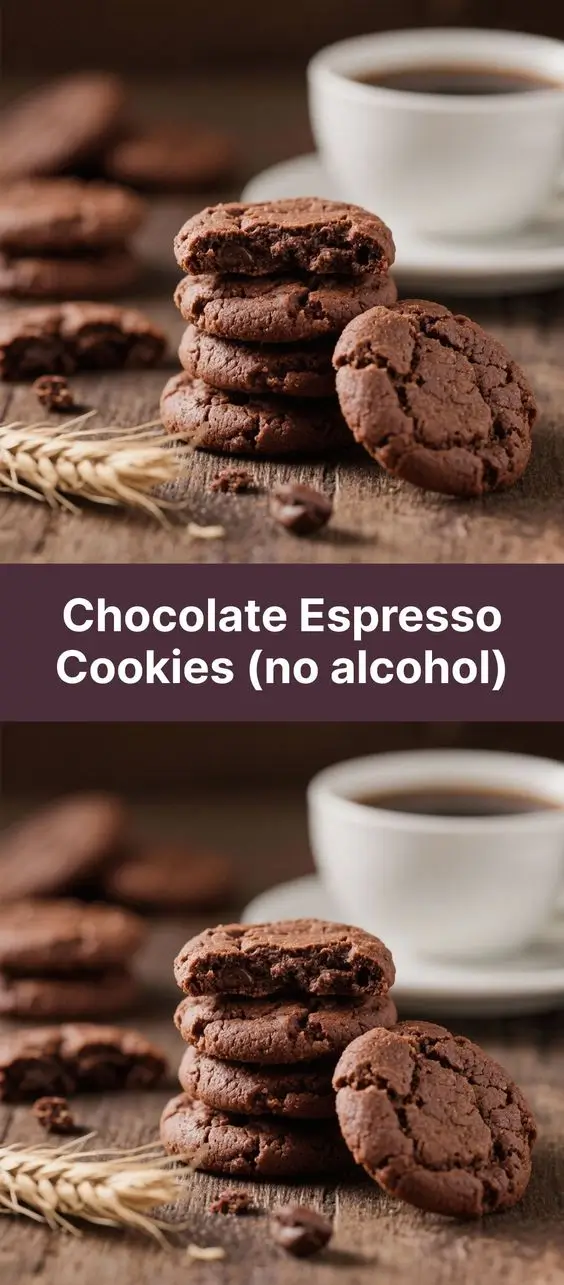
Chocolate Espresso Cookies (No Alcohol)
The History
Chocolate Espresso Cookies are a modern twist on classic chocolate chip cookies, combining the rich tradition of American baking with the sophisticated flavors of European coffee culture. While chocolate chip cookies were famously invented in the 1930s by Ruth Wakefield at the Toll House Inn in Massachusetts, the fusion with espresso reflects the growing love for bold coffee flavors in desserts over the past few decades. As specialty coffee shops began popping up around the world and home bakers sought more complex flavor profiles, the idea of infusing cookies with finely ground espresso or instant coffee gained popularity. These cookies represent a perfect marriage between two beloved indulgences: high-quality dark chocolate and aromatic, robust espresso. Over time, bakers refined the recipe to balance sweetness, bitterness, and richness—creating a cookie that satisfies both chocolate lovers and caffeine enthusiasts alike. Unlike some adult-oriented variations that include liqueurs like Kahlúa, this version remains alcohol-free, making it ideal for all ages and occasions.
Ingredients Breakdown
The magic of Chocolate Espresso Cookies lies in the careful selection and combination of ingredients that enhance both texture and flavor. Here’s a detailed look at each component:
- All-Purpose Flour: Provides the structural base for the cookies. It contains just the right amount of gluten to give them a soft yet slightly chewy texture without becoming tough.
- Baking Soda: Acts as a leavening agent, helping the cookies rise slightly and spread evenly during baking. It also contributes to a tender crumb when combined with acidic components like brown sugar.
- Salt: Enhances all other flavors, balancing sweetness and highlighting the depth of chocolate and espresso.
- Unsalted Butter: Used for its rich, creamy flavor and ability to create a melt-in-your-mouth texture. Softened butter blends smoothly with sugars and helps create air pockets for a lighter cookie.
- Granulated Sugar: Adds sweetness and assists in creating a crisp outer edge while promoting browning through caramelization.
- Brown Sugar (light or dark): Contributes moisture and chewiness due to its molasses content. Dark brown sugar adds a deeper, more caramel-like note that complements espresso beautifully.
- Egg: Binds the ingredients together and adds structure and richness. A large egg ensures proper consistency and helps the cookies hold their shape while remaining soft inside.
- Pure Vanilla Extract: Adds warmth and complexity to the overall flavor profile, rounding out the sharpness of the espresso.
- Instant Espresso Powder or Finely Ground Espresso Beans: The star ingredient. Instant espresso dissolves easily into the dough, delivering an intense coffee flavor without adding moisture. Using real ground espresso beans can add subtle texture and an even more authentic coffee aroma.
- Dark Chocolate Chunks or Chips: High-quality dark chocolate (60–70% cocoa) is preferred for its deep, slightly bitter taste that pairs perfectly with coffee. Chopping a chocolate bar creates uneven pieces that melt beautifully, offering gooey pockets throughout the cookie.
- Optional Add-ins: Some bakers include chopped nuts (like toasted walnuts or pecans), flaky sea salt on top before baking, or even a sprinkle of cinnamon for added dimension—all while keeping the recipe alcohol-free.
Step-by-Step Recipe
- Preheat the Oven: Begin by preheating your oven to 350°F (175°C). Line two large baking sheets with parchment paper or silicone baking mats to prevent sticking and ensure even baking.
- Mix Dry Ingredients: In a medium bowl, whisk together 2 ¼ cups (280g) all-purpose flour, 1 teaspoon baking soda, ½ teaspoon salt, and 2 tablespoons of instant espresso powder until fully combined. Set aside.
- Cream Butter and Sugars: In a large mixing bowl, use an electric mixer to beat ¾ cup (170g or 1½ sticks) softened unsalted butter with ¾ cup (150g) granulated sugar and ¾ cup (165g) packed dark brown sugar. Cream on medium speed for 2–3 minutes until light, fluffy, and pale in color. This step incorporates air, which helps create soft, bakery-style cookies.
- Add Wet Ingredients: Beat in 1 large egg and 2 teaspoons pure vanilla extract until fully incorporated and smooth. Scrape down the sides of the bowl as needed to ensure even mixing.
- Incorporate Dry Mixture: Gradually add the dry ingredients to the wet mixture, mixing on low speed just until the flour disappears. Do not overmix—this can lead to dense cookies.
- Fold in Chocolate: Using a spatula, gently fold in 1 ½ cups (270g) of chopped dark chocolate or chocolate chips until evenly distributed throughout the dough. For extra flair, reserve a small handful to press onto the tops of the scooped dough balls later.
- Chill the Dough (Optional but Recommended): Cover the bowl with plastic wrap and refrigerate the dough for at least 30 minutes, or up to 48 hours. Chilling firms up the butter, reduces spreading, enhances flavor development, and leads to thicker, chewier cookies.
- Scoop and Shape: Use a cookie scoop or tablespoon to portion the dough into balls about 1.5 tablespoons in size. Roll them between your palms for a uniform shape and place them at least 2 inches apart on the prepared baking sheets.
- Bake: Bake one sheet at a time in the center rack of the oven for 10–12 minutes, or until the edges are set and lightly golden but the centers still appear soft and slightly underbaked. The cookies will continue to firm up as they cool.
- Cool and Serve: Allow the cookies to rest on the baking sheet for 5 minutes before transferring them to a wire rack to cool completely. They can be enjoyed warm for a gooey experience or cooled for a firmer texture.
Tips
- Use Quality Espresso Powder: Not all instant coffee is created equal. Opt for 100% pure instant espresso powder (such as Medaglia D’Oro or Nescafé Taster’s Choice) rather than regular instant coffee for a richer, less acidic flavor.
- Don’t Skip the Chill Time: Refrigerating the dough improves texture dramatically. It prevents excessive spreading and allows the flour to hydrate fully, resulting in better flavor integration.
- Measure Flour Accurately: Spoon flour into your measuring cup and level it off with a knife. Scooping directly from the bag compacts the flour, leading to dry, cakey cookies.
- Underbake Slightly: Remove the cookies from the oven when they look just set around the edges but still soft in the middle. Overbaking kills the chewy center everyone loves.
- Rotate the Pan: If your oven has hot spots, rotate the baking sheet halfway through baking for even browning.
- Uniform Size Matters: Use a consistent scoop size so all cookies bake evenly. A #40 cookie scoop (about 1.5 tablespoons) works perfectly.
- Add Sea Salt on Top: Sprinkle a pinch of flaky sea salt on each dough ball before baking to elevate both sweet and bitter notes.
- Double Batch Friendly: This recipe scales well. Just make sure your mixer can handle the volume or mix in batches.
- Fresh Eggs Matter: Use large eggs straight from the fridge unless otherwise specified. Older eggs may affect texture and binding.
- Storage Tips: Store cooled cookies in an airtight container at room temperature for up to 5 days. For longer storage, freeze baked cookies or raw dough balls for up to 3 months.
Variations and Customizations
While the classic Chocolate Espresso Cookie is already a showstopper, there are countless ways to personalize the recipe:
- Gluten-Free Version: Substitute the all-purpose flour with a high-quality 1:1 gluten-free baking blend (like Bob’s Red Mill or King Arthur). Ensure your espresso powder and chocolate are certified gluten-free if needed.
- Dairy-Free Option: Replace butter with plant-based alternatives such as Earth Balance or Miyoko’s Creamery. Choose dairy-free dark chocolate to keep it fully vegan.
- Vegan Adaptation: In addition to dairy-free swaps, replace the egg with a “flax egg” (1 tablespoon ground flaxseed mixed with 3 tablespoons water, let sit for 5 minutes). Note: Texture may be slightly denser.
- White Chocolate & Espresso: Swap dark chocolate for white chocolate chunks for a sweeter, creamier contrast against the bold coffee flavor.
- Mocha Twist: Add 2 tablespoons of unsweetened cocoa powder along with the dry ingredients for a double-chocolate mocha effect.
- Nutty Crunch: Fold in ½ cup chopped toasted hazelnuts, almonds, or pecans for added crunch and nutty depth.
- Spiced Variation: Add ¼ teaspoon of ground cinnamon, cardamom, or orange zest to introduce warm, aromatic layers.
- Mini Cookies: Make bite-sized versions using a teaspoon-sized scoop—perfect for parties or sampling.
- Stuffed Cookies: Place a square of high-quality chocolate or a piece of chocolate-covered espresso bean in the center of each dough ball before baking for a molten surprise.
- Cookie Sandwiches: Once cooled, sandwich two cookies together with a layer of coffee-flavored buttercream or chocolate ganache.
Health Considerations and Nutritional Value
Like most indulgent treats, Chocolate Espresso Cookies should be enjoyed in moderation. However, understanding their nutritional makeup can help you make mindful choices:
- Caffeine Content: Each cookie contains approximately 10–15mg of caffeine from the espresso powder—significantly less than a cup of coffee (about 95mg per 8 oz), but still enough to affect sensitive individuals, especially children.
- Sugar Levels: With both granulated and brown sugar included, these cookies are moderately high in sugar. One serving (one average-sized cookie) contains roughly 10–12g of sugar. To reduce sugar, consider lowering the total by 25%, though this may affect texture and spread.
- Fat Profile: The primary fat comes from butter and chocolate. While mostly saturated, it’s balanced by the presence of beneficial compounds in dark chocolate, such as flavonoids and antioxidants.
- Dark Chocolate Benefits: High-cocoa chocolate provides iron, magnesium, and polyphenols linked to heart health and improved mood—though benefits diminish with increased sugar content.
- Portion Control: Making smaller cookies helps manage calorie intake. One standard cookie has about 120–150 calories depending on size and ingredients.
- Allergens: Contains dairy, wheat (gluten), and eggs. Always check labels on chocolate and espresso products for potential cross-contamination if allergies are severe.
- Dietary Modifications: Health-conscious bakers can experiment with coconut sugar, oat flour, or reduced-fat substitutes—but expect changes in texture and taste.
Ingredients
- 2 ¼ cups (280g) all-purpose flour
- 1 teaspoon baking soda
- ½ teaspoon fine sea salt
- 2 tablespoons (10g) instant espresso powder (pure, no additives)
- ¾ cup (170g / 1½ sticks) unsalted butter, softened
- ¾ cup (150g) granulated sugar
- ¾ cup (165g) packed dark brown sugar
- 1 large egg, room temperature
- 2 teaspoons pure vanilla extract
- 1 ½ cups (270g) chopped dark chocolate (60–70% cacao) or chocolate chips
- Optional: Flaky sea salt for topping, chopped nuts, or additional chocolate for garnish
Directions
- Preheat oven to 350°F (175°C). Line baking sheets with parchment paper or silicone mats.
- In a medium bowl, whisk together flour, baking soda, salt, and instant espresso powder. Set aside.
- In a large bowl, cream softened butter, granulated sugar, and brown sugar on medium speed for 2–3 minutes until light and fluffy.
- Beat in egg and vanilla extract until smooth and fully combined.
- Gradually mix in the dry ingredients on low speed until just incorporated. Do not overmix.
- Fold in chopped dark chocolate with a spatula until evenly distributed.
- Cover dough and chill in the refrigerator for at least 30 minutes (up to 48 hours for enhanced flavor).
- Scoop dough into 1.5-tablespoon balls and place 2 inches apart on baking sheets.
- Bake one sheet at a time for 10–12 minutes, until edges are golden but centers remain soft.
- Let cool on the baking sheet for 5 minutes before transferring to a wire rack.
- Optional: Sprinkle with flaky sea salt immediately after removing from the oven.
- Enjoy warm or at room temperature. Store in an airtight container for up to 5 days.
FAQ
Can I use regular instant coffee instead of espresso powder?
Yes, but the flavor will be milder and potentially more acidic. Pure espresso powder delivers a stronger, smoother coffee taste. Adjust to taste, starting with 1–2 teaspoons if substituting.
Why did my cookies spread too much?
Common causes include melted butter, insufficient flour, skipping the chill step, or an inaccurate oven temperature. Use softened (not melted) butter, measure flour correctly, always chill the dough, and ensure your oven is properly calibrated.
Can I freeze the cookie dough?
Absolutely! Portion the dough into balls and freeze them on a tray. Once solid, transfer to a freezer bag. Bake frozen—just add 1–2 minutes to the baking time. No thawing required!
Are these cookies truly alcohol-free?
Yes. This recipe contains no alcohol. Some commercial espresso powders or chocolates may have trace amounts due to processing, but none are added here. Always verify labels if strict avoidance is necessary.
What kind of chocolate works best?
High-quality dark chocolate bars (like Ghirardelli, Lindt, or Valrhona) chopped into chunks provide superior flavor and texture compared to standard chips. Look for 60–70% cocoa content.
Can I make these without eggs?
Yes, use a flax egg (1 tbsp ground flax + 3 tbsp water per egg) or applesauce (¼ cup per egg), though the texture may be denser and less chewy.
How do I store leftover cookies?
Keep in an airtight container at room temperature for up to 5 days. For longer life, freeze for up to 3 months. Reheat briefly in the microwave for a fresh-from-the-oven feel.
Can I add nuts or other mix-ins?
Definitely! Toasted walnuts, pecans, almonds, or even dried cherries pair wonderfully with chocolate and espresso. Just fold in ½–¾ cup with the chocolate.
Summary
Indulge in rich, decadent Chocolate Espresso Cookies that deliver a perfect harmony of bold coffee flavor and luxurious dark chocolate—all without a drop of alcohol. These bakery-quality treats are easy to customize, freezer-friendly, and guaranteed to impress every time.