Introduction
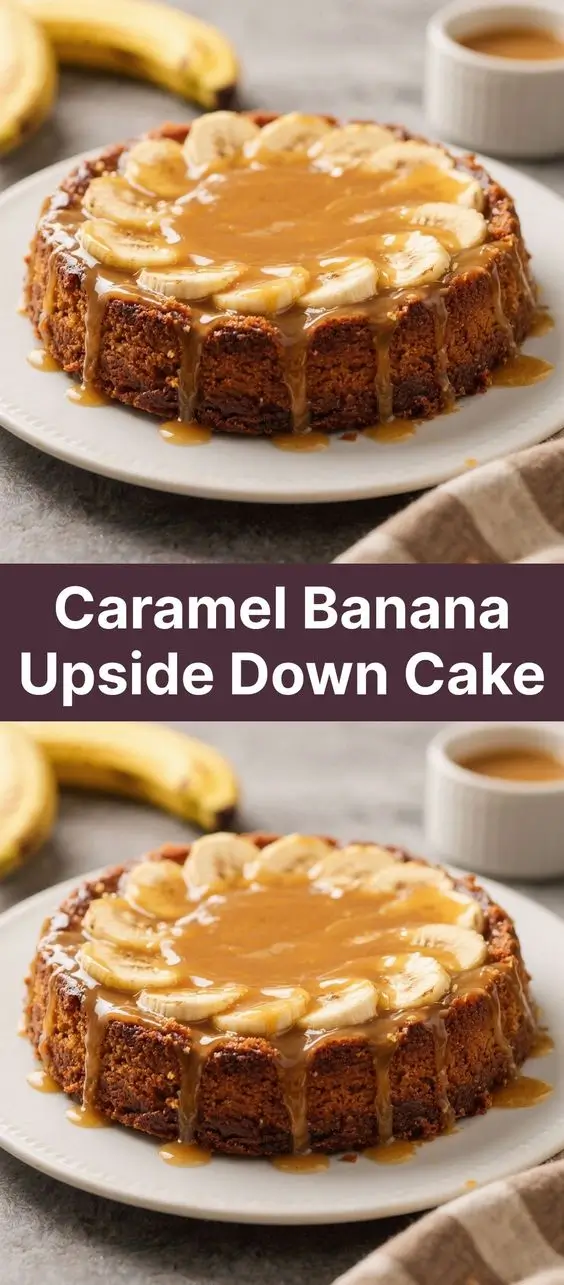
Welcome to the world of decadent desserts, where rich flavors meet moist textures in perfect harmony. The Caramel Banana Upside Down Cake is a show-stopping dessert that combines the deep sweetness of caramel with the natural creaminess of ripe bananas and the comforting crumb of a buttery cake. This dessert is more than just a treat—it’s an experience. With its golden-brown, sticky top layer that transforms into the star of the show once flipped, this cake delivers a dramatic presentation and an unforgettable taste. Whether you’re baking for a family dinner, holiday celebration, or simply indulging your sweet tooth, this recipe promises to impress.
The History
The origins of upside-down cakes trace back to the early 20th century, when home cooks began experimenting with cast-iron skillets and fruit-based toppings placed at the bottom of the pan before adding batter. The most famous version, Pineapple Upside Down Cake, gained popularity in the 1920s thanks to promotional campaigns by Hawaiian pineapple companies. Over time, bakers began substituting fruits based on seasonal availability and personal preferences, leading to variations using apples, peaches, cherries, and eventually, bananas.
The Caramel Banana Upside Down Cake is a modern twist on this classic concept, combining Southern American baking traditions with global influences from French and Latin American desserts that celebrate caramelized fruits. Bananas, native to Southeast Asia but now cultivated throughout tropical regions including Central America and the Caribbean, bring a naturally sweet and creamy profile ideal for caramelization. When paired with buttery caramel sauce, they create a luxurious topping that soaks into the cake as it bakes, enhancing every bite. Today, this dessert stands as a beloved fusion of old-world techniques and contemporary flavor profiles.
Ingredients Breakdown
To create the perfect Caramel Banana Upside Down Cake, each ingredient plays a crucial role in texture, flavor, and structure:
- Ripe Bananas: Use 3–4 medium to large ripe bananas (with brown speckles). They provide natural sweetness, moisture, and a soft texture that caramelizes beautifully.
- Unsalted Butter: Essential for both the caramel layer and the cake batter. It adds richness, promotes browning, and contributes to a tender crumb.
- Brown Sugar: Packed dark brown sugar enhances the deep molasses notes in the caramel and complements the banana flavor. Its moisture content also helps create a gooey topping.
- Granulated Sugar: Used in the cake batter to balance sweetness without overpowering the banana-caramel duo.
- All-Purpose Flour: Provides structure to the cake. Sifted to prevent lumps and ensure even rising.
- Baking Powder & Baking Soda: Leavening agents that help the cake rise properly. Baking soda reacts with acidic ingredients (like sour cream), while baking powder offers additional lift.
- Salt: Enhances all other flavors and prevents the cake from tasting flat or overly sweet.
- Eggs: Large eggs bind the ingredients, add structure, and contribute to a fluffy texture.
- Vanilla Extract: Pure vanilla extract deepens the aroma and adds warmth to the overall flavor profile.
- Sour Cream: Adds moisture, tenderness, and a slight tang that balances the sweetness—key for a velvety crumb.
- Milk: Helps adjust the batter’s consistency and ensures smooth blending of ingredients.
- Lemon Juice (optional): A splash prevents bananas from browning too quickly before baking and brightens the final taste.
Step-by-Step Recipe
- Preheat Oven: Begin by preheating your oven to 350°F (175°C). Position the rack in the center to ensure even heat distribution.
- Prepare the Pan: Select a 9- or 10-inch round cake pan or cast-iron skillet safe for both stovetop and oven use. Lightly grease the bottom and sides with butter to prevent sticking.
- Make the Caramel Layer: In a saucepan over medium heat, melt ½ cup (1 stick) unsalted butter. Stir in ¾ cup packed dark brown sugar until fully dissolved and bubbly—about 3–5 minutes. For extra depth, add 1 tablespoon of pure maple syrup or a pinch of sea salt to make a salted caramel variation. Pour this mixture evenly into the prepared pan, tilting to coat the base completely.
- Arrange the Bananas: Slice the bananas on a diagonal into ½-inch thick pieces. Starting from the outer edge, arrange them in concentric circles over the hot caramel, slightly overlapping to cover the surface. You may need two layers depending on size. Sprinkle with a teaspoon of lemon juice to preserve color and enhance brightness.
- Prepare the Cake Batter: In a large mixing bowl, whisk together 1½ cups all-purpose flour, 1 teaspoon baking powder, ½ teaspoon baking soda, and ¼ teaspoon salt. Set aside.
- Cream Butter and Sugars: In another bowl, beat ⅓ cup softened unsalted butter with ½ cup granulated sugar and ¼ cup brown sugar until light and fluffy—about 3 minutes using a hand mixer or stand mixer.
- Add Eggs and Vanilla: Beat in 2 large eggs one at a time, ensuring each is fully incorporated before adding the next. Mix in 1 teaspoon vanilla extract.
- Incorporate Wet Ingredients: Alternate adding the dry ingredients and ½ cup sour cream with ¼ cup milk. Begin and end with the dry mix: Dry → Sour cream/milk blend → Dry → Final portion of dry ingredients. Mix only until just combined; do not overmix to avoid a dense cake.
- Pour Over Bananas: Carefully pour the batter over the arranged bananas, spreading gently with a spatula to cover evenly without disturbing the fruit layer.
- Bake: Place the pan in the preheated oven and bake for 35–45 minutes, or until a toothpick inserted into the center comes out clean and the top is golden brown.
- Cool Slightly: Remove from oven and let rest for 10–15 minutes. This allows the caramel to thicken slightly, reducing the risk of the fruit sliding off during inversion.
- Invert the Cake: Run a knife around the edges. Place a large serving plate upside-down over the pan. Using oven mitts, firmly hold both plate and pan together and flip them in one swift motion. Gently lift the pan to reveal the glossy, caramel-coated banana top.
- Serve Warm: Allow to cool slightly more before slicing. Best served warm, optionally with whipped cream, vanilla ice cream, or a drizzle of extra caramel sauce.
Tips
- Use Ripe Bananas: The riper the bananas, the sweeter and more flavorful the caramel layer will be. Look for skins with brown spots but not mushy fruit.
- Don’t Skip the Resting Time: Cooling for 10–15 minutes after baking is essential. Flipping too soon can cause the bananas to slide off or break apart.
- Cast-Iron Skillet Advantage: Using a well-seasoned cast-iron skillet not only distributes heat evenly but also goes from stovetop (for caramel) to oven seamlessly, enhancing the caramelization process.
- Grease the Pan Well: Even if using nonstick cookware, always grease the sides thoroughly to prevent sticking, especially where the batter meets the caramel.
- Check Doneness Early: Ovens vary—start checking at 35 minutes. Insert a skewer or toothpick near the center; if it comes out clean or with a few moist crumbs, it’s done.
- Seal Any Gaps: If any spaces appear between bananas after arranging, fill them with small slices or halved pieces to prevent batter from seeping through.
- Flip Confidently: Use a plate larger than the pan and grip tightly when flipping. Perform the turn over the sink or counter in case of drips.
- Storage Tip: While best fresh, leftovers can be stored covered at room temperature for up to 2 days or refrigerated for 5 days. Reheat gently in the oven or microwave before serving.
Variations and Customizations
The beauty of the Caramel Banana Upside Down Cake lies in its versatility. Here are some creative ways to customize it:
- Nutty Crunch: Add chopped pecans, walnuts, or toasted almonds to the caramel layer before placing the bananas for a delightful crunch.
- Spiced Version: Infuse warmth with spices—add ½ teaspoon cinnamon, ¼ teaspoon nutmeg, or a pinch of cloves to the batter or caramel.
- Rum or Bourbon Caramel: Deglaze the caramel with 1–2 tablespoons of dark rum or bourbon for an adult twist. Let it simmer briefly to cook off the alcohol while retaining flavor.
- Double Banana: Mash one ripe banana into the cake batter for intensified banana flavor throughout.
- Gluten-Free Option: Substitute all-purpose flour with a high-quality gluten-free flour blend containing xanthan gum for similar texture.
- Dairy-Free Adaptation: Replace butter with coconut oil or vegan butter, sour cream with dairy-free yogurt, and milk with almond or oat milk.
- Fruit Fusion: Combine bananas with sliced apples, pears, or pineapple chunks for a mixed fruit caramel top.
- Chocolate Drizzle: After flipping, drizzle melted chocolate or white chocolate over the top for visual appeal and added richness.
- Mini Versions: Make individual servings using muffin tins or ramekins. Reduce baking time to 20–25 minutes and invert onto small plates.
- Espresso Kick: Add 1 teaspoon instant espresso powder to the batter for a mocha-banana flavor profile.
Health Considerations and Nutritional Value
While undeniably delicious, the Caramel Banana Upside Down Cake is a dessert best enjoyed in moderation due to its sugar and fat content. However, it does offer some nutritional benefits worth noting:
- Bananas: Rich in potassium, vitamin B6, dietary fiber, and natural sugars. They support heart health, digestion, and energy levels.
- Brown Sugar vs. White Sugar: Brown sugar contains trace amounts of minerals like calcium, iron, and magnesium due to molasses content, though the difference is minimal in typical serving sizes.
- Butter and Dairy: Source of fat-soluble vitamins (A, D, E, K) and conjugated linoleic acid (CLA), which may have anti-inflammatory properties—especially in grass-fed butter.
- Eggs: High-quality protein with choline, beneficial for brain function.
A typical slice (1/8th of a 9-inch cake) contains approximately:
- Calories: 380–420
- Total Fat: 16–20g (mostly from butter and eggs)
- Saturated Fat: 9–11g
- Carbohydrates: 58–65g
- Sugars: 40–45g (naturally occurring and added)
- Protein: 5–6g
- Fiber: 1–2g (from bananas and flour)
- Sodium: 200–250mg
Note: Values may vary based on specific ingredients and portion size. To reduce calorie density, consider using reduced-fat sour cream, cutting back slightly on sugar, or increasing banana ratio to naturally sweeten. Diabetic individuals should monitor intake and consult dietary guidelines. For healthier versions, explore whole wheat pastry flour, natural sweeteners like coconut sugar, or stevia blends—but expect changes in texture and browning.
Ingredients
- ½ cup (1 stick) unsalted butter, divided
- ¾ cup packed dark brown sugar, plus ¼ cup for batter
- 3–4 ripe bananas, peeled and sliced
- 1½ cups all-purpose flour (spooned and leveled)
- 1 teaspoon baking powder
- ½ teaspoon baking soda
- ¼ teaspoon salt
- ⅓ cup unsalted butter, softened
- ½ cup granulated sugar
- 2 large eggs, room temperature
- 1 teaspoon pure vanilla extract
- ½ cup full-fat sour cream
- ¼ cup whole milk
- 1 teaspoon lemon juice (optional)
Directions
- Preheat oven to 350°F (175°C). Grease a 9- or 10-inch round cake pan or cast-iron skillet.
- In a saucepan, melt ½ cup butter over medium heat. Stir in ¾ cup brown sugar and cook until smooth and bubbling, about 4 minutes. Pour into the prepared pan, swirling to coat the bottom evenly.
- Slice bananas diagonally into ½-inch thick pieces. Arrange them in a single (or double) layer over the caramel, starting from the outside and working inward. Sprinkle with lemon juice if desired.
- In a medium bowl, whisk together flour, baking powder, baking soda, and salt.
- In a large bowl, beat ⅓ cup softened butter, ½ cup granulated sugar, and ¼ cup brown sugar until light and fluffy (~3 minutes).
- Add eggs one at a time, beating well after each addition. Stir in vanilla extract.
- Gradually add the dry ingredients alternately with sour cream and milk, beginning and ending with dry ingredients. Mix until just combined.
- Pour the batter over the bananas, smoothing the top with a spatula.
- Bake for 35–45 minutes, or until a toothpick comes out clean.
- Let cool in the pan for 10–15 minutes. Run a knife around the edge.
- Place a serving plate upside-down over the pan. Hold tightly and flip in one confident motion.
- Remove the pan carefully. Serve warm with optional garnishes like whipped cream or ice cream.
FAQ
Q: Can I make this cake ahead of time?
A: Yes! Bake and cool completely, then store covered at room temperature for up to 24 hours. Reheat in a 300°F oven for 10–15 minutes before serving for best texture.
Q: Why did my bananas stick to the pan?
A: This usually happens if the cake was flipped too soon or the pan wasn’t greased properly. Always wait 10–15 minutes post-baking and ensure thorough greasing.
Q: Can I freeze Caramel Banana Upside Down Cake?
A: Yes, though the texture may soften slightly upon thawing. Wrap tightly in plastic and foil, then freeze for up to 2 months. Thaw in the refrigerator overnight and reheat before serving.
Q: What can I substitute for sour cream?
A: Greek yogurt, plain yogurt, or buttermilk work well as substitutes. Avoid low-fat versions to maintain richness.
Q: My cake didn’t release cleanly—what went wrong?
A: Ensure you’re using enough butter in the caramel layer and that the cake has cooled sufficiently. A silicone spatula can help loosen edges gently before flipping.
Q: Can I use frozen bananas?
A: Not recommended for the topping—they become too soft and watery. However, mashed frozen bananas can be used in the batter if thawed and drained.
Q: Is this cake suitable for brunch?
A: Absolutely! Its sweet yet balanced flavor makes it a fantastic choice for weekend brunches, baby showers, or holiday breakfasts.
Summary
The Caramel Banana Upside Down Cake is a luscious fusion of caramelized bananas and tender vanilla cake, delivering a stunning presentation and rich, comforting flavor in every bite.
Easy to customize and perfect for sharing, this timeless dessert brings warmth and joy to any occasion—best served warm with a scoop of ice cream.