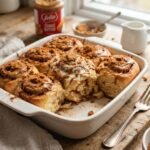
Biscoff Stuffed Cookies: A Decadent Delight of Caramelized Spice and Soft Cookie Bliss
Introduction
If you’re a fan of warm, spiced flavors with a rich caramel-like sweetness, then Biscoff Stuffed Cookies are about to become your new obsession. These indulgent treats combine the beloved texture and taste of classic chewy cookies with a molten core of creamy Biscoff (speculoos) spread, creating an irresistible contrast that melts in your mouth with every bite. Originating from the global popularity of Lotus Biscoff biscuits and their iconic spread, these stuffed cookies have taken home kitchens and bakeries by storm—especially on social media platforms where food lovers crave both visual appeal and deep flavor complexity. Whether you’re baking for a special occasion or simply treating yourself on a quiet afternoon, Biscoff Stuffed Cookies deliver comfort in every golden-brown, crinkled morsel.
The History
The story of Biscoff begins in Belgium, where Lotus Bakeries introduced Lotus Biscoff biscuits in 1932. Originally served alongside coffee in European cafés, these crisp, cinnamon-spiced cookies quickly gained a loyal following. Decades later, in 2008, the company revolutionized snack culture by launching Biscoff Cookie Butter—a smooth, spreadable version of the cookie’s essence. Its unique blend of caramelized sugar, warm spices like cinnamon, nutmeg, and ginger, and subtle hints of browned butter made it an instant hit worldwide.
Biscoff spread found its way into pantries across America after being featured on airline flights and embraced by food bloggers experimenting with creative uses—from cheesecake fillings to pancake toppings. The idea of stuffing cookies with this velvety spread emerged organically among dessert enthusiasts looking to intensify the Biscoff experience. By encasing a chilled dollop of Biscoff inside a soft chocolate chip-style dough, bakers discovered they could create a gooey surprise center during baking—an innovation now celebrated as one of the most luxurious twists on traditional cookies. Today, Biscoff Stuffed Cookies are a staple at bake sales, brunch gatherings, and influencer-curated dessert spreads, symbolizing the fusion of nostalgic flavors and modern culinary creativity.
Ingredients Breakdown
Creating perfect Biscoff Stuffed Cookies requires attention to ingredient quality and balance. Each component plays a crucial role in achieving the ideal texture—crisp edges, chewy interior, and a luscious molten center. Below is a detailed breakdown:
- All-Purpose Flour: Provides structure and stability. Sifted for even distribution to avoid dense cookies.
- Baking Soda: Acts as a leavening agent, helping the cookies rise slightly and develop those signature cracks on top.
- Salt: Enhances all other flavors and balances the sweetness. Use fine sea salt for uniform mixing.
- Unsalted Butter: Key for richness and tender texture. Must be softened to room temperature for proper creaming with sugars.
- Granulated Sugar: Adds sweetness and contributes to surface cracking and slight crispiness.
- Brown Sugar (light or dark): Brings moisture and deep molasses notes that complement the spiciness of Biscoff.
- Egg: Binds ingredients together and adds structure while contributing to chewiness.
- Vanilla Extract: Enhances overall aroma and rounds out the warm spice profile.
- Chocolate Chips (optional but recommended): Semi-sweet or milk chocolate chips add depth and contrast against the spiced Biscoff center.
- Biscoff Spread (Cookie Butter): The star ingredient! Choose original smooth variety for best results. It should be thick enough to hold shape when chilled.
- Extra Flour (for dusting): Prevents sticking when shaping dough around the filling.
Note: For best consistency, ensure all refrigerated ingredients (like egg and Biscoff) are brought close to room temperature before use—except when chilling the Biscoff balls, which must remain firm to prevent leakage during baking.
Step-by-Step Recipe
- Prepare the Biscoff Centers: Scoop out tablespoon-sized portions of Biscoff spread (about 18–24, depending on cookie size). Roll into smooth balls using clean hands. Place them on a parchment-lined tray and freeze for at least 30 minutes—or up to 3 months if preparing ahead. This step is critical to prevent melting too early in the oven.
- Preheat Oven & Prepare Baking Sheets: Preheat your oven to 350°F (175°C). Line two large baking sheets with parchment paper or silicone mats. Set aside.
- Mix Dry Ingredients: In a medium bowl, whisk together 2 ¼ cups all-purpose flour, ½ teaspoon baking soda, and ¾ teaspoon salt. Set aside.
- Cream Butter and Sugars: In a large mixing bowl, beat ¾ cup (1.5 sticks) softened unsalted butter with ¾ cup granulated sugar and ¾ cup packed brown sugar until light, fluffy, and pale in color—about 3–5 minutes with a hand mixer or stand mixer.
- Add Wet Ingredients: Beat in one large egg until fully incorporated, then mix in 1 teaspoon vanilla extract. Scrape down the sides of the bowl as needed.
- Incorporate Dry Ingredients: Gradually add the dry mixture to the wet ingredients, mixing on low speed just until combined. Do not overmix. Fold in 1 to 1 ½ cups chocolate chips if using.
- Chill Dough (Optional but Recommended): Cover the dough and chill in the refrigerator for 30–60 minutes. Chilling prevents excessive spreading and enhances flavor development.
- Shape the Stuffed Cookies: Remove dough from fridge. Dust your hands lightly with flour. Take a heaping tablespoon of dough (about 2 tablespoons total), flatten it in your palm, place a frozen Biscoff ball in the center, and carefully wrap the dough around it, sealing completely. Roll gently into a ball, ensuring no cracks or exposed filling. Repeat with remaining dough and Biscoff centers.
- Arrange on Baking Sheet: Place formed cookies 2 inches apart on prepared trays. Gently press down each ball just slightly to encourage even baking.
- Bake: Bake one tray at a time in the center rack for 11–13 minutes, or until edges are golden brown and tops appear set with slight cracks. The centers will still look soft—that’s okay!
- Cool: Allow cookies to cool on the baking sheet for 5 minutes before transferring to a wire rack to cool completely. This resting period allows the structure to stabilize and the Biscoff center to thicken slightly without leaking.
Tips
- Freeze the Biscoff Balls: Never skip freezing the Biscoff centers. Room-temperature spread will leak immediately upon contact with heat.
- Seal Tightly: Make sure there are no gaps when wrapping the dough around the filling. Any opening will cause the Biscoff to burst out during baking.
- Don’t Overbake: Remove cookies when edges are golden but centers are still soft. They continue cooking slightly on the hot tray.
- Use Parchment Paper: Avoid greasing the pan directly; it can lead to uneven browning. Parchment ensures consistent results.
- Rotate the Pan: Halfway through baking, rotate the tray front-to-back for even heat distribution, especially in ovens with hot spots.
- Dough Storage: Unbaked dough balls (without filling) can be refrigerated for up to 3 days or frozen for 3 months. Add filling just before baking if freezing.
- Baking Time Adjustments: For softer, underbaked-style cookies, aim for 10–11 minutes. For crispier textures, extend to 13–14 minutes.
Variations and Customizations
The beauty of Biscoff Stuffed Cookies lies in their adaptability. Here are some creative ways to personalize your batch:
- Double-Stuffed Version: Insert two small Biscoff balls instead of one for an extra-intense center.
- White Chocolate Chips: Pair with white chocolate for a sweeter, creamier contrast.
- Dark Chocolate Chunks: Use chopped dark chocolate (70% cacao) for a more sophisticated, less sweet profile.
- Nutty Twist: Fold in chopped pecans, walnuts, or toasted almonds for added crunch and earthy flavor.
- Spice Boost: Add ½ teaspoon ground cinnamon or a pinch of nutmeg and clove to the dry ingredients to amplify the Biscoff spice notes.
- Gluten-Free Option: Substitute all-purpose flour with a high-quality gluten-free 1:1 baking blend (e.g., Bob’s Red Mill).
- Vegan Adaptation: Replace butter with vegan stick butter (not tub), use flax egg (1 tbsp ground flax + 3 tbsp water per egg), and ensure Biscoff spread is vegan-friendly (check label—some versions contain milk derivatives).
- Mini Cookies: Make bite-sized versions using teaspoon-sized dough and smaller Biscoff pieces—perfect for parties or cookie platters.
- Drizzled Finish: After cooling, drizzle melted chocolate or additional warmed Biscoff over the tops for visual flair and enhanced taste.
- Layered Bars: Press half the dough into a greased 8×8-inch pan, scatter frozen Biscoff balls, then cover with remaining dough. Bake 25–30 minutes for easy slice-and-serve bars.
Health Considerations and Nutritional Value
While undeniably delicious, Biscoff Stuffed Cookies are best enjoyed in moderation due to their high sugar, fat, and calorie content. However, understanding their nutritional makeup helps make mindful choices:
| Nutrient | Per Cookie (approx. 1/18th of batch) |
|---|---|
| Calories | ~280–320 kcal |
| Total Fat | ~16–19g (mostly from butter and Biscoff) |
| Saturated Fat | ~9–11g |
| Cholesterol | ~35–40mg |
| Sodium | ~120–150mg |
| Total Carbohydrates | ~35–40g |
| Dietary Fiber | ~1–2g |
| Sugars | ~20–25g (including natural and added sugars) |
| Protein | ~3–4g |
Key Notes:
- Biscoff spread contains vegetable oils (often palm oil), sugar, and wheat flour, contributing significantly to saturated fat and glycemic load.
- Butter and egg yolks add cholesterol, so those monitoring heart health may want to limit intake.
- No significant vitamins or minerals unless nuts or whole grain flours are added.
- For lower-calorie options, consider reducing sugar by 25%, using sugar substitutes like erythritol blends, or incorporating applesauce (though texture changes may occur).
- Portion control is key—these cookies are rich, so savoring one slowly enhances satisfaction.
Ingredients
- 2 ¼ cups (280g) all-purpose flour
- ½ tsp baking soda
- ¾ tsp salt
- ¾ cup (1.5 sticks / 170g) unsalted butter, softened
- ¾ cup (150g) granulated sugar
- ¾ cup (165g) packed light or dark brown sugar
- 1 large egg, room temperature
- 1 tsp pure vanilla extract
- 1 – 1 ½ cups (175–250g) chocolate chips (semi-sweet, milk, or dark)
- ½ cup (150g) Biscoff spread (smooth)
- Extra flour for dusting hands
Directions
- Place Biscoff spread in a bowl and scoop 18–24 rounded teaspoons. Roll into balls, place on a parchment-lined tray, and freeze for at least 30 minutes.
- Preheat oven to 350°F (175°C). Line two baking sheets with parchment paper.
- In a medium bowl, whisk flour, baking soda, and salt. Set aside.
- In a large bowl, beat softened butter, granulated sugar, and brown sugar together until light and fluffy (3–5 minutes).
- Add egg and vanilla; beat until smooth. Scrape bowl as needed.
- Gradually mix in dry ingredients on low speed until just combined. Fold in chocolate chips.
- (Optional) Chill dough for 30–60 minutes for thicker cookies.
- Dust hands with flour. Take a heaping 2-tbsp portion of dough, flatten in palm, insert one frozen Biscoff ball, seal completely, and roll into a ball.
- Place dough balls 2 inches apart on baking sheets. Lightly flatten tops.
- Bake one tray at a time for 11–13 minutes, until edges are golden and centers still soft.
- Cool on tray for 5 minutes, then transfer to wire racks to finish cooling.
- Serve warm or store in an airtight container for up to 5 days.
FAQ
Q: Can I use crunchy Biscoff spread?
A: Yes, though smooth works better for forming balls. If using crunchy, press firmly to minimize loose bits that might break the dough seal.
Q: Why did my Biscoff leak out during baking?
A: Likely causes include unfrozen filling, cracked dough seals, overfilling, or overbaking. Always freeze the Biscoff balls thoroughly and double-check each seal.
Q: Can I make the dough ahead of time?
A: Absolutely! Refrigerate unbaked dough (with or without filling) for up to 3 days. For longer storage, freeze shaped dough balls on a tray, then transfer to a zip-top bag for up to 3 months. Bake from frozen, adding 1–2 extra minutes.
Q: Are these cookies safe for nut allergies?
A: Standard Biscoff spread does NOT contain nuts, but always check the packaging for allergen warnings as manufacturing processes vary. Also verify your chocolate chips are nut-free if needed.
Q: Can I substitute shortening for butter?
A: While possible, butter provides superior flavor and texture. Shortening may result in paler, denser cookies with less richness.
Q: How do I reheat leftover cookies?
A: Warm in a 300°F oven for 3–5 minutes or microwave for 8–10 seconds for a fresh-from-the-oven experience with melty center.
Q: Can I use peanut butter instead?
A: You can try, but the flavor and texture will differ greatly. Peanut butter is thinner and oilier, increasing risk of leakage. Chill longer and use natural PB with no added oil for best results.
Summary
Biscoff Stuffed Cookies are buttery, spiced delights with a molten core of creamy cookie butter, offering a perfect balance of chewy texture and aromatic sweetness. Easy to customize and impossible to resist, they’re a show-stopping treat that turns simple ingredients into gourmet magic.