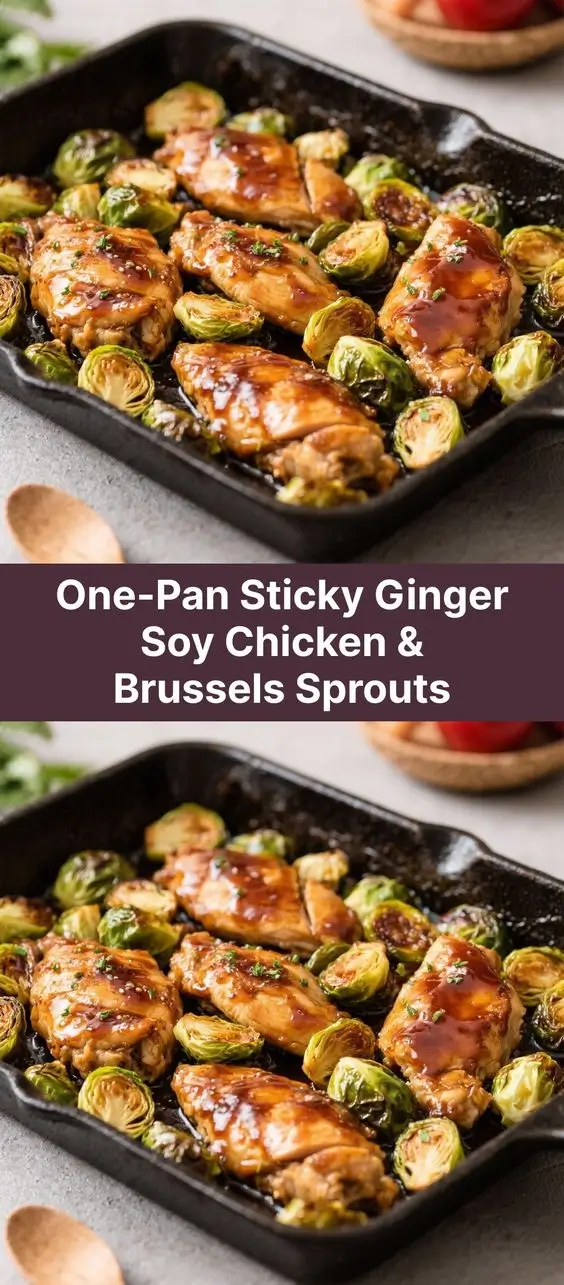
One-Pan Sticky Ginger Soy Chicken & Brussels Sprouts
The History
The concept of one-pan meals has deep roots in global culinary traditions, where efficiency, flavor layering, and minimal cleanup were essential—especially in home kitchens across Asia, the Mediterranean, and rural Europe. The fusion of soy sauce, ginger, and chicken can be traced back to ancient Chinese cooking practices, where fermented soy sauces were used as early as the Zhou Dynasty (1046–256 BCE) to preserve and enhance flavors. Ginger, a staple in both Chinese and Southeast Asian cuisines, was prized not only for its pungent warmth but also for its medicinal properties.
Fast forward to modern times, and this combination found new life in Western kitchens during the 20th century as Asian-inspired dishes gained popularity in North America and Europe. The addition of Brussels sprouts—a cruciferous vegetable native to Belgium (first recorded near Brussels in the 13th century)—may seem like a recent innovation, but it reflects a growing trend toward balanced, vegetable-forward proteins that satisfy both health-conscious eaters and flavor seekers.
The one-pan method itself became a hallmark of weeknight cooking in the 2000s, popularized by food bloggers and busy families looking for quick, nutritious, and delicious meals with less cleanup. This recipe combines centuries-old flavor principles with contemporary convenience, resulting in a dish that’s deeply savory, slightly sweet, aromatic, and effortlessly elegant—all from a single sheet pan.
Ingredients Breakdown
The magic of One-Pan Sticky Ginger Soy Chicken & Brussels Sprouts lies in its harmonious blend of umami-rich, sweet, tangy, and earthy ingredients. Let’s explore each component:
- Chicken Thighs (Boneless, Skin-on): Preferred over breasts for their higher fat content and ability to stay juicy during roasting. The skin crisps beautifully while basting in the glaze.
- Brussels Sprouts: These mini cabbages add texture, color, and a slightly bitter contrast that balances the sweetness of the sauce. When roasted, they develop a nutty, caramelized flavor.
- Soy Sauce: Provides saltiness and depth. Use reduced-sodium if you’re watching salt intake, or tamari for a gluten-free option.
- Fresh Ginger: Grated or minced, it delivers a bright, spicy zing that lifts the entire dish. Far superior to powdered ginger in this context.
- Garlic: Minced fresh garlic enhances the aromatic base, adding complexity without overpowering.
- Honey or Maple Syrup: Acts as a natural sweetener and helps create that glossy, sticky glaze when caramelized in the oven.
- Rice Vinegar: Adds a touch of acidity to cut through the richness and balance the sweetness.
- Sesame Oil: A small amount goes a long way in adding a nutty aroma and authentic Asian flair.
- Olive Oil: Used to coat the sprouts and chicken for even browning and crisp edges.
- Red Pepper Flakes (optional): For a subtle heat that warms the palate without overwhelming.
- Sesame Seeds and Green Onions (for garnish): Add visual appeal and a fresh, crunchy finish.
Step-by-Step Recipe
- Preheat the Oven: Set your oven to 400°F (200°C). Line a large rimmed baking sheet with parchment paper or foil for easy cleanup (though avoid foil if using acidic marinades, as it may react).
- Prepare the Brussels Sprouts: Trim the stems and remove any yellow outer leaves. Cut larger sprouts in half lengthwise so they cook evenly. Smaller ones can remain whole.
- Make the Glaze: In a medium bowl, whisk together ⅓ cup soy sauce, 3 tablespoons honey (or maple syrup), 2 tablespoons rice vinegar, 1 tablespoon sesame oil, 1 tablespoon olive oil, 1½ tablespoons freshly grated ginger, 3 cloves minced garlic, and ½ teaspoon red pepper flakes (if using). Stir until honey is fully dissolved.
- Coat the Ingredients: Place the halved Brussels sprouts in a large mixing bowl. Pour half of the glaze over them and toss thoroughly to coat every piece. Transfer the sprouts to one side of the baking sheet, spreading them out in a single layer.
- Prepare the Chicken: Pat the chicken thighs dry with paper towels. Place them in the same bowl used for the sprouts (no need to wash it), then pour the remaining half of the glaze over the chicken. Toss gently to coat all sides. Place the chicken thighs skin-side up on the other side of the baking sheet, leaving space between each piece for airflow and even cooking.
- Roast First Stage: Place the pan in the preheated oven and roast for 20 minutes. This allows the sprouts to begin caramelizing and the chicken to start rendering its fat.
- Baste and Flip: After 20 minutes, carefully remove the pan from the oven. Use a spoon or brush to baste the chicken with the juices pooling on the pan. Flip the Brussels sprouts to promote even browning.
- Final Roast: Return the pan to the oven and continue roasting for another 15–20 minutes, or until the chicken reaches an internal temperature of 165°F (74°C), the skin is golden and crisp, and the Brussels sprouts are tender with charred edges.
- Broil for Extra Stickiness (Optional): For an even more caramelized, sticky finish, switch the oven to broil for the last 2–3 minutes. Watch closely to prevent burning.
- Rest and Garnish: Remove from the oven and let the chicken rest for 5 minutes. This helps retain juices. Sprinkle with toasted sesame seeds and sliced green onions before serving.
Tips
- Uniform Sizing: Cut Brussels sprouts to similar sizes to ensure even cooking. If some are much smaller, they’ll burn before larger ones soften.
- Dry Chicken Skin: Patting the chicken dry before marinating ensures better browning and crispier skin.
- Don’t Crowd the Pan: Overcrowding causes steaming instead of roasting. Use two pans if needed.
- Use Fresh Ginger: Pre-minced ginger from a jar lacks the vibrant, spicy kick of freshly grated root.
- Marinate for More Flavor: For deeper flavor, marinate the chicken in half the sauce for 30 minutes to 2 hours in the fridge before cooking.
- Check Internal Temperature: Invest in a meat thermometer. Juicy chicken hinges on proper doneness—165°F at the thickest part, not touching bone.
- Save the Drippings: The reduced glaze and pan juices are liquid gold! Spoon them over rice or quinoa when serving.
- Rotate the Pan: If your oven has hot spots, rotate the baking sheet halfway through for even cooking.
Variations and Customizations
This recipe is highly adaptable to dietary needs, preferences, and seasonal availability:
- Protein Swap: Replace chicken thighs with chicken breasts (reduce cooking time), tofu (press and use extra-firm), tempeh, salmon fillets, or even shrimp (add in the last 10 minutes).
- Veggie Alternatives: Try broccoli florets, sugar snap peas, carrots, green beans, or baby bok choy instead of Brussels sprouts.
- Sweetener Options: Substitute honey with agave, brown sugar, or coconut nectar for different flavor profiles.
- Low-Sodium Version: Use low-sodium soy sauce or coconut aminos, which are gentler on sodium and offer a slightly sweeter taste.
- Spice It Up: Add sriracha, gochujang, or a splash of chili garlic sauce to the glaze for extra heat.
- Citrus Twist: Add 1 tablespoon of fresh orange or yuzu juice to brighten the glaze.
- Herb Infusion: Stir in chopped cilantro, Thai basil, or mint after cooking for a fresh finish.
- Gluten-Free: Ensure your soy sauce is certified gluten-free (tamari works perfectly).
- Keto-Friendly: Replace honey with a keto-approved sweetener like monk fruit syrup and reduce or omit carrots if added.
Health Considerations and Nutritional Value
One-Pan Sticky Ginger Soy Chicken & Brussels Sprouts offers a well-rounded nutritional profile, combining lean protein, fiber-rich vegetables, and healthy fats:
- Chicken Thighs: Though higher in fat than breasts, they provide more iron, zinc, and B vitamins. The fat content contributes to satiety and flavor.
- Brussels Sprouts: Packed with vitamin C, vitamin K, fiber, and antioxidants like kaempferol, which may have anti-inflammatory properties. They support digestive health and immune function.
- Ginger: Known for its anti-nausea, anti-inflammatory, and digestive benefits. Contains gingerol, a bioactive compound with powerful medicinal effects.
- Garlic: Rich in allicin, which has been studied for cardiovascular and immune support.
- Soy Sauce: High in sodium, so moderation is key—especially for those with hypertension. Opt for reduced-sodium versions when possible.
- Honey: While natural, it’s still a sugar. Use in moderation, especially for diabetics or those managing blood sugar levels.
- Sesame Oil: Contains heart-healthy monounsaturated and polyunsaturated fats, along with antioxidants like sesamol.
Nutritional Estimate (per serving, serves 4):
- Calories: ~380–420
- Protein: 28–32g
- Fat: 18–22g (mostly unsaturated)
- Carbohydrates: 24–28g
- Fiber: 5–6g
- Sugar: 14–16g (primarily from honey and natural veggie sugars)
- Sodium: 900–1200mg (depending on soy sauce used)
To make it healthier: increase the veggie-to-protein ratio, use skinless chicken, reduce honey by half, or serve over cauliflower rice instead of grains.
Ingredients
- 1.5 lbs (680g) boneless, skin-on chicken thighs
- 1 lb (450g) Brussels sprouts, trimmed and halved
- ⅓ cup low-sodium soy sauce (or tamari)
- 3 tbsp honey (or pure maple syrup)
- 2 tbsp rice vinegar
- 1 tbsp sesame oil
- 1 tbsp olive oil
- 1½ tbsp fresh ginger, finely grated
- 3 cloves garlic, minced
- ½ tsp red pepper flakes (optional)
- 1 tbsp sesame seeds, toasted
- 2 green onions, thinly sliced
Directions
- Preheat oven to 400°F (200°C). Line a large baking sheet with parchment paper.
- Trim and halve Brussels sprouts. Place in a large bowl and toss with half the glaze (made from soy sauce, honey, rice vinegar, oils, ginger, garlic, and red pepper flakes).
- Spread sprouts in a single layer on one side of the baking sheet.
- Pat chicken thighs dry, place in the same bowl, and toss with remaining glaze.
- Arrange chicken skin-side up on the other side of the pan.
- Roast for 20 minutes, then remove to flip sprouts and baste chicken.
- Return to oven and roast 15–20 minutes more, until chicken hits 165°F and sprouts are caramelized.
- (Optional) Broil 2–3 minutes for extra crispness.
- Rest 5 minutes, then garnish with sesame seeds and green onions.
- Serve immediately, ideally over rice, quinoa, or noodles to soak up the delicious sauce.
FAQ
Can I use frozen Brussels sprouts?
While fresh is best, you can use frozen—but thaw and pat them dry first. Excess moisture will steam rather than roast, leading to soggy results.
Can I make this ahead of time?
Yes! Marinate the chicken and chop the sprouts a day in advance. Store separately in airtight containers. Assemble and bake when ready.
How do I store leftovers?
Cool completely and store in an airtight container for up to 3 days. Reheat in the oven at 350°F or microwave gently.
Can I freeze this dish?
Yes, though texture may change slightly. Freeze in portions for up to 2 months. Thaw overnight and reheat in the oven.
Why are my Brussels sprouts bitter?
Undercooking or uneven roasting can leave them raw and bitter. Ensure they’re cut evenly and roasted long enough to caramelize.
Is this recipe gluten-free?
Only if you use gluten-free soy sauce (like tamari) and confirm all other ingredients are certified GF.
Can I use chicken breasts?
Yes, but reduce cooking time to 15–18 minutes per side, as they dry out faster. Consider brining first for juiciness.
What can I serve with this?
Steamed jasmine rice, brown rice, quinoa, soba noodles, or mashed sweet potatoes. A side of kimchi or pickled vegetables adds brightness.
Summary
One-Pan Sticky Ginger Soy Chicken & Brussels Sprouts delivers bold, savory-sweet flavors with minimal effort and cleanup—perfect for busy weeknights.
Packed with protein, fiber, and aromatic spices, this healthy, sheet-pan wonder is as nourishing as it is delicious.