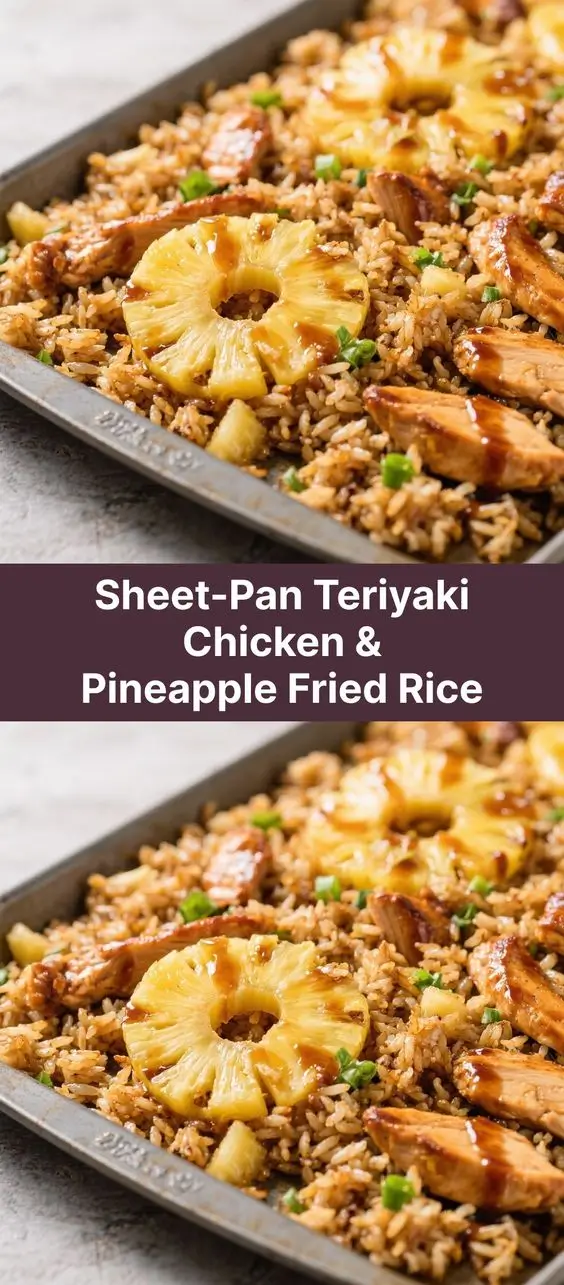
Sheet-Pan Teriyaki Chicken & Pineapple Fried Rice: A Complete Guide
Introduction
If you’re looking for a vibrant, flavorful, and fuss-free meal that brings together the best of Asian-inspired cuisine with modern convenience, then this Sheet-Pan Teriyaki Chicken & Pineapple Fried Rice is your ultimate weeknight hero. This recipe combines tender, sticky-sweet teriyaki chicken with bright, tropical fried rice loaded with pineapple, vegetables, and aromatic seasonings—all cooked efficiently on one sheet pan for minimal cleanup and maximum flavor. Whether you’re cooking for your family, meal prepping for the week, or hosting a casual dinner, this dish delivers bold taste, colorful presentation, and satisfying textures in every bite.
The beauty of this recipe lies in its simplicity and efficiency. By utilizing a single sheet pan, you reduce the number of dishes while still achieving restaurant-quality results. The roasted teriyaki chicken develops a caramelized glaze as it bakes, while the pineapple fried rice mixture absorbs savory umami notes from soy sauce, garlic, and sesame oil. It’s a harmonious fusion of sweet, salty, tangy, and smoky flavors that dance across your palate. Plus, it’s easily customizable to suit dietary preferences—gluten-free, dairy-free, low-carb, or plant-based alternatives can all be incorporated seamlessly.
Beyond its deliciousness, this recipe celebrates convenience without sacrificing nutrition. Packed with lean protein, fiber-rich vegetables, and complex carbohydrates, it offers a balanced meal that fuels your body and satisfies your cravings. Let’s dive into the fascinating history behind this dish, explore each ingredient, and walk through how to make it step-by-step for perfect results every time.
The History
The roots of this dish trace back to two distinct culinary traditions—Japanese teriyaki and Chinese fried rice—that have evolved through centuries of cultural exchange and adaptation across Asia and beyond. Teriyaki, derived from the Japanese words *teri* (luster) and *yaki* (grill or broil), originated in Japan during the Edo period (1603–1868). It referred to a cooking technique where fish—often salmon or mackerel—was glazed with a mixture of soy sauce, mirin, and sugar, then grilled until shiny and caramelized. Over time, the method expanded to include meats like chicken and beef, especially after Western influence introduced new proteins to Japanese diets.
Fried rice, on the other hand, has ancient origins in China, dating back over 4,000 years. As a practical way to use leftover rice and prevent waste, early Chinese cooks stir-fried cold rice with available ingredients such as vegetables, eggs, and scraps of meat. Regional variations flourished across China, with Cantonese fried rice becoming particularly famous for its light seasoning and inclusion of egg, peas, and green onions. When Chinese immigrants brought their culinary techniques to Hawaii and other parts of the Pacific Rim, they encountered new ingredients like pineapple—a fruit native to South America but widely cultivated in tropical climates including Hawaii since the late 18th century.
Hawaiian-style fried rice emerged as a unique fusion dish, blending Chinese cooking methods with local island produce. The addition of pineapple introduced a sweet-tart contrast that complemented savory soy and garlic flavors beautifully. Meanwhile, American-Japanese restaurants began popularizing teriyaki chicken in the mid-20th century, adapting traditional recipes to suit Western palates by increasing sweetness and serving it with steamed rice or noodles. Today, the combination of teriyaki chicken and pineapple fried rice represents a global mash-up of East Asian, Polynesian, and American culinary influences—an homage to migration, innovation, and cross-cultural creativity.
This Sheet-Pan version takes those rich traditions and reimagines them for contemporary kitchens. Rather than using multiple pans or stovetop attention, modern home cooks are embracing oven-roasted, hands-off approaches that preserve flavor while saving time. The result is a globally inspired, locally adaptable dish that honors its heritage while fitting perfectly into today’s fast-paced lifestyle.
Ingredients Breakdown
To create an authentic yet accessible flavor profile, each component of this Sheet-Pan Teriyaki Chicken & Pineapple Fried Rice plays a crucial role. Below is a detailed breakdown of the key ingredients and why they matter:
For the Teriyaki Chicken:
- Chicken thighs (boneless, skin-on or skinless): Thighs are preferred over breasts because they remain juicy and tender when baked. Their higher fat content helps carry flavor and prevents drying out during roasting.
- Soy sauce (or tamari for gluten-free): Provides the foundational saltiness and umami depth essential to teriyaki. Low-sodium versions help control overall salt levels.
- Coconut aminos (optional substitute): A soy-free alternative made from coconut sap; slightly sweeter and less salty than soy sauce, ideal for paleo or allergen-sensitive diets.
- Maple syrup or honey: Adds natural sweetness that balances the salt and contributes to caramelization. Maple syrup also brings a subtle earthy note.
- Garlic (freshly minced): Imparts pungent aroma and complexity. Fresh garlic reacts with heat to mellow and deepen in flavor.
- Ginger (grated fresh): Offers zesty warmth and brightness, cutting through richness and enhancing digestion.
- Rice vinegar: Introduces mild acidity that lifts the sauce and prevents it from being overly cloying.
- Sesame oil: Used sparingly for its nutty fragrance. Toasted sesame oil adds more intensity.
- Cornstarch or arrowroot powder: Acts as a thickener to give the sauce that glossy, clingy texture typical of teriyaki.
- Red pepper flakes (optional): For a hint of heat—adjustable based on spice tolerance.
For the Pineapple Fried Rice:
- Cooked and cooled jasmine or basmati rice: Day-old rice works best because it’s drier and less sticky, allowing individual grains to crisp up when roasted. Freshly cooked rice tends to clump.
- Fresh pineapple chunks: Juicy and tart-sweet, pineapple adds tropical flair and moisture. Canned pineapple can be used but should be well-drained to avoid sogginess.
- Frozen mixed vegetables (peas, carrots, corn): Convenient and pre-cut, these add color, nutrients, and texture. They release minimal water when heated, making them ideal for oven preparation.
- Scallions (green onions): Both white and green parts contribute mild onion flavor and visual appeal. Added at the end for freshness.
- Eggs (beaten): Scrambled into the rice, they provide protein and richness. Can be omitted for vegan versions.
- Garlic and ginger (again!): Reinforce the aromatic base and tie the entire dish together.
- Soy sauce or tamari: Seasoning agent that gives the rice its signature savory tone.
- Sesame oil: Drizzled at the end for fragrance and depth.
- Vegetable oil or avocado oil: High smoke point oils suitable for roasting without burning.
- Salt and black pepper: To taste, balancing overall seasoning.
Optional Garnishes:
- Chopped cilantro or Thai basil
- Extra scallions
- Toasted sesame seeds
- Lime wedges
- Chili oil or sriracha for extra kick
Step-by-Step Recipe
- Preheat Oven & Prepare Pan: Preheat your oven to 400°F (200°C). Line a large rimmed baking sheet with parchment paper or lightly grease it with oil to prevent sticking. A half-sheet pan (approx. 18×13 inches) works best to allow even roasting without overcrowding.
- Make the Teriyaki Marinade/Sauce: In a medium bowl, whisk together ½ cup soy sauce, ¼ cup maple syrup, 2 tablespoons rice vinegar, 2 tablespoons water, 3 cloves minced garlic, 1 tablespoon grated ginger, 1 teaspoon toasted sesame oil, and ½ teaspoon red pepper flakes (if using). In a small bowl, mix 1 tablespoon cornstarch with 2 tablespoons cold water to make a slurry. Add it to the sauce and whisk until smooth. Reserve about ⅓ of the sauce for basting and tossing later.
- Marinate the Chicken: Place 1.5 lbs boneless chicken thighs in a resealable bag or shallow dish. Pour half of the teriyaki sauce over the chicken, seal, and toss to coat. Let marinate for at least 20 minutes at room temperature or up to 4 hours in the refrigerator for deeper flavor.
- Prepare the Fried Rice Mixture: In a large mixing bowl, combine 3 cups cooked and cooled rice, 1 cup frozen mixed vegetables (no need to thaw), 1 cup fresh pineapple chunks, 3 sliced scallions (whites and greens separated), and 2 beaten eggs. Heat 1 tablespoon vegetable oil in a skillet over medium heat. Sauté 2 cloves minced garlic and 1 teaspoon grated ginger for 30 seconds until fragrant. Remove from heat and stir into the rice mixture. Add 2 tablespoons soy sauce and 1 teaspoon sesame oil. Mix thoroughly until evenly combined.
- Arrange on Sheet Pan: Spread the rice mixture onto one side of the prepared baking sheet, pressing it into an even layer about ½ inch thick. On the other side, place the marinated chicken pieces in a single layer, skin-side up if applicable. Do not overlap to ensure proper browning.
- Bake First Phase: Roast in the preheated oven for 20 minutes. After 10 minutes, remove the pan briefly to flip the chicken and brush it with reserved teriyaki sauce. Return to oven.
- Baste and Finish: At the 20-minute mark, remove the pan again. Brush the chicken once more with sauce. Stir the rice mixture gently with a fork to redistribute heat and crisp edges. If desired, drizzle a little extra sauce over the rice for added flavor.
- Final Bake: Return to oven for another 10–15 minutes, or until the chicken reaches an internal temperature of 165°F (74°C) and the edges of the rice begin to crisp slightly. The teriyaki glaze should be bubbling and deeply browned.
- Rest and Serve: Remove from oven and let rest for 5 minutes. Use a spatula to break apart the rice and fluff with a fork. Slice the chicken into strips or leave whole. Transfer to plates or a serving platter.
- Garnish and Enjoy: Top with remaining scallion greens, toasted sesame seeds, chopped cilantro, and a squeeze of fresh lime juice. Serve hot.
Tips
- Use Cold Rice: Always use day-old, refrigerated rice for fried rice. Warm rice becomes mushy. If you must cook fresh rice, spread it on a tray and let it cool completely in the fridge for 30–60 minutes before use.
- Don’t Skip the Cornstarch: The cornstarch slurry is what transforms your sauce from thin liquid to glossy, restaurant-style glaze. Without it, the sauce won’t cling properly to the chicken.
- Maximize Caramelization: For darker, stickier teriyaki, increase the oven temperature to 425°F (220°C) during the last 5–10 minutes or switch to broil for 2–3 minutes—watch closely to avoid burning.
- Prevent Soggy Rice: Make sure pineapple is well-drained. Pat dry with paper towels if needed. Avoid adding too much sauce directly to the rice before baking.
- Boost Umami: Add a splash of fish sauce (½ tsp) to the teriyaki marinade for deeper savory flavor, or sprinkle a pinch of MSG (optional) into the rice.
- Even Cooking: Cut larger chicken thighs into uniform sizes so they cook evenly. Smaller pieces may dry out faster.
- Double the Sauce: Many people love extra sauce for drizzling. Consider doubling the teriyaki recipe and storing leftovers in the fridge for up to 2 weeks.
- Oil Matters: Lightly oil the pan—even with parchment—to help the rice develop crispy bits. You can also spray the rice surface lightly with cooking oil before baking.
- Stir Midway: Gently fluffing the rice halfway ensures even heating and prevents dense packing.
Variations and Customizations
This recipe is incredibly versatile and welcomes creative tweaks. Here are some popular variations:
Protein Swaps:
- Salmon: Replace chicken with salmon fillets for a seafood twist. Marinate similarly and bake until flaky.
- Shrimp: Toss peeled shrimp in teriyaki sauce and add during the last 10–12 minutes of baking to avoid overcooking.
- Tofu or Tempeh: Use extra-firm tofu, pressed and cubed. Roast alongside rice and baste with sauce for a vegan option.
- Beef: Thinly sliced flank steak or sirloin works well. Sear first or roast quickly to medium-rare.
Dietary Adaptations:
- Gluten-Free: Use tamari instead of soy sauce and verify all other ingredients (e.g., sauces, spices) are certified GF.
- Keto/Low-Carb: Substitute cauliflower rice for regular rice. Sauté first to remove moisture, then mix with seasonings and roast.
- Vegan: Omit eggs and chicken. Use plant-based protein and replace honey with agave or maple syrup.
- Paleo: Use coconut aminos, omit cornstarch (use arrowroot), and skip grains entirely with riced cauliflower.
Fruit & Veggie Twists:
- Add diced mango or peach for extra sweetness.
- Swap pineapple with peaches or omit altogether for a classic teriyaki + veggie fried rice combo.
- Include bell peppers, snap peas, broccoli florets, or mushrooms in the rice mixture.
- Add kimchi for a spicy, fermented kick.
Flavor Boosters:
- Drizzle with chili garlic sauce or gochujang mayo before serving.
- Sprinkle furikake (Japanese rice seasoning) over the finished dish.
- Add crushed peanuts or cashews for crunch.
- Use coconut milk in the rice while cooking for creamier texture.
Health Considerations and Nutritional Value
This Sheet-Pan Teriyaki Chicken & Pineapple Fried Rice offers a balanced macronutrient profile when prepared mindfully. Below is an approximate nutritional breakdown per serving (assuming 4 servings):
| Nutrient | Amount per Serving |
|---|---|
| Calories | 520 kcal |
| Protein | 32g |
| Total Fat | 18g |
| Saturated Fat | 4g |
| Carbohydrates | 58g |
| Dietary Fiber | 4g |
| Sugars | 22g (natural from pineapple, honey, and maple syrup) |
| Sodium | 980mg (can be reduced with low-sodium soy sauce) |
Health Highlights:
- Lean Protein Source: Chicken thighs offer high-quality protein with essential amino acids for muscle repair and satiety.
- Fiber-Rich Vegetables: Peas, carrots, and pineapple contribute dietary fiber, aiding digestion and gut health.
- Healthy Fats: Sesame oil contains monounsaturated fats and antioxidants like sesamol.
- Vitamins & Minerals: Pineapple provides vitamin C and bromelain (an enzyme with anti-inflammatory properties). Carrots supply beta-carotene (vitamin A precursor).
Considerations:
- Sodium Content: Traditional soy sauce is high in sodium. Opt for reduced-sodium versions or dilute with water to lower intake, especially for those managing hypertension.
- Sugar Awareness: While naturally sourced, the combined sugars from honey, maple syrup, pineapple, and sauces can add up. Diabetics or low-sugar dieters may reduce sweeteners or use monk fruit-based substitutes.
- Balanced Portions: Pairing this dish with a side salad or steamed greens enhances nutrient diversity and volume without excess calories.
- Allergens: Contains soy, sesame, and eggs. Modify accordingly for allergies.
Ingredients
For the Teriyaki Chicken:
- 1.5 lbs boneless, skinless (or skin-on) chicken thighs
- ½ cup low-sodium soy sauce (or tamari/coconut aminos)
- ¼ cup pure maple syrup or honey
- 2 tbsp rice vinegar
- 3 cloves garlic, minced
- 1 tbsp fresh ginger, grated
- 1 tsp toasted sesame oil
- ½ tsp red pepper flakes (optional)
- 1 tbsp cornstarch
- 2 tbsp cold water
For the Pineapple Fried Rice:
- 3 cups cooked jasmine rice, chilled
- 1 cup frozen mixed vegetables (peas, carrots, corn)
- 1 cup fresh pineapple chunks, drained and patted dry
- 3 scallions, thinly sliced (separate whites and greens)
- 2 large eggs, beaten
- 1 tbsp vegetable oil
- 2 cloves garlic, minced
- 1 tsp fresh ginger, grated
- 2 tbsp soy sauce
- 1 tsp sesame oil
Garnishes (optional):
- Extra scallion greens
- Toasted sesame seeds
- Chopped cilantro or Thai basil
- Lime wedges
- Chili oil or sriracha
Directions
- Preheat oven to 400°F (200°C). Line a large rimmed baking sheet with parchment paper or lightly grease it.
- In a bowl, whisk together soy sauce, maple syrup, rice vinegar, minced garlic, grated ginger, sesame oil, and red pepper flakes.
- In a small bowl, mix cornstarch with 2 tbsp water to make a slurry. Add to sauce and whisk until smooth. Reserve ⅓ for later.
- Place chicken thighs in a bag or dish. Pour half the sauce over them, toss to coat, and marinate for 20+ minutes.
- Heat 1 tbsp oil in a skillet over medium heat. Sauté garlic and ginger for 30 seconds. Stir in beaten eggs and scramble until just set. Remove from heat.
- In a large bowl, combine chilled rice, frozen vegetables, pineapple, scallion whites, scrambled eggs, 2 tbsp soy sauce, and 1 tsp sesame oil. Mix well.
- Spread rice mixture onto one side of the baking sheet in an even layer. Place marinated chicken on the other side.
- Bake for 20 minutes. Remove pan, flip chicken, brush with sauce, and stir rice gently.
- Return to oven for 10–15 more minutes, brushing chicken once more, until chicken hits 165°F and rice is heated through.
- Let rest 5 minutes. Fluff rice, slice chicken, garnish with scallion greens, sesame seeds, cilantro, and lime. Serve warm.
FAQ
Can I use chicken breast instead of thighs?
Yes, but thighs are recommended for juiciness. If using breasts, reduce baking time by 5–7 minutes to prevent drying out.
Can I make this ahead of time?
Absolutely! Marinate the chicken up to 24 hours in advance. Prepare the rice mixture up to a day ahead and store separately. Assemble and bake when ready.
Can I freeze leftovers?
Yes. Store in airtight containers for up to 3 months. Reheat in oven or skillet for best texture—microwaving may soften the rice too much.
Why didn’t my sauce thicken?
The cornstarch needs direct heat to activate. If the sauce remains thin after baking, simmer the reserved sauce on the stove for 2–3 minutes until glossy.
Can I cook everything in one pan on the stove?
You can—but this recipe is designed for sheet-pan ease. For stovetop, cook chicken first, remove, then fry rice in same pan, returning chicken at the end.
Is this recipe spicy?
Only mildly, due to optional red pepper flakes. Adjust or omit for sensitive palates. Add chili oil at serving for personalized heat.
What can I serve with this dish?
Great on its own, but pairs well with steamed bok choy, cucumber salad, miso soup, or seaweed salad.
Summary
Sheet-Pan Teriyaki Chicken & Pineapple Fried Rice is a vibrant, easy-to-make meal that combines juicy, glazed chicken with tropical fried rice roasted to perfection—all on one pan for effortless cleanup. Packed with flavor, nutrition, and customization options, it’s a modern favorite rooted in global culinary tradition.