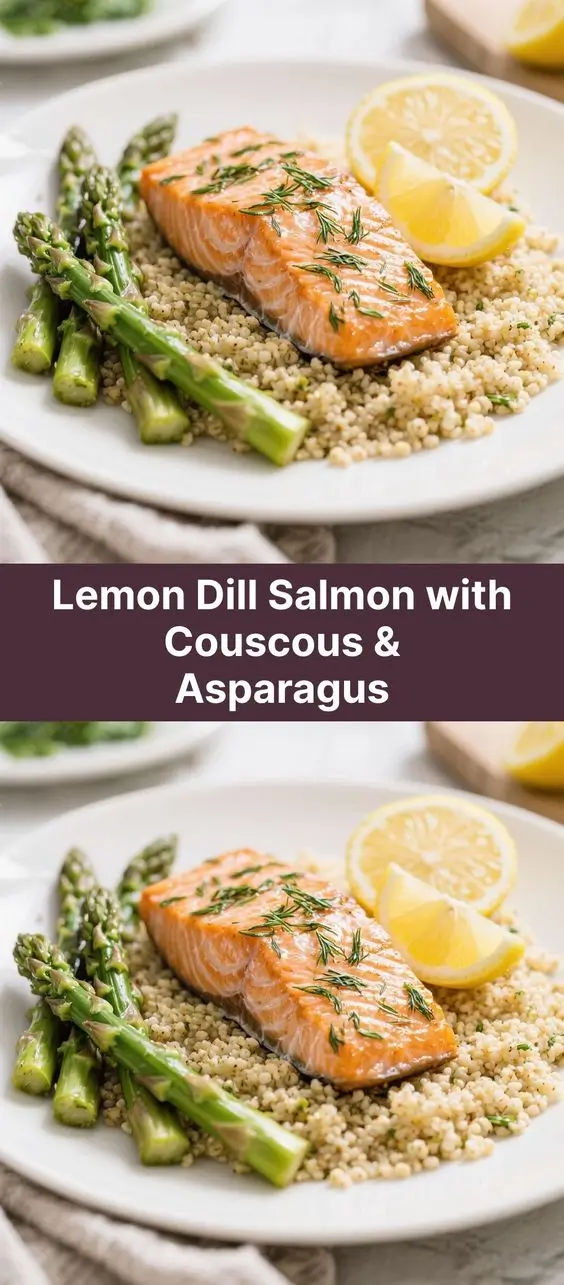
Lemon Dill Salmon with Couscous & Asparagus
Introduction
Looking for a quick, nutritious, and restaurant-worthy weeknight meal? Lemon Dill Salmon with Couscous & Asparagus is the perfect dish to impress your family or guests without spending hours in the kitchen. This balanced plate brings together tender, flaky salmon infused with bright lemon zest and fresh dill, served over fluffy couscous and roasted asparagus spears. Packed with protein, fiber, and heart-healthy omega-3 fatty acids, this recipe offers not just flavor but also nourishment. Whether you’re cooking for a cozy dinner at home or preparing a light meal after a long day, this dish delivers on taste, texture, and elegance—all in under 30 minutes.
The History
Salmon has been a staple in coastal diets for centuries, particularly among Scandinavian, Pacific Northwest Indigenous, and Mediterranean communities. Its rich, oily flesh made it ideal for preservation methods like smoking and drying, but its natural flavor also shines when prepared simply—grilled, baked, or pan-seared. The use of lemon and herbs like dill dates back to ancient times, where these ingredients were used both for their ability to enhance flavor and for their preservative qualities.
Couscous, originating from North Africa—particularly Morocco, Algeria, and Tunisia—is one of the oldest forms of pasta. Traditionally hand-rolled from semolina wheat, it was steamed in a special pot called a ksar and served with stews or vegetables. Over time, couscous became popular across the Middle East and Southern Europe, eventually making its way into modern Western cuisine as a quick-cooking grain alternative.
Asparagus, prized since Roman times for its delicate taste and medicinal properties, complements fish dishes beautifully. When combined with lemon and dill, it creates a harmony of flavors that’s both refreshing and satisfying. This particular dish—a fusion of Mediterranean and modern American culinary traditions—has gained popularity in recent decades due to its balance of health, convenience, and gourmet appeal. It’s now a favorite in home kitchens and upscale cafés alike.
Ingredients Breakdown
Lemon Dill Salmon:
- Salmon Fillets (4): About 6 oz each, skin-on or skinless based on preference. Wild-caught salmon is recommended for higher omega-3 content and better sustainability.
- Fresh Lemon Juice (3 tbsp): Adds acidity and brightness, enhancing the natural richness of salmon.
- Lemon Zest (1 tsp): Intensifies citrus flavor without adding extra liquid.
- Fresh Dill (2 tbsp chopped): Imparts a slightly sweet, grassy note that pairs perfectly with seafood.
- Extra Virgin Olive Oil (2 tbsp): Helps keep the salmon moist during cooking and carries flavor.
- Garlic (2 cloves, minced): Adds aromatic depth.
- Salt (½ tsp) and Black Pepper (¼ tsp): Essential seasonings to elevate all components.
Couscous:
- Whole Wheat or Regular Couscous (1 cup dry): Whole wheat adds more fiber and nutrients.
- Vegetable or Chicken Broth (1¼ cups): Infuses more flavor than water; low-sodium options help control salt intake.
- Olive Oil (1 tbsp): Prevents sticking and adds richness.
- Lemon Zest (½ tsp): Reinforces the citrus theme throughout the dish.
- Salt (¼ tsp): Balances the broth’s flavor.
Roasted Asparagus:
- Asparagus Spears (1 lb): Trimmed and cut into 2-inch pieces. Fresh, firm stalks are best.
- Olive Oil (1½ tbsp): Coats evenly for roasting.
- Garlic Powder (½ tsp): Complements fresh garlic in the salmon.
- Salt (¼ tsp) and Pepper (pinch): Simple seasoning to highlight freshness.
- Lemon Juice (1 tbsp): Drizzled after roasting for a zesty finish.
Garnish (Optional):
- Additional chopped dill
- Lemon slices or wedges
- Grated Parmesan cheese (for non-vegan variation)
- Toasted pine nuts or slivered almonds
Step-by-Step Recipe
- Preheat Oven: Set oven to 400°F (200°C). Line a large baking sheet with parchment paper or lightly grease it to prevent sticking.
- Prepare the Salmon Marinade: In a small bowl, whisk together 3 tablespoons lemon juice, 1 teaspoon lemon zest, 2 tablespoons chopped dill, 2 tablespoons olive oil, 2 minced garlic cloves, ½ teaspoon salt, and ¼ teaspoon black pepper. Mix well until fully combined.
- Marinate the Salmon: Place salmon fillets on one side of the baking sheet. Spoon the marinade evenly over each fillet, gently rubbing it into the surface. Let sit while you prepare the other ingredients—about 5–10 minutes.
- Prepare the Asparagus: On the opposite side of the same baking sheet, spread out the trimmed asparagus spears. Drizzle with 1½ tablespoons olive oil, sprinkle with ½ teaspoon garlic powder, ¼ teaspoon salt, and a pinch of black pepper. Toss with your hands or a spoon to coat evenly.
- Roast Vegetables and Fish Together: Place the baking sheet in the preheated oven. Roast for 12–15 minutes, depending on the thickness of the salmon. The salmon should reach an internal temperature of 145°F (63°C), flake easily with a fork, and appear opaque. Asparagus should be tender-crisp with slightly caramelized tips.
- Cook the Couscous: While the salmon and asparagus roast, bring 1¼ cups of broth to a gentle boil in a small saucepan. Stir in 1 cup couscous, 1 tablespoon olive oil, ½ teaspoon lemon zest, and ¼ teaspoon salt. Remove from heat, cover, and let steep for 5 minutes. After 5 minutes, fluff with a fork to separate grains.
- Finish the Asparagus: Once out of the oven, transfer roasted asparagus to a serving bowl and drizzle with 1 tablespoon fresh lemon juice. Toss gently.
- Plate the Dish: Spoon a generous portion of couscous onto each plate. Top with a salmon fillet and a side of asparagus. Garnish with extra dill, lemon slices, and optional toppings like toasted nuts or Parmesan.
- Serve Immediately: Enjoy while warm for the best texture and flavor experience.
Tips
- Don’t Overcook the Salmon: Salmon continues to cook slightly after being removed from the oven (carryover cooking). Pull it out just before it reaches desired doneness.
- Uniform Thickness: If your fillets vary in thickness, fold thinner ends underneath so they cook evenly.
- Use Fresh Herbs: Fresh dill makes a significant difference compared to dried. If unavailable, substitute with parsley or tarragon for a similar herbal lift.
- Toast the Couscous (Optional Upgrade): For nuttier flavor, toast the dry couscous in a dry skillet over medium heat for 2–3 minutes before adding liquid.
- Make Ahead Components: You can prep the marinade and chop vegetables up to a day in advance. Store separately in airtight containers in the fridge.
- Double the Batch: This recipe reheats well. Leftovers can be stored and enjoyed within 2 days—reheat gently to avoid drying out the salmon.
- Check Doneness Without a Thermometer: The salmon should begin to flake along the natural lines when nudged with a fork and lose its translucent appearance.
- Maximize Roasting Space: Use two baking sheets if needed, especially if making larger portions. Crowding leads to steaming instead of roasting.
Variations and Customizations
This dish is highly adaptable to dietary needs and flavor preferences. Here are some creative twists:
- Gluten-Free Option: Replace couscous with quinoa, cauliflower rice, or gluten-free grain blends like millet or buckwheat.
- Dairy-Free/Plant-Based Twist: Keep as-is—it’s naturally dairy-free! For a vegan version, swap salmon with grilled marinated tofu or tempeh using the same lemon-dill marinade.
- Spicy Kick: Add ¼ teaspoon red pepper flakes or a dash of cayenne to the salmon marinade for heat.
- Mediterranean Style: Mix chopped sun-dried tomatoes, Kalamata olives, feta cheese, and cucumber into the couscous for a Greek-inspired twist.
- Creamy Version: Stir a spoonful of Greek yogurt or tzatziki into the couscous before serving.
- Herb Variations: Try basil, chives, or tarragon instead of dill. Each brings a unique profile—basil adds sweetness, chives offer mild onion flavor, tarragon gives an anise-like note.
- Different Veggies: Substitute asparagus with green beans, broccoli, zucchini, or bell peppers—just adjust roasting time accordingly.
- Pantry-Friendly Shortcut: Use frozen pre-steamed asparagus or microwave-in-bag varieties if fresh isn’t available. Sauté quickly in a pan with olive oil and seasonings.
- Smoked Salmon Alternative: For a cold dish, serve smoked salmon over lemon-dill couscous with raw shaved asparagus or arugula for a salad-style presentation.
Health Considerations and Nutritional Value
This dish scores high on both taste and nutrition. Here’s a breakdown per serving (1 salmon fillet, ¾ cup couscous, ¼ lb asparagus):
| Nutrient | Amount Per Serving | Benefits |
|---|---|---|
| Calories | Approx. 480 kcal | Balanced energy source suitable for active individuals. |
| Protein | 35–40g | Supports muscle repair, satiety, and metabolic health. |
| Omega-3 Fatty Acids | ~2,000–2,500 mg | Promotes heart and brain health; reduces inflammation. |
| Total Fat | 22g (mostly unsaturated) | Heart-healthy fats from olive oil and salmon. |
| Carbohydrates | 30g | Primarily from whole grains and vegetables; moderate glycemic impact. |
| Dietary Fiber | 5–6g | Aids digestion and supports gut microbiome (especially with whole wheat couscous). |
| Vitamin C | Over 30% DV | From lemon and asparagus; boosts immunity and collagen production. |
| Vitamin B12 | Nearly 100% DV | Essential for nerve function and red blood cell formation. |
| Folate & Vitamin K | High levels | Supports cellular function and bone health. |
| Selenium & Potassium | Good sources | Antioxidant support and electrolyte balance. |
Dietary Notes:
- Heart-Healthy: Rich in monounsaturated fats and omega-3s, which may reduce LDL cholesterol and lower risk of cardiovascular disease.
- Weight Management Friendly: High protein and fiber content promote fullness and reduce cravings.
- Pregnancy-Safe (with caution): Salmon is safe and beneficial during pregnancy due to DHA content, but ensure it’s fully cooked and sourced responsibly to minimize mercury exposure. Limit to 2–3 servings per week.
- Low in Added Sugars and Refined Carbs: Especially when using whole wheat couscous and avoiding sugary sauces.
Ingredients
For Lemon Dill Salmon:
- 4 salmon fillets (6 oz each)
- 3 tbsp fresh lemon juice
- 1 tsp lemon zest
- 2 tbsp fresh dill, finely chopped
- 2 tbsp extra virgin olive oil
- 2 cloves garlic, minced
- ½ tsp salt
- ¼ tsp black pepper
For Couscous:
- 1 cup whole wheat or regular couscous
- 1¼ cups vegetable or chicken broth
- 1 tbsp olive oil
- ½ tsp lemon zest
- ¼ tsp salt
For Roasted Asparagus:
- 1 lb fresh asparagus, trimmed
- 1½ tbsp olive oil
- ½ tsp garlic powder
- ¼ tsp salt
- Pinch of black pepper
- 1 tbsp lemon juice (added after roasting)
Garnish Options:
- Extra chopped dill
- Lemon slices or wedges
- Grated Parmesan
- Toasted pine nuts or almonds
Directions
- Preheat oven to 400°F (200°C). Line a large baking sheet with parchment paper.
- In a small bowl, whisk together lemon juice, lemon zest, dill, olive oil, garlic, salt, and pepper to make the salmon marinade.
- Place salmon fillets on one side of the baking sheet. Spoon marinade evenly over them, coating completely.
- On the other side of the baking sheet, arrange asparagus. Drizzle with olive oil, garlic powder, salt, and pepper. Toss to coat.
- Place baking sheet in oven and roast for 12–15 minutes, until salmon is flaky and asparagus is tender-crisp.
- While roasting, heat broth in a saucepan until boiling. Stir in couscous, olive oil, lemon zest, and salt. Cover, remove from heat, and let stand for 5 minutes. Fluff with a fork.
- Remove asparagus from oven and transfer to a bowl. Drizzle with 1 tbsp lemon juice and toss.
- Divide couscous among plates. Top with salmon and asparagus.
- Garnish with fresh dill, lemon wedges, and any optional toppings.
- Serve immediately and enjoy!
FAQ
Q: Can I use frozen salmon?
A: Yes, but thaw it first in the refrigerator overnight for even cooking and better texture. Avoid microwaving unless necessary, as it can partially cook the edges.
Q: Is it okay to cook salmon from frozen?
A: Technically yes, but increase cooking time by 5–7 minutes and cover loosely with foil to retain moisture. Results may vary in texture.
Q: Can I grill instead of bake?
A: Absolutely! Grill salmon over medium heat (375–400°F) for 4–6 minutes per side. Use a grill basket or foil to prevent sticking.
Q: How do I store leftovers?
A: Store cooled components separately in airtight containers. Salmon keeps for 2 days in the fridge. Reheat gently in the oven or air fryer—avoid microwaving to prevent rubberiness.
Q: Can I make this ahead for meal prep?
A: Yes! Cook everything and assemble individual portions. Reheat only the couscous and asparagus; add cold salmon or warm very gently.
Q: What sides go well with this dish?
A: A simple arugula salad with vinaigrette, crusty bread, or a dollop of tzatziki works wonderfully.
Q: Is canned salmon suitable?
A: Not ideal for this recipe, as the texture differs significantly. Reserve canned salmon for salads, cakes, or spreads.
Q: Can I use dried dill?
A: Yes, but use half the amount (1 tbsp fresh ≈ 1 tsp dried). Fresh is strongly preferred for optimal aroma and flavor.
Summary
Lemon Dill Salmon with Couscous & Asparagus is a vibrant, wholesome meal that combines flaky salmon, herb-infused grains, and crisp-tender vegetables in a symphony of Mediterranean flavors.
Ready in under 30 minutes, this nutritious one-pan wonder is perfect for healthy weeknight dinners, meal prep, or elegant casual entertaining.