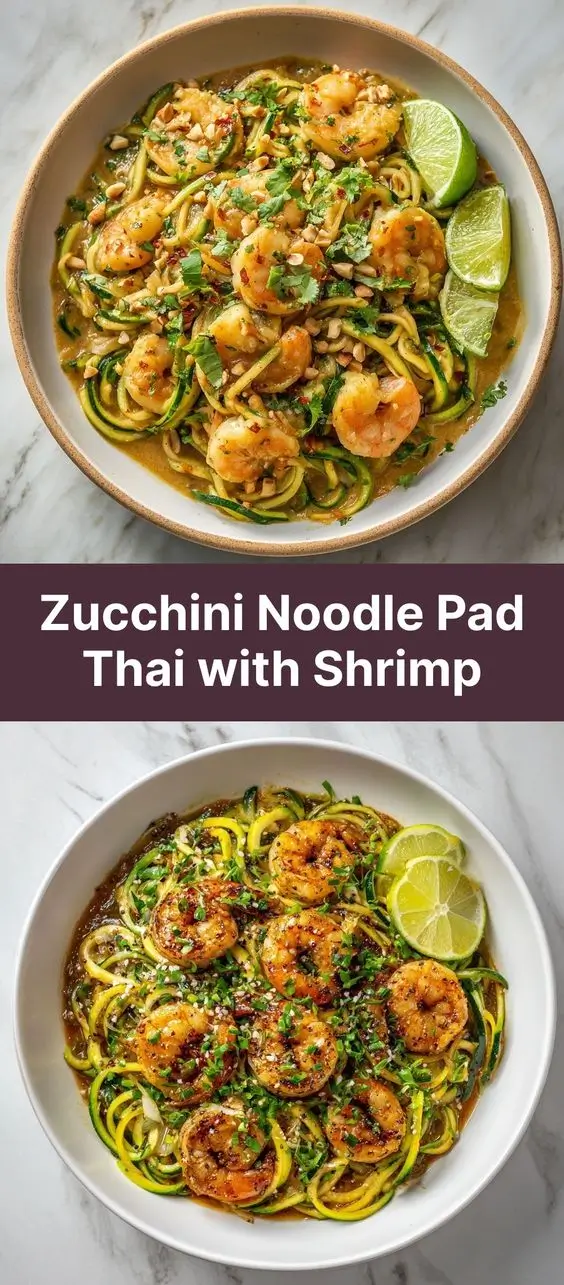
Zucchini Noodle Pad Thai with Shrimp: A Fresh, Healthy Twist on a Classic Favorite
The History of Pad Thai and Its Modern Evolution
Pad Thai is one of the most iconic dishes in Thai cuisine, with roots that trace back to the mid-20th century. It was popularized during the nationalist movement in Thailand under Prime Minister Plaek Phibunsongkhram in the 1930s and 1940s, who sought to modernize the country and promote national unity through food. As part of this initiative, the government encouraged the consumption of rice noodles as a way to reduce rice consumption and boost exports. Street vendors were given grants to sell Pad Thai, and it quickly became a staple across the nation.
The traditional dish consists of stir-fried rice noodles (typically sen lek), tamarind paste, fish sauce, dried shrimp, garlic, red chili pepper, palm sugar, and often includes egg, tofu, and a protein such as chicken or shrimp. It’s garnished with crushed peanuts, fresh lime wedges, bean sprouts, and green onions. Over time, Pad Thai gained international acclaim and has been adapted by home cooks and chefs around the world.
In recent years, with the rise of health-conscious eating and low-carb lifestyles, culinary innovators have begun reimagining classic dishes using alternative ingredients. One such innovation is the use of spiralized zucchini as a noodle substitute—commonly known as “zoodles.” This transformation gives Pad Thai a lighter, nutrient-dense profile while maintaining the bold, tangy, sweet, and savory flavors that make the original so beloved. Zucchini Noodle Pad Thai with Shrimp is thus not only a tribute to tradition but also a reflection of modern dietary trends emphasizing freshness, balance, and wellness.
Ingredients Breakdown: What Makes This Dish Shine
The magic of Zucchini Noodle Pad Thai with Shrimp lies in its harmonious blend of fresh, vibrant ingredients and bold seasonings. Each component plays a crucial role in delivering texture, flavor, and nutrition.
- Zucchini: The star of the show, zucchini is spiralized into thin noodles that mimic the texture of rice noodles when lightly cooked. Low in calories and carbohydrates, high in water content, and rich in vitamin C and antioxidants, zucchini provides a light yet satisfying base.
- Shrimp: Peeled and deveined medium shrimp add lean protein, a delicate sweetness, and a luxurious texture. Shrimp cook quickly and pair beautifully with the tangy-sweet sauce.
- Tamarind Paste: This is the soul of authentic Pad Thai flavor—a deep, fruity sourness that cannot be replicated exactly with substitutes like lime juice or vinegar. Tamarind brings complexity and authenticity to the sauce.
- Fish Sauce: A quintessential ingredient in Southeast Asian cooking, fish sauce adds umami depth and saltiness. It’s fermented from anchovies and sea salt and should be used sparingly due to its potency.
- Coconut Aminos or Soy Sauce (optional): For those avoiding fish sauce or seeking a soy-free, gluten-free alternative, coconut aminos offer a slightly sweeter, milder umami note.
- Palm Sugar or Coconut Sugar: These natural sweeteners provide a caramel-like richness that balances the tartness of tamarind. They melt smoothly into the sauce and prevent it from being overly acidic.
- Garlic and Shallot: Sautéed until fragrant, these aromatics build the foundational flavor of the dish.
- Egg: Scrambled into the noodles, the egg adds creaminess, protein, and helps bind the ingredients together.
- Bean Sprouts: Added raw at the end, they bring crunch and freshness, enhancing the textural contrast.
- Lime Wedges: Essential for finishing the dish, lime juice brightens all the flavors and adds a zesty kick.
- Roasted Peanuts: Crushed peanuts lend nuttiness, saltiness, and a delightful crunch. Opt for unsalted or lightly salted varieties to control sodium levels.
- Green Onions and Cilantro: These herbs contribute aromatic freshness and a pop of color.
- Red Pepper Flakes or Fresh Chili: For heat lovers, a pinch of spice elevates the overall taste profile.
- Avocado Oil or Coconut Oil: Used for stir-frying, these healthy fats have high smoke points and complement the dish without overpowering it.
Step-by-Step Recipe: How to Make Zucchini Noodle Pad Thai with Shrimp
Follow this detailed guide to create a restaurant-quality, nutrient-packed meal right in your kitchen.
Ingredients (Serves 3–4)
- 4 medium zucchinis, spiralized (about 6 cups)
- 1 lb (450g) medium shrimp, peeled and deveined
- 3 cloves garlic, minced
- 1 small shallot, finely chopped
- 2 large eggs, beaten
- 2 cups fresh bean sprouts
- 3 tbsp tamarind paste (or concentrate diluted in 2 tbsp warm water)
- 2 tbsp fish sauce (or coconut aminos for fish-free option)
- 1½ tbsp palm sugar or coconut sugar (adjust to taste)
- 1 tbsp avocado oil or coconut oil
- Juice of 1 lime (about 2–3 tbsp)
- ¼ cup roasted peanuts, crushed
- ¼ cup fresh cilantro, chopped
- 3 green onions, sliced diagonally
- ½–1 tsp red pepper flakes (optional)
- Salt and freshly ground black pepper, to taste
Directions
- Prepare the Zucchini Noodles: Spiralize the zucchinis using a spiralizer or julienne peeler. Place the zoodles in a colander, sprinkle lightly with salt, and let them sit for 10–15 minutes to draw out excess moisture. Gently press with paper towels or a clean kitchen towel to remove water—this prevents a soggy stir-fry.
- Make the Pad Thai Sauce: In a small bowl, whisk together tamarind paste, fish sauce, and palm sugar until the sugar dissolves completely. Set aside. If the mixture is too thick, add a teaspoon of warm water to help it blend smoothly.
- Cook the Shrimp: Heat ½ tablespoon of oil in a large non-stick skillet or wok over medium-high heat. Add the shrimp in a single layer and cook for 1–2 minutes per side until pink and opaque. Remove and set aside.
- Sauté Aromatics: In the same pan, add the remaining oil. Sauté garlic and shallot for 30–60 seconds until fragrant but not browned.
- Add Eggs: Push the aromatics to one side, pour in the beaten eggs, and scramble gently until just set. Mix into the aromatics.
- Incorporate Zucchini Noodles: Add the drained zucchini noodles to the pan. Stir-fry for 2–3 minutes—just enough to warm them through and soften slightly without turning mushy.
- Add Sauce: Pour the prepared Pad Thai sauce over the zoodles. Toss everything together gently and cook for another 1–2 minutes until the sauce coats the noodles evenly.
- Combine All Ingredients: Return the cooked shrimp to the pan. Add half of the bean sprouts, green onions, and cilantro. Toss gently to combine. Avoid overcooking to preserve texture and nutrients.
- Finish and Serve: Remove from heat. Squeeze fresh lime juice over the top, sprinkle with crushed peanuts, red pepper flakes (if using), and the remaining bean sprouts and herbs. Adjust seasoning with extra fish sauce, lime, or sugar if needed.
- Plate Immediately: Serve hot, ideally in wide bowls to showcase the colorful ingredients. Accompany with extra lime wedges and a side of additional peanuts for sprinkling.
Tips for Perfect Zucchini Noodle Pad Thai Every Time
- Don’t Skip the Salting Step: Removing excess moisture from zucchini is critical. Skipping this can lead to a watery dish that lacks proper sauce adherence.
- Use a Hot Pan: A properly heated skillet ensures quick cooking and prevents steaming, which preserves the zucchini’s texture.
- Prep Ahead: Spiralize zucchini and make the sauce in advance. Store separately in the fridge for up to 24 hours to streamline cooking.
- Avoid Overcooking: Zucchini noodles only need 2–3 minutes of stir-frying. Overcooking turns them soft and unappealing.
- Balancing the Sauce: Taste your sauce before adding it. The ideal Pad Thai flavor is a balanced harmony of sweet, sour, salty, and umami. Adjust sugar or tamarind accordingly.
- Fresh Tamarind Is Key: While substitutions exist, real tamarind paste makes a noticeable difference in authenticity. Look for it in squeeze bottles or blocks at Asian grocery stores.
- Protein Variations: Swap shrimp with grilled chicken, tofu, tempeh, or scallops for variety.
- Serve Immediately: This dish does not reheat well due to the delicate nature of zucchini. Best enjoyed fresh off the stove.
Variations and Customizations
One of the greatest strengths of Zucchini Noodle Pad Thai is its adaptability. Here are several creative ways to customize it to suit different diets, preferences, or what’s in your pantry:
- Vegan Version: Omit shrimp and egg. Use firm tofu or edamame for protein. Replace fish sauce with soy sauce or tamari (gluten-free) and a splash of seaweed powder for umami depth.
- Keto-Friendly: Reduce or omit sugar entirely. Use erythritol-based sweetener instead of palm sugar. Ensure tamarind is low-carb (some brands add sugar).
- Vegetable Boost: Add shredded carrots, thinly sliced bell peppers, baby bok choy, or snap peas for more color, crunch, and nutrients.
- Different Noodles: While zucchini is the focus, mix in yellow squash noodles or spaghetti squash for variety.
- Nut-Free Option: Replace peanuts with toasted sunflower seeds or pumpkin seeds for a similar crunch without allergens.
- Spicier Kick: Add sriracha, chili garlic sauce, or a few slices of fresh bird’s eye chili during cooking.
- Herb Twists: Try Thai basil or mint for an aromatic twist on the usual cilantro.
- Low-Sodium Version: Use reduced-sodium fish sauce or dilute regular fish sauce with water. Increase lime and tamarind to maintain flavor without salt overload.
Health Considerations and Nutritional Value
Zucchini Noodle Pad Thai with Shrimp is a nutritionally balanced dish that aligns well with various health goals, including weight management, clean eating, and plant-forward diets.
Nutritional Highlights (Per Serving, Approximate)
- Calories: ~280–320 kcal
- Protein: ~25–30g (from shrimp and egg)
- Carbohydrates: ~15–20g (mostly complex carbs and fiber from vegetables)
- Fiber: ~4–6g (thanks to zucchini, bean sprouts, and veggies)
- Fat: ~10–12g (healthy fats from oil, avocado if added, and shrimp)
- Sugar: ~8–10g (naturally occurring and minimal added sugars)
Key Health Benefits
- Low-Carb and Keto-Compatible: By replacing rice noodles with zucchini, this dish reduces carbohydrate content by over 75%, making it ideal for low-carb and ketogenic diets.
- Rich in Antioxidants: Zucchini contains lutein, zeaxanthin, and vitamin C, which support eye health and immune function.
- Heart-Healthy: Shrimp provide omega-3 fatty acids and selenium, supporting cardiovascular health when consumed in moderation.
- Gluten-Free and Dairy-Free: Naturally free from gluten and dairy, this recipe is suitable for individuals with sensitivities or celiac disease (ensure fish sauce is gluten-free).
- Hydration Support: With zucchini being over 95% water, this dish contributes to daily hydration needs.
- Digestive Health: The fiber from vegetables aids digestion and promotes gut health.
Dietary Notes
- Shellfish Allergy: Avoid shrimp; substitute with grilled chicken, turkey, or plant-based protein.
- Gout Concerns: Shrimp are moderate in purines. Those managing gout may limit portion size or opt for tofu.
- Pregnancy: Fully cooked shrimp are safe and beneficial during pregnancy due to their protein and choline content. Ensure all seafood is sourced responsibly.
Frequently Asked Questions (FAQ)
Can I make this dish ahead of time?
While best served fresh, you can prep components in advance. Spiralize zucchini (salt and drain), make the sauce, and chop veggies up to one day ahead. Cook the dish just before serving to avoid sogginess.
How do I store leftovers?
Store in an airtight container in the refrigerator for up to 1 day. Reheat gently in a skillet over low heat—microwaving may release more water. Note that texture will soften upon storage.
Can I freeze Zucchini Noodle Pad Thai?
No, freezing is not recommended. Zucchini becomes watery and mushy when thawed due to its high water content.
Is this dish truly gluten-free?
Yes, provided you use gluten-free fish sauce or coconut aminos. Some fish sauces contain wheat, so always check labels.
What can I use instead of tamarind?
If unavailable, substitute with 2 tbsp lime juice + 1 tsp brown sugar. However, the flavor will lack the complexity of true tamarind.
Can I use store-bought spiralized zucchini?
Yes, many grocery stores now carry pre-spiralized zucchini in the produce section. Just remember to drain excess liquid before cooking.
Why are my zucchini noodles soggy?
This usually happens if they weren’t salted and drained or were overcooked. Always pat them dry and stir-fry briefly.
Can I add avocado?
Absolutely! Diced avocado adds creaminess, healthy fats, and complements the tangy sauce beautifully.
Is this recipe kid-friendly?
Yes, especially if you reduce the spice level. Kids often enjoy the mild flavor of zucchini and the fun “noodle” texture. Let them sprinkle their own peanuts and lime!
Can I make it in an air fryer or oven?
No, this is a stovetop stir-fry dish. The quick cooking method is essential for texture and flavor development.
Summary
Zucchini Noodle Pad Thai with Shrimp is a vibrant, healthy reinvention of a Thai classic—offering bold flavors, colorful ingredients, and a nourishing profile perfect for modern diets. Light yet satisfying, it’s a delicious way to enjoy your favorite takeout flavors guilt-free.