Introduction
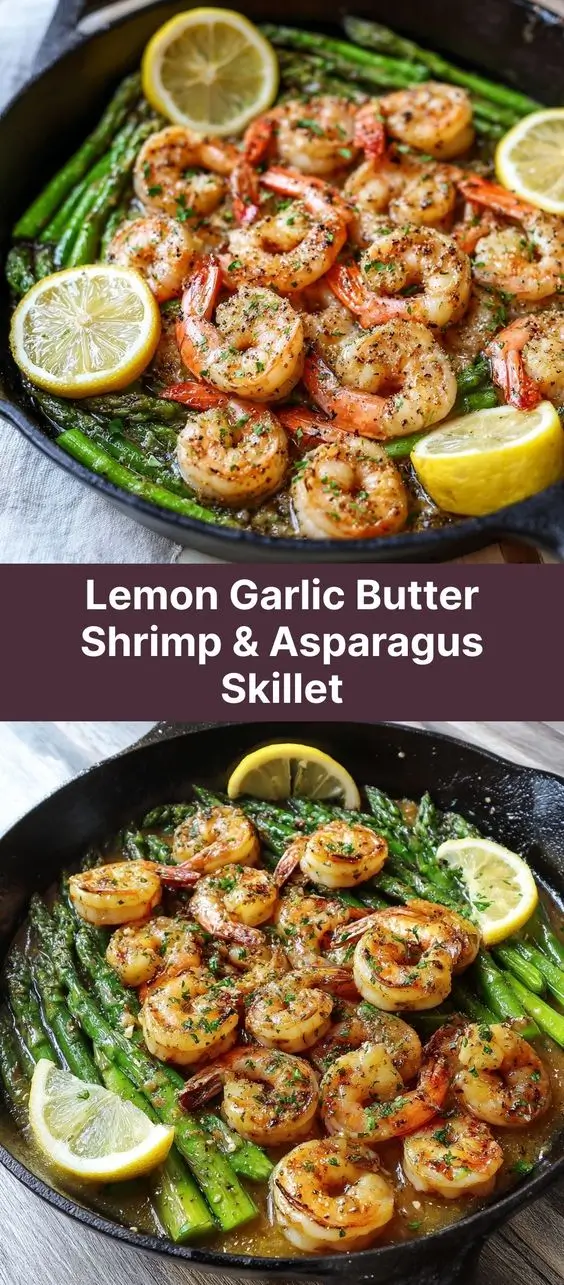
Welcome to a culinary delight that brings together the bold zest of lemon, the rich aroma of garlic, and the succulent tenderness of shrimp—all paired with crisp, vibrant asparagus in one sizzling skillet. The Lemon Garlic Butter Shrimp & Asparagus Skillet is not just a dish; it’s an experience. Perfect for weeknight dinners or impressing guests on a cozy evening, this recipe combines simplicity with gourmet flair. With minimal prep time, quick cooking, and maximum flavor, it’s a go-to meal for home cooks seeking something healthy, delicious, and visually stunning. Whether you’re following a low-carb, keto, or Mediterranean-inspired diet, this dish fits seamlessly into your lifestyle while delivering restaurant-quality taste from the comfort of your kitchen.
The History
While there isn’t a single documented origin for the Lemon Garlic Butter Shrimp & Asparagus Skillet, its roots can be traced back to coastal Mediterranean cuisines, particularly those of Southern France, Italy, and Greece. These regions have long celebrated fresh seafood, seasonal vegetables, and simple yet aromatic preparations using olive oil, butter, citrus, and herbs. Shrimp has been a staple protein in seaside communities for centuries, often sautéed quickly over high heat to preserve its delicate texture. Asparagus, once prized by ancient Romans and Egyptians for its medicinal properties, became a symbol of springtime freshness in European cooking. The combination of lemon and garlic as flavor enhancers dates back even further—ancient Greeks used them both for their pungent taste and health benefits. Over time, French cuisine refined these elements into elegant dishes like “crevettes à l’ail” (garlic shrimp), while Italian cooks embraced “aglio e olio” techniques. The modern American adaptation integrates butter more liberally, creating a richer sauce, and the one-pan skillet method reflects contemporary preferences for fast, clean, and efficient cooking. Today, this dish stands as a fusion of old-world tradition and new-age convenience, beloved by food lovers across continents.
Ingredients Breakdown
Understanding each ingredient helps elevate your cooking and allows for informed substitutions without sacrificing flavor:
- Shrimp: Large or jumbo shrimp (16–20 count per pound) are ideal. Peeled and deveined, they cook quickly and absorb flavors beautifully. Opt for wild-caught if possible for better texture and sustainability.
- Asparagus: Choose firm, bright green stalks with tightly closed tips. Thicker spears hold up better during cooking and offer a meatier bite. Trim the woody ends before use.
- Butter: Unsalted butter gives you control over seasoning. It adds richness and helps create a silky sauce when emulsified with lemon juice.
- Garlic: Freshly minced garlic provides the signature pungency and depth. Avoid pre-minced jarred versions for optimal flavor.
- Lemon: Both zest and juice contribute brightness. Zest contains essential oils that intensify citrus notes, while juice balances the fat from the butter.
- Olive Oil: Used for searing, extra virgin olive oil lends a fruity undertone and prevents butter from burning at high temperatures.
- White Wine: Dry white wine (like Sauvignon Blanc or Pinot Grigio) deglazes the pan and adds complexity. Substitute with chicken broth if avoiding alcohol.
- Red Pepper Flakes: A pinch introduces subtle heat, enhancing other flavors without overpowering.
- Fresh Herbs: Parsley or basil adds color and freshness. Flat-leaf parsley is preferred for its clean, slightly peppery taste.
- Salt & Black Pepper: Essential for seasoning layers throughout the cooking process.
Each component plays a role in building a harmonious flavor profile—savory, tangy, herbal, and slightly sweet—all coming together in perfect balance.
Step-by-Step Recipe
- Prep Ingredients: Pat shrimp dry with paper towels to ensure proper searing. Season lightly with salt and pepper. Trim asparagus by snapping off the tough ends or cutting 1–2 inches from the base. Mince garlic, zest and juice the lemon, chop parsley, and measure out all ingredients (mise en place).
- Sear Asparagus: Heat 1 tablespoon olive oil in a large skillet (preferably stainless steel or cast iron) over medium-high heat. Add asparagus in a single layer and cook for 3–4 minutes, turning occasionally, until bright green and slightly tender. Remove and set aside.
- Cook Shrimp: In the same skillet, add 1 tablespoon butter and 1 tablespoon olive oil. Once butter melts and begins to foam, add shrimp in a single layer. Sauté for 1–2 minutes per side until pink and opaque. Do not overcrowd—cook in batches if needed. Transfer shrimp to a plate.
- Build Sauce: Reduce heat to medium. Add remaining butter and stir in minced garlic and red pepper flakes. Cook for 30 seconds until fragrant (do not let garlic brown). Pour in white wine (or broth), scraping up any browned bits from the bottom of the pan. Let simmer for 2–3 minutes until reduced by half.
- Combine: Return asparagus and shrimp to the skillet. Add lemon juice and zest. Toss gently to coat everything in the sauce. Cook for another 1–2 minutes to reheat through.
- Finish: Stir in chopped parsley. Taste and adjust seasoning with additional salt, pepper, or lemon juice as needed.
- Serve Immediately: Plate hot, optionally garnished with extra parsley, lemon slices, or grated Parmesan cheese. Serve with crusty bread, rice, quinoa, or enjoy as-is for a low-carb option.
Tips
- Dry Shrimp = Better Sear: Moisture prevents browning. Always pat shrimp thoroughly dry before cooking.
- Don’t Overcook Shrimp: They continue to cook slightly after removal from heat. Remove when just opaque to avoid rubberiness.
- Use High Heat Wisely: Start high for searing, then reduce for delicate ingredients like garlic to prevent bitterness.
- Brown Bits Are Flavor: Deglazing the pan with wine or broth lifts caramelized residues (“fond”), which enriches the sauce.
- Balanced Acidity: If the lemon makes the dish too tart, balance with a tiny drizzle of honey or a bit more butter.
- Uniform Cutting: Cut asparagus into similar lengths so they cook evenly.
- Skillet Size Matters: Use a 12-inch skillet to avoid crowding and allow space for stirring.
- Rest Before Serving: Letting the dish sit for a minute after cooking allows flavors to meld.
- Make Ahead Tip: Prep all ingredients ahead of time. This dish comes together fast, so having everything ready ensures smooth execution.
- Leftover Storage: Store leftovers in an airtight container in the refrigerator for up to 2 days. Reheat gently in a skillet—microwaving may make shrimp rubbery.
Variations and Customizations
This versatile recipe welcomes creativity. Here are some delicious twists:
- Protein Swap: Replace shrimp with scallops, chicken breast strips, or even firm tofu for a vegetarian version.
- Veggie Boost: Add sliced mushrooms, cherry tomatoes, spinach, zucchini, or bell peppers along with the asparagus.
- Dairy-Free Option: Substitute butter with vegan butter or increase olive oil. Coconut oil works but adds a slight tropical note.
- Creamy Version: Stir in ¼ cup heavy cream or coconut milk at the end for a luxurious, velvety sauce.
- Herb Variations: Try dill, chives, tarragon, or thyme instead of parsley for different aromatic profiles.
- Spicier Kick: Increase red pepper flakes or add a dash of hot sauce like Sriracha or Calabrian chili paste.
- Lemon Alternative: Use lime or orange for a citrus twist—lime pairs well with cilantro, while orange complements thyme.
- Wine-Free: Use vegetable or seafood stock combined with a splash of apple cider vinegar or white wine vinegar for acidity.
- Keto-Friendly: Already naturally low in carbs, but serve with cauliflower rice or roasted broccoli for full compliance.
- Mediterranean Style: Top with crumbled feta, Kalamata olives, and sun-dried tomatoes for a Greek-inspired flair.
- Asian Fusion: Replace lemon with yuzu or rice vinegar, add ginger, soy sauce, and sesame oil, and garnish with green onions and sesame seeds.
Health Considerations and Nutritional Value
The Lemon Garlic Butter Shrimp & Asparagus Skillet is not only delicious but also packed with nutritional benefits:
- Shrimp: Low in calories and high in protein, shrimp provide about 20g of protein per 3-ounce serving. They’re rich in selenium, vitamin B12, phosphorus, and omega-3 fatty acids, supporting heart and brain health.
- Asparagus: A nutrient powerhouse, asparagus is loaded with fiber, folate, vitamins A, C, E, and K, and antioxidants like glutathione. It supports digestion, immunity, and detoxification.
- Lemon: High in vitamin C, lemon boosts immune function and enhances iron absorption. Its citric acid may support kidney stone prevention.
- Garlic: Known for its antimicrobial and anti-inflammatory properties, garlic may help lower blood pressure and cholesterol levels.
- Butter & Olive Oil: While high in fat, moderate use of unsaturated fats (especially olive oil) supports heart health. Using mostly olive oil with a touch of butter keeps saturated fat in check.
- Low Carb & Gluten-Free: Naturally free from gluten and low in carbohydrates, making it suitable for keto, paleo, and gluten-sensitive diets.
- Sodium Note: Be mindful of added salt, especially if using store-bought broth or serving with salty sides. You can reduce sodium by using low-sodium ingredients and boosting flavor with herbs and lemon.
- Allergy Alert: Contains shellfish and dairy (butter). For allergies, substitute shrimp with chicken or chickpeas and use dairy-free alternatives.
Per serving (approx. 1 cup with 6 oz shrimp and ½ cup asparagus): ~320 calories, 28g protein, 18g fat (9g saturated), 8g carbohydrates, 4g fiber, 150mg cholesterol, 450mg sodium (varies based on ingredients). Always consult a nutritionist for personalized dietary advice.
Ingredients
- 1.5 lbs (680g) large shrimp, peeled and deveined
- 1 bunch asparagus (about 1 lb / 450g), trimmed and cut into 2-inch pieces
- 4 tbsp unsalted butter, divided
- 2 tbsp extra virgin olive oil, divided
- 5 cloves garlic, minced
- 1 large lemon (zest + 3 tbsp juice)
- ¼ cup dry white wine (e.g., Sauvignon Blanc or Pinot Grigio)
- ½ tsp red pepper flakes (adjust to taste)
- ¼ cup fresh parsley, finely chopped
- Salt and freshly ground black pepper, to taste
Directions
- Pat shrimp dry with paper towels and season lightly with salt and pepper. Set aside.
- Trim asparagus by snapping or cutting off the woody ends. Wash and pat dry.
- In a large skillet over medium-high heat, warm 1 tablespoon olive oil. Add asparagus in a single layer and sauté for 3–4 minutes, turning occasionally, until crisp-tender and bright green. Remove and set aside.
- In the same skillet, heat 1 tablespoon butter and 1 tablespoon olive oil over medium-high heat. Once butter is foamy, add shrimp in a single layer. Cook for 1–2 minutes per side until pink and just cooked through. Transfer to a plate.
- Reduce heat to medium. Add remaining 2 tablespoons butter. Stir in minced garlic and red pepper flakes. Cook for 30 seconds, stirring constantly, until fragrant.
- Pour in white wine, scraping the bottom of the pan to release any browned bits. Simmer for 2–3 minutes until liquid is reduced by half.
- Return asparagus and shrimp to the skillet. Add lemon juice and lemon zest. Gently toss to coat everything in the sauce. Cook for 1–2 minutes to reheat.
- Remove from heat. Stir in chopped parsley. Taste and adjust seasoning with salt, pepper, or more lemon juice as desired.
- Serve immediately, garnished with extra parsley and lemon slices if desired.
FAQ
Q: Can I use frozen shrimp?
A: Yes! Thaw frozen shrimp completely in the refrigerator overnight or under cold running water. Pat very dry before cooking to ensure proper searing.
Q: Is it safe to eat shrimp every day?
A: In moderation, yes. Shrimp are high in cholesterol but low in saturated fat and rich in nutrients. Consult your doctor if you have specific health concerns.
Q: Can I make this ahead of time?
A: Best served fresh, but you can prep all ingredients ahead. Reheat gently to avoid overcooking shrimp.
Q: What wine should I use?
A: A dry, crisp white wine like Sauvignon Blanc, Pinot Grigio, or Chardonnay works best. Avoid cooking wines—they contain added salt and preservatives.
Q: How do I know when shrimp are done?
A: Shrimp turn opaque and pink, curl into a “C” shape, and reach an internal temperature of 120°F (49°C). Overcooked shrimp form a tight “O” and become rubbery.
Q: Can I add pasta?
A: Absolutely! Toss with cooked linguine, fettuccine, or orzo to turn it into a full entrée. Reserve some pasta water to thin the sauce if needed.
Q: Why did my sauce separate?
A: Temperature shock or too much fat can cause separation. Emulsify by whisking vigorously or adding a splash of warm broth while stirring.
Q: Is asparagus supposed to be crunchy?
A: Yes—it should be crisp-tender. If you prefer softer asparagus, steam or blanch before sautéing, or cook longer in the pan.
Q: Can I grill instead?
A: Yes! Skewer shrimp and asparagus, brush with garlic butter, and grill over medium heat for 2–3 minutes per side.
Q: How do I store leftovers?
A: Cool completely and refrigerate in an airtight container within 2 hours. Consume within 1–2 days for best quality.
Summary
The Lemon Garlic Butter Shrimp & Asparagus Skillet is a fast, flavorful, and nutritious one-pan meal that delivers bold Mediterranean-inspired taste with minimal effort. Packed with protein, fiber, and vibrant flavors, it’s perfect for healthy weeknight dinners or elegant entertaining.