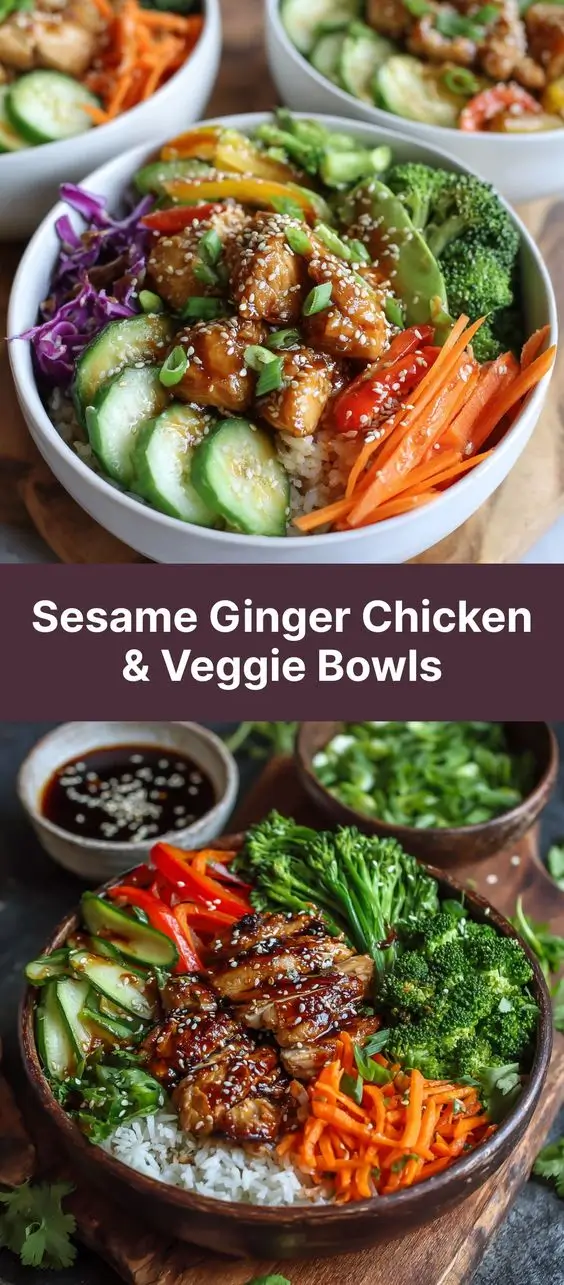
Sesame Ginger Chicken & Veggie Bowls
Introduction
Sesame Ginger Chicken & Veggie Bowls are the ultimate fusion of bold Asian-inspired flavors and wholesome, nutritious ingredients. This vibrant, colorful dish brings together tender marinated chicken, crisp-tender vegetables, and a rich, aromatic sesame-ginger sauce served over fluffy brown rice or quinoa for a satisfying, balanced meal. Whether you’re looking for a quick weeknight dinner, a healthy lunch option, or a way to incorporate more plant-based foods into your diet, this bowl delivers on taste, texture, and nutrition. Packed with protein, fiber, and essential vitamins, it’s a culinary masterpiece that’s as nourishing as it is delicious.
The History
The roots of Sesame Ginger Chicken trace back to traditional East Asian cuisines, particularly Chinese and Japanese cooking, where ginger has been revered for centuries not only for its pungent, warming flavor but also for its medicinal properties. In ancient China, ginger was used in both culinary and herbal remedies to aid digestion and circulation. Sesame oil and seeds, originating from the Indus Valley civilization, were later adopted across Asia due to their rich, nutty profile and high smoke point—making them ideal for stir-frying.
In modern times, sesame-ginger flavor profiles gained global popularity through the spread of Pan-Asian cuisine in the 20th century, especially in North America. Chefs began blending elements from Chinese, Korean, and Japanese cooking to create accessible, fusion-style dishes. The “bowl” format itself emerged from Hawaiian poke culture and California’s farm-to-table movement, emphasizing fresh, layered ingredients in a single serving vessel. Today, Sesame Ginger Chicken & Veggie Bowls represent a harmonious blend of tradition and innovation—a celebration of cultural exchange on a plate.
Ingredients Breakdown
For the Chicken:
- Chicken Breast (1.5 lbs): Lean and high in protein, chicken breast provides a tender base that absorbs marinades beautifully.
- Fresh Ginger (2 tbsp grated): Adds zingy warmth and anti-inflammatory benefits.
- Garlic (3 cloves minced): Enhances depth and savory umami notes.
- Soy Sauce (¼ cup low-sodium): Offers saltiness and richness while keeping sodium levels in check.
- Rice Vinegar (2 tbsp): Provides tanginess and helps tenderize the meat.
- Honey (2 tbsp): Balances the salt and acid with natural sweetness.
- Sesame Oil (1 tbsp toasted): Imparts a deep, roasted aroma essential to authentic Asian flavor.
- Red Pepper Flakes (½ tsp): Introduces subtle heat—adjustable based on preference.
For the Vegetables:
- Bell Peppers (1 red, 1 yellow, sliced): Bright, sweet, and loaded with vitamin C.
- Broccoli (2 cups florets): Nutrient-dense cruciferous vegetable rich in fiber and antioxidants.
- Carrots (2 medium, julienned): Add crunch and beta-carotene for eye health.
- Snow Peas (1 cup): Crisp and slightly sweet, contributing freshness.
- Zucchini (1 large, halved and sliced): Mild flavor and soft texture when cooked.
- Green Onions (4 stalks, sliced): For garnish and mild onion kick.
For the Sauce (Optional Extra Boost):
- Peanut Butter or Tahini (3 tbsp): Creamy thickener that enhances mouthfeel and adds healthy fats.
- Lime Juice (1 tbsp): Brightens the overall flavor profile.
- Maple Syrup or Agave (1 tsp): Additional sweet balance if desired.
- Water (2–3 tbsp): To thin the sauce to drizzling consistency.
For Serving:
- Brown Rice or Quinoa (3 cups cooked): Whole grains offering complex carbs and sustained energy.
- Sesame Seeds (toasted, 2 tbsp): For nutty finish and calcium boost.
- Cilantro (optional, for garnish): Fresh herbal note that elevates aroma.
- Extra Red Pepper Flakes or Sriracha: For those who love extra spice.
Step-by-Step Recipe
- Marinate the Chicken: In a large bowl, combine grated ginger, minced garlic, soy sauce, rice vinegar, honey, sesame oil, and red pepper flakes. Slice chicken breasts horizontally into thin cutlets for faster cooking, then add to the marinade. Toss well to coat every piece. Cover and refrigerate for at least 30 minutes (or up to 4 hours for deeper flavor).
- Cook the Base Grain: While the chicken marinates, prepare 3 cups of brown rice or quinoa according to package instructions. Use vegetable broth instead of water for added flavor. Set aside once cooked and fluffed.
- Prepare the Vegetables: Wash and slice all vegetables uniformly so they cook evenly. Keep them separated by type for organized cooking.
- Cook the Chicken: Heat 1 tablespoon of coconut or avocado oil in a large skillet or wok over medium-high heat. Remove chicken from marinade (reserve leftover marinade) and sear for 5–7 minutes, flipping occasionally, until golden brown and internal temperature reaches 165°F. Transfer to a plate and cover loosely with foil.
- Reduce the Marinade: Pour the reserved marinade into the same hot pan. Bring to a simmer and cook for 3–4 minutes until slightly thickened—this kills any raw chicken residue and intensifies flavor.
- Stir-Fry the Vegetables: In the same pan, add another teaspoon of oil if needed. Start with harder veggies like broccoli and carrots—sauté for 3 minutes. Then add bell peppers, zucchini, and snow peas. Stir-fry for another 4–5 minutes until vibrant and crisp-tender. Avoid overcooking to preserve nutrients and texture.
- Combine or Layer: You can either toss the cooked chicken back into the veggie mixture with reduced sauce for a unified stir-fry, or keep components separate for better visual appeal in bowls.
- Make the Creamy Drizzle (Optional): In a small bowl, whisk peanut butter (or tahini), lime juice, maple syrup, 1 tsp of the reduced sauce, and water until smooth. Adjust thickness with more water as needed.
- Assemble the Bowls: Divide warm grain among 4–6 bowls. Arrange chicken and vegetables in sections for an aesthetically pleasing presentation. Drizzle each bowl with the creamy sesame-ginger sauce.
- Garnish and Serve: Top with sliced green onions, toasted sesame seeds, fresh cilantro, and a wedge of lime. Offer sriracha or chili crunch on the side for heat lovers.
Tips
- Uniform Cutting: Cut chicken and vegetables into similar sizes to ensure even cooking.
- Don’t Overcrowd the Pan: Cook chicken in batches if necessary to avoid steaming instead of searing.
- Use Toasted Sesame Oil Wisely: It’s potent—use sparingly as a finishing oil or in marinades, not for high-heat frying.
- Boost Flavor Without Salt: Add a splash of fish sauce or miso paste to the marinade for deeper umami without increasing sodium significantly.
- Prep Ahead: Marinate chicken the night before and chop vegetables in advance for faster weekday assembly.
- Reheating Tip: When reheating leftovers, sprinkle a few drops of water and cover while microwaving to revive moisture.
- Wok Hei Magic: If using a gas stove, crank the heat high and toss ingredients constantly for that signature “breath of the wok” smoky flavor.
Variations and Customizations
This recipe is incredibly adaptable to different dietary needs, preferences, and seasonal produce.
- Vegetarian/Vegan Option: Replace chicken with tofu, tempeh, or chickpeas. Press and cube firm tofu, then marinate and pan-sear until crispy. Use maple syrup instead of honey for a fully vegan version.
- Gluten-Free Version: Substitute tamari or coconut aminos for soy sauce to make it gluten-free.
- Keto-Friendly Adaptation: Skip the rice and serve over cauliflower rice or massaged kale. Increase healthy fats with avocado slices or extra tahini sauce.
- Low-Carb Alternative: Use spiralized zucchini noodles (zoodles) or shirataki noodles as the base.
- Spice Level Control: Omit red pepper flakes for mildness, or add gochujang, sambal oelek, or fresh Thai chilies for intense heat.
- Seasonal Swaps: In fall, try roasted sweet potatoes and Brussels sprouts; in spring, use asparagus and sugar snap peas.
- Nut-Free Option: Swap peanut butter for sunflower seed butter in the sauce to accommodate allergies.
- Grain Variations: Try farro, barley, wild rice blend, or sushi rice depending on desired texture and nutritional goals.
Health Considerations and Nutritional Value
A typical serving (one bowl) contains approximately:
- Calories: ~520–580 kcal (varies based on grain and oil amounts)
- Protein: 35–40g – supports muscle repair and satiety
- Carbohydrates: 55–65g – primarily complex carbs from whole grains and vegetables
- Dietary Fiber: 8–10g – promotes digestive health and blood sugar control
- Fat: 18–22g – mostly unsaturated fats from sesame oil, nuts, and seeds
- Sodium: ~600–750mg (with low-sodium soy sauce); reduce further with coconut aminos
Key Nutrients:
- Vitamin A: From carrots and red peppers – vital for vision and immune function.
- Vitamin C: Abundant in bell peppers and broccoli – boosts immunity and collagen production.
- Iron: Found in chicken and dark leafy greens (if added) – essential for oxygen transport.
- Calcium: Provided by sesame seeds and broccoli – supports bone health.
- Zinc & Selenium: Present in chicken and whole grains – important for metabolism and antioxidant defense.
- Gingerol: Active compound in ginger – known for anti-nausea and anti-inflammatory effects.
Dietary Benefits:
- High-protein content makes this meal ideal for weight management and post-workout recovery.
- Rich in phytonutrients and antioxidants that combat oxidative stress.
- Low glycemic index when made with brown rice or quinoa, supporting stable blood sugar levels.
- Contains heart-healthy fats from sesame oil and nut butters.
- Ideal for meal prepping—keeps well in the fridge for up to 4 days.
Ingredients
- 1.5 lbs boneless, skinless chicken breasts, thinly sliced
- 2 tbsp fresh ginger, grated
- 3 cloves garlic, minced
- ¼ cup low-sodium soy sauce (or tamari/coconut aminos for GF)
- 2 tbsp rice vinegar
- 2 tbsp honey (or maple syrup for vegan)
- 1 tbsp toasted sesame oil
- ½ tsp red pepper flakes (adjust to taste)
- 1 red bell pepper, sliced
- 1 yellow bell pepper, sliced
- 2 cups broccoli florets
- 2 medium carrots, julienned
- 1 cup snow peas
- 1 large zucchini, halved and sliced
- 4 green onions, sliced
- 3 cups cooked brown rice or quinoa
- 2 tbsp toasted sesame seeds
- Fresh cilantro, for garnish (optional)
- 2 tbsp peanut butter or tahini (for sauce)
- 1 tbsp lime juice
- 1 tsp maple syrup
- 2–3 tbsp water (for sauce thinning)
- Coconut or avocado oil, for cooking
Directions
- In a mixing bowl, whisk together grated ginger, minced garlic, soy sauce, rice vinegar, honey, sesame oil, and red pepper flakes.
- Add sliced chicken to the marinade, ensuring all pieces are coated. Cover and refrigerate for 30 minutes to 4 hours.
- Cook brown rice or quinoa in vegetable broth according to package directions. Set aside.
- Heat 1 tbsp oil in a large skillet or wok over medium-high heat. Remove chicken from marinade and cook for 5–7 minutes until fully cooked. Transfer to a plate.
- Pour reserved marinade into the same pan and simmer for 3–4 minutes to reduce and sterilize.
- Add a bit more oil if needed, then sauté broccoli and carrots for 3 minutes. Add bell peppers, zucchini, and snow peas; stir-fry 4–5 minutes more.
- Return chicken to the pan with vegetables and pour reduced marinade over. Toss gently to combine (or keep separate for bowl styling).
- For creamy sauce: mix peanut butter, lime juice, maple syrup, 1 tsp reduced sauce, and water until smooth.
- Divide rice among bowls. Arrange chicken and vegetables attractively. Drizzle with sauce.
- Garnish with green onions, sesame seeds, cilantro, and lime wedges. Serve immediately.
FAQ
Can I make this ahead of time?
Yes! Marinate the chicken and chop vegetables up to 24 hours in advance. Cook everything and store in airtight containers in the fridge for up to 4 days. Reheat gently before serving.
Is this recipe freezer-friendly?
Cooked chicken and sauce freeze well for up to 3 months. Vegetables are best frozen separately or eaten fresh to maintain texture.
Can I grill the chicken instead?
Absolutely! Grill marinated chicken on high heat for 3–4 minutes per side. Slice and serve over stir-fried or grilled veggies.
What can I substitute for peanut butter?
Tahini, almond butter, cashew butter, or sunflower seed butter work great. Choose nut-free options for allergies.
How do I get restaurant-quality wok flavor at home?
Use the highest heat possible, avoid overcrowding, and let ingredients caramelize slightly without constant stirring. A carbon steel wok helps achieve this.
Are these bowls kid-friendly?
Yes! Kids often enjoy the sweet-savory sauce. Reduce spice, dice food finely, and let them build their own bowls for fun engagement.
Can I use frozen vegetables?
While fresh is ideal, you can use frozen broccoli or stir-fry blends—just thaw and pat dry to prevent sogginess during cooking.
Summary
Sesame Ginger Chicken & Veggie Bowls combine tender marinated chicken, crisp seasonal vegetables, and a flavorful sesame-ginger sauce over wholesome grains for a nutritious, globally inspired meal. Easy to customize, packed with protein and fiber, and perfect for meal prep—this bowl satisfies both palate and wellness goals in one delicious bite.