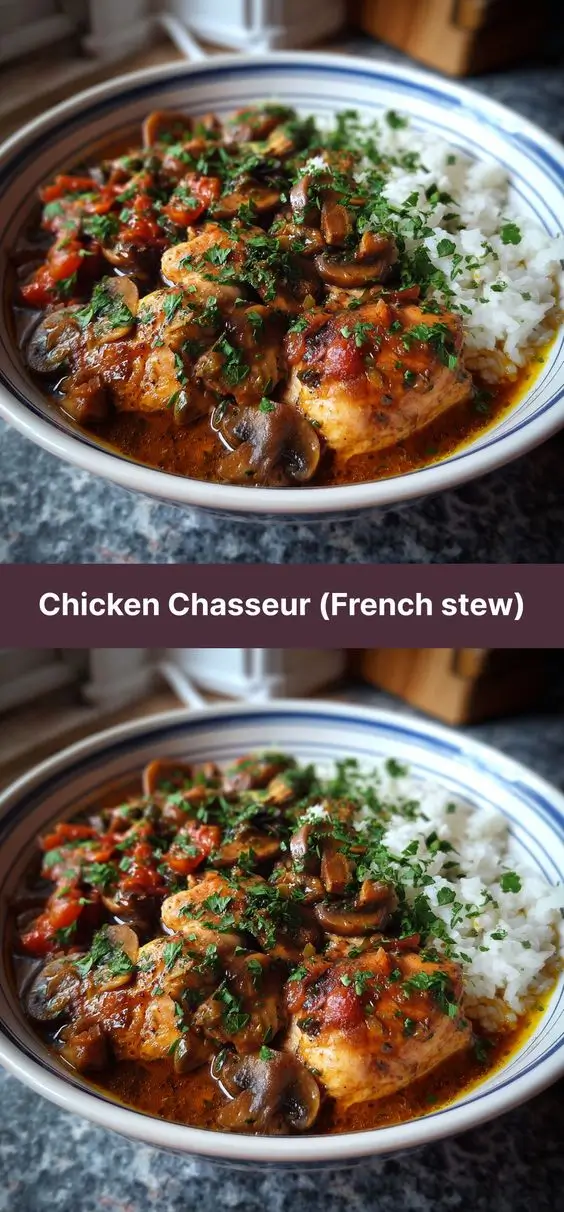
Chicken Chasseur: A Rustic French Classic
The History of Chicken Chasseur
Chicken Chasseur, known in French as Poulet à la Chasseur, is a traditional French stew that embodies the soulful essence of countryside cooking. The term “chasseur” translates to “hunter” in English, and this dish was historically prepared by hunters who used readily available forest ingredients—such as wild mushrooms, garlic, herbs, and wine—to create hearty, flavorful meals after a day of hunting. Originating in the rural regions of France, particularly in areas like Burgundy and Provence, where game birds were abundant and foraged foods plentiful, the recipe evolved over centuries into a beloved classic.
Originally made with game birds like pheasant or rabbit, the dish transitioned to using more accessible poultry such as chicken during the 19th and 20th centuries, especially as it gained popularity in home kitchens and French bistros. Its rustic preparation reflects the principles of cuisine bourgeoise—simple, robust flavors derived from quality ingredients cooked slowly to develop depth. Unlike other French sauces that rely on elaborate reductions or dairy, Chasseur sauce is distinguished by its savory-sour profile, achieved through tomatoes, wine, and aromatic vegetables.
Over time, Chicken Chasseur became a staple of French home cooking and fine dining alike, celebrated for its balance of acidity, umami, and herbal fragrance. It’s often served in autumn and winter months when mushrooms are at their peak, though modern adaptations make it possible to enjoy year-round. Today, the dish stands as a testament to the ingenuity of rural French cooks who transformed humble ingredients into culinary masterpieces.
Ingredients Breakdown: What Makes Chicken Chasseur Unique
The magic of Chicken Chasseur lies in its harmonious blend of earthy, tangy, and aromatic components. Each ingredient plays a crucial role in building the complex flavor profile characteristic of this rustic stew:
- Chicken (bone-in, skin-on): Preferably thighs and drumsticks, which remain moist during slow cooking and impart rich flavor to the sauce. The bones contribute gelatin, giving the sauce body.
- Olive oil or butter: Used for searing the chicken, creating a golden crust while developing fond—the browned bits essential for flavor.
- Shallots and onions: Provide sweetness and depth. Shallots are favored in French cuisine for their delicate, nuanced flavor.
- Garlic: Adds pungency and warmth; typically minced or sliced and added toward the end of vegetable sautéing to avoid burning.
- Mushrooms (cremini, button, or wild varieties): Represent the “hunter’s” harvest. Sautéed until golden, they lend an earthy umami richness that defines the dish.
- Tomatoes (canned diced or fresh): Introduce acidity and brightness, balancing the richness of the meat and mushrooms. Some versions use tomato paste for concentrated flavor.
- Dry white wine (e.g., Sauvignon Blanc or Chardonnay) or red wine: Deglazes the pan, lifting the fond and adding complexity. White wine is more traditional, though some regional variations use light reds.
- Chicken stock or broth: Forms the base of the sauce, simmered slowly to meld flavors. Homemade stock enhances richness significantly.
- Fresh herbs (thyme, bay leaf, parsley): Thyme complements mushrooms and poultry perfectly; bay leaf adds subtle bitterness; parsley is stirred in at the end for freshness.
- Flour (optional): Sometimes used to lightly dust chicken before searing or to thicken the sauce, though many modern recipes avoid it for a cleaner finish.
- Brandy or cognac (optional): An authentic touch—flambéed briefly to add depth and sophistication.
This combination creates a sauce that is neither too heavy nor too thin—a balanced, deeply savory gravy with a hint of acidity and woodsy aroma, ideal for pairing with starches like potatoes, rice, or crusty bread.
Step-by-Step Recipe: How to Make Authentic Chicken Chasseur
Follow this detailed guide to prepare a restaurant-quality Chicken Chasseur in your own kitchen. This method emphasizes layering flavors through proper browning, deglazing, and slow simmering.
Ingredients
- 4 bone-in, skin-on chicken thighs (about 2.5 lbs / 1.1 kg)
- 2 bone-in chicken drumsticks (optional, for serving variety)
- Salt and freshly ground black pepper (to taste)
- 3 tablespoons olive oil or unsalted butter (or a mix)
- 1 large yellow onion, finely chopped
- 2 shallots, minced
- 3 cloves garlic, thinly sliced
- 1 pound (450g) cremini or white mushrooms, sliced (wild mushrooms like chanterelles or porcini can be added for extra depth)
- 1 can (14.5 oz / 400g) diced tomatoes, drained slightly
- ½ cup (120ml) dry white wine (e.g., Sauvignon Blanc or Pinot Grigio)
- 1 cup (240ml) good-quality chicken stock (preferably homemade)
- 2 sprigs fresh thyme
- 1 bay leaf
- 1 tablespoon tomato paste (optional, for richer color and flavor)
- 1 tablespoon brandy or cognac (optional)
- 2 tablespoons fresh flat-leaf parsley, chopped (for garnish)
- Crème fraîche or butter (optional, for finishing)
Directions
- Season and Prepare the Chicken: Pat the chicken pieces dry with paper towels—this ensures proper browning. Season generously with salt and pepper on both sides.
- Sear the Chicken: In a large Dutch oven or heavy-bottomed pot, heat 2 tablespoons of oil or butter over medium-high heat. Once hot, place chicken pieces skin-side down and cook undisturbed for 6–7 minutes until deep golden brown. Flip and sear the other side for 4–5 minutes. Remove and set aside on a plate. Do not overcrowd the pan; work in batches if necessary.
- Sauté the Aromatics: Reduce heat to medium. Add the remaining oil or butter. Add onions and shallots, stirring occasionally, until softened and translucent (about 5 minutes). Avoid browning them too much at this stage.
- Cook the Mushrooms: Add mushrooms to the pot. Cook for 8–10 minutes, stirring occasionally, until they release their moisture and begin to brown. This step is vital—do not rush it, as browning builds flavor.
- Add Garlic and Tomato Paste: Stir in garlic and tomato paste (if using), cooking for 1 minute until fragrant. Be careful not to burn the garlic.
- Flambé (Optional): Pour in the brandy carefully and ignite with a match or long lighter (stand back!). Let flames die down naturally, then stir to incorporate the caramelized bits.
- Deglaze with Wine: Pour in the white wine, scraping the bottom of the pot with a wooden spoon to lift all the fond. Simmer for 3–4 minutes until reduced by half.
- Build the Sauce: Return the chicken to the pot, along with any accumulated juices. Add diced tomatoes, chicken stock, thyme sprigs, and bay leaf. Liquid should come halfway up the chicken—add more stock if needed.
- Simmer Gently: Bring to a gentle simmer, then reduce heat to low. Cover partially and cook for 35–40 minutes, or until chicken is tender and registers 165°F (74°C) internally.
- Finish the Dish: Remove chicken and keep warm. Increase heat to medium and simmer sauce uncovered for 8–10 minutes to reduce and thicken slightly. Taste and adjust seasoning with salt and pepper. For a silkier texture, stir in a tablespoon of cold butter or crème fraîche off the heat.
- Serve: Discard thyme stems and bay leaf. Return chicken to the sauce briefly to rewarm. Garnish with fresh parsley.
Tips for Perfect Chicken Chasseur
- Brown, Don’t Gray: Proper searing develops Maillard reaction, crucial for flavor. Ensure your pan is hot and avoid moving the chicken too soon.
- Dry Chicken = Better Browning: Always pat the chicken dry before seasoning. Moisture steams instead of sears.
- Use a Heavy Pot: A Dutch oven retains heat evenly and prevents scorching during long simmers.
- Don’t Overcook Mushrooms Early: They should be sautéed separately until golden—not boiled in liquid. Wet mushrooms steam and won’t brown properly.
- Wine Matters: Use a wine you’d drink. Cheap “cooking wine” contains salt and preservatives that dull flavor.
- Skim Fat if Needed: After cooking, skim excess fat from the surface with a spoon or use a fat separator for a cleaner sauce.
- Rest Before Serving: Letting the dish sit for 10 minutes off heat allows flavors to settle and sauce to thicken naturally.
- Make Ahead Friendly: Like most stews, Chicken Chasseur tastes even better the next day. Reheat gently over low heat.
Variations and Customizations
While traditional Chicken Chasseur remains timeless, numerous regional and personal adaptations exist:
- Game Version: Substitute chicken with rabbit, pheasant, or venison for a more authentic “hunter’s” experience.
- Red Wine Chasseur: Some versions, especially in southern France, use light red wine like Beaujolais instead of white for a deeper hue and tannic structure.
- Herb Variations: Tarragon or rosemary can replace or complement thyme for a different aromatic profile.
- Gluten-Free Option: Skip flour entirely; rely on reduction and natural gelatin from bones to thicken the sauce.
- Vegan Adaptation: Use portobello mushrooms or seitan as a protein base, vegetable stock, and omit wine or use non-alcoholic alternatives.
- Creamy Chasseur: Stir in a splash of heavy cream or coconut milk at the end for a richer, velvety texture (not traditional but delicious).
- Add Peppers or Olives: In Mediterranean-inspired takes, roasted bell peppers or niçoise olives may be added for complexity.
- One-Pan Modern Twist: Roast everything together in the oven at 375°F (190°C) for 45 minutes for hands-off cooking.
Health Considerations and Nutritional Value
Chicken Chasseur can be part of a balanced diet when prepared thoughtfully. Here’s what you need to know:
- Protein-Rich: Chicken thighs provide high-quality protein (about 25–30g per serving), essential for muscle repair and satiety.
- Fat Content: Dark meat has more fat than breast, but includes heart-healthy monounsaturated fats. Skin contributes flavor but can be removed before eating to reduce saturated fat.
- Sodium: Store-bought stock and canned tomatoes can be high in sodium. Opt for low-sodium versions or make your own to control salt levels.
- Alcohol: Most alcohol evaporates during cooking, but trace amounts remain. For alcohol-free versions, substitute wine with additional stock and a splash of vinegar (apple cider or white wine vinegar).
- Mushrooms: Low in calories and rich in selenium, B vitamins, and antioxidants. They also support immune function.
- Lycopene from Tomatoes: Cooking tomatoes increases bioavailability of lycopene, a powerful antioxidant linked to reduced risk of certain cancers.
- Portion Control: Serve with nutrient-dense sides like quinoa, roasted vegetables, or cauliflower mash instead of buttery noodles or mashed potatoes to keep the meal lighter.
- Allergens: Naturally gluten-free if no flour is used; dairy-free if butter is substituted with oil. Always check labels on broths and wines for hidden allergens.
Estimated nutritional values per serving (1 thigh with sauce, without sides):
- Calories: ~380
- Protein: 32g
- Fat: 22g (Saturated: 6g)
- Carbohydrates: 8g
- Fiber: 2g
- Sodium: 600–800mg (varies based on ingredients)
Frequently Asked Questions (FAQ)
Can I use chicken breast instead of thighs?
Yes, but boneless, skinless breasts may dry out during cooking. If using breast, reduce cooking time to 20–25 minutes and ensure internal temperature reaches 165°F (74°C). Bone-in, skin-on breasts are better suited for this stew.
Is wine necessary? Can I skip it?
Wine adds acidity and depth, but you can substitute with additional chicken stock plus 1 tablespoon of lemon juice or vinegar (like white wine or apple cider) to mimic tartness.
Can I freeze Chicken Chasseur?
Yes! Freeze in airtight containers for up to 3 months. Thaw overnight in the refrigerator and reheat gently on the stove. Sauce may thicken—thin with a little water or stock.
Why is my sauce too watery?
The sauce should reduce during the final simmer. If too thin, remove chicken and boil sauce rapidly until desired consistency. Alternatively, mix 1 tsp cornstarch with 1 tbsp cold water and stir in, heating until thickened.
What sides go well with Chicken Chasseur?
Classic pairings include:
- Buttered egg noodles
- Mashed potatoes or pommes purée
- Crusty baguette for dipping
- Steamed green beans or haricots verts
- Rice pilaf or farro
- Simple green salad with vinaigrette
Can I make this in a slow cooker?
Yes. Sear chicken and sauté vegetables in a skillet first, then transfer everything to a slow cooker. Cook on low for 6 hours or high for 3–4 hours. Finish by reducing the sauce on the stove if needed.
Do I have to use fresh herbs?
Fresh thyme and bay leaf are preferred, but dried thyme can be used (use 1 teaspoon dried for every 1 sprig fresh). Dried parsley lacks flavor—always use fresh for garnish.
Can I add other vegetables?
Traditionally, it’s just mushrooms and aromatics, but carrots, celery, or leeks can be added when sautéing onions for extra body and sweetness.
Summary
Chicken Chasseur is a richly flavored French country stew featuring tender chicken braised in a savory mushroom-tomato-wine sauce infused with garlic and herbs—a true celebration of rustic elegance. Simple yet sophisticated, it’s a comforting dish perfect for weeknight dinners or impressing guests, embodying the heart of French culinary tradition.