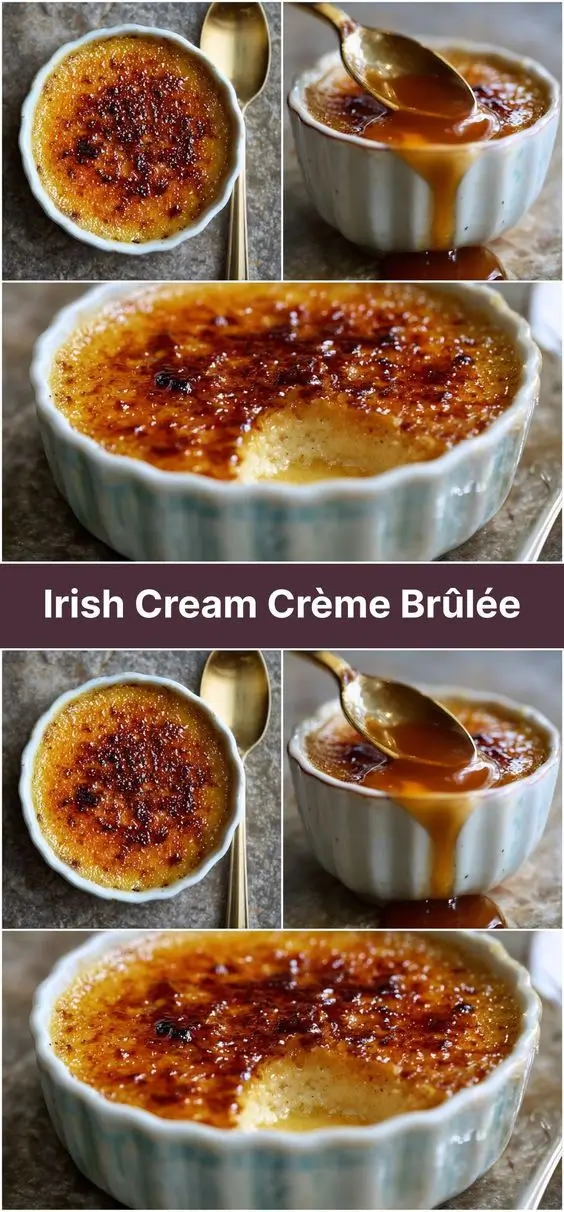
Irish Cream Crème Brûlée
The History
The origins of crème brûlée, a classic French dessert known for its rich custard base and caramelized sugar top, can be traced back to the 17th century. While its exact beginnings are debated—some sources suggest appearances in both French and English cookbooks—the dessert gained widespread popularity in France and eventually became a staple in haute cuisine. The traditional version features a silky blend of cream, egg yolks, sugar, and vanilla, finished with a crisp layer of burnt sugar that shatters under the tap of a spoon.
Fast forward to modern times, and culinary innovators have embraced fusion desserts that combine international flavors with classic techniques. Enter the Irish Cream Crème Brûlée, a luxurious twist on the original that infuses the velvety custard with the warm, comforting notes of Irish cream liqueur—most famously represented by brands like Baileys. This boozy rendition emerged as part of the broader trend of alcohol-infused desserts popularized in the late 20th century, particularly in American and European fine dining circles. The addition of Irish cream not only imparts a subtle whiskey warmth but also enhances the creaminess of the custard, creating a dessert that feels indulgent, festive, and perfectly suited for holiday gatherings or romantic dinners.
Today, Irish Cream Crème Brûlée is celebrated in restaurants across Ireland, the United States, and beyond. It’s often served during St. Patrick’s Day celebrations as a nod to its Irish roots, but its year-round appeal lies in its perfect balance of sophistication and comfort. Whether enjoyed in a Michelin-starred restaurant or recreated in a home kitchen, this dessert bridges cultures and flavors, honoring tradition while embracing innovation.
Ingredients Breakdown
Creating an exceptional Irish Cream Crème Brûlée begins with selecting high-quality ingredients that harmonize to produce a smooth, flavorful custard with a delicate alcoholic kick. Each component plays a crucial role in texture, taste, and structure:
- Heavy Cream (or Double Cream): The foundation of any crème brûlée, heavy cream provides the lush, velvety mouthfeel. Its high fat content ensures the custard sets properly and resists curdling during baking. For an even richer result, some chefs substitute part of the cream with crème fraîche.
- Irish Cream Liqueur: Typically Baileys Original Irish Cream, this ingredient adds sweetness, dairy richness, and a nuanced blend of Irish whiskey, cream, cocoa, and vanilla. It contributes both flavor depth and a slight tang. Use a premium brand for best results, as lower-quality versions may separate or impart artificial aftertastes.
- Egg Yolks: These are essential for thickening the custard through gentle coagulation when baked. Egg yolks add silkiness and a golden hue. Using only yolks (not whole eggs) prevents the custard from becoming rubbery.
- Granulated Sugar: Used in two stages—first to sweeten the custard, then to create the signature crackling top. Fine white sugar melts evenly and caramelizes beautifully under a torch or broiler.
- Vanilla Bean (or Pure Vanilla Extract): A split vanilla bean pod scraped into the cream delivers aromatic complexity and visible speckles throughout the custard. Alternatively, high-quality extract can be used, though it lacks the floral elegance of real vanilla.
- Pinch of Salt: Often overlooked, salt enhances all other flavors, balancing sweetness and preventing the dessert from tasting flat.
- Optional Enhancements: Some variations include dark chocolate shavings, coffee extract, cinnamon, nutmeg, or orange zest to complement the Irish cream. A splash of pure vanilla bean paste can intensify aroma without adding extra liquid.
Step-by-Step Recipe
Follow these detailed instructions to achieve a flawless Irish Cream Crème Brûlée with a satiny custard and a glass-like sugar crust.
Ingredients
- 2 cups (480 ml) heavy cream
- ½ cup (120 ml) Irish cream liqueur (e.g., Baileys)
- 5 large egg yolks
- ⅓ cup (65 g) granulated sugar, plus 2 tablespoons for topping
- 1 vanilla bean, split and seeds scraped (or 1 tsp pure vanilla extract)
- Pinch of sea salt
Directions
- Preheat Oven: Set your oven to 325°F (160°C). Bring a kettle of water to a simmer for the water bath (bain-marie).
- Infuse the Cream: In a medium saucepan, combine the heavy cream, Irish cream liqueur, scraped vanilla seeds, and the empty pod. Heat over medium-low heat until steaming and just about to simmer (do not boil), about 5–7 minutes. Remove from heat, cover, and let steep for 15 minutes to deepen flavor. Discard the vanilla pod.
- Whisk Egg Mixture: In a large bowl, whisk together egg yolks, granulated sugar, and salt until pale yellow and slightly thickened, about 2–3 minutes. Avoid over-whisking to prevent incorporating too much air.
- Temper the Eggs: Slowly pour the warm cream mixture into the egg mixture in a thin stream, whisking constantly to prevent scrambling the yolks. If using vanilla extract instead of a bean, stir it in now.
- Strain the Custard: Pour the mixture through a fine-mesh sieve into a pouring pitcher or large measuring cup. This removes any cooked egg bits and ensures a silky texture.
- Fill Ramekins: Place 4–6 ceramic ramekins (6 oz size) in a deep roasting pan. Divide the custard evenly among them.
- Add Water Bath: Carefully pour hot water into the roasting pan around the ramekins until it reaches halfway up their sides. This gentle, indirect heat prevents curdling and promotes even cooking.
- Bake: Transfer the pan to the oven and bake for 35–45 minutes, or until the edges are set but the center still jiggles slightly like gelatin when nudged.
- Cool and Chill: Carefully remove ramekins from the water bath and let cool to room temperature on a wire rack. Cover each with plastic wrap and refrigerate for at least 4 hours, preferably overnight, to fully set and develop flavor.
- Caramelize the Top: Just before serving, sprinkle about 1–2 teaspoons of sugar evenly over each custard. Use a kitchen torch to melt and caramelize the sugar until deep golden brown and crisp. Alternatively, place under a preheated broiler for 1–3 minutes, watching closely to avoid burning.
- Rest and Serve: Let the caramelized surface harden for 1–2 minutes before serving. Serve immediately for the full sensory experience of cracking through the brittle top into the cold, creamy custard beneath.
Tips
- Use Room Temperature Eggs: Cold eggs can cause the hot cream to cool too quickly, leading to uneven tempering. Let them sit out for 20–30 minutes before use.
- Don’t Skip the Strain: Even if your mixture looks smooth, straining catches tiny particles that could affect texture.
- Avoid Overbaking: The custard will continue to set as it chills. Remove it from the oven when the center still has a slight wobble.
- Uniform Sugar Layer: For even caramelization, use superfine sugar or pulse granulated sugar in a blender briefly. Spread it in a thin, consistent layer.
- Torch Technique: Move the flame in slow, circular motions about 3–4 inches above the surface. Stop when bubbles form and the sugar turns amber—over-torching creates bitterness.
- Chill Before Torch: Ensure custards are thoroughly chilled; warm bases can melt the sugar instead of caramelizing it.
- Prepare Ahead: Custards can be made up to 3 days in advance. Add the sugar topping and torch just before serving.
- Water Bath Seal: To prevent water from seeping into ramekins, wrap the bottom of each with aluminum foil or use silicone ramekins designed for water baths.
Variations and Customizations
The beauty of Irish Cream Crème Brûlée lies in its adaptability. Here are several creative twists to suit different tastes and occasions:
- Chocolate Irish Cream Brûlée: Add 2 oz of melted dark chocolate or 2 tbsp cocoa powder to the warm cream mixture before tempering the eggs. Garnish with chocolate shavings.
- Espresso Crème Brûlée: Infuse 1–2 tsp instant espresso or ¼ cup strong brewed coffee into the cream for a mocha-Irish fusion.
- Bourbon or Whiskey Swap: Replace part of the Irish cream with aged bourbon or single-malt Irish whiskey for a bolder, more complex spirit profile.
- Dairy-Free Version: Use full-fat coconut milk and a dairy-free Irish cream alternative (available commercially or homemade with almond milk, maple syrup, and whiskey). Note: Texture may be slightly less creamy.
- Gluten-Free Friendly: Naturally gluten-free, provided the Irish cream used is certified GF (most major brands are).
- Festive Garnishes: Top with edible gold dust for New Year’s, green sugar crystals for St. Patrick’s Day, or crushed peppermint for Christmas.
- Mini Mason Jar Presentation: Bake in small mason jars for a rustic-chic look, ideal for parties or gifts.
- Fruit Pairings: Serve with a side of macerated berries, poached pears, or caramelized bananas to cut through the richness.
- Smoked Brûlée: Use a smoking gun with hickory or applewood chips to add a smoky aroma before serving—an avant-garde touch loved by foodies.
Health Considerations and Nutritional Value
While undeniably decadent, Irish Cream Crème Brûlée should be enjoyed in moderation due to its high calorie, fat, and sugar content. However, it does offer some nutritional elements worth noting:
- Calories: One serving (about 6 oz) contains approximately 380–450 calories, depending on size and recipe adjustments.
- Fat Content: Around 30–35g of fat per serving, mostly from saturated fat in heavy cream. While this contributes to richness, those monitoring cholesterol should consume sparingly.
- Protein: Provides about 6–8g of protein from egg yolks and dairy, aiding satiety.
- Sugar: Roughly 25–30g per serving, combining added sugar and natural sugars from liqueur and cream. Diabetics may consider sugar substitutes like erythritol for the topping (though caramelization results may vary).
- Alcohol: Contains approximately 1.5–2 oz of Irish cream per serving, equating to roughly 3–4% ABV in the final dish. Most alcohol remains after baking, so this dessert is not suitable for children, pregnant women, or those avoiding alcohol.
- Lactose: High in lactose due to cream and liqueur base. Lactose-intolerant individuals may opt for lactase enzyme supplements or dairy alternatives.
- Nutrient Highlights: Egg yolks contribute choline (important for brain health), vitamin A, and small amounts of iron and folate.
To make a lighter version:
- Replace half the heavy cream with whole milk.
- Reduce sugar by 25% and rely on the natural sweetness of the Irish cream.
- Use low-fat Irish cream alternatives (though texture may suffer).
- Serve in smaller 4-oz ramekins to control portion size.
FAQ
Can I make Irish Cream Crème Brûlée without a kitchen torch?
Yes! Use your oven’s broiler. Place cooled custards on a baking sheet and broil 3–5 inches from the heat for 1–3 minutes, rotating occasionally for even browning. Watch closely to avoid burning.
Why did my custard curdle?
Curdling usually occurs from overheating or improper tempering. Always heat cream gently and add it slowly to eggs while whisking. Straining helps remove any curdled bits.
Can I freeze crème brûlée?
Not recommended. Freezing disrupts the custard’s emulsion, leading to grainy texture upon thawing. It’s best stored refrigerated for up to 3 days.
Can I use whole eggs instead of just yolks?
You can, but the texture will be firmer and less rich. Whole eggs increase protein content, which can make the custard more jelly-like. Stick to yolks for authenticity.
How do I prevent water from leaking into ramekins?
Ensure ramekins are placed on a level surface and use new, tight-fitting foil wraps around the base if necessary. Silicone ramekins eliminate this issue entirely.
Is there non-alcoholic Irish cream available?
Yes—several brands offer alcohol-free versions using flavor extracts and cream substitutes. These work well for a family-friendly version.
Can I double the recipe?
Absolutely. Just ensure all ramekins fit in one roasting pan with space for water circulation. Bake time remains similar, but check doneness individually.
Why isn’t my sugar caramelizing?
Moisture on the custard surface prevents proper melting. Make sure the custards are well-chilled and dry. Try a thinner layer of finer sugar.
Summary
Irish Cream Crème Brûlée masterfully blends the elegance of French dessert tradition with the cozy warmth of Irish spirits, resulting in a rich, creamy custard crowned with a crisp, golden crust. Perfect for special occasions or as a show-stopping finale to a gourmet meal, this indulgent treat balances sweetness, luxury, and just the right hint of booziness.