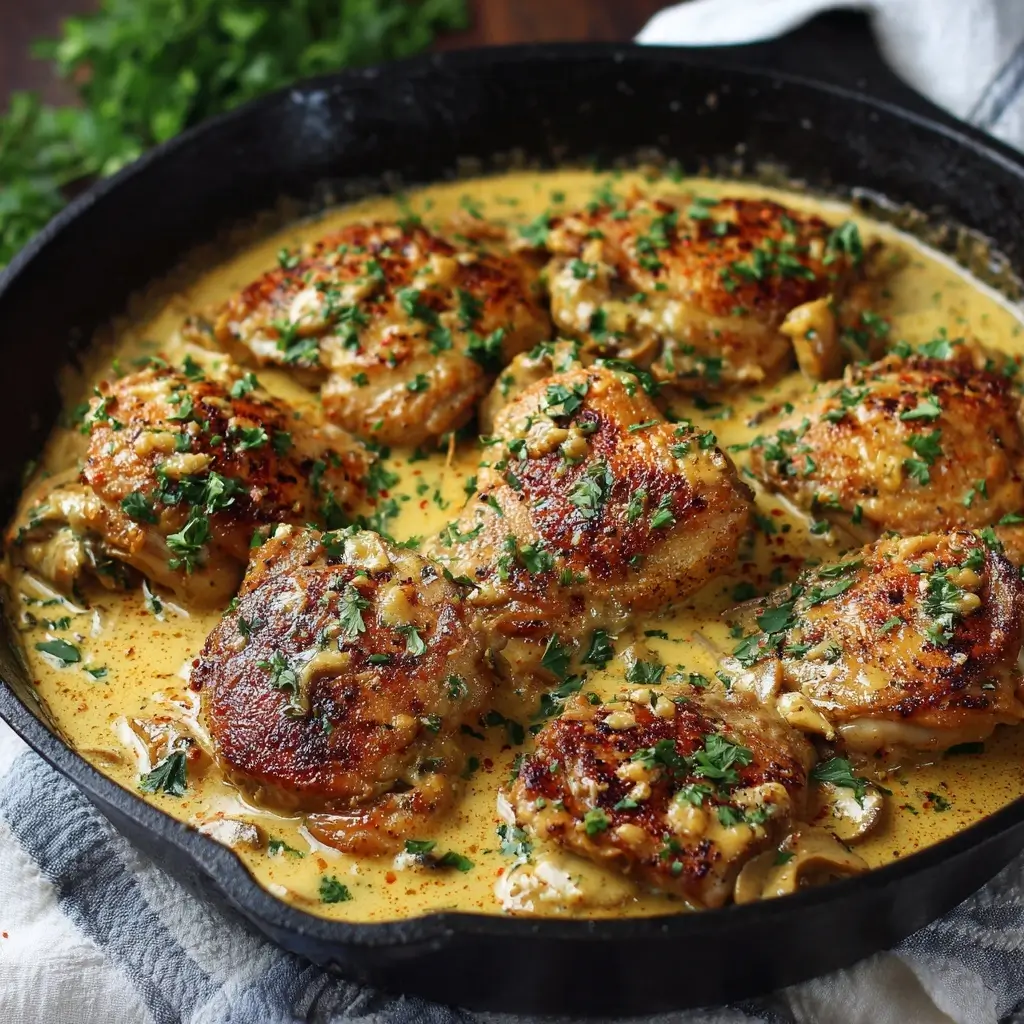
Creamy Dijon Chicken Thighs: A Rich, Flavorful Comfort Dish
Introduction
Creamy Dijon Chicken Thighs are a culinary masterpiece that brings together the succulent richness of chicken thighs with the bold, tangy flavor of Dijon mustard in a velvety cream sauce. This dish strikes the perfect balance between elegance and comfort food, making it ideal for weeknight dinners or impressing guests at weekend gatherings. The tender, fall-off-the-bone texture of the chicken combined with the smooth, aromatic sauce creates a meal that is both satisfying and deeply flavorful. Whether you’re an experienced home cook or just beginning to explore gourmet cooking, this recipe offers simplicity without sacrificing sophistication.
The History
The roots of Creamy Dijon Chicken Thighs trace back to French cuisine, where mustard has long been a staple ingredient in sauces and marinades. Dijon mustard itself originated in the town of Dijon, France, during the 13th century and was traditionally made from brown or black mustard seeds mixed with verjuice—the acidic juice of unripe grapes. Over time, as wine replaced verjuice, the distinct sharp and slightly fruity flavor of Dijon evolved. In French households, mustard-based sauces became popular pairings for meats, particularly poultry and pork.
By the 19th and 20th centuries, creamy sauces incorporating mustard, cream, and herbs became common in French provincial cooking. Chicken, especially dark meat like thighs, was favored for its ability to retain moisture and absorb flavors during slow cooking. As French culinary techniques spread across Europe and North America, variations of mustard-cream chicken dishes emerged, often adapted to local tastes and available ingredients. Today, Creamy Dijon Chicken Thighs represent a modern fusion of traditional French methods with contemporary ease, reflecting both rustic charm and refined taste.
Ingredients Breakdown
The success of this dish hinges on the quality and harmony of its ingredients. Each component plays a vital role in building layers of flavor, texture, and aroma:
- Chicken Thighs (bone-in, skin-on): These provide deep flavor and remain juicy even after prolonged cooking. The fat under the skin renders down, basting the meat naturally and contributing to a rich sauce.
- Dijon Mustard: The star of the dish—sharp, tangy, and slightly nutty. It emulsifies into the sauce and gives the dish its signature zing.
- Heavy Cream: Adds luxurious body and smoothness to the sauce. It balances the acidity of the mustard and creates a silky mouthfeel.
- Garlic: Freshly minced garlic adds aromatic depth and warmth. Sautéed gently, it infuses the oil without turning bitter.
- Shallots or Onion: Shallots are preferred for their mild sweetness and subtle complexity, enhancing the sauce without overpowering.
- Dry White Wine: Deglazes the pan, lifting flavorful browned bits (fond) and adding brightness. Choose a crisp variety like Sauvignon Blanc or Pinot Grigio.
- Chicken Stock: Forms the base of the sauce, providing savory umami notes and helping regulate consistency.
- Fresh Herbs: Thyme and rosemary are classic choices. Their earthy, pine-like aroma complements the mustard and enriches the overall profile.
- Olive Oil or Butter: Used for searing, these fats promote browning (Maillard reaction), which develops complex flavors.
- Salt and Black Pepper: Essential for seasoning throughout each stage of cooking.
- All-Purpose Flour (optional): Sometimes used to lightly dust chicken before searing to thicken the sauce naturally.
Step-by-Step Recipe
- Preparation: Remove chicken thighs from the refrigerator 20–30 minutes before cooking to bring them closer to room temperature. Pat them dry thoroughly with paper towels—this ensures proper browning. Season generously with salt and pepper on both sides.
- Sear the Chicken: Heat 2 tablespoons of olive oil in a large oven-safe skillet or Dutch oven over medium-high heat. Once shimmering, place chicken thighs skin-side down. Cook undisturbed for 6–8 minutes until golden brown and crispy. Flip and sear the other side for 3–4 minutes. Transfer to a plate, leaving juices and fond in the pan.
- Sauté Aromatics: Reduce heat to medium. Add 1 tablespoon butter if needed. Stir in 1 finely chopped shallot and cook for 3–4 minutes until softened. Add 3 minced garlic cloves and stir for 30 seconds until fragrant—do not let garlic burn.
- Build the Sauce Base: Pour in ½ cup dry white wine to deglaze the pan, scraping up all the browned bits with a wooden spoon. Let simmer until reduced by half, about 3–4 minutes.
- Incorporate Liquids: Stir in 1 cup chicken stock, ¼ cup Dijon mustard (use whole-grain for extra texture if desired), 1 teaspoon dried thyme (or 3 sprigs fresh), and a pinch of black pepper. Bring to a gentle simmer.
- Add Cream: Slowly whisk in ¾ cup heavy cream. Stir well to combine. Taste and adjust seasoning—you may want more mustard for tang or salt for balance.
- Return Chicken to Pan: Place chicken thighs back into the skillet, skin-side up. Spoon some sauce over the top but leave the skin exposed to keep it crisp.
- Bake: Transfer the skillet to a preheated oven at 375°F (190°C). Bake uncovered for 35–40 minutes, or until chicken reaches an internal temperature of 165°F (74°C) and thighs are tender.
- Finish and Rest: Remove from oven. If desired, broil for 1–2 minutes to crisp the skin further. Let rest for 5–10 minutes before serving to allow juices to redistribute.
- Garnish and Serve: Sprinkle with chopped fresh parsley. Optionally drizzle with a touch more Dijon or a swirl of cream for presentation.
Tips
- Dry the Skin Well: Moisture is the enemy of crispiness. Patting the chicken dry ensures optimal browning.
- Don’t Crowd the Pan: Sear in batches if necessary. Overcrowding causes steaming instead of searing.
- Use Room-Temperature Cream: Cold cream can curdle when added to hot liquid. Let it warm slightly or temper it by mixing a small amount of hot sauce into the cream first.
- Balance the Tang: If the mustard flavor is too strong, add a teaspoon of honey or a splash of cream to mellow it out.
- Skim Excess Fat: After baking, skim off any excess surface fat with a spoon for a cleaner-tasting sauce.
- Thicken the Sauce: For a richer glaze, simmer the sauce on the stovetop after removing the chicken. Alternatively, mix 1 tsp cornstarch with 1 tbsp cold water and stir in while simmering.
- Check Doneness Properly: Use a meat thermometer. Juices should run clear, and the thigh should feel tender when pierced.
Variations and Customizations
This recipe is highly adaptable. Here are several creative twists:
- Mushroom Dijon Chicken: Sauté sliced cremini or wild mushrooms with the shallots for an earthy, umami boost.
- Herb Crust Variation: Mix Dijon with breadcrumbs and herbs, spread on chicken before baking for a casserole-style topping.
- Mustard-Crème Fraîche Twist: Replace heavy cream with crème fraîche for a tangier, lighter finish.
- Wine-Free Version: Substitute white wine with additional chicken stock and a splash of apple cider vinegar or lemon juice for acidity.
- Dairy-Free Option: Use full-fat coconut milk or cashew cream instead of heavy cream. Pair with dairy-free butter alternatives.
- Spicy Kick: Add a pinch of cayenne pepper, crushed red pepper flakes, or a dash of hot sauce to the sauce.
- Apple & Sage Addition: Sauté diced apples and fresh sage with the aromatics for a sweet-savory autumnal version.
- One-Pan with Vegetables: Add baby potatoes, carrots, or Brussels sprouts to the skillet before baking for a complete meal.
- Air Fryer Method: After searing, transfer to an air fryer basket with sauce poured around (not over) chicken. Cook at 350°F for 20–25 minutes.
- Slow Cooker Adaptation: Sear chicken first, then place in a slow cooker with sauce ingredients. Cook on low for 6 hours or high for 3–4.
Health Considerations and Nutritional Value
Creamy Dijon Chicken Thighs offer a balanced nutritional profile with protein, healthy fats, and essential nutrients, though moderation is key due to the richness of the sauce.
- Protein Source: Chicken thighs are high in protein (about 26g per 100g), supporting muscle maintenance and satiety.
- Fat Content: Dark meat contains more fat than breast, but much of it is monounsaturated fat—beneficial for heart health when consumed in balance.
- Calories: One serving (with sauce) can range from 450–600 calories depending on preparation. Using skinless thighs and low-fat cream reduces this significantly.
- Dijon Mustard Benefits: Low in calories and rich in selenium and antioxidants. Its acetic acid content may support digestion.
- Dairy Considerations: Heavy cream adds saturated fat and calories. Those managing cholesterol or lactose intolerance may opt for substitutes.
- Sodium Levels: Store-bought stock and mustard can be high in sodium. Choose low-sodium versions and control added salt.
- Gluten-Free Potential: Naturally gluten-free if no flour is used and certified GF mustard is selected.
- Balancing the Meal: Serve with steamed greens, quinoa, or roasted vegetables to increase fiber and nutrient density.
Ingredients
- 6 bone-in, skin-on chicken thighs (about 2.5–3 lbs total)
- Salt and freshly ground black pepper (to taste)
- 2 tablespoons olive oil (or unsalted butter)
- 1 large shallot (finely chopped) or ½ small onion
- 3 garlic cloves (minced)
- ½ cup dry white wine (e.g., Sauvignon Blanc)
- 1 cup low-sodium chicken stock
- ¼ cup Dijon mustard (preferably stone-ground for texture)
- ¾ cup heavy cream (or substitute)
- 1 teaspoon dried thyme (or 3 sprigs fresh thyme)
- 1 small sprig fresh rosemary (optional)
- 2 tablespoons chopped fresh parsley (for garnish)
Directions
- Preheat oven to 375°F (190°C).
- Pat chicken thighs dry and season generously with salt and pepper.
- In a large oven-safe skillet, heat olive oil over medium-high heat. Add chicken skin-side down and sear for 6–8 minutes until golden. Flip and sear opposite side for 3–4 minutes. Transfer to a plate.
- Reduce heat to medium. Add butter if needed, then sauté shallot for 3–4 minutes. Add garlic and cook 30 seconds.
- Pour in white wine to deglaze, scraping up browned bits. Simmer until reduced by half (~3–4 min).
- Stir in chicken stock, Dijon mustard, thyme, rosemary, and pepper. Bring to a simmer.
- Whisk in heavy cream until smooth. Adjust seasoning to taste.
- Nestle chicken thighs back into the sauce, skin-side up.
- Transfer skillet to oven and bake for 35–40 minutes, until internal temperature reaches 165°F.
- Remove from oven, rest for 5–10 minutes, garnish with parsley, and serve warm.
FAQ
Can I use chicken breasts instead of thighs?
Yes, but reduce cooking time to 20–25 minutes as breasts cook faster and can dry out. Consider brining first for added moisture.
How do I prevent the cream from curdling?
Avoid boiling the sauce vigorously. Keep it at a gentle simmer. You can also temper the cream by slowly adding a ladle of hot sauce into the cream before mixing it in.
Can I make this ahead of time?
Absolutely. Prepare through step 7, cool, cover, and refrigerate for up to 2 days. Reheat covered in a 350°F oven for 30–35 minutes, adding a splash of stock if needed.
Is this recipe freezer-friendly?
Yes, though dairy-based sauces may separate slightly upon thawing. Freeze in an airtight container for up to 3 months. Thaw overnight in the fridge and reheat gently on the stove, stirring frequently.
What sides go well with Creamy Dijon Chicken Thighs?
Mashed potatoes, buttered egg noodles, risotto, roasted vegetables, green beans almondine, or a simple arugula salad with lemon vinaigrette.
Can I use yellow mustard instead of Dijon?
Not recommended—yellow mustard is sweeter and less complex. Dijon’s sharpness is essential to the dish’s character. Stone-ground or whole-grain Dijon works well too.
Why did my sauce turn out too thin/thick?
If too thin, simmer uncovered to reduce or add a slurry (cornstarch + water). If too thick, whisk in warm stock or cream a tablespoon at a time.
Can I cook this entirely on the stovetop?
Yes. After returning chicken to the sauce, cover and simmer on low for 35–40 minutes, turning once, until fully cooked.
Summary
Creamy Dijon Chicken Thighs deliver a decadent blend of tender, juicy chicken enveloped in a rich, tangy mustard-cream sauce infused with aromatic herbs and wine. Elegant enough for company yet simple enough for family meals, this dish embodies the heart of comforting French-inspired cuisine.