Introduction
Chicken and dumplings is more than just a comforting dish—it’s a culinary heirloom, a steaming bowl of nostalgia that evokes memories of Sunday suppers, snowy afternoons, and grandmother’s kitchen filled with the gentle perfume of simmering broth and fresh herbs. This timeless American classic—though with deep roots across European, African, and Indigenous foodways—represents the very essence of home cooking: nourishing, resourceful, and deeply communal. Whether served in a humble farmhouse kitchen or reimagined in a modern bistro, chicken and dumplings bridges generations through its tender poached chicken, velvety broth, and soft, pillowy dumplings that gently swell and soak up every savory note. Its enduring appeal lies not only in its simplicity but in its remarkable adaptability—each region, each family, each cook adds their own quiet signature, making every pot uniquely personal.
The History
The origins of chicken and dumplings stretch far beyond the American South, weaving together centuries of global culinary evolution. Dumplings themselves are among humanity’s oldest prepared foods—archaeological evidence suggests wheat-based dough parcels were boiled or steamed as early as 5,000 BCE in Central Asia. By the Middle Ages, “dumplings” appeared across Europe under many names: German *Knödel*, Polish *kluski*, English “dowmlings” (first recorded in the 14th century), and Scottish *cloutie dumplings*. When English colonists arrived in North America, they brought flour-based dumpling techniques, adapting them to local ingredients like cornmeal and wild herbs. Enslaved Africans contributed profound culinary knowledge—including stewing methods, thickening with roux or okra, and using every part of the bird—and helped shape the rich, layered textures now associated with Southern iterations. Meanwhile, Native American communities introduced foraged greens, sassafras, and slow-cooked broths that honored seasonal abundance and sustainability. Over time, economic necessity—especially during the Great Depression and wartime rationing—cemented chicken and dumplings as a frugal yet filling meal: a single chicken could yield broth, meat, and dumplings, stretching protein and calories across multiple meals. Regional variations blossomed: Appalachian versions often feature drop dumplings and rustic herb notes; Lowcountry cooks might add benne seeds or a splash of sherry; Midwestern renditions lean into creamy, herb-flecked broths with biscuit-style dumplings; while Pennsylvania Dutch traditions favor egg-rich, rolled-and-cut noodles called “spaetzle” or “klub.” Today, this dish stands not only as comfort food—but as a living archive of resilience, adaptation, and interwoven cultural heritage.
Ingredients Breakdown
Every exceptional pot of chicken and dumplings begins with intentionality—not just in selection, but in understanding how each component contributes to harmony of flavor, texture, and mouthfeel.
- Chicken: A whole stewing hen (3–4 lbs) offers superior collagen-rich dark meat and deeper flavor, ideal for long-simmered broths. Alternatively, bone-in, skin-on chicken thighs and drumsticks deliver richness and tenderness without drying out; breasts may be added at the end for delicate texture. Organic, pasture-raised, or air-chilled poultry yields cleaner taste and better gelatin extraction.
- Aromatics: Yellow onions, celery ribs, and carrots—the classic mirepoix—form the aromatic base. Leeks (white and light green parts), garlic cloves, and fresh parsley stems amplify depth. A bay leaf, 2–3 whole black peppercorns, and a few sprigs of thyme or sage lend subtle earthiness and complexity.
- Liquid: High-quality low-sodium chicken stock forms the foundation—but for true authenticity, make your own by simmering chicken bones, necks, and backs with vegetables and herbs for 4–6 hours. Water can be used, but it must be fortified with extra seasoning and umami sources (e.g., a spoonful of tomato paste, dried porcini powder, or soy sauce).
- Fat & Thickener: Unsalted butter or rendered chicken schmaltz adds luxurious mouthfeel and sheen. All-purpose flour is traditionally used for both the roux (if making a thicker broth) and the dumpling dough; for gluten-free options, a 1:1 blend of brown rice flour, tapioca starch, and xanthan gum works well when carefully balanced.
- Dumpling Flour Base: Soft winter wheat flour (like White Lily or Martha White) produces especially tender, melt-in-your-mouth dumplings due to its lower protein content. If unavailable, all-purpose flour blended with 1–2 tablespoons of cornstarch per cup replicates tenderness. Whole wheat pastry flour adds nuttiness and fiber but requires slightly more liquid.
- Leavening & Moisture: Baking powder provides lift; baking soda may be added in tiny amounts (⅛ tsp) if buttermilk is used for tang and tenderness. Buttermilk, whole milk, or even unsweetened oat milk contribute fat, acidity, and moisture—critical for plump, non-gummy dumplings. Eggs enrich structure and add silkiness, especially in “drop” or “biscuit-style” versions.
- Herbs & Seasonings: Fresh dill, chives, flat-leaf parsley, and tarragon shine bright in the finished dish. Dried thyme, marjoram, and savory offer warm, woodsy notes during simmering. Salt should be added in stages—never all at once—to avoid over-seasoning the broth before reduction. White pepper is preferred over black for its clean heat and lack of visual specks.
- Finishing Touches: A final swirl of cold butter, a drizzle of truffle oil, a handful of baby spinach or kale ribbons stirred in off-heat, or a garnish of crispy fried shallots elevates the dish from homestyle to heirloom-worthy.
Step-by-Step Recipe
- Prepare the Chicken & Broth: Rinse a 3–4 lb stewing hen or 2 lbs bone-in chicken pieces (thighs/drumsticks). Place in a large Dutch oven with 1 large chopped onion, 2 diced carrots, 2 ribs of celery, 4 smashed garlic cloves, 2 bay leaves, 1 tsp black peppercorns, 4 sprigs fresh thyme, and 1 tbsp apple cider vinegar (helps extract minerals from bones). Cover with 10–12 cups cold water or low-sodium stock. Bring to a gentle simmer—not a rolling boil—over medium-low heat. Skim foam for first 10 minutes. Partially cover and simmer for 1 hour 45 minutes (for whole hen) or 1 hour (for pieces), until meat is fall-off-the-bone tender. Remove chicken, reserving liquid.
- Strain & Reserve Broth: Carefully strain broth through a fine-mesh sieve lined with cheesecloth into a large bowl or measuring pitcher. Discard solids except for the softened carrots and onions—you may reserve these for texture. Let broth settle 10 minutes; skim excess fat with a ladle or fat separator. You should have ~8–9 cups clarified broth. Taste and season lightly with salt—remember, dumplings and finishing seasonings will add more.
- Debone & Shred Chicken: While broth cools slightly, shred meat from bones, discarding skin and bones. Reserve 4–5 cups of tender meat; refrigerate any extra for another use. Check for stray cartilage or bone fragments.
- Build the Broth Base: Return 6 cups of strained broth to the Dutch oven. Add reserved cooked carrots/onions (if using), shredded chicken, ½ tsp white pepper, 1 tsp dried thyme, and ¼ cup finely chopped fresh parsley. Bring to a gentle bubble over medium heat. Reduce heat to low to maintain a bare simmer (tiny bubbles at edges only).
- Make the Dumpling Dough: In a large bowl, whisk together 2 cups soft winter wheat flour (or AP flour + 2 tbsp cornstarch), 1 tbsp baking powder, 1 tsp salt, and ½ tsp white pepper. Grate in 4 tbsp cold unsalted butter (or 3 tbsp schmaltz) using a box grater; cut in with a pastry blender or fingers until mixture resembles coarse crumbs. Stir in ¾ cup cold buttermilk (or whole milk + 1 tsp lemon juice) and 1 large egg. Mix *just* until combined—do not overwork. Batter should be thick, sticky, and lumpy, with visible butter flecks. Rest 10 minutes.
- Cook the Dumplings: Using two spoons or a small ice cream scoop (about 1.5 tbsp per dumpling), gently drop batter onto the barely-simmering broth. Space dumplings evenly—do not submerge or stir. Cover tightly with lid (use foil underneath if lid doesn’t seal well). Cook undisturbed for 15 minutes—steam is essential. Do NOT lift the lid during this time. After 15 minutes, check one dumpling: it should be puffed, firm to touch, and cooked through (no raw dough inside). If needed, steam 2–3 minutes more.
- Final Simmer & Finish: Turn off heat. Let pot rest, covered, for 5 minutes—this allows dumplings to fully hydrate and broth to gently thicken. Gently stir in 2 tbsp cold butter, 2 tbsp fresh dill, and additional salt/pepper to taste. For extra richness, swirl in ¼ cup heavy cream or crème fraîche off-heat. Adjust consistency: if too thick, add warm broth; if too thin, simmer uncovered 3–4 minutes.
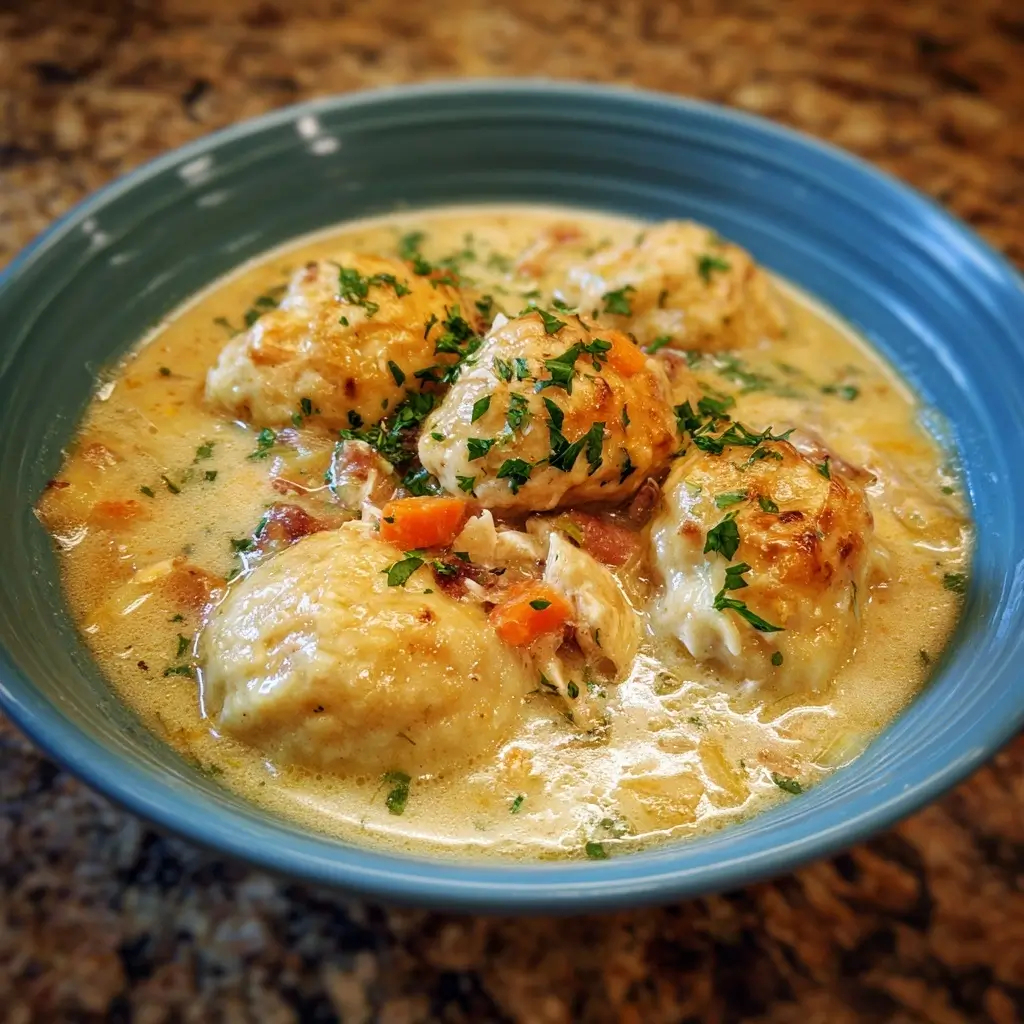
- Serve Immediately: Ladle into wide, shallow bowls—showcasing dumplings nestled in golden broth with shreds of chicken peeking through. Garnish generously with chopped chives, flaky sea salt, and a grind of white pepper.
Tips
- Broth Clarity is Key: Always start with cold liquid and bring slowly to a simmer to prevent emulsifying fat into the broth. Skimming diligently in the first 15 minutes ensures crystal-clear, refined flavor—not cloudy or greasy.
- Dumpling Texture Secret: Cold fat + cold dairy + minimal mixing = tender dumplings. Warm ingredients cause gluten development and toughness. Never knead or stir dumpling batter vigorously—fold like muffin batter.
- Steam, Don’t Boil: A tight-fitting lid traps steam, which cooks dumplings gently and evenly. Boiling causes them to dissolve or become gummy. If your lid leaks, create a foil “gasket” or use a damp kitchen towel tucked under the lid’s edge.
- Test Before Serving: Insert a toothpick into the center of a dumpling—if it emerges clean and dry (not wet or doughy), they’re done. Undercooked dumplings absorb too much broth and turn dense.
- Resist the Stir: Once dumplings are dropped, do not stir, poke, or rearrange. Disturbing them breaks their structure and releases starch, clouding the broth.
- Broth Depth Hack: Roast chicken bones and mirepoix at 400°F for 30 minutes before simmering—adds caramelized, umami-rich complexity. Or add a Parmesan rind while simmering for subtle savoriness.
- Make-Ahead Wisdom: Broth and shredded chicken keep beautifully for 4 days refrigerated or 6 months frozen. Dumpling batter can be mixed (without liquid) and stored airtight for 2 days; add dairy/egg just before cooking. Fully cooked dumplings don’t reheat well—they become rubbery—so always prepare fresh.
- Altitude Adjustment: At high elevations (>3,000 ft), increase simmer time by 10–15% and reduce leavening by ⅛ tsp baking powder to prevent dumplings from collapsing.
- Batch Scaling: To double, use a 7–8 qt Dutch oven and increase dumpling cook time by 2–3 minutes. Never triple in one pot—broth-to-dumpling ratio must remain balanced for proper steaming.
- Leftover Magic: Refrigerated leftovers thicken overnight. Revive with a splash of warm broth and gentle reheating on low—never boil. Leftover dumplings make excellent pan-fried “crispies”: sear in butter until golden and serve atop salad or soup.
Variations and Customizations
Chicken and dumplings invites endless creativity—respecting tradition while honoring personal palate, pantry, and purpose.
- Global-Inspired Twists: Korean-inspired: add gochujang + ginger + scallions; dumplings folded with kimchi and sesame oil. Mediterranean: swap thyme for oregano, add lemon zest + olives + artichokes, and finish with feta. Indian-inflected: bloom cumin, coriander, and turmeric in ghee before adding broth; dumplings enriched with cilantro and mint.
- Dietary Adaptations: Gluten-Free: Use certified GF flour blend + xanthan gum; add 1 tsp psyllium husk to mimic elasticity. Vegan: Substitute king oyster mushrooms or seitan for chicken, vegetable broth infused with nutritional yeast and smoked paprika, and dumplings made with chickpea flour + plant milk + flax egg. Keto/Low-Carb: Replace dumplings with cauliflower “gnocchi” (riced cauliflower + egg + cheese + almond flour) or shirataki noodle dumplings bound with egg white.
- Dumpling Styles: Drop Dumplings (classic, rustic, irregular): quickest method. Rolled & Cut (like biscuits): roll ½-inch thick, cut with floured cutter—more uniform, slightly chewier. Pinched “Soup Dumplings”: wrap small portions of filling (herbed ricotta + chicken) in thin dough—steamed separately, added at the end. Spaetzle-Style: press batter through a spaetzle maker directly into simmering broth—delicate, noodle-like.
- Broth Variations: Creamy: stir in ½ cup mascarpone or goat cheese at the end. Herbal: infuse broth with lemon verbena, chamomile, or lavender (use sparingly). Smoky: add a small chipotle in adobo or smoked salt. Umami Bomb: stir in 1 tsp fish sauce or Worcestershire (undetectable but deeply savory).
- Protein Swaps: Turkey and dumplings (perfect for post-holiday use), rabbit and dumplings (a historic Appalachian favorite), duck confit and dumplings (rich and gamey), or lentil-and-mushroom “vegetarian chicken” dumplings for plant-based depth.
- Seasonal Add-Ins: Spring: fresh peas, asparagus tips, fava beans, and mint. Summer: zucchini ribbons, cherry tomatoes, basil. Autumn: roasted sweet potato cubes, apple matchsticks, toasted walnuts. Winter: kale, collards, parsnips, and pearl onions.
- Textural Contrasts: Top with crispy fried capers, crushed sourdough croutons, pickled red onions, or candied pecans for delightful crunch against the soft dumplings.
- Breakfast Version: Poach eggs into the finished broth just before serving, then top dumplings with a runny yolk, chives, and hot sauce—a soul-warming brunch revelation.
Health Considerations and Nutritional Value
A well-crafted pot of chicken and dumplings can be both deeply satisfying and nutritionally intelligent—when approached with mindful ingredient choices and preparation techniques.
- Protein Powerhouse: Chicken provides complete, high-bioavailability protein—essential for muscle repair, satiety, and immune support. Bone-in, skin-on cuts contribute collagen and glycine, supporting joint health and gut integrity. Removing skin before serving reduces saturated fat by up to 40% without sacrificing flavor.
- Bone Broth Benefits: Long-simmered broth delivers bioavailable minerals (calcium, magnesium, phosphorus), gelatin (supports digestion and skin elasticity), and amino acids like proline and arginine. Studies suggest bone broth may reduce inflammation and improve hydration—especially valuable during cold/flu season.
- Carbohydrate Consciousness: Traditional dumplings rely on refined flour—but substitutions significantly enhance nutritional profile. Adding ¼ cup ground flaxseed or almond flour boosts fiber and healthy fats. Using whole grain or oat flour increases B-vitamins and polyphenols. Portion control matters: 2–3 dumplings per serving keeps carbs moderate (~25–35g).
- Fat Quality Matters: Choosing pasture-raised chicken and using grass-fed butter or olive oil instead of generic shortening improves omega-3:omega-6 ratio and adds antioxidants. Schmaltz (rendered chicken fat) contains oleic acid—similar to olive oil—and imparts unmatched flavor without trans fats.
- Sodium Savvy: Store-bought broths often contain >800mg sodium per cup. Homemade broth lets you control salt entirely—season gradually and finish with flaky sea salt for maximum impact with less volume. Lemon juice or vinegar can enhance perceived saltiness without added sodium.
- Fiber & Phytonutrients: Including the cooked mirepoix (carrots, onions, celery) adds soluble fiber, beta-carotene, quercetin, and vitamin K. Stirring in leafy greens like spinach or Swiss chard at the end boosts folate, iron, and lutein—without compromising texture.
- Digestive Support: The gentle simmering process partially predigests proteins and starches, improving digestibility. Adding fermented elements—like a spoonful of sauerkraut juice to the broth or kimchi dumplings—introduces beneficial probiotics.
- Allergen Awareness: Naturally free of nuts, soy, and shellfish, this dish is easily adapted for common allergies. For egg allergy, replace with flax or chia “egg”; for dairy sensitivity, use coconut milk or unsweetened oat milk and vegan butter.
- Glycemic Considerations: Dumplings made with white flour have a moderate glycemic index (~60). Lower-GI alternatives include coconut flour dumplings (high fiber, low carb) or cassava flour blends. Serving with a side of vinegar-based slaw also helps moderate blood sugar response.
- Portion Guidance: A balanced serving includes ~1 cup broth, 4 oz chicken, 2–3 dumplings, and ½ cup vegetables—totaling approximately 450–550 calories, 35g protein, 45g complex carbs, and 12g healthy fats. Ideal for sustained energy and recovery meals.
Ingredients
- 1 (3–4 lb) stewing hen OR 2 lbs bone-in, skin-on chicken thighs and drumsticks
- 1 large yellow onion, quartered (skin on for color)
- 2 medium carrots, roughly chopped
- 2 ribs celery, roughly chopped
- 4 garlic cloves, smashed
- 2 bay leaves
- 1 tsp whole black peppercorns
- 4 sprigs fresh thyme (or 1 tsp dried)
- 1 tbsp apple cider vinegar
- 10–12 cups cold water or low-sodium chicken stock
- ½ tsp white pepper (freshly ground)
- ¼ cup finely chopped fresh flat-leaf parsley (plus extra for garnish)
- 2 tbsp unsalted butter (cold, for dumplings)
- 2 cups soft winter wheat flour (e.g., White Lily) OR all-purpose flour + 2 tbsp cornstarch
- 1 tbsp baking powder
- 1 tsp fine sea salt
- ¾ cup cold buttermilk (or whole milk + 1 tsp lemon juice)
- 1 large egg
- 2 tbsp cold unsalted butter (for finishing)
- 2 tbsp fresh dill, chopped (optional but recommended)
- Flaky sea salt and white pepper, for finishing
Directions
- Place chicken, onion, carrots, celery, garlic, bay leaves, peppercorns, thyme, and apple cider vinegar in a 6–7 quart Dutch oven. Cover with cold water or stock until chicken is submerged by 1 inch. Bring to a gentle simmer over medium heat. Skim foam vigorously for first 10 minutes. Reduce heat to low, partially cover, and simmer 1 hour 45 minutes (whole hen) or 1 hour (pieces), until meat is extremely tender.
- Remove chicken with tongs; set aside until cool enough to handle. Strain broth through a fine-mesh sieve lined with cheesecloth into a large bowl. Discard solids except for softened carrots/onions (reserve if desired). Let broth sit 10 minutes; skim fat with ladle or separator. You need ~8 cups clear broth.
- Shred chicken, discarding skin, bones, and cartilage. Reserve 4–5 cups meat. Refrigerate extras.
- Return 6 cups strained broth to Dutch oven. Add shredded chicken, reserved vegetables (if using), white pepper, dried thyme, and ¼ cup parsley. Bring to bare simmer over medium heat, then reduce to lowest setting.
- In a large bowl, whisk flour, baking powder, salt, and white pepper. Grate cold butter into flour; cut in with pastry cutter until pea-sized crumbs form. Stir in buttermilk and egg with fork until *just* combined—batter will be shaggy and sticky. Rest 10 minutes.
- Drop dumpling batter by heaping tablespoons onto simmering broth, spacing evenly. Cover tightly. Steam undisturbed for 15 minutes.
- Turn off heat. Let rest covered 5 minutes. Gently stir in 2 tbsp cold butter, dill, and additional salt/pepper to taste. Adjust consistency with warm broth if needed.
- Ladle into bowls. Garnish with chives, flaky salt, and white pepper. Serve immediately.
FAQ
- Can I use chicken breast only?
- Yes—but it dries out easily. Poach breasts separately for just 12–15 minutes in broth, then shred and add at the very end. Dark meat remains more forgiving and flavorful for long simmers.
- Why did my dumplings dissolve?
- Most commonly: broth was boiling too hard (causes disintegration), batter was overmixed (develops gluten), or dumplings were stirred before fully set. Ensure gentle simmer, minimal mixing, and no stirring for first 15 minutes.
- Can I make this in a slow cooker or Instant Pot?
- Absolutely. Slow cooker: simmer chicken/broth on LOW 6–8 hours, strain, then add chicken + broth back, bring to simmer, drop dumplings, cover, and cook on HIGH 30–40 minutes. Instant Pot: Use “Soup” mode for broth (45 min), quick-release, then use “Sauté” to simmer, then “Steam” with trivet + covered bowl for dumplings (15 min). Note: Dumpling texture differs slightly—less “pillowy,” more compact.
- How do I store and reheat leftovers?
- Refrigerate broth + chicken + dumplings together in airtight container up to 4 days. Freeze broth + chicken (without dumplings) up to 6 months. To reheat: gently warm on stove over low heat, adding splash of broth or water to loosen. Never microwave covered—dumplings become tough. Stir in fresh herbs and butter after reheating.
- My broth is too thin. How do I thicken it?
- Avoid flour slurry (causes pastiness). Instead: simmer uncovered 5–10 minutes to reduce; whisk in 1 tsp arrowroot or cornstarch mixed with 1 tbsp cold water; or stir in 2 tbsp mashed cooked potato or white beans for natural, silky thickening.
- Can I prep dumpling batter ahead?
- Dry ingredients can be mixed and stored 2 days ahead. Wet ingredients should be combined no more than 30 minutes before cooking. Batter may be refrigerated up to 2 hours—but longer causes leavening loss and gumminess.
- What’s the best flour for ultra-tender dumplings?
- Soft winter wheat flour (protein 8–9%) like White Lily or Martha White is gold standard. If unavailable, blend 1¾ cups all-purpose + ¼ cup cornstarch + ½ tsp xanthan gum for similar tenderness and lift.
- Are dumplings supposed to be doughy?
- No—they should be light, tender, and cooked through, with a slight springiness. Doughiness signals undercooking, too much liquid, or overmixing. Always test with a toothpick.
- Can I freeze uncooked dumplings?
- Yes! Drop batter onto parchment-lined tray, freeze solid (2 hours), then transfer to freezer bag. Cook from frozen—add 2–3 minutes to steam time. Texture remains excellent.
- Why add vinegar to the broth?
- Acidity helps break down collagen in bones and connective tissue, extracting more gelatin, minerals, and flavor—resulting in richer, more nutritious, and naturally thickened broth.
Summary
Chicken and dumplings is a masterclass in culinary empathy—transforming humble ingredients into profound comfort through patience, technique, and care. It honors history while inviting innovation, nourishes body and spirit alike, and reminds us that the deepest flavors are often simmered slowly, shared generously, and savored with gratitude.
From its multicultural roots to its customizable canvas, this dish proves