Introduction
Chicken potstickers are a beloved staple of Chinese-American cuisine—and increasingly, a global comfort food favorite. These delicate, pan-fried dumplings boast a tender, chewy wrapper enveloping a savory, aromatic filling of ground chicken, vegetables, and seasonings. Crisp golden-brown bottoms contrast beautifully with soft, steamed tops, creating an irresistible textural harmony in every bite. Whether served as an appetizer, snack, light lunch, or party favorite, chicken potstickers offer versatility, depth of flavor, and nostalgic satisfaction. Their name—“potsticker”—is said to originate from a happy accident: a cook left dumplings unattended in a wok, resulting in them sticking to the bottom and forming a lacy, caramelized crust—a flaw that became a celebrated hallmark. Today, they represent both tradition and adaptability, bridging home kitchens and high-end restaurants alike.
The History
The origins of potstickers trace back over 1,800 years to ancient China during the Eastern Han Dynasty (25–220 CE), where dumplings—known as jiaozi—were first crafted by Zhang Zhongjing, a renowned physician and herbalist. Legend holds that he invented them to treat frostbitten ears among villagers, wrapping warming mutton, chili, and herbs in dough shaped like ears. Over centuries, jiaozi evolved regionally: boiled (shuijiao), steamed (zhengjiao), and pan-fried (guotie). The term “potsticker” is an English translation of guotie (literally “pot stick”), popularized in the United States in the mid-20th century by Chinese immigrants adapting traditional recipes for local palates and available ingredients. In post-war America, frozen potstickers entered supermarkets in the 1950s, cementing their place in mainstream culinary culture. While authentic guotie traditionally features pork or lamb, chicken potstickers emerged as a leaner, milder, and widely accessible variation—especially appealing to health-conscious diners, families with children, and those avoiding pork for religious or dietary reasons. Their rise parallels broader trends in fusion cooking, ingredient democratization, and the globalization of Asian flavors.
Ingredients Breakdown
Every exceptional chicken potsticker begins with intentionality—from the quality of the protein to the freshness of aromatics. Below is a detailed, chef-informed analysis of each component’s role:
- Ground Chicken (1 lb / 450g): Opt for a blend of thigh and breast meat (70/30 ratio) for optimal moisture, tenderness, and umami depth. Pure breast can yield dry fillings; pure thigh may be overly rich. Organic, air-chilled, or pasture-raised chicken enhances flavor and reduces sodium content in pre-ground options.
- Napa Cabbage (1½ cups, finely shredded & salted): The backbone of texture and subtle sweetness. Salting and squeezing removes excess water—a critical step preventing soggy dumplings and ensuring cohesive binding.
- Shiitake Mushrooms (¼ cup dried, rehydrated & minced, or ½ cup fresh): Imparts deep, earthy savoriness (umami) and a meaty bite. Dried shiitakes concentrate flavor and add natural glutamates—key to “umami synergy” with chicken.
- Carrot (½ cup, very finely julienned or grated): Adds natural sweetness, vibrant color, and structural integrity without overwhelming moisture.
- Green Onions (⅓ cup, finely chopped, whites and greens separated): Whites contribute pungent aroma when sautéed; greens lend freshness and visual appeal upon serving.
- Fresh Ginger (1 tbsp, microplaned): Non-negotiable for brightness and zesty warmth. Microplaning releases volatile oils far more effectively than grating.
- Garlic (2 cloves, finely minced or pressed): Adds foundational allium depth—best added after ginger to prevent burning.
- Sesame Oil (1½ tsp toasted): Used exclusively for finishing the filling—not for frying. Toasted sesame oil contributes nutty complexity and aroma; never substitute with raw or refined versions.
- Light Soy Sauce (2 tbsp): Provides saltiness, color, and fermented depth. Use naturally brewed, low-sodium varieties to control overall salt content.
- Shaoxing Wine (1 tbsp): A Chinese rice wine that tenderizes protein, deodorizes poultry, and adds subtle fruitiness. Substitute dry sherry *only* if unavailable—but avoid cooking wine with added salt.
- White Pepper (¼ tsp, freshly ground): Preferred over black pepper for its warm, floral heat that complements poultry without harshness.
- Chinese Rice Vinegar (1 tsp): Brightens richness and balances fat—adds a faint tang that lifts the entire profile.
- Chinkiang (Black) Vinegar (½ tsp, optional but recommended): Adds molasses-like depth and complexity; use sparingly to avoid bitterness.
- Arrowroot or Cornstarch (1 tsp): Acts as a binder and moisture regulator—critical for holding shape during cooking and preventing leakage.
- Dumpling Wrappers (36–40 round wrappers, ~3.5″ diameter): Look for “round wonton skins” or “jiaozi wrappers” with 30–40% hydration—pliable but sturdy. Avoid square wrappers or egg roll skins. Freshly made wrappers (flour + water + pinch of salt + knead/rest/roll) yield superior chew and translucency.
- Neutral Oil for Frying (2–3 tbsp): High-smoke-point oils like peanut, grapeseed, or avocado oil ensure even browning without burning.
- Water or Broth for Steaming (½ cup): Enhances steam generation and infuses subtle flavor—chicken broth adds extra savoriness.
Step-by-Step Recipe
- Prep the Cabbage: Finely shred 1½ cups napa cabbage. Place in a bowl, sprinkle with 1 tsp kosher salt, and massage gently for 1 minute. Let sit 10 minutes, then firmly squeeze out *all* excess liquid using cheesecloth or a clean kitchen towel. Discard liquid—this step is non-negotiable for texture.
- Rehydrate & Prep Mushrooms: Soak ¼ cup dried shiitakes in ½ cup hot water for 20 minutes. Drain, reserving liquid. Finely mince caps (discard stems). Strain soaking liquid through a coffee filter to remove grit; set aside.
- Sauté Aromatics: Heat 1 tsp neutral oil in a small skillet over medium-low. Add minced ginger and white parts of green onions. Sauté 1 minute until fragrant. Add garlic and minced shiitakes; cook 2 minutes until mushrooms soften and release moisture. Cool completely.
- Combine Filling: In a large bowl, combine ground chicken, prepared cabbage, cooled mushroom mixture, grated carrot, remaining green onion greens, soy sauce, Shaoxing wine, sesame oil, white pepper, rice vinegar, black vinegar (if using), and arrowroot. Using chopsticks or hands, mix vigorously in *one direction only* for 3–4 minutes until sticky, glossy, and fully emulsified. This develops myosin proteins for binding—do not skip or reverse direction.
- Chill Filling: Cover and refrigerate for at least 30 minutes (up to 2 hours). Chilling firms the fat and improves pliability for wrapping.
- Wrap Dumplings (Traditional Pleat Method): Place 1 wrapper in palm. Spoon 1 scant tablespoon filling into center. Moisten half the outer edge with water. Fold in half to create a half-moon. Starting at center, make 4–5 tight, overlapping pleats on one side, pressing each firmly to seal. Then mirror pleats on the other side, meeting at the tip. Gently press ends to secure. Place on parchment-lined tray, loosely covered with damp cloth.
- Heat Pan & Brown: Heat 2 tbsp neutral oil in a heavy-bottomed 12-inch nonstick or seasoned cast-iron skillet over medium-high until shimmering. Arrange dumplings in single layer, flat side down. Cook undisturbed 2–3 minutes until deeply golden brown and crisp.
- Steam-Fry (The “Potsticker” Step): Carefully pour in ½ cup hot water (or reserved mushroom broth). Immediately cover *tightly* with lid. Reduce heat to medium-low and steam-fry for 8–9 minutes—no peeking! Steam builds pressure, cooking interiors while crisping bases.
- Crisp & Release: Uncover and cook uncovered 1–2 minutes to evaporate residual moisture. Gently shake pan—if dumplings slide freely, base is fully crisp. If stuck, add 1 tsp water, cover 30 seconds, then try again.
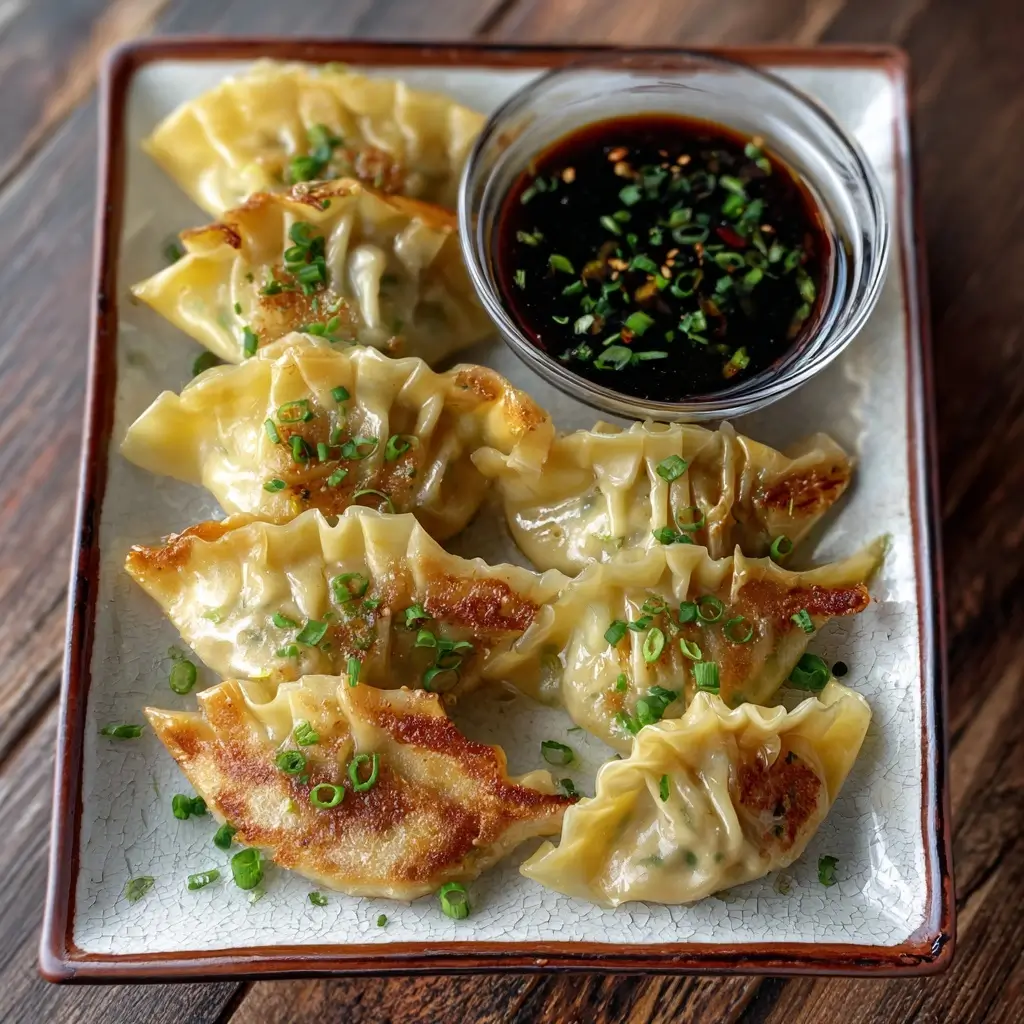
- Plate & Serve: Slide a thin spatula under dumplings and invert onto a serving plate to showcase the lacy, amber crust. Serve immediately with dipping sauce.
Tips
- Wrapper Wisdom: Keep unused wrappers covered with a damp paper towel at all times—they dry out within seconds. If edges crack while pleating, dab with water instead of over-wetting the whole wrapper.
- Filling Firmness Test: Before wrapping, scoop a small portion onto a hot pan—if it holds together without crumbling or oozing grease, it’s ready. If too wet, add ½ tsp more arrowroot; if too dry, mix in ½ tsp cold broth.
- Pan Selection Matters: A well-seasoned carbon steel or cast iron wok provides superior heat retention and crust development versus thin nonstick pans. For beginners, a dark-colored nonstick skillet allows easier visual monitoring of browning.
- Steam Timing Precision: Set a timer—the moment steam stops escaping from under the lid (usually around 8:30 minutes), the dumplings are perfectly cooked. Over-steaming leads to mushy wrappers; under-steaming yields raw centers.
- Batch Cooking Hack: Freeze uncooked dumplings in a single layer on a parchment-lined tray. Once solid (1 hour), transfer to airtight freezer bags. Cook from frozen—add 1–2 minutes to steam time. No thawing needed.
- Crust Integrity Secret: After browning, resist moving dumplings—even slightly—until you’re ready to add water. Disturbing them before a full crust forms causes tearing and leakage.
- Leftover Filling? No Waste! Shape into mini meatballs and bake at 375°F (190°C) for 12–15 minutes. Or stir into fried rice, noodle soups, or lettuce wraps.
- Texture Contrast Boost: For extra crunch, sprinkle 1 tsp toasted sesame seeds or crushed roasted peanuts over dumplings just before serving.
- Acidity Balance: If your dipping sauce tastes flat, add a drop of yuzu juice or calamansi—citrus varietals with lower pH brighten more effectively than lemon or lime.
- Consistent Pleating: Practice pleating with a small batch first. Use your thumb and index finger to fold and pinch—your middle finger can act as a “pleat guide” to maintain uniform spacing.
Variations and Customizations
Chicken potstickers serve as a flavorful canvas for endless creativity—whether adapting to dietary needs, seasonal produce, global pantry staples, or personal taste preferences. Here’s an expansive guide to inspired variations:
Dietary Adaptations
- Gluten-Free: Substitute tamari or coconut aminos for soy sauce; use certified GF rice flour wrappers or homemade wrappers from GF all-purpose blend (with xanthan gum). Ensure Shaoxing wine is GF-certified (some contain barley).
- Keto/Low-Carb: Replace wrappers with thinly sliced zucchini ribbons (blanched 30 sec), cabbage leaves, or shirataki “rice paper.” Bind filling with extra egg white and increase shiitakes for bulk.
- Vegan “Chicken” Version: Use finely chopped king oyster mushrooms + crumbled tofu + vital wheat gluten (seitan) marinated in soy, nutritional yeast, and smoked paprika. Add kelp powder for oceanic umami.
- Paleo: Wrap in blanched collard or chard leaves. Fill with chicken, water chestnuts, bok choy, and ginger-garlic paste bound with duck egg white.
Flavor & Regional Twists
- Sichuan Mala: Add ½ tsp Sichuan peppercorns (toasted & ground), 1 tsp chili oil, and ¼ tsp doubanjiang (fermented broad bean paste) to filling. Garnish with preserved mustard greens.
- Thai-Inspired: Swap soy for fish sauce (1 tbsp), add lemongrass paste (1 tsp), kaffir lime zest (½ tsp), and chopped Thai basil. Serve with sweet chili-lime dipping sauce.
- Korean Kimchi: Fold in ¼ cup finely chopped, well-drained house-made kimchi + 1 tsp gochujang. Top with toasted sesame and scallion oil.
- Mediterranean Herb: Replace ginger/garlic with 1 tbsp za’atar, 2 tsp lemon zest, and 1 tbsp chopped mint + parsley. Add crumbled feta (1 tbsp per batch) to filling.
- Tex-Mex: Mix in 2 tbsp roasted corn, 1 tsp chipotle in adobo (minced), 1 tbsp chopped cilantro, and ½ tsp cumin. Serve with avocado crema and pickled red onions.
Ingredient Swaps & Seasonal Upgrades
- Protein Alternatives: Ground turkey (add 1 tsp poultry seasoning), chicken thigh-only (richer), or shredded rotisserie chicken (pulsed briefly for texture—reduce added liquid).
- Vegetable Rotations: Bok choy (substitute for napa), water chestnuts (for crunch), jicama (sweet crispness), spinach (wilted & squeezed), or roasted delicata squash (mild sweetness).
- Umami Boosters: 1 tsp nutritional yeast, ½ tsp mushroom powder, 1 small rehydrated porcini (finely ground), or 1 tsp fermented black beans (rinsed & minced).
- Herb Infusions: Stir in 1 tsp finely chopped tarragon (French twist), dill (Eastern European), or shiso (Japanese).
- Umami Liquids: Replace part of water with dashi, mushroom broth, or coconut milk (for Southeast Asian flair).
Cooking Method Variations
- Deep-Fried: For ultra-crisp texture, fry at 350°F (175°C) for 2–2.5 minutes until golden. Drain on wire rack—not paper towels—to preserve crunch.
- Steamed Only: Place on oiled parchment in bamboo steamer over briskly boiling water. Steam 10–12 minutes. Delicate, tender, and lighter.
- Baked: Brush dumplings with oil, place on parchment-lined sheet. Bake at 400°F (200°C) for 18–20 minutes, flipping halfway. Less labor-intensive, consistent results.
- Air-Fried: Spray basket and dumplings lightly with oil. Cook at 375°F (190°C) for 10 minutes, shaking halfway. Crisp exterior, tender interior—ideal for small batches.
Health Considerations and Nutritional Value
A standard serving of 6 medium chicken potstickers (made with lean chicken, minimal oil, and vegetable-forward filling) delivers approximately:
- Calories: 220–260 kcal
- Protein: 14–17 g (excellent source; complete amino acid profile)
- Total Fat: 8–11 g (mostly unsaturated from sesame and neutral oils)
- Saturated Fat: 1.5–2.5 g
- Carbohydrates: 24–28 g (primarily from wrapper; ~2 g fiber)
- Sodium: 420–580 mg (highly variable—controlled by soy sauce choice and added salt)
- Vitamins & Minerals: Rich in Vitamin A (carrots, cabbage), Vitamin C (cabbage, scallions), B6 & B12 (chicken), selenium, zinc, and copper. Shiitakes contribute ergothioneine—an antioxidant linked to cellular protection.
Health Highlights:
- Lean Protein Powerhouse: Chicken breast/thigh blend supports muscle maintenance, satiety, and metabolic function—especially beneficial for active individuals and aging adults.
- Fiber & Phytonutrient Density: Napa cabbage contains glucosinolates (linked to detoxification support) and abundant antioxidants like quercetin and kaempferol. Carrots supply beta-carotene for immune and ocular health.
- Anti-Inflammatory Agents: Gingerols in ginger and allicin in garlic exhibit clinically studied anti-inflammatory and antimicrobial properties. Sesame oil contains sesamin and sesamolin—lignans shown to support healthy cholesterol metabolism.
- Low-Glycemic Impact: When paired with vinegar and protein, the moderate carb load elicits a gentle glucose response—suitable for prediabetic or insulin-sensitive individuals.
- Gut-Friendly Potential: Fermented soy sauce (naturally brewed) contains beneficial peptides and mild probiotics. Adding kimchi or miso to variations further enhances microbiome support.
Considerations & Mitigations:
- Sodium Awareness: Use low-sodium soy sauce, omit added salt, and rinse canned ingredients (e.g., water chestnuts). Boost flavor with citrus zest, herbs, and toasted spices instead.
- Gluten Sensitivity: Always verify soy sauce and wrapper labels—even “wheat-free” sauces may contain hydrolyzed wheat protein.
- Oil Moderation: Stick to 2 tbsp max for pan-frying. For oil-free options, steam then finish under broiler for 2 minutes to crisp bases.
- Digestibility: Finely mincing vegetables and thorough mixing ensures easier digestion. Adding digestive-friendly ginger and fennel seed (¼ tsp) to filling aids gastric comfort.
- Allergen Note: Contains wheat (wrappers), soy (soy sauce), and optionally sesame (oil/topping). Clearly label for guests with allergies.
Ingredients
- 1 pound (450g) ground chicken (70% thigh, 30% breast preferred)
- 1½ cups napa cabbage, finely shredded
- 1 tsp kosher salt (for cabbage)
- ¼ cup dried shiitake mushrooms
- ½ cup hot water (for soaking mushrooms)
- ½ cup carrot, very finely julienned or grated
- ⅓ cup green onions, finely chopped (whites and greens separated)
- 1 tablespoon fresh ginger, microplaned
- 2 cloves garlic, finely minced
- 2 tablespoons light soy sauce (naturally brewed, low-sodium preferred)
- 1 tablespoon Shaoxing rice wine
- 1½ teaspoons toasted sesame oil
- ¼ teaspoon freshly ground white pepper
- 1 teaspoon Chinese rice vinegar
- ½ teaspoon Chinkiang black vinegar (optional but recommended)
- 1 teaspoon arrowroot powder or cornstarch
- 36–40 round dumpling wrappers (3.5 inches / 9 cm diameter)
- 2–3 tablespoons neutral high-smoke-point oil (peanut, grapeseed, or avocado)
- ½ cup hot water or low-sodium chicken broth (for steaming)
Directions
- Prepare the cabbage: In a medium bowl, combine shredded napa cabbage and 1 tsp kosher salt. Massage vigorously for 60 seconds, then let sit 10 minutes. Squeeze *all* excess liquid using cheesecloth or a clean kitchen towel. Discard liquid and set cabbage aside.
- Rehydrate mushrooms: Place dried shiitakes in a heatproof bowl. Pour ½ cup hot water over them. Soak for 20 minutes. Remove mushrooms, reserving liquid. Finely mince caps (discard stems). Strain soaking liquid through a coffee filter or fine-mesh sieve; set aside.
- Sauté aromatics: Heat 1 tsp neutral oil in a small skillet over medium-low heat. Add ginger and white parts of green onions; sauté 1 minute until fragrant. Add garlic and minced shiitakes; cook 2 minutes, stirring, until mushrooms soften and moisture evaporates. Transfer to a plate and cool completely.
- Make filling: In a large bowl, combine ground chicken, prepared cabbage, cooled mushroom mixture, carrot, green onion greens, soy sauce, Shaoxing wine, sesame oil, white pepper, rice vinegar, black vinegar (if using), and arrowroot. Using chopsticks or clean hands, mix vigorously in *one direction only* for 3–4 minutes until mixture becomes sticky, glossy, and fully emulsified. Cover and refrigerate for 30–60 minutes.
- Wrap dumplings: Lay a wrapper flat in your non-dominant hand. Place 1 scant tablespoon filling in center. Moisten half the outer edge with water using fingertip. Fold wrapper in half to form a half-moon. Starting at center, make 4–5 tight, overlapping pleats on one side, sealing each firmly. Mirror pleats on opposite side, meeting at the tip. Gently press ends to secure. Place on parchment-lined tray, covering loosely with damp cloth.
- Heat pan: Heat 2 tbsp neutral oil in a 12-inch heavy-bottomed skillet (nonstick or seasoned cast iron) over medium-high heat until shimmering.
- Brown dumplings: Arrange dumplings in single layer, flat side down. Cook undisturbed 2–3 minutes until deeply golden brown and crisp.
- Steam-fry: Carefully pour in ½ cup hot water or reserved mushroom broth. Immediately cover *tightly* with lid. Reduce heat to medium-low and steam-fry for 8 minutes and 30 seconds—do not lift lid.
- Crisp base: Uncover and cook uncovered 1–2 minutes to evaporate residual moisture. Gently shake pan—if dumplings slide freely, base is fully crisp. If stuck, add 1 tsp water, cover 30 seconds, then try again.
- Serve: Slide a thin, flexible spatula under dumplings and invert onto a serving plate to display the lacy, amber crust. Serve immediately with dipping sauce.
FAQ
- Can I make the filling ahead of time?
- Yes! Filling can be refrigerated for up to 2 days or frozen for 3 months. Thaw overnight in fridge before wrapping. Do not freeze wrapped raw dumplings unless flash-frozen first (see freezing tip above).
- Why do my dumplings stick to the pan?
- Three main causes: (1) Pan not hot enough before adding dumplings—oil should shimmer, not smoke; (2) Lifting or moving dumplings before a full crust forms—wait full 2–3 minutes; (3) Insufficient oil or degraded nonstick coating. Always preheat pan and use adequate oil.
- Can I use store-bought wrappers?
- Absolutely—and they’re excellent for beginners. Look for “round wonton skins” or “jiaozi wrappers” in the refrigerated section of Asian markets. Avoid square wrappers, egg roll skins, or spring roll wrappers—they’re too thick or brittle.
- How do I prevent dumplings from bursting during cooking?
- Ensure filling is well-chilled, seal edges thoroughly (press out air pockets), and avoid overfilling. Also, always add hot (not cold) water for steaming—cold water causes thermal shock and cracking.
- What’s the best dipping sauce?
- A classic blend: 3 tbsp low-sodium soy sauce, 1 tbsp rice vinegar, 1 tsp toasted sesame oil, 1 tsp chili oil (optional), 1 tsp minced garlic, 1 tsp grated ginger, and 1 green onion (thinly sliced). For sweetness, add ½ tsp honey or brown sugar. For heat, add ¼ tsp Sichuan peppercorn powder.
- Can I boil or steam these instead of pan-frying?
- Yes—though they won’t be “potstickers” in the traditional sense. Steam 10–12 minutes over boiling water; or boil gently 5–6 minutes until floating and cooked through. Texture will be softer, without the signature crisp base.
- Are chicken potstickers healthier than pork?
- Generally yes—chicken has less saturated fat and fewer calories than pork belly