Introduction
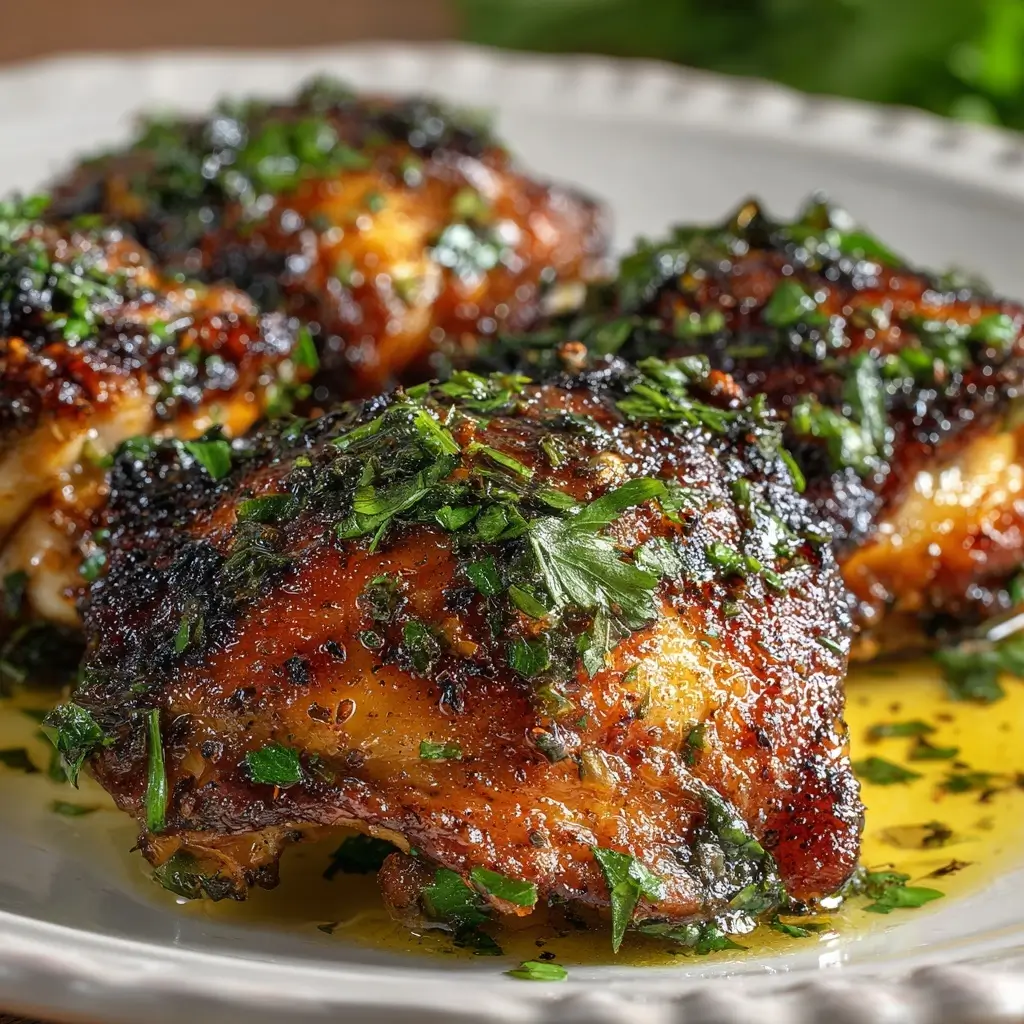
Garlic Herb Chicken Thighs are a beloved, weeknight-friendly dish that marries the deep, savory richness of bone-in, skin-on chicken thighs with the aromatic brightness of fresh herbs and the pungent warmth of garlic. Unlike leaner cuts like chicken breast, thighs offer unparalleled juiciness, tenderness, and flavor—thanks to their higher fat content and collagen-rich connective tissue, which breaks down beautifully during cooking. This recipe celebrates simplicity without sacrificing depth: minimal prep, pantry-friendly ingredients, and maximum taste. Whether you’re roasting, pan-searing, or air-frying, Garlic Herb Chicken Thighs deliver restaurant-quality results in your own kitchen—crispy golden skin, succulent meat infused with herbaceous notes, and a fragrant, garlicky aroma that fills your home from the moment it hits the heat. It’s comfort food redefined: rustic yet refined, humble yet deeply satisfying.
The History
While no single “inventor” or origin date can be pinned to Garlic Herb Chicken Thighs, its roots stretch across centuries and continents, reflecting humanity’s enduring love for roasted poultry seasoned with alliums and aromatics. Ancient Romans prized garlic for both culinary and medicinal uses—Pliny the Elder documented its use in sauces and marinades—and often roasted fowl with wild herbs like rosemary and thyme gathered from Mediterranean hillsides. In medieval Europe, whole chickens or parts were frequently cooked over open hearths with butter, garlic, and garden herbs—a technique passed down through generations of home cooks and innkeepers. The rise of chicken thighs as a celebrated cut is more modern: historically considered less prestigious than breast or whole birds, thighs gained popularity in the mid-20th century as chefs and home cooks recognized their superior moisture retention and rich flavor profile—especially when paired with bold seasonings. By the 1980s and ’90s, American and European food media began spotlighting “rustic roast chicken” recipes featuring thighs, garlic confit, lemon zest, and fresh herbs—often inspired by Provençal daube or Tuscan pollo al forno. Today, Garlic Herb Chicken Thighs symbolize a global culinary convergence: French technique, Italian herb gardens, Middle Eastern garlic traditions, and American practicality—all united on one sheet pan or skillet.
Ingredients Breakdown
Every exceptional Garlic Herb Chicken Thighs recipe begins not with complexity—but with intentionality. Each ingredient serves a distinct functional and sensory role:
- Chicken Thighs (bone-in, skin-on): The foundation. Bone-in thighs retain moisture better during roasting or searing; the skin crisps to a golden, crackling finish while basting the meat in natural rendered fat. Skin also acts as a flavorful “carrier” for herbs and garlic.
- Garlic (fresh, minced or thinly sliced): Provides pungent depth when raw, mellow sweetness when roasted, and aromatic complexity when sautéed. Fresh cloves contain allicin—the compound responsible for garlic’s health benefits and signature aroma—which activates upon crushing or chopping.
- Fresh Herbs (rosemary, thyme, parsley): Rosemary contributes piney, resinous notes and stands up beautifully to high heat; thyme offers subtle earthiness and floral nuance; parsley adds bright, clean freshness—best added at the end to preserve its volatile oils.
- Olive Oil (extra-virgin): Used for coating, basting, and building flavor. Its polyphenols enhance antioxidant activity, and its smoke point (around 375–410°F) suits roasting and medium-high sautéing. Infused olive oil can deepen herb-garlic integration.
- Lemon (zest and juice): Zest contains essential citrus oils that lift and balance richness; juice adds acidity to cut through fat and brighten the entire profile—critical for harmony.
- Onion (yellow or red, thickly sliced): Adds natural sweetness, umami depth, and textural contrast. Roasted onions become jammy and caramelized, enriching the pan juices.
- Sea Salt & Freshly Ground Black Pepper: Not mere seasonings—they’re flavor amplifiers. Salt draws out moisture initially, then reabsorbs into the meat to enhance juiciness and protein structure; coarse sea salt provides texture and controlled salinity.
- Optional Enhancements: A splash of dry white wine (for deglazing), Dijon mustard (for tangy emulsification), honey or maple syrup (for subtle glaze), capers (for briny pop), or crumbled feta (for salty creaminess).
Quality matters: Pasture-raised, air-chilled thighs yield superior texture and flavor. Organic, cold-pressed olive oil and farm-fresh herbs make a measurable difference—not just in taste, but in mouthfeel and aromatic longevity.
Step-by-Step Recipe
- Prep the Chicken (15 minutes): Remove thighs from refrigerator 20–30 minutes before cooking to ensure even roasting. Pat *extremely* dry with paper towels—this is non-negotiable for crisp skin. Using kitchen shears or a sharp knife, trim excess fat and loose skin around edges (but leave the main skin intact). Lightly score the skin in 2–3 diagonal slashes per thigh—deep enough to penetrate fat but not pierce meat—to allow seasoning penetration and fat rendering.
- Make the Herb-Garlic Paste (5 minutes): In a small bowl, combine 6–8 peeled garlic cloves (minced fine), 2 tbsp finely chopped fresh rosemary, 1 tbsp finely chopped fresh thyme leaves, 1 tsp lemon zest, ¼ tsp red pepper flakes (optional), ½ tsp flaky sea salt, and ¼ tsp freshly ground black pepper. Stir in 3 tbsp extra-virgin olive oil to form a loose, aromatic paste. For deeper flavor, let this rest 10 minutes at room temperature.
- Season & Marinate (minimum 30 minutes, ideally 2–4 hours): Gently loosen the skin from the meat with your fingers—being careful not to tear it—creating a pocket. Rub about two-thirds of the herb-garlic paste *under* the skin, massaging it directly onto the meat surface. Then rub the remaining paste *over* the skin. Place thighs skin-side up on a wire rack set over a baking sheet. Refrigerate uncovered for at least 30 minutes (or up to 24 hours) to dry-brine and further dehydrate the skin surface—this guarantees maximum crispness.
- Preheat & Prep Pan (10 minutes): Position oven rack in the upper third. Preheat oven to 425°F (220°C). Meanwhile, in a large oven-safe skillet (cast iron preferred) or heavy-duty rimmed baking sheet, scatter 1 large yellow onion (cut into ½-inch thick rounds), 1 tbsp olive oil, and a pinch of salt. Roast for 5 minutes to soften slightly and begin caramelization.
- Sear & Roast (35–45 minutes total): Carefully place seasoned thighs skin-side down into the hot skillet or onto the pre-roasted onions. Press gently with a spatula for 2–3 minutes to encourage even contact and initial skin crisping. Transfer to oven (skillet or sheet pan) and roast for 25 minutes. Flip thighs skin-side up, baste with pan juices, and continue roasting 10–15 minutes more—or until internal temperature reaches 175°F (80°C) at the thickest part (not touching bone) and skin is deeply golden and blistered.
- Rest & Finish (10 minutes): Remove from oven and tent loosely with foil. Rest for 8–10 minutes—this allows juices to redistribute, yielding moist, tender meat. While resting, squeeze 1–2 tbsp fresh lemon juice over thighs, sprinkle with 2 tbsp chopped flat-leaf parsley, and add a final drizzle of high-quality olive oil. Optional: Spoon warm pan juices and roasted onions over servings for added depth and moisture.
Tips
- Dryness is Key: Moisture is the enemy of crispy skin. Pat thighs *thoroughly*, refrigerate uncovered before cooking, and avoid overcrowding the pan—steam prevents browning.
- Don’t Skip the Skin-Lifting: Sliding herbs under the skin—not just on top—infuses flavor directly into the meat and protects it from drying out.
- Control Heat Zones: Start skin-side down in a hot pan to render fat and initiate crisping, then finish skin-side up in the oven for even browning and gentle cooking.
- Use a Meat Thermometer: Chicken thighs are forgiving, but overcooking past 175°F leads to stringiness. Under 165°F risks safety—170–175°F is the sweet spot for tenderness and safety.
- Save the Pan Juices: Those golden, herb-flecked drippings are liquid gold. Deglaze with white wine or broth, reduce slightly, and serve as a light sauce—or drizzle over grains or roasted vegetables.
- Crisp Skin Hack: For ultra-crisp results, broil for the final 1–2 minutes—watch closely to prevent burning.
- Room-Temp Start: Letting thighs sit out 20–30 minutes ensures even cooking—cold meat contracts violently in heat, squeezing out juices.
- Herb Timing Matters: Delicate herbs like parsley and chives should be added post-cook. Hardy herbs like rosemary and thyme thrive under heat—but chop finely so they don’t overpower.
- Air Fryer Shortcut: Cook at 380°F for 22–26 minutes, flipping halfway—no preheating needed, and skin crisps impressively fast.
- Batch Cooking Friendly: Double the batch and freeze uncooked, seasoned thighs (vacuum-sealed or in airtight container) for up to 3 months. Thaw overnight in fridge before cooking.
Variations and Customizations
This recipe is gloriously adaptable—ideal for seasonal shifts, dietary preferences, global inspirations, or pantry improvisation:
- Mediterranean Style: Add kalamata olives, sun-dried tomatoes, and crumbled feta in the last 5 minutes of roasting. Swap lemon for orange zest and juice.
- Asian-Inspired: Replace rosemary/thyme with 1 tbsp grated fresh ginger, 2 scallions (sliced), 1 tbsp tamari or coconut aminos, and 1 tsp toasted sesame oil. Garnish with cilantro and sesame seeds.
- Smoky Paprika Version: Add 1 tsp smoked paprika and ½ tsp cumin to the herb paste. Serve with roasted sweet potatoes and Greek yogurt dip.
- Lemon-Dill Brightness: Use dill and tarragon instead of rosemary/thyme; double the lemon zest and juice; finish with crème fraîche swirl.
- Spicy Harissa Twist: Blend 1 tbsp North African harissa paste into the herb-garlic mixture. Top with preserved lemon wedges and mint.
- Low-Carb/Keto-Friendly: Serve over cauliflower rice or zucchini noodles; increase healthy fats with avocado slices and extra olive oil drizzle.
- Paleo/Whole30 Compliant: Omit honey/maple; use compliant coconut aminos instead of soy-based condiments; ensure all herbs and spices are additive-free.
- Meal-Prep Powerhouse: Roast 8–10 thighs, portion with roasted veggies, and store in glass containers for 4 days. Reheat gently in oven or air fryer to revive crispness.
- Kid-Friendly Mild: Reduce garlic to 3 cloves, omit red pepper flakes, add 1 tsp maple syrup for subtle sweetness, and serve with apple sauce or mashed potatoes.
- Vegetarian Parallel: Substitute king oyster mushrooms or cauliflower steaks—marinated and roasted identically—for a plant-based version with similar texture and umami depth.
Health Considerations and Nutritional Value
Garlic Herb Chicken Thighs offer a nutrient-dense, balanced profile that aligns well with modern wellness principles—when prepared mindfully:
- Protein Powerhouse: A single 6-oz bone-in, skin-on thigh provides ~25g high-biological-value protein—complete with all 9 essential amino acids—supporting muscle maintenance, satiety, and metabolic health.
- Healthy Fats: Thighs contain monounsaturated and saturated fats in a natural ratio. The skin contributes stearic acid (a neutral saturated fat) and oleic acid (heart-healthy MUFA)—especially when cooked with olive oil, boosting polyphenol absorption.
- Garlic Benefits: Rich in allicin, garlic supports cardiovascular health (modest blood pressure and cholesterol reduction), immune modulation, and anti-inflammatory pathways. Crushing and resting garlic before cooking maximizes allicin yield.
- Antioxidant-Rich Herbs: Rosemary contains carnosic acid and rosmarinic acid—potent antioxidants shown to inhibit lipid peroxidation. Thyme’s thymol exhibits antimicrobial and neuroprotective properties.
- Lemon’s Bioavailability Boost: Vitamin C in lemon juice enhances non-heme iron absorption from the chicken (especially important for menstruating individuals), while limonene supports liver detoxification enzymes.
- Considerations: Sodium can accumulate if using pre-salted spice blends or processed broths—opt for whole herbs and sea salt to control intake. For lower saturated fat, remove skin before eating (though keeping it during cooking preserves moisture and flavor). Those with GERD or IBS may benefit from reducing raw garlic quantity or using roasted garlic for milder impact.
- Nutrition Snapshot (per serving: 1 large bone-in, skin-on thigh, ~8 oz raw / ~6 oz cooked, with full herb paste & 1 tbsp olive oil): Calories: ~380 | Protein: 26g | Total Fat: 28g (Saturated: 7g) | Carbs: 1g | Fiber: 0g | Sodium: 320mg | Vitamin B12: 110% DV | Selenium: 65% DV | Zinc: 30% DV | Iron: 15% DV | Vitamin C (from lemon): 12% DV.
Note: Values vary based on exact cut size, fat content, and preparation method. Nutritionally, this dish shines not in isolation—but as part of a varied, whole-food pattern: pair with leafy greens, cruciferous vegetables, or fermented sides like sauerkraut to amplify gut and immune benefits.
Ingredients
- 6–8 bone-in, skin-on chicken thighs (about 2.5–3 lbs total)
- 8 large garlic cloves, peeled and finely minced
- 2 tbsp fresh rosemary leaves, finely chopped (or 2 tsp dried, though fresh is strongly preferred)
- 1 tbsp fresh thyme leaves, finely chopped (or 1 tsp dried)
- 1 large yellow or red onion, cut into ½-inch thick rounds
- ¼ cup extra-virgin olive oil (plus more for finishing)
- 1 large lemon (zested and juiced — about 1 tsp zest, 2 tbsp juice)
- 1½ tsp flaky sea salt (such as Maldon) or 1 tsp fine sea salt
- 1 tsp freshly ground black pepper
- ¼ tsp red pepper flakes (optional, for subtle heat)
- ¼ cup fresh flat-leaf parsley, finely chopped (for garnish)
- Additional lemon wedges, for serving
Directions
- Remove chicken thighs from refrigerator 20–30 minutes before cooking. Pat *very* dry with paper towels—especially the skin. Trim excess fat and gently score skin diagonally in 2–3 places per thigh.
- In a small bowl, combine minced garlic, rosemary, thyme, lemon zest, red pepper flakes (if using), salt, and pepper. Stir in ¼ cup olive oil to form a smooth, fragrant paste. Let sit 10 minutes at room temperature.
- Gently slide fingers under the skin of each thigh to loosen it from the meat—do not tear. Rub approximately ⅔ of the herb-garlic paste evenly *under* the skin, massaging it onto the meat surface. Rub remaining paste *over* the skin. Arrange thighs skin-side up on a wire rack placed over a baking sheet. Refrigerate uncovered for at least 30 minutes (up to 24 hours).
- Preheat oven to 425°F (220°C). Place oven rack in upper third. Heat a large oven-safe skillet (cast iron recommended) or rimmed baking sheet over medium heat. Add 1 tbsp olive oil and onion rounds; sauté 3–4 minutes until lightly softened and translucent. Sprinkle with a pinch of salt.
- Place thighs skin-side down into the hot skillet/onions. Press gently with a spatula for 2–3 minutes to ensure full contact and initiate skin crisping. Transfer skillet or sheet pan to preheated oven.
- Raise oven temperature to 450°F (230°C) for optimal browning. Roast for 25 minutes. Carefully flip thighs skin-side up using tongs. Baste with pan juices. Roast another 10–15 minutes, until skin is deep golden brown and blistered, and internal temperature reads 170–175°F (77–80°C) when measured in the thickest part (avoiding bone).
- Remove from oven. Tent loosely with foil and rest for 8–10 minutes. During rest, squeeze fresh lemon juice over thighs, sprinkle generously with chopped parsley, and drizzle with 1 tsp high-quality olive oil.
- Serve immediately, spooning roasted onions and pan juices over each portion. Accompany with crusty bread for soaking, roasted vegetables, or a simple arugula salad with lemon vinaigrette.
FAQ
- Can I use boneless, skinless chicken thighs?
- Yes—but texture and flavor will differ significantly. Boneless, skinless thighs cook faster (15–20 min) and lack the rich, crispy dimension of skin. To compensate, marinate longer (1–2 hours), sear aggressively in a hot pan, and finish with a quick broil. Expect less juiciness and less herb adhesion.
- Why do you recommend bone-in, skin-on?
- Bone-in thighs retain moisture better due to conductive heat distribution and marrow release. Skin renders fat that self-bastes the meat, delivers unmatched crunch, and acts as a barrier against drying. Removing skin before cooking sacrifices both flavor and texture integrity.
- Can I make this ahead of time?
- Absolutely. Season thighs up to 24 hours in advance and refrigerate uncovered. For full make-ahead meals: roast, cool completely, store in airtight containers for up to 4 days, and reheat in a 350°F oven (covered for 15 min, then uncovered for 5–8 min) or air fryer (375°F for 6–8 min) to restore crispness.
- My skin isn’t crispy—what went wrong?
- Most common causes: insufficient drying before seasoning, overcrowded pan (traps steam), low oven temp, or skipping the initial stovetop sear. Also verify your oven temperature with an independent oven thermometer—many run 25–50°F low.
- Can I grill these?
- Yes! Use a two-zone fire (medium-high direct + medium indirect). Sear skin-side down over direct heat for 5–6 minutes until deeply marked and skin begins to release. Flip, move to indirect zone, cover grill, and cook 20–25 minutes until 175°F. Baste with herb-oil mixture during last 5 minutes.
- What sides pair best?
- Classic pairings include creamy mashed potatoes, garlic-herb roasted carrots, lemon-dressed farro salad, sautéed spinach with pine nuts, or crusty sourdough with whipped feta. For lighter options: shaved fennel & orange salad or grilled zucchini ribbons.
- Is this Whole30 or keto approved?
- Yes—with minor adjustments: omit sugar-containing ingredients (e.g., honey), use compliant olive oil and herbs, and avoid grain-based sides. For keto, serve with cauliflower rice or roasted broccoli—both low-carb and fiber-rich.
- How do I store leftovers safely?
- Cool within 2 hours of cooking. Store in shallow, airtight containers in the refrigerator for up to 4 days. Freeze for up to 3 months (remove bones first for easier portioning). Thaw overnight in fridge before reheating.
- Can I use dried herbs instead of fresh?
- You can—but adjust ratios: use 1 tsp dried rosemary and ½ tsp dried thyme per tbsp fresh. Dried herbs lack volatile oils, so add them earlier in the paste (with garlic and oil) and let infuse longer. Fresh herbs provide brighter, more complex aromatics.
- Why rest the chicken before serving?
- Resting allows muscle fibers to relax and reabsorb juices that migrate toward the surface during cooking. Skipping rest leads to significant juice loss upon cutting—resulting in drier meat. 8–10 minutes is ideal for thighs.
Summary
Garlic Herb Chicken Thighs are a masterclass in rustic elegance—transforming humble, affordable poultry into a deeply flavorful, nutritionally robust centerpiece through thoughtful technique, quality ingredients, and time-honored layering of aromatics.
With endless customization potential, make-ahead flexibility, and broad dietary adaptability, this dish earns its place as a perennial favorite: equally at home on a weeknight table, a holiday spread, or a meal-prep rotation—all while delivering crave-worthy crisp skin, succulent meat, and vibrant herb-garlic brilliance in every bite.