Introduction
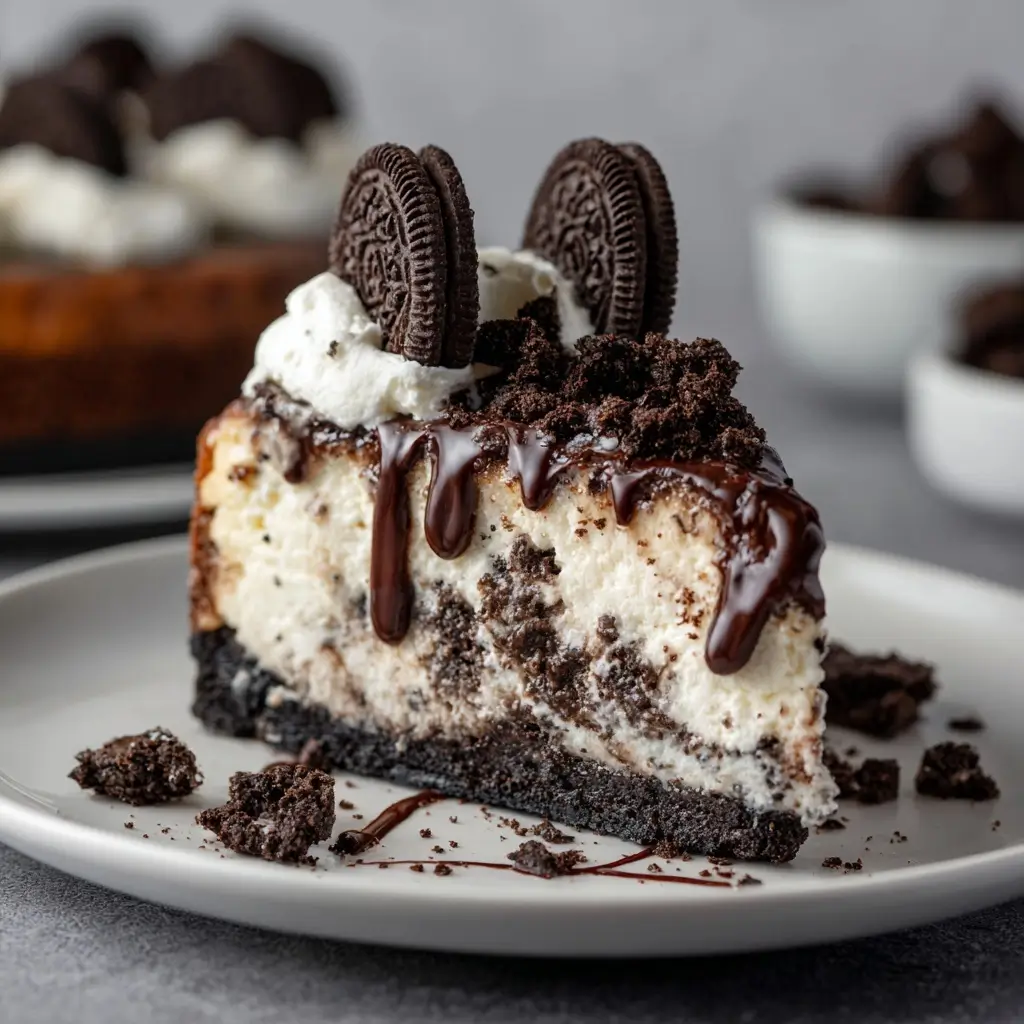
Oreo Cookies and Cream Cheesecake is a decadent, no-bake (or baked—depending on your preference) dessert that marries the iconic crunch and cocoa-rich sweetness of Oreo cookies with the luxuriously smooth, velvety texture of classic New York–style cheesecake. This beloved dessert has become a staple at potlucks, holiday gatherings, birthday celebrations, and even gourmet bakery displays—not just for its show-stopping appearance but for its deeply nostalgic flavor profile. With layers of crushed Oreos forming a rich, buttery graham cracker–adjacent crust, a luscious filling infused with real cream cheese, heavy cream, vanilla, and finely blended Oreo crumbs, and a glossy, often chocolate-dipped or cookie-studded topping, this cheesecake delivers a symphony of textures and tastes in every bite. Whether you’re a seasoned baker or a kitchen novice, this recipe is remarkably forgiving, scalable, and endlessly adaptable—making it as perfect for a weeknight treat as it is for an Instagram-worthy centerpiece.
The History
The origins of the Oreo Cookies and Cream Cheesecake are delightfully modern and entirely American—a delicious byproduct of two iconic 20th-century innovations: the Oreo cookie and the rise of cream cheese-based desserts. Nabisco introduced the Oreo in 1912, touting its “milk’s favorite cookie” slogan and quickly embedding itself into U.S. snack culture. Meanwhile, cream cheese—originally popularized by Philadelphia Cream Cheese (introduced commercially in 1872)—became the cornerstone of American cheesecake after World War II, when refrigeration improved and home baking surged. The fusion of the two didn’t happen overnight; rather, it evolved organically through mid-century home cooks experimenting with “cookies and cream” as a flavor concept—first in ice cream (reportedly pioneered by Steve Herrell in 1973 at Herrell’s Ice Cream in Massachusetts), then in milkshakes, cupcakes, and finally, cheesecakes. By the late 1980s and early 1990s, food magazines like Bon Appétit and Martha Stewart Living, along with regional cookbooks from Midwest and Southern bakeries, began publishing variations featuring Oreo crusts and fillings. The dessert truly exploded in popularity with the advent of food blogs in the early 2000s—and later, Pinterest and TikTok—where visually stunning, sliceable, no-bake versions went viral. Today, it’s considered a canonical American dessert, served in high-end patisseries (often with gold leaf or edible flowers), adapted for dietary restrictions (vegan, gluten-free, keto), and even reimagined internationally—like Japan’s matcha-Oreo swirl or Australia’s Tim Tam–infused twist.
Ingredients Breakdown
Understanding each ingredient’s role ensures success, consistency, and room for intelligent substitutions:
- Graham Cracker Crumbs (or Oreo Cookie Crumbs for the Crust): Provides structure, subtle sweetness, and a sandy, crisp base. Traditional graham crackers lend a honeyed, spiced note, while using *whole Oreos* (filling and all) for the crust intensifies chocolate flavor and adds richness—but increases sweetness and fat content. A hybrid approach (½ graham + ½ Oreo) balances depth and balance.
- Unsalted Butter (melted): Acts as the binder for the crust—its fat coats the crumbs, enabling compaction and preventing sogginess. Clarified butter or browned butter can add nuance, though standard unsalted is most reliable.
- Cream Cheese (full-fat, brick-style, room temperature): The heart of the filling. Must be softened to ~68°F (20°C) for seamless blending—cold cream cheese causes lumps; overheated or microwaved cheese breaks emulsion. Block-style (not spreadable tubs) guarantees proper density and tang. Philadelphia, Kraft, or store-brand full-fat bricks work best.
- Granulated Sugar: Not just for sweetness—it stabilizes the protein matrix in cream cheese, aids aeration during mixing, and helps control water activity to prevent weeping or cracking. Confectioners’ sugar may be used in no-bake versions for smoother texture, but granulated is preferred for baked versions to avoid excess starch.
- Sour Cream or Full-Fat Greek Yogurt: Adds acidity for brightness, moisture for tenderness, and fat for silkiness. Sour cream yields a richer, more traditional tang; Greek yogurt offers slightly more protein and less fat—ideal for lighter adaptations. Never substitute low-fat or nonfat versions—they cause separation and graininess.
- Heavy Whipping Cream (36–40% fat): Critical for ultra-creamy mouthfeel and stable whipability. In no-bake versions, it’s often whipped separately and folded in to aerate the filling. In baked versions, it contributes to custard-like tenderness and sheen.
- Pure Vanilla Extract (or paste): Enhances complexity and rounds out dairy notes. Mexican or Tahitian vanilla adds floral layers; Madagascar bourbon vanilla remains the gold standard. Avoid imitation—its harsh alcohol notes clash with chocolate.
- Pinch of Fine Sea Salt: An essential flavor amplifier that cuts sweetness and deepens chocolate perception. Kosher salt dissolves too slowly; table salt may contain anti-caking agents that affect texture.
- Full-Sized Oreo Cookies (for filling and garnish): Approximately 24–30 cookies are typically used—12–15 crushed finely into the filling for flavor and speckled texture, 6–8 coarsely chopped for visual contrast and crunch, and several whole for elegant garnish. Double-Stuf or Mega Stuf Oreos increase cream-to-cookie ratio—ideal for extra “cream” lovers. Golden Oreos offer a vanilla-caramel alternative for a twist.
- Optional Additions: White chocolate curls (for contrast), espresso powder (¼ tsp enhances cocoa), dark cocoa powder (1 tbsp for intensified depth), toasted pecans or hazelnuts (for crunch), or a splash of crème de cacao (½ tsp) for adult appeal.
Step-by-Step Recipe
Note: This version is a hybrid—baked for stability and depth, with a no-bake-style creamy finish. Total active time: 45 minutes | Chill time: minimum 12 hours (ideally 24–48) | Serves 14–16
- Prepare the Pan: Grease a 9-inch springform pan generously with butter or nonstick spray. Line the bottom with parchment paper, then wrap the *outside only* of the pan tightly with two overlapping sheets of heavy-duty aluminum foil—this prevents water seepage during the water bath.
- Make the Crust: In a food processor, pulse 30 regular Oreos (with filling) until fine crumbs form (~1½ cups). Alternatively, place cookies in a zip-top bag and crush with a rolling pin. Transfer to a bowl, add 6 tbsp melted unsalted butter and 2 tbsp granulated sugar, and mix until evenly moistened and clumping when squeezed. Press firmly and evenly into the bottom and 1 inch up the sides of the prepared pan using the back of a measuring cup or flat-bottomed glass. Refrigerate for at least 30 minutes (or freeze for 15) to set.
- Preheat & Prep Water Bath: Position oven rack in center position. Preheat oven to 325°F (163°C). Place a large roasting pan (larger than the springform) on the rack and fill halfway with hot tap water—this creates gentle, even heat and prevents cracking.
- Prepare Filling Base: In the bowl of a stand mixer fitted with the paddle attachment (or large bowl + hand mixer), beat 24 oz (three 8-oz blocks) full-fat cream cheese on medium speed for 2 minutes until completely smooth and fluffy—scraping down bowl and paddle frequently. Add 1 cup granulated sugar and beat 2 more minutes until pale and airy. Scrape down thoroughly. Add 1 cup full-fat sour cream and ½ cup heavy cream; beat on medium-low for 1 minute until homogenous. Add 2 tsp pure vanilla extract and ¼ tsp fine sea salt; beat 30 seconds.
- Incorporate Egg Structure: Add 3 large eggs, one at a time, beating on low speed for 20 seconds after each addition—do *not* overmix. Overbeating incorporates too much air, causing puffing and collapse. After third egg, mix just until yellow disappears—about 15 seconds. Batter should be silky, not foamy.
- Add Oreo Magic: Coarsely chop 8 Oreos (reserve 4 for garnish). Finely crush 12 Oreos in food processor until sandy (not powdery). Gently fold the fine crumbs into batter with a silicone spatula using 3–4 strokes—just until dispersed. Then fold in the coarsely chopped pieces—again, minimal strokes to retain texture.
- Bake with Care: Carefully place chilled crust-filled springform pan into the preheated water bath. Pour filling over crust, smoothing top with offset spatula. Bake for 1 hour 15 minutes–1 hour 25 minutes. The cheesecake is done when edges are puffed and lightly golden, center jiggles *slightly* (like Jell-O) when gently shaken, and an instant-read thermometer inserted 1 inch from edge reads 150–155°F (65–68°C). Do not open oven door before 75 minutes.
- Cool Gradually: Turn off oven. Crack door open 1 inch with a wooden spoon handle and let cheesecake cool inside for 1 hour. Remove from water bath, run thin knife around edge to loosen, then cool completely on wire rack (2–3 hours). Refrigerate uncovered for *at least 12 hours*, preferably 24–48, to fully set and develop flavor.
- Final Touches: Run warm knife under hot water, dry thoroughly, and carefully release springform collar. For glossy finish, warm ¼ cup heavy cream and 2 tbsp white chocolate chips in microwave in 15-second bursts until melted and smooth; stir in 1 tsp corn syrup. Pour over chilled cheesecake, tilting pan to coat evenly. Immediately scatter reserved whole Oreos, extra chopped Oreos, and optional white chocolate curls or gold flakes. Chill 30 minutes before slicing.
Tips
- Room Temperature Is Non-Negotiable: All dairy ingredients (cream cheese, sour cream, eggs) must be at true room temperature—not just “out of the fridge for 30 minutes.” Place cream cheese unwrapped on a plate for 2 hours at 68–72°F. Cold eggs cause lumps and uneven emulsification.
- Scrape Religiously: Use a flexible silicone spatula to scrape bowl, paddle, and spatula after *every* addition. Even small pockets of unmixed sugar or cream cheese create dense spots or cracks.
- No Overmixing Zone: Once eggs are added, switch to low speed and count seconds—not minutes. Overmixed batter = cracked surface and rubbery texture.
- Water Bath Mastery: Use boiling or very hot tap water—not cold—to maintain thermal mass. Ensure foil wrapping is tight and double-layered. If water seeps in, don’t panic—just pat crust dry and continue chilling; flavor won’t suffer.
- Chill Like a Pro: Overnight chilling isn’t optional—it’s transformative. It allows proteins to relax, fats to fully crystallize, and flavors to marry. Skipping it results in soft edges, sliding slices, and muted Oreo notes.
- Slicing Secrets: Use a long, thin, straight-edge knife (not serrated). Dip in hot water, wipe dry, and cut with firm, even downward pressure—no sawing. Clean and rewarm knife between *every* slice for pristine edges.
- Freezing for Longevity: Unfrosted, well-wrapped cheesecake freezes beautifully for up to 3 months. Thaw overnight in fridge—not at room temperature—to preserve texture.
- Crust Reinforcement: For ultra-crisp crusts, pre-bake at 350°F for 8–10 minutes before chilling. This sets the butter and prevents absorption of filling moisture.
- Flavor Layering: Steep 1 tsp vanilla bean seeds or ½ cinnamon stick in warm cream before adding to batter for aromatic depth. Or infuse heavy cream with espresso grounds (steep 10 min, strain) for mocha variation.
- Texture Control: For denser, fudgier texture, reduce heavy cream to ¼ cup and add 2 tbsp melted bittersweet chocolate. For airier, mousse-like texture, whip 1 cup heavy cream to stiff peaks and fold in last.
Variations and Customizations
This recipe is a canvas—here are 12 inspired, tested variations—from accessible swaps to showstopping upgrades:
- No-Bake Classic: Omit eggs and baking step. Whip 2 cups cold heavy cream to stiff peaks. Fold into cooled, fully mixed filling (sans eggs) and pour over chilled crust. Chill 8+ hours.
- Gluten-Free: Use certified GF Oreo-style cookies (like Kinnikinnick or Glutino) and GF graham crackers. Verify all labels—cross-contamination matters.
- Vegan: Substitute cashew cream (soaked, blended raw cashews + lemon juice + maple syrup), coconut cream, silken tofu, and vegan butter. Use aquafaba or commercial egg replacer if baking. Flavor with blackstrap molasses for depth.
- Keto/Low-Carb: Replace Oreos with homemade almond flour–cocoa “cookies” (almond flour, cocoa, erythritol, butter, xanthan gum). Use Swerve or monk fruit sweetener. Increase cream cheese to 32 oz and reduce cream.
- Mini Jar Cheesecakes: Layer crust + filling + garnish in 12 oz mason jars. Chill 6 hours. Perfect for parties or gifts.
- Layered Chocolate Ganache: After initial chill, pour dark chocolate ganache (1:1 dark chocolate: heavy cream) over top and chill 30 min before final Oreo garnish.
- Strawberry Swirl: Puree ½ cup fresh strawberries + 1 tbsp sugar + 1 tsp lemon juice. Ripple into filling before baking with chopstick.
- Peppermint Crunch: Add ½ tsp peppermint extract + ¼ cup crushed candy canes to filling; top with crushed candy and white chocolate.
- Espresso Affogato Style: Serve individual slices with a shot of hot espresso poured tableside and a scoop of vanilla bean gelato.
- Golden Oreo Edition: Swap all regular Oreos for Golden Oreos. Add 1 tbsp caramel sauce to filling and drizzle top with salted caramel.
- Black Bottom: Pre-pour ½ cup cooled dark chocolate ganache into crust, chill 20 min, then add Oreo filling.
- Boozy Bourbon: Add 2 tbsp good-quality bourbon and ½ tsp orange zest to filling. Garnish with candied orange peel.
Health Considerations and Nutritional Value
While undeniably indulgent, understanding the nutritional composition empowers mindful enjoyment and informed modifications:
Per Standard Slice (1/16 of 9-inch cake, ~180g):
Calories: ~480–520 kcal
Total Fat: 32–36g (Saturated: 18–21g)
Cholesterol: 115–130mg
Sodium: 320–380mg
Total Carbohydrates: 42–46g (Dietary Fiber: 1.5–2g, Sugars: 30–34g)
Protein: 6–8g
Key Nutrients & Notes:
- Calcium & Vitamin A: Significant contributions from cream cheese, sour cream, and butter—supporting bone and vision health.
- Saturated Fat Source: Primarily from dairy and Oreo fillings. While recent research nuances saturated fat’s role, moderation remains wise—especially for those managing cholesterol.
- Added Sugars: High (≈32g/slice), largely from Oreo cookies and granulated sugar. The American Heart Association recommends ≤25g added sugar/day for women, ≤36g for men—so one slice meets or exceeds that.
- Gluten & Allergens: Contains wheat (gluten), dairy, soy (in Oreos and some cream cheeses), and eggs. Always verify labels for allergen statements.
- Dietary Adaptations:
- Fiber Boost: Add 1 tbsp ground flaxseed or psyllium husk to crust—adds 2–3g fiber/slice without altering taste.
- Lower Sugar Option: Replace half the sugar with allulose (non-glycemic, same sweetness); reduces net carbs by ~25g/slice.
- Protein Enhancement: Blend in 1 scoop unflavored collagen peptides (heat-stable) or whey isolate—adds 15–20g protein with zero flavor impact.
- Portion Mindfulness: Serve smaller slices (1/18 or 1/20) with fresh berries or mint—reduces calories by 20–30% and adds antioxidants and fiber.
- Occasional Indulgence Framework: Registered dietitians emphasize that no food is inherently “bad”—balance across the week matters more than single servings. Pair with a nutrient-dense meal and stay hydrated.
Ingredients
For the Crust:
- 30 regular Oreo cookies (with filling), finely crushed (about 1½ cups crumbs)
- 6 tablespoons (85g) unsalted butter, melted
- 2 tablespoons (25g) granulated sugar
For the Filling:
- 24 ounces (680g) full-fat brick-style cream cheese, at room temperature (three 8-oz packages)
- 1 cup (200g) granulated sugar
- 1 cup (240g) full-fat sour cream
- ½ cup (120ml) heavy whipping cream (36–40% fat)
- 2 teaspoons pure vanilla extract
- ¼ teaspoon fine sea salt
- 3 large eggs, at room temperature
- 12 regular Oreo cookies, finely crushed (for speckling)
- 8 regular Oreo cookies, coarsely chopped (for texture)
For the Garnish & Finish:
- 4–6 whole Oreo cookies
- ¼ cup (60ml) heavy cream
- 2 tablespoons (30g) white chocolate chips
- 1 teaspoon light corn syrup (optional, for shine)
- Optional: white chocolate curls, edible gold dust, flaky sea salt
Directions
- Grease a 9-inch springform pan and line the bottom with parchment paper. Wrap the *outside only* tightly with two layers of heavy-duty aluminum foil.
- In a food processor, pulse 30 Oreos until fine crumbs form. Transfer to a bowl; stir in melted butter and 2 tbsp sugar until mixture resembles wet sand. Press firmly into bottom and 1 inch up sides of pan. Refrigerate 30 minutes (or freeze 15).
- Preheat oven to 325°F (163°C). Place large roasting pan on center rack and fill halfway with hot tap water.
- In stand mixer with paddle attachment, beat cream cheese on medium 2 minutes until smooth. Add sugar; beat 2 more minutes until light. Scrape bowl. Add sour cream and heavy cream; beat 1 minute. Add vanilla and salt; beat 30 seconds.
- Add eggs one at a time, beating 20 seconds low speed after each—scrape bowl thoroughly between additions. Mix only until incorporated.
- Fold in finely crushed Oreos (12 cookies) with 3–4 strokes. Fold in coarsely chopped Oreos (8 cookies) with 2–3 strokes.
- Pour filling over chilled crust. Smooth top. Place springform in water bath. Bake 1 hr 15 min–1 hr 25 min until edges are set and center jiggles slightly.
- Turn off oven. Crack door open 1 inch with spoon handle. Cool inside oven 1 hour. Remove from water bath, loosen edges with knife, and cool completely on wire rack (2–3 hrs).
- Refrigerate uncovered for minimum 12 hours—preferably 24–48 hours.
- Run warm knife around edge, remove collar. Warm cream and white chocolate in microwave (15-sec bursts) until smooth; stir in corn syrup. Pour over top, tilt to coat. Immediately garnish with whole Oreos, extra chopped Oreos, and optional embellishments. Chill 30 minutes before slicing.
FAQ
- Can I use low-fat cream cheese or sour cream?
- No—low-fat or nonfat dairy lacks sufficient fat to stabilize the emulsion, leading to curdling, weeping, graininess, or collapse. Full-fat is essential for texture and integrity.
- Why did my cheesecake crack?
- Most common causes: overmixing after adding eggs, rapid temperature changes (opening oven too soon, cooling too fast), insufficient moisture in water bath, or overbaking. Follow gradual cooling and water bath instructions precisely.
- Can I make this ahead?
- Absolutely—and you should! It keeps beautifully refrigerated for up to 5 days, or frozen (unfrosted) for 3 months. Flavor deepens over 24–48 hours.
- What if I don’t have a springform pan?
- You can use a 9-inch cake pan with parchment sling (two strips overlapping under pan, extending up sides), but removal is trickier. Avoid glass or ceramic—thermal shock risk is high.
- Can I substitute Greek yogurt for sour cream?
- Yes—but use *full-fat* plain Greek yogurt only. Low-fat or flavored versions will destabilize the batter. Stir well before measuring to reincorporate whey.
- How do I prevent soggy crust?
- Ensure crust is well-chilled before filling. For extra insurance, pre-bake crust 8–10 minutes at 350°F before chilling and filling.
- Is there a way to make it lighter?
- Reduce sugar to ¾ cup, use Neufchâtel cheese (⅓ less fat), swap half sour cream for plain full-fat yogurt, and skip the white chocolate glaze. Still decadent—but ~80 fewer calories/slice.
- Can I use Cool Whip instead of heavy cream?
- Not recommended for baked versions—Cool Whip contains stabilizers, gums, and air that disrupt baking chemistry. For no-bake, stabilized whipped cream is superior.
- My filling looks lumpy—can I save it?
- Yes—if caught early: pass entire mixture through a fine-mesh sieve using a rubber spatula, pressing firmly. Discard any stubborn bits. Chill 15 minutes before pouring.
- Can I add food coloring?
- Yes—for fun holiday versions (pink for Valentine’s, green for St. Patrick’s). Use gel-based food coloring (not liquid) to avoid thinning batter. Add after vanilla, before eggs.
Summary
Oreo Cookies and Cream Cheesecake is a masterclass in nostalgic indulgence—layering the unmistakable crunch and cocoa-vanilla sweetness of America’s favorite sandwich cookie into a luxuriously dense-yet-creamy, slow-baked (or elegantly no-bake) dessert that balances richness with bright acidity and textural intrigue.
With meticulous attention to ingredient temperature, gentle mixing, precise baking technique, and unhurried chilling, this showstopping centerpiece delivers restaurant-quality elegance, pantry-friendly accessibility, and infinite potential for creative customization—all while honoring the joyful simplicity of childhood treats reimagined with grown-up sophistication.