Introduction
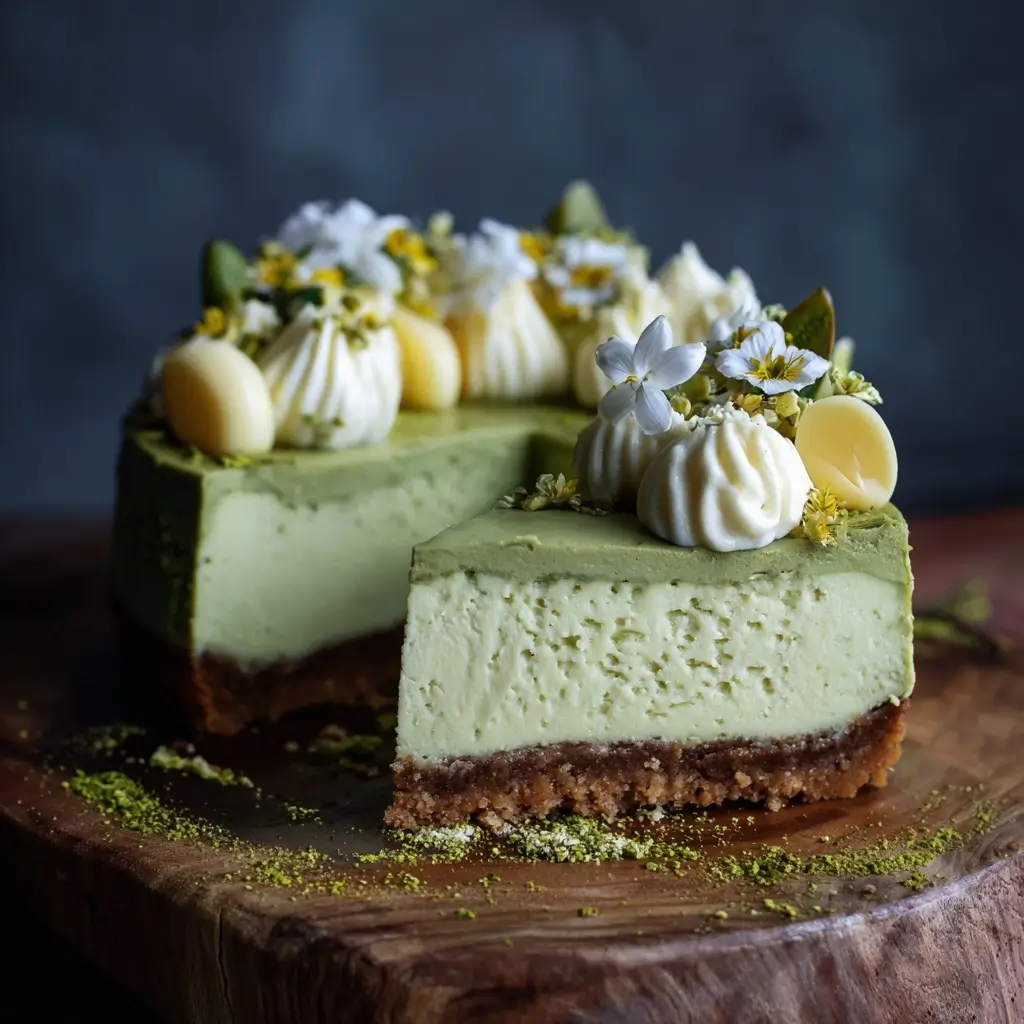
Indulge in the serene elegance and velvety sophistication of the Matcha White Chocolate Cheesecake—a harmonious fusion of Japanese tradition and modern dessert artistry. This isn’t just another cheesecake; it’s a mindful, multi-sensory experience where earthy, grassy matcha meets the luxuriously sweet, creamy richness of white chocolate—balanced by the tangy depth of New York–style cream cheese. With its vibrant jade-green hue, silky-smooth texture, and delicate bittersweet finish, this dessert transcends seasonal trends to become a timeless centerpiece for afternoon tea, bridal showers, holiday gatherings, or quiet self-care moments. Whether you’re a matcha devotee, a chocolate connoisseur, or simply someone who appreciates thoughtfully crafted flavor layering, this cheesecake invites you to slow down, savor deeply, and celebrate balance—both on the palate and in life.
The History
The Matcha White Chocolate Cheesecake is a relatively recent yet culturally resonant evolution in the global dessert lexicon—born from the convergence of three distinct culinary lineages. Its foundation, the American baked cheesecake, traces back to ancient Greece (where early versions were made with honey-sweetened cheese and flour), later refined in 19th-century New York through innovations like cream cheese (introduced by William Lawrence in 1872) and the iconic water bath technique. Meanwhile, matcha—the finely ground, shade-grown green tea powder—has been central to Japanese Zen Buddhist rituals since the 12th century, gaining global prominence in the late 20th and early 21st centuries as part of the wellness and “clean label” movements. White chocolate, though controversial among purists due to its lack of cocoa solids, was first commercially developed by Nestlé in Switzerland in 1930 and rose to gourmet status in the 1990s with the emergence of high-cacao-butter, single-origin varieties. The marriage of these elements began appearing in high-end patisseries across Tokyo’s Ginza district and Kyoto’s historic Gion district in the mid-2000s, championed by chefs like Yukihiro Sato and pastry innovators at Michelin-starred establishments such as Florilège and Narisawa. By 2015, food media platforms—including Bon Appétit, Kinfolk, and Japan Times—began spotlighting matcha-infused desserts, accelerating its adoption in North America and Europe. Today, the Matcha White Chocolate Cheesecake stands as a symbol of cross-cultural gastronomy: a respectful homage to centuries-old tea ceremony principles, elevated by contemporary baking science and ingredient transparency.
Ingredients Breakdown
Every element in this recipe has been selected not only for flavor synergy but also for functional performance—ensuring structural integrity, optimal emulsification, balanced acidity, and authentic matcha vibrancy. Below is an in-depth analysis of each component:
- High-Quality Ceremonial-Grade Matcha (1.5–2 tsp): Not culinary-grade—ceremonial matcha is stone-ground from the youngest, most tender tencha leaves, offering superior chlorophyll content, umami depth, and minimal bitterness. Its fine particle size ensures seamless dispersion without grittiness. Brands like Marukyu-Koyamaen, Ippodo Tea Co., or Encha Organic are recommended for consistent color and flavor. Note: Matcha degrades rapidly when exposed to heat, light, or moisture—always store in an airtight, opaque container in the freezer and whisk into a slurry with warm cream *before* folding into batter to preserve its volatile compounds.
- White Chocolate (8 oz / 227 g), 32–35% cocoa butter: Choose couverture-grade white chocolate with real vanilla bean (not vanillin) and no artificial fillers or palm oil. High cocoa butter content ensures smooth melting, proper tempering within the batter, and resistance to seizing or greasiness during baking. Avoid “white baking chips” — they contain stabilizers that inhibit proper emulsification and yield a waxy mouthfeel. Recommended brands: Valrhona Ivoire, Callebaut Opalys, or Guittard El Rey.
- Cream Cheese (24 oz / 680 g), full-fat, room temperature: Use brick-style, Philadelphia-brand or Kerrygold for reliable fat content (≥33%) and neutral pH. Low-fat or whipped varieties introduce excess air and destabilize the protein matrix, leading to cracking or weeping. Let sit at room temperature for 2–3 hours—not just 30 minutes—to ensure truly pliable, lump-free consistency.
- Sour Cream (¾ cup / 180 g), full-fat, cultured: Adds lactic tang to counter sweetness, improves tenderness via enzymatic tenderization of proteins, and contributes moisture retention without thinning the batter. Avoid low-fat or “light” versions—they contain gums and thickeners that interfere with coagulation.
- Heavy Cream (½ cup / 120 ml), 36–40% milk fat: Used both to bloom the matcha and enrich the batter. Higher fat content yields greater viscosity and prevents curdling when blended with warm matcha slurry.
- Granulated Cane Sugar (1 cup + 2 tbsp / 230 g): Provides sweetness, aids in aeration during mixing, and contributes to browning and structure via caramelization. The extra 2 tbsp helps offset matcha’s natural astringency without masking its complexity.
- Eggs (4 large), Grade A, room temperature: Act as primary binders and leaveners. Using room-temp eggs ensures uniform incorporation and minimizes risk of thermal shock when added to warm batter. Always add one at a time, fully incorporating before the next.
- Vanilla Bean Paste (1 tsp) or Seeds from 1 Vanilla Bean: Enhances aromatic depth and rounds out matcha’s vegetal notes. Paste offers convenience and visual speckling; whole bean delivers superior terroir expression.
- Fine Sea Salt (¼ tsp): Critical for flavor modulation—it sharpens sweetness, suppresses bitterness, and amplifies umami in both matcha and white chocolate.
- Graham Cracker Crust Ingredients: 1 ½ cups (150 g) finely crushed graham crackers (or digestive biscuits for a less sweet base), 6 tbsp (85 g) unsalted butter (melted), 2 tbsp (25 g) granulated sugar, and ¼ tsp salt. Optional upgrade: substitute ¼ cup of crumbs with toasted almond flour for nutty depth and improved crunch retention.
Step-by-Step Recipe
- Prepare the Crust: Preheat oven to 325°F (163°C). In a food processor, pulse graham crackers until fine (like sand). Add sugar and salt; pulse to combine. Pour in melted butter and pulse until mixture resembles wet sand. Press firmly and evenly into the bottom and 1.5 inches up the sides of a 9-inch springform pan lined with parchment (bottom only). Chill uncovered for 30 minutes, then bake for 10 minutes. Cool completely on a wire rack—do not skip cooling; residual heat will melt filling upon contact.
- Bloom the Matcha: In a small heatproof bowl, whisk ceremonial matcha with 2 tbsp warm heavy cream (105–110°F / 40–43°C) until smooth and glossy—no lumps. Set aside to cool slightly while preparing batter.
- Melt & Temper White Chocolate: Chop white chocolate and place in a heatproof bowl. Melt gently using a double boiler (water simmering—not boiling) or microwave in 20-second bursts, stirring between intervals, until 85% melted. Remove from heat and stir until fully smooth and cooled to 90°F (32°C)—critical to prevent egg scrambling or matcha degradation.
- Cream Cheese Base: In a stand mixer fitted with paddle attachment, beat cream cheese on medium-low for 2 minutes until completely smooth and airy. Scrape bowl thoroughly. Add sugar and beat 2 more minutes until homogeneous and slightly lightened. Add sour cream and beat 1 minute. Add vanilla paste and salt; mix 30 seconds.
- Incorporate Eggs: Add eggs one at a time on low speed, beating just until yolk disappears (≈15 sec per egg). Scrape bowl after each addition. Overmixing introduces excess air → cracks.
- Combine Wet Components: Gently fold in matcha-cream slurry and tempered white chocolate in two additions using a silicone spatula—use gentle figure-8 motions to retain air while ensuring full integration. Do not stir vigorously. Fold in remaining ¼ cup heavy cream last—this adjusts final batter viscosity for ideal water bath flow.
- Strain & Pour: Strain batter through a fine-mesh sieve into a large measuring cup to eliminate any undissolved matcha particles or unmelted chocolate bits. Pour slowly into chilled crust, smoothing top with offset spatula. Tap pan sharply 3x on counter to release air bubbles.
- Water Bath Setup: Wrap exterior of springform pan tightly with 3 layers of heavy-duty aluminum foil (to prevent leaks). Place pan inside a larger roasting pan. Carefully pour hot (not boiling) water into roasting pan until it reaches halfway up springform sides (~1.5 inches).
- Bake: Transfer to preheated oven. Bake for 75–85 minutes. Cheesecake is done when edges are set and center jiggles slightly like Jell-O (not liquid). A thermometer inserted 1 inch from center should read 150–152°F (65–67°C). Avoid opening oven door before 60 minutes.
- Cool Gradually: Turn off oven. Crack door open 1 inch with wooden spoon. Let cheesecake rest inside for 1 hour. Remove from water bath, discard foil, and cool on wire rack for 2 hours. Refrigerate uncovered for minimum 12 hours (ideally 24–48 hrs) before serving—this allows full protein set, flavor melding, and textural refinement.
- Unmold & Finish: Run thin knife around edge. Release springform collar. Slide offset spatula under crust to lift onto cake board. Optional garnishes: dust with matcha, drizzle with white chocolate ganache (made from 2:1 white chocolate to warm cream), edible gold leaf, or fresh raspberries for acid contrast.
Tips
- Matcha Freshness Matters: If your matcha smells dusty, fishy, or lacks aroma, it’s oxidized—discard it. Fresh matcha should smell sweetly vegetal, like steamed spinach and fresh hay.
- Room Temperature Is Non-Negotiable: Cold ingredients cause separation. Test cream cheese: press thumb—it should yield like cold butter, not resist like refrigerated yogurt.
- Patience with Cooling = Crack-Free Results: Rapid temperature shifts induce stress fractures. The 1-hour oven cooldown mimics professional blast-chilling protocols.
- Straining Is Your Secret Weapon: Even if batter looks smooth, straining catches micro-lumps that would bake into unattractive specks.
- Water Bath Water Must Be Hot, Not Boiling: Boiling water creates steam pockets and uneven baking; hot tap water (~140°F) is ideal.
- Chill Time Can’t Be Rushed: Under-chilled cheesecake slices poorly and tastes “raw.” The 24-hour chill allows casein proteins to fully cross-link, yielding dense-yet-creamy texture.
- Knife Technique for Clean Slices: Dip knife in hot water, wipe dry, slice, repeat. For perfect edges, use a long, thin, non-serrated blade.
- Freezing Extends Life Gracefully: Unfrosted, fully chilled cheesecake freezes beautifully for up to 3 months. Thaw overnight in fridge—not at room temp—to preserve moisture.
- Crust Moisture Control: If crust softens during chilling, pop it in the freezer for 10 minutes before filling to re-firm the butter.
- Altitude Adjustment: Above 3,000 ft? Reduce sugar by 1 tbsp, increase baking time by 5–10 min, and lower oven temp by 5°F.
Variations and Customizations
- Vegan Matcha White Chocolate Cheesecake: Substitute cashew cream (soaked raw cashews + lemon juice + maple syrup + coconut oil), silken tofu base, or coconut cream cheese. Use vegan white chocolate (Enjoy Life or Pascha) and agar-agar (1 tsp dissolved in warm plant milk) instead of eggs. Requires no-bake method and 8-hour chill.
- Gluten-Free Version: Replace graham crackers with GF almond flour crust (1 ¼ cups almond flour + 3 tbsp coconut sugar + 5 tbsp melted coconut oil + pinch xanthan gum). Ensure matcha and white chocolate are certified GF (cross-contamination risk exists).
- Matcha White Chocolate Swirl: Reserve ⅓ of batter. Mix 1 tsp extra matcha + 1 tbsp melted white chocolate into reserved portion. Alternate spoonfuls into pan and swirl gently with chopstick—not over-swirled!
- Yuzu-Infused Twist: Add 1 tbsp yuzu juice and 1 tsp yuzu zest to batter along with vanilla. Complements matcha’s umami and adds bright citrus top note.
- Black Sesame Fusion: Replace 1 tbsp matcha with roasted black sesame paste (1:1 ratio) and swirl in 2 tbsp toasted black sesame seeds before baking.
- Earl Grey Matcha Hybrid: Infuse ¼ cup heavy cream with 1 tsp loose-leaf Earl Grey for 10 minutes, strain, then use to bloom matcha—adds bergamot perfume and tannic lift.
- Mini Jar Cheesecakes: Scale down for 4-oz mason jars. Reduce bake time to 30–35 minutes; no water bath needed—just place jars in shallow roasting pan with ½ inch hot water.
- Decadent Topping Trio: White chocolate mirror glaze (for shine), matcha crème anglaise (infuse cream with matcha, temper with yolks), and candied ginger–matcha brittle (for textural contrast).
- Low-Sugar Adaptation: Replace granulated sugar with allulose (1:1) + 1 tsp monk fruit extract. Sour cream and white chocolate provide natural sweetness—reduce sugar by up to 30% without sacrificing structure.
- Seasonal Fruit Pairings: Spring: strawberry–shiso compote. Summer: peach–basil coulis. Fall: poached pear & miso-caramel. Winter: blood orange curd + pomegranate arils.
Health Considerations and Nutritional Value
This dessert balances indulgence with intentional nutrition—leveraging matcha’s bioactive compounds and mindful ingredient selection. Per standard slice (1/12 of 9-inch cake, ~220 g), approximate values are:
- Calories: 425 kcal
- Total Fat: 31 g (19 g saturated, primarily from cocoa butter and dairy)
- Carbohydrates: 32 g (26 g sugars, including naturally occurring lactose and sucrose)
- Protein: 7 g (from dairy proteins and trace amino acids in matcha)
- Fiber: 0.3 g (minimal unless GF crust includes psyllium or flax)
- Matcha-Specific Phytonutrients: Each slice delivers ~40–50 mg EGCG (epigallocatechin gallate), 30 mg L-theanine (promoting calm alertness), and 1.5 mg natural caffeine—less than half a cup of green tea, but highly bioavailable due to ingestion vs. brewing.
- Antioxidant ORAC Value: Estimated 1,800 µmol TE/100g—comparable to blueberries, enhanced by synergistic effects of catechins + cocoa butter lipids improving absorption.
- Dietary Notes: Contains dairy, gluten (unless modified), and eggs. Naturally free of trans fats, artificial colors, and preservatives when using whole-food ingredients. Low in sodium (120 mg/slice) due to minimal added salt.
- Metabolic Considerations: The combination of L-theanine and caffeine offers neuroprotective, focus-enhancing effects without jitters. White chocolate’s high cocoa butter content slows gastric emptying, promoting satiety and stable glucose response—especially when paired with fiber-rich berries.
- Mindful Enjoyment Guidance: Nutritionists recommend pairing with unsweetened genmaicha or hojicha to enhance digestion and polyphenol uptake. Limit to 1 slice with mindful eating practice (chew slowly, pause between bites) for optimal satisfaction and metabolic harmony.
Ingredients
For the Crust:
- 1 ½ cups (150 g) graham cracker crumbs (about 12 full sheets)
- 6 tablespoons (85 g) unsalted butter, melted
- 2 tablespoons (25 g) granulated cane sugar
- ¼ teaspoon fine sea salt
For the Filling:
- 24 ounces (680 g) full-fat brick-style cream cheese, room temperature
- 1 cup + 2 tablespoons (230 g) granulated cane sugar
- ¾ cup (180 g) full-fat sour cream, room temperature
- ½ cup (120 ml) heavy cream (36–40% fat), divided
- 1 ½–2 teaspoons high-quality ceremonial-grade matcha powder
- 8 ounces (227 g) high-cocoa-butter white chocolate (32–35%), finely chopped
- 4 large eggs, room temperature
- 1 teaspoon pure vanilla bean paste (or seeds from 1 vanilla bean)
- ¼ teaspoon fine sea salt
Directions
- Preheat oven to 325°F (163°C). Grease and line the bottom of a 9-inch springform pan with parchment paper. Set aside.
- Make the crust: In a medium bowl, combine graham cracker crumbs, melted butter, sugar, and salt. Mix until evenly moistened. Press firmly into the bottom and 1.5 inches up the sides of the prepared pan. Chill for 30 minutes.
- Bake crust for 10 minutes. Cool completely on a wire rack.
- In a small heatproof bowl, whisk matcha with 2 tablespoons of the heavy cream until completely smooth and lump-free. Set aside.
- Melt white chocolate using a double boiler or microwave (20-sec bursts), stirring until smooth. Cool to 90°F (32°C).
- In the bowl of a stand mixer fitted with paddle attachment, beat cream cheese on medium-low for 2 minutes until creamy and smooth. Scrape bowl.
- Add sugar and beat 2 minutes more until homogeneous. Add sour cream and beat 1 minute. Add vanilla paste and salt; mix 30 seconds.
- Add eggs one at a time, beating on low just until incorporated (≈15 sec each). Scrape bowl after each addition.
- Fold in matcha–cream slurry and cooled white chocolate in two additions using a silicone spatula. Gently fold in remaining ¼ cup heavy cream.
- Strain batter through a fine-mesh sieve into a large spouted measuring cup.
- Pour batter into cooled crust. Smooth top. Tap pan sharply on counter 3 times.
- Wrap outside of springform pan with 3 layers heavy-duty foil. Place inside a large roasting pan. Carefully pour hot water (140°F) into roasting pan until halfway up springform sides.
- Bake 75–85 minutes, until edges are set and center jiggles slightly. Internal temperature should read 150–152°F.
- Turn off oven. Crack door open 1 inch with wooden spoon. Let cheesecake cool in oven for 1 hour.
- Remove from water bath, discard foil, and cool on wire rack for 2 hours.
- Refrigerate uncovered for minimum 12 hours—preferably 24–48 hours—before serving.
- To serve: Run thin knife around edge, release springform, slide spatula underneath, and transfer to serving plate. Garnish as desired.
FAQ
- Can I use culinary-grade matcha?
- No—culinary matcha is coarser, more bitter, and oxidized. It won’t dissolve cleanly and imparts a harsh, vegetal aftertaste. Ceremonial grade is essential for clarity, color, and balance.
- Why does my cheesecake crack?
- Most commonly due to rapid cooling, overmixing, or opening the oven too soon. Ensure gradual oven cooldown, avoid overbeating eggs, and never rush the chill time. Straining also prevents micro-cracks from undissolved particles.
- Can I make this ahead?
- Absolutely—this cheesecake improves with time. It keeps refrigerated for up to 5 days, or frozen (well-wrapped) for 3 months. Thaw overnight in fridge.
- My batter looks curdled—did I ruin it?
- Not necessarily. Curdling often occurs if cold sour cream hits warm melted chocolate or if eggs were too cold. As long as you continue folding gently and strain before baking, it will bake evenly. Next time, ensure all dairy is room temperature.
- Is there a substitute for white chocolate?
- Not without compromising structure and flavor. White baking chips contain stabilizers that break emulsion. If avoiding dairy, use certified vegan white chocolate—not coconut butter blends.
- Can I omit the water bath?
- You can—but not without trade-offs. Without it, expect drier texture, higher risk of cracking, uneven baking, and reduced shelf life. For best results, don’t skip it.
- How do I store leftovers?
- Keep covered tightly with plastic wrap or in an airtight container. Refrigerate for up to 5 days. Avoid storing near strong-smelling foods—cheesecake absorbs odors easily.
- Why does my matcha taste bitter?
- Likely due to overheating (above 140°F), using low-grade matcha, or excessive quantity. Matcha should be subtly astringent—not harshly bitter. Try reducing to 1 ½ tsp and blooming in cooler cream.
- Can I add gelatin for extra stability?
- Not recommended for this baked version—gelatin interferes with protein coagulation and may create rubbery zones. Reserve for no-bake variations only (¼ tsp bloomed in 1 tbsp cold water, added with sour cream).
- What’s the best way to transport this cheesecake?
- Chill fully, then place on a cardboard round wrapped in foil. Keep refrigerated until departure. Transport in insulated cooler with ice packs. Let sit at room temp 15 minutes before slicing.
Summary
A sublime marriage of Japanese matcha tradition and decadent Western cheesecake craftsmanship, this dessert delivers vibrant earthy notes, cloud-like creaminess, and elegant sweetness—all anchored by precise technique and premium ingredients. With its showstopping jade hue, crack-free surface, and layered depth of flavor, it’s as nourishing for the soul as it is unforgettable on the tongue.
Whether served at a contemplative tea ceremony or a joyous celebration, the Matcha White Chocolate Cheesecake is more than dessert—it’s an invitation to presence, patience, and the quiet luxury of perfectly balanced taste.