Introduction
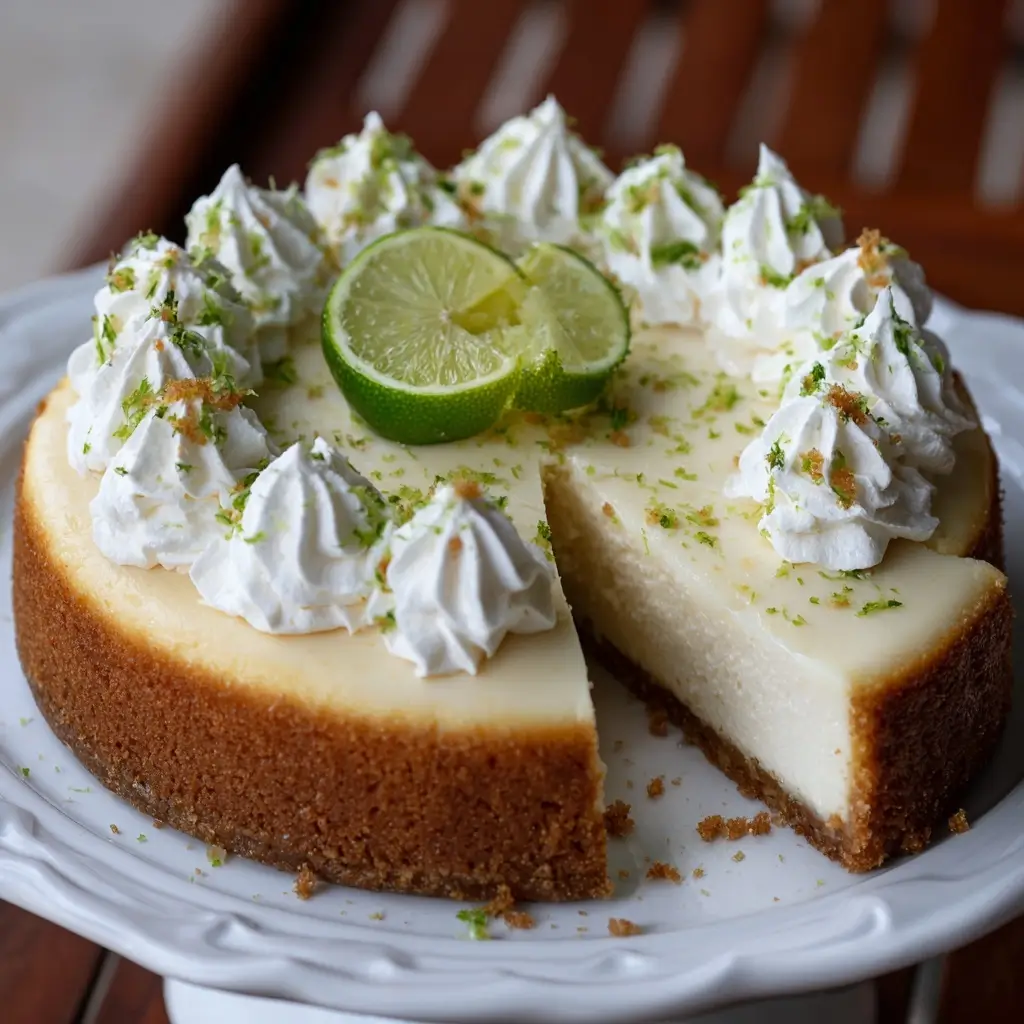
Key Lime Cheesecake is a dazzling fusion of tropical brightness and velvety richness—a dessert that captures the essence of sun-drenched Florida coastlines in every bite. Unlike traditional New York–style cheesecakes, which lean into dense, creamy indulgence, Key Lime Cheesecake balances intense citrus tang with luscious, cloud-like texture, resulting in a refreshingly sophisticated treat that feels both nostalgic and elegant. Its vibrant green-tinged filling, graham cracker crust kissed with buttery sweetness, and signature zesty aroma make it an unforgettable centerpiece for summer gatherings, holiday tables, or quiet moments of self-care. Whether you’re a seasoned baker or a curious beginner, this recipe invites you to explore the magic of balance—where acidity lifts fat, heat transforms texture, and simplicity yields sophistication.
The History
The origins of Key Lime Cheesecake are deeply rooted in the culinary evolution of two iconic American desserts: the Key lime pie and the classic baked cheesecake. Key lime pie itself traces back to the Florida Keys in the late 19th and early 20th centuries, when local residents—particularly sponge fishermen—relied on condensed milk (which required no refrigeration), fresh Key limes (Citrus aurantiifolia var. floridana), and egg yolks to create a no-bake, shelf-stable dessert. The small, aromatic Key limes—higher in acidity and essential oils than Persian limes—imparted a uniquely floral, tart complexity that became synonymous with regional identity.
Meanwhile, cheesecake has ancient lineage—dating to Ancient Greece—before evolving through European iterations and arriving in America via Philadelphia-style (unbaked, cream cheese–based) and New York–style (baked, rich, and dense) versions. The marriage of these traditions occurred gradually in mid-century American home kitchens and upscale Florida resorts, where chefs sought to elevate the beloved pie into something more luxurious and texturally nuanced. By the 1970s and ’80s, food magazines like Bon Appétit and Gourmet began publishing “Key Lime Cheesecake” variations, often specifying authentic Key lime juice (imported or bottled, as fresh Key limes remain seasonally limited and geographically scarce outside South Florida). Today, it’s a staple at iconic establishments like The Keys’ famous Blue Heaven and Miami’s Joe’s Stone Crab, and a beloved hallmark of Floridian cuisine recognized by the Florida Department of Agriculture as a culturally significant food product.
Ingredients Breakdown
Every element in Key Lime Cheesecake serves a precise functional and sensory role—understanding these elevates your baking from replication to mastery:
- Graham Cracker Crust Base: Standard graham crackers provide structure, subtle caramelized sweetness, and fine crumb density. Their molasses content adds depth, while their neutral flavor avoids competing with the lime. For gluten-free versions, certified GF graham-style crackers or almond flour–coconut flour blends maintain integrity without gumminess.
- Unsalted Butter (melted): Acts as the binding agent for the crust; unsalted ensures full control over sodium levels and prevents masking delicate citrus notes.
- Granulated Sugar (for crust): Enhances browning, adds crispness, and balances the tannic notes in graham crackers.
- Cream Cheese (full-fat, brick-style, room temperature): The backbone of the filling. Must be truly softened—not just warm—to ensure smooth incorporation. Low-fat or whipped varieties destabilize emulsion, leading to curdling or graininess. Philadelphia brand remains the gold standard for consistency and pH stability.
- Granulated Sugar (for filling): Not only sweetens but also aids in aeration during beating and stabilizes the protein matrix during baking. Confectioners’ sugar is avoided—it contains cornstarch, which can mute acidity and create chalkiness.
- Large Eggs (room temperature, jumbo preferred): Provide structure via coagulation and contribute richness and moisture. Room temperature ensures even dispersion and minimizes mixing time—critical to prevent over-aeration and cracking.
- Egg Yolks (extra, room temperature): Boost fat content and emulsification, yielding silkier texture and deeper yellow hue. They also increase thermal stability, reducing risk of weeping or separation.
- Fresh Key Lime Juice (not bottled unless specified): The soul of the dessert. Authentic Key limes yield ~1 tsp juice per fruit; expect 30–40 limes for ½ cup. Their higher citric acid (≈6%) and volatile oil concentration (limonene, β-pinene) deliver unmatched brightness and floral finish. Bottled Key lime juice (e.g., Nellie & Joe’s) is acceptable if fresh is unavailable—but avoid generic “lime juice,” which lacks nuance and may contain preservatives that dull flavor.
- Finely Grated Key Lime Zest: Contains aromatic oils concentrated in the flavedo (colored outer peel). Zesting before juicing maximizes yield and fragrance. Never include the bitter white pith.
- Sour Cream (full-fat, room temperature): Adds tang, moisture, and slight acidity to tenderize proteins—yielding a more supple, less rubbery crumb. Greek yogurt may substitute but alters pH and thickness; adjust liquid accordingly.
- Heavy Whipping Cream (36–40% fat, cold): Enriches mouthfeel and contributes to a smoother, more stable batter. Cold cream helps temper the batter temperature pre-bake, supporting even setting.
- Vanilla Extract (pure, not imitation): Rounds out acidity with warm, woody notes and enhances perception of sweetness without added sugar. Mexican or Tahitian vanilla adds intriguing nuance.
- Salt (fine sea salt or kosher): A crucial flavor amplifier—just ¼ tsp heightens lime’s vibrancy and balances fat. Omitting salt flattens the entire profile.
Step-by-Step Recipe
- Prep & Preheat: Position oven rack in center position. Preheat oven to 325°F (163°C). Line the *outside* of a 9-inch springform pan with two overlapping sheets of heavy-duty aluminum foil—this creates a watertight barrier for the upcoming water bath. Lightly grease the pan’s inner sides (not bottom) with unsalted butter or nonstick spray.
- Make the Crust: In a food processor, pulse 1 ½ cups (150g) finely crushed graham crackers, ¼ cup (50g) granulated sugar, and 6 tbsp (85g) melted unsalted butter until mixture resembles wet sand. Press firmly and evenly into the bottom and 1 inch up the sides of the prepared pan using the back of a spoon or flat-bottomed measuring cup. Chill uncovered for at least 30 minutes—or freeze for 15 minutes—to set the fat and prevent slumping during baking.
- Prepare Water Bath: Place the chilled, crust-lined springform pan inside a larger roasting pan (minimum 12″x15″). Fill the outer pan with hot tap water to reach halfway up the springform’s exterior. Keep this water bath ready near your oven.
- Beat Cream Cheese Base: In a large bowl of a stand mixer fitted with paddle attachment (or using a hand mixer), beat 24 oz (680g / four 8-oz blocks) full-fat cream cheese on medium speed for 2 minutes until completely smooth, scraping bowl and paddle frequently. Add 1 cup (200g) granulated sugar and beat 2 more minutes until fluffy and lightened in color—no graininess should remain.
- Incorporate Eggs Gradually: Reduce speed to low. Add 3 large room-temperature eggs, one at a time, beating just until yolk disappears (~15 seconds per egg). Scrape bowl thoroughly after each addition. Then add 2 large room-temperature egg yolks and beat until fully integrated. Overmixing at this stage introduces excess air, increasing crack risk.
- Add Lime Elements: With mixer on lowest speed, slowly drizzle in ½ cup (120ml) freshly squeezed Key lime juice, followed by 2 tbsp (6g) finely grated Key lime zest. Mix only until combined—do not whip. Pause to scrape bowl and beater.
- Enrich with Dairy: Add ¾ cup (180g) full-fat sour cream, ¼ cup (60ml) cold heavy whipping cream, 1 tsp pure vanilla extract, and ¼ tsp fine sea salt. Mix on low just until homogeneous—approximately 20–30 seconds. Batter should be thick, glossy, and pourable—not runny nor stiff.
- Strain & Pour: Immediately strain batter through a fine-mesh sieve into a large pouring vessel (like a 4-cup liquid measuring cup) to eliminate any undissolved sugar granules, zest clumps, or minor curdles. Gently pour batter over chilled crust, smoothing surface with an offset spatula. Tap pan sharply 3 times on counter to release trapped air bubbles.
- Bake in Water Bath: Carefully transfer roasting pan with water bath into preheated oven. Bake for 75–85 minutes. Cheesecake is done when edges are puffed and lightly golden, center jiggles only slightly (like Jell-O) when gently shaken, and internal temperature reads 150–152°F (65–67°C) on an instant-read thermometer inserted 1 inch from center.
- Cool Gradually (Critical!): Turn oven off. Crack oven door open 1 inch with a wooden spoon. Let cheesecake cool in water bath for 1 hour. Then carefully lift springform from water bath, remove foil, and run a thin knife around interior edge to loosen. Cool on wire rack at room temperature for another 2 hours.
- Chill Overnight: Refrigerate uncovered for *at least* 12 hours—and ideally 24–48 hours—before serving. This allows full protein set, flavor melding, and optimal slice integrity. Do not rush this step.
- Final Touches: Before serving, wipe condensation from pan sides. Release springform clamp and gently slide a long, thin metal spatula between crust and pan base to free. Transfer to serving plate. Garnish with additional zest, lime wheels, toasted coconut flakes, or a whisper of edible orchid.
Tips
- Room Temperature Is Non-Negotiable: Cream cheese, eggs, sour cream, and even butter must be truly room temperature (68–72°F)—set out for 2–3 hours, never microwaved. Cold ingredients cause splitting, lumping, and uneven baking.
- Zest Before You Juice: Limes are easier to zest when cold—but juice yields more when at room temp. So chill limes first, zest, then let them warm before rolling and juicing.
- Roll, Don’t Squeeze: To maximize juice extraction without bitterness: roll limes firmly on countertop with palm pressure before cutting in half and using a citrus reamer or handheld juicer. Avoid pressing pith into juice.
- Water Bath Mastery: Use hot (not boiling) water to minimize thermal shock. If water seeps in, don’t panic—the cake will still taste amazing; just pat crust dry before chilling. For foolproof sealing, double-wrap foil in crisscross layers.
- No Peek Policy: Resist opening the oven during the first 60 minutes. Temperature fluctuations invite cracks. Trust the timeline and visual cues.
- Crack Prevention Protocol: Beyond water bath and gradual cooling: mix batter minimally, avoid overbeating eggs, and consider adding 1 tbsp cornstarch (optional) to stabilize proteins—though purists omit it for purity of texture.
- Freeze for Future Joy: Fully chilled, uncut cheesecake freezes beautifully for up to 3 months. Wrap tightly in plastic + foil. Thaw overnight in fridge—not at room temp—to preserve texture.
- Knife Hygiene: For clean slices, dip a sharp, thin-bladed knife in hot water, wipe dry, cut, then repeat. Never saw—press straight down.
- Acidity Calibration: If your Key lime juice tastes unusually mild, add ½ tsp freshly squeezed lemon juice to boost brightness without altering profile.
- Crust Reinvention: For enhanced contrast, add 1 tsp ground ginger or ½ tsp toasted cumin to graham cracker crumbs—surprisingly complementary to lime’s florals.
Variations and Customizations
This foundational recipe is a canvas for creativity—each variation honors the spirit of Key lime while offering new dimensions of flavor, texture, and inclusivity:
- No-Bake Key Lime Cheesecake: Replace baked filling with a stabilized no-bake version: blend 24 oz cream cheese, 1 cup powdered sugar, ½ cup Key lime juice, 2 tbsp zest, 1 cup cold heavy cream (whipped to soft peaks), and 1 tsp unflavored gelatin (bloomed in 1 tbsp cold water, then melted and cooled). Fold gently, pour into chilled crust, and refrigerate 8+ hours.
- Coconut Key Lime Cheesecake: Infuse tropical depth by substituting ¼ cup of sour cream with full-fat coconut milk (canned, stirred well), using toasted coconut–graham crust (¼ cup toasted coconut blended into crumb mix), and garnishing with toasted coconut curls and lime-coconut candied pepitas.
- Blackberry-Key Lime Swirl: After pouring batter, dollop ⅓ cup seedless blackberry coulis (simmered berries + sugar + lemon juice, strained) onto surface. Drag a toothpick in figure-eights for elegant marbling—bake as directed.
- Vegan Key Lime Cheesecake: Use soaked raw cashews (2 cups), coconut cream (1 cup), maple syrup (⅔ cup), ⅓ cup Key lime juice, 2 tbsp zest, ¼ cup refined coconut oil (melted), and 1 tsp apple cider vinegar for tang. Blend until ultra-smooth; pour into date-walnut-oat crust; chill 12+ hours.
- Gluten-Free Key Lime Cheesecake: Substitute gluten-free graham crackers (like Schär or Pamela’s) and verify all extracts and juices are GF-certified. Add 1 tsp xanthan gum to crust for cohesion.
- Mini Key Lime Cheesecakes: Use a lined muffin tin (24 cavities). Press 1 tbsp crust per cup. Fill ¾ full with batter. Bake at 325°F for 22–26 minutes. Cool in pan 10 min, then refrigerate 8+ hours.
- Boozy Key Lime Cheesecake: Add 1.5 tbsp Key lime–infused vodka or Cointreau to batter with the lime juice. Optional: brush cooled top with lime-laced simple syrup spiked with rum before garnishing.
- White Chocolate-Key Lime: Melt and cool 4 oz high-quality white chocolate; fold into batter after dairy additions. Adds subtle sweetness and creamy richness that tames acidity beautifully.
- Herbal Accent: Steep 1 tsp fresh lemongrass or ½ tsp dried lavender in warm cream for 10 minutes before straining and adding to batter—use sparingly to avoid soapiness.
- Smoked Salt Finish: Sprinkle flaky smoked sea salt over each slice just before serving—a surprising, savory counterpoint that deepens lime’s complexity.
Health Considerations and Nutritional Value
A single generous slice (1/12th of a standard 9-inch cheesecake, approx. 180g) contains approximately:
- Calories: 420–460 kcal
- Total Fat: 30–33g (18–20g saturated)
- Cholesterol: 145–165mg
- Sodium: 280–320mg
- Total Carbohydrates: 32–36g (26–29g sugars, primarily added)
- Dietary Fiber: 0.5g
- Protein: 7–9g
Nutritional Highlights & Considerations:
While undeniably indulgent, Key Lime Cheesecake offers notable functional benefits when enjoyed mindfully. Key limes are rich in vitamin C (≈22mg per ½ cup juice—nearly 25% DV), flavonoids (including hesperidin and naringenin), and antioxidants linked to reduced oxidative stress and improved vascular function. The calcium and phosphorus in cream cheese support bone health, and the healthy fats aid absorption of fat-soluble phytonutrients.
However, its high saturated fat and added sugar content warrant portion awareness—especially for individuals managing metabolic syndrome, hypertension, or insulin resistance. To enhance nutritional alignment without sacrificing authenticity:
- Reduce Added Sugar: Decrease granulated sugar in filling by ¼ cup (50g); compensate with 2 tbsp monk fruit–erythritol blend (zero glycemic impact) and extra zest for perceptual sweetness.
- Boost Fiber: Incorporate 2 tbsp ground flaxseed or psyllium husk into crust—adds omega-3s and soluble fiber without altering flavor.
- Optimize Fat Profile: Substitute 2 tbsp of butter in crust with avocado oil; replace 2 tbsp sour cream with plain full-fat kefir (probiotic-rich).
- Lower Sodium Option: Use low-sodium graham crackers and omit added salt—relying solely on natural dairy sodium.
- Allergen Notes: Naturally nut-free and soy-free (with verified dairy brands), but always check labels for cross-contamination if severe allergies exist. For lactose sensitivity, lactose-free cream cheese and sour cream are widely available and perform identically.
Remember: Nutrition is contextual. Paired with a leafy green salad, grilled fish, or fresh fruit, this dessert becomes part of a balanced, joyful eating pattern—not an isolated “good” or “bad” choice.
Ingredients
- For the Crust:
– 1 ½ cups (150g) graham cracker crumbs (about 12 full sheets)
– ¼ cup (50g) granulated sugar
– 6 tablespoons (85g) unsalted butter, melted - For the Filling:
– 24 ounces (680g) full-fat brick-style cream cheese, room temperature
– 1 cup (200g) granulated sugar
– 3 large eggs, room temperature
– 2 large egg yolks, room temperature
– ½ cup (120ml) freshly squeezed Key lime juice (from ~30–40 Key limes)
– 2 tablespoons (6g) finely grated Key lime zest
– ¾ cup (180g) full-fat sour cream, room temperature
– ¼ cup (60ml) cold heavy whipping cream
– 1 teaspoon pure vanilla extract
– ¼ teaspoon fine sea salt
Directions
- Preheat oven to 325°F (163°C). Prepare a 9-inch springform pan by wrapping the *outside* tightly with two overlapping sheets of heavy-duty aluminum foil. Lightly grease the *inside* sides.
- In a food processor, combine graham cracker crumbs, ¼ cup sugar, and melted butter. Pulse until mixture resembles damp sand. Press firmly into bottom and 1 inch up sides of pan. Chill 30 minutes.
- Place chilled pan inside a large roasting pan. Fill roasting pan with hot water to halfway up springform sides.
- In stand mixer with paddle attachment, beat cream cheese on medium 2 minutes until smooth. Add sugar; beat 2 more minutes until light and fluffy.
- Reduce speed to low. Add eggs one at a time, beating just until incorporated. Add yolks; mix until smooth. Scrape bowl thoroughly.
- Add lime juice, zest, sour cream, heavy cream, vanilla, and salt. Mix on low just until uniform—do not overmix.
- Strain batter through fine-mesh sieve into a pouring vessel. Pour over chilled crust; smooth top. Tap pan sharply 3 times.
- Bake in water bath 75–85 minutes, until edges are set and center jiggles slightly. Internal temp should read 150–152°F (65–67°C).
- Turn oven off. Crack door open 1 inch; cool in water bath 1 hour.
- Remove from water bath. Run thin knife around edge. Cool on rack 2 hours.
- Refrigerate uncovered 12–48 hours before serving.
- Before serving, release springform, transfer to plate, and garnish as desired.
FAQ
- Can I use regular limes instead of Key limes?
- Yes—but with caveats. Persian limes are milder, less aromatic, and lack the floral top notes. To approximate Key lime intensity: use ⅔ cup Persian lime juice + 1 tsp lemon juice + extra zest (2 tbsp). Still, authentic Key limes are strongly recommended for true character.
- Why did my cheesecake crack?
- Most commonly due to rapid temperature shifts (opening oven too soon), overmixing batter, insufficient cooling time, or skipping the water bath. The gradual cooling protocol and minimal mixing are your best defenses.
- Can I make this ahead?
- Absolutely—and you should. It improves significantly after 24 hours. Fully assembled, it keeps refrigerated for up to 5 days, or frozen (wrapped tightly) for 3 months.
- My crust is soggy. What went wrong?
- Sogginess usually results from water seepage (check foil seal), under-baking the crust (pre-bake 8–10 min at 350°F before chilling), or cutting into the cake before full chilling. Ensure crust is thoroughly chilled and water bath is secure.
- Is there a lower-fat version?
- Reducing fat compromises texture and stability. However, you may use neufchâtel cheese (⅓ less fat than cream cheese) *if* you add 1 extra egg yolk and extend chilling to 48 hours for proper set. Full-fat remains ideal.
- How do I store leftovers?
- Cover tightly with plastic wrap or place in airtight container. Refrigerate up to 5 days. Do not store at room temperature beyond 2 hours.
- Can I use bottled Key lime juice?
- Yes—Nellie & Joe’s or Keenan’s are reputable. Avoid “lime juice cocktail” or blends with preservatives. Shake bottle well before measuring.
- What’s the best way to zest limes without bitterness?
- Use a microplane grater—never a box grater. Only grate the bright green/yellow outer layer. Stop immediately when you see white pith appearing.
- Can I add food coloring?
- Not recommended. Authentic Key lime filling naturally develops a pale, luminous yellow-green hue from zest and juice. Artificial coloring masks subtlety and risks an unnatural tone.
- Why does the recipe call for both sour cream AND heavy cream?
- Sour cream provides tang, protein, and moisture; heavy cream enriches fat content and improves mouth-coating viscosity. Together, they create superior tenderness and sheen versus either alone.
Summary
Key Lime Cheesecake is a masterclass in balance—where the exhilarating acidity of Florida-grown Key limes meets the sumptuous luxury of slow-baked cream cheese, all anchored by a buttery graham cracker foundation.
With meticulous attention to ingredient temperature, water bath technique, and unhurried chilling, this dessert transcends seasonal trend to become a timeless expression of sunshine, sophistication, and Southern hospitality—best shared slowly, savoring every vibrant, velvety bite.