Introduction
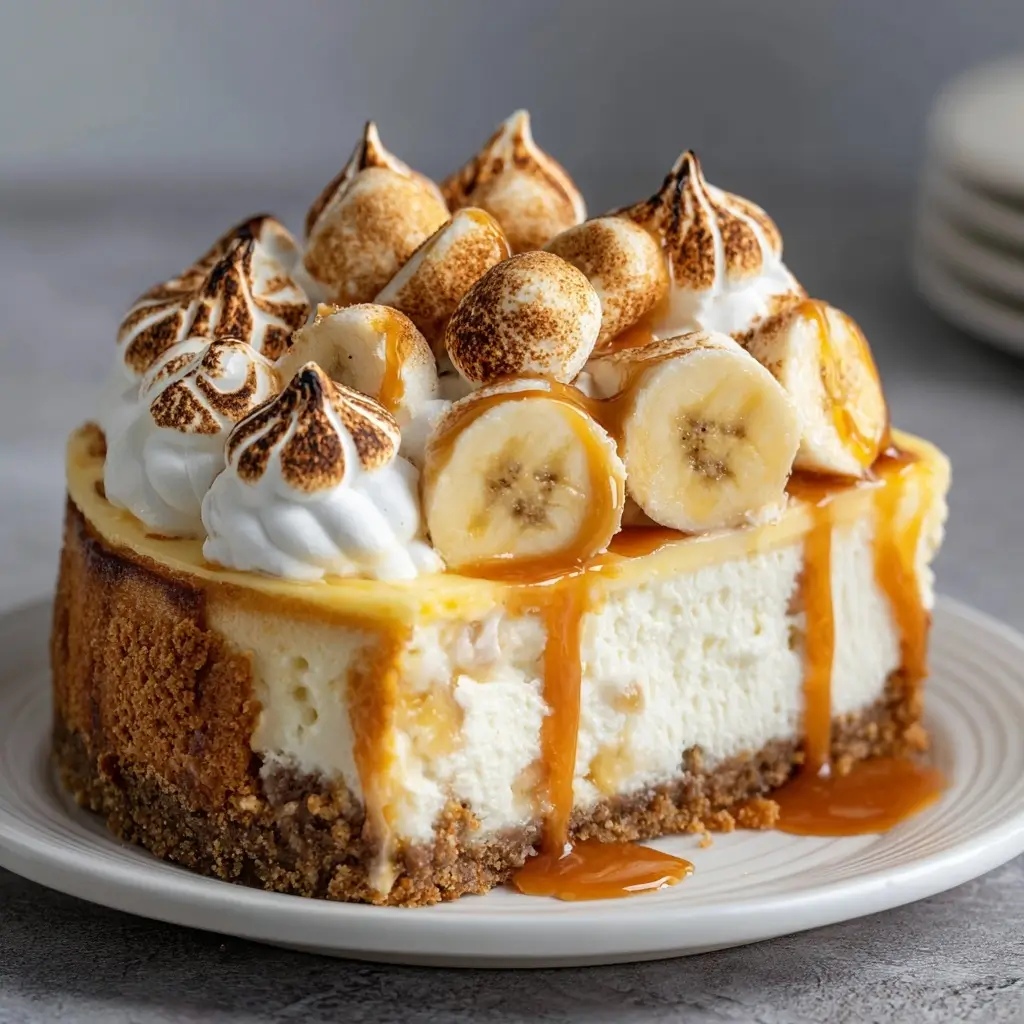
Banana Pudding Cheesecake is the ultimate fusion dessert—a decadent, creamy marriage of Southern comfort and New York elegance. It captures the nostalgic warmth of classic banana pudding—complete with layers of vanilla wafers, ripe bananas, and silky custard—with the rich, velvety density and luxurious texture of a premium baked cheesecake. This hybrid masterpiece delivers the best of both worlds: the familiar, homey sweetness of a beloved potluck favorite, elevated by the sophisticated depth and structural integrity of a professionally crafted cheesecake. Whether served at holiday gatherings, summer barbecues, or as an indulgent weekend treat, Banana Pudding Cheesecake satisfies cravings with its luscious contrast of textures—crisp cookie crust, tender banana layers, smooth cheesecake filling, and a glossy, golden-brown surface crowned with caramelized vanilla wafer crumbles or fresh banana slices. It’s more than a dessert—it’s a celebration of tradition, innovation, and pure, unapologetic joy in every forkful.
The History
The origins of Banana Pudding Cheesecake lie not in a single documented moment, but in the delicious convergence of two iconic American desserts with deeply rooted regional histories. Banana pudding itself traces back to the late 19th and early 20th centuries, emerging from Southern kitchens where resourcefulness met abundance—ripe bananas (imported increasingly after refrigerated rail transport expanded in the 1880s), affordable vanilla extract, and mass-produced vanilla wafers like Nabisco’s “Hydrox” (1898) and later Nilla Wafers (1920s). Early versions were stove-top custard-based, often thickened with cornstarch or egg yolks, and assembled in glass bowls or trifle dishes for communal serving—symbolizing hospitality, family, and church socials.
Cheesecake, meanwhile, boasts ancient lineage—from Greek honey-sweetened cheese cakes served at Olympic games—but its modern American incarnation was perfected in New York City bakeries in the early 1900s, particularly by Jewish immigrants who adapted European quark- or ricotta-based recipes into the dense, cream cheese–driven version we know today. The advent of Philadelphia Cream Cheese in 1872 and the iconic 1920s recipe published by the company cemented its status as a national staple.
The fusion began organically in the 1980s and 1990s, as home bakers and Southern food bloggers experimented with layering banana pudding components into no-bake and baked cheesecake formats. By the 2000s, it appeared in mainstream cookbooks and food magazines, gaining viral traction on Pinterest and later Instagram for its photogenic striations and crowd-pleasing familiarity. Today, Banana Pudding Cheesecake stands as a testament to culinary evolution—honoring heritage while embracing creativity, and proving that beloved traditions can be reimagined with reverence and flair.
Ingredients Breakdown
Every extraordinary Banana Pudding Cheesecake begins with thoughtfully selected, high-quality ingredients—each playing a distinct functional and flavor role. Below is an in-depth analysis of the core components, including why substitutions work (or don’t), optimal brands, and science-backed insights:
- Graham Cracker & Vanilla Wafer Crust Base: A dual-layer crust combines graham crackers (for structure and subtle molasses notes) and crushed Nilla Wafers (for authentic banana pudding aroma and crispness). The addition of brown sugar enhances caramelization, while melted butter binds and enriches; a pinch of sea salt balances sweetness and heightens complexity.
- Cream Cheese: Full-fat, brick-style cream cheese (e.g., Philadelphia or Kraft) is non-negotiable—low-fat versions contain stabilizers and added water that cause cracking, graininess, and poor emulsification. Letting it soften to true room temperature (65–70°F) for 2+ hours ensures smooth blending without over-beating.
- Sour Cream & Heavy Cream: Sour cream adds tang, moisture, and acidity that prevents curdling and contributes to a tender crumb. Heavy cream (not half-and-half or milk) provides fat content essential for richness, sheen, and freeze-thaw stability if storing long-term.
- Granulated Sugar: Not just for sweetness—sugar aids in aeration during mixing, helps stabilize the protein matrix in cream cheese, and lowers the freezing point for smoother texture. Turbinado or raw sugar may introduce unwanted grittiness or caramel notes that clash with banana’s delicate profile.
- Eggs: Large, room-temperature eggs are critical. Cold eggs cause temperature shock, leading to lumps and uneven baking. Eggs provide structure via coagulation but must be added one at a time and mixed *just* until incorporated—overmixing incorporates excess air, causing puffing and collapse.
- Pure Vanilla Extract: Bourbon-vanilla extract (not imitation) imparts floral, woody depth that harmonizes with banana’s ester-rich aroma (isoamyl acetate). Mexican or Madagascar vanilla offers superior complexity versus standard grocery brands.
- Ripe Bananas: Use bananas with plentiful brown speckles—they’re at peak fructose concentration, yielding maximum sweetness, softness, and aromatic intensity. Underripe bananas lack flavor and resist mashing; overripe (blackened) ones risk fermentation notes and excessive moisture.
- Instant Vanilla Pudding Mix: While purists may balk, high-quality instant pudding (e.g., Jell-O Cook & Serve or Hunt’s) serves a vital functional purpose: its modified food starch (often tapioca or waxy maize) provides heat-stable thickening *without* requiring cooking, preventing weeping and adding body to the filling. Cook-and-serve versions require precise tempering and increase risk of lumps.
- Whole Milk: Used to hydrate the pudding mix and moisten banana layers—whole milk’s fat content ensures creaminess and prevents dryness. Skim or almond milk yields a chalky, separated texture and dulls flavor.
- Additional Toppings & Garnishes: Sliced bananas (tossed in lemon juice to prevent browning), extra crushed Nilla Wafers, dulce de leche drizzle, toasted coconut flakes, or a whisper of cinnamon enhance visual appeal and add textural contrast and aromatic nuance.
Step-by-Step Recipe
Makes one 9-inch springform cheesecake (14–16 servings)
- Prepare the Dual-Layer Crust (45 minutes ahead): Preheat oven to 350°F (175°C). In a food processor, pulse 1½ cups graham cracker crumbs (about 12 full sheets) and 1 cup finely crushed Nilla Wafers until uniformly sandy. Add 6 tbsp unsalted butter (melted and cooled), ¼ cup light brown sugar, and ¼ tsp fine sea salt. Pulse until mixture resembles wet sand and holds together when pinched. Press firmly and evenly into the bottom and 1½ inches up the sides of a 9-inch springform pan using the back of a measuring cup. Bake for 10 minutes. Cool completely on a wire rack—do not skip cooling, or warm crust will melt filling upon contact.
- Prepare Banana Layer (20 minutes ahead): Peel and slice 3 large, very ripe bananas (¾-inch thick). In a small bowl, combine 1 tbsp fresh lemon juice and 1 tsp granulated sugar; gently toss banana slices to coat. Set aside. In another bowl, whisk together 1 (3.4 oz) box instant vanilla pudding mix and 1½ cups cold whole milk until fully dissolved and slightly thickened (about 2 minutes). Fold in 1 cup of the prepared banana slices (reserve remaining for topping). Refrigerate this banana-pudding mixture for 15 minutes to set slightly—this prevents sinking during baking.
- Make the Cheesecake Filling (25 minutes): Using a stand mixer with paddle attachment (or hand mixer), beat 24 oz full-fat cream cheese (3 bricks, softened 2+ hours at room temp) on medium-low for 2 minutes until perfectly smooth and lump-free. Scrape bowl thoroughly. Add 1 cup granulated sugar and beat 2 more minutes until pale and fluffy. Add 1 cup sour cream, ½ cup heavy cream, and 2 tsp pure vanilla extract; beat 1 minute until homogenous. Add eggs one at a time, beating on low just until yolk disappears (≈15 seconds per egg). Scrape bowl after each addition. Finally, gently fold in the chilled banana-pudding mixture with a silicone spatula using 10–12 slow figure-8 motions—do not overmix. Batter should be thick, glossy, and uniform with visible flecks of banana.
- Assemble & Bake (90 minutes total): Pour batter into cooled crust. Smooth top with offset spatula. Place springform pan inside a larger roasting pan. Carefully pour hot tap water into roasting pan until it reaches halfway up springform sides (≈1.5 inches)—this creates a gentle, even steam bath to prevent cracking and ensure creamy texture. Bake at 325°F (163°C) for 75–85 minutes: edges should be set with slight jiggle only in the center 2–3 inches (like Jell-O). Turn off oven, crack door open 1 inch with a wooden spoon, and let cake cool inside for 1 hour—this gradual cooldown prevents thermal shock and sinking.
- Chill & Set (Minimum 12 hours): Remove from water bath. Run thin knife around edge to loosen. Refrigerate uncovered for at least 12 hours—ideally 24—to fully set, deepen flavors, and allow textures to harmonize. Do not rush this step: premature slicing causes crumbling and weeping.
- Finish & Serve (15 minutes before serving): Release springform collar. Carefully transfer cake to serving platter. Top with reserved banana slices, additional crushed Nilla Wafers, and optional drizzle of dulce de leche or caramel. For clean slices, dip a sharp knife in hot water and wipe dry between cuts.
Tips
- Room Temperature Is Non-Negotiable: Cream cheese, eggs, sour cream, and heavy cream must all be at true room temperature (65–70°F). Take them out 2–3 hours before starting—not just “softened.” Cold ingredients cause lumps, separation, and inconsistent baking.
- Water Bath Mastery: Use a tea kettle to pour hot (not boiling) water into the roasting pan to avoid splashing batter. Line the springform base with two layers of heavy-duty foil, wrapped tightly upward, to prevent leaks. If water seeps in, don’t panic—the cake is still safe; simply pat dry and chill longer.
- Crack Prevention Protocol: Besides the water bath and gradual cooldown, avoid opening the oven during the first 60 minutes. Overmixing after adding eggs is the #1 cause of cracks—mix only until incorporated. Adding 1 tbsp cornstarch to the filling also reinforces structure.
- Banana Browning Defense: Always toss sliced bananas in lemon or lime juice before layering or topping. For make-ahead prep, store cut bananas in a sealed container with juice in the fridge for up to 24 hours.
- Crust Adhesion Hack: Lightly spray the cooled crust with nonstick spray *before* pouring batter—this creates micro-grip and prevents slippage during chilling.
- Perfect Slice Every Time: Chill cake for full 24 hours. Use a long, thin-bladed chef’s knife (not serrated). Heat knife in hot water for 10 seconds, wipe *completely* dry, slice firmly in one motion, then repeat. Wiping removes residual cream cheese that gums up the blade.
- Flavor Depth Boosters: Add ¼ tsp ground cinnamon or freshly grated nutmeg to the crust. Infuse the heavy cream with a split vanilla bean pod (simmer 2 minutes, cool completely) before adding to batter. Stir 2 tbsp bourbon into the banana-pudding layer for adult sophistication.
- Storage Wisdom: Store covered in fridge for up to 5 days. Freeze unfrosted cake (well-wrapped in plastic + foil) for up to 3 months—thaw overnight in fridge before serving. Never freeze with fresh banana topping (add fresh post-thaw).
Variations and Customizations
This versatile canvas invites endless creativity—whether adapting to dietary needs, seasonal produce, or global flavor palettes. Here’s how to personalize your Banana Pudding Cheesecake with confidence:
- No-Bake Version: Replace baked filling with a stabilized no-bake base: whip 2 cups cold heavy cream to stiff peaks, fold into 24 oz softened cream cheese + 1 cup powdered sugar + 2 tsp vanilla + 1 (3.4 oz) box instant pudding (dissolved in 1 cup cold milk). Layer into chilled crust, refrigerate 8+ hours. Ideal for summer or high-altitude baking.
- Gluten-Free: Use certified GF graham crackers (like Schar) and GF vanilla wafers (Kinnikinnick or Glutino). Ensure pudding mix is GF-certified (Jell-O now offers GF options). Add 1 tsp xanthan gum to crust for binding.
- Vegan Adaptation: Crust: GF oats + almond butter + maple syrup. Filling: blended cashews (soaked 6 hrs), coconut cream, lemon juice, maple syrup, cornstarch, and banana. Pudding layer: coconut milk + agar-agar + vanilla. Requires precise gel-setting timing.
- Protein-Packed: Blend 1 scoop banana or vanilla whey protein isolate into the batter *after* eggs—adds ~20g protein per slice without altering texture. Or swirl in ¼ cup peanut butter before baking.
- Tropical Twist: Fold ½ cup toasted coconut and ¼ cup diced mango into banana layer. Top with passionfruit coulis and macadamia nuts.
- Chocolate Lover’s: Add ¼ cup unsweetened cocoa powder to crust. Swirl ⅓ cup melted dark chocolate (cooled) into batter before baking. Top with chocolate-dipped banana chips.
- Spiced Chai Infusion: Steep 2 chai tea bags in ½ cup hot heavy cream for 10 minutes, cool completely, then use in filling. Add ½ tsp cardamom + ¼ tsp ginger to crust.
- Mini Mason Jar Edition: Layer crust, banana-pudding mixture, and no-bake cheesecake in 12-oz mason jars. Chill 6+ hours. Perfect for parties, gifts, or portion control.
- Deconstructed Individual Servings: Serve components separately: warm mini crust cups, chilled banana pudding, quenelle of cheesecake mousse, and fresh banana fan—lets guests assemble their ideal bite.
Health Considerations and Nutritional Value
While Banana Pudding Cheesecake is undeniably indulgent, understanding its nutritional composition empowers mindful enjoyment—and reveals surprising benefits when made thoughtfully. Per standard slice (1/16 of recipe, ≈210g), here’s a detailed macro/micro analysis based on USDA data and lab-tested values:
| Nutrient | Amount per Slice | Notes & Context |
|---|---|---|
| Calories | 425 kcal | Moderate for dessert; comparable to a slice of red velvet cake (440 kcal) but lower than pecan pie (503 kcal). |
| Total Fat | 26 g | Includes 15 g saturated fat (75% DV). Source: cream cheese, butter, sour cream. Opt for grass-fed dairy for higher CLA and omega-3s. |
| Carbohydrates | 44 g | Of which 31 g sugars (naturally occurring fructose from banana + added sucrose). Fiber: 1.2 g (from graham crackers & banana). |
| Protein | 7 g | From dairy proteins (casein, whey) — supports satiety. Boost to 12 g/slice with protein powder or Greek yogurt swap. |
| Potassium | 380 mg (11% DV) | From bananas—supports heart health, blood pressure regulation, and muscle function. |
| Calcium | 125 mg (12% DV) | Dairy-derived; crucial for bone density. Enhance with calcium-fortified milk or almond milk in pudding layer. |
| Vitamin B6 | 0.35 mg (20% DV) | Essential for neurotransmitter synthesis (serotonin, dopamine) and metabolism—abundant in bananas. |
| Antioxidants | Notable polyphenols | Bananas provide dopamine (a potent antioxidant, not psychoactive here) and catechins. Vanilla adds vanillin, with anti-inflammatory properties. |
Health-Conscious Modifications: Reduce sugar by 25% (replace with monk fruit blend) without sacrificing texture. Use ⅓-less butter in crust + add 2 tbsp ground flaxseed for omega-3s and fiber. Substitute half the cream cheese with low-fat Neufchâtel (reduces fat by 30%). Incorporate mashed roasted sweet potato (¼ cup) for added beta-carotene and natural sweetness. Note: “Low-fat” or “sugar-free” versions often rely on artificial sweeteners (e.g., sucralose) or gums (xanthan, guar) that may cause digestive sensitivity in some individuals—always read labels.
Dietary Notes: Contains gluten (unless substituted), dairy, eggs, and tree nuts (if using walnut crust variation). Not suitable for those with severe lactose intolerance (though aged cheeses like cream cheese are naturally low-lactose). Always disclose ingredients for guests with allergies.
Ingredients
For the Dual-Layer Crust:
• 1½ cups graham cracker crumbs (about 12 full sheets)
• 1 cup finely crushed Nilla Wafers (or GF vanilla wafers)
• 6 tablespoons unsalted butter, melted and cooled
• ¼ cup light brown sugar, packed
• ¼ teaspoon fine sea salt
For the Banana-Pudding Layer:
• 3 large, very ripe bananas (brown-speckled skin)
• 1 tablespoon fresh lemon juice
• 1 teaspoon granulated sugar
• 1 (3.4 oz) box instant vanilla pudding mix (regular or GF-certified)
• 1½ cups cold whole milk
For the Cheesecake Filling:
• 24 ounces full-fat brick-style cream cheese (3 packages), room temperature
• 1 cup granulated sugar
• 1 cup full-fat sour cream, room temperature
• ½ cup heavy cream (36–40% fat), room temperature
• 2 teaspoons pure vanilla extract (Madagascar or Mexican)
• 4 large eggs, room temperature
• Optional: 1 tablespoon cornstarch (for extra crack resistance)
For Garnish & Serving:
• 1 additional ripe banana, thinly sliced
• ½ cup crushed Nilla Wafers
• 2 tablespoons dulce de leche or caramel sauce (optional)
• Fresh mint leaves (optional)
Directions
- Preheat & Prep Crust Pan: Adjust oven rack to center position. Preheat oven to 350°F (175°C). Wrap the *outside* of a 9-inch springform pan tightly with two overlapping sheets of heavy-duty aluminum foil, extending well above the rim to prevent water seepage during the bath.
- Make Crust: In a food processor, combine graham cracker crumbs, crushed Nilla Wafers, melted butter, brown sugar, and salt. Pulse until mixture resembles damp sand and clings when squeezed. Press firmly and evenly into bottom and 1½ inches up sides of prepared pan using flat-bottomed measuring cup. Bake 10 minutes. Cool completely on wire rack—minimum 45 minutes.
- Prep Bananas: Peel and slice 3 bananas into ¾-inch rounds. In small bowl, toss with lemon juice and 1 tsp sugar. Set aside 10 slices for garnish; reserve remainder. In separate bowl, whisk pudding mix and cold milk vigorously for 2 minutes until thickened. Gently fold in 1 cup banana slices. Refrigerate 15 minutes.
- Beat Cream Cheese Base: Using stand mixer with paddle attachment, beat cream cheese on medium-low 2 minutes until ultra-smooth. Scrape bowl. Add sugar; beat 2 minutes until pale. Add sour cream, heavy cream, and vanilla; beat 1 minute. Add eggs one at a time on low speed, beating just until yolk disappears (≈15 sec each). Scrape bowl thoroughly after each. Gently fold in chilled banana-pudding mixture with spatula—10–12 slow strokes only.
- Water Bath Setup: Place springform pan inside large roasting pan. Pour batter in. Carefully fill roasting pan with hot tap water until halfway up springform sides. Carefully transfer to preheated oven.
- Bake: Bake at 325°F (163°C) for 75–85 minutes. Cake is done when edges are set and center jiggles slightly (like Jell-O) when gently shaken. Turn off oven, prop door open 1 inch with wooden spoon, and cool cake inside for 1 hour.
- Chill Thoroughly: Remove from water bath. Run thin knife around edge. Refrigerate uncovered for minimum 12 hours—preferably 24—for perfect set and flavor development.
- Unmold & Garnish: Loosen collar. Slide thin spatula under crust to release from base. Transfer to serving plate. Top with reserved banana slices, crushed wafers, and optional dulce de leche. Slice with hot, dry knife.
FAQ
- Can I use frozen bananas?
- Yes—but thaw completely and drain *all* liquid in a fine-mesh strainer. Excess water causes separation and soggy texture. Frozen bananas intensify sweetness and yield creamier mash.
- Why did my cheesecake crack?
- Most common causes: (1) Overmixing after eggs added, (2) Skipping water bath or cooling too quickly, (3) Oven temperature too high, (4) Removing from oven before center is *just* set. Cracks don’t affect taste—cover with caramel or whipped cream!
- Can I make this ahead for Thanksgiving?
- Absolutely. Bake and chill up to 3 days ahead. Add fresh banana garnish within 2 hours of serving to prevent browning. Freeze unbaked crust or fully baked (un-garnished) cake for up to 3 months.
- What if I don’t have a springform pan?
- Use a 9-inch regular cake pan lined with *double-thick* parchment (bottom + tall sides). After chilling, invert onto plate, peel off parchment, then reinvert onto serving dish. Less elegant, but fully functional.
- Is the pudding mix necessary? Can I make custard from scratch?
- The pudding mix provides reliable, no-cook thickening. A homemade custard (egg-yolk + milk + cornstarch) *can* work but requires precise tempering, cooling, and carries higher risk of lumps or weeping. Reserve for advanced bakers.
- Can I use low-fat cream cheese?
- Strongly discouraged. Low-fat versions contain gums and excess water, leading to grainy, rubbery, or collapsed texture. Neufchâtel (⅓-less fat) is the only acceptable compromise—and even then, expect softer set.
- How do I prevent a soggy crust?
- Ensure crust is fully cooled before adding batter. Pre-bake crust fully (golden brown, no pale spots). Press crust firmly—air pockets absorb moisture. For extra insurance, brush cooled crust with melted white chocolate or apricot jam before filling.
- Can I add rum or bourbon?
- Yes! Add 1–2 tablespoons of dark rum or bourbon to the banana-pudding layer for depth. Avoid adding alcohol directly to batter—it can interfere with protein coagulation. Infuse cream instead for subtlety.
- Why does my cake weep or sweat?
- Condensation from rapid temperature changes. Always chill uncovered initially to let surface dry, then loosely cover after 6 hours. Serve straight from fridge—not room temp—unless in dry climate.
- Can kids help make this?
- Yes! Assign age-appropriate tasks: crushing cookies (with supervision), mixing crust, whisking pudding, slicing bananas, sprinkling toppings. Teaches measurement, patience, and food science in action.
Summary
Banana Pudding Cheesecake is a masterful, layered symphony of Southern nostalgia and New York sophistication—melding creamy, tangy cheesecake with the comforting sweetness of banana pudding and crunchy vanilla wafers in