Introduction
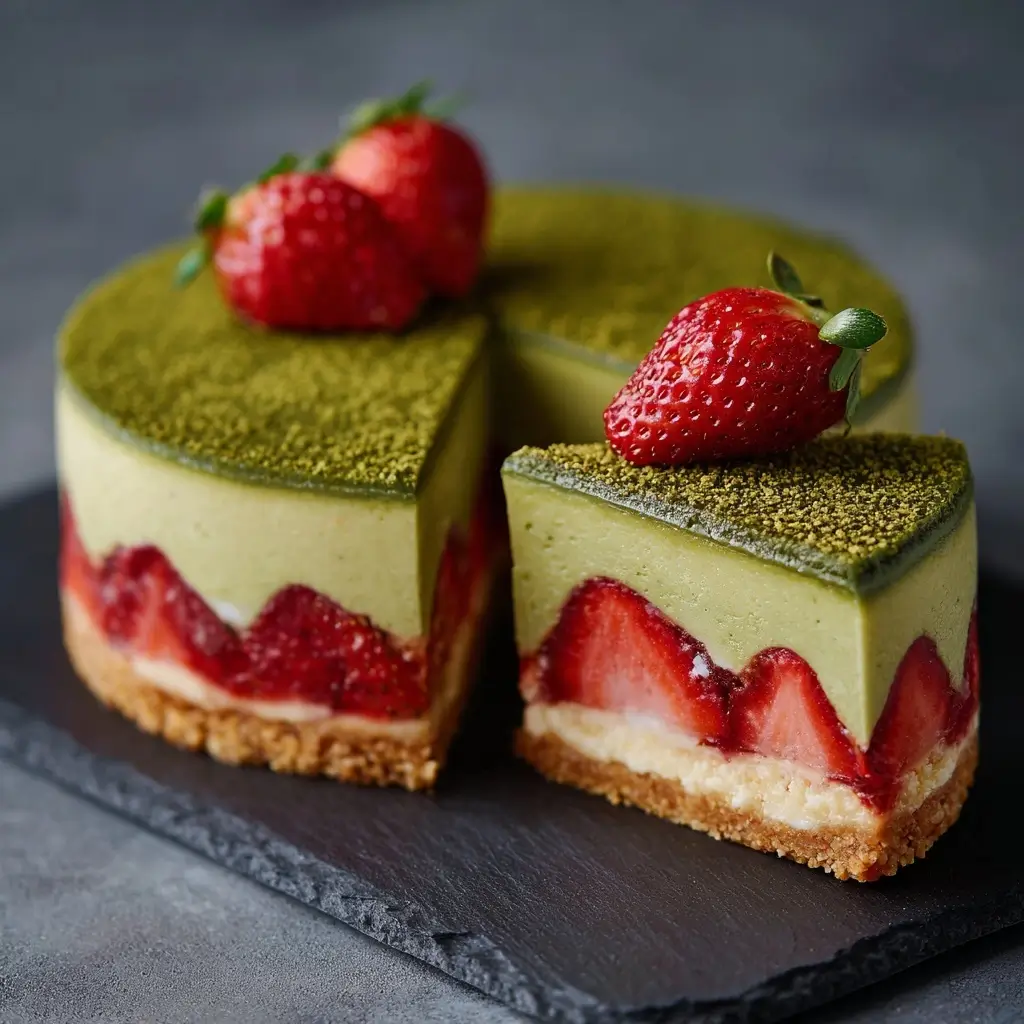
Welcome to the vibrant, velvety, and utterly enchanting world of Matcha Strawberry Cheesecake — a harmonious fusion of Japanese tradition and modern dessert artistry. This isn’t just a cheesecake; it’s a multisensory experience where earthy umami depth meets bright, sun-ripened sweetness, all wrapped in a luxuriously creamy, no-bake (or baked, depending on your preference) structure. Whether you’re a matcha connoisseur, a strawberry devotee, or simply someone seeking a showstopping dessert that balances sophistication with approachability, this recipe delivers on every front. With its stunning gradient hues — from pale jade green to rosy pink — it’s as photogenic as it is delicious, making it perfect for celebrations, afternoon tea service, bridal showers, or even mindful solo indulgence.
The History
The evolution of Matcha Strawberry Cheesecake is a beautiful testament to culinary globalization and cross-cultural innovation. Cheesecake itself traces its origins to ancient Greece — where honey-sweetened cheese cakes were served to athletes at the first Olympic Games in 776 BCE — later refined by the Romans and reimagined across Europe through centuries of regional adaptations. In the 20th century, New York-style baked cheesecake rose to prominence in America, defined by its dense, rich, cream-cheese-forward texture and graham cracker crust. Meanwhile, matcha — finely ground shade-grown tencha leaves — has been central to Japanese tea ceremony culture since the 12th century, revered not only for its spiritual significance but also its calming yet alerting properties due to the synergistic presence of L-theanine and caffeine.
The marriage of matcha and strawberry, however, is a relatively recent phenomenon — emerging in the early 2000s within Japan’s “kawaii” (cute) food movement and artisanal patisseries like Tsujiri and Ippudo’s dessert offshoots. Pastry chefs began experimenting with matcha’s vegetal complexity to temper the sharp acidity of fresh strawberries, discovering that the subtle bitterness of high-grade ceremonial matcha actually enhances fruit sweetness through contrast — a principle well known in flavor science as “flavor layering.” As matcha gained global traction post-2010 (fueled by wellness trends and social media aesthetics), Western bakers adopted the pairing, elevating it from mochi fillings and parfaits into decadent, layered cheesecakes. Today, Matcha Strawberry Cheesecake stands as a symbol of mindful indulgence — honoring tradition while embracing creativity, balance, and visual poetry on the plate.
Ingredients Breakdown
Every exceptional dessert begins with intentionality — understanding not just *what* goes into the bowl, but *why* each component matters. Below is an in-depth, function-driven analysis of each ingredient:
- Graham Cracker Crust Base (or Alternatives): Graham crackers provide structure, caramelized sweetness, and gentle crunch. Their molasses content adds a warm, toasty nuance that complements matcha’s roasted notes. For gluten-free versions, almond flour–based shortbread or certified GF gingersnaps work beautifully — their higher fat content yields a more tender, buttery base.
- Unsalted Butter (melted): Acts as the binding agent for the crust, ensuring cohesion and preventing crumbliness. European-style butter (82–86% fat) is ideal for richer flavor and superior melt-in-the-mouth texture.
- Cream Cheese (full-fat, block-style, room temperature): The cornerstone of any great cheesecake. Block-style (not spreadable) ensures minimal added stabilizers and water content, resulting in denser, smoother texture and better emulsification. Room temperature is non-negotiable — cold cream cheese leads to lumps and air pockets.
- Full-Fat Sour Cream & Heavy Cream (36–40% fat): These dairy enrichers add tang, moisture, and silkiness. Sour cream contributes acidity to balance sweetness and improves sliceability; heavy cream lends fluidity and helps prevent cracking during baking (if using the baked version). Avoid low-fat substitutes — they introduce excess water and destabilize the protein matrix.
- Granulated Sugar: Provides sweetness, aids in aeration during mixing, and helps stabilize the egg proteins (in baked versions). Fine caster sugar dissolves more readily than granulated, yielding ultra-smooth batter.
- Pure Vanilla Extract (alcohol-based, not imitation): Adds aromatic warmth and rounds out matcha’s grassy notes. Madagascar bourbon vanilla is preferred for its complex floral-anise undertones.
- High-Quality Ceremonial-Grade Matcha Powder: This is the soul of the recipe. Ceremonial grade is stone-ground from the youngest, most shaded leaves — yielding vibrant green color, delicate umami, creamy mouthfeel, and zero bitterness when properly whisked. Culinary-grade matcha will result in duller color, harsher astringency, and diminished aromatic finesse. Always sift matcha before use to eliminate clumps — a fine-mesh sieve or dedicated matcha sifter is essential.
- Fresh, Ripe Strawberries (hulled and sliced): Choose locally grown, peak-season berries — deep red, fragrant, slightly yielding to pressure. Underripe strawberries lack natural pectin and sweetness; overripe ones release too much water and dilute flavor. For optimal texture, macerate them lightly with a touch of sugar and lemon juice to draw out juices and intensify flavor without sogginess.
- Lemon Juice & Zest: Bright acidity cuts through richness and lifts matcha’s earthiness. Freshly squeezed juice and microplaned zest offer volatile citrus oils that amplify aroma far beyond bottled alternatives.
- Unflavored Gelatin (for no-bake version) or Eggs (for baked version): Gelatin provides clean-set stability, jiggle-free firmness, and crystal-clear translucency in layers. For baked versions, large eggs (room temperature) act as natural binders and leaveners — their proteins coagulate gently to create a tender, custard-like crumb. Always temper eggs slowly to avoid scrambling.
- Optional Enhancements: A pinch of sea salt (Maldon or fleur de sel) heightens all flavors; a splash of amaretto or yuzu juice adds intriguing nuance; toasted white sesame seeds or crushed pistachios lend textural contrast and nutty harmony.
Step-by-Step Recipe
This detailed, chef-tested methodology ensures flawless execution whether you choose the elegant no-bake route or the classic baked variation. Each step includes timing estimates, visual cues, and troubleshooting notes.
- Prepare the Crust (15 minutes + 30 min chill): Pulse 1 ½ cups graham cracker crumbs (about 10 full sheets), 3 tbsp granulated sugar, and ¼ tsp fine sea salt in a food processor until uniform. Add 6 tbsp melted unsalted butter and pulse until sandy and moistened. Press firmly and evenly into the bottom and 1 inch up the sides of a 9-inch springform pan using the back of a measuring cup or flat-bottomed glass. Chill uncovered in the refrigerator for at least 30 minutes (or freeze for 15) to set the butter and prevent slippage during filling.
- Macarade the Strawberries (20 minutes + 1 hour drain): In a non-reactive bowl, combine 2 cups hulled, quartered strawberries, 3 tbsp granulated sugar, 1 tsp fresh lemon juice, and ½ tsp lemon zest. Gently fold, cover, and refrigerate for 1 hour. Then, strain through a fine-mesh sieve lined with cheesecloth, reserving both syrup and berries separately. Pat berries dry with paper towels to remove excess moisture — critical for preventing weeping in the final cake.
- Make the Matcha Base Layer (25 minutes + 4 hours chill): In a medium bowl, whisk 2 tbsp ceremonial matcha with 2 tbsp hot (not boiling) water (175°F / 80°C) until completely smooth and frothy — a bamboo chasen is ideal, but a small whisk works. Set aside to cool slightly. In a stand mixer fitted with the paddle attachment, beat 24 oz (3 standard blocks) full-fat cream cheese on medium-low for 2 minutes until creamy and lump-free. Scrape down bowl. Add ¾ cup granulated sugar and beat 2 more minutes until lightened. Add 1 cup full-fat sour cream, ½ cup heavy cream, 1 tbsp vanilla extract, and ½ tsp fine sea salt; beat 90 seconds until homogenous. Finally, drizzle in the cooled matcha mixture while mixing on low — continue until fully incorporated and vivid green (about 1 minute). Do NOT overmix — stop as soon as color is even.
- Set the No-Bake Version (Critical Step): Bloom 2 ¼ tsp (one standard packet) unflavored gelatin in 3 tbsp cold water for 5 minutes. Heat ¼ cup heavy cream in a small saucepan over medium-low until steaming (do not boil). Whisk bloomed gelatin into hot cream until fully dissolved (15–20 seconds). Let cool 2 minutes, then slowly whisk into matcha batter on low speed. Pour immediately into chilled crust. Smooth top with offset spatula. Refrigerate uncovered for at least 4 hours — preferably overnight — until completely firm to the touch and cleanly releasing from the pan sides.
- Baked Version Alternative (35–40 min bake + 12 hr chill): Preheat oven to 325°F (163°C) with rack in center. Prepare water bath: place springform pan inside a larger roasting pan; fill outer pan with 1 inch of hot water. Omit gelatin. Instead, beat in 3 large room-temperature eggs one at a time on low, mixing just until yolk disappears (≈15 sec per egg). Scrape bowl thoroughly. Pour batter into crust. Bake 75–85 minutes — cake is done when edges are set but center jiggles slightly like Jell-O (not liquid). Turn off oven, crack door open 2 inches, let cool inside for 1 hour. Remove from water bath, run thin knife around edge, cool completely at room temp (2 hrs), then refrigerate uncovered 12+ hours.
- Assemble the Strawberry Layer (15 minutes): In a small saucepan, combine reserved strawberry syrup (≈⅓ cup), 1 tbsp granulated sugar, and 1 tsp lemon juice. Simmer 3–4 minutes until reduced by ⅓ and slightly thickened. Cool completely. Fold cooled syrup gently into drained strawberries. Spoon evenly over chilled matcha layer. Use an offset spatula to spread without disturbing the green base.
- Final Chill & Garnish (Minimum 2 hours): Return cake to refrigerator for at least 2 hours (preferably 4) to allow strawberry layer to fully set and flavors to meld. Before serving, dip springform knife in hot water and wipe dry between each cut for clean slices. Garnish with: fresh strawberry fans, edible dried strawberry powder, matcha-dusted whipped cream, micro mint, or delicate shiso leaves.
Tips
- Temperature Is Everything: All dairy ingredients — cream cheese, sour cream, heavy cream, eggs, even butter — must be truly room temperature (68–72°F). Cold ingredients cause separation, lumps, and unstable emulsions. Leave them out for 2–3 hours (not overnight — safety first).
- Matcha Sifting Is Non-Negotiable: Even “clump-free” matcha benefits from sifting through a fine-mesh strainer directly into your mixing bowl. Use a small silicone spatula to press any residue through — this guarantees velvet-smooth texture and even color distribution.
- Whisk Matcha With Precision: Never use boiling water — it degrades chlorophyll and creates bitterness. 175°F is ideal. Whisk vigorously in a “W” or “M” motion for 15–20 seconds until frothy and glossy. If using a blender, pulse only 3–4 times to avoid aerating excessively.
- Strawberry Moisture Control Is Key: Excess water = weeping layers and soggy crust. Always macerate, drain, and pat dry. For extra security, toss drained berries with ½ tsp cornstarch or arrowroot powder before folding into syrup.
- Prevent Cracking (Baked Version): Water bath is mandatory. Cool gradually — never rush chilling. Run a thin knife around the perimeter after initial cooling to release tension. Refrigerate overnight before unmolding.
- Slice Like a Pro: Use a long, thin, non-serrated knife dipped in hot water and wiped dry before every cut. Clean, sharp strokes — no sawing. Wipe knife between slices for pristine edges.
- Storage Wisdom: Store covered in refrigerator for up to 5 days. Do not freeze the assembled cake — freezing disrupts the delicate emulsion and causes ice crystals that ruin texture. However, unbaked crust and matcha batter (without gelatin/eggs) can be frozen separately for up to 1 month.
- Taste As You Go: Matcha potency varies. After adding matcha mixture to batter, taste a tiny amount (it’s safe — no raw eggs in no-bake version). Adjust with another ¼ tsp matcha if desired — but remember, flavor intensifies slightly upon chilling.
Variations and Customizations
This recipe is a canvas — adaptable to dietary needs, seasonal availability, cultural preferences, and creative whims. Here are thoughtfully curated variations, each tested for structural integrity and flavor harmony:
- Vegan Matcha Strawberry Cheesecake: Replace cream cheese with soaked and blended raw cashews (2 cups), coconut cream (1 cup), coconut oil (¼ cup melted), lemon juice (3 tbsp), maple syrup (⅔ cup), and matcha (2 tbsp). Set with agar-agar (2 tsp dissolved in ¼ cup water, boiled 2 min). Crust: dates + almonds + coconut flakes. Top with coconut yogurt–strawberry compote.
- Gluten-Free & Grain-Free: Crust: 1 ½ cups almond flour + ¼ cup coconut flour + 3 tbsp maple syrup + 4 tbsp melted coconut oil + pinch salt. Press and bake at 350°F for 10 min before cooling. Ensure all other ingredients are certified GF.
- Strawberry-White Chocolate Matcha Swirl: Melt 4 oz high-quality white chocolate (30–32% cocoa butter) with 1 tbsp coconut oil. Cool to 85°F. Dollop over matcha batter and drag with a toothpick for marbling before adding strawberry layer.
- Yuzu-Kissed Variation: Substitute 1 tbsp yuzu juice + 1 tsp yuzu zest for half the lemon. Yuzu’s grapefruit-tangerine complexity adds exhilarating brightness that dances with matcha’s depth.
- Matcha-Strawberry Balsamic Reduction Drizzle: Simmer ½ cup strawberries, 2 tbsp balsamic vinegar, 1 tbsp honey, and 1 tsp lemon juice until thick and syrupy (12–15 min). Strain and cool. Drizzle artistically over finished cake.
- Chia Seed Jam Layer: Replace traditional strawberry topping with a vibrant chia jam: mash 1 cup berries, mix with 2 tbsp chia seeds, 2 tbsp maple syrup, and 1 tsp lemon juice. Refrigerate 2 hours until gel-like. Swirl gently into matcha batter before pouring — creates stunning marbled effect.
- Mini Jar or Tartlet Version: Scale down for individual servings — use 4-oz mason jars or 3-inch tart pans. Reduce chill time to 3 hours (no-bake) or bake time to 25–30 min (baked). Perfect for parties or gift-giving.
- Green Tea–Infused Crust: Add 1 tsp finely ground matcha + ¼ tsp ground ginger to graham cracker crust mixture for subtle aromatic reinforcement and visual continuity.
Health Considerations and Nutritional Value
While undeniably indulgent, Matcha Strawberry Cheesecake offers surprising functional benefits when crafted mindfully — transforming dessert into a nourishing ritual rather than mere caloric excess. Below is a comprehensive nutritional and wellness perspective based on a standard 9-inch, 12-slice no-bake version (per slice, approx. 320 kcal):
- Matcha’s Science-Backed Benefits: Ceremonial matcha delivers 137x more EGCG (epigallocatechin gallate) — a potent antioxidant — than regular green tea. It supports metabolic health, neuroprotection, and calm alertness via L-theanine–induced alpha brain waves. One serving (~2 tsp matcha) provides ~70 mg caffeine — less than coffee, but synergistically modulated for sustained focus without jitters.
- Strawberry Power: Rich in vitamin C (98 mg/slice ≈ 109% DV), folate, potassium, and ellagic acid — a polyphenol shown to inhibit oxidative stress and support cellular repair. Their natural fructose is balanced by fiber and polyphenols, resulting in lower glycemic impact than refined sugar alone.
- Cream Cheese Realities: Full-fat dairy contributes saturated fat (≈12g/slice), but recent meta-analyses (e.g., The Lancet, 2017) suggest moderate intake is not associated with cardiovascular risk — especially when paired with antioxidants and fiber. Opt for grass-fed or organic cream cheese for higher CLA (conjugated linoleic acid) and omega-3s.
- Sugar Consciousness: This recipe uses ¾ cup total sugar for the entire cake (≈10g/slice), significantly less than traditional cheesecakes (often 20–25g/slice). Natural sweetness from strawberries allows further reduction — try ½ cup sugar if preferring less sweet.
- Dietary Adaptability: Naturally low-carb (≈5g net carbs/slice), keto-friendly with sugar substitute (erythritol + monk fruit blend), and easily modified for paleo (cashew-based), vegan (coconut-cashew), or diabetic-friendly (low-glycemic sweeteners + increased fiber via chia or psyllium).
- Mindful Indulgence Principle: Portion control (1 slice = ~1/12 cake), savoring slowly, and pairing with green tea or sparkling water enhances satiety signals and reduces reactive eating. The combination of fat, protein, fiber, and polyphenols promotes stable blood sugar and prolonged satisfaction.
- Allergen Notes: Contains dairy, gluten (in standard crust), and eggs (baked version). Always verify matcha sourcing — some low-grade powders may contain fillers or contaminants (lead, aluminum); choose USDA Organic, JAS-certified, or third-party tested brands like Encha, Aiya, or Mizuba.
Ingredients
Makes one 9-inch cheesecake (12 servings)
For the Crust:
- 1 ½ cups graham cracker crumbs (about 10 full sheets)
- 3 tablespoons granulated sugar
- ¼ teaspoon fine sea salt
- 6 tablespoons unsalted butter, melted (85g)
For the Matcha Cheesecake Layer:
- 2 tablespoons ceremonial-grade matcha powder, sifted
- 2 tablespoons hot water (175°F / 80°C)
- 24 ounces full-fat cream cheese, room temperature (3 standard 8-oz blocks)
- ¾ cup granulated sugar
- 1 cup full-fat sour cream, room temperature
- ½ cup heavy cream (36–40% fat), room temperature
- 1 tablespoon pure vanilla extract
- ½ teaspoon fine sea salt
For the No-Bake Setting Agent:
- 2 ¼ teaspoons (one 7g packet) unflavored gelatin
- 3 tablespoons cold water
- ¼ cup heavy cream
For the Strawberry Layer:
- 2 cups fresh strawberries, hulled and quartered (300g)
- 3 tablespoons granulated sugar
- 1 teaspoon fresh lemon juice
- ½ teaspoon lemon zest
For Garnish (optional but recommended):
- Fresh strawberry slices or fans
- Extra matcha powder for dusting
- Edible dried strawberry chips
- Micro mint or shiso leaves
- Lightly sweetened whipped cream
Directions
- Prepare the crust: Preheat oven to 350°F (177°C) if pre-baking crust (recommended for extra crispness, though chilling alone works). In a food processor, pulse graham crackers into fine crumbs. Add sugar and salt; pulse to combine. Pour in melted butter and pulse until mixture resembles wet sand. Press firmly into bottom and 1 inch up sides of a 9-inch springform pan. Bake 10 minutes (or chill 30+ minutes). Cool completely before filling.
- Macarade strawberries: In a bowl, combine strawberries, 3 tbsp sugar, lemon juice, and zest. Cover and refrigerate 1 hour. Strain through a fine-mesh sieve lined with cheesecloth; reserve syrup and berries separately. Pat berries dry with paper towels.
- Make matcha slurry: In a small bowl, whisk sifted matcha with hot water until smooth and frothy. Let cool 5 minutes.
- Beat cream cheese base: Using stand mixer with paddle attachment, beat cream cheese on medium-low 2 minutes until creamy. Add sugar; beat 2 more minutes. Add sour cream, heavy cream, vanilla, and salt; beat 90 seconds until smooth. Scrape bowl thoroughly.
- Incorporate matcha: With mixer on low, slowly drizzle in matcha slurry. Beat just until fully combined and uniformly green (≈1 minute). Do not overmix.
- Bloom and dissolve gelatin: Sprinkle gelatin over cold water in a small bowl; let sit 5 minutes. Heat ¼ cup heavy cream in small saucepan until steaming (180°F). Whisk gelatin mixture into hot cream until fully dissolved (15 sec). Cool 2 minutes.
- Emulsify gelatin: With mixer on low, slowly pour warm gelatin mixture into matcha batter. Mix just until incorporated (≈30 sec). Stop immediately — overmixing incorporates air bubbles.
- Fill and chill: Pour batter into prepared crust. Tap pan firmly on counter 3 times to release air bubbles. Refrigerate uncovered for minimum 4 hours — ideally overnight — until firm and cold throughout.
- Prepare strawberry layer: Simmer reserved syrup with 1 tbsp sugar and 1 tsp lemon juice 3–4 minutes until reduced and slightly thickened. Cool completely. Gently fold syrup into drained, dried strawberries.
- Top and set: Spoon strawberry mixture evenly over chilled matcha layer. Smooth gently. Refrigerate uncovered for at least 2 more hours — preferably 4 — to fully set strawberry layer.
- Unmold and serve: Run thin knife around edge. Release springform collar. Place cake on serving plate. Garnish as desired. Slice with hot, wiped knife.
FAQ
- Can I use culinary-grade matcha?
- Technically yes — but expect muted color, stronger bitterness, and diminished umami. Ceremonial grade is strongly recommended for authenticity and balance. If budget-constrained, seek “premium culinary” grades from reputable Japanese sources (e.g., Ippodo, Yamamotoyama).
- Why did my cheesecake crack?
- If baked: likely due to rapid temperature change, overbaking, or skipping the water bath. If no-bake: overmixing after adding gelatin or insufficient chilling time. Always cool gradually and chill minimum 12 hours.
- Can I make this ahead?
- Absolutely — in fact, it improves! Assemble up to 3 days ahead. Flavor melds beautifully after 24–48 hours. Add fresh garnishes within 2 hours of serving.
- My matcha layer is grainy — what went wrong?
- Matcha wasn’t sifted, or was whisked with boiling water. Always sift matcha and use 175°F water. Also ensure cream cheese was fully softened and mixed long enough before adding other ingredients.
- How do I prevent a soggy crust?
- Chill crust thoroughly before filling. Pat strawberries *very* dry. For extra protection, brush chilled crust with melted white chocolate or a thin layer of apricot jam before adding filling.
- Can I omit the gelatin?
- For no-bake: Not advised — it won’t set properly. For baked version: Yes — eggs replace gelatin entirely. Just follow baked instructions.
- Is there caffeine in this cake?
- Yes — approximately 35–45 mg per slice (equivalent to ½ cup green tea), derived solely from matcha. The L-theanine moderates absorption for calm focus, not jitters.
- What if I don’t have a springform pan?
- You can use a 9-inch pie dish or cake pan lined with parchment paper (overhanging for easy lift-out). Chill longer before cutting — 6+ hours recommended.
- Can