Introduction
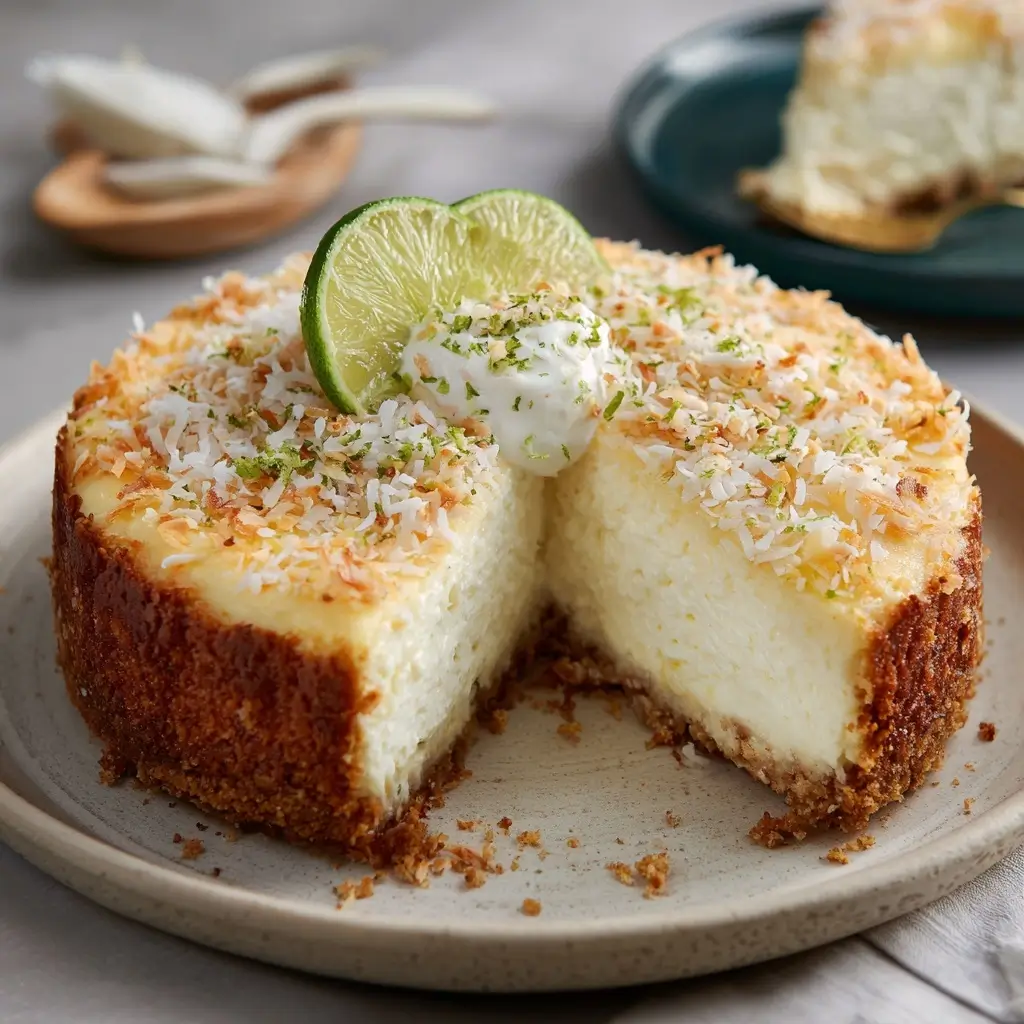
Welcome to the vibrant, tropical embrace of Coconut Lime Cheesecake — a luscious fusion of creamy richness, zesty brightness, and island-inspired sweetness. This isn’t just another cheesecake; it’s a sensory vacation in every bite. Imagine the velvety smoothness of New York–style cream cheese base, elevated with the nutty depth of toasted coconut, brightened by freshly squeezed Key lime juice and zest, and crowned with a glossy, tangy lime glaze studded with delicate coconut flakes. Whether served at a summer soirée, a holiday dessert table, or as a self-care treat on a quiet Tuesday evening, this dessert delivers balance, sophistication, and unmistakable flair. Its harmonious contrast — cool yet warm, tart yet sweet, dense yet airy — makes it universally beloved while remaining refreshingly distinctive in a crowded field of classic desserts.
The History
Coconut Lime Cheesecake is a modern culinary hybrid born from the convergence of three rich traditions: the ancient lineage of cheesecakes (tracing back to ancient Greece and later refined through Roman, European, and American iterations), the tropical abundance of Southeast Asian and Caribbean coconut culture, and the citrus-forward legacy of Florida Keys lime cultivation. While traditional American cheesecake evolved in the early 20th century with innovations like the Philadelphia-style no-bake version and the iconic baked version popularized by Arnold Reuben and later perfected at New York institutions like Junior’s and Lindy’s, the coconut-lime twist didn’t emerge until the late 1980s and 1990s — coinciding with the rise of “fusion cuisine,” increased global ingredient accessibility, and heightened consumer interest in bright, health-adjacent flavors. Early iterations appeared in gourmet food magazines like Bon Appétit and Gourmet, often styled as “tropical cheesecake” or “Key West Cheesecake.” Chefs and home bakers alike began experimenting with coconut milk substitutions, shredded coconut infusions, and lime curd swirls. By the 2000s, food blogs and cooking shows further democratized the recipe, adding variations like vegan coconut cream bases and gluten-free crusts. Today, Coconut Lime Cheesecake stands as a testament to culinary globalization — honoring tradition while joyfully embracing innovation, sunshine, and a little bit of island soul.
Ingredients Breakdown
Every exceptional Coconut Lime Cheesecake begins not with technique alone, but with intentionality in its components. Below is an in-depth analysis of each key ingredient — why it’s included, what it contributes structurally and sensorially, and optimal selection criteria:
- Cream Cheese (full-fat, block-style, room temperature): The foundational backbone — provides richness, density, and the signature tang. Block-style (not spreadable) ensures proper emulsification and prevents excess moisture. Must be truly softened (68–72°F) to avoid lumps and overmixing.
- Granulated Sugar: Not only sweetens but also aids in aeration during beating and stabilizes the protein matrix. Fine granulation ensures seamless dissolution. Some bakers substitute part with turbinado for subtle molasses notes, though purists prefer pure white for clean citrus clarity.
- Sour Cream & Full-Fat Greek Yogurt (or heavy cream): Adds moisture, tenderness, and a cultured tang that balances lime acidity. Sour cream contributes fat and body; Greek yogurt adds protein and slight thickness. Avoid low-fat versions — they introduce excess water and compromise texture.
- Fresh Key Lime Juice (and/or Persian lime juice): Key limes are smaller, more aromatic, and distinctly floral-tart — ideal for authenticity. When unavailable, Persian limes work well when juiced generously and balanced with extra zest. Never use bottled lime juice; its oxidized, bitter notes dull the entire profile. Yield: ~¼ cup juice from 12–15 Key limes or 6–8 Persian limes.
- Lime Zest (finely grated, no pith): Contains essential oils that deliver intense, volatile citrus aroma — crucial for fragrance and top-note brightness. Use a microplane for ultra-fine, even zest without bitterness.
- Large Eggs (room temperature): Act as emulsifiers and structural agents. Yolks add fat and richness; whites provide lift and stability. Cold eggs risk curdling the batter; always bring to room temp (30 min out of fridge).
- Unsweetened Shredded Coconut (toasted): Toasting unlocks deep, nutty, caramelized flavor and removes raw starchiness. Medium-fine shred integrates seamlessly into the batter without grittiness. Avoid sweetened coconut unless adjusting sugar downward — it adds unwanted moisture and cloying sweetness.
- Graham Cracker Crust Base: Classic pairing — its honeyed, slightly buttery, and mildly spiced notes complement both coconut and lime beautifully. For depth, many toast the crumbs before mixing. Alternatives include coconut graham crackers, vanilla wafers, or even shortbread — each shifting the flavor narrative subtly.
- Unsalted Butter (melted): Binds the crust and adds richness and flakiness. Unsalted allows precise salt control. Clarified butter can be used for higher smoke point and cleaner coconut flavor.
- Vanilla Extract (pure, not imitation): A quiet enhancer — rounds out sharp acidity and amplifies dairy warmth without dominating. Madagascar bourbon vanilla offers ideal complexity.
- Sea Salt (fine, non-iodized): Critical for flavor balancing. Salt suppresses bitterness, lifts sweetness, and intensifies lime’s aromatic compounds. Kosher or Maldon sea salt preferred for clean mineral finish.
- Heavy Whipping Cream (for glaze): Provides sheen, smoothness, and luxurious mouthfeel to the lime glaze. Higher fat content ensures stability and gloss without splitting.
- Confectioners’ Sugar (sifted): Used in glaze for sweetness and thickening. Sifting prevents graininess and ensures velvet-smooth consistency.
- Optional Garnishes: Toasted coconut flakes, lime wheels, candied lime peel, edible orchids, mint sprigs, or a dusting of lime zest — all serve visual appeal and layered aroma release.
Step-by-Step Recipe
- Prep & Preheat: Position oven rack in center position. Preheat oven to 325°F (163°C). Lightly grease the bottom and sides of a 9-inch springform pan. Wrap the *outside* of the pan tightly with two overlapping layers of heavy-duty aluminum foil — this prevents water seepage during the critical water bath step.
- Prepare the Crust: In a food processor, pulse 1 ½ cups graham cracker crumbs (about 12 full sheets), ¼ cup toasted unsweetened shredded coconut, 3 tbsp granulated sugar, and ¼ tsp fine sea salt until combined. Add 6 tbsp melted unsalted butter and pulse until mixture resembles wet sand. Press firmly and evenly into the bottom and 1 inch up the sides of the prepared pan using the back of a measuring cup or flat-bottomed glass. Chill crust in freezer for 15 minutes (or refrigerator for 30) to set.
- Toast Coconut for Filling: Spread ¾ cup unsweetened shredded coconut on a parchment-lined baking sheet. Toast in preheated oven for 5–7 minutes, stirring once, until golden and fragrant. Cool completely — this prevents melting the cream cheese later.
- Make the Cheesecake Batter: In a large bowl using a stand mixer fitted with paddle attachment (or hand mixer on medium-low), beat cream cheese (24 oz / 3 standard 8-oz blocks) until completely smooth and creamy, about 2 minutes — scraping down bowl and paddle frequently. Add sugar (¾ cup) and beat 2 more minutes until lightened and fluffy. Scrape bowl thoroughly. Add sour cream (½ cup), Greek yogurt (½ cup), and vanilla (1 tsp); beat until fully incorporated (~1 min). Add lime zest (2 tbsp) and mix 30 seconds. One at a time, add eggs (3 large), beating on low just until yolk disappears — never overmix. Finally, gently fold in cooled toasted coconut (¾ cup) and lime juice (¼ cup) using a silicone spatula — just until streak-free. Overmixing introduces air bubbles and increases cracking risk.
- Pour & Smooth: Pour batter over chilled crust. Tap pan firmly on counter 3–4 times to release trapped air bubbles. Smooth top with offset spatula.
- Water Bath Setup: Place springform pan inside a larger roasting pan. Carefully pour hot (not boiling) water into the roasting pan until it reaches halfway up the sides of the springform pan (~1.5 inches deep). Ensure no water touches the foil seal.
- Bake Low & Slow: Bake in preheated 325°F oven for 1 hour 15 minutes – 1 hour 25 minutes. The cheesecake is done when edges are set and center jiggles *just slightly*, like Jell-O — not liquidy, not firm. A thermometer inserted 1 inch from edge should read 150°F (65°C); center should be ~140°F (60°C).
- Cool Gradually (Critical!): Turn oven off. Crack oven door open 2 inches with a wooden spoon. Let cheesecake sit in oven for 1 hour. Remove from water bath, carefully run a thin knife around inner edge to loosen. Cool on wire rack at room temperature for 1 hour more.
- Chill Overnight: Refrigerate uncovered for *minimum 12 hours*, preferably 16–24 hours. This slow, cold setting ensures perfect sliceability, flavor melding, and texture refinement. Do not rush this step.
- Prepare Lime Glaze: While cheesecake chills, whisk together ½ cup heavy whipping cream, 1 tbsp fresh lime juice, 1 tsp lime zest, and a pinch of salt. Gradually whisk in 1 cup sifted confectioners’ sugar until smooth and glossy. Adjust thickness with ½ tsp cream (thinner) or 1 tsp more sugar (thicker). Refrigerate until ready to use.
- Glaze & Garnish: Just before serving, remove side of springform pan. Gently pour glaze over center and tilt pan to allow glaze to cascade naturally toward edges. Use offset spatula to guide flow if needed. Immediately sprinkle with additional toasted coconut flakes and extra lime zest. Optional: arrange thin lime wheels around perimeter.
Tips
- Room Temperature Is Non-Negotiable: Cold cream cheese = lumpy batter. Cold eggs = curdled texture. Plan ahead — remove dairy and eggs from fridge 2–3 hours before starting.
- Scrape Religiously: Every 30 seconds during mixing, stop and scrape bowl, paddle/beaters, and spatula. Uneven incorporation causes separation and inconsistent baking.
- No Overmixing After Eggs: Once eggs are added, mix *only* until blended. Overbeating incorporates too much air → cracks and sunken centers.
- Use a Water Thermometer: For precision, monitor water bath temperature — keep it between 170–180°F. Too hot = rapid expansion → cracks; too cool = underbaked center.
- Steam Release Trick: If surface appears overly moist post-bake, place a folded kitchen towel over the warm cheesecake (still in pan) for 5 minutes before cooling — absorbs residual condensation.
- Freeze for Future Joy: Fully chilled, unglazed cheesecake freezes beautifully for up to 3 months. Wrap tightly in plastic + foil. Thaw overnight in fridge before glazing and serving.
- Cutting Clean Slices: Dip a long, thin knife in hot water and wipe dry before each cut. Wipe and reheat between slices for pristine edges.
- Fix a Cracked Top: Don’t panic! A crack is cosmetic, not culinary. Conceal with generous glaze, whipped coconut cream, or a lattice of lime curd drizzle.
- Crust Adhesion Hack: For foolproof crust release, lightly press crumb mixture *up* the sides first, then fill bottom — creates a natural “lip” that grips the filling.
- Flavor Depth Boost: Add 1/8 tsp coconut extract (not essence) to batter — enhances aroma without artificial taste. Or steep 1 tsp lime zest in warm cream for 10 minutes before chilling and straining into glaze.
Variations and Customizations
This recipe is gloriously adaptable — whether accommodating dietary needs, celebrating seasonal produce, or simply indulging creative whims. Explore these thoughtfully tested variations:
- Vegan Coconut Lime Cheesecake: Replace cream cheese with soaked and blended raw cashews (2 cups), coconut cream (1 can, solid portion only), coconut oil (¼ cup), maple syrup (⅔ cup), lime juice/zest, and agar-agar (1 tsp bloomed in 2 tbsp water) for structure. Crust: dates + toasted coconut + almond flour. Set in freezer 8+ hours.
- No-Bake Version: Blend cream cheese, coconut cream, lime juice/zest, powdered sugar, and whipped coconut cream (chilled cans). Fold in crushed graham + toasted coconut. Pour into crust and freeze 6 hours. Thaw 20 min before serving.
- Gluten-Free: Use GF graham crackers or almond flour–coconut flour crust (1 cup almond flour, ¼ cup coconut flour, 3 tbsp sugar, 5 tbsp butter, pinch salt). Ensure all extracts and toppings are certified GF.
- Protein-Powered: Add 2 scoops unflavored collagen peptides or vanilla whey isolate to batter — dissolves invisibly and adds satiety without altering taste or texture.
- Tropical Swirl: Before baking, dollop ¼ cup mango or passionfruit puree (unsweetened) onto batter surface and gently marble with a toothpick for vibrant, fruity ribbons.
- Coconut-Lime Crème Brûlée Cheesecake: After chilling, torch a thin, even layer of turbinado sugar on top for crackling caramel contrast.
- Mini Mason Jar Cheesecakes: Layer crust, filling, and glaze in 4-oz jars. Bake in water bath in deep baking dish for 25–30 min. Chill 8+ hours. Perfect for parties and gifting.
- Boozy Infusion: Add 1 tbsp high-quality coconut rum (like Malibu Reserve) or Key lime liqueur to batter — reduces acidity and adds aromatic complexity. Reduce lime juice by 1 tsp to compensate.
- Herbal Accent: Infuse heavy cream for glaze with 2 small sprigs of fresh lemongrass or kaffir lime leaves (simmer 3 min, cool, strain) for an elegant Southeast Asian nuance.
- Spiced Variation: Add ¼ tsp ground cardamom + tiny pinch of ground ginger to crust crumbs for warm, aromatic depth that complements lime’s sharpness.
Health Considerations and Nutritional Value
While Coconut Lime Cheesecake is undeniably a decadent dessert, understanding its nutritional composition empowers mindful enjoyment — especially for those managing dietary goals, allergies, or health conditions. Below is an approximate per-slice (1/12th of 9-inch cake) breakdown based on the classic recipe:
- Calories: ~420–460 kcal — primarily from healthy fats (coconut, dairy), complex carbs (crust), and natural sugars.
- Fat: ~30–33g total — ~18–20g saturated (from coconut, cream cheese, butter). Notably, coconut contains medium-chain triglycerides (MCTs), which are metabolized differently than long-chain fats and may support energy utilization.
- Carbohydrates: ~32–36g — ~24–26g sugars (mostly added from crust and batter; lime contributes minimal natural sugar). Fiber: ~1.2g (from coconut and graham crumbs).
- Protein: ~6–7g — from dairy and eggs; modest but valuable for satiety.
- Vitamins & Minerals: Rich in calcium (cream cheese, yogurt), vitamin C (lime juice/zest), manganese (coconut), and small amounts of iron and B vitamins. Lime zest alone delivers significant flavonoids (hesperidin, naringenin) with antioxidant and anti-inflammatory properties.
- Allergens: Contains dairy (milk, cream, cheese), eggs, wheat (in standard graham crackers), and coconut (a tree nut per FDA labeling). Gluten-free and nut-free alternatives available (see Variations).
- Dietary Notes: Naturally low in sodium (<180mg/slice) — beneficial for blood pressure management. Contains zero trans fats when made with natural ingredients. High in satiating fat and protein helps moderate glycemic response compared to high-sugar, low-fat desserts.
- Mindful Modifications: Reduce sugar by 1–2 tbsp without sacrificing structure; swap half cream cheese for lower-fat Neufchâtel (saves ~35 kcal/slice); use whole-grain graham crumbs for added fiber; increase lime zest to 3 tbsp to boost polyphenols without calories.
- Portion Wisdom: Serving size matters — a 2-inch slice (vs. oversized 3-inch) reduces calories by ~30% and supports intuitive eating practices. Pair with fresh berries or a green salad to round out the meal nutritionally.
As with all foods, context matters most: enjoyed occasionally as part of a varied, whole-foods-based diet, Coconut Lime Cheesecake contributes joy, cultural connection, and even functional nutrients — proving that pleasure and wellness need not be mutually exclusive.
Ingredients
- For the Crust:
– 1 ½ cups graham cracker crumbs (about 12 full sheets)
– ¼ cup unsweetened shredded coconut, toasted
– 3 tablespoons granulated sugar
– ¼ teaspoon fine sea salt
– 6 tablespoons unsalted butter, melted - For the Cheesecake Filling:
– 24 ounces full-fat cream cheese (3 standard 8-oz blocks), room temperature
– ¾ cup granulated sugar
– ½ cup full-fat sour cream
– ½ cup plain full-fat Greek yogurt
– 1 teaspoon pure vanilla extract
– 2 tablespoons finely grated lime zest (from ~12 Key limes or 6–8 Persian limes)
– ¼ cup fresh lime juice (strained, no pulp)
– 3 large eggs, room temperature
– ¾ cup unsweetened shredded coconut, toasted and cooled - For the Lime Glaze:
– ½ cup heavy whipping cream
– 1 tablespoon fresh lime juice
– 1 teaspoon finely grated lime zest
– Pinch of fine sea salt
– 1 cup confectioners’ sugar, sifted - For Garnish:
– Extra toasted coconut flakes
– Additional lime zest
– Thin lime wheels (optional)
Directions
- Preheat oven to 325°F (163°C). Prepare a 9-inch springform pan: grease bottom and sides lightly, then wrap exterior tightly with two overlapping layers of heavy-duty aluminum foil.
- In a food processor, combine graham cracker crumbs, ¼ cup toasted coconut, sugar, and salt; pulse until uniform. Add melted butter and pulse until mixture resembles damp sand. Press firmly into bottom and 1 inch up sides of pan. Freeze for 15 minutes.
- Toast remaining ¾ cup coconut on parchment-lined sheet at 350°F for 5–7 minutes until golden. Cool completely.
- In stand mixer with paddle attachment, beat cream cheese on medium speed 2 minutes until silky. Add sugar; beat 2 more minutes until pale and airy. Scrape bowl thoroughly.
- Add sour cream, Greek yogurt, and vanilla; beat 1 minute. Add lime zest; mix 30 seconds. Add eggs one at a time, mixing on low just until incorporated — do not overbeat. Gently fold in cooled toasted coconut and lime juice with spatula until uniform.
- Pour batter over chilled crust. Tap pan sharply on counter 4 times. Smooth top.
- Place springform pan into larger roasting pan. Carefully pour hot water into roasting pan until halfway up springform sides.
- Bake 1 hour 15–25 minutes, until edges are set and center jiggles slightly. Internal temp at edge: 150°F (65°C).
- Turn oven off. Crack door open 2 inches with spoon. Let cheesecake sit 1 hour. Remove from water bath, run knife around edge, cool on rack 1 hour.
- Refrigerate uncovered minimum 12 hours, ideally 24.
- Make glaze: Whisk cream, lime juice, zest, and salt. Gradually whisk in sifted confectioners’ sugar until smooth and glossy. Chill 15 minutes.
- Remove springform ring. Pour glaze over center, tilt to spread. Sprinkle with extra coconut and zest. Serve chilled.
FAQ
- Can I make this cheesecake ahead of time?
- Absolutely — and highly recommended! It keeps beautifully refrigerated for up to 5 days (unglazed) or 3 days (glazed). For best texture and flavor integration, prepare filling and bake 1–2 days in advance, then glaze the morning of serving.
- Why does my cheesecake crack? How can I prevent it?
- Cracking most commonly results from rapid temperature changes, overmixing after eggs, or overbaking. Prevention: ensure all ingredients are room temp; avoid overbeating; use a water bath; cool gradually in turned-off oven; and never open oven during first 75 minutes of baking.
- Can I substitute lime juice with lemon juice?
- You can — but flavor will shift significantly. Lemon is brighter and less floral, with higher citric acid. Use same quantity, but add ½ tsp extra zest and reduce sugar by 1 tbsp to compensate for sharper acidity.
- Is there a way to make this lighter or lower-calorie?
- Yes — several smart options: replace half cream cheese with Neufchâtel; use low-fat Greek yogurt instead of sour cream; reduce sugar to ⅔ cup; skip glaze and dust with lime zest + coconut; or serve smaller portions with fresh fruit.
- My glaze is too thin/thick — how do I fix it?
- Too thin? Whisk in 1–2 tsp more sifted confectioners’ sugar. Too thick? Add ½ tsp cold heavy cream at a time, whisking vigorously until desired pourable-but-coating consistency is reached. Let rest 5 minutes to stabilize.
- Can I freeze Coconut Lime Cheesecake?
- Yes — unglazed, fully chilled cheesecake freezes exceptionally well for up to 3 months. Wrap tightly in plastic wrap, then foil. Thaw overnight in refrigerator before glazing and serving. Glazed cheesecake may weep slightly upon thawing.
- What’s the best way to store leftovers?
- Cover tightly with plastic wrap or place in airtight container. Refrigerate up to 4 days. If glazed, consume within 2–3 days for optimal appearance and texture. Always use clean utensils to prevent contamination.
- Can I use sweetened coconut?
- You can — but you’ll need to reduce granulated sugar in the filling by 2 tbsp and possibly in the crust by 1 tbsp to avoid excessive sweetness. Sweetened coconut also adds moisture, so bake 5–10 minutes longer and monitor closely.
- Why do I need a water bath?
- A water bath (bain-marie) creates gentle, even, moist heat — preventing rapid expansion, surface drying, and cracking. It ensures the center cooks slowly and evenly without overcooking the edges — essential for ultra-creamy texture.
- Can I make individual servings?
- Yes! Use lined muffin tins or mini springform pans (4-inch). Reduce bake time to 20–25 minutes in water bath. Chill minimum 8 hours. Garnish each with micro-coconut and lime zest dot.
Summary
Coconut Lime Cheesecake is a masterclass in tropical harmony — where the lush creaminess of slow-baked New York–style filling meets the bright, aromatic punch of fresh Key limes and the warm, nutty depth of toasted coconut, all anchored by a buttery graham cracker crust.
With meticulous attention to temperature, texture, and timing — plus endless possibilities for customization — this showstopping dessert delivers unforgettable flavor, elegant simplicity, and joyful celebration in every impeccably sliced, gorgeously glazed, sun-drenched bite.