Introduction
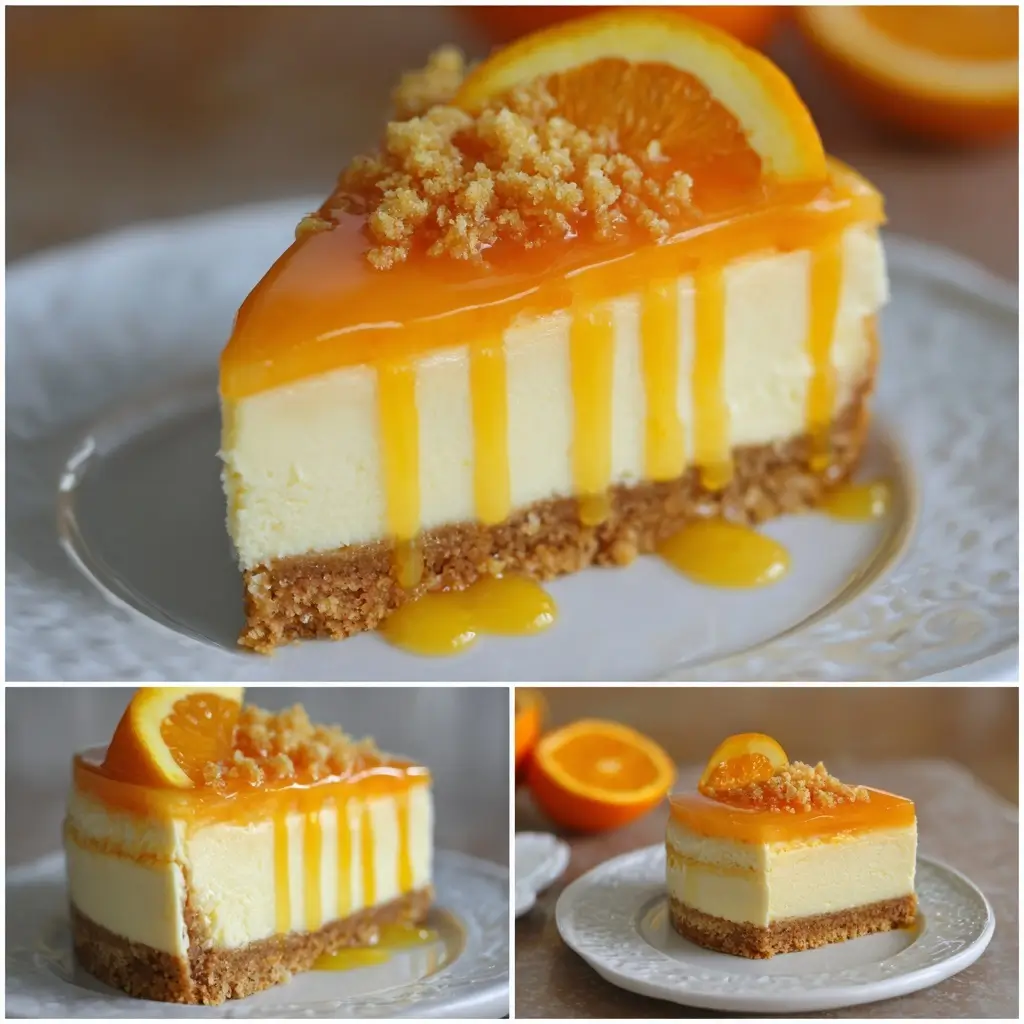
Imagine the nostalgic, sun-drenched joy of a childhood summer—breezy afternoons, bare feet on warm pavement, and the unmistakable, creamy-sweet burst of an Orange Creamsicle melting slowly on your tongue. Now imagine that iconic flavor experience transformed into a luscious, velvety, no-bake (or baked, if you prefer!) cheesecake that’s as visually stunning as it is unforgettable. The Orange Creamsicle Cheesecake is more than just a dessert—it’s a sensory time machine. With its vibrant citrus brightness balanced by rich, dreamy vanilla creaminess, this showstopping confection bridges the playful simplicity of a classic frozen pop with the elegant sophistication of artisanal cheesecake. Whether served at a backyard BBQ, a birthday celebration, or simply as a luxurious weeknight treat for two, this dessert delivers pure, unadulterated delight in every forkful—and promises to become a beloved staple in your baking repertoire.
The History
The story of the Orange Creamsicle Cheesecake begins not in a gourmet kitchen, but in the frosty aisles of early 20th-century American ice cream trucks and corner stores. Its progenitor—the Creamsicle—was invented in 1923 by Oakland, California entrepreneur Harry Burt, founder of Good Humor. Though Burt is better known for the chocolate-dipped Good Humor Bar, his broader innovation was pioneering the concept of the “frozen novelty”: a harmonious union of creamy dairy and bright fruit flavor encased in a single, portable, handheld format. The original Creamsicle—a blend of orange sherbet and vanilla ice cream—quickly became synonymous with carefree summer nostalgia.
Fast forward to the 1980s and ’90s, when home bakers began experimenting with “frozen cake” hybrids—think no-bake icebox cakes layered with pudding, whipped cream, and graham cracker crusts. As food blogs rose in prominence in the mid-2000s, nostalgic flavor mashups surged in popularity: root beer float cupcakes, banana split layer cakes, and—inevitably—Creamsicle-inspired desserts. The first documented Orange Creamsicle Cheesecake appeared on food-sharing platforms around 2011–2012, often featuring a gingersnap-or-vanilla wafer crust, a tangy-orange-infused no-bake filling, and a glossy orange glaze. Over time, bakers refined techniques—incorporating stabilized whipped cream for texture integrity, using real orange zest and cold-pressed juice for authenticity, and even developing baked versions with water-bath precision to emulate New York–style density while preserving citrus lift. Today, the Orange Creamsicle Cheesecake stands proudly at the intersection of retro Americana and modern pastry craftsmanship—a testament to how deeply flavor memory can inspire culinary evolution.
Ingredients Breakdown
Every extraordinary cheesecake begins with intentionality in ingredient selection. Below is a meticulous breakdown—not just of *what* goes in, but *why*, *how it functions*, and *what to watch for*:
- Graham Cracker Crust Base (or Alternatives): Classic graham crackers provide subtle honeyed sweetness and structural integrity. For enhanced depth, many bakers toast the crumbs lightly before mixing with melted butter—this unlocks nutty, caramelized notes that beautifully complement orange’s acidity. Vegan versions use plant-based butter and certified vegan graham crackers; gluten-free adaptations rely on certified GF gingersnaps or almond flour–coconut flour blends for binding and crunch.
- Cream Cheese (Full-Fat, Brick Style): This is non-negotiable. Low-fat or whipped cream cheese introduces excess moisture and air pockets, leading to cracking, weeping, or grainy texture. Philadelphia-brand or other high-fat (≥33% milkfat), full-fat brick-style cream cheese ensures richness, stability, and proper emulsification. Always bring to true room temperature (65–70°F)—not just “softened”—for seamless blending.
- Heavy Whipping Cream (36–40% Fat): Acts as both a textural tenderizer and aerator. When whipped to soft peaks and folded in, it imparts cloud-like lightness without diluting flavor. Ultra-pasteurized cream may take longer to whip and yield less volume—opt for pasteurized (not ultra-pasteurized) whenever possible.
- Real Orange Elements (Not Just “Orange Flavor”): This is where authenticity lives. Use freshly zested navel or Valencia oranges (zest contains aromatic oils—never substitute dried or bottled). Freshly squeezed juice adds bright acidity—but must be reduced by ~50% to eliminate excess water that could destabilize the filling. Some elite versions incorporate a small amount of blood orange juice for complex berry-tinged depth and natural crimson blush.
- Pure Vanilla Extract (vs. Imitation or Paste): A high-quality Madagascar bourbon vanilla extract contributes warm, floral, buttery undertones that round out orange’s sharpness. Avoid alcohol-heavy extracts that may curdle cream cheese; instead, choose ones labeled “folded” or “cold-extracted.” For intensified aroma, add ¼ tsp of real vanilla bean seeds scraped from a split pod.
- Unflavored Gelatin (for No-Bake Versions): Critical for heat-free stability. Bloomed properly in cool water and dissolved over a double boiler (never boiled), gelatin creates a delicate lattice that suspends fat and water without rubberiness. Agar-agar serves as a vegan alternative—but requires precise pH adjustment due to orange’s acidity, making it less forgiving.
- Sour Cream or Greek Yogurt (Optional but Recommended): Adds subtle tang, moisture control, and protein structure—especially vital in baked versions to prevent shrinkage and promote creamy crumb. Full-fat, plain, and strained (to remove whey) are essential.
- Granulated Sugar & Confectioners’ Sugar: Granulated dissolves cleanly into cream cheese; confectioners’ sugar (with trace cornstarch) helps stabilize whipped components and smooth glazes. Never substitute one for the other interchangeably.
Step-by-Step Recipe
Note: This comprehensive guide covers both the most popular No-Bake Orange Creamsicle Cheesecake (ideal for beginners and hot-weather entertaining) and key modifications for a Baked Version (for those who prefer dense, velvety texture with a slight golden edge).
- Prepare the Crust (30 min ahead): Preheat oven to 350°F (175°C) if baking the crust. Pulse 1 ½ cups graham cracker crumbs (about 10 full sheets), 2 tbsp granulated sugar, and 6 tbsp unsalted butter (melted, cooled) in a food processor until moistened and clumping. Press firmly and evenly into the bottom and 1 inch up the sides of a 9-inch springform pan using the back of a measuring cup. Bake 10 minutes (no-bake option: chill 30 min). Cool completely.
- Bloom the Gelatin (No-Bake Only): Sprinkle 2 ¼ tsp (one standard packet) unflavored gelatin over ¼ cup cold water in a small heatproof bowl. Let sit 5 minutes until spongy (“bloomed”). Meanwhile, gently warm ¼ cup freshly squeezed orange juice (reduced to 2 tbsp) in a saucepan until steaming—not boiling. Remove from heat, stir in bloomed gelatin until fully dissolved (~30 sec). Set aside to cool to room temp—do NOT let it set.
- Whip the Cream Base: In a large chilled bowl, beat 1 cup cold heavy whipping cream with 2 tbsp confectioners’ sugar and ½ tsp pure vanilla extract until soft peaks form. Transfer to a separate bowl and refrigerate.
- Cream the Cheese Foundation: Using a stand mixer fitted with paddle attachment (or hand mixer), beat 24 oz (three 8-oz bricks) full-fat cream cheese, ¾ cup granulated sugar, and 1 tbsp finely grated orange zest on medium-low for 2 minutes until completely smooth, scraping bowl thoroughly. Add ½ cup sour cream (or full-fat Greek yogurt), 2 tbsp reduced fresh orange juice, and 1 tsp vanilla extract; beat 1 minute more until homogenous. Mixture should be glossy and lump-free.
- Combine & Stabilize (No-Bake): Gently fold one-third of the whipped cream into cream cheese mixture to lighten. Then carefully fold in remaining whipped cream in two additions until just combined—do not overmix. Slowly drizzle in cooled gelatin mixture while folding gently. Batter should be thick, airy, and pourable—not runny nor stiff.
- Pour & Chill (No-Bake): Pour batter into prepared crust. Smooth top with offset spatula. Refrigerate uncovered for at least 6 hours—but ideally overnight (12+ hrs) for full set and flavor melding. For clean slices, run a thin knife dipped in hot water around perimeter before releasing springform.
- Bake Option (For Denser Texture): Prepare same crust and cream cheese base (omit gelatin and whipped cream). Instead, add 3 large eggs (room temp), ⅓ cup heavy cream, and 1 tsp lemon juice for balance. Pour into crust. Place springform in roasting pan; fill pan with 1 inch hot water (water bath). Bake at 325°F for 75–90 minutes until edges are set but center jiggles slightly like Jell-O. Turn off oven, crack door open 2 inches, let cool inside 1 hour. Chill minimum 8 hours—or preferably 24 hours—before serving.
- Prepare the Signature Glaze (Optional but Highly Recommended): Combine ½ cup powdered sugar, 1 tbsp reduced orange juice, ½ tsp orange zest, and ½ tsp light corn syrup (for shine and anti-crystallization) in a small bowl. Whisk until smooth. Drizzle over chilled cheesecake just before serving—or pipe in concentric circles for elegance.
- Garnish Thoughtfully: Top with candied orange slices (simmer thin rounds in equal parts sugar/water + 1 tsp lemon juice until translucent), toasted coconut flakes, edible marigold petals, or a dusting of freeze-dried orange powder for intense aroma and visual pop.
Tips
- Temperature Is Everything: All dairy ingredients—cream cheese, sour cream, heavy cream, even eggs for baked versions—must be at true room temperature (65–70°F). Cold ingredients cause curdling, lumps, and poor emulsification. Plan ahead: unwrap cream cheese and leave on counter for 2–3 hours; measure heavy cream and let sit 30 minutes before whipping.
- Zest First, Juice Second: Always zest your oranges *before* juicing—they’re easier to grip and yield more oil-rich zest. Use a microplane, not a box grater, to avoid bitter pith.
- Reduce, Don’t Dilute: Never add raw orange juice directly to cheesecake batter—it carries too much water. Simmer fresh juice in a small saucepan over low heat until reduced by half (e.g., ¼ cup → 2 tbsp). Cool completely before use.
- Scrape Relentlessly: Use a flexible silicone spatula and scrape the bowl, paddle, and spatula itself after *every* mixing step—even between additions—to ensure uniform texture and flavor distribution.
- Chill Your Tools: For no-bake versions, chill your mixing bowls, beaters, and spatulas in the freezer for 10 minutes before whipping cream. Cold tools = higher volume, stiffer peaks, better stability.
- Prevent Cracking (Baked Version): Water bath is non-negotiable. Also, avoid opening the oven during baking. After cooling in oven, run a thin knife around the edge *immediately* upon removal to release tension before chilling.
- Freeze for Future Joy: Fully chilled no-bake cheesecake freezes beautifully for up to 3 months. Wrap tightly in plastic wrap, then foil. Thaw overnight in fridge—not at room temp—to preserve texture. Glaze only after thawing.
- Cut Clean, Serve Confidently: Dip a sharp, thin-bladed knife in hot water and wipe dry before each slice. Wipe and reheat between cuts for picture-perfect layers.
Variations and Customizations
This recipe is a canvas—not a cage. Here’s how to make it uniquely yours:
- Vegan Orange Creamsicle Cheesecake: Substitute cashew cream (soaked raw cashews blended with lemon juice, maple syrup, and orange zest), coconut cream (chilled overnight, solid part only), and agar-agar (dissolved in heated orange juice). Use date-sweetened graham-style crust made from almond flour, oats, and coconut oil.
- Gluten-Free & Grain-Free: Replace graham cracker crust with a blend of 1 ¼ cups almond flour, ¼ cup coconut flour, 3 tbsp maple syrup, 4 tbsp melted coconut oil, and ½ tsp cinnamon. Press and bake at 350°F for 12 minutes.
- Protein-Powered Version: Fold in 2 scoops unflavored collagen peptides or vanilla whey isolate (ensure it’s acid-stable) into the cream cheese base before folding in whipped cream—adds ~15g protein per slice without altering taste or texture.
- Boozy Twist (Adults Only): Infuse the reduced orange juice with 1 tbsp Grand Marnier or Cointreau before adding to batter—or swirl 2 tbsp into the glaze. For baked version, add 1 tbsp to batter pre-egg addition.
- Layered Elegance: Create a “Creamsicle Swirl” by dividing batter in half. Tint one portion pale orange with natural annatto or turmeric (¼ tsp), leaving the other vanilla-white. Spoon alternating dollops into pan and gently marble with a toothpick.
- Crust Innovations: Try a shortbread crust (butter + flour + sugar), speculoos cookie crust (spiced, caramelized depth), or even a toasted pistachio–orange crust (finely ground roasted pistachios + graham + orange zest + brown butter).
- Texture Play: Fold in ⅓ cup finely chopped candied ginger for spicy contrast, or swirl in ¼ cup homemade orange marmalade (seedless, reduced) for jammy bursts.
- Miniature Magic: Make individual servings in muffin tins lined with parchment. Reduce chill time to 4 hours. Perfect for parties, bridal showers, or portion-controlled indulgence.
Health Considerations and Nutritional Value
While undeniably decadent, mindful preparation allows the Orange Creamsicle Cheesecake to align thoughtfully with wellness goals—without sacrificing soul-satisfying pleasure. Below is a detailed nutritional profile and evidence-informed guidance:
- Nutrition Snapshot (per standard slice, 1/12 of 9-inch cake, no glaze): Calories: ~380 | Total Fat: 28g (17g sat) | Carbs: 27g (19g sugars) | Protein: 6g | Calcium: 65mg | Vitamin C: ~8mg (from fresh orange elements). Notably, this includes significant amounts of vitamin A (from dairy fat), choline (brain-supportive nutrient in eggs, if baked), and probiotics (if using live-culture sour cream or yogurt).
- Sugar Intelligence: While sweet, the orange’s natural acidity and zest’s volatile oils enhance perceived sweetness—allowing many bakers to reduce granulated sugar by 1–2 tbsp without compromising enjoyment. Substituting 25% of granulated sugar with allulose (a low-calorie, non-glycemic keto-friendly sweetener) yields near-identical texture and browning in baked versions.
- Fat Quality Matters: Full-fat dairy provides conjugated linoleic acid (CLA), shown in studies to support healthy metabolism and inflammation response. Grass-fed cream cheese and butter elevate omega-3 content and vitamin K2—crucial for calcium utilization and cardiovascular health.
- Digestive Harmony: Orange zest contains d-limonene, a compound studied for its gastroprotective effects and ability to ease occasional bloating. Pairing with probiotic-rich sour cream or yogurt further supports microbiome diversity.
- Allergen Awareness: Naturally nut-free (unless customized), soy-free (check cream cheese label), and egg-free in no-bake versions—making it accessible for many common dietary restrictions. Always verify labels for shared equipment warnings if severe allergies apply.
- Mindful Indulgence Strategy: Serve smaller portions (1.5-inch slices) on decorative plates with fresh seasonal berries and mint. This visually satisfies craving cues while reducing intake by ~30%. Savor slowly—research shows mindful eating enhances satisfaction and reduces post-consumption guilt.
Ingredients
Makes one 9-inch cheesecake (12 servings)
- For the Crust:
• 1 ½ cups (150g) graham cracker crumbs (about 10 full sheets)
• 2 tablespoons (25g) granulated sugar
• 6 tablespoons (85g) unsalted butter, melted and cooled - For the Filling (No-Bake Version):
• 24 oz (680g) full-fat brick-style cream cheese, room temperature
• ¾ cup (150g) granulated sugar
• 1 tablespoon (6g) finely grated orange zest (from 2 medium navel oranges)
• ½ cup (120g) full-fat sour cream or plain Greek yogurt, room temperature
• 2 tablespoons (30ml) freshly squeezed orange juice, reduced to 1 tablespoon (see Tips)
• 1 teaspoon (5ml) pure vanilla extract
• 2 ¼ teaspoons (7g) unflavored gelatin
• ¼ cup (60ml) cold water (for blooming gelatin)
• 1 cup (240ml) cold heavy whipping cream (36–40% fat)
• 2 tablespoons (15g) confectioners’ sugar
• ½ teaspoon (2.5ml) pure vanilla extract (for whipped cream) - For the Orange Glaze (Optional):
• ½ cup (60g) confectioners’ sugar
• 1 tablespoon (15ml) reduced orange juice (cooled)
• ½ teaspoon (2g) finely grated orange zest
• ½ teaspoon (2.5ml) light corn syrup (optional, for shine) - For Garnish (Optional):
• Candied orange slices
• Toasted coconut flakes
• Edible flowers (e.g., pansies, marigolds)
• Freeze-dried orange powder
For Baked Version Additions: • 3 large eggs, room temperature • ⅓ cup (80ml) heavy cream • 1 teaspoon (5ml) fresh lemon juice • Water for bain-marie
Directions
- Prepare the Crust: Preheat oven to 350°F (175°C). In a medium bowl, combine graham cracker crumbs, granulated sugar, and melted butter. Mix with a fork until evenly moistened and clumping. Press mixture firmly and evenly into the bottom and 1 inch up the sides of a 9-inch springform pan using the flat bottom of a measuring cup or glass. Bake for 10 minutes. Remove and let cool completely on a wire rack—about 30 minutes. Reduce oven temperature to 325°F if proceeding with baked version.
- Bloom the Gelatin (No-Bake Only): In a small heatproof bowl, sprinkle gelatin over cold water. Let sit 5 minutes until swollen and spongy. In a tiny saucepan, heat reduced orange juice just until steaming (do not boil). Remove from heat and whisk in bloomed gelatin until fully dissolved and clear—about 30 seconds. Set aside to cool to room temperature (~15–20 minutes). Do not refrigerate or let it set.
- Whip the Cream: In a large chilled metal or glass bowl, combine cold heavy cream, 2 tbsp confectioners’ sugar, and ½ tsp vanilla. Using an electric mixer on medium-high, whip until soft peaks form—about 2 to 3 minutes. Do not overwhip. Transfer to a separate bowl and refrigerate while preparing filling.
- Cream the Base: In the bowl of a stand mixer fitted with paddle attachment (or large bowl with hand mixer), beat cream cheese, ¾ cup granulated sugar, and orange zest on medium-low for 2 minutes, stopping to scrape bowl and paddle frequently, until completely smooth and creamy. Add sour cream (or Greek yogurt), reduced orange juice, and 1 tsp vanilla; beat 1 minute more until uniformly blended and glossy.
- Combine Components (No-Bake): Gently fold one-third of the whipped cream into the cream cheese mixture to lighten. Then carefully fold in remaining whipped cream in two additions, using a large silicone spatula and gentle figure-eight motion—just until no white streaks remain. Slowly drizzle in cooled gelatin mixture while continuing to fold gently. Batter should be thick, airy, and pourable. Do not stir vigorously.
- Pour and Chill: Carefully pour filling into cooled crust. Tap pan gently on counter 2–3 times to release air bubbles. Smooth top with offset spatula. Refrigerate uncovered for minimum 6 hours—but for optimal texture and flavor integration, chill 12–24 hours.
- Baked Version Directions (Alternative): Skip gelatin and whipped cream steps. To cream cheese base above, add eggs one at a time, beating on low just until incorporated (scrape bowl after each). Add ⅓ cup heavy cream and 1 tsp lemon juice; mix until just combined. Pour into cooled crust. Place springform pan inside a larger roasting pan. Fill roasting pan with 1 inch of hot water (bain-marie). Carefully transfer to preheated 325°F oven. Bake 75–90 minutes—center should jiggle slightly like Jell-O when gently shaken. Turn off oven, crack door open 2 inches with wooden spoon, and let cheesecake cool inside for 1 hour. Remove from water bath. Run thin knife around edge. Cool completely on wire rack (~2 hours), then refrigerate minimum 8 hours—or ideally 24 hours—before serving.
- Glaze and Garnish: Just before serving, prepare glaze: whisk confectioners’ sugar, reduced orange juice, zest, and corn syrup (if using) until smooth. Drizzle artfully over chilled cheesecake. Garnish with candied orange, toasted coconut, or edible flowers. Slice with hot, wiped knife for clean edges.
FAQ
- Can I use low-fat cream cheese?
- No—low-fat, neufchâtel, or whipped cream cheese lacks sufficient milkfat (minimum 33%) and stabilizing proteins required for proper emulsification and structure. It will yield a watery, crumbly, or separated filling. Stick with full-fat brick-style.
- Why does my no-bake cheesecake weep or release liquid?
- This is usually caused by one (or more) of three issues: (1) Using cold or un-chilled ingredients (especially cream cheese or cream), (2) Skipping the gelatin step or improperly blooming/dissolving it, or (3) Overmixing after adding whipped cream, which collapses air cells and forces out whey. Always follow temperature and technique guidelines precisely.
- Can I make this ahead? How far in advance?
- Absolutely—and it’s recommended! No-bake versions improve in flavor and texture for up to 3 days refrigerated (covered loosely with plastic wrap after glazing). Baked versions peak at 2–3 days. Both freeze beautifully for up to 3 months—wrap tightly in plastic, then foil. Thaw overnight in fridge before serving.
- What if I don’t have a springform pan?
- You can use a 9-inch regular cake pan lined with two overlapping strips of parchment paper (with long overhangs acting as “lift handles”). Press crust and pour filling as directed. After chilling, use parchment tabs to gently lift cake out onto serving plate, then carefully peel away paper. For baked version, this method works—but avoid water bath unless pan is truly leakproof.
- Can I substitute orange extract for fresh zest and juice?
- Not recommended. Most commercial orange extracts contain synthetic compounds (like octyl acetate) that lack the nuanced terpenes and esters found in real citrus. They can taste medicinal or overly sharp. If absolutely necessary, use only ¼ tsp pure, alcohol-based orange oil (not extract)—but fresh is always superior.
- My glaze is too thin/thick—how do I fix it?
- Too thin? Sift in 1 tsp more confectioners’ sugar at a time until desired consistency. Too thick? Add drops of reduced orange juice (not water) —1 drop at a time—until fluid but not runny. Corn syrup helps prevent crystallization and improves sheen.
- Is this safe for pregnant people or immunocompromised individuals?
- Yes—with caveats. No-bake version uses pasteurized dairy and no raw eggs. Baked version fully cooks eggs to safe internal temperature (160°F+). Always use pasteurized products, maintain strict hygiene, and refrigerate promptly. Consult your