Introduction
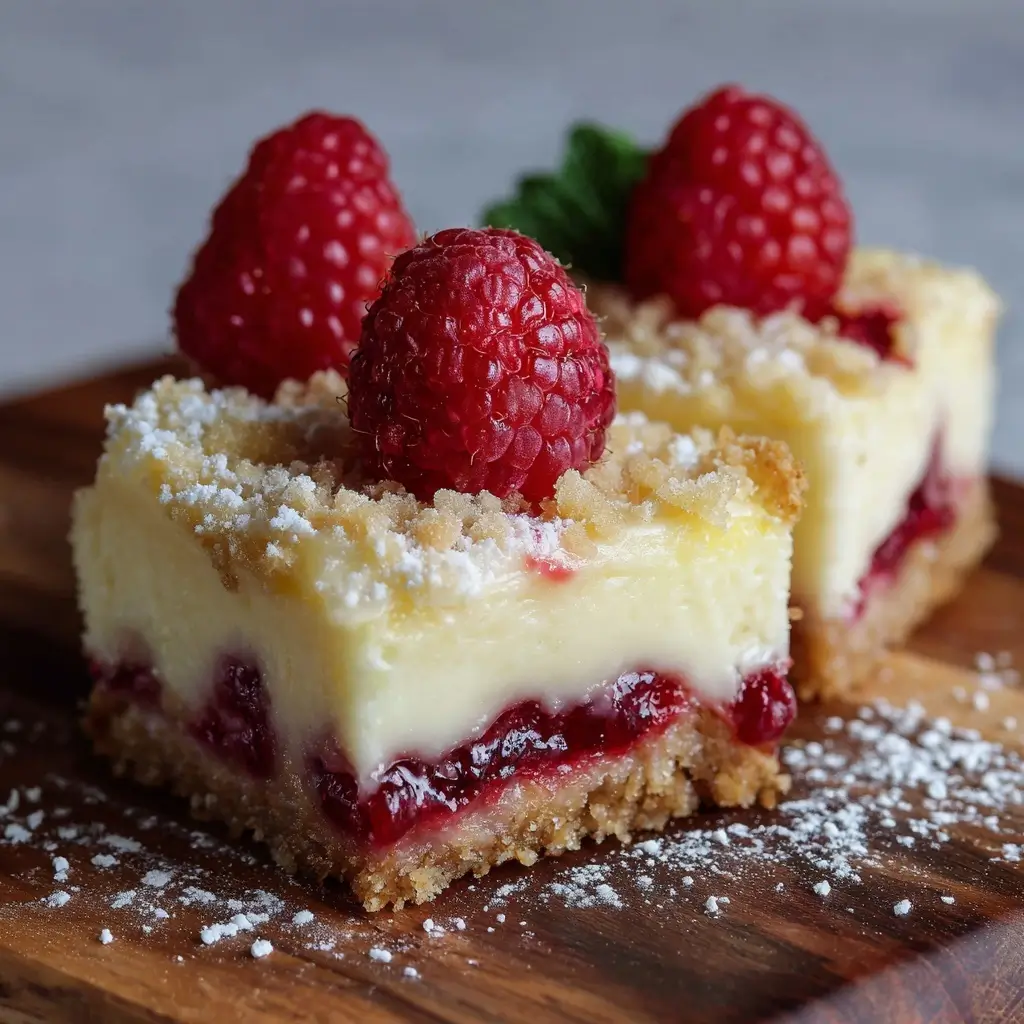
Raspberry Lemon Cheesecake Bars are the quintessential summer dessert—vibrant, tangy, creamy, and irresistibly refreshing. These luscious bars combine the bright zing of fresh lemons with the sweet-tart burst of ripe raspberries, all nestled atop a buttery graham cracker crust and enrobed in a velvety, no-bake or baked cheesecake layer that’s luxuriously smooth and perfectly balanced. Whether served at backyard barbecues, bridal showers, holiday potlucks, or as an elegant after-dinner treat, these bars deliver restaurant-quality flavor with surprisingly simple home-kitchen execution. Their stunning visual appeal—swirled ribbons of ruby-red raspberry coulis against snowy lemon cheesecake, crowned with fresh berries and a delicate dusting of zest—makes them as photogenic as they are delicious. More than just a dessert, Raspberry Lemon Cheesecake Bars represent a harmonious marriage of classic American cheesecake tradition and modern, fruit-forward sophistication—ideal for bakers who crave both nostalgia and novelty in every bite.
The History
The evolution of Raspberry Lemon Cheesecake Bars traces a rich, layered lineage across continents and centuries. Cheesecake itself dates back to ancient Greece, where early versions made with honey-sweetened cheese and flour were served to athletes at the first Olympic Games in 776 BCE. The Romans later adopted and adapted the concept, spreading it across their empire. In America, cream cheese—key to the New York–style cheesecake that underpins most modern bar variations—wasn’t commercially produced until the 1870s by William Lawrence in Chester, New York. By the early 20th century, “cheesecake bars” began appearing in community cookbooks and women’s magazines as a practical, portion-controlled alternative to full-sized cakes—especially during wartime rationing, when efficient use of ingredients was paramount.
Lemon and raspberry, meanwhile, have long held symbolic and culinary significance: lemons arrived in Europe via Arab traders in the Middle Ages and became prized in Victorian England for both medicinal use and dessert-making; raspberries—native to northern Eurasia and North America—were foraged for millennia before being cultivated in earnest in 17th-century England and later commercialized in the U.S. Pacific Northwest. The fusion of these two fruits in cheesecake form gained traction in the 1980s and ’90s, buoyed by the rise of food television, gourmet grocery chains (like Williams-Sonoma and Sur La Table), and the proliferation of recipe-sharing in print and early internet forums. Today, Raspberry Lemon Cheesecake Bars stand as a beloved hallmark of contemporary American baking—a testament to how global heritage, regional agriculture, technological innovation (e.g., reliable refrigeration, electric mixers, silicone baking mats), and cultural shifts toward brighter, less cloyingly sweet desserts have converged into one unforgettable handheld delight.
Ingredients Breakdown
Every exceptional batch of Raspberry Lemon Cheesecake Bars begins not with technique—but with intentionality behind each ingredient. Below is a meticulous, function-driven analysis:
- Graham Cracker Crust Base: Whole-grain graham crackers provide structure, subtle molasses depth, and just enough fiber to balance richness. Melted unsalted butter binds the crumbs while contributing lactose-derived caramelization and mouth-coating fat. A pinch of fine sea salt enhances sweetness perception and counters any potential cardboard-like dryness.
- Cream Cheese Layer: Full-fat, brick-style cream cheese (Philadelphia or generic store-brand) is non-negotiable—low-fat versions contain stabilizers and excess moisture that cause cracking, graininess, and poor setting. It must be truly softened (65–68°F) to emulsify smoothly without overmixing. Granulated sugar dissolves fully into the cream cheese matrix, providing sweetness *and* texture control (sugar inhibits protein coagulation). Pure vanilla extract adds warm aromatic complexity, while lemon zest contributes volatile citrus oils that perfume the entire bar—not just the surface.
- Fresh Lemon Component: Freshly squeezed lemon juice—not bottled—is essential for its bright, nuanced acidity and absence of preservatives or sulfites that dull flavor and destabilize proteins. The juice’s citric acid interacts with calcium in dairy to gently firm the filling, while its pH level helps preserve the vibrant pink hue of the raspberry swirl.
- Raspberry Element: Fresh, peak-season raspberries yield the most floral, complex tartness and natural pectin for thickening. Frozen unsweetened raspberries (thawed and well-drained) are an excellent year-round substitute—just avoid sweetened or syrup-packed varieties, which add unwanted water and sugar. For the swirl, a lightly cooked, strained raspberry coulis ensures vivid color, intense flavor, and optimal viscosity—too thin, and it bleeds; too thick, and it won’t marble elegantly.
- Heavy Cream & Sour Cream (Optional but Recommended): Heavy cream (36–40% fat) adds silkiness and improves freeze-thaw stability. Sour cream contributes lactic tang, moisture retention, and a subtle tang that deepens the lemon profile without sharpness—its cultured bacteria also help tenderize proteins for a more delicate crumb.
- Thickener (for No-Bake Versions): High-bloom gelatin (e.g., Knox unflavored) or premium agar-agar (for vegan versions) provides clean-set structure without gumminess. Bloomed properly in cold liquid and dissolved in warm (not boiling) dairy, it creates a luxurious, sliceable texture that holds its shape at room temperature for hours.
- Finishing Touches: Extra lemon zest and fresh whole raspberries add textural contrast and visual drama. A light dusting of powdered sugar or edible flower petals elevates presentation without altering taste. Optional toasted coconut or candied lemon peel offers gourmet nuance for special occasions.
Step-by-Step Recipe
This comprehensive, chef-tested method yields 16 perfectly portioned, crack-free, vibrantly swirled Raspberry Lemon Cheesecake Bars—whether you choose the classic baked version or the elegant no-bake alternative. Each step includes pro tips, timing notes, and troubleshooting cues.
- Prepare the Pan: Line a 9×13-inch metal baking pan with two overlapping sheets of parchment paper, leaving 2-inch overhangs on two opposite sides for easy lifting. Lightly butter the parchment and pan edges. (Pro Tip: Use a metal pan—not glass or ceramic—for even heat conduction and crispier crust edges.)
- Make the Crust: Pulse 1 ½ cups (150g) finely crushed graham crackers, ¼ cup (50g) granulated sugar, and ¼ tsp fine sea salt in a food processor until powdery. Add 6 tbsp (85g) melted unsalted butter and pulse until moist clumps form. Press firmly and evenly into the bottom of the prepared pan using the bottom of a measuring cup or flat glass. Chill uncovered for 30 minutes—or freeze for 15 minutes—to set the butter and prevent bubbling during baking.
- Bake the Crust (Baked Version Only): Preheat oven to 325°F (163°C). Bake chilled crust for 10–12 minutes until fragrant and lightly golden at the edges. Cool completely on a wire rack—do not skip cooling; warm crust will melt the filling.
- Prepare the Raspberry Coulis: In a small saucepan, combine 1 cup (125g) fresh or thawed frozen raspberries, 2 tbsp (25g) granulated sugar, and 1 tsp fresh lemon juice. Simmer over medium-low heat for 5–7 minutes, stirring often, until berries break down. Strain through a fine-mesh sieve into a bowl, pressing solids with a spatula. Discard seeds. Cool to room temperature—refrigerate 10 minutes if rushed. Stir in ½ tsp lemon zest for brightness. Set aside.
- Make the Cheesecake Filling: Using a stand mixer fitted with the paddle attachment (or hand mixer + large bowl), beat 24 oz (680g) full-fat cream cheese on medium speed for 2 minutes until completely smooth and lump-free. Scrape bowl thoroughly. Add 1 cup (200g) granulated sugar; beat 2 minutes until fluffy and pale. Add 1 cup (240g) full-fat sour cream, ½ cup (120ml) heavy cream, 2 tbsp (30ml) fresh lemon juice, 2 tsp finely grated lemon zest, and 1 tsp pure vanilla extract. Beat on medium-low for 1 minute until just combined—do NOT overmix. Scrape bowl. For baked version: Add 3 large eggs (room temperature) one at a time, beating on low just until yolk disappears—about 15 seconds per egg. For no-bake version: Bloom 2 ¼ tsp (7g) unflavored gelatin in 3 tbsp cold water for 5 minutes, then gently heat in microwave (10–15 sec) until liquid; whisk into warm (not hot) filling base off heat.
- Assemble & Swirl: Pour filling over cooled crust. Tilt pan gently to level. Spoon ⅓ cup (80g) cooled raspberry coulis evenly over surface. Using a toothpick, chopstick, or thin skewer, drag through filling in gentle figure-8 or zigzag motions—no more than 12–15 passes—to create soft, organic marbling. Avoid over-swirling, which causes muddy color and loss of definition.
- Bake (Baked Version): Place pan on center oven rack. Bake at 325°F (163°C) for 42–48 minutes. The bars are done when edges are set and puffed slightly, center jiggles *just* like Jell-O (not liquid), and internal temperature reads 150–155°F (65–68°C) on an instant-read thermometer. Turn off oven, crack door open 2 inches with a wooden spoon, and let bars cool inside for 1 hour—this prevents dramatic temperature shock and cracking.
- Cool & Chill: Remove from oven and cool on wire rack for 1 hour. Refrigerate uncovered for at least 6 hours—or ideally overnight (12+ hours)—to fully set and develop flavor. Do not cut before full chill; premature slicing causes smearing and crumbling.
- Unmold & Slice: Use parchment overhangs to lift entire slab onto a cutting board. Run a long, thin knife under hot water, wipe dry, and slice into 4×4 grid (16 bars). Wipe and reheat knife between every 2–3 cuts for pristine edges. For cleanest results, chill knife in freezer 5 minutes before final slicing.
- Finish & Serve: Garnish each bar with a fresh raspberry, micro lemon zest, and optional edible violet or mint leaf. Serve chilled. Store covered in refrigerator for up to 5 days or freeze for up to 3 months (wrap individual bars in parchment + foil).
Tips
- Room-Temperature Rule: All dairy (cream cheese, sour cream, eggs, heavy cream) must be at true room temperature (65–70°F/18–21°C)—not just “out of the fridge.” Cold ingredients cause lumps, curdling, and uneven emulsification. Place cream cheese cubes on a plate for 45 minutes; submerge sealed eggs in warm (not hot) tap water for 10 minutes.
- Zest Before Juicing: Always zest lemons *before* juicing—they’re easier to grate when cold and firm, and you’ll get more oil-rich zest before the fruit softens.
- Pulse, Don’t Grind: When crushing graham crackers, pulse in short bursts. Over-processing creates paste instead of sandy crumbs, leading to a greasy, dense crust.
- No Overmixing: Once eggs are added to baked filling, mix only until incorporated. Overbeating incorporates air, causing bubbles and eventual collapse or cracking.
- Water Bath? Not Needed: Unlike full cheesecakes, bars bake evenly without a water bath due to their shallow depth. Adding one increases steam, risking soggy crust.
- Crust Protection: To prevent over-browning, tent crust edges loosely with foil during last 5 minutes of baking—if needed.
- Swirl Timing: Swirl *immediately* after pouring filling—waiting allows surface to skin over, making marbling difficult.
- Chill Patience: Rushing the chill time is the #1 cause of sloppy slices. Overnight chilling allows starches and proteins to fully relax and set.
- Cutting Precision: Use a chef’s knife with a 6–8 inch blade—not a serrated knife. A hot, dry blade glides; a wet one drags. Keep a small bowl of hot water nearby for quick reheating.
- Freezing Success: For best frozen texture, slice *before* freezing. Wrap each bar tightly in parchment, then in freezer-weight foil. Thaw overnight in fridge—not at room temp—to preserve texture and prevent condensation.
Variations and Customizations
These Raspberry Lemon Cheesecake Bars are a canvas for creativity—adaptable for dietary needs, seasonal produce, global flavors, and occasion-specific elegance. Explore these thoughtfully curated variations:
- Vegan Version: Replace cream cheese with blended silken tofu + cashew cream (soaked raw cashews + lemon juice + maple syrup); use coconut oil–based graham crackers and agar-agar (1 tbsp agar flakes boiled in ¼ cup water, cooled slightly, then whisked in). Sweeten with date paste or coconut sugar for deeper notes.
- Gluten-Free: Swap graham crackers for GF gingersnaps or almond flour shortbread cookies. Verify all labels (vanilla, baking powder) are certified GF. Add 1 tsp xanthan gum to crust for binding.
- Protein-Packed: Blend 1 scoop (30g) unflavored collagen peptides or whey isolate into dry crust ingredients. Stir 2 tbsp Greek yogurt (strained) into filling for extra tang and protein—reduce sour cream by 2 tbsp accordingly.
- Herbal Infusion: Steep 1 tbsp fresh lavender buds or 1 tsp lemon verbena in warm cream for 10 minutes before straining and adding to filling. Pair with edible lavender garnish.
- Tropical Twist: Replace half the raspberries with puréed fresh mango or passionfruit pulp. Add 1 tsp toasted coconut to crust and top with shredded coconut curls.
- Boozy Elegance: Fold 1 tbsp high-quality limoncello or Chambord into cooled coulis. Add 1 tsp to filling—reduce lemon juice by ½ tsp to maintain acidity balance.
- Chocolate-Dipped: After chilling, dip one end of each bar in tempered white, dark, or ruby chocolate. Sprinkle with crushed freeze-dried raspberries or lemon sugar.
- Mini Mason Jar Edition: Layer crust, filling, and coulis in 4-oz wide-mouth mason jars. Chill 4 hours. Top with whipped cream and fresh berries for individual servings.
- Low-Sugar/Keto: Use almond flour + erythritol/monk fruit blend crust; replace sugar with allulose in filling (it behaves like sugar in baking). Add 1 tsp psyllium husk to stabilize no-bake version.
- Seasonal Swaps: In fall—substitute roasted blackberries and orange zest; in spring—use strawberries and basil-infused coulis; in winter—swap raspberries for cranberry-orange compote and add cardamom to crust.
Health Considerations and Nutritional Value
While undeniably indulgent, Raspberry Lemon Cheesecake Bars can be part of a balanced diet when enjoyed mindfully—and several smart modifications significantly improve their nutritional profile without sacrificing pleasure. A standard 2″x2″ bar (based on 16 servings from this recipe) contains approximately:
- Calories: 245 kcal (baked version)
- Total Fat: 15g (9g saturated)
- Carbohydrates: 23g (16g sugars, 0.5g fiber)
- Protein: 4g
- Vitamin C: ~12mg (13% DV) — primarily from lemon juice and raspberries
- Manganese: ~0.4mg (18% DV) — abundant in raspberries and whole-grain graham crackers
- Calcium: ~45mg (4% DV) — from dairy and fortified graham crackers
- Antioxidants: Raspberries rank among the highest ORAC (Oxygen Radical Absorbance Capacity) foods, delivering ellagic acid, quercetin, and anthocyanins proven to support cellular health and reduce oxidative stress. Lemon zest contains limonene—a bioactive compound studied for anti-inflammatory and digestive-supportive properties.
Health-Conscious Adjustments:
- Reduce Added Sugar: Cut granulated sugar in filling by 25% (¼ cup) without compromising texture—raspberries and lemon provide ample natural brightness.
- Increase Fiber: Use whole-wheat or oat-based graham crackers (adds 2g fiber/serving) or blend in 1 tbsp ground flaxseed or chia into crust.
- Boost Protein: Add 1–2 tbsp Greek yogurt or cottage cheese (blended smooth) to filling—enhances satiety and reduces total fat.
- Heart-Healthy Fats: Substitute 1 tbsp butter in crust with cold-pressed walnut or avocado oil for omega-3s and monounsaturated fats.
- Dairy Sensitivity: Lactose-intolerant individuals often tolerate baked cheesecake better than fresh dairy due to partial lactose breakdown during heating—still, lactose-free cream cheese and sour cream are widely available and perform identically.
- Portion Control: Cutting into 20 smaller bars (instead of 16) reduces calories per serving by ~20% and supports mindful eating habits.
- Allergen Notes: Naturally nut-free and soy-free (check graham cracker label). Egg-free versions possible using flax “eggs” (1 tbsp ground flax + 2.5 tbsp water per egg) in baked version—but expect slightly softer set.
As with all desserts, frequency and context matter more than isolated nutrients. Enjoy these bars as part of a varied, plant-rich diet—and savor them slowly, honoring both craft and nourishment.
Ingredients
- For the Crust:
- 1 ½ cups (150g) graham cracker crumbs (about 12 full sheets)
- ¼ cup (50g) granulated sugar
- ¼ tsp fine sea salt
- 6 tbsp (85g) unsalted butter, melted and cooled slightly
- For the Raspberry Coulis:
- 1 cup (125g) fresh or frozen unsweetened raspberries
- 2 tbsp (25g) granulated sugar
- 1 tsp fresh lemon juice
- ½ tsp finely grated lemon zest (optional, for brightness)
- For the Lemon Cheesecake Filling (Baked Version):
- 24 oz (680g) full-fat brick-style cream cheese, room temperature
- 1 cup (200g) granulated sugar
- 1 cup (240g) full-fat sour cream, room temperature
- ½ cup (120ml) heavy cream (36–40% fat), room temperature
- 2 tbsp (30ml) fresh lemon juice (from ~1 large lemon)
- 2 tsp finely grated lemon zest (from ~1 large lemon)
- 1 tsp pure vanilla extract
- 3 large eggs, room temperature
- For the Lemon Cheesecake Filling (No-Bake Version):
- 24 oz (680g) full-fat brick-style cream cheese, room temperature
- 1 cup (200g) granulated sugar
- 1 cup (240g) full-fat sour cream, room temperature
- ½ cup (120ml) heavy cream, room temperature
- 2 tbsp (30ml) fresh lemon juice
- 2 tsp finely grated lemon zest
- 1 tsp pure vanilla extract
- 2 ¼ tsp (7g) unflavored gelatin
- 3 tbsp cold water
- For Garnish (Optional):
- Fresh raspberries
- Extra lemon zest
- Light dusting of powdered sugar
- Edible flowers or mint leaves
Directions
- Prepare the Pan: Line a 9×13-inch metal baking pan with parchment paper, leaving 2-inch overhangs on two opposite sides. Lightly butter parchment and pan edges.
- Make the Crust: In a food processor, pulse graham crackers, sugar, and salt until fine crumbs form. Add melted butter; pulse until mixture resembles wet sand. Press firmly and evenly into prepared pan. Chill 30 minutes (or freeze 15 minutes).
- Bake Crust (Baked Version Only): Preheat oven to 325°F (163°C). Bake chilled crust 10–12 minutes until fragrant and lightly golden. Cool completely on wire rack.
- Make Raspberry Coulis: Combine raspberries, sugar, and lemon juice in a small saucepan. Simmer 5–7 minutes until broken down. Strain through fine-mesh sieve, pressing solids. Stir in lemon zest. Cool to room temperature.
- Make Cheesecake Filling: In stand mixer with paddle attachment, beat cream cheese on medium 2 minutes until smooth. Add sugar; beat 2 minutes until fluffy. Add sour cream, heavy cream, lemon juice, zest, and vanilla; beat on low 1 minute until combined. For baked: Add eggs one at a time, mixing just until incorporated. For no-bake: Bloom gelatin in cold water 5 minutes; microwave 10–15 sec until liquid; whisk into warm (not hot) filling.
- Assemble & Swirl: Pour filling over cooled crust. Spoon ⅓ cup coulis over top. Swirl gently 12–15 times with toothpick.
- Bake (Baked Version): Bake at 325°F (163°C) 42–48 minutes until edges set and center jiggles slightly. Turn off oven, crack door open with spoon, and cool inside 1 hour.
- Cool & Chill: Cool on wire rack 1 hour. Refrigerate uncovered 6+ hours—or preferably overnight (12–24 hours).
- Unmold & Slice: Lift slab using parchment overhangs. Slice into 16 bars with hot, dry knife—wipe and reheat between cuts.
- Serve: Garnish with fresh raspberries, lemon zest, and optional accents. Serve chilled.
FAQ
- Can I use low-fat cream cheese?
- No—low-fat or neufchâtel cheeses contain added gums, stabilizers, and excess water, resulting in a grainy, weepy, or cracked filling. Full-fat is essential for texture and stability.
- Why did my bars crack?
- Most commonly: overmixing after adding eggs, cooling too quickly (skip the ice bath!), or baking too long. Ensure proper chill time before slicing—under-chilled bars crack when cut.
- Can I make these ahead?
- Absolutely! They improve in flavor after 24 hours. Prepare up to 3 days ahead and keep refrigerated. Freeze sliced bars up to 3 months—thaw overnight in fridge.
- My raspberry swirl disappeared—what happened?
- You likely over-swirled or used coulis that was too thin (excess water) or too warm (melted filling). Cool coulis completely and swirl gently—12–15 passes max.
- Can I omit the sour cream?
- You can substitute with full-fat Greek yogurt (same volume), but avoid low-fat or flavored yogurts. Sour cream contributes ideal fat content, tang, and moisture balance.
- Are these bars gluten-free?
- Not by default—but easily made so! Use certified gluten-free graham crackers or GF gingersnaps, and verify all other ingredients (vanilla, baking powder) are GF-certified.
- How do I prevent a soggy crust?
- Chill crust before baking (baked version) or before adding filling (no-bake). Ensure coulis is well-strained and fully cooled. For no-bake, consider a light pre-toast of crust at 350°F for 5 minutes before chilling.
- Can I use frozen raspberries?
- Yes—and they’re excellent! Use unsweetened, thawed, and *thoroughly drained* (press through cheesecloth if needed) to remove excess liquid that could water down coulis or filling.
- What’s