Introduction
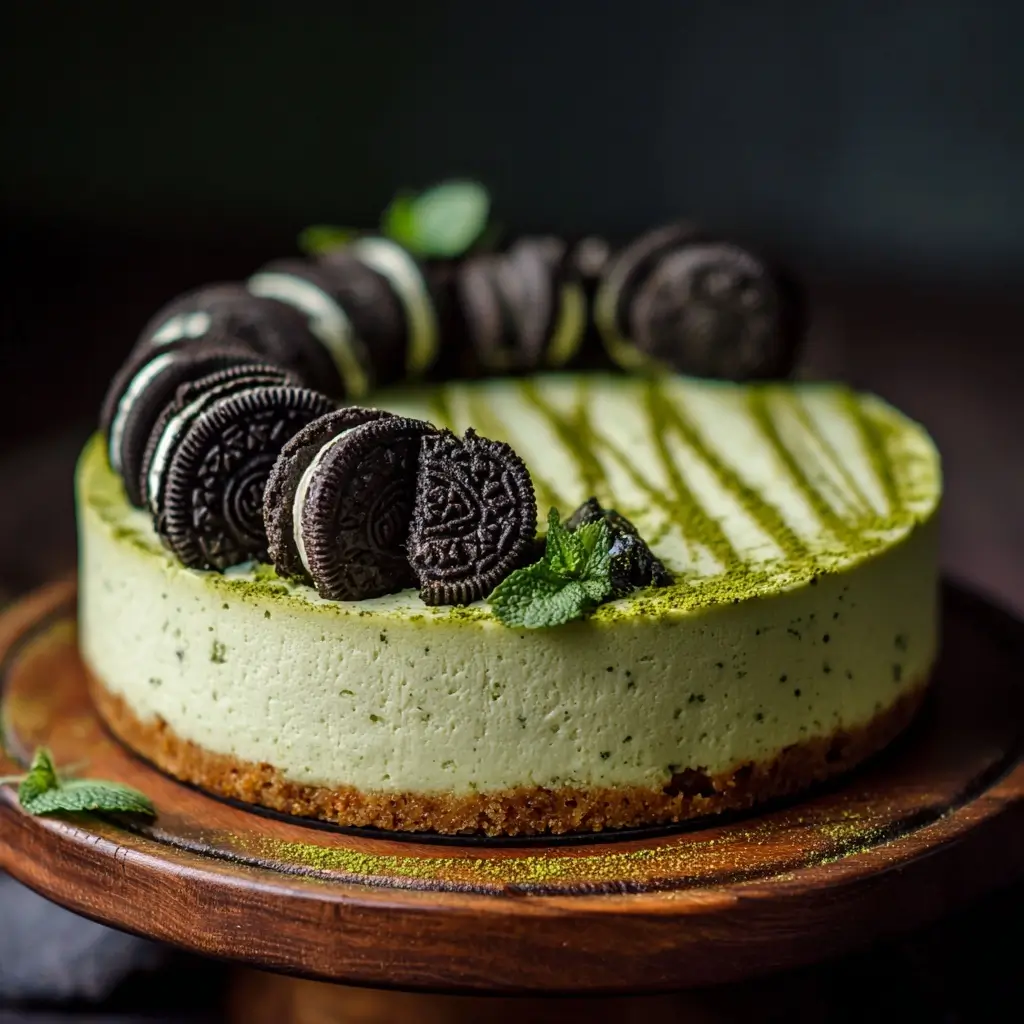
Welcome to the ultimate fusion dessert experience: the Matcha Oreo Cheesecake. This isn’t just another cheesecake—it’s a masterful, harmonious collision of Japanese elegance and American nostalgia. Silky, earthy matcha green tea meets the nostalgic crunch and sweetness of Oreo cookies, all wrapped in a luxuriously creamy, no-bake (or baked—your choice!) New York–style cheesecake base. Whether you’re a matcha connoisseur seeking depth and umami balance or an Oreo devotee craving that iconic chocolate-cookie contrast, this dessert delivers on every sensory level—visually stunning with its vibrant jade-green layers, texturally dynamic with its crisp crust and velvety filling, and flavorfully complex with notes of grassy sweetness, subtle bitterness, rich cocoa, and tangy cream cheese. Perfect for spring picnics, Japanese-inspired dinner parties, afternoon tea service, or simply treating yourself to something both sophisticated and comforting.
The History
The Matcha Oreo Cheesecake is a brilliant example of modern culinary globalization—a relatively recent innovation born from the convergence of three distinct food traditions. Matcha, finely ground shade-grown green tea leaves, has been central to Japanese tea ceremony culture since the 12th century, prized for its ceremonial purity, vibrant color, and health symbolism. Its global rise began in earnest in the early 2000s as matcha lattes, ice creams, and baked goods surged in popularity across North America, Europe, and Australia—driven by wellness trends and social media aesthetics. Meanwhile, Oreo cookies, introduced by Nabisco in 1912, became the best-selling cookie in the world, beloved for their “twist, lick, dunk” ritual and iconic sandwich structure. Their crumbly, cocoa-rich, vanilla-creamed profile made them a natural candidate for crusts and mix-ins. Cheesecake, with ancient roots in Greek and Roman dairy-based desserts, evolved into its modern American form in the late 19th century—particularly through New York-style baked cheesecake’s dense, creamy, slightly tangy identity. The first documented Matcha Oreo Cheesecake appeared in food blogs around 2015–2016, notably gaining traction on Pinterest and Instagram thanks to its photogenic contrast: deep black cookie crumbs against luminous green filling. Since then, it’s been elevated by pastry chefs in Tokyo cafes, Los Angeles pop-ups, and Melbourne dessert studios—each adding regional flourishes like yuzu zest, white chocolate shavings, or black sesame garnish—solidifying its status as a true 21st-century hybrid classic.
Ingredients Breakdown
Every element of this cheesecake serves a precise structural, textural, and flavor purpose—no ingredient is arbitrary. Let’s explore each component in detail:
- Oreo Cookie Crust Base: 30 full Oreos (about 360g), finely crushed—including the creamy filling. The cocoa powder, sugar, palm oil, and vanillin in the wafers provide deep chocolate flavor, fat for binding, and caramelized notes when lightly toasted. The cream filling adds extra sweetness and emulsifiers that help the crust hold together without excessive butter.
- Unsalted Butter (for crust): 6 tbsp (85g), melted and cooled. Acts as the essential binder—coating each crumb to create cohesion and prevent crumbling. Clarified butter can be used for enhanced shelf stability and richer mouthfeel.
- Cream Cheese: 24 oz (680g) full-fat, brick-style, at room temperature (not softened in microwave). Philadelphia brand is recommended for consistency, but any high-quality domestic or imported full-fat cream cheese works. Room temperature ensures smooth incorporation—cold cheese causes lumps; overheated cheese breaks the emulsion.
- Granulated Sugar: 1 cup (200g), ultra-fine if possible. Provides sweetness, stabilizes the protein matrix, and aids in aeration during beating. Confectioners’ sugar may be substituted for silkier texture—but avoid if using a no-bake version with gelatin, as cornstarch can interfere.
- Sour Cream: 1 cup (240g), full-fat, room temperature. Adds tang, moisture, and fat—crucial for preventing cracking in baked versions and contributing to lush mouthfeel in no-bake versions.
- Heavy Whipping Cream (36–40% fat): ½ cup (120ml), cold. Used in no-bake versions for volume and richness; in baked versions, it enhances tenderness and sheen.
- Full-Fat Greek Yogurt (optional but recommended): ¼ cup (60g), strained, room temperature. Adds bright acidity, protein structure, and subtle creaminess—helps balance matcha’s bitterness and improves slice integrity.
- Pure Ceremonial-Grade Matcha Powder: 2½ tbsp (15g), sifted *immediately before use*. This is non-negotiable: culinary-grade matcha will taste bitter, dusty, and lack vibrancy. Ceremonial grade offers umami depth, floral top notes, and brilliant green hue. Store in an airtight, opaque container in the freezer to preserve chlorophyll and catechins.
- Fresh Lemon Juice: 1½ tsp (7ml), strained. Brightens the entire profile, cuts through richness, and enhances matcha’s natural grassy notes without adding perceptible citrus flavor.
- Vanilla Extract: 1½ tsp, pure Madagascar bourbon. Complements matcha’s vanilla-like compounds and rounds out sharp edges—avoid imitation, which tastes artificial and dulls the matcha.
- Unflavored Gelatin (for no-bake version only): 2¼ tsp (7g) + 3 tbsp cold water for blooming. Creates stable, sliceable set without refrigeration dependency beyond standard chilling. Agar-agar (1½ tsp, dissolved in ¼ cup hot coconut milk) is a vegan alternative—but yields a firmer, less creamy texture.
- Pinch of Fine Sea Salt: Enhances all other flavors, reduces perceived bitterness, and balances sweetness.
- Garnish Options (highly encouraged): Reserved crushed Oreos, matcha-dusted white chocolate curls, edible cherry blossoms (sakura), toasted black sesame seeds, fresh raspberries, or a delicate drizzle of matcha-infused white chocolate ganache.
Step-by-Step Recipe
This recipe provides instructions for both baked and no-bake methods—choose based on your time, equipment, and desired texture. Total active time: 45 minutes. Chill/bake + set time: minimum 12 hours (ideally 24–48 hours for optimal flavor melding).
- Prepare the Springform Pan: Wrap the *outside bottom and sides* of a 9-inch (23 cm) springform pan tightly with two layers of heavy-duty aluminum foil—this prevents water seepage during the baked version’s water bath. Lightly grease the foil and inner side rim with neutral oil (e.g., grapeseed). Set aside.
- Make the Oreo Crust: Pulse 30 whole Oreos (cream and wafer) in a food processor until fine, sandy crumbs form (~30 seconds). Transfer to a bowl, add melted butter, and stir with a spatula until evenly moistened—when squeezed, it should hold together without excess greasiness. Press firmly and evenly into the bottom and 1 inch up the sides of the prepared pan using the bottom of a flat measuring cup or glass. Refrigerate uncovered for at least 30 minutes (or freeze for 15) to set.
- Preheat & Prep (Baked Version Only): Preheat oven to 325°F (163°C). Prepare a large roasting pan for the water bath—fill halfway with hot tap water (≈2 inches deep). Place springform pan inside roasting pan *before* adding batter.
- Beat Cream Cheese Base: In a large stand mixer fitted with paddle attachment (or using hand mixer), beat room-temp cream cheese on medium-low for 2 minutes until completely smooth and glossy—scrape bowl thoroughly. Add sugar and beat 2 more minutes until fluffy and lump-free. Scrape bowl again.
- Incorporate Wet Ingredients: Add sour cream, Greek yogurt (if using), lemon juice, vanilla, and salt. Beat on medium for 1 minute until homogenous. Scrape bowl meticulously.
- Integrate Matcha: Sift matcha directly into the mixture. Beat on low for 30 seconds just until fully incorporated—do not overmix, as this can cause air bubbles or dull the green color. Pause and scrape bowl twice.
- Final Texture Adjustment (Baked): Gently fold in cold heavy cream with a silicone spatula until just swirled—not fully blended—for subtle marbling and tender crumb. (Skip for no-bake.)
- Final Texture Adjustment (No-Bake): In separate small bowl, bloom gelatin in 3 tbsp cold water for 5 minutes. Microwave *only* 10–15 seconds until fully liquefied (do not boil). Cool 1 minute. Slowly drizzle warm gelatin into cheesecake batter while mixing on lowest speed for 15 seconds—then fold gently 10 times with spatula.
- Pour & Smooth: Pour batter evenly over chilled crust. Tap pan sharply 3–4 times on counter to release air bubbles. Use offset spatula to smooth top perfectly level.
- Bake (If Using Baked Method): Carefully place roasting pan with hot water onto center oven rack. Bake 75–85 minutes—until edges are set and center jiggles *slightly* like Jell-O (not liquid). Turn off oven, crack door open 2 inches with wooden spoon, and let cool inside for 1 hour. Remove from water bath, run thin knife around edge, and cool completely at room temp (≈2 hours), then refrigerate uncovered ≥12 hours.
- Chill (If Using No-Bake Method): Cover loosely with plastic wrap (not touching surface) and refrigerate ≥12 hours—preferably 24–48 hours for full set and flavor development. Do not freeze before slicing.
- Unmold & Serve: Run thin, warm knife around perimeter. Release springform collar. Slide thin metal spatula under crust to loosen from base. Transfer to cake stand. Garnish generously. Slice with hot, dry knife wiped between cuts.
Tips
- Matcha Matters Most: Never substitute culinary-grade matcha here. Ceremonial grade is expensive but irreplaceable—its solubility, sweetness, and color make or break the dessert. If unsure, buy from reputable vendors like Ippodo, Encha, or Midori Tea.
- Temperature Is Everything: All dairy must be truly room temperature (68–72°F / 20–22°C)—cold ingredients cause curdling and graininess; overheated ones cause separation. Take cream cheese out 3–4 hours ahead; cut into cubes to speed warming.
- Sifting Is Sacred: Sift matcha *twice*—once before measuring, once right before adding to batter—to eliminate clumps that create bitter pockets and dull color.
- Scrape Relentlessly: Scrape bowl and paddle after *every* addition—especially after sugar and matcha. Unincorporated streaks lead to uneven texture and flavor.
- No Overmixing: Once matcha is added, mix only until just combined. Over-beating oxidizes matcha, turning it olive-gray and amplifying bitterness.
- Water Bath Wisdom: For baked version, use hot (not boiling) water to avoid sudden steam bursts. Ensure foil wrapping is seamless—leaks cause soggy crust. A towel-lined roasting pan bottom prevents sliding.
- Cooling Patience Pays Off: Rushing cooling causes cracks. The gradual oven cooldown and full fridge rest allow proteins to relax and set uniformly.
- Slicing Science: Use a long, thin, non-serrated knife dipped in near-boiling water and wiped *completely dry* before each cut. This gives clean, glossy slices with defined layers.
- Crust Reinforcement: For ultra-sturdy crust, pre-bake at 350°F (175°C) for 8–10 minutes before chilling—especially helpful for no-bake versions.
- Flavor Blooming: Let assembled, chilled cheesecake sit at cool room temperature (60°F / 16°C) for 15–20 minutes before serving—this softens texture and volatilizes aromatic compounds for maximum matcha nuance.
Variations and Customizations
This recipe is a canvas—adaptable for dietary needs, seasonal inspiration, and creative expression. Here are rigorously tested, chef-approved variations:
- Vegan Matcha Oreo Cheesecake: Replace cream cheese with 2 cups (480g) soaked raw cashews (soaked 6+ hrs, drained), ⅓ cup (80ml) refined coconut oil, ⅓ cup (80ml) maple syrup, 3 tbsp lemon juice, 2½ tbsp matcha, ¼ tsp salt, and 1 tsp apple cider vinegar. Blend until ultra-smooth in high-speed blender. Set with 3 tsp agar-agar dissolved in ¼ cup hot coconut milk. Crust: vegan Oreos (check label—some contain whey) + coconut oil instead of butter.
- Gluten-Free Matcha Oreo Cheesecake: Use certified GF Oreos (like Kinnikinnick or Glutino) or make a GF chocolate cookie crust from GF cocoa graham crackers + GF oat flour + butter. Ensure matcha is processed in GF facility.
- Low-Sugar / Keto-Friendly: Crust: 2 cups (180g) crushed keto chocolate cookies (e.g., Simple Mills) + 4 tbsp melted coconut oil. Filling: 24 oz full-fat cream cheese, ¾ cup (180ml) erythritol-monk fruit blend, 1 cup sour cream, ½ cup heavy cream, 2½ tbsp matcha, 1½ tsp lemon juice, 1½ tsp vanilla, pinch salt. Optional: add 1 tsp xanthan gum to stabilize.
- Matcha Oreo Cheesecake Bars: Press crust into 9×13″ pan. Reduce filling by 25%. Bake 45–55 mins (baked) or chill 12+ hrs (no-bake). Cut into 24 squares—ideal for parties and portion control.
- Strawberry-Matcha Swirl: After pouring base batter, dollop ½ cup seedless strawberry jam (simmered with 1 tsp lemon juice and cooled) over surface. Drag chopstick through in figure-8 pattern for elegant marbling.
- Yuzu-Infused: Replace lemon juice with 1 tbsp yuzu juice + ½ tsp yuzu zest. Adds a distinctive Japanese citrus brightness that lifts matcha beautifully.
- Black Sesame Accent: Mix 2 tbsp toasted black sesame paste into ¼ cup of the batter, then swirl into main mixture before baking/chilling. Adds nutty depth and visual contrast.
- Green Tea–Lavender Infusion: Steep 1 tsp food-grade lavender buds in 2 tbsp warm heavy cream for 10 minutes, strain, cool, and use in place of plain cream. Complements matcha’s floral notes—use sparingly to avoid soapiness.
- Mini Jar Cheesecakes: Layer crushed Oreo crust (1 tbsp), matcha cheesecake (2 tbsp), and optional white chocolate shavings in 6 oz mason jars. Chill 8+ hrs. Portable, gift-ready, and perfect for individual servings.
- Matcha Oreo Cheesecake Ice Cream: Churn fully chilled, no-bake batter (without gelatin) in ice cream maker per manufacturer’s instructions. Fold in crushed Oreos post-churn. Ripen 4+ hrs. Intense, scoopable matcha indulgence.
Health Considerations and Nutritional Value
A 1/12th slice (approx. 180g) of the standard baked version contains:
- Calories: ~425 kcal
- Total Fat: 31g (19g saturated)
- Carbohydrates: 32g (24g sugars, including 18g added from Oreos/sugar)
- Protein: 6g
- Fiber: 1g
- Sodium: 280mg
Nutritional Highlights & Considerations:
- Matcha Benefits: A single serving delivers ~60mg caffeine and 120mg EGCG (epigallocatechin gallate)—a potent antioxidant linked to improved metabolic function, neuroprotection, and anti-inflammatory effects. Matcha also contains L-theanine, which promotes calm alertness and mitigates caffeine jitters—making this dessert surprisingly functional.
- Oreo Reality Check: While Oreos contribute enjoyable texture and flavor, they are highly processed, high in added sugars and palm oil. Opting for reduced-sugar or organic Oreos lowers glycemic impact but doesn’t eliminate processing concerns. For mindful consumption, savor one thoughtful slice—not three.
- Cream Cheese Context: Full-fat dairy provides conjugated linoleic acid (CLA) and vitamin K2 (in fermented varieties), supporting bone and cardiovascular health. However, saturated fat content warrants moderation, especially for those managing cholesterol.
- Portion Intelligence: This is a celebration dessert—not an everyday snack. Pair with green tea (unsweetened) to enhance matcha’s benefits and aid digestion. Avoid serving with additional sugary beverages.
- Allergen Notes: Contains dairy, eggs (in some Oreo formulations—check labels), wheat/gluten (unless GF version used), soy (lecithin in Oreos), and tree nuts (if using cashew-based vegan version). Always verify ingredient labels for allergen statements.
- Lower-Impact Swaps: Reduce sugar by 25% without sacrificing texture. Use Greek yogurt to replace ¼ cup cream cheese for added protein and less fat. Substitute half the Oreos with crushed dark chocolate–dipped green tea biscuits for deeper flavor and less sweetness.
Ultimately, this cheesecake exemplifies the principle of intentional indulgence: crafted with premium, purposeful ingredients, enjoyed mindfully, and celebrated for its cultural resonance—not just its calories.
Ingredients
Makes one 9-inch cheesecake (12–16 servings)
- 30 Oreo cookies (full-size, original, with cream filling), finely crushed (≈360g)
- 6 tbsp (85g) unsalted butter, melted and cooled
- 24 oz (680g) full-fat brick-style cream cheese, at room temperature
- 1 cup (200g) granulated sugar, ultra-fine preferred
- 1 cup (240g) full-fat sour cream, at room temperature
- ¼ cup (60g) full-fat Greek yogurt, strained and at room temperature (optional but recommended)
- ½ cup (120ml) cold heavy whipping cream (36–40% fat) — omit for no-bake if using gelatin
- 2½ tbsp (15g) ceremonial-grade matcha powder, sifted
- 1½ tsp (7ml) fresh lemon juice, strained
- 1½ tsp pure vanilla extract
- ¼ tsp fine sea salt
- For No-Bake Version Only: 2¼ tsp (7g) unflavored gelatin + 3 tbsp cold water for blooming
- Garnishes (optional): Reserved crushed Oreos, white chocolate curls dusted with matcha, edible sakura, toasted black sesame seeds
Directions
- Prep Pan: Wrap exterior of 9-inch springform pan with double-layer heavy-duty foil. Lightly grease foil and inner side rim.
- Make Crust: Pulse Oreos in food processor until fine crumbs. Mix with melted butter until moistened. Press firmly into pan bottom and 1″ up sides. Refrigerate 30+ minutes.
- Beat Base: With mixer, beat cream cheese on medium-low 2 min until smooth. Add sugar; beat 2 min until fluffy. Scrape bowl.
- Add Wet Ingredients: Add sour cream, Greek yogurt, lemon juice, vanilla, and salt. Beat 1 min on medium. Scrape bowl.
- Incorporate Matcha: Sift matcha over mixture. Beat on low 30 sec until fully blended. Scrape bowl twice.
- Adjust for Method: Baked: Gently fold in cold heavy cream. No-Bake: Bloom gelatin in cold water 5 min, microwave 10–15 sec until liquid, cool 1 min, then drizzle in while mixing on low 15 sec; fold gently 10 times.
- Pour & Smooth: Pour over crust. Tap pan. Smooth top with offset spatula.
- Bake (Optional): Place in water bath. Bake at 325°F (163°C) 75–85 min until set at edges, slight jiggle center. Cool in oven 1 hr, then room temp 2 hrs, then refrigerate ≥12 hrs.
- Chill (No-Bake): Cover loosely, refrigerate ≥12 hrs—ideally 24–48 hrs.
- Unmold & Serve: Run warm knife around edge. Release collar. Slide spatula under crust. Garnish. Slice with hot, dry knife.
FAQ
- Can I use matcha from the grocery store “tea aisle”?
- No—most supermarket matcha is culinary grade: dull green, bitter, and oxidized. Ceremonial grade is essential for vibrant color, balanced flavor, and proper solubility. Look for origin (Uji, Nishio), harvest date (within 6 months), and packaging (opaque, nitrogen-flushed).
- Why did my cheesecake crack?
- Most commonly: overmixing after adding matcha, cooling too quickly, or opening oven door too soon. Also, insufficient resting time before refrigeration. Follow the slow-cool protocol religiously.
- Can I freeze this cheesecake?
- Yes—wrap *fully chilled*, unsliced cheesecake tightly in plastic + foil. Freeze up to 2 months. Thaw overnight in fridge, then sit at cool room temp 20 min before slicing. Texture remains excellent.
- My matcha layer turned brown/grey. What happened?
- Oxidation from overmixing, high heat exposure, or using old/low-grade matcha. Always sift fresh, mix minimally, and avoid heating matcha directly (never microwave batter with matcha already added).
- Is there a substitute for Oreos in the crust?
- Yes—but with caveats: chocolate graham crackers + cocoa powder + sugar work, but lack the signature cream filling’s emulsifying power. For closest result, use Newman’s Own Chocolate Cookies or Back to Nature Cocoa Wafers.
- Can I make this gluten-free?
- Absolutely—use certified GF Oreos (Kinnikinnick is widely available) and verify all other ingredients (vanilla, matcha) are GF-certified. Cross-contamination is the biggest risk, so clean equipment thoroughly.
- How long does it keep?
- Refrigerated, covered: 5 days. Uncovered: 3 days (crust softens). Frozen: 2 months. Always store on a plate covered with inverted cake dome or large bowl to prevent odor absorption.
- Can I add white chocolate to the filling?
- Yes—melt and cool 4 oz (115g) high-quality white chocolate, then fold in *after* matcha is incorporated and just before pouring. Adds luxurious sweetness and helps mute matcha’s bitterness.
- What if I don’t have a springform pan?
- You can use a 9-inch regular cake pan lined with *overhanging parchment* (create a sling). Lift out using parchment ends. Expect slightly less clean edges—but still delicious.
- Can kids eat this? How much caffeine is in a slice?
- Yes—each slice contains ~5–7mg caffeine (from matcha), comparable to a cup of decaf coffee. It’s safe for most children in moderation, but consult your pediatrician for sensitive individuals.
Summary
The Matcha Oreo Cheesecake is a transcendent