Introduction
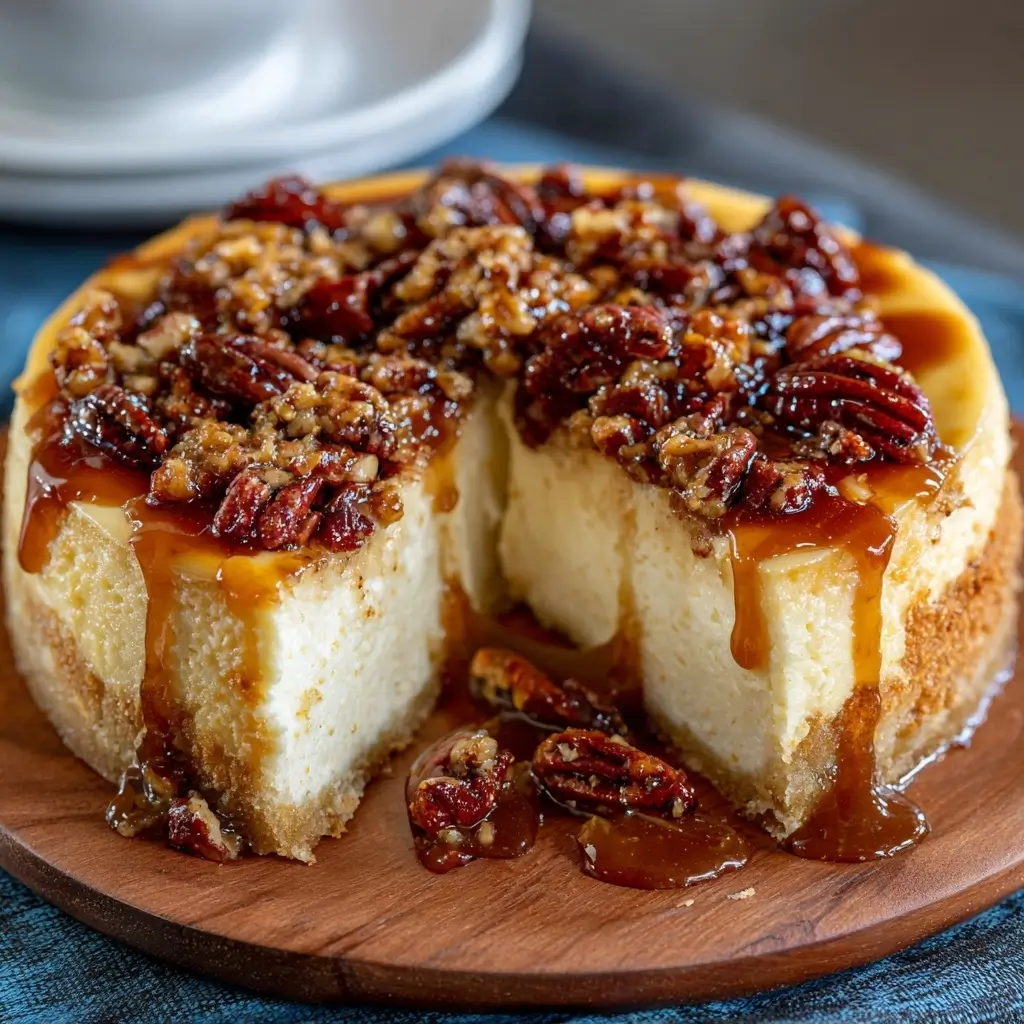
Maple Pecan Cheesecake is a luxurious, autumnal twist on the classic New York–style dessert—a harmonious marriage of velvety cream cheese richness, the deep, woody sweetness of pure maple syrup, and the buttery crunch of toasted pecans. This decadent confection evokes the warmth of harvest festivals, cozy cabin mornings, and slow-simmered maple farms nestled in Vermont’s rolling hills. Unlike standard cheesecakes that rely heavily on granulated sugar and vanilla, the Maple Pecan variation celebrates nuanced, natural sweetness and layered texture—offering a sophisticated balance of earthy, caramelized, creamy, and nutty notes in every forkful. Whether served at Thanksgiving dinner, as an elegant finale to a winter dinner party, or as a weekend treat to savor with spiced coffee, this cheesecake delivers both nostalgic comfort and refined gourmet appeal.
The History
The origins of Maple Pecan Cheesecake lie at the intersection of two deeply rooted American culinary traditions: cheesecake and maple sugaring. Cheesecake itself traces back over 2,000 years to ancient Greece, where early versions made with honey, flour, and fresh cheese were served to athletes at the first Olympic Games in 776 BCE. It evolved through Roman adaptations and later crossed the Atlantic with European settlers, finding fertile ground in Pennsylvania Dutch country and ultimately blossoming into the dense, baked New York style by the early 20th century—thanks in large part to cream cheese’s commercialization by William Lawrence and the Philadelphia Cream Cheese brand in 1872.
Meanwhile, maple syrup production is an Indigenous North American innovation—long before European contact, the Anishinaabe, Haudenosaunee, and Wabanaki peoples developed sophisticated techniques for tapping sugar maple trees (Acer saccharum), collecting sap, and boiling it down into concentrated syrup and sugar using clay pots and hot stones. Early colonial settlers adopted and industrialized these methods, especially in Vermont, Quebec, and upstate New York—regions now synonymous with Grade A Amber Rich and Dark Robust maple syrups. The pairing of maple and pecans—native to the southern and central United States—emerged organically in Southern and Midwestern baking traditions, where pecan pie reigned supreme. By the late 1970s and 1980s, artisanal bakeries began experimenting with maple-infused desserts, and by the early 2000s, food magazines like Bon Appétit and Food & Wine featured maple-pecan cheesecakes as “elevated comfort food,” cementing its status as a seasonal staple. Today, it symbolizes conscious indulgence—celebrating regional ingredients, sustainable forestry (maple tapping is non-destructive), and heirloom nut cultivation.
Ingredients Breakdown
Every component of Maple Pecan Cheesecake serves a precise structural, textural, and flavor-driven purpose—no ingredient is arbitrary. Below is a meticulous breakdown of each element and its functional role:
- Graham Cracker Crumb Base: Provides a sturdy, slightly sweet, and sandy foundation. Graham crackers contain whole wheat flour and honey, lending subtle molasses notes that complement maple. The addition of melted butter binds the crumbs and creates a crisp, shortbread-like integrity when baked. A pinch of cinnamon and flaky sea salt enhances warmth and balances sweetness.
- Cream Cheese (full-fat, block-style, room temperature): The structural backbone. High-fat content (≥33%) ensures density, smoothness, and resistance to cracking. Neufchâtel or low-fat alternatives yield graininess and curdling. Room temperature is non-negotiable—cold cream cheese introduces lumps that no amount of mixing can fully resolve.
- Sour Cream & Heavy Cream: Sour cream adds tang, moisture, and slight acidity to cut through richness while improving sliceability. Heavy cream (not half-and-half or milk) contributes fat and silkiness without diluting flavor or destabilizing the batter. Together, they create a custard-like tenderness and inhibit over-baking.
- Pure Maple Syrup (Grade A Dark Robust preferred): Not pancake syrup! Real maple syrup contains over 200 volatile organic compounds—including vanillin, furfural, and caramelized sugars—that impart smoky, woody, roasted, and butterscotch-like complexity. Dark Robust grade has the highest concentration of these compounds due to late-season sap collection, offering deeper flavor and better heat stability during baking. Its natural invert sugars also help retain moisture and prevent graininess.
- Granulated Sugar: Provides necessary sucrose for structure, browning (via Maillard reaction), and controlled sweetness. Maple alone lacks sufficient sucrose for proper protein coagulation and air incorporation. Fine granulated (not raw or turbinado) dissolves completely and avoids crystallization.
- Eggs (large, room temperature): Act as emulsifiers and binders. Egg yolks add fat and richness; whites provide lift and stability. Room temperature eggs incorporate more evenly and reduce batter temperature shock, minimizing cracks. Overmixing after adding eggs introduces excess air, causing puffing and collapse.
- Vanilla Extract (pure, not imitation): Reinforces maple’s vanillin notes while adding floral depth. Madagascar Bourbon vanilla is ideal for its creamy, spicy profile. Avoid alcohol-heavy extracts that may curdle dairy.
- Fine Sea Salt: Critical for flavor modulation—it suppresses bitterness, heightens sweetness perception, and balances the earthiness of maple and pecans.
- Toasted Pecans (medium-chop, unsalted): Toasting unlocks volatile oils (like limonene and pinene), producing warm, buttery, slightly resinous aromas. Medium-chopping ensures even distribution without sinking or creating textural pockets. Pecans’ high monounsaturated fat content enriches mouthfeel and prevents dryness.
- Maple-Pecan Swirl (optional but recommended): A luxurious finishing layer made from warmed maple syrup, softened butter, brown sugar, and finely chopped toasted pecans—swirled just before baking to create marbled ribbons that caramelize at the surface.
- Maple Glaze (post-bake): A glossy, pourable topping made from reduced maple syrup, a touch of cream cheese for tang, and a whisper of bourbon or apple cider vinegar for brightness—applied chilled to set without melting the cake.
Step-by-Step Recipe
This recipe yields one stunning 9-inch, 3-inch-tall cheesecake with clean slices, crack-free surface, and professional bakery texture. Total time: 2 days (includes chilling and resting). Active prep: 45 minutes. Baking: 1 hour 20 minutes. Cooling: 3 hours minimum. Refrigeration: 12–24 hours (non-negotiable).
- Prepare the Springform Pan: Wrap the *outside* of a 9-inch springform pan tightly with two overlapping layers of heavy-duty aluminum foil—ensure no gaps at the base or seams. This prevents water seepage during the critical water bath step. Lightly grease the *inside* bottom and sides with unsalted butter, then line the bottom with a round of parchment paper cut to fit precisely.
- Make the Crust: In a food processor, pulse 1 ½ cups (150g) graham cracker crumbs (about 12 full sheets), 3 tbsp (38g) granulated sugar, ¼ tsp fine sea salt, and ¼ tsp ground cinnamon until uniform. Add 6 tbsp (85g) unsalted butter, melted and cooled to room temperature, and pulse until moistened clumps form. Press firmly and evenly into the prepared pan—first up the sides (~½ inch high), then across the bottom using the flat bottom of a measuring cup or glass. Chill uncovered for at least 30 minutes (or freeze for 15) to solidify the butter.
- Preheat & Prepare Water Bath: Position oven rack in the lower third. Preheat oven to 325°F (163°C). Place a large, deep roasting pan (at least 3 inches tall) on the rack. Fill halfway with boiling water—you’ll nestle the cheesecake pan inside this later.
- Toast the Pecans: Spread 1 cup (115g) raw pecan halves on a parchment-lined baking sheet. Toast at 350°F (177°C) for 8–10 minutes, shaking once, until fragrant and lightly golden. Cool completely, then chop into ¼-inch pieces. Reserve ⅓ cup for the swirl/topping; use remainder in batter.
- Prepare Maple Swirl (Optional but Highly Recommended): In a small saucepan, combine ¼ cup (85g) pure maple syrup, 2 tbsp (28g) unsalted butter, and 2 tbsp (25g) light brown sugar. Warm over medium-low heat, stirring constantly, until butter melts and mixture simmers gently for 1 minute. Remove from heat; stir in reserved ⅓ cup toasted pecans. Cool to lukewarm (do not refrigerate—will harden).
- Beat Cream Cheese Base: Using a stand mixer fitted with the paddle attachment (or hand mixer on medium-low), beat 24 oz (680g / four 8-oz blocks) full-fat cream cheese at medium speed for 2 minutes until completely smooth, scraping bowl thoroughly. Add ¾ cup (150g) granulated sugar and ½ tsp fine sea salt; beat 2 more minutes until fluffy and lump-free. Scrape bowl well.
- Incorporate Dairy & Flavor: Add 1 cup (240g) full-fat sour cream and ½ cup (120ml) heavy cream. Beat on medium for 1 minute until homogenous. Add 2 tsp pure vanilla extract and ⅓ cup (115g) pure maple syrup (Dark Robust grade). Beat 30 seconds—just until combined. Do *not* overmix.
- Add Eggs One at a Time: With mixer on low speed, add 4 large room-temperature eggs, one at a time, beating for 15 seconds after each addition and scraping the bowl after the second and fourth eggs. Batter should be thick, glossy, and free of streaks.
- Fold in Pecans: Gently fold in the remaining ⅔ cup toasted, chopped pecans using a silicone spatula—just 8–10 turns until evenly distributed. Over-folding deflates the batter.
- Fill & Swirl: Pour batter into chilled crust. Tap pan sharply 3 times on countertop to release air bubbles. Drizzle the lukewarm maple-pecan swirl evenly over the surface. Use a thin skewer or toothpick to draw gentle figure-eights and S-curves—avoid over-swirling, which causes bleeding.
- Water Bath Bake: Carefully place the foil-wrapped springform pan into the preheated water bath. The water should reach halfway up the pan’s exterior. Close oven door gently. Bake for 1 hour 15 minutes—cake is done when edges are puffed and set, center jiggles *slightly* like Jell-O (not liquid), and internal temperature reads 150–152°F (65–67°C) on an instant-read thermometer inserted 1 inch from center.
- Gradual Cooling (Critical!): Turn oven OFF. Crack oven door open 1 inch with a wooden spoon. Let cake cool undisturbed in the water bath for 1 hour. Then carefully lift cake out of water bath, remove foil, and run a thin knife around the inner edge to loosen. Cool on wire rack for another 1 hour at room temperature.
- Chill Overnight: Cover loosely with plastic wrap (touching surface to prevent condensation) and refrigerate for *minimum 12 hours*, ideally 24. This allows proteins to fully set, flavors to meld, and texture to mature into silken perfection.
- Glaze & Garnish (Day 2): Make maple glaze: Simmer ½ cup (170g) maple syrup in a small saucepan over medium heat until reduced by ⅓ (≈3 minutes). Cool 5 minutes, then whisk in 2 tbsp (30g) softened cream cheese and 1 tsp apple cider vinegar until smooth. Cool to room temperature (it will thicken). Unmold cake, place on serving plate, and pour glaze over center, allowing it to cascade naturally. Sprinkle with extra toasted pecan halves and a pinch of flaky sea salt.
- Serve: Use a hot, thin-bladed knife (dipped in hot water and wiped dry between cuts) for clean slices. Serve chilled—not cold—and allow to sit at room temperature for 10 minutes before serving for optimal flavor release.
Tips
- Room Temperature Is Non-Negotiable: All dairy (cream cheese, sour cream, heavy cream, eggs) must be at true room temperature (68–72°F / 20–22°C)—leave out for 2–3 hours, not just “softened.” Cold ingredients cause separation, lumps, and cracks.
- Scrape Religiously: Use a flexible silicone spatula to scrape the paddle attachment, bowl bottom, and sides after *every* mixing stage—even if it looks clean. Undissolved sugar or unmixed cream cheese hides in corners.
- No Overmixing After Eggs: Once eggs are added, mix only until just incorporated. Over-beating incorporates excess air → rise → collapse → cracks.
- Water Bath Precision: Use boiling water—not warm—to maintain consistent temperature. If water evaporates significantly, carefully add more boiling water mid-bake. Never let water boil dry.
- Thermometer > Timetables: Ovens vary wildly. An instant-read thermometer is the only foolproof way to gauge doneness. Underbaked = weeping; overbaked = dry, crumbly, cracked.
- Patience in Cooling: Skipping the 1-hour oven cooldown or rushing refrigeration guarantees cracks and weeping. The slow thermal transition sets proteins gently.
- Unmolding Gracefully: Run a thin knife dipped in hot water around the edge *before* chilling. After chilling, dip entire springform base in hot water for 15 seconds, then carefully release the latch and lift off the ring.
- Storage Wisdom: Keep covered in fridge for up to 5 days. Freeze unfrosted, wrapped in plastic + foil, for up to 3 months. Thaw overnight in fridge—never at room temperature or microwave.
- Texture Rescue: If surface cracks slightly, hide them under a generous maple glaze or whipped maple cream. Imperfections disappear under elegance.
- Flavor Amplification: For deeper maple notes, replace 1 tbsp of the maple syrup in the batter with maple extract (use sparingly—½ tsp max) or a splash of real maple liqueur.
Variations and Customizations
Maple Pecan Cheesecake is gloriously adaptable—whether accommodating dietary needs, seasonal ingredients, or creative flair. Here are meticulously tested variations, each preserving structural integrity and flavor harmony:
- No-Bake Maple Pecan Cheesecake: Replace baked filling with a no-bake version: whip 24 oz cold cream cheese with 1 cup powdered sugar, ⅓ cup maple syrup, 1 tsp vanilla, and ¼ tsp salt until smooth. Fold in 1 cup cold heavy cream whipped to soft peaks and ¾ cup toasted pecans. Pour into chilled graham crust. Chill 8+ hours. Top with maple-coconut whipped cream and candied pecans.
- Gluten-Free: Substitute gluten-free graham crackers (like Schar or Pamela’s) or a blend of almond flour (½ cup), oat flour (½ cup), and toasted pecan meal (¼ cup) for crust. Ensure all other ingredients (vanilla, baking powder if used) are certified GF.
- Vegan Maple Pecan Cheesecake: Use soaked cashews (2 cups), coconut cream (1 cup), maple syrup (⅔ cup), lemon juice (3 tbsp), apple cider vinegar (1 tsp), and ¼ cup melted coconut oil for filling. Crust: dates + pecans + oats. Set with agar-agar (1 tsp dissolved in ¼ cup hot water) instead of eggs. Chill 12+ hours.
- Mini Mason Jar Cheesecakes: Scale down batter by ⅓. Layer crust (1 tsp per 8-oz jar), filling (3 tbsp), and swirl (½ tsp). Bake in water bath at 325°F for 28–32 minutes. Chill 6+ hours. Perfect for parties and gifting.
- Maple Pecan Cheesecake Bars: Double crust recipe; press into 9×13 pan. Pour batter, swirl, and bake 55–65 minutes. Cool completely before cutting into 24 bars. Dust with maple sugar and crushed pecans.
- Smoked Maple Pecan Cheesecake: Add ¼ tsp pure maple smoke powder (or cold-smoke the maple syrup for 10 minutes over hickory chips) to the batter for campfire nuance. Pair with smoked sea salt garnish.
- Spiced Chai Maple Pecan: Infuse heavy cream with 2 chai tea bags (or 1 tbsp loose-leaf) for 20 minutes, then strain. Add ½ tsp ground cardamom and ¼ tsp ground ginger to batter.
- Bourbon-Maple Swirl: Replace 1 tbsp maple syrup in swirl with 1 tbsp small-batch bourbon—adds oak, vanilla, and warmth. Reduce simmer time by 30 seconds to preserve alcohol.
- Maple-Pecan-Streusel Topping: Before baking, sprinkle batter with a streusel of ¼ cup flour, 3 tbsp brown sugar, 2 tbsp cold butter, ¼ tsp cinnamon, and 3 tbsp chopped toasted pecans.
- Maple Pecan Cheesecake Ice Cream Sandwich: Slice chilled cake into ½-inch rounds. Sandwich between two maple-oat cookies. Freeze 4+ hours. Dip edges in tempered dark chocolate and crushed pralines.
Health Considerations and Nutritional Value
While Maple Pecan Cheesecake is inherently indulgent, thoughtful ingredient selection and portion awareness allow for mindful enjoyment. A standard 1/12th slice (approx. 180g) contains roughly:
- Calories: 420–460 kcal
- Total Fat: 31–34g (19–21g saturated)
- Carbohydrates: 32–36g (24–27g sugars—of which 14–16g are naturally occurring from maple syrup and dairy)
- Protein: 7–9g
- Fiber: 1–1.5g (from graham crust and pecans)
- Sodium: 280–320mg
Nutritional Highlights & Considerations:
- Maple Syrup Benefits: Contains manganese (22% DV per ¼ cup), zinc (5% DV), and polyphenols like quebecol—anti-inflammatory compounds unique to maple. Lower glycemic index (54) than table sugar (65), resulting in slower blood sugar spikes.
- Pecan Power: Rich in monounsaturated fats (heart-healthy), vitamin E (antioxidant), magnesium, and beta-sitosterol (cholesterol-lowering plant sterol). One ounce provides 196mg of potassium—supporting blood pressure regulation.
- Cream Cheese Reality: High in saturated fat and cholesterol, but also provides calcium (6% DV per slice) and vitamin A. Opting for full-fat supports satiety and reduces cravings versus low-fat versions laden with stabilizers and added sugars.
- Dietary Notes: Naturally low in sodium (when unsalted butter and minimal added salt are used); contains no artificial preservatives or colors when made from scratch. Lactose content is moderate (sour cream and heavy cream contain less lactose than milk), making it potentially tolerable for some with mild lactose sensitivity.
- Mindful Enjoyment Strategies: Serve 3-inch slices (not 4-inch); pair with tart apple compote or poached pear to balance richness; enjoy post-dinner walk to aid digestion and glucose metabolism; savor slowly—flavor intensity means smaller portions satisfy.
- Not Suitable For: Strict keto (too many carbs), severe dairy allergy (unless vegan version used), or those managing advanced heart disease without medical guidance. Always consult a registered dietitian for personalized adaptation.
Ingredients
Makes one 9-inch cheesecake (12 servings)
- For the Crust:
• 1 ½ cups (150g) graham cracker crumbs (about 12 full sheets)
• 3 tbsp (38g) granulated sugar
• ¼ tsp fine sea salt
• ¼ tsp ground cinnamon
• 6 tbsp (85g) unsalted butter, melted and cooled - For the Filling:
• 24 oz (680g) full-fat brick-style cream cheese, room temperature (four 8-oz blocks)
• ¾ cup (150g) granulated sugar
• ½ tsp fine sea salt
• 1 cup (240g) full-fat sour cream, room temperature
• ½ cup (120ml) heavy cream (not whipping cream or half-and-half), room temperature
• 2 tsp pure vanilla extract
• ⅓ cup (115g) pure Grade A Dark Robust maple syrup, room temperature
• 4 large eggs, room temperature - For the Maple-Pecan Swirl (Highly Recommended):
• ¼ cup (85g) pure maple syrup
• 2 tbsp (28g) unsalted butter
• 2 tbsp (25g) light brown sugar
• ⅓ cup (38g) toasted, finely chopped pecans - For Toasting & Garnish:
• 1 cup (115g) raw pecan halves
• Flaky sea salt, for finishing - For the Maple Glaze (Optional but Elegant):
• ½ cup (170g) pure maple syrup
• 2 tbsp (30g) full-fat cream cheese, softened
• 1 tsp apple cider vinegar or bourbon
Directions
Follow the Step-by-Step Recipe section above in strict sequential order. Each direction is engineered for success—deviating (e.g., skipping the water bath, using cold ingredients, rushing chill time) compromises texture, appearance, and flavor development. For best results, read the entire guide before beginning, gather all tools (stand mixer, springform pan, instant-read thermometer, heavy-duty foil, parchment), and allocate two full days.
FAQ
- Q: Can I use pancake syrup instead of pure maple syrup?
- A: Absolutely not. Pancake syrup is primarily corn syrup, artificial flavors, and caramel color—lacking the complex sugars, minerals, and volatile compounds essential for authentic maple flavor and proper baking chemistry. It will taste cloying, burn easily, and fail to caramelize correctly.
- Q: Why did my cheesecake crack?
- A: Most common causes: 1) Overmixing after adding eggs, 2) Rapid temperature changes (opening oven too soon, skipping water bath or oven cooldown), 3) Overbaking (internal temp >155°F), 4) Cold ingredients causing uneven emulsification. Review the Tips section for prevention.
- Q: Can I make this ahead for Thanksgiving?
- A: Yes—and highly recommended! Bake and chill fully on Monday or Tuesday. Glaze and garnish the morning of Thanksgiving. It tastes even better on Day 2 and 3 as flavors deepen.
- Q: My batter looks lumpy. What do I do?
- A: Stop mixing immediately. Lumps almost always mean cream cheese wasn’t at true room temperature or wasn’t beaten long enough *before* adding sugar. Scrape bowl, return to mixer, and beat cream cheese alone for 2–3 more minutes until silky—then proceed.
- Q: Can I substitute walnuts or almonds for pecans?
- A: Walnuts work well (toaster longer—10–12 mins—and chop finer). Almonds lack the same buttery fat profile and may turn bitter; if using, blanch and skin them first, then toast lightly. Avoid peanuts—they clash with maple’s delicate