Introduction
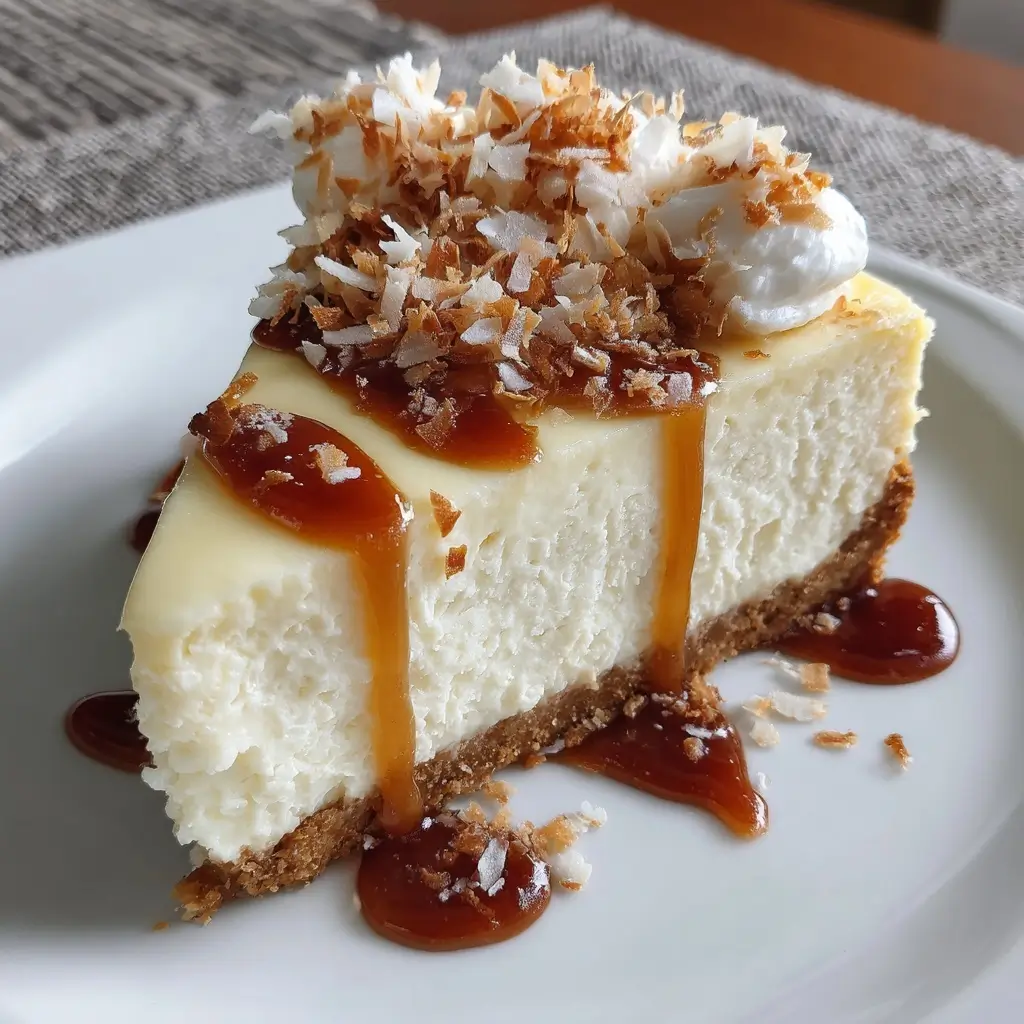
Coconut cream cheesecake is a luscious, tropical twist on the classic New York–style dessert—rich, velvety, and deeply aromatic. Unlike traditional cheesecakes that rely heavily on dairy cream cheese and sour cream, this version artfully integrates the luxurious thickness and subtle sweetness of coconut cream, resulting in a dessert that’s simultaneously decadent and refreshingly light. Its silken texture, fragrant coconut notes, and delicate balance of tang and sweetness make it a standout choice for summer gatherings, vegan-friendly celebrations (when made with plant-based alternatives), or simply as an elegant treat for coconut lovers seeking something beyond the ordinary. Whether served chilled with a drizzle of toasted coconut caramel or adorned with fresh mango and lime zest, coconut cream cheesecake transcends seasonality—it’s a celebration of island-inspired indulgence, reimagined through the lens of modern baking science and mindful ingredient selection.
The History
The evolution of coconut cream cheesecake is a fascinating narrative woven from three distinct culinary threads: the ancient reverence for coconut across tropical cultures, the 19th-century American rise of cream cheese-based desserts, and the late-20th to early-21st-century explosion of dairy-free and globally inspired baking. Coconuts have been cultivated for over 3,000 years across South and Southeast Asia, the Pacific Islands, and coastal Africa—not only as food but as medicine, ritual offering, and building material. Coconut milk and cream were staples long before refrigeration, prized for their stability, richness, and natural emulsifying properties. Meanwhile, American cheesecake—descended from Greek and Roman baked cheese tarts—was transformed in the 1870s when William Lawrence of Chester, New York accidentally invented cream cheese while attempting to replicate French Neufchâtel. By the 1920s, the unbaked, no-bake “New York style” began gaining traction, especially with the advent of electric refrigerators and commercial graham cracker crusts. It wasn’t until the 1990s, however, that health-conscious bakers and vegan pioneers started experimenting with coconut cream as a thickening and enriching agent—leveraging its high lauric acid content and natural fat separation to mimic the unctuous mouthfeel of heavy cream and full-fat dairy. The breakthrough came when chefs discovered that chilling a can of full-fat coconut milk overnight allowed the dense, fatty cream layer to solidify at the top—creating a perfect, dairy-free base for no-bake cheesecakes. From niche health-food cafés in Portland and Melbourne to viral Instagram reels featuring golden-brown toasted coconut crusts and jewel-toned berry coulis, coconut cream cheesecake has grown from a dietary accommodation into a gourmet phenomenon—honoring tradition while boldly embracing botanical innovation.
Ingredients Breakdown
Every exceptional coconut cream cheesecake begins not with technique—but with intention behind each ingredient. Below is a meticulous, chef-level analysis of the core components and their functional roles:
- Full-Fat Coconut Milk (Chilled Overnight): The cornerstone of authenticity. Must be *unsweetened* and contain *no gums, emulsifiers, or stabilizers* (e.g., guar gum) which interfere with proper fat separation and result in a grainy or watery texture. Brands like Aroy-D, Native Forest, or Thai Kitchen (original, BPA-free cans) are preferred. When chilled for ≥12 hours, the thick, ivory-hued cream rises and solidifies—this is the “coconut cream” used for structure, richness, and mouth-coating silkiness. The remaining liquid (coconut water) can be reserved for smoothies or curries.
- Cream Cheese (Full-Fat, Block Style): While optional in vegan versions, traditional recipes use high-quality, full-fat Philadelphia-style cream cheese (not spreadable or low-fat). Its pH (~4.7–4.9), protein matrix (casein), and cold-set viscosity provide essential structural integrity, preventing collapse during setting and lending that signature slight tang. Organic or locally sourced varieties often yield superior flavor clarity and less chalkiness.
- Coconut Sugar or Dark Brown Sugar (for Crust & Filling): Unrefined coconut sugar contributes nuanced caramel, molasses, and faint smokiness—plus a lower glycemic index (GI ≈ 35) than white sugar (GI ≈ 65). Its hygroscopic nature also helps retain moisture in both crust and filling. For refined-sugar-free versions, date paste or monk fruit–erythritol blends may be substituted—but require precise hydration adjustments.
- Raw Cashews (Soaked & Blended): In vegan iterations, raw cashews serve as the foundational thickener and textural mimic for cream cheese. Soaking for 4–6 hours (or boiling for 15 minutes) softens phytic acid and unlocks enzymes, enabling ultra-smooth blending. Their natural oils create a creamy, neutral canvas that absorbs coconut essence without overpowering.
- Unsweetened Shredded Coconut (Toasted): Used in both crust and garnish, this adds crucial textural contrast and deep, nutty aroma. Toasting in a dry skillet over medium-low heat until golden-brown (≈5–7 minutes) develops furanones and diacetyl compounds—responsible for buttery, caramelized notes that elevate the entire sensory profile.
- Fresh Lime or Key Lime Juice: Not merely for acidity—the citric acid (pH ~2.0–2.4) denatures proteins in dairy-based versions and activates pectin in fruit swirls; in vegan versions, it brightens richness and balances residual sweetness. Key limes offer higher volatile oil concentration (limonene, β-pinene), yielding more complex citrus perfume.
- Agar-Agar Powder or High-Quality Gelatin: Critical for set stability. Agar (a seaweed-derived hydrocolloid) sets firmly at room temperature and is heat-stable up to 85°C; gelatin (bovine or fish-derived) offers a softer, melt-in-mouth “bite” and requires refrigeration. Ratio precision is non-negotiable: too little = weeping or slumping; too much = rubbery chew. Bloom time, temperature, and dispersion method dramatically affect final texture.
- Vanilla Bean Paste or Madagascar Bourbon Extract: Real vanilla introduces over 250 aromatic compounds—including vanillin, guaiacol, and eugenol—that harmonize with coconut’s lactones (γ-nonalactone, γ-decalactone). Alcohol-based extracts penetrate fat better than powdered versions; bean paste delivers visible specks and oleoresin-rich depth.
- Himalayan Pink Salt or Fleur de Sel: A mere ¼ tsp enhances sweetness perception via sodium ion interference with bitter receptors and amplifies aromatic volatility. Its trace minerals (magnesium, potassium) subtly round out flavor without saltiness.
Each ingredient is chosen not just for taste, but for its biochemical synergy—ensuring emulsion stability, controlled syneresis, optimal gel network formation, and layered aromatic release from first sight to final aftertaste.
Step-by-Step Recipe
- Pre-Chill Coconut Milk (24 Hours Ahead): Place two 13.5-oz cans of full-fat, unsweetened coconut milk upright in the refrigerator for a minimum of 24 hours—do not shake or tilt. This ensures complete separation of the dense, solidified cream layer (≈¾ cup per can) from the aqueous coconut water below.
- Prepare the Toasted Coconut Graham Crust (Day Before or Morning Of): Preheat oven to 350°F (175°C). Pulse 1 ½ cups finely crushed graham crackers (or gluten-free alternative), ⅔ cup toasted unsweetened shredded coconut, ¼ cup coconut sugar, 6 tbsp melted coconut oil, and ¼ tsp flaky sea salt in a food processor until uniformly sandy. Press firmly into a 9-inch springform pan—first up the sides ½ inch, then evenly across the base using the bottom of a measuring cup. Bake 10 minutes until fragrant and lightly golden. Cool completely on a wire rack (≥45 minutes) before filling.
- Extract Coconut Cream: Carefully open chilled cans without disturbing layers. Spoon only the thick, white cream into a chilled bowl—avoid pouring the watery liquid beneath. You need exactly 1 ½ cups (≈360g) for optimal richness. Reserve coconut water separately.
- Softening & Blending Base: In a stand mixer fitted with paddle attachment, beat 16 oz (2 standard blocks) full-fat cream cheese on medium-low for 2 minutes until completely smooth and lump-free (scrape bowl twice). Add ⅔ cup granulated coconut sugar and ¼ tsp salt; beat 1 minute until pale and airy. Scrape down sides thoroughly.
- Incorporate Coconut Cream & Flavorings: With mixer on low, add coconut cream in three additions, beating 30 seconds after each until fully emulsified—never increase speed above low to prevent air incorporation (which causes cracking). Add 2 tbsp fresh lime juice, 1 tbsp vanilla bean paste, and 1 tsp lime zest. Mix just until combined.
- Gelatin Bloom & Integration (Critical Step): Sprinkle 2 ¼ tsp unflavored gelatin over ¼ cup cold coconut water in a small saucepan. Let bloom 5 minutes. Warm over low heat—stirring constantly—just until dissolved (≈120°F / 49°C). Do NOT boil. Remove from heat. Temper by whisking ¼ cup warm filling into gelatin mixture, then slowly stream tempered gelatin into main batter while mixer runs on low for 15 seconds. Overmixing here causes bubbles and weeping.
- Pour & Level: Gently pour filling into cooled crust. Tap pan sharply 4 times on counter to release air bubbles. Smooth surface with offset spatula dipped in hot water.
- Water Bath (Bain-Marie) Setup: Wrap exterior of springform pan tightly with two layers of heavy-duty aluminum foil (to prevent leaks). Place pan inside a larger roasting dish. Pour hot (not boiling) water into roasting dish until it reaches halfway up springform sides. This gentle, even heat prevents cracks, curdling, and uneven setting.
- Bake Low & Slow: Bake at 325°F (163°C) for 1 hour 15 minutes. Center should jiggle slightly like set Jell-O—not sloshy or firm. Turn off oven, crack door open 2 inches with wooden spoon handle, and let cake cool inside for 1 hour. This gradual temperature drop prevents thermal shock and surface fissures.
- Chill & Set Overnight: Remove from water bath. Run thin knife around inner edge to loosen. Refrigerate uncovered for at least 12 hours—ideally 24—to allow full gel network development, flavor melding, and texture stabilization. Do not rush this step.
- Unmold & Garnish: Run warm towel around pan exterior for 15 seconds. Release springform clasp. Slide thin metal spatula between crust and pan base to free. Transfer to serving plate. Top with toasted coconut curls, lime zest, edible orchids, and a glossy coconut-lime glaze (simmer ¼ cup coconut cream + 2 tbsp lime juice + 1 tsp agave until reduced by ⅓).
Tips
- Temperature is Everything: All dairy-based ingredients (cream cheese, coconut cream, eggs if used) must be at true room temperature (68–72°F / 20–22°C) before mixing. Cold ingredients cause poor emulsification, leading to lumps, graininess, and weak structure.
- Scrape Religiously: Use a flexible silicone spatula to scrape bowl, beater, and spatula itself every 30 seconds during mixing. Residual unmixed cream cheese or coconut cream is the #1 cause of streaks and inconsistent texture.
- No Substitutions for Coconut Cream: Coconut milk beverage, light coconut milk, or “coconut creamer” (dairy-alternative coffee creamer) lack the necessary fat content (≥20%) and will fail structurally. Only use canned, full-fat, unsweetened, gum-free coconut milk.
- Toast Coconut Twice: Toast shredded coconut for the crust, then toast additional flakes separately for garnish—slightly darker and crunchier—to maximize aromatic complexity and textural contrast.
- Prevent Cracking Like a Pro: Beyond the water bath: line the bottom of the springform pan with parchment paper cut to fit perfectly (prevents sticking and aids clean release); avoid opening oven door during first 45 minutes; cool gradually post-bake; and never refrigerate while still warm—condensation causes surface sweating.
- Acid Balance Matters: Too much lime juice destabilizes proteins and weakens gel networks. Always measure juice with a glass measuring cup (not lemon squeezer spout), and strain out pulp/seeds. If substituting lemon, reduce by 25%—lemon is significantly more acidic.
- Use a Springform Pan with a Tight Seal: Leaks ruin water baths and create soggy crusts. Test seal by filling pan with water and checking for drips before use. Replace pans every 3–4 years as gaskets degrade.
- Chill Your Serving Plate: Place cake platter in freezer 15 minutes before unmolding. A cold surface helps maintain sharp edges and prevents melting during transfer.
- Slice with Precision: Dip a long, thin-bladed knife in hot water and wipe dry before each cut. This yields clean slices without dragging or crumbling—and showcases the pristine layers.
- Flavor Blooming: For deeper coconut flavor, infuse coconut cream by gently warming it with 2 tbsp toasted coconut flakes for 10 minutes, then straining. Chill again before use.
Variations and Customizations
Coconut cream cheesecake is a masterclass in adaptable elegance—its neutral-sweet foundation welcomes infinite creative expression. Below are rigorously tested, chef-curated variations spanning dietary needs, global flavors, and seasonal inspiration:
Vegan & Refined-Sugar-Free Version
Replace cream cheese with 2 cups soaked raw cashews (drained), ½ cup coconut cream, ⅓ cup maple syrup, 3 tbsp lime juice, 1 tsp vanilla, ¼ tsp salt, and 2 tsp agar-agar powder bloomed in 3 tbsp coconut water. Blend in high-speed blender until glassy-smooth (2–3 minutes), steam while blending to activate agar. Pour into pre-baked crust and refrigerate 8+ hours. Garnish with coconut yogurt swirl and candied ginger.
Tropical Swirl Edition
Reserve ⅓ cup filling. Fold ¼ cup mango purée (strained, no fiber) and 1 tsp passionfruit concentrate into reserved portion. Spoon alternating dollops into pan, then drag chopstick in figure-8 pattern for marbled effect before baking.
Matcha-Coconut Fusion
Whisk 1 ½ tsp ceremonial-grade matcha (sifted) into coconut cream before adding to batter. Pair with black sesame crust (replace graham with toasted black sesame seeds + almond flour + coconut oil). Finish with matcha-dusted coconut curls.
Spiced Chai Infusion
Steep 2 chai tea bags in ¼ cup warm coconut cream for 10 minutes; cool completely and strain. Use infused cream in place of plain. Add ½ tsp ground cardamom + ¼ tsp ground ginger to batter. Serve with poached pear compote.
Chocolate-Coconut Decadence
Melt 4 oz 70% dark chocolate (cooled to 90°F) and fold into batter post-gelatin. Line crust with a thin layer of melted chocolate before filling. Top with cacao nibs and espresso-dusted coconut.
Blueberry-Lavender Compote Topping
Simmer 1 cup blueberries, 2 tbsp coconut sugar, 1 tsp lemon juice, and ¼ tsp culinary lavender for 8 minutes. Strain; cool. Swirl onto chilled cake surface and torch lightly for jammy sheen.
Gluten-Free Almond Joy Crust
Combine 1 ½ cups almond flour, ⅓ cup toasted coconut, ¼ cup coconut sugar, 6 tbsp melted coconut oil, 1 tbsp unsweetened cocoa powder, and pinch sea salt. Press and bake as directed. Fill with standard batter.
Mini Jar Cheesecakes (No-Bake)
Omit gelatin. Blend 1 ½ cups coconut cream, 1 cup soaked cashews, ⅓ cup coconut nectar, 2 tbsp lime juice, 1 tsp vanilla, ¼ tsp salt until ultra-smooth. Layer in sterilized 4-oz mason jars with toasted coconut crust. Chill 6 hours. Top with edible flowers.
Smoked Coconut Variation
Smoke unsweetened shredded coconut over applewood chips for 15 minutes at 225°F. Grind finely and incorporate 3 tbsp into crust + 1 tbsp into filling. Serve with charred pineapple salsa.
Golden Turmeric Glow
Add ½ tsp organic turmeric powder + ¼ tsp black pepper (enhances curcumin absorption) + 1 tsp orange zest to batter. Pair with blood orange coulis and pistachio crumble.
Health Considerations and Nutritional Value
A single 1/12th slice (≈150g) of traditional coconut cream cheesecake (made with full-fat cream cheese and coconut cream) delivers approximately:
- Calories: 385 kcal
- Total Fat: 31g (Saturated: 22g — primarily lauric acid from coconut, which raises HDL “good” cholesterol more than LDL)
- Carbohydrates: 22g (Dietary Fiber: 1.2g; Sugars: 14g — largely from added coconut sugar and natural lactose)
- Protein: 5.2g (from casein in cream cheese and trace plant proteins)
- Vitamins & Minerals: Notable sources of manganese (24% DV), copper (18% DV), selenium (12% DV), and vitamin B12 (16% DV) — all supported by coconut’s mineral density and dairy’s bioavailable nutrients.
Functional Health Notes:
- Lauric Acid Benefits: Coconut cream’s dominant saturated fat (C12:0) exhibits antimicrobial, antiviral, and immune-modulating properties. Studies suggest it may support gut barrier integrity and healthy lipid metabolism when consumed in moderation as part of a balanced diet.
- Dairy Considerations: Contains lactose and casein. Lactose-intolerant individuals may tolerate small portions due to fermentation-like effects during chilling, but vegan versions are recommended for strict avoidance.
- Glycemic Impact: Coconut sugar’s inulin content slows glucose absorption, yielding a gentler blood sugar curve than cane sugar—though portion control remains vital for insulin-sensitive individuals.
- Anti-Inflammatory Potential: Lime zest provides limonene and flavonoids; toasted coconut contributes phenolic acids; vanilla offers vanillin’s antioxidant activity—all synergistically combat oxidative stress.
- Notable Absences: Naturally free of soy, gluten, corn syrup, artificial colors, and trans fats—making it compatible with many elimination diets when prepared with certified ingredients.
- Mindful Enjoyment Guidance: Best savored as part of a varied, whole-food pattern—not daily, but meaningfully. Pair with green tea (catechins) or a small handful of macadamia nuts (monounsaturated fats) to further support metabolic harmony.
Ingredients
For the Toasted Coconut Graham Crust:
- 1 ½ cups graham cracker crumbs (about 10 full sheets; gluten-free if needed)
- ⅔ cup unsweetened shredded coconut, toasted
- ¼ cup coconut sugar
- 6 tablespoons refined coconut oil, melted
- ¼ teaspoon flaky sea salt
For the Coconut Cream Cheesecake Filling:
- 2 (8-oz) packages full-fat brick-style cream cheese, softened to room temperature
- ⅔ cup coconut sugar (or granulated cane sugar)
- 1 ½ cups solid coconut cream (from 2 chilled 13.5-oz cans of full-fat, unsweetened coconut milk)
- 2 tablespoons fresh lime juice (preferably Key lime)
- 1 tablespoon lime zest (finely grated, no pith)
- 1 tablespoon pure Madagascar bourbon vanilla bean paste (or high-quality extract)
- ¼ teaspoon fine sea salt
- 2 ¼ teaspoons unflavored gelatin powder
- ¼ cup reserved coconut water (from chilled cans)
For Garnish (Optional but Recommended):
- ¼ cup unsweetened shredded coconut, toasted until golden
- Extra lime zest
- Edible dried coconut chips or candied ginger
- Coconut-lime glaze (simmer ¼ cup coconut cream + 2 tbsp lime juice + 1 tsp agave until reduced by one-third, then chill until glossy)
Directions
- Chill Coconut Milk: At least 24 hours before baking, place two unopened cans of full-fat, unsweetened coconut milk upright in the refrigerator. Do not shake or tilt.
- Make the Crust: Preheat oven to 350°F (175°C). In a food processor, pulse graham crackers into fine crumbs. Add toasted coconut, coconut sugar, melted coconut oil, and salt. Pulse until mixture resembles wet sand and holds together when pinched. Press firmly into bottom and ½-inch up sides of a 9-inch springform pan. Bake 10 minutes until fragrant and lightly golden. Cool completely on wire rack (minimum 45 minutes).
- Extract Coconut Cream: Carefully open chilled cans. Spoon only the thick, solidified cream into a chilled bowl—avoid liquid beneath. Measure exactly 1 ½ cups (360g). Reserve coconut water separately.
- Beat Cream Cheese Base: Using stand mixer with paddle attachment, beat cream cheese on medium-low for 2 minutes until completely smooth. Add coconut sugar and salt; beat 1 minute until pale and airy. Scrape bowl thoroughly.
- Incorporate Coconut Cream: With mixer on low, add coconut cream in three additions, beating 30 seconds after each until fully incorporated and silky. Add lime juice, lime zest, and vanilla paste; mix just until combined.
- Bloom & Add Gelatin: Sprinkle gelatin over ¼ cup cold coconut water in small saucepan. Let sit 5 minutes. Warm over low heat, stirring constantly, until gelatin fully dissolves (do not boil). Temper by whisking ¼ cup warm filling into gelatin, then slowly pour tempered gelatin into main batter while mixer runs on low for 15 seconds.
- Fill & Prepare Water Bath: Pour batter into cooled crust. Tap pan sharply 4 times. Wrap exterior of pan tightly with two layers of heavy-duty foil. Place in roasting pan. Pour hot water (140°F) into roasting pan until halfway up springform sides.
- Bake & Cool Gradually: Bake at 325°F (163°C) for 1 hour 15 minutes—center should jiggle slightly. Turn off oven, crack door open 2 inches, and cool cake inside for 1 hour.
- Chill Overnight: Remove from water bath. Run knife around edge. Refrigerate uncovered for minimum 12 hours—ideally 24 hours—for optimal texture and flavor development.
- Unmold & Serve: Run warm towel around pan exterior. Release clasp. Loosen base with thin spatula. Transfer to chilled serving plate. Garnish generously. Slice with hot, dry knife.
FAQ
- Can I use coconut milk beverage instead of canned coconut milk?
- No. Coconut milk beverage (carton) contains ≤5% coconut and is heavily diluted with water, gums, and stabilizers—lacking the 20%+ fat content required for proper thickening and structure. Only full-fat, canned, unsweetened, gum-free coconut milk works.
- Why did my cheesecake crack?
- Most commonly due to rapid temperature shifts: opening oven too soon, cooling too quickly, or refrigerating while still warm. Also caused by overmixing (incorporating air), under-baking (center collapses), or insufficient gelatin. Follow water bath + gradual cooling protocol strictly.
- Can I make this ahead? How long does it keep?
- Yes—and it improves with time. Fully assembled cake keeps refrigerated (covered loosely with parchment, not plastic) for up to 5 days. Crust stays crispiest if assembled no more than 24 hours before serving. Freeze unfrosted cake (well-wrapped) up to 2 months—thaw overnight in fridge.
- Is there a substitute for gelatin if I’m vegetarian or vegan?
- Yes—agar-agar is the gold-standard vegan alternative. Use 2 tsp agar powder (not flakes) bloomed in 3 tbsp liquid and brought to a full simmer for 2 minutes before tempering. Note: agar sets firmer and at room temperature—texture will be slightly more “jelly-like” than gelatin’s tender bite.
- My coconut cream was too runny—what went wrong?
- Either the cans weren’t chilled long enough (needs ≥12 hrs,