Introduction
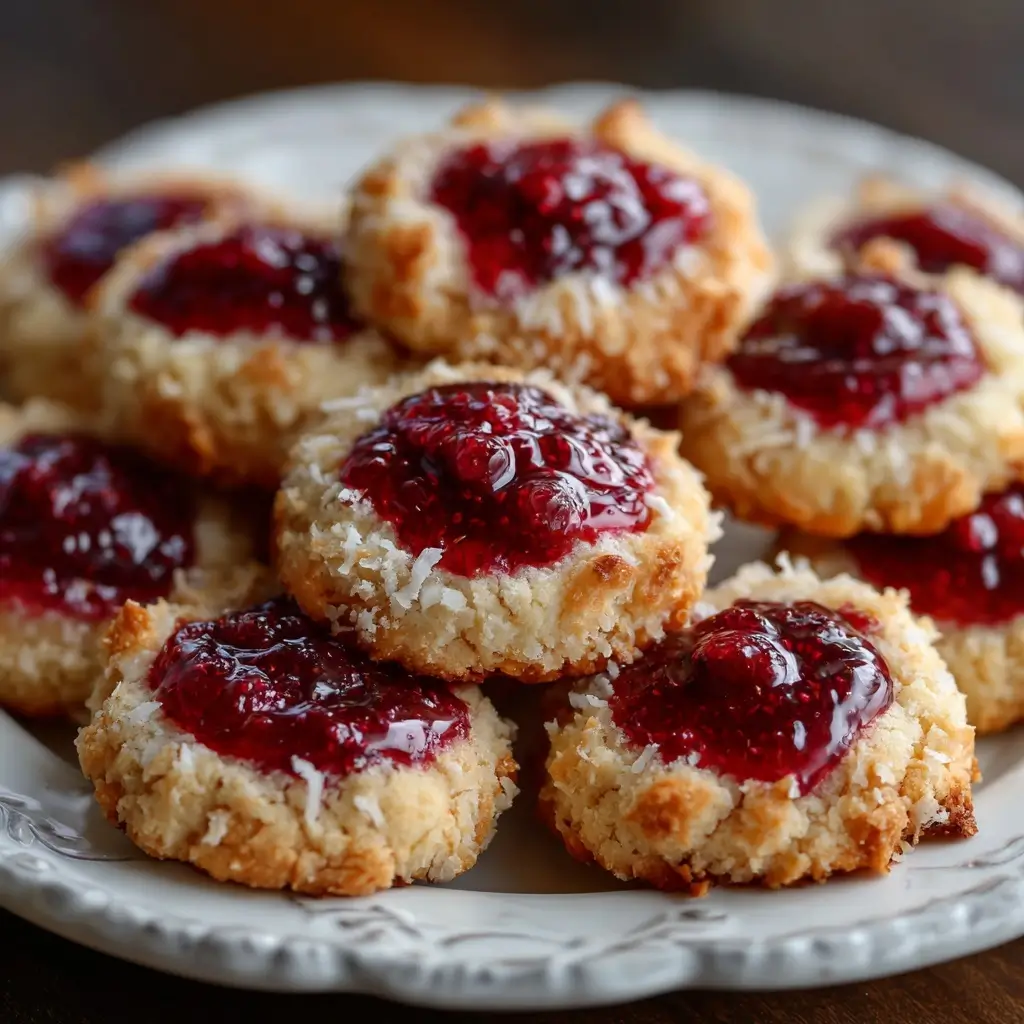
Raspberry Cheesecake Thumbprint Cookies are the perfect marriage of two beloved dessert classics: rich, creamy New York–style cheesecake and tender, buttery shortbread. These delicate, hand-pressed cookies feature a soft, crumbly cookie base, a luscious vanilla cream cheese filling, and a vibrant, jewel-toned raspberry jam center that bursts with tart-sweet flavor in every bite. Elegant yet approachable, they’re ideal for holiday platters, afternoon tea service, bridal showers, or simply as an indulgent treat to brighten any ordinary day. Their visual charm—golden cookie “frames” surrounding glossy red centers—makes them as photogenic as they are delicious, and their balanced sweetness ensures they’re never cloying. Whether you’re a seasoned baker or a curious beginner, these cookies offer a rewarding, fuss-free project that delivers restaurant-quality results from your own kitchen.
The History
Thumbprint cookies trace their origins back centuries—to medieval Europe, where bakers used their thumbs (or sometimes a wooden spoon handle) to create indentations in dense, spiced doughs before baking. These early versions were often filled with dried fruits, honey, or preserved jams and served during festive occasions. In Scandinavia, particularly Sweden and Finland, thumbprint-style cookies known as *hallongrotta* (raspberry caves) and *munkkikakku* became staples of *fika*, the cherished coffee-and-pastry tradition. The American adaptation surged in popularity during the mid-20th century, fueled by postwar ingredient accessibility (especially canned jellies and cream cheese), the rise of convenience baking, and iconic cookbooks like the 1959 edition of *The Joy of Cooking*. The fusion with cheesecake—a dessert with roots in ancient Greece but modernized in 19th-century New York—emerged more recently, likely in the 1980s–1990s, as home bakers began experimenting with hybrid desserts. Cream cheese’s natural tang and luxurious texture proved ideal for enriching traditional thumbprint fillings, transforming humble jam cookies into decadent, multi-layered confections. Today, Raspberry Cheesecake Thumbprint Cookies represent a joyful evolution of heritage baking—honoring tradition while embracing innovation, balance, and artisanal appeal.
Ingredients Breakdown
Every element in this recipe serves a precise functional and sensory purpose—no ingredient is arbitrary. Understanding the “why” behind each component empowers you to troubleshoot, adapt, and elevate your results:
- Unsalted Butter (1 cup, softened): Provides richness, tenderness, and flakiness. Softened—not melted—butter creams smoothly with sugar to trap air, aiding lift and structure. Unsalted allows full control over sodium content and prevents flavor interference.
- Granulated Sugar (¾ cup): Sweetens and aids creaming; its fine crystals cut into fat to create a light, airy crumb. Too much sugar can cause overspreading; too little yields bland, dense cookies.
- Cream Cheese (4 oz, full-fat, cold & cubed): The cornerstone of the cheesecake layer. Full-fat (not low-moisture or Neufchâtel) ensures proper richness, stability, and resistance to weeping or cracking. Cold cubes incorporate evenly without overheating the batter, preserving texture.
- Pure Vanilla Extract (1½ tsp): Adds aromatic depth and warmth. Real extract—not imitation—is non-negotiable for authentic flavor complexity.
- All-Purpose Flour (2¼ cups, spooned & leveled): Provides gluten structure for shape retention. Spooning and leveling prevents compaction and over-flouring, which leads to toughness. For gluten-free adaptations, a 1:1 certified GF blend with xanthan gum works well.
- Fine Sea Salt (½ tsp): Enhances all other flavors and balances sweetness. Fine grain dissolves seamlessly; coarse salt may leave gritty pockets.
- High-Quality Raspberry Jam (⅔ cup): Must be seedless or finely strained for smooth texture and vivid color. Avoid “fruit spreads” with added corn syrup or excessive water—they bubble, thin out, and lose intensity. Look for small-batch, pectin-set preserves with real fruit as the first ingredient.
- Optional Garnishes: A dusting of powdered sugar (sifted just before serving), a tiny fresh raspberry per cookie, edible gold flakes, or a drizzle of white chocolate ganache add elegance and contrast.
Step-by-Step Recipe
- Prep & Chill (30 min): Line two large baking sheets with parchment paper. In a small bowl, combine cold cream cheese cubes, granulated sugar (2 tbsp), and vanilla extract. Using a fork or small whisk, mash until smooth, creamy, and lump-free—about 1–2 minutes. Cover and refrigerate for at least 30 minutes. This firms the mixture for clean piping and prevents melting during baking.
- Cream Butter & Sugar (3 min): In a large bowl, beat softened unsalted butter and remaining granulated sugar with an electric mixer on medium speed until pale, fluffy, and doubled in volume—approximately 3 minutes. Scrape down the bowl halfway through.
- Incorporate Dry Ingredients (2 min): Sift together flour and salt. Gradually add to the butter-sugar mixture on low speed, mixing just until no dry streaks remain—about 60–90 seconds. Overmixing develops gluten and causes toughness. The dough will be soft, slightly crumbly, and hold together when squeezed.
- Chill Dough (1 hour): Divide dough in half. Shape each into a 1-inch-thick disc, wrap tightly in plastic wrap, and refrigerate for at least 1 hour (up to 3 days). Chilling solidifies fats, prevents spreading, and makes dough easier to roll and shape.
- Portion & Shape (10 min): Preheat oven to 325°F (163°C) with racks in upper and lower thirds. Scoop chilled dough using a 1-tbsp cookie scoop (≈18g per ball). Roll each into a smooth sphere, then gently flatten into a 1½-inch disc in the palm of your hand. Place on parchment-lined sheets, spacing 2 inches apart. Use your thumb (lightly floured to prevent sticking) or the back of a small measuring teaspoon to press a deep, centered indentation—about ¾ inch wide and ¼ inch deep—without tearing the edges.
- Fill & Bake (22–25 min): Spoon ½ tsp of chilled cream cheese mixture into each indentation, spreading gently to cover the base. Top with ¼ tsp raspberry jam—just enough to fill but not overflow. Bake 1 sheet at a time for 22–25 minutes, rotating halfway, until edges are lightly golden and centers appear set (jam should bubble gently at the edges, cream cheese layer matte—not shiny). Cool on sheets for 5 minutes, then carefully transfer to wire racks to cool completely—crucial for setting the jam and cream cheese layers.
Tips
- Butter Temperature Is Everything: Butter should be cool to the touch but yield slightly under gentle pressure—like softened cream cheese. Too warm? Dough becomes greasy and spreads. Too cold? It won’t cream properly and resists incorporation.
- Flour Measuring Matters: Never scoop flour directly from the bag with your measuring cup—it compacts and adds up to 25% extra flour. Instead, stir flour in its container, spoon loosely into the cup, and level with a straight edge.
- Thumbprint Depth & Consistency: Press firmly but gently. If the indentation closes up while baking, your dough was too warm or under-chilled. If it tears, your dough was too cold or overworked.
- Prevent Jam Boil-Overs: Use jam at room temperature—not straight from the fridge—to reduce thermal shock. Fill jam last, right before baking, and avoid overfilling. A tiny dab of jam on top of the cream cheese layer helps seal and prevents bubbling.
- Cooling Is Non-Negotiable: These cookies rely on carryover heat and gradual cooling to set their delicate layers. Removing them too soon causes jam to run and cream cheese to slump. Let them cool fully—minimum 45 minutes—before storing or serving.
- Baking Sheet Strategy: Use heavy-gauge, light-colored aluminum sheets. Dark sheets absorb heat and over-brown bottoms. Always bake one sheet at a time for even airflow and consistent browning.
- Freeze for Freshness: Unbaked, filled cookies freeze beautifully for up to 3 months. Place on a parchment-lined tray, freeze solid, then transfer to an airtight container. Bake frozen—add 1–2 minutes to bake time.
Variations and Customizations
These cookies are a versatile canvas—easily adapted for dietary needs, seasonal ingredients, or creative flair:
- Flavor Twists: Swap raspberry jam for blackberry, strawberry, apricot, or fig preserve. Add ¼ tsp almond extract to the cream cheese filling for a marzipan-like nuance. Stir 1 tbsp finely grated orange zest into the dough for brightness.
- Texture Enhancements: Fold ¼ cup finely chopped toasted pecans or pistachios into the dough for crunch. Sprinkle tops with crushed graham crackers, lemon sugar, or flaky sea salt before baking.
- Dietary Adaptations: Gluten-Free: Substitute 2¼ cups certified GF 1:1 baking flour (with xanthan gum). Vegan: Use vegan butter (Miyoko’s or Earth Balance), dairy-free cream cheese (Kite Hill or Tofutti), and maple-sweetened raspberry chia jam. Lower-Sugar: Replace granulated sugar with erythritol-based monk fruit blend (1:1) and use reduced-sugar jam (ensure it contains pectin for setting).
- Mini & Mega Versions: Make bite-sized “petite” thumbprints using 1-teaspoon dough portions (bake 14–16 min). Or go decadent with “jumbo” 2-tbsp portions and double-fill with cream cheese + jam (bake 28–32 min).
- Decorative Upgrades: After cooling, pipe a ring of stabilized whipped cream or mascarpone frosting around the jam. Drizzle with melted dark chocolate or raspberry coulis. Top with freeze-dried raspberry powder for intense color and tang.
- Alcoholic Infusion: Add 1 tsp Chambord (raspberry liqueur) to the jam or ½ tsp to the cream cheese filling for sophisticated depth—reduce vanilla by ¼ tsp to balance.
Health Considerations and Nutritional Value
While undeniably indulgent, these cookies can be enjoyed mindfully—with awareness and smart tweaks. A standard 2-inch cookie (approx. 45g) contains roughly:
- Calories: 180–200 kcal
- Total Fat: 10–12g (6–7g saturated)
- Carbohydrates: 20–22g (12–14g sugars)
- Protein: 2–3g
- Fiber: <1g (naturally low—enhance with whole wheat pastry flour or oat flour substitution)
Nutritional Highlights: Cream cheese contributes calcium and vitamin A; raspberries supply antioxidant-rich anthocyanins, vitamin C, and dietary fiber. Using high-pectin, low-sugar jam increases fruit concentration without refined sugar overload.
Considerations: High in saturated fat and added sugar—best enjoyed in moderation (1–2 cookies per sitting). Those managing diabetes should monitor portion size and pair with protein/fat (e.g., a handful of almonds) to slow glucose response. For heart health, consider replacing 2 tbsp butter with avocado oil in the dough—but note texture changes. Always read labels on store-bought jam and cream cheese for hidden sodium, preservatives, or stabilizers.
Mindful Enjoyment Tips: Serve alongside herbal tea or sparkling water with citrus. Freeze extras to prevent overconsumption. Share with loved ones—portion control happens naturally when cookies are gifted!
Ingredients
- 1 cup (227g) unsalted butter, softened to cool room temperature
- ¾ cup (150g) granulated sugar, divided
- 4 oz (113g) full-fat brick cream cheese, cold and cut into ½-inch cubes
- 1½ tsp pure vanilla extract
- 2¼ cups (281g) all-purpose flour, spooned and leveled
- ½ tsp fine sea salt
- ⅔ cup (180g) high-quality seedless raspberry jam (no corn syrup)
Directions
- Line two large baking sheets with parchment paper. In a small bowl, combine cold cream cheese cubes, 2 tablespoons of the granulated sugar, and vanilla extract. Mash vigorously with a fork until completely smooth and creamy, about 1–2 minutes. Cover and refrigerate for at least 30 minutes.
- In the bowl of a stand mixer fitted with the paddle attachment (or a large bowl with a hand mixer), beat softened butter and remaining granulated sugar on medium speed for 3 minutes, until pale, fluffy, and well combined. Scrape down sides as needed.
- Sift flour and salt together. With mixer on low speed, gradually add dry ingredients to butter mixture. Mix just until dough comes together and no dry streaks remain—about 60–90 seconds. Do not overmix.
- Divide dough in half. Shape each portion into a 1-inch-thick disc. Wrap tightly in plastic wrap and refrigerate for at least 1 hour (or up to 3 days).
- Preheat oven to 325°F (163°C) with racks positioned in upper and lower thirds. Scoop chilled dough using a 1-tablespoon cookie scoop (≈18g). Roll each into a smooth ball, then gently flatten into a 1½-inch disc in your palm. Place on prepared sheets, 2 inches apart.
- Using your lightly floured thumb or the back of a ½-teaspoon measure, press a deep, centered indentation into each disc—about ¾ inch wide and ¼ inch deep. Ensure edges remain intact.
- Remove chilled cream cheese mixture from fridge. Spoon ½ teaspoon into each indentation, spreading gently to cover the base. Top with ¼ teaspoon raspberry jam—just enough to fill without overflowing.
- Bake one sheet at a time for 22–25 minutes, rotating halfway through, until edges are lightly golden and centers appear set (jam bubbles gently at edges; cream cheese surface looks matte, not wet/shiny). Cool on baking sheets for 5 minutes.
- Using a thin metal spatula, carefully transfer cookies to wire racks. Cool completely—minimum 45 minutes—before storing or serving. Cookies keep in an airtight container at room temperature for up to 5 days, or frozen for up to 3 months.
FAQ
- Can I use low-fat cream cheese?
- No—low-fat or Neufchâtel cream cheese contains higher moisture and less fat, causing the filling to weep, separate, or fail to set properly. Full-fat is essential for texture and stability.
- Why did my cookies spread too much?
- Likely culprits: butter too warm, insufficient chilling of dough or cream cheese filling, or over-creaming the butter-sugar mixture. Also check your oven temperature with an oven thermometer—many run hot.
- Can I make the dough ahead?
- Absolutely! Chilled dough discs keep refrigerated for up to 3 days or frozen for up to 3 months. Thaw overnight in the fridge before portioning.
- My jam bubbled over and made a mess. How do I prevent that?
- Use room-temperature jam, fill only to the rim (not above), and ensure your cream cheese layer is cold and thick—not runny. Baking one sheet at a time also promotes even heat distribution and reduces boil-overs.
- Can I substitute lemon curd for the jam?
- Yes—but lemon curd is thinner and higher in moisture. Reduce amount to ⅛ tsp per cookie and chill curd thoroughly before filling. Expect slight settling—best for experienced bakers.
- How do I get perfectly round, uniform cookies?
- Use a cookie scoop for consistent sizing. Chill dough balls for 10 minutes before thumbprinting. Rotate sheets halfway through baking—and invest in an oven thermometer for accuracy.
- Are these cookies suitable for mailing or gifting?
- Yes! Layer cooled cookies between sheets of parchment in a rigid tin or box. They ship well for up to 5 days. Include a silica gel packet if shipping in humid climates to prevent stickiness.
- Can I add food coloring to the cream cheese layer?
- Yes—use gel-based food coloring (not liquid) to avoid thinning. Add drop by drop and mix thoroughly. Pink or pale rose complements raspberry beautifully.
Summary
Raspberry Cheesecake Thumbprint Cookies are an elegant, layered delight—featuring a tender buttery shortbread base, a luxuriously tangy vanilla cream cheese center, and a glossy, tart-sweet raspberry jam crown—all achieved through precise technique, quality ingredients, and mindful chilling. They embody timeless tradition reimagined with modern sophistication—perfect for special occasions or soul-soothing everyday moments.
With adaptable variations, thoughtful health considerations, and foolproof tips, this recipe invites both novice and expert bakers to create showstopping, deeply flavorful cookies that deliver on aroma, texture, visual allure, and nostalgic joy—every single time.