Introduction
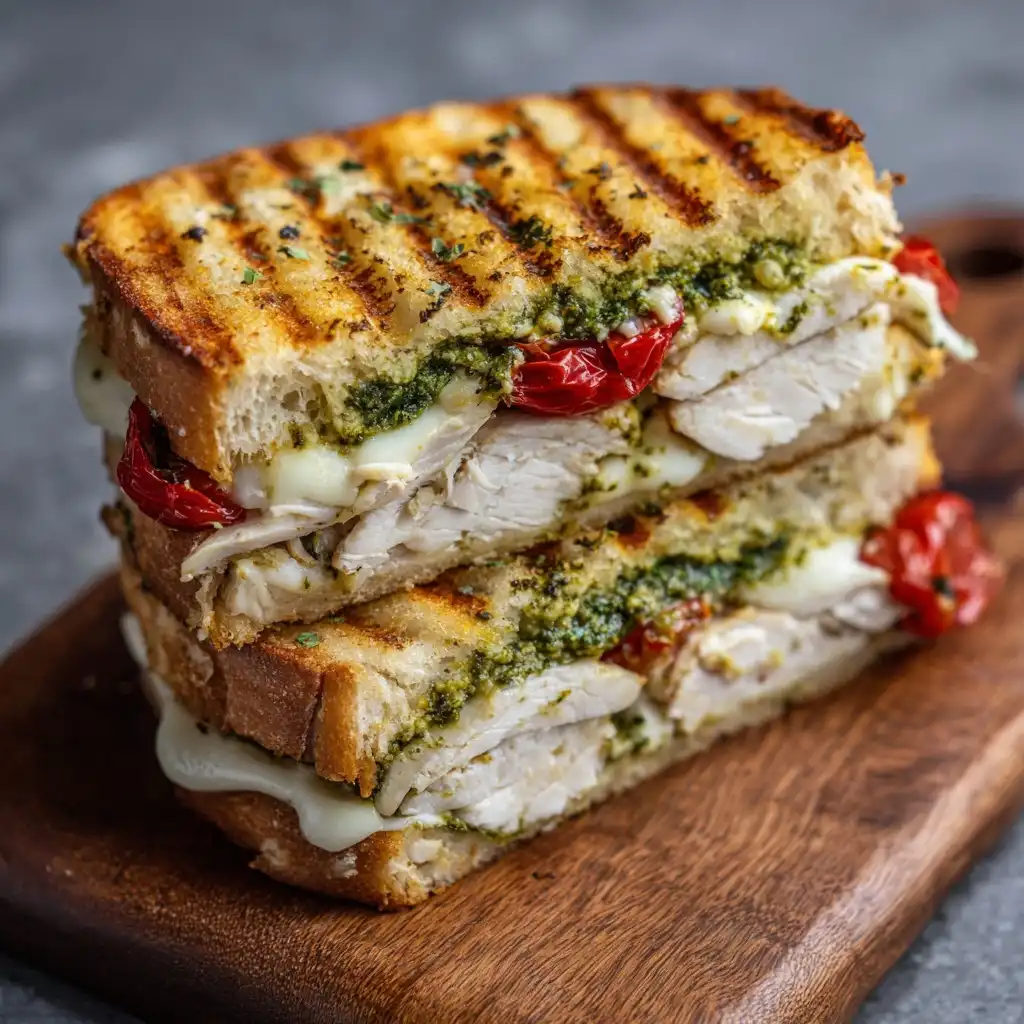
The Turkey Pesto Mozzarella Panini is a modern, gourmet twist on the classic grilled sandwich—elevating humble lunchtime fare into a symphony of savory, herbaceous, and creamy flavors. This beloved panini marries lean, tender roasted turkey breast with vibrant, aromatic basil pesto and rich, melt-in-your-mouth fresh mozzarella, all pressed between golden, crisp artisanal bread. Whether enjoyed as a quick weekday lunch, a satisfying picnic centerpiece, or an elegant appetizer at gatherings, this sandwich delivers restaurant-quality taste with comforting familiarity and effortless preparation. Its balanced profile—salty, herbal, creamy, and subtly nutty—makes it universally appealing while remaining adaptable to dietary preferences and seasonal ingredients.
The History
While the panini itself traces its roots to Italy—where “panino” (plural: panini) originally referred to any small sandwich made with Italian bread—the modern grilled, pressed version gained global prominence in the 1980s and ’90s, especially after American and Australian cafés adopted the panini press as a kitchen staple. Turkey, a relatively recent but now iconic addition to Italian-American deli culture, rose to prominence post–World War II as a lean, affordable, and versatile cold-cut alternative to cured meats like salami or prosciutto. Pesto Genovese, hailing from Genoa in Liguria, dates back to at least the 13th century, with early versions documented in Roman texts referencing similar garlic-and-herb pastes; its modern basil-walnut-pine nut-parmesan-olive oil incarnation solidified by the 19th century. Mozzarella di bufala has been crafted in Campania since at least the 12th century, though cow’s milk mozzarella (fior di latte) became more widely used in sandwiches due to accessibility and meltability. The convergence of these three ingredients—turkey, pesto, and mozzarella—into a pressed sandwich reflects the broader culinary trend of “fusion comfort food”: honoring tradition while embracing convenience, nutrition, and cross-cultural innovation. By the early 2000s, café menus across North America and Western Europe began featuring variations of this trio, cementing the Turkey Pesto Mozzarella Panini as a cornerstone of contemporary casual dining.
Ingredients Breakdown
Each component in this panini plays a distinct yet harmonious role—not just in flavor, but in texture, moisture balance, and structural integrity during grilling:
- Turkey Breast (Sliced): Opt for high-quality, minimally processed, oven-roasted turkey—preferably no-nitrate, low-sodium, and sliced about 1/8-inch thick. Its mild, slightly sweet flavor acts as the ideal canvas, while its firm-yet-tender texture holds up under heat without releasing excess water that could steam the bread instead of crisping it.
- Fresh Basil Pesto: Authentic pesto provides the aromatic heart of the sandwich. Made from fresh Genovese basil (not Thai or lemon basil), extra-virgin olive oil, pine nuts (or walnuts for economy), garlic, grated Parmigiano-Reggiano or Pecorino Romano, and a touch of lemon juice for brightness and pH balance—this emulsified sauce contributes herbaceous depth, healthy fats, and natural acidity that cuts through richness.
- Fresh Mozzarella: Use mozzarella fior di latte (cow’s milk) for optimal melt and creaminess—or, for a more luxurious experience, burrata (with its luscious stracciatella center). Avoid pre-shredded mozzarella, which contains anti-caking agents (like cellulose) that inhibit smooth melting and create graininess. Slicing or tearing mozzarella by hand preserves its delicate structure and moisture content, ensuring gooey pockets rather than rubbery sheets.
- Artisan Bread: A sturdy, medium-density loaf is essential. Ciabatta offers open crumb and chewy crust; sourdough provides tang and resilience; multigrain adds nuttiness and fiber. Avoid overly soft sandwich bread or dense rye—it either compresses too much or resists browning. Ideal slices are ½-inch thick, lightly toasted before assembly to reinforce structural integrity.
- Supporting Elements: A whisper of Dijon mustard adds subtle complexity and emulsifying power; a drizzle of high-quality olive oil enhances browning and sheen; flaky sea salt and freshly cracked black pepper elevate every bite. Optional additions include sun-dried tomatoes (oil-packed, patted dry), arugula (added post-grill for peppery freshness), or caramelized onions for umami depth.
Step-by-Step Recipe
- Prepare Ingredients: Remove mozzarella from brine (if packed in water); pat gently with paper towels to eliminate surface moisture. Slice into ¼-inch rounds or tear into irregular pieces. Let turkey come to room temperature for even heating. Bring pesto to room temperature for optimal spreadability.
- Toast Bread Lightly (Optional but Recommended): Place bread slices cut-side down in a dry skillet over medium-low heat for 60–90 seconds until faintly golden and slightly stiffened—this prevents sogginess and encourages crispness during pressing.
- Assemble the Sandwich: Lay one bread slice on a clean surface. Spread 1 tablespoon of pesto evenly over the surface, leaving a ¼-inch border. Add a thin layer of Dijon mustard (½ tsp) if using. Arrange 3–4 oz of turkey slices in a single, slightly overlapping layer. Top with 3–4 mozzarella slices (or torn pieces covering ~75% of surface). Sprinkle with a pinch of flaky salt and several turns of black pepper. Cap with second bread slice, pesto-side down.
- Press & Grill: Preheat a panini press, grill pan, or cast-iron skillet over medium heat (350°F / 175°C). Lightly brush both outer bread surfaces with olive oil (or use butter for richer browning). Place sandwich in press or skillet. If using a skillet, top with a weighted cast-iron press, foil-wrapped brick, or another heavy skillet. Press firmly and cook for 3–4 minutes per side—or until deeply golden brown, crisp, and the cheese is fully molten (check by gently lifting an edge with a spatula).
- Rest and Serve: Transfer panini to a wire rack for 60–90 seconds to allow residual steam to escape and cheese to set slightly—preventing messy oozing upon cutting. Slice diagonally with a serrated knife. Serve immediately, optionally garnished with micro basil, lemon zest, or a final drizzle of aged balsamic glaze.
Tips
- Moisture Control Is Everything: Excess water from mozzarella or pesto can make bread gummy. Always pat mozzarella dry, and if your pesto seems oily or separated, stir vigorously or add a pinch of grated cheese to re-emulsify.
- Temperature Matters: Cold ingredients lower the pan’s temperature, causing steaming instead of searing. Warm turkey and room-temp pesto/mozzarella ensure rapid, even melting and browning.
- Bread Thickness & Type: Too thin = brittle and burnt; too thick = doughy center. Stick to ½-inch slices. For gluten-free needs, choose certified GF ciabatta or sourdough with high xanthan gum content for elasticity.
- Pressing Pressure: Don’t over-compress—gentle, consistent pressure yields ideal texture. Over-pressing squeezes out flavorful oils and flattens the cheese into a greasy film.
- Grill Marks vs. Even Browning: Rotate the panini 90° halfway through cooking on a skillet to achieve crosshatch sear marks and uniform color.
- Make-Ahead Prep: Assemble sandwiches up to 2 hours ahead and refrigerate uncovered on parchment-lined tray (to prevent condensation)—but bring to room temp 15 minutes before grilling.
- Cheese Alternatives That Melt Well: Provolone, fontina, or smoked scamorza offer nuanced alternatives—avoid low-moisture mozzarella blocks unless shredded fresh (never pre-packaged).
Variations and Customizations
This panini serves as an endlessly adaptable template—ideal for seasonal rotation, dietary accommodations, or creative experimentation:
- Vegan Version: Swap turkey for marinated, grilled tofu or smoky tempeh “bacon”; use cashew-based basil pesto (soaked raw cashews, nutritional yeast, lemon, garlic, basil); replace mozzarella with house-made almond ricotta or store-bought vegan mozzarella shreds formulated for melting (e.g., Miyoko’s or Violife). Brush bread with vegan butter or olive oil.
- Gluten-Free Adaptation: Choose certified GF artisan bread (look for sorghum, teff, or brown rice blends with psyllium husk for chew); verify pesto and turkey are GF-certified (some brands use wheat-based thickeners or shared equipment).
- Keto/Low-Carb Option: Replace bread with large, grilled portobello mushroom caps or thinly sliced, blanched zucchini “bread” (salted, pressed, and patted dry). Increase healthy fats with extra pesto and avocado slices added post-grill.
- Mediterranean Twist: Add kalamata olives (pitted and chopped), crumbled feta, roasted red peppers, and a sprinkle of dried oregano. Substitute parsley for part of the basil in pesto.
- Spicy Southwest Style: Mix chipotle purée or adobo sauce into pesto; use pepper jack instead of mozzarella; add pickled jalapeños and grilled corn kernels.
- Breakfast Panini: Incorporate a thin, folded egg omelet or crispy fried egg; swap turkey for maple-glazed turkey sausage; add a smear of herbed cream cheese.
- Thanksgiving Leftover Remix: Use leftover roasted turkey thigh meat, cranberry-orange compote swirled into pesto, and sage-infused mozzarella.
- Herb-Forward Garden Edition: Fold in fresh spinach, heirloom tomato ribbons (seeded and salted to draw out moisture), and pesto blended with mint and tarragon.
Health Considerations and Nutritional Value
A well-crafted Turkey Pesto Mozzarella Panini can be a nutrient-dense, balanced meal—especially when mindful ingredient choices are prioritized:
- Protein Powerhouse: Turkey breast provides ~25g high-quality complete protein per 3-oz serving—supporting muscle maintenance, satiety, and metabolic function. It’s naturally low in saturated fat and rich in B vitamins (B3, B6, B12), selenium, and zinc.
- Heart-Healthy Fats: Extra-virgin olive oil (in pesto and for brushing) supplies monounsaturated fats, polyphenols (oleocanthal, hydroxytyrosol), and vitamin E—linked to reduced inflammation, improved endothelial function, and LDL cholesterol modulation.
- Calcium & Probiotics: Fresh mozzarella offers bioavailable calcium (~200mg per oz), phosphorus, and—in traditionally cultured versions—live lactic acid bacteria beneficial for gut microbiota diversity.
- Antioxidant-Rich Herbs: Basil contains flavonoids (orientin, vicenin), volatile oils (eugenol), and beta-carotene—shown in studies to support cellular defense, cognitive health, and blood sugar regulation.
- Considerations & Mitigations:
- Sodium: Deli turkey and cheese can be high in sodium. Counteract with low-sodium turkey, unsalted mozzarella, and homemade pesto (skip added salt; rely on lemon and garlic for seasoning).
- Calorie Density: Olive oil and cheese contribute healthy but concentrated calories. Portion control (1 panini = ~550–700 kcal depending on bread size and oil use) and pairing with a leafy green side salad balances energy density.
- Food Safety: Refrigerate assembled but uncooked panini no longer than 2 hours; never leave cooked panini at room temperature >2 hours. Reheat only once to 165°F internally.
- Allergen Awareness: Pine nuts (in traditional pesto) are tree nuts; walnuts are common substitutes but also allergenic. Sunflower seed pesto offers a safe, nutrient-rich alternative rich in vitamin E and magnesium.
- Nutritional Snapshot (Approximate per Standard Panini, 8″ ciabatta, 4 oz turkey, 3 oz mozzarella, 2 tbsp pesto, 1 tsp olive oil):
Calories: 620 | Protein: 42g | Total Fat: 36g (Saturated: 13g) | Carbohydrates: 32g (Fiber: 2g, Sugar: 2g) | Sodium: 980mg | Calcium: 580mg | Iron: 3.2mg | Vitamin A: 25% DV | Vitamin C: 12% DV | Potassium: 620mg
Ingredients
- 2 (½-inch-thick) slices artisan ciabatta, sourdough, or multigrain bread
- 3–4 tablespoons high-quality fresh basil pesto (homemade preferred)
- 3–4 ounces thinly sliced, high-quality roasted turkey breast (no nitrates, low sodium)
- 3–4 ounces fresh mozzarella fior di latte, drained and patted dry
- ½ teaspoon Dijon mustard (optional, for complexity)
- 1 teaspoon extra-virgin olive oil (for brushing)
- ¼ teaspoon flaky sea salt (such as Maldon)
- Freshly ground black pepper (6–8 turns)
- Optional garnishes: micro basil, lemon zest, arugula, aged balsamic reduction
Directions
- Arrange all ingredients at room temperature. Drain mozzarella thoroughly and gently blot with paper towel—do not squeeze.
- Lightly toast bread slices in a dry skillet over medium-low heat for 60–90 seconds per side until just beginning to firm and dry slightly. Set aside to cool 1 minute.
- Spread 1½ tablespoons pesto evenly over one toasted bread slice, leaving a ¼-inch border. Add Dijon mustard if using. Layer turkey slices evenly, folding slightly for coverage. Top with mozzarella slices, overlapping slightly. Season with salt and pepper. Cover with second bread slice, pesto-side down.
- Brush outer surfaces of sandwich lightly but evenly with olive oil—this ensures golden color, crisp crust, and prevents sticking.
- Preheat panini press or cast-iron skillet over medium heat (350°F / 175°C) for 3 minutes. Place sandwich in press and close gently—or in skillet, cover with weighted press or heavy pan.
- Grill 3–4 minutes, checking at 3 minutes: bread should be deep golden brown with defined grill marks, and cheese should be visibly melted when peeked at the edge. Flip and repeat on second side if using skillet method.
- Transfer to wire rack. Rest 90 seconds—critical for cheese stabilization and steam release.
- Cut diagonally with sharp serrated knife. Serve immediately, garnished as desired.
FAQ
- Can I make this panini without a panini press?
- Absolutely. A heavy-bottomed cast-iron or stainless-steel skillet works beautifully. Place sandwich in hot, oiled skillet, then top with another heavy skillet or foil-wrapped brick. Press gently but firmly and cook over medium heat—flipping once for even browning.
- Why does my mozzarella not melt smoothly?
- Common causes include: (1) Using low-moisture or pre-shredded mozzarella (anti-caking agents inhibit melt); (2) Cold cheese straight from the fridge (lowers pan temp); (3) Overcrowding the pan (steams instead of sears); (4) Insufficient heat (melting requires sustained 325–350°F). Always use fresh, room-temp, hand-sliced mozzarella.
- Can I prepare the pesto ahead of time?
- Yes—homemade pesto keeps for up to 1 week refrigerated in an airtight container with a thin layer of olive oil on top to prevent oxidation. For longer storage, freeze in ice cube trays (up to 6 months); thaw overnight in fridge before use.
- Is there a way to add vegetables without making the panini soggy?
- Yes—use only low-moisture, pre-treated veggies: sun-dried tomatoes (oil-packed, patted dry), roasted eggplant or zucchini (cooled and pressed), caramelized onions (well-drained), or baby spinach (massaged with lemon juice to soften cell walls). Avoid raw tomatoes or cucumbers unless seeded, salted, and thoroughly blotted.
- Can I use store-bought pesto?
- You can—but read labels carefully. Many commercial pestos contain preservatives (potassium sorbate), fillers (xanthan gum), or inferior oils (soybean or canola). Look for short ingredient lists: basil, olive oil, nuts, cheese, garlic, lemon juice, salt. Refrigerated sections often yield fresher, higher-quality options than shelf-stable jars.
- How do I prevent the bread from burning before the cheese melts?
- Lower the heat slightly and extend press time. Ensure your pan or press is properly preheated—not scorching hot—and that bread isn’t overly thin or dry. Brushing with oil (not butter, which browns faster) helps regulate browning. If needed, cover loosely with foil for first 2 minutes to trap gentle heat for melting, then uncover to crisp.
- Can I freeze assembled, uncooked panini?
- Not recommended—freezing degrades bread texture (causing freezer burn and sogginess) and causes mozzarella to weep excessively upon thawing. Instead, prep components separately: portion turkey, slice mozzarella, and freeze pesto in cubes. Assemble and grill fresh.
- What wine or beverage pairs best with this panini?
- A crisp, citrus-driven white such as Vermentino, Pinot Grigio, or Sauvignon Blanc complements the herbaceous notes and cuts richness. For red lovers, try a chilled, low-tannin Barbera or light Gamay. Non-alcoholic pairings: sparkling lemon water with basil, chilled green tea with mint, or unsweetened tart cherry juice.
Summary
The Turkey Pesto Mozzarella Panini is a masterclass in intentional simplicity—where premium, minimally processed ingredients converge under precise heat to deliver layered textures, vibrant aromatics, and deeply satisfying umami balance.
With endless customization potential, strong nutritional foundations, and accessible techniques, it transcends the category of “sandwich” to become a versatile, nourishing, and celebratory expression of modern home cooking—equally at home in a sunlit kitchen, a bustling café, or a picnic blanket beneath summer trees.