Introduction
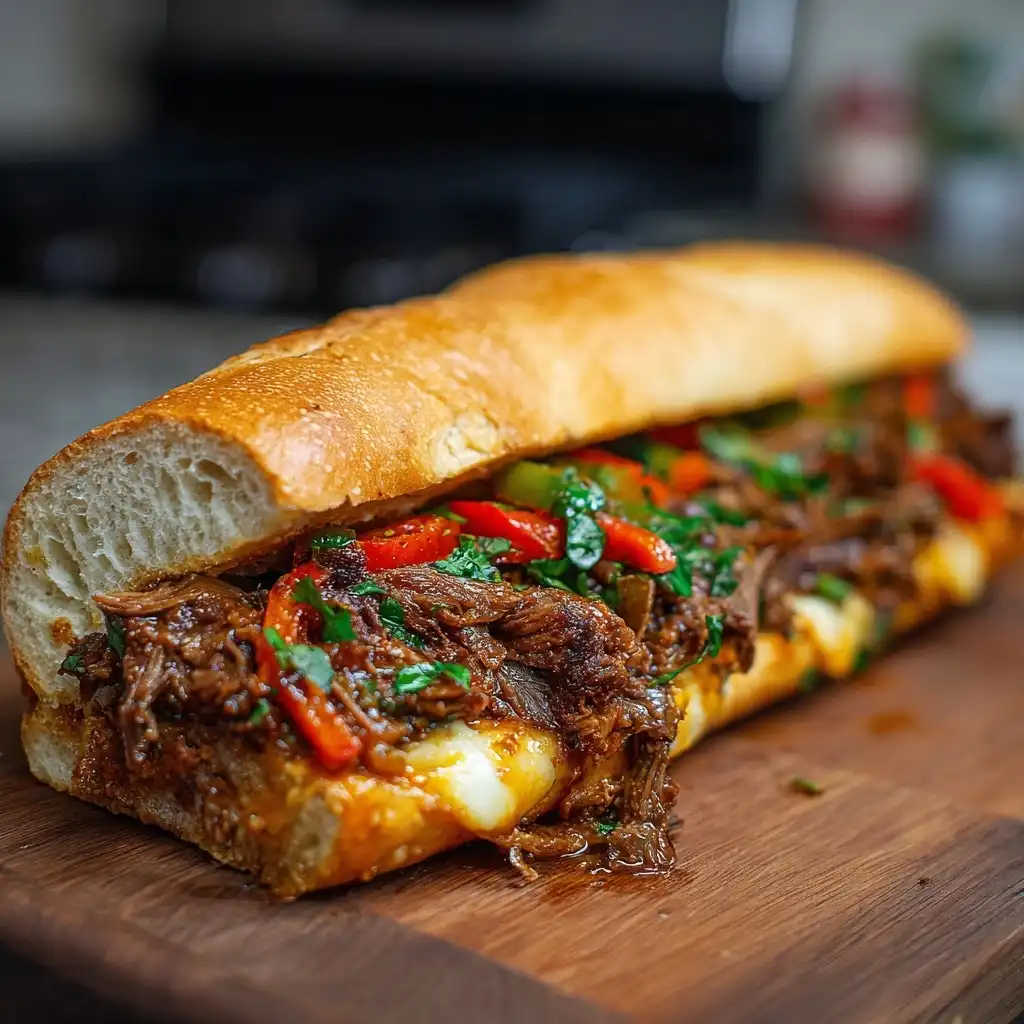
The Philly-Style Beef Sandwich—more commonly known as the Philadelphia Cheesesteak—is an iconic American sandwich born from the vibrant, blue-collar roots of Philadelphia, Pennsylvania. More than just a meal, it’s a cultural institution: a symphony of thinly sliced, sautéed ribeye beef, melted cheese, and caramelized onions, all cradled in a soft yet sturdy hoagie roll. While purists may debate the “correct” toppings or cheese, one thing remains undisputed—the cheesesteak embodies authenticity, simplicity, and soul-satisfying comfort. Whether enjoyed at a decades-old corner stand with paper-wrapped foil or crafted carefully at home, this sandwich tells a story of resourcefulness, community, and culinary pride. This guide dives deep into every facet of the Philly-Style Beef Sandwich—not only how to make it faithfully but also how to understand its legacy, adapt it thoughtfully, and appreciate its place in both food history and modern wellness-conscious kitchens.
The History
The origins of the Philly cheesesteak trace back to the early 1930s in South Philadelphia, when brothers Pat and Harry Olivieri—a hot dog vendor—experimented with grilling chopped beef on their flat-top grill and serving it on an Italian roll. Legend has it that a taxi driver passing by caught the irresistible aroma, ordered the impromptu creation, and immediately requested more—prompting the brothers to pivot entirely from hot dogs to steak sandwiches. By 1933, they opened Pat’s King of Steaks (originally “Pat’s Hot Dogs”) near Passyunk Avenue, cementing the birthplace of the cheesesteak. The addition of cheese came later—reportedly in the 1940s—when a customer asked for American cheese to be added, and the idea stuck. Provolone soon followed, and by the 1950s and ’60s, the rivalry between Pat’s and Geno’s Steaks (founded in 1966 across the street) transformed the cheesesteak into a national phenomenon. Over time, regional interpretations emerged—from New Jersey’s “steak wit’” (with fried onions and peppers) to Chicago’s grilled-onion-heavy versions—but true Philadelphians uphold strict tenets: ribeye (never sirloin or round), a long, soft, slightly chewy Amoroso roll (baked fresh daily in Philly), and cheese applied directly onto the sizzling meat so it melts seamlessly into the fibers. The sandwich was even granted official recognition: in 2008, then-Mayor Michael Nutter declared the cheesesteak the city’s official sandwich, and in 2022, the “Philly Cheesesteak Trail” was launched by the Philadelphia Convention & Visitors Bureau to celebrate over 30 historic and beloved locations.
Ingredients Breakdown
Every element of an authentic Philly-Style Beef Sandwich serves a precise functional and sensory role—no ingredient is arbitrary. Below is a meticulous breakdown of each component, including why it matters and what to look for:
- Ribeye Steak (1 lb, thinly sliced): Ribeye is non-negotiable for its ideal marbling—enough fat to render and create rich flavor and juiciness without greasiness. Look for “shaved” or “sandwich-cut” ribeye from your butcher (frozen and partially thawed ribeye is easiest to slice paper-thin at home). Avoid pre-packaged “cheesesteak meat”—it’s often leaner cuts like top round that dry out and lack depth.
- Hoagie Roll (4 rolls, 6–8 inches long): Not just any sub roll will do. Authentic Philly rolls are soft, airy, and slightly sweet, with a thin, tender crust—Amoroso’s brand is the gold standard, baked fresh daily in Philadelphia using a proprietary blend of flour, water, yeast, and honey. Alternatives include Sarcone’s or local bakery equivalents; avoid dense, overly crusty, or sesame-seeded rolls, which overwhelm the delicate balance.
- Cheese (8–12 oz total): The three canonical options are American (for meltability and nostalgic tang), provolone (mild, creamy, and slightly nutty), or Cheez Whiz (the ultra-smooth, shelf-stable processed cheese sauce that defined the 1960s–’80s era and remains beloved for its velvety texture and umami punch). A hybrid “whiz wit’ provolone” or “American-provolone blend” is increasingly popular. Note: Real cheddar, mozzarella, or feta are not traditional and disrupt authenticity.
- Yellow Onions (1 large, thinly sliced): Sweet yellow onions caramelize beautifully on the griddle, adding natural sweetness, moisture, and aromatic depth. Red onions offer sharper bite (used sparingly); white onions are acceptable but less nuanced. Never skip—the onions aren’t just topping; they’re a foundational layer that steams the meat and binds the flavors.
- Beef Tallow or Clarified Butter (3 tbsp): Traditional Philly griddles use beef tallow for unparalleled richness and high-heat stability. At home, clarified butter (ghee) or a blend of butter + neutral oil (like canola or grapeseed) works best—regular butter burns too easily. Avoid olive oil (low smoke point) or margarine (off-flavors).
- Worcestershire Sauce (1 tsp): A secret umami amplifier—just enough to deepen savoriness without tasting “sauce-y.” Low-sodium versions work well for health-conscious cooks.
- Garlic Powder (½ tsp) & Black Pepper (¼ tsp, freshly ground): Subtle background notes—no garlic cloves or onion powder, which muddy the clean, meat-forward profile.
- Salt (¾ tsp, kosher or sea salt): Applied in two stages: lightly on raw meat before cooking (to draw out moisture and season deeply), and a final pinch post-melting for brightness.
Optional—but highly recommended for authenticity: “Steak sauce” or “Philly-style gravy” (a light, savory pan reduction made from reserved meat juices, a splash of beef broth, and a touch of cornstarch)—served on the side for dipping, never poured on top.
Step-by-Step Recipe
This method replicates the high-heat, fast-paced rhythm of a professional Philly griddle—adapted for home stovetops without sacrificing integrity. Yield: 4 sandwiches.
- Prep the Meat: Place 1 lb ribeye (partially frozen) on a cutting board. Using a very sharp chef’s knife, slice *against the grain* into paper-thin strips (~1/16-inch thick). Stack 3–4 slices at a time and cut into 1-inch pieces. Transfer to a bowl. Sprinkle with ½ tsp kosher salt and ¼ tsp black pepper. Gently toss—do not knead. Refrigerate uncovered for 15 minutes (this firms up the meat for better sear).
- Prep the Aromatics: Halve and thinly slice 1 large yellow onion (¼-inch half-moons). Soak slices in ice water for 5 minutes to mellow harshness; drain and pat *very* dry with paper towels. Dryness = better caramelization, not steaming.
- Heat the Griddle or Skillet: Place a heavy 12-inch cast-iron skillet or flat griddle over medium-high heat for 5 minutes until shimmering hot (a drop of water should skitter and evaporate instantly). Add 1½ tbsp beef tallow or clarified butter. Swirl to coat.
- First Sear – Onions: Spread onions in a single layer. Cook undisturbed for 90 seconds to develop fond. Stir, reduce heat to medium, and cook 4–5 minutes, stirring every 60 seconds, until golden-brown and jammy—but *not* burnt. Transfer to a bowl lined with paper towels; set aside. Wipe skillet clean with a dry cloth (critical—excess onion residue causes sticking).
- Second Sear – Beef: Return skillet to medium-high. Add remaining 1½ tbsp tallow/butter. Once foaming subsides, add beef in *one even layer*—do not crowd. Let sear untouched for 60 seconds. Flip with a wide metal spatula and cook 45 seconds more. Break up clumps gently—do not stir constantly. You want light browning, not gray boiling.
- Combine & Melt: Push beef to one side. Immediately add reserved onions to the empty side. Spoon 2 tbsp of the cooked onions *over* the beef. Sprinkle with Worcestershire, garlic powder, and remaining ¼ tsp salt. Stir *once* to combine—then stop moving. Let sit 20 seconds to build steam and meld flavors.
- Cheese Application: Immediately scatter shredded cheese (or dollop Cheez Whiz) evenly over the hot beef-onion mixture. Cover skillet *tightly* with a lid or aluminum foil for 30 seconds—trapping steam to melt cheese into the meat, not just on top. For provolone or American, peek at 25 seconds; for Cheez Whiz, 20 seconds is perfect.
- Toast the Rolls: While cheese melts, split hoagie rolls lengthwise *without cutting all the way through*—leave a hinge. Lightly butter the *cut sides*, then toast cut-side-down on the griddle/skillet over medium heat for 60–90 seconds until golden and crisp but still pliable. Do *not* over-toast—the roll must hold juicy filling without disintegrating.
- Assemble with Precision: Using the spatula, lift generous portions of cheesy beef mixture (including all rendered juices and fond) and mound into each roll. Fold the top flap over gently. Serve immediately—no wrapping, no resting. Optional: drizzle 1 tsp of reserved meat jus or Philly-style gravy alongside for dipping.
Tips
- Freeze for Slicing Success: Place ribeye in freezer for 45–60 minutes before slicing. Firm-but-not-frozen meat yields clean, ultra-thin cuts—essential for tenderness and rapid cooking.
- The “Steam-Lock” Technique: Covering the skillet during cheese-melting isn’t optional—it creates instant steam that melts cheese *into* the beef, creating a cohesive, sliceable mass (not loose shreds). No lid? Use a large inverted baking sheet.
- Roll Integrity Matters: If your hoagie rolls are too soft, briefly warm them in a 300°F oven for 3 minutes before toasting—this strengthens the crumb structure to prevent sogginess.
- Griddle Temp is Everything: Too cool = boiled, gray meat. Too hot = burnt onions and scorched cheese. Use an infrared thermometer: ideal surface temp is 375–400°F. When in doubt, test with a small piece of beef—it should sizzle violently and brown in under 30 seconds.
- No “Dripping” Allowed: Authentic Philly cheesesteaks have minimal visible grease. Blot excess tallow from onions before adding to beef. After melting cheese, tilt skillet and spoon off any pooled fat—retain only the glossy, emulsified juices.
- Work in Batches—Never Double the Batch: Cooking more than 1 lb at once drops pan temperature drastically, causing steaming instead of searing. Make multiple small batches for consistent results.
- Season Early, Season Late: Salt the raw meat to enhance flavor penetration, but reserve a final micro-pinching of flaky salt *after* assembly—this brightens the entire bite and balances richness.
- Keep It Cold, Serve It Scalding: Serve within 90 seconds of assembly. The contrast of hot, melty interior and just-toasted, yielding roll is irreplaceable. Pre-plating or holding degrades texture irreversibly.
Variations and Customizations
While tradition reigns supreme, thoughtful adaptations keep the Philly cheesesteak relevant across diets, regions, and palates—without betraying its spirit:
- The “Wit’” Classics: “Steak wit’ onions” is standard. “Steak wit’ onions and peppers” adds ½ cup sautéed green bell peppers (julienned, cooked separately in same tallow). “Steak wit’ mushrooms” uses 1 cup cremini, sliced thin and cooked until deeply browned—adds earthy umami. Note: “Wit’” always means *included*, never “on top.”
- Low-Carb/Keto Version: Substitute ribeye with grass-fed flank steak (higher protein, lower fat), omit onions (or use 2 tbsp roasted shallots), and serve in a low-carb cloud bread “roll” or wrapped in butter lettuce. Use full-fat Cheez Whiz or aged provolone; skip sugar-laden sauces.
- Vegetarian “Philly-Style”: Replace beef with king oyster mushrooms (shaved lengthwise, then seared until chewy and browned) + textured vegetable protein (TVP) rehydrated in beef bouillon. Sauté with onions, Worcestershire, and smoked paprika. Melt provolone or vegan mozzarella. Serve on toasted whole-grain hoagie.
- Gourmet Upscale: Use dry-aged ribeye, house-made Cheez Whiz infused with truffle oil and roasted garlic, caramelized shallots + pickled red onions for acidity, and a roll brushed with duck fat before toasting. Garnish with micro-cress and flaky Maldon salt.
- Spicy Kick: Add 1 tsp Calabrian chili paste to the beef while searing—or fold in 2 tbsp pickled jalapeños *after* cheese melts. Avoid generic “hot sauce,” which clashes with the sandwich’s harmony.
- Breakfast Cheesesteak: Add 2 scrambled eggs (cooked separately, folded into the beef mixture just before cheese) and swap American for sharp cheddar. Serve on a potato roll.
- Gluten-Free: Use certified GF hoagie rolls (like Canyon Bakehouse or Schar) and verify Worcestershire is GF (Lea & Perrins US version contains malt vinegar—opt for GF brands like The Wizard’s or Coconut Secret). Toast rolls in dedicated GF toaster.
- Meal-Prep Friendly: Cook and portion beef-onion mixture (uncheesed) in vacuum-sealed bags. Freeze up to 3 months. Thaw overnight, then melt cheese per batch. Toast rolls fresh daily.
Health Considerations and Nutritional Value
A traditionally prepared Philly-Style Beef Sandwich (1 sandwich, ~8 oz ribeye, provolone, onions, Amoroso roll) averages approximately 720–850 calories, with 42–50g protein, 38–45g carbohydrates (mostly from roll), and 36–42g total fat (15–18g saturated). While indulgent, its nutritional profile is more balanced than many assume—especially when contextualized:
- Protein Powerhouse: Ribeye provides complete protein, heme iron (highly bioavailable), zinc, B12, and creatine—supporting muscle maintenance, energy metabolism, and immune function. A single sandwich delivers >75% of the RDA for B12 and ~30% for iron.
- Onions’ Phytonutrient Boost: Yellow onions contain quercetin (a potent anti-inflammatory flavonoid), allicin precursors (supporting cardiovascular health), and prebiotic fiber (inulin) that feeds beneficial gut bacteria. Caramelizing preserves most nutrients while enhancing antioxidant capacity.
- Smart Fat Choices: Ribeye’s monounsaturated fats (oleic acid) mirror those in olive oil—linked to reduced LDL cholesterol. Choosing grass-fed beef increases omega-3s and conjugated linoleic acid (CLA), associated with metabolic benefits.
- Roll Realities: Amoroso rolls are enriched flour-based, offering B vitamins and iron—but low in fiber. Opt for 100% whole-grain hoagie alternatives (e.g., Ezekiel sprouted grain) to add 5–7g fiber per sandwich, slowing glucose absorption and increasing satiety.
- Cheese Considerations: Provolone offers calcium and protein with moderate sodium (~220mg/slice); American is higher in sodium (~350mg) but lower in saturated fat. Cheez Whiz contains added phosphates and preservatives—limit to occasional use. Vegan cheeses often lack protein and add processed oils.
- Mindful Modifications: Reduce sodium by omitting added salt and using low-sodium Worcestershire; cut saturated fat by trimming visible fat from ribeye (though marbling is key for flavor); boost fiber with spinach or arugula added post-melting (a Philly “green wit’” trend); control portions by using 6-inch rolls or splitting one sandwich.
- Who Should Moderate? Those with hypertension should monitor sodium (choose provolone, skip extra salt); individuals managing diabetes benefit from pairing with non-starchy veg (e.g., side salad) and choosing whole-grain rolls; people with lactose intolerance can opt for aged provolone (naturally low-lactose) or lactase-treated cheese.
Bottom line: The Philly cheesesteak is not “unhealthy”—it’s nutrient-dense *when made intentionally*. Its reputation stems from portion size and frequency, not inherent flaws. Enjoyed mindfully—1–2x monthly as part of a varied diet—it aligns comfortably with Mediterranean, DASH, or flexible healthy eating patterns.
Ingredients
- 1 pound ribeye steak, partially frozen and shaved into paper-thin slices (ask your butcher or slice yourself)
- 4 authentic Philadelphia-style hoagie rolls (Amoroso’s preferred, 6–8 inches long)
- 8 ounces provolone cheese, thinly sliced or coarsely grated (or 1 cup Cheez Whiz, or 8 oz American cheese slices)
- 1 large yellow onion, halved and sliced into thin half-moons
- 3 tablespoons beef tallow, clarified butter (ghee), or high-heat oil blend (e.g., 1½ tbsp ghee + 1½ tbsp canola)
- 1 teaspoon Worcestershire sauce (low-sodium if preferred)
- ½ teaspoon garlic powder
- ¾ teaspoon kosher salt, divided (½ tsp for meat, ¼ tsp for finishing)
- ¼ teaspoon freshly ground black pepper
Optional for serving: Reserved meat jus (“Philly gravy”), extra black pepper, flaky sea salt.
Directions
- Prepare the ribeye: Place on a cutting board and slice against the grain into very thin strips (~1/16 inch thick), then cut into 1-inch pieces. Place in a bowl, sprinkle with ½ tsp kosher salt and ¼ tsp black pepper, and gently toss. Refrigerate uncovered for 15 minutes.
- Prepare the onions: Slice the onion thinly. Soak in ice water for 5 minutes, then drain thoroughly and pat completely dry with paper towels.
- Heat a 12-inch heavy skillet or griddle over medium-high heat for 5 minutes until very hot. Add 1½ tbsp tallow or clarified butter and swirl to coat.
- Add onions in a single layer. Cook undisturbed for 90 seconds, then stir and cook 4–5 minutes over medium heat until deeply golden and soft. Transfer to paper towels to drain; wipe skillet clean.
- Return skillet to medium-high heat. Add remaining 1½ tbsp tallow/butter. Once shimmering, add beef in one even layer. Sear untouched for 60 seconds, flip, and cook 45 seconds more.
- Push beef to one side; add reserved onions to the other side. Spoon 2 tbsp onions over beef. Add Worcestershire, garlic powder, and remaining ¼ tsp salt. Stir once, then let sit 20 seconds.
- Evenly distribute cheese over beef-onion mixture. Cover skillet tightly with lid or foil for 30 seconds to steam-melt cheese into the meat.
- Meanwhile, split hoagie rolls lengthwise, leaving hinge intact. Lightly butter cut sides and toast cut-side-down on griddle for 60–90 seconds until golden and crisp.
- Lift generous portions of cheesy beef mixture (including all juices) and mound into each toasted roll. Fold top flap over gently. Serve immediately, optionally with 1 tsp reserved jus for dipping.
FAQ
- Q: Can I use sirloin or flank steak instead of ribeye?
- A: Technically yes—but strongly discouraged. Sirloin lacks marbling and becomes tough and dry. Flank is lean and fibrous; even thinly sliced, it chews differently and lacks the unctuous mouthfeel essential to authenticity. Ribeye’s intramuscular fat renders into flavor and tenderness—non-negotiable for true texture.
- Q: Why can’t I use regular butter?
- A: Regular butter contains milk solids that burn at high temperatures (smoke point ~350°F), creating acrid, bitter flavors and blackened residue. Clarified butter (ghee) or tallow has a smoke point of ~485°F, allowing proper searing without burning.
- Q: Is Cheez Whiz “real” cheese?
- A: Technically no—it’s a pasteurized processed cheese product containing whey, vegetable oils, and emulsifiers. But culturally? It’s 100% real Philly. Introduced in the 1950s, it became synonymous with speed, consistency, and that signature velvety pull. Many iconic stands (like Tony Luke’s original location) built legacies on Whiz. It’s tradition—not a shortcut.
- Q: How do I prevent soggy rolls?
- A: Three keys: (1) Toast rolls *after* cooking beef—never ahead of time; (2) Blot onions *thoroughly* before adding to beef; (3) Assemble and serve within 90 seconds—no waiting. The roll should be crisp outside, tender inside—not soaked.
- Q: Can I make this gluten-free?
- A: Yes—with caveats. Use certified GF hoagie rolls (check labels for hidden barley/malt), GF Worcestershire, and verify cheese contains no gluten-derived additives (rare but possible in processed varieties). Toast in a dedicated GF toaster or clean skillet.
- Q: What’s the difference between a “Philly cheesesteak” and a “steak sandwich”?
- A: A “steak sandwich” is generic—a steak on bread with toppings. A “Philly cheesesteak” is a protected regional preparation: ribeye only, thin-sliced, cooked on flat griddle with onions, melted cheese integrated *into* the meat (not layered), served on specific soft hoagie roll, and assembled to order. No ketchup, mustard, lettuce, or tomato—those are “not Philly.”
- Q: Can I freeze leftovers?
- A: Yes—but only the uncheesed beef-onion mixture. Portion into airtight containers or vacuum bags and freeze up to 3 months. Thaw overnight in fridge, then reheat in skillet and add fresh cheese. Never freeze assembled sandwiches—the roll turns rubbery and cheese separates.
- Q: Why do some places serve it “wit’” and others “wit-out”?
- A: “Wit’” (slang for “with”) refers to onions being cooked *into* the meat—not placed on top. “Wit-out” means no onions at all (rare and considered sacrilegious by many). Even “steak and cheese” implies onions are included unless explicitly stated otherwise.
Summary
The Philly-Style Beef Sandwich is a masterclass in intentional simplicity—where premium ribeye, slow-caramelized onions, melty cheese, and a perfectly toasted hoagie roll converge under high heat to create something greater than the sum of its parts.
It’s not just food; it’s heritage on a roll—rooted in working-class ingenuity, refined by decades of passionate iteration, and endlessly adaptable without losing its soul.