Introduction
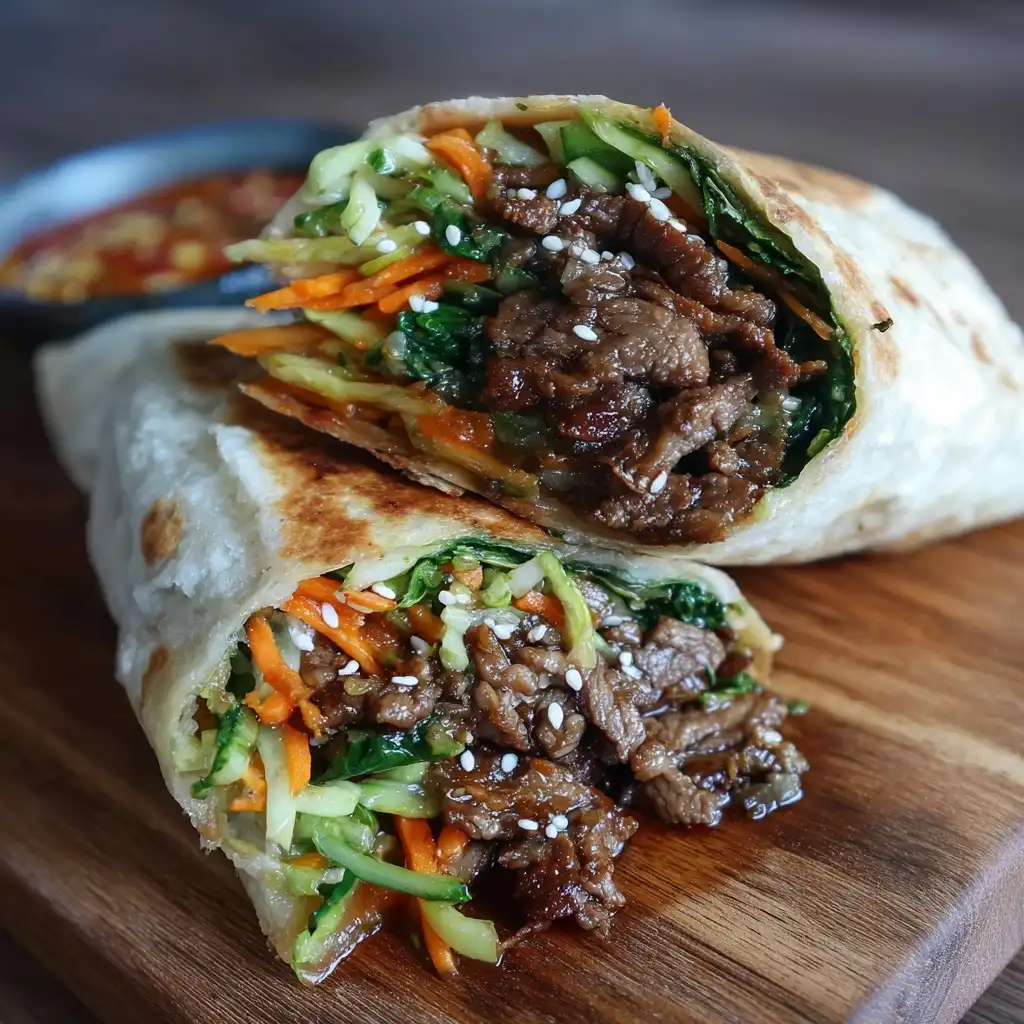
Korean Bulgogi Beef Wrap is a vibrant, modern fusion dish that marries the deep umami richness of traditional Korean bulgogi with the portable, customizable convenience of a wrap format. Born from the global rise of Korean cuisine—fueled by K-pop, Korean dramas, and culinary innovation—this dish transforms tender, marinated beef into a handheld delight, wrapped in soft, pliable tortillas or Korean-style ssam wraps (like lettuce or perilla leaves). It’s more than just a meal—it’s an experience: sweet-savory, subtly smoky, gently spicy, and texturally dynamic, with crisp vegetables, creamy sauces, and chewy-caramelized beef all coming together in every bite. Whether served at a bustling food truck, a family dinner table, or as meal-prep lunch for the week, the Korean Bulgogi Beef Wrap embodies balance, bold flavor, and cultural storytelling through food.
The History
Bulgogi—literally meaning “fire meat” in Korean—dates back to the Goguryeo era (37 BCE–668 CE), where thinly sliced beef was marinated and grilled over open flames, a technique originally reserved for royalty and aristocrats due to the scarcity and value of beef in agrarian Korea. Over centuries, bulgogi evolved alongside Korea’s socio-economic landscape: post-Korean War industrialization brought wider access to soy sauce and sugar, refining the marinade into its now-iconic sweet-savory profile. The 1980s and ’90s saw bulgogi gain international recognition as Korean immigration surged across North America and Europe—often adapted to local palates with increased sweetness and milder heat. The “wrap” iteration emerged organically in the early 2010s within Korean-American food trucks and fusion restaurants, responding to demand for portable, deconstructed, and customizable meals. Chefs began pairing bulgogi with flour tortillas, whole-wheat wraps, or traditional ssam (leafy vessels like red leaf lettuce, butter lettuce, or wild sesame/perilla leaves—kkaennip) to honor both Korean dining customs (ssambap, the art of wrapping) and Western fast-casual trends. Today, the Korean Bulgogi Beef Wrap stands as a delicious testament to culinary adaptation, cross-cultural dialogue, and the universal love of eating with your hands.
Ingredients Breakdown
Every component of the Korean Bulgogi Beef Wrap plays a purposeful role—not just in flavor, but in texture, temperature, contrast, and nutrition. Let’s unpack them:
- Beef: Traditionally, chadolbaegi (brisket) or ussamgyeop (ribeye) are preferred for bulgogi due to their ideal fat-to-lean ratio, which yields tenderness and rich mouthfeel when thinly sliced and quickly cooked. For wraps, top sirloin or flank steak work beautifully—more affordable, leaner, yet still flavorful when properly marinated and not overcooked.
- Marinade Base: Soy sauce provides saltiness and umami depth; brown sugar or Korean pear juice (bae) adds natural sweetness and tenderizing enzymes; minced garlic and ginger deliver aromatic pungency and warmth; toasted sesame oil contributes nutty complexity and aroma; green onions add freshness and subtle bite.
- Acid & Brightness: Rice vinegar or apple cider vinegar balances sweetness and cuts richness; a splash of mirin enhances sweetness while adding subtle fermented depth.
- Heat Element: Gochujang (fermented Korean chili paste) introduces layered heat—sweet, spicy, funky, and deeply savory. Optional gochugaru (Korean chili flakes) adds gentle, smoky heat and vivid red color.
- Wrap Vessel: Flour tortillas (8–10 inch) offer soft pliability and neutral canvas; whole-wheat or spinach tortillas add fiber and earthiness; gluten-free rice paper or coconut wraps accommodate dietary needs. For authenticity, use large, crisp ssam leaves—butter lettuce cups provide cool crunch; perilla leaves (kkaennip) lend minty-anise notes and digestive benefits.
- Fresh Toppings: Shredded purple cabbage adds color, crunch, and anthocyanin antioxidants; julienned carrots bring sweetness and beta-carotene; quick-pickled radishes (mu saengchae) or cucumbers offer tang and brightness; fresh cilantro or scallions contribute herbal lift.
- Creamy Elements: Spicy mayo (sriracha + Kewpie mayo), sesame-ginger yogurt, or avocado crema cools heat, enriches texture, and bridges flavors.
- Garnishes: Toasted white or black sesame seeds add nuttiness and visual appeal; additional drizzle of sesame oil or gochujang glaze intensifies aroma and finish.
Step-by-Step Recipe
Yield: 4 servings (2 wraps per person)
Prep time: 30 minutes (plus 2–24 hours marinating)
Cook time: 12–15 minutes
Total time: ~35 minutes active + marinating
- Prepare the Bulgogi Marinade: In a blender or food processor, combine ½ cup low-sodium soy sauce, ⅓ cup brown sugar (or ¼ cup maple syrup for refined sugar-free), 3 tbsp Korean pear puree (or grated Asian pear/apple), 3 minced garlic cloves, 1 tbsp freshly grated ginger, 2 tbsp rice vinegar, 1 tbsp toasted sesame oil, 1 tbsp mirin, 1 tbsp gochujang, and ½ tsp black pepper. Blend until smooth. Taste and adjust—add a pinch of red pepper flakes if you prefer more heat, or 1 tsp honey for extra gloss.
- Marinate the Beef: Slice 1.5 lbs (680 g) beef (top sirloin or ribeye) against the grain into thin, ¼-inch-wide strips. Place in a large non-reactive bowl or resealable bag. Pour marinade over beef, ensuring every piece is coated. Seal and refrigerate for minimum 2 hours—but ideally 8–12 hours (overnight yields optimal tenderness and flavor penetration). Do NOT exceed 24 hours, as the acidity and enzymes may begin to “cook” the beef and turn it mushy.
- Prep Fresh Components: While beef marinates, julienne 1 cup purple cabbage, ½ cup carrots, and ½ cup English cucumber. Thinly slice 4 green onions on diagonal. Make quick-pickle: toss 1 cup thinly sliced daikon or radish with 2 tbsp rice vinegar, 1 tsp sugar, and pinch of salt—let sit 15+ minutes. Wash and dry 16 large butter lettuce leaves or 8–12 perilla leaves. Prepare sauce: whisk together ½ cup Kewpie mayo, 1 tbsp gochujang, 1 tsp lime juice, and ½ tsp toasted sesame oil.
- Cook the Bulgogi: Heat 1 tbsp neutral oil (grapeseed or avocado) in a wide cast-iron skillet or stainless steel pan over medium-high heat until shimmering. Drain beef well—discard excess marinade (do not pour into pan—it will burn). Working in batches to avoid steaming, sear beef in single layer for 1.5–2 minutes per side, stirring only once, until edges caramelize and centers are just cooked through (slightly pink is ideal for tenderness). Avoid overcrowding—this ensures Maillard reaction, not boiling. Transfer to a clean plate; tent loosely with foil.
- Warm Wraps & Assemble: Lightly toast tortillas (15–20 sec per side in dry skillet) or warm briefly in microwave wrapped in damp paper towel. Lay flat. Spoon ¼ of beef down center, leaving 1-inch border. Top with 2 tbsp pickled radish, ¼ cup cabbage-carrot mix, 2–3 cucumber ribbons, 2–3 perilla or lettuce leaves (if using double-wrap method), and 1 tbsp spicy mayo. Garnish with sliced scallions and ½ tsp toasted sesame seeds.
- Wrap Technique: Fold bottom edge up over filling, then fold left and right sides inward. Roll tightly away from you, tucking as you go—like a burrito—to seal. Optional: secure with parchment paper sling or toothpick. Serve immediately—or wrap in parchment + foil for grab-and-go portability.
Tips
- Slice with Precision: Partially freeze beef (45–60 minutes) before slicing—it firms up, allowing for paper-thin, uniform cuts essential for quick, even cooking.
- Marinade Math: For deeper flavor, add 1 tsp fish sauce (optional but traditional in some regional bulgogi) or 1 tbsp Korean plum extract (maesil cheong) for bright acidity.
- Control the Caramel: If marinade burns during cooking, reduce heat slightly and add 1 tsp water to deglaze pan mid-cook—scrape up fond for extra flavor.
- Texture Contrast is Key: Always include something crunchy (cabbage), something tangy (pickles), something creamy (spicy mayo), and something aromatic (sesame, scallion, perilla).
- Don’t Skip the Rest: Let cooked beef rest 2–3 minutes before assembling—this allows juices to redistribute, preventing soggy wraps.
- Make-Ahead Magic: Marinate beef up to 24 hours ahead; prep veggies and sauce up to 3 days ahead (store separately); cook beef day-of or up to 2 days ahead—reheat gently in skillet with 1 tsp water to retain moisture.
- Grill Option: For authentic smokiness, grill beef over medium-hot charcoal or gas—use a grilling basket to prevent falling through grates.
- Low-Sodium Swap: Use coconut aminos instead of soy sauce and reduce added salt—balance with extra pear and ginger for depth.
- Freeze-Friendly: Cooked bulgogi freezes exceptionally well for up to 3 months—thaw overnight in fridge before reheating.
- Perfect Sear Secret: Pat beef *very* dry before cooking—even after draining marinade. Surface moisture is the enemy of caramelization.
Variations and Customizations
This recipe is endlessly adaptable—here’s how to make it your own:
- Protein Swaps: Try thinly sliced chicken thigh (marinate 1–3 hours), pork belly (blanch first to remove excess fat), marinated tofu or tempeh (press well, use tamari + miso base), or even king oyster mushrooms (slice lengthwise, marinate 30 min, grill or pan-sear).
- Vegan/Vegetarian Bulgogi: Replace beef with 2 cups shredded oyster or shiitake mushrooms + 1 cup shredded young green jackfruit. Boost umami with 1 tbsp nutritional yeast + 1 tsp liquid smoke in marinade.
- Gluten-Free Version: Use tamari or certified GF soy sauce; opt for GF tortillas (corn, cassava, or almond flour-based) or double up on large butter lettuce or steamed napa cabbage leaves.
- Spice Level Spectrum: Mild: omit gochujang/gochugaru, add 1 tsp grated apple. Medium: keep recipe as written. Fiery: add 1 tsp gochugaru + ½ tsp gochujang powder + dash of Sichuan peppercorn oil.
- Breakfast Bulgogi Wrap: Add a runny-yolk fried egg, crumbled crispy bacon, and kimchi relish—swap soy for low-sodium tamari and reduce sugar by half.
- Deconstructed “Bowl” Style: Skip the wrap—serve bulgogi over brown rice or quinoa with same toppings + nori strips, edamame, and soft-boiled egg.
- Meal Prep Friendly: Portion bulgogi + toppings into 4 glass containers. Store sauce separately. Assemble day-of for maximum freshness and crunch.
- Kids’ Version: Omit gochujang, increase pear and honey, add mild shredded cheddar or mozzarella, and serve with fun-shaped whole-grain wraps.
- Low-Carb/Keto Adaptation: Use large romaine or iceberg lettuce cups, increase healthy fats (avocado slices, toasted walnuts), swap sugar for erythritol or monk fruit blend (½ tsp), and boost sesame oil to 1.5 tbsp.
- Global Fusion Twists: Mexican-Korean: add black beans, corn, lime crema, and cotija. Hawaiian: pineapple chunks, macadamia nuts, and lilikoi aioli. Mediterranean: tzatziki, kalamata olives, and roasted red peppers.
Health Considerations and Nutritional Value
A thoughtfully prepared Korean Bulgogi Beef Wrap can be a nutrient-dense, balanced meal—especially when mindful ingredient choices and portion control are applied. Here’s a detailed nutritional breakdown per serving (1 wrap with 3.75 oz beef, 1 whole-wheat tortilla, ½ cup veggies, 1 tbsp spicy mayo, and garnishes):
- Calories: ~480–520 kcal (varies with tortilla type and oil usage)
- Protein: ~32–36 g (high-quality complete protein from beef; supports muscle repair, satiety, and metabolism)
- Fat: ~22–26 g (mostly unsaturated—sesame oil, avocado mayo, beef marbling; includes heart-healthy omega-6 and modest omega-3s)
- Carbohydrates: ~38–42 g (fiber-rich from whole-wheat tortilla and raw vegetables; low glycemic impact due to vinegar and protein/fat content)
- Dietary Fiber: ~7–9 g (supports gut health, blood sugar regulation, and digestive regularity)
- Vitamins & Minerals: Excellent source of iron (heme iron from beef), zinc, vitamin B12, selenium, vitamin K (from greens), vitamin A (beta-carotene in carrots), and vitamin C (from cabbage, radish, scallions). Fermented gochujang provides beneficial probiotics and digestive enzymes.
- Sodium Consideration: Naturally moderate (~580–650 mg/serving) when using low-sodium soy sauce and no added salt—well below FDA daily limit (2,300 mg). Monitor if using store-bought gochujang (some contain added sodium).
- Sugar Awareness: Total sugar ~9–12 g per wrap—primarily from natural sources (pear, carrots, cabbage) and minimal added sweeteners. Easily reduced by halving brown sugar and relying on pear enzyme for tenderness.
- Anti-Inflammatory Benefits: Ginger and garlic contain potent compounds (gingerol, allicin); sesame oil has sesamin and sesamol antioxidants; cruciferous cabbage delivers sulforaphane; perilla leaves are rich in rosmarinic acid.
- Dietary Accommodations: Naturally dairy-free, nut-free (unless added), and easily made soy-free (coconut aminos), gluten-free, or paleo (lettuce wrap). Ideal for high-protein, Mediterranean, or flexitarian diets.
- Portion Guidance: For weight management, consider 1 wrap + side miso soup or seaweed salad. For athletes or active individuals, add ½ avocado or 1 tbsp hemp seeds for sustained energy.
Ingredients
- 1.5 lbs (680 g) boneless beef top sirloin or ribeye, very thinly sliced against the grain
- ½ cup low-sodium soy sauce (or tamari for GF)
- ⅓ cup packed dark brown sugar (or ¼ cup pure maple syrup)
- ⅓ cup Korean pear puree (or grated Asian pear or Fuji apple)
- 3 large garlic cloves, minced
- 1 tbsp fresh ginger, finely grated
- 2 tbsp unseasoned rice vinegar
- 1 tbsp toasted sesame oil
- 1 tbsp mirin (or dry sherry)
- 1 tbsp gochujang (Korean chili paste)
- ½ tsp freshly ground black pepper
- 1 tbsp neutral high-heat oil (avocado, grapeseed, or refined coconut)
- 4 large whole-wheat or spinach tortillas (8–10 inch), or 16 butter lettuce leaves, or 8–12 perilla leaves
- 1 cup shredded purple cabbage
- ½ cup matchstick-cut carrots
- ½ cup thinly sliced English cucumber
- 1 cup quick-pickled radish or daikon (see Tips)
- 4 green onions, thinly sliced on diagonal
- 2 tbsp toasted white or black sesame seeds
For Spicy Mayo Sauce:
- ½ cup Kewpie mayonnaise (or vegan mayo)
- 1 tbsp gochujang
- 1 tsp fresh lime or yuzu juice
- ½ tsp toasted sesame oil
- Pinch of garlic powder (optional)
Directions
- In a high-speed blender or food processor, combine soy sauce, brown sugar, pear puree, garlic, ginger, rice vinegar, sesame oil, mirin, gochujang, and black pepper. Blend on high for 45 seconds until completely smooth and emulsified. Taste and adjust—add a splash of water if too thick; more pear for sweetness, more vinegar for brightness, or more gochujang for depth and heat.
- Place sliced beef in a large non-reactive bowl or gallon-sized resealable bag. Pour marinade over beef, using hands or tongs to coat thoroughly. Seal and refrigerate for at least 2 hours—or ideally 8–12 hours (up to 24 hours max).
- At least 30 minutes before cooking, prepare fresh components: shred cabbage, julienne carrots and cucumber, slice green onions, and make quick-pickle (toss 1 cup thinly sliced radish with 2 tbsp rice vinegar, 1 tsp sugar, ¼ tsp salt; let sit). Also prepare spicy mayo sauce and set aside.
- When ready to cook, drain beef extremely well in a fine-mesh strainer—press gently with paper towels to remove excess marinade. Discard marinade (do not reuse).
- Heat neutral oil in a 12-inch heavy-bottomed skillet (cast iron preferred) over medium-high heat until shimmering but not smoking (~375°F). Test with one piece of beef—it should sizzle vigorously.
- Add half the beef in a single layer. Do not stir for 90 seconds—allow deep caramelization. Flip and cook 60–90 seconds more, stirring once, until just cooked through with slight pink center. Transfer to a clean plate; cover loosely with foil. Repeat with remaining beef.
- Warm tortillas one at a time in dry skillet for 15 seconds per side—or wrap in damp paper towel and microwave 20 seconds. For lettuce/perilla wraps, rinse and spin dry; pat gently with towel.
- To assemble each wrap: lay tortilla or large lettuce leaf flat. Place ¼ of bulgogi horizontally across center. Top with 2 tbsp pickled radish, ¼ cup cabbage-carrot mix, 2–3 cucumber ribbons, 2–3 perilla leaves (if using), and 1 tbsp spicy mayo. Sprinkle with 1 tsp sliced scallions and ½ tsp toasted sesame seeds.
- Fold bottom edge up over filling, then fold left and right sides inward snugly. Roll tightly away from you, applying gentle pressure to seal. Optional: wrap in parchment paper “sling” for neat handling.
- Serve immediately while warm and vibrant—or pack for lunch with an ice pack. Best enjoyed within 2 hours of assembly for optimal texture.
FAQ
- Can I make this without a grill or cast-iron skillet?
- Absolutely. A stainless steel or nonstick skillet works well—just ensure it’s preheated properly and don’t skip drying the beef. You can also bake: spread marinated beef on parchment-lined sheet pan, broil on high for 4–5 minutes per side, flipping halfway.
- Why does my bulgogi taste too salty or too sweet?
- Marinade balance depends on soy sauce quality (some brands are saltier), sugar type (brown sugar adds molasses depth vs. white sugar’s sharpness), and pear ripeness (riper pear = sweeter, more tenderizing enzymes). Always taste marinade *before* adding beef—and adjust with vinegar (for saltiness) or pear (for sweetness).
- Can I use frozen beef?
- Yes—but thaw completely in fridge overnight, then pat *extremely* dry before marinating. Never marinate partially frozen beef—it won’t absorb flavor evenly.
- What’s the best way to store leftovers?
- Store components separately: cooked bulgogi (cool completely) in airtight container for up to 4 days; fresh veggies in separate container with paper towel to absorb moisture; sauce for up to 1 week. Assemble wraps fresh—never refrigerate fully assembled wraps (they’ll wilt and leak).
- Is gochujang necessary? Can I substitute sriracha?
- Gochujang is highly recommended—it’s fermented, complex, and integral to authentic flavor. Sriracha lacks depth, sweetness, and umami. Better substitutes: 1 tsp miso + ½ tsp chipotle in adobo (for smoke/heat) OR 1 tbsp tomato paste + ½ tsp smoked paprika + ½ tsp honey.
- How do I prevent soggy wraps?
- Key strategies: (1) Drain and dry beef thoroughly; (2) Use crisp, dry lettuce or toasted tortillas; (3) Keep wet ingredients (pickles, sauce) *under* dry ones (cabbage, beef); (4) Assemble just before eating; (5) Add a thin layer of mashed avocado or cream cheese as moisture barrier.
- Can I make this nut-free and allergen-friendly?
- Yes—the base recipe is naturally nut-free, dairy-free, egg-free, and shellfish-free. Double-check labels on gochujang (some contain wheat or fish) and mayo. For sesame allergy, omit sesame oil and seeds—substitute avocado oil and hemp seeds.
- Why isn’t my beef tender, even after marinating?
- Three likely causes: (1) Slicing *with* the grain instead of against it—always cut perpendicular to muscle fibers; (2) Overcooking—bulgogi should be just-cooked, not gray and dry; (3) Using overly lean cuts (like eye of round) without sufficient marinating time. Stick to sirloin, ribeye, or brisket.
- Can kids enjoy this dish?
- Yes—with simple tweaks: omit gochujang, reduce sugar by 25%, add grated apple for sweetness, and serve with mild dipping sauce (toasted sesame + yogurt). Let kids build their own wraps—it encourages veggie acceptance!
- What wine or beverage pairs well?
- Off-dry Riesling or Gewürztraminer complements spice and sweetness; cold barley tea (boricha) or sparkling yuzu soda offers refreshing, traditional balance; for adults, a light Korean soju cocktail (soju + yuzu + soda) or craft lager works beautifully.
Summary
The Korean Bulgogi Beef Wrap is a harmonious fusion of ancient Korean grilling tradition and contemporary global street-food culture—delivering irresistible sweet-savory umami, tender-crisp texture contrast, and vibrant, health-forward nutrition in every handheld bite. With endless customization, make-ahead ease, and deep-rooted cultural significance, it’s not just a meal—it’s a celebration of flavor, flexibility, and culinary connection across generations and borders.