Introduction
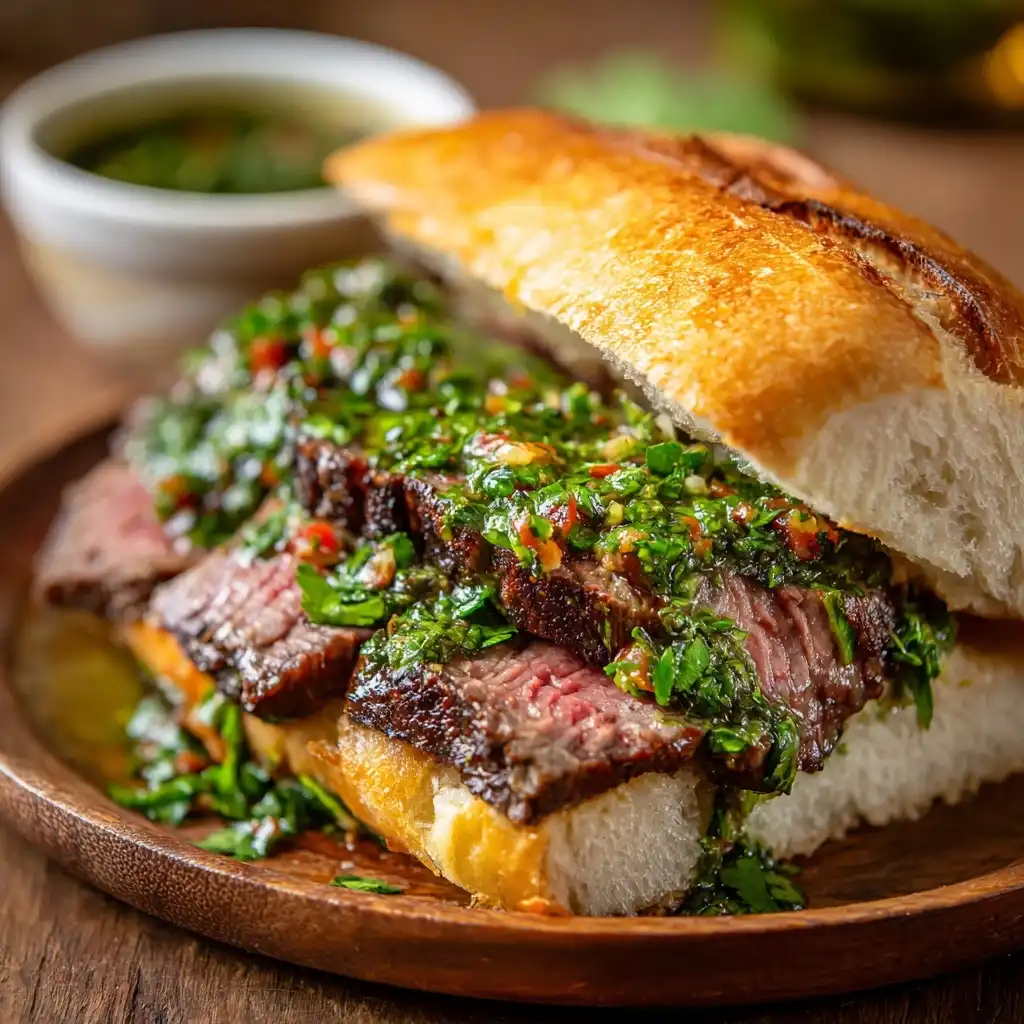
The Steak Chimichurri Sandwich is a vibrant, bold, and deeply satisfying fusion of Argentine culinary tradition and American sandwich craftsmanship. It marries tender, well-seasoned grilled steak—typically flank, skirt, or sirloin—with the zesty, herbaceous, garlicky brilliance of chimichurri sauce, all nestled between crusty artisan bread. Unlike conventional deli-style sandwiches, this dish celebrates freshness, texture contrast, and layered flavor: juicy meat meets bright acidity, earthy herbs meet smoky char, and creamy richness (often from caramelized onions or optional cheese) balances sharp tang. Whether served at backyard barbecues, elevated lunch counters, or as a centerpiece for weeknight dinners, the Steak Chimichurri Sandwich transcends its humble format—it’s a celebration of simplicity done exceptionally well.
The History
Tracing its roots, the sandwich is a modern evolution of two distinct cultural pillars: Argentine asado (barbecue) culture and the global rise of the gourmet sandwich movement. Chimichurri itself dates back to at least the early 19th century in the pampas of Argentina and Uruguay, where gauchos (cowboys) developed the uncooked herb sauce as a flavorful accompaniment to open-fire-grilled meats—both to enhance taste and, historically, to aid digestion and preserve meat in pre-refrigeration times. Its name likely derives from the Basque word tximitxurri, meaning “a mixture of many things,” or possibly from an anglicized mispronunciation of “Jimmy’s curry” (a folk etymology tied to British immigrants in Argentina). Meanwhile, the sandwich format gained prominence in the United States during the 20th century, but exploded in creativity during the 2000s food truck and artisanal bakery boom. Chefs began reimagining global condiments and proteins within handheld formats—and the Steak Chimichurri Sandwich emerged as a standout: a smart, scalable, and restaurant-worthy dish that brought South American soul to the American lunchbox. Today, it appears on menus from Portland to Miami, often adapted with local ingredients—like Sonoma garlic or Texas-grown cilantro—while staying true to its vibrant, unapologetically green heart.
Ingredients Breakdown
Every exceptional Steak Chimichurri Sandwich rests on three foundational components—each deserving thoughtful selection and preparation:
- The Steak: Flank steak is the gold standard—lean, deeply beefy, and ideal for quick, high-heat cooking. Skirt steak offers even more intense flavor and tenderness when sliced *against the grain*, though it can be slightly chewier if overcooked. Sirloin flap or hanger steak are excellent alternatives for richer marbling and buttery mouthfeel. All benefit from a dry-brine (salted 1–2 hours ahead) and a brief marinade (optional but recommended) to boost moisture and depth.
- The Chimichurri: Far more than “just parsley sauce,” authentic chimichurri is a living emulsion of fresh herbs (flat-leaf parsley + optional oregano), sharp aromatics (garlic, shallots, red onion), bright acidity (red wine vinegar, sometimes with a splash of fresh lemon juice), quality olive oil (extra-virgin, fruity, and peppery), and subtle heat (crushed red pepper flakes or finely minced Fresno chile). Unlike pesto, chimichurri is never blended smooth—it’s coarsely chopped or pulsed to retain texture, allowing each herb leaf and garlic shard to deliver bursts of flavor.
- The Bread & Supporting Cast: A sturdy, open-crumbed roll is non-negotiable: ciabatta, telera, bolillo, or a rustic baguette with a crisp, shattery crust and airy interior holds up to juicy steak and saucy chimichurri without disintegrating. Optional enhancements include slow-sautéed sweet onions, pickled red onions for extra brightness, roasted poblano strips for smoky depth, crumbled queso fresco or feta for salty creaminess, and arugula or baby spinach for peppery freshness. Even the finishing touch matters—a drizzle of high-quality olive oil or a grind of black pepper just before serving elevates aroma and perception.
Step-by-Step Recipe
- Prepare the Steak (30 minutes active + resting): Pat 1.5 lbs flank steak *very* dry. Generously season both sides with 1½ tsp kosher salt and 1 tsp freshly ground black pepper. Let rest at room temperature for 30 minutes. Optional marinade: Whisk together 3 tbsp olive oil, 2 tbsp red wine vinegar, 2 minced garlic cloves, 1 tsp dried oregano, and ½ tsp smoked paprika; rub over steak and refrigerate 30 min–2 hrs (do not exceed).
- Make the Chimichurri (15 minutes, best made ahead): Finely chop 1 cup packed flat-leaf parsley and 2 tbsp fresh oregano (stems removed). Mince 4 garlic cloves and ½ small red onion. Combine in a bowl with ⅓ cup red wine vinegar, zest and juice of 1 small lemon, 1 tsp crushed red pepper flakes, ½ tsp salt, and ¼ tsp black pepper. Slowly whisk in ¾ cup extra-virgin olive oil until emulsified but still textured—not homogenous. Cover and refrigerate at least 1 hour (up to 3 days); bring to room temperature before using.
- Grill or Sear the Steak (8–12 minutes): Heat grill or cast-iron skillet over high heat until smoking. Lightly oil grates or pan. Cook steak 4–6 minutes per side for medium-rare (130–135°F internal), depending on thickness. Avoid pressing—let it sear. Transfer to a cutting board; tent loosely with foil and rest 10 minutes (critical for juiciness).
- Toast the Bread (3 minutes): Slice 4 artisan rolls horizontally. Brush cut sides lightly with olive oil. Toast on grill or in a skillet over medium heat until golden and crisp—about 1.5 minutes per side.
- Assemble with Precision (5 minutes): Thinly slice steak *against the grain* into ¼-inch strips. Spread generous 2–3 tbsp chimichurri on both top and bottom halves of each roll. Layer warm steak evenly. Top with optional additions: 2–3 tbsp caramelized onions, 1–2 tbsp pickled red onions, ¼ cup arugula, and/or 2 tbsp crumbled queso fresco. Drizzle with extra chimichurri and a final swirl of olive oil. Serve immediately.
Tips
- Slice Against the Grain—Religiously: This single technique transforms tough cuts like flank or skirt into tender, melt-in-your-mouth bites. Look for the long parallel muscle fibers and cut perpendicular to them.
- Chimichurri Texture Matters: Use a chef’s knife—not a food processor—for chimichurri. Over-processing releases bitter chlorophyll and creates a muddy, watery sauce. Aim for a coarse, confetti-like consistency.
- Rest the Steak—Don’t Skip It: Resting allows juices to redistribute. Cutting too soon causes precious moisture to pool on the board instead of staying in the meat.
- Bread Selection Is Strategic: Avoid soft, squishy buns—they’ll collapse. Choose bread with structural integrity *and* absorbency: the crust should resist sogginess, while the crumb gently soaks up chimichurri without turning mushy.
- Warm Steak, Room-Temp Sauce: Never serve cold steak with chilled chimichurri. Warm meat slightly re-releases aromatics in the sauce, creating a harmonious, cohesive bite.
- Acid Balance Is Key: If your chimichurri tastes harsh, add a pinch of sugar or a teaspoon of honey to round it out. Too oily? Add another splash of vinegar or lemon juice.
- Make-Ahead Smart: Chimichurri tastes better after 12–24 hours as flavors meld. Steak can be cooked, sliced, and refrigerated (up to 2 days); re-warm gently in a skillet with a splash of broth or chimichurri oil before assembling.
Variations and Customizations
This sandwich is gloriously adaptable—here’s how to tailor it to dietary needs, seasonal produce, regional preferences, and creative whims:
- Vegetarian/Vegan Version: Replace steak with thick-cut grilled portobello caps, marinated tempeh steaks, or smoky roasted cauliflower “steaks.” Boost umami with tamari, liquid smoke, and nutritional yeast in the marinade. Use vegan chimichurri (ensure no honey; substitute maple syrup or agave) and dairy-free cheese alternatives like almond-based feta.
- Gluten-Free Adaptation: Use certified GF artisan rolls (e.g., cassava-flour based or sourdough rye GF) or serve open-faced on grilled gluten-free bread. Verify all sauces and marinades are GF-certified (some vinegars or spice blends contain hidden gluten).
- Spice-Lover’s Upgrade: Add 1 finely minced jalapeño or serrano to chimichurri. Rub steak with chipotle powder before grilling. Top with pickled habaneros or a swipe of roasted garlic–chipotle aioli.
- Breakfast Chimichurri Steak Sandwich: Grill thin-cut hanger steak, then layer on toasted brioche with fried eggs, avocado slices, and chimichurri. A drizzle of chimichurri-infused hollandaise takes it over the top.
- Mediterranean Twist: Swap oregano for fresh mint and dill; add lemon zest and capers to chimichurri. Use grilled lamb loin instead of beef and garnish with crumbled feta and kalamata olives.
- Smoked & Charred Style: Cold-smoke the steak for 30 minutes before grilling, or finish over wood chips (oak or cherry) for deep complexity. Enhance chimichurri with a teaspoon of smoked sea salt.
- Low-Carb/Keto-Friendly: Serve steak and chimichurri over a bed of massaged kale or in large butter lettuce cups. Add avocado ribbons and hemp seeds for healthy fats and crunch.
- Global Fusion Riffs: Korean-inspired: Add gochujang to chimichurri and marinate steak in soy-ginger-sesame. Japanese: Use yuzu instead of lemon, add toasted sesame and shiso leaves. Mexican: Fold in roasted corn, cotija, and epazote into chimichurri.
Health Considerations and Nutritional Value
A well-prepared Steak Chimichurri Sandwich can be a nutrient-dense, balanced meal—especially when thoughtfully composed. Here’s a detailed nutritional snapshot (per standard 1-serving sandwich using 4 oz flank steak, ¼ cup chimichurri, 1 medium ciabatta roll, and 2 tbsp caramelized onions):
- Calories: ~580–650 kcal (moderate for a main course; highly variable based on oil/bread/cheese use)
- Protein: ~38–42g (excellent source; supports muscle maintenance and satiety)
- Fat: ~32–38g (predominantly heart-healthy monounsaturated fats from olive oil and lean beef; includes ~8–10g saturated fat—within daily recommendations when balanced with whole foods)
- Carbohydrates: ~35–42g (mostly complex carbs from whole-grain or artisan bread; fiber ~3–5g)
- Vitamins & Minerals: Rich in iron (heme iron from beef—highly bioavailable), vitamin B12, zinc, selenium, vitamin K (from parsley), vitamin C (from lemon and fresh herbs), and polyphenols (powerful antioxidants from olive oil and garlic).
- Key Health Notes:
- Olive oil in chimichurri contributes oleocanthal, a natural anti-inflammatory compound.
- Garlic and onions provide allicin and quercetin—linked to cardiovascular support and immune modulation.
- Red wine vinegar may support blood sugar regulation and digestive enzyme activity.
- To reduce sodium: Use low-sodium bread, omit added salt on steak, and rely on herbs/spices for flavor.
- To increase fiber: Opt for 100% whole-grain or sprouted grain rolls, or add shredded raw zucchini or julienned carrots to the filling.
- For heart health: Prioritize grass-fed beef (higher in omega-3s) and limit added sugars in marinades.
While naturally gluten-containing and not low-calorie by default, this sandwich aligns beautifully with Mediterranean, DASH, and flexitarian dietary patterns—emphasizing whole foods, plant-forward flavors, and mindful meat consumption.
Ingredients
For the Steak:
- 1.5 lbs flank steak (or skirt/sirloin flap), trimmed of excess fat
- 1½ tsp kosher salt (plus more to taste)
- 1 tsp freshly ground black pepper
- 2 tbsp high-heat oil (avocado or grapeseed), for searing
For the Chimichurri:
- 1 cup tightly packed flat-leaf parsley (stems removed, roughly chopped)
- 2 tbsp fresh oregano leaves (stems removed)
- 4 garlic cloves, finely minced
- ½ small red onion, finely minced (about ¼ cup)
- ⅓ cup good-quality red wine vinegar
- Zest and juice of 1 medium lemon (about 2 tsp juice)
- 1 tsp crushed red pepper flakes (adjust to heat preference)
- ½ tsp fine sea salt
- ¼ tsp freshly ground black pepper
- ¾ cup extra-virgin olive oil (fruity, robust variety preferred)
For Assembly:
- 4 artisan sandwich rolls (ciabatta, telera, or rustic baguette)
- 2 tbsp olive oil (for brushing bread)
- Optional additions: ½ cup caramelized onions, ¼ cup pickled red onions, 2 cups baby arugula or spinach, ½ cup crumbled queso fresco or feta, extra virgin olive oil for finishing
Directions
- Season and Rest the Steak: Place flank steak on a clean surface. Pat extremely dry with paper towels. Sprinkle evenly with 1½ tsp kosher salt and 1 tsp black pepper on both sides. Let sit uncovered at cool room temperature for 30 minutes. (For deeper flavor, combine marinade ingredients—3 tbsp olive oil, 2 tbsp red wine vinegar, 2 minced garlic cloves, 1 tsp dried oregano, ½ tsp smoked paprika—and rub over steak. Refrigerate 30 minutes–2 hours.)
- Prepare the Chimichurri: In a medium non-reactive bowl, combine chopped parsley, oregano, minced garlic, and minced red onion. Add red wine vinegar, lemon zest and juice, crushed red pepper flakes, ½ tsp salt, and ¼ tsp black pepper. Stir well. Gradually whisk in olive oil in a slow, steady stream until fully incorporated but still visibly textured—do not overmix. Taste and adjust: more salt for balance, more vinegar for brightness, more oil if too sharp. Cover and refrigerate at least 1 hour (ideally 12–24 hours) to allow flavors to bloom. Bring to room temperature before using.
- Cook the Steak: Preheat grill or heavy-bottomed skillet (cast iron preferred) over high heat until very hot—smoking slightly. Lightly brush grates or pan with oil. Place steak on heat and cook undisturbed for 4–5 minutes until deeply seared and release easily. Flip and cook another 4–5 minutes for medium-rare (130–135°F). For thicker cuts, reduce heat slightly after flipping to avoid charring. Transfer steak to a cutting board, tent loosely with foil, and rest for 10 minutes.
- Toast the Rolls: While steak rests, slice rolls horizontally. Brush cut sides lightly with olive oil. Toast on grill (cut-side down, covered) or in a dry skillet over medium heat for 1–1.5 minutes per side, until golden brown and crisp. Do not over-toast—the interior should remain tender.
- Slice and Assemble: Using a sharp knife, slice rested steak thinly *against the grain* (look for direction of muscle fibers and cut perpendicular). Spread 2 tablespoons chimichurri on the bottom half of each roll. Layer sliced steak evenly. Top with desired additions (caramelized onions, pickled onions, greens, cheese). Drizzle generously with additional chimichurri (1–2 tsp per sandwich) and a final swirl of olive oil. Close sandwiches gently and serve immediately.
FAQ
- Can I make chimichurri ahead of time?
- Yes—chimichurri improves with time! It can be refrigerated for up to 5 days. The flavors deepen and mellow overnight. Always bring to room temperature before using for optimal aroma and balance.
- What if I don’t have a grill?
- No problem. A heavy cast-iron or stainless-steel skillet delivers excellent sear and fond. Preheat over medium-high heat until very hot, add oil, then sear steak as directed. You can also roast in a 425°F oven for 12–15 minutes (flip halfway), though grilling or pan-searing yields superior crust and flavor.
- Why does my chimichurri taste bitter?
- Bitterness usually comes from over-processing (releasing parsley stems/chlorophyll), using old/dried herbs, or excessive garlic. Fix it by adding ½ tsp honey or maple syrup, a splash of fresh citrus juice, or a pinch of flaky salt to round the edges.
- Can I freeze the steak or chimichurri?
- Steak freezes well—wrap tightly in butcher paper or vacuum-seal before freezing (up to 6 months). Thaw in fridge overnight before cooking. Chimichurri does *not* freeze well—the herbs will oxidize and turn brown/mushy. Freeze only the base (oil/vinegar/aromatics) without fresh herbs, then stir in parsley/oregano after thawing.
- Is chimichurri spicy?
- Traditionally, it’s more aromatic than fiery. Crushed red pepper provides gentle warmth—not heat. For true spice, add minced fresh chiles (serrano, jalapeño) or a dash of cayenne to taste.
- What’s the best bread for sandwich structure?
- Look for high hydration, open-crumbed loaves with a sturdy, crackling crust—ciabatta, telera, or a country boule work best. Avoid brioche or soft dinner rolls unless you prefer a more delicate, less structurally sound experience.
- Can I use dried herbs instead of fresh?
- Not recommended. Dried parsley and oregano lack the volatile oils, brightness, and texture essential to chimichurri. They’ll yield a flat, dusty, and unbalanced sauce. Fresh is non-negotiable here.
- How do I prevent soggy bread?
- Toast thoroughly, assemble just before serving, and spread chimichurri *only* on the bread—not directly onto the steak. Let warm steak cool 1–2 minutes before stacking. For picnics or meal prep, pack components separately and assemble on-site.
- Can I use leftover steak?
- Absolutely! Leftover grilled or roasted steak works beautifully. Slice thinly against the grain and gently warm in a skillet with 1 tsp chimichurri oil over low heat—just until heated through (do not overcook).
- Is this sandwich kid-friendly?
- Yes—with modifications: reduce or omit red pepper flakes, use mild garlic, add a thin layer of mashed avocado or hummus for creaminess, and skip strong toppings like raw onion. Many children love the savory-herbal profile once introduced gradually.
Summary
The Steak Chimichurri Sandwich is a masterclass in bold, balanced, and beautifully simple cuisine—where premium grilled beef meets vibrant, hand-chopped Argentine herb sauce on artisan bread, delivering layers of smoky, tangy, garlicky, and verdant flavor in every bite. It honors tradition while inviting endless creativity, making it equally at home on a picnic table, a fine-dining menu, or your weeknight dinner rotation.
Nutritionally rich, culturally resonant, and endlessly customizable, this sandwich proves that extraordinary flavor doesn’t require complexity—just quality ingredients, respectful technique, and joyful intention.