Introduction
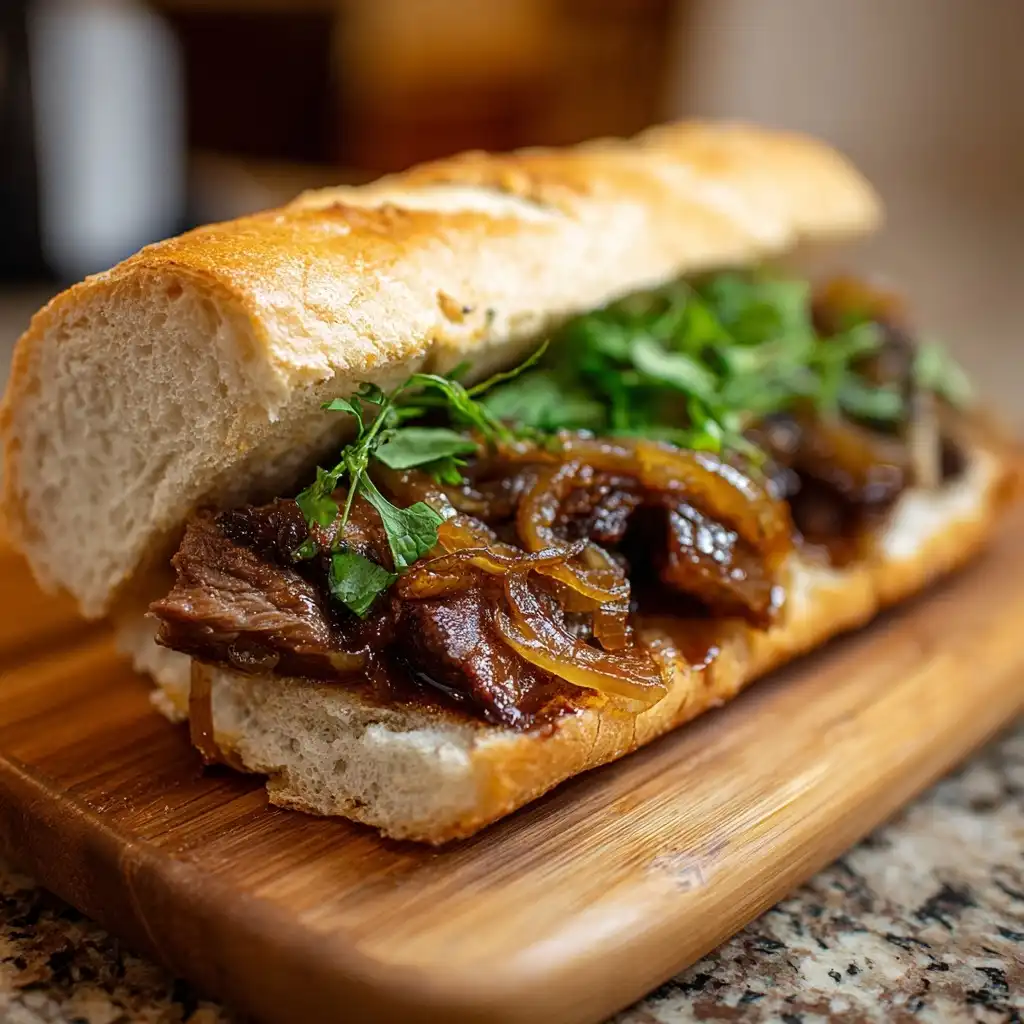
The Beef & Caramelized Onion Sandwich is a soul-satisfying, deeply flavorful comfort food classic that marries tender, savory beef with the rich, sweet, umami-laden complexity of slow-cooked onions. More than just a lunchtime staple, it’s an elevated culinary experience—elegant enough for a dinner party yet approachable enough for a weeknight supper. This sandwich strikes a perfect balance: the robust earthiness of high-quality beef (whether thinly sliced roast beef, slow-braised short rib, or seared flank steak) harmonizes effortlessly with the silken, golden-brown sweetness of caramelized onions, while complementary elements—melty cheese, toasted artisan bread, and optional aromatic enhancements like horseradish, Dijon mustard, or fresh thyme—elevate each bite into something truly memorable. Whether served open-faced for maximum visual appeal or stacked tall on crusty brioche, this sandwich celebrates technique, patience, and the transformative power of time and heat—making it not just a meal, but a testament to the art of slow, intentional cooking.
The History
While no single origin story defines the Beef & Caramelized Onion Sandwich, its roots stretch across multiple culinary traditions and historical developments. Caramelizing onions—a technique dating back to at least medieval Europe—was historically a method of preserving flavor and extending shelf life before refrigeration, often used in stews, tarts, and savory pies. In 19th-century France, oignons confits (confited onions) appeared in bourgeois cuisine, later evolving into the iconic boeuf bourguignon, where slow-cooked onions complemented braised beef. Meanwhile, the American deli culture of the early 20th century embraced roast beef sandwiches, but it wasn’t until the mid-to-late 20th century—amplified by the rise of gourmet sandwich shops, food television, and chef-driven casual dining—that the deliberate pairing of slow-caramelized onions with premium sliced beef gained widespread acclaim. Influences from French onion soup (with its Gruyère-topped crouton foundation), Montreal-style smoked meat sandwiches, and even Japanese nikujaga-inspired sweet-savory beef preparations all contributed subtle threads to its evolution. By the 2010s, the sandwich had become a fixture on artisanal menus nationwide—from Portland food trucks to Brooklyn bistros—often rebranded as the “Umami Bomb,” “Bourbon-Braised Beef Stack,” or “Parisian Roast Beef Melt,” reflecting its cosmopolitan adaptability and timeless appeal.
Ingredients Breakdown
Every exceptional Beef & Caramelized Onion Sandwich begins with thoughtfully selected, high-integrity components—each playing a distinct structural, textural, and flavor role:
- Beef: Opt for well-marbled, slow-cooked cuts such as top round roast (for traditional deli-style thin slices), boneless short ribs (fall-apart tenderness), chuck eye roast (rich marbling), or grass-fed flank steak (for a leaner, more mineral-forward profile). Pre-cooked options like leftover pot roast or sous-vide ribeye also work beautifully—if using raw beef, ensure thorough cooking to safe internal temperatures (145°F for medium-rare, 160°F for medium).
- Onions: Yellow or sweet onions (Vidalia, Walla Walla, or Maui) are ideal—their natural fructose content promotes deep, even browning. Red onions add visual contrast and a brighter acidity; shallots lend finesse and layered aroma. Avoid white onions for long caramelization—they lack sufficient sugar and can turn bitter.
- Fat for Cooking: A blend of unsalted butter (for richness and milk solids that aid browning) and neutral oil (like grapeseed or avocado oil) prevents burning while ensuring even heat transfer. Ghee is an excellent dairy-free alternative with a higher smoke point and nutty depth.
- Liquid Enhancers: Dry sherry, Madeira, or red wine add acidity and complexity during deglazing; low-sodium beef broth intensifies savoriness without overwhelming saltiness; a splash of balsamic vinegar in the final minutes lends glossy sweetness and balancing tartness.
- Aromatics & Seasonings: Fresh thyme sprigs, a bay leaf, or a strip of orange zest infuse subtle perfume; minced garlic (added only in the last 2–3 minutes to avoid bitterness); flaky sea salt (Maldon or Fleur de Sel) for finishing; freshly cracked black pepper; and a whisper of ground coriander or smoked paprika for warmth.
- Bread: A sturdy, high-quality vehicle is non-negotiable. Brioche offers buttery tenderness and structural integrity; sourdough provides tang and chew; ciabatta delivers airy crumb and crisp crust; whole-grain levain adds nuttiness and fiber. Always toast or griddle the bread—preferably with garlic-infused butter or herb oil—to create a moisture-resistant barrier and enhance mouthfeel.
- Cheese (optional but highly recommended): Gruyère (nutty, molten), provolone (mildly sharp, excellent melt), aged cheddar (bold, crystalline), or fontina (creamy, earthy) all integrate seamlessly. For vegan versions, house-made cashew-based “Gruyère” or Miyoko’s Smoked Farmhouse provide compelling depth.
- Condiments & Accents: Whole-grain Dijon mustard (spicy-sweet backbone), horseradish cream (for pungent lift), pickled red onions (for brightness and crunch), arugula or watercress (peppery freshness), and micro herbs (chive blossoms, parsley cress) round out the full sensory profile.
Step-by-Step Recipe
- Prepare the Onions: Slice 3 large yellow onions (about 2 lbs) into uniform ¼-inch half-moons. Heat 3 tbsp butter + 2 tbsp neutral oil in a heavy-bottomed Dutch oven or wide stainless-steel skillet over medium-low heat. Add onions, 1 tsp flaky salt, and stir to coat. Cook uncovered, stirring every 8–10 minutes, for 45–60 minutes—until deeply golden brown, soft, and jammy. Resist rushing: if onions stick, add 1 tbsp water or broth to deglaze and scrape fond.
- Deepen Flavor: In the last 10 minutes, add 2 minced garlic cloves, 1 tsp fresh thyme leaves, and a 2-inch strip of orange zest. Stir gently. Deglaze with ¼ cup dry sherry, scraping vigorously to lift all browned bits. Simmer 2–3 minutes until alcohol cooks off. Finish with 1 tsp balsamic vinegar and 2 tbsp low-sodium beef broth. Cook 2 more minutes until glossy and thickened. Remove from heat; set aside.
- Warm or Prepare the Beef: If using pre-roasted beef, thinly slice against the grain. Gently reheat slices in reserved beef jus or a splash of broth over low heat—do not boil or steam, which toughens meat. For fresh beef: season 1 lb flank steak with salt, pepper, and smoked paprika; sear 3–4 mins per side in cast iron; rest 10 mins; slice thinly on a sharp bias.
- Toast the Bread: Split 4 brioche rolls or sourdough boule slices. Brush cut sides generously with garlic-herb butter (½ cup softened butter + 2 minced garlic cloves + 1 tbsp chopped rosemary + zest of ½ lemon). Toast in a skillet or under broiler until deeply golden and crisp—about 2–3 minutes per side.
- Assemble with Intention: Spread a thin layer of whole-grain Dijon on the bottom bun. Layer warm beef evenly. Spoon generous portions of hot caramelized onions over beef (reserve any liquid for drizzling). Top with 2–3 oz melted cheese—cover pan briefly or use a salamander to fully melt and blister. Add a small handful of peppery arugula and a light drizzle of horseradish cream (½ cup sour cream + 1 tbsp prepared horseradish + ½ tsp lemon juice + pinch of white pepper).
- Final Touches & Serve: Crown with top bun. Press gently—not flat, but with respectful weight—to encourage cohesion. Slice diagonally with a serrated knife. Serve immediately on warmed ceramic plates with a side of roasted fingerling potatoes, heirloom tomato salad, or dill-pickled vegetables.
Tips
- Patient Caramelization Is Non-Negotiable: Rushing leads to steamed, pale onions—not sweet, complex ones. Use low, steady heat and allow time for enzymatic browning (Maillard reaction) and sugar polymerization. Stirring too frequently lowers pan temperature; stir only when needed to prevent scorching.
- Slice Beef Against the Grain—Always: This shortens muscle fibers, yielding dramatically more tender bites—even with leaner cuts like top round or sirloin.
- Reserve Juices & Fond: Never discard the flavorful liquid from cooked beef or the browned bits left after sautéing onions. These are concentrated umami bombs—deglaze with them to build your sauce or moisten leftovers.
- Toast Bread Just Before Assembly: Stale or soggy bread ruins texture. Keep toasted buns wrapped in clean linen or foil until the final moment—never stack or cover while hot, or steam will soften the crust.
- Season in Layers: Salt onions at the start (draws out water), again mid-process (enhances browning), and finish with flaky salt (for burst of minerality). Same goes for beef: season before cooking, after resting, and optionally just before serving.
- Temperature Contrast Matters: Warm beef + hot onions + room-temp cheese + cool, crisp greens = dimensional eating. Don’t serve everything piping hot—it blurs distinctions and dulls freshness.
- Use a Fish Spatula for Lifting Onions: Its thin, flexible edge lifts caramelized layers intact—no breaking or tearing. A silicone spatula works well for stirring, but metal gives superior control for fond-scraping.
- Make Components Ahead: Caramelized onions keep refrigerated for 10 days or frozen for 3 months. Roast beef can be cooked 2–3 days ahead. Assemble only when ready to serve for optimal texture and temperature harmony.
Variations and Customizations
This sandwich is gloriously adaptable—here are inspired riffs for every palate, dietary need, and occasion:
- The Umami-Rich Vegan Version: Replace beef with marinated, grilled king oyster mushrooms (sliced lengthwise, brushed with tamari-maple glaze) or shredded young jackfruit simmered in smoky BBQ sauce. Use coconut oil + nutritional yeast “butter” for onions, miso-caramelized shallots, and cashew-Gruyère shreds. Add black garlic aioli and roasted beet slaw.
- The Gourmet Brunch Twist: Swap beef for thinly sliced, herb-crusted lamb loin; top with caramelized fennel & red onion jam, crumbled feta, mint oil, and a poached egg nestled on top—runny yolk acting as luxurious binder.
- The Korean-Inspired Bulgogi Stack: Marinate flank steak in gochujang, pear puree, toasted sesame oil, and rice vinegar; grill and slice. Pair with quick-pickled daikon radish, scallion-ginger slaw, and spicy-sweet onion relish made with toasted sesame seeds and toasted nori flakes.
- The Mediterranean Interpretation: Use grilled halloumi instead of beef (or alongside it), layer with preserved lemon–caramelized onions, kalamata tapenade, baby spinach, and harissa-yogurt drizzle. Serve on za’atar-dusted focaccia.
- The Low-Carb/Keto Build: Skip the bread entirely—serve as a “sandwich bowl”: warm beef and onions over cauliflower rice “bun,” topped with melted Swiss, crispy fried shallots, and truffle aioli.
- The Breakfast Sandwich Reinvention: Incorporate into a morning menu: top with a fried duck egg, maple-glazed bacon crumbles, and chive crème fraîche on a toasted English muffin.
- The Global Street Food Fusion: Use naan or pita as the base; fill with spiced beef kofta, tamarind-onion chutney, mango pickle, and cilantro-mint chutney for Indian-Mexican crossover flair.
- The Holiday Showstopper: Elevate for special occasions: use dry-aged ribeye cap, truffle-infused caramelized onions, black truffle brie, and a port wine reduction drizzle—served open-faced on brioche with micro chervil garnish.
Health Considerations and Nutritional Value
When crafted mindfully, the Beef & Caramelized Onion Sandwich can be a nutrient-dense, balanced meal—far beyond mere indulgence. A standard serving (1 sandwich, ~6 oz beef + ½ cup onions + 2 oz cheese + 3 oz brioche) contains approximately 620–780 calories, with notable contributions across macronutrients and micronutrients:
- Protein Powerhouse: Grass-fed beef provides ~42g complete protein per serving—including all nine essential amino acids, plus bioavailable heme iron (critical for oxygen transport), zinc (immune support), and B12 (neurological health). Choosing leaner cuts or portion control (4–5 oz beef) reduces saturated fat without sacrificing satiety.
- Onion Benefits Amplified: Slow-cooked onions retain quercetin (a potent anti-inflammatory flavonoid), prebiotic inulin (supports gut microbiome diversity), and sulfur compounds linked to cardiovascular protection. Adding a splash of apple cider vinegar during cooking enhances polyphenol extraction.
- Smart Fat Choices: Using grass-fed butter or avocado oil increases omega-3s and vitamin K2 (bone and arterial health). Limiting added sodium by using low-sodium broth and finishing with flaky salt—not table salt—helps manage blood pressure.
- Fiber & Phytonutrient Boost: Opting for 100% whole-grain or seeded sourdough adds 5–8g of fiber, supporting digestion and glycemic control. Topping with arugula contributes nitrates (vasodilation), lutein (eye health), and vitamin K.
- Dietary Modifications: Gluten-free? Use certified GF sourdough or lettuce wraps. Dairy-free? Skip cheese or use cultured coconut yogurt–based “cheese.” Lower-carb? Choose portobello “buns” or cloud bread. For histamine sensitivity, avoid aged cheeses and fermented condiments—opt for fresh mozzarella and lemon-thyme butter instead.
- Mindful Pairings: Balance richness with antioxidant-rich sides: roasted rainbow carrots with turmeric, massaged kale salad with lemon-tahini, or fermented cucumber kimchi. Hydrate with hibiscus iced tea (natural ACE-inhibitor properties) or sparkling water with lime.
Note: Individuals managing gout should moderate purine-rich beef intake (limit to 4–6 oz weekly) and increase cherry consumption—tart cherry juice has been clinically shown to reduce uric acid levels. Those with IBS may benefit from low-FODMAP caramelized leeks instead of onions, paired with lactose-free cheese.
Ingredients
- 3 large yellow onions (about 2 lbs), halved and sliced ¼-inch thick
- 3 tbsp unsalted butter
- 2 tbsp neutral oil (grapeseed, avocado, or refined coconut)
- 1½ tsp flaky sea salt (plus more to finish)
- 2 cloves garlic, minced
- 1 tsp fresh thyme leaves (or ½ tsp dried)
- 1 2-inch strip orange zest (organic, unwaxed)
- ¼ cup dry sherry or dry red wine
- 2 tbsp low-sodium beef broth
- 1 tsp high-quality balsamic vinegar
- 1 lb center-cut beef roast (top round, chuck eye, or boneless short rib), cooked and thinly sliced—or 1 lb flank steak, seasoned and grilled
- 4 artisan brioche rolls or sourdough boule slices (4 oz each)
- 4 tbsp garlic-herb butter (½ cup softened butter + 2 garlic cloves, minced + 1 tbsp chopped fresh rosemary + zest of ½ lemon)
- 4 oz Gruyère or provolone cheese, thinly sliced
- ¼ cup whole-grain Dijon mustard
- ½ cup horseradish cream (½ cup sour cream + 1 tbsp prepared horseradish + ½ tsp lemon juice + pinch white pepper)
- 2 cups baby arugula or watercress
- Freshly cracked black pepper
Directions
- In a heavy-bottomed 5-qt Dutch oven or wide stainless skillet, combine butter and oil over medium-low heat. Once butter melts and foaming subsides, add onions and 1 tsp flaky salt. Stir to coat evenly.
- Cook uncovered, stirring every 8–10 minutes with a heat-resistant spatula, for 45–60 minutes—until onions are deeply amber, uniformly soft, and have reduced by ~75%. Adjust heat as needed: if browning too fast, lower to medium-low; if steaming, raise slightly. Scrape bottom frequently to prevent sticking—add 1 tbsp broth or water only if needed to loosen fond.
- When onions are deeply golden and syrupy, stir in garlic, thyme, and orange zest. Cook 2 minutes until fragrant.
- Pour in sherry, immediately scraping bottom to release all browned bits. Simmer 3–4 minutes until liquid reduces by half and aroma intensifies.
- Add beef broth and balsamic vinegar. Cook 2–3 minutes more, stirring, until glossy and thickened to jam-like consistency. Remove from heat. Discard orange zest. Taste and adjust salt.
- Preheat oven to 375°F (or prepare stovetop griddle). Thinly slice beef against the grain. Gently warm beef in a skillet with 2 tbsp reserved beef jus or broth over low heat—just until heated through (~2 minutes). Do not boil.
- Split buns and spread cut sides with garlic-herb butter. Place butter-side down on preheated skillet or baking sheet. Toast 2–3 minutes until deeply golden and crisp. Flip and toast second side 1–2 minutes. Transfer to wire rack.
- Spread 1 tbsp Dijon on bottom bun of each sandwich. Layer warm beef evenly. Spoon ⅓ cup hot caramelized onions over beef—drizzle lightly with any reserved onion liquid. Arrange cheese slices over onions.
- Return assembled sandwiches (open-faced) to skillet or oven. Cover loosely with foil or use lid. Heat 2–3 minutes until cheese melts completely. For extra richness, uncover and broil 30–60 seconds until cheese bubbles and browns slightly.
- Top each with ¼ cup arugula, a generous swirl of horseradish cream, and a crack of black pepper. Close sandwiches gently. Slice diagonally with serrated knife. Serve immediately.
FAQ
- Can I caramelize onions in advance?
- Yes—caramelized onions improve with time! Cool completely, store in airtight container in refrigerator up to 10 days or freeze up to 3 months. Reheat gently in skillet with splash of broth before assembling.
- Why do my onions always burn or stay crunchy?
- Burning indicates heat too high or insufficient fat; crunchiness signals inadequate time or moisture. Use heavy pan, low heat, adequate butter/oil ratio, and patience—stir occasionally but let onions sit between stirs to encourage even browning. If they seize up, add 1 tsp water and continue.
- What’s the best beef cut for this sandwich—and can I use leftover roast?
- Top round roast yields classic deli-style tenderness; short rib offers unctuous richness. Leftover pot roast, brisket, or London broil work beautifully—just slice thinly against the grain and reheat gently in its own juices.
- Is there a way to speed up caramelization without sacrificing flavor?
- Not truly—but you *can* cheat intelligently: add ½ tsp baking soda (food-grade) at the beginning—it raises pH and accelerates Maillard reactions. Or use an Instant Pot: sauté onions 5 mins, seal, pressure cook 15 mins, then reduce liquid on sauté mode. Still requires finishing for depth.
- How do I prevent a soggy sandwich?
- Toast bread thoroughly (creates moisture barrier), use warm—not hot—onions (excess steam softens bread), drain onions briefly if overly liquidy, and assemble just before serving. Never press down aggressively—gentle cohesion preserves structure.
- Can I make this gluten-free?
- Absolutely. Use certified GF sourdough, gluten-free brioche, or sturdy gluten-free rolls (like Schar or Canyon Bakehouse). Ensure broth, mustard, and horseradish are GF-certified. Lettuce wrap or portobello “buns” are excellent alternatives.
- What wine pairs best with this sandwich?
- A medium-bodied red with bright acidity and soft tannins complements the richness: Cru Beaujolais (Morgon), Pinot Noir (Willamette Valley), or a lighter-style Rioja Crianza. For white lovers, try an oak-aged Chardonnay or dry Gewürztraminer.
- How do I reheat leftovers without drying out the beef?
- Never microwave directly. Instead, gently steam beef slices in a bamboo steamer over simmering broth for 90 seconds. Or warm in skillet with 1 tbsp au jus on lowest setting, covered, flipping once. Onions reheat perfectly in saucepan with splash of broth.
Summary
The Beef & Caramelized Onion Sandwich is a masterclass in layered flavor, textural contrast, and patient technique—where humble ingredients transform through time, heat, and intention into something profoundly satisfying and deeply nourishing. It honors tradition while inviting endless creativity, making it equally at home on a rustic farmhouse table or a polished urban bistro counter.
Whether you savor it for its nostalgic comfort, its umami depth, or its surprising nutritional virtues, this sandwich reminds us that extraordinary meals are built not on complexity alone—but on respect for ingredients, reverence for process, and joy in sharing.