Introduction
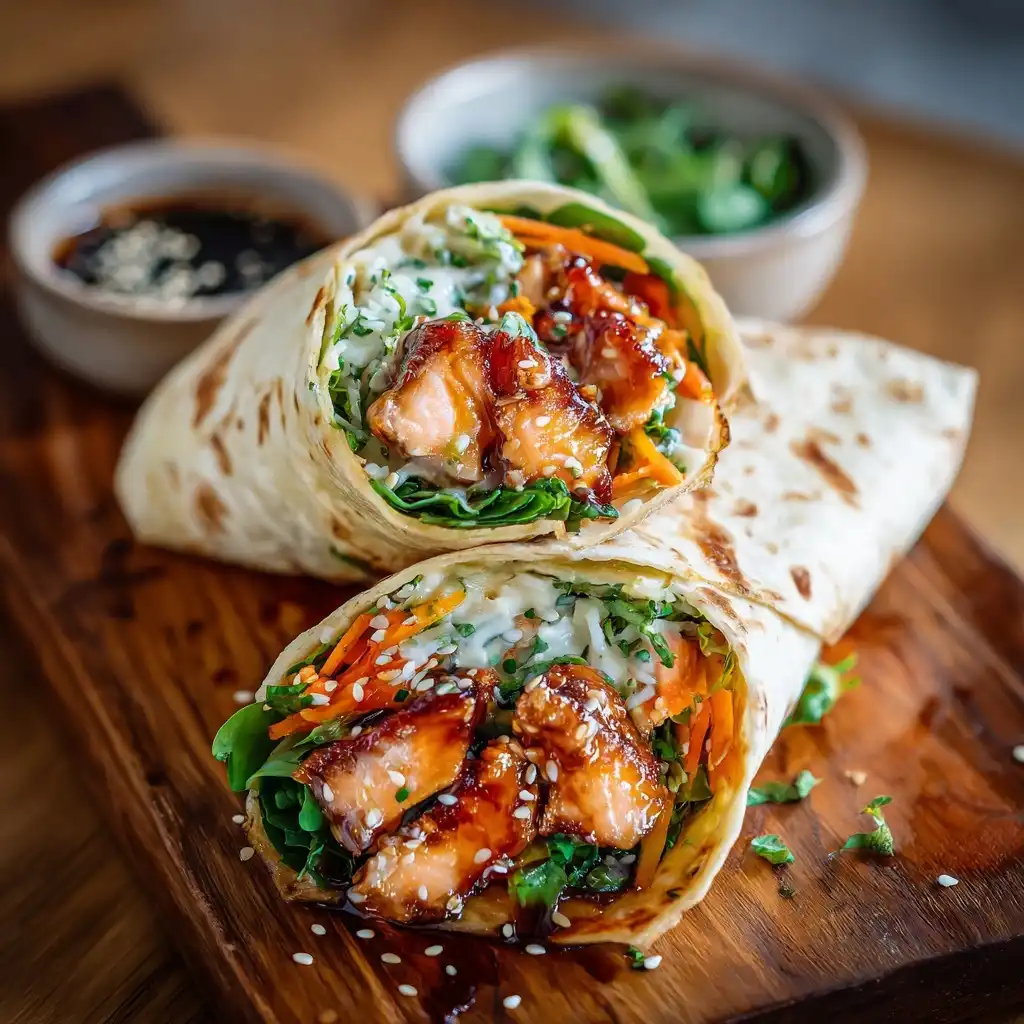
The Teriyaki Salmon Wrap is a vibrant, nutrient-dense fusion dish that marries the umami richness of Japanese teriyaki with the clean, flaky elegance of wild-caught salmon—and wraps it all in a soft, pliable tortilla or whole-grain flatbread for effortless portability and modern mealtime appeal. Far more than just a quick lunch option, this wrap represents a harmonious convergence of culinary traditions: the precision and balance of Japanese seasoning techniques meet the convenience and versatility of Western handheld fare. Whether enjoyed chilled after meal prep, warmed gently for a cozy weeknight dinner, or served at brunch with a side of miso-glazed vegetables, the Teriyaki Salmon Wrap delivers bold flavor, textural contrast (tender fish, crisp veggies, creamy avocado), and satiating nutrition—all in one beautifully bundled package. Its growing popularity reflects a broader cultural shift toward globally inspired, health-conscious eating without sacrificing depth of taste or ease of preparation.
The History
While the Teriyaki Salmon Wrap as we know it today is a relatively recent culinary innovation—emerging prominently in the early 2010s within U.S.-based gourmet food trucks, wellness cafés, and meal delivery services—it draws deeply from centuries-old roots. Teriyaki itself originates from feudal Japan (as early as the 17th century), where “teri” (luster or shine) and “yaki” (grill or broil) described a cooking method involving simmering or glazing proteins in a sweet-savory soy-based sauce to create a glossy, caramelized finish. Traditionally applied to chicken, beef, or mackerel, teriyaki gained international recognition post-World War II, especially through Japanese-American restaurants adapting recipes to local palates—often increasing sweetness and reducing salt intensity. Salmon, though not historically central to classic teriyaki preparations in Japan (where fatty fish like sanma or ayu were more common), rose to prominence in teriyaki applications during the late 20th century due to its ideal fat content for absorbing marinades and resisting dryness during grilling. The “wrap” format, meanwhile, evolved from Middle Eastern and Mexican antecedents (like the Lebanese manakish and Mexican burrito) but was reimagined in North America during the 1980s–90s as part of the “healthy fast-casual” movement—prioritizing whole grains, lean proteins, and fresh produce. The marriage of teriyaki salmon and the wrap format thus symbolizes culinary globalization in action: a Japanese technique, a Pacific Northwest superfood, and an American vehicle for mindful, on-the-go nourishment—all refined over decades of cross-cultural experimentation and dietary evolution.
Ingredients Breakdown
Every component in the Teriyaki Salmon Wrap plays a deliberate functional and sensory role—balancing flavor profiles, optimizing texture, enhancing nutritional synergy, and supporting food safety and shelf stability. Below is an in-depth analysis of each ingredient’s purpose:
- Wild-Caught Sockeye or Coho Salmon Fillet (6–8 oz per serving): Chosen for its firm texture, rich omega-3 content (EPA/DHA), deep rosy hue, and ability to hold up to marinating without becoming mushy. Wild varieties offer lower contaminant levels and higher astaxanthin (a potent antioxidant) than farmed alternatives.
- Homemade Teriyaki Marinade/Glaze: Composed of low-sodium tamari or coconut aminos (for gluten-free integrity), raw unfiltered apple cider vinegar (adds brightness and tenderizing acidity), toasted sesame oil (for aromatic depth and oxidative stability), minced fresh ginger and garlic (bioactive compounds like gingerol and allicin support digestion and immunity), and a touch of pure maple syrup or brown rice syrup (for gentle caramelization—not refined sugar). Unlike commercial teriyaki sauces laden with corn syrup, MSG, and preservatives, this version emphasizes whole-food sweeteners and fermented soy for enzymatic complexity.
- Whole-Grain or Sprouted Grain Tortilla/Flatbread: Provides slow-digesting complex carbohydrates, B vitamins, magnesium, and prebiotic fiber. Sprouted grain options enhance mineral bioavailability and reduce phytic acid, improving nutrient absorption. For paleo or keto adaptations, butter lettuce cups or grilled shiitake “wraps” serve as elegant, low-carb vessels.
- Shredded Purple Cabbage: Adds brilliant color, satisfying crunch, and glucosinolates—sulfur-containing phytonutrients linked to detoxification support and cellular health. Its mild peppery note cuts through the teriyaki’s richness.
- Sliced Avocado or Whipped Avocado-Lime Spread: Supplies heart-healthy monounsaturated fats, potassium, and creamy mouthfeel that cools the palate and emulsifies flavors. Lime juice prevents browning while adding vitamin C to boost iron absorption from the salmon.
- Quick-Pickled Daikon Radish & Carrot Slaw: Fermented or vinegar-brined for gut-friendly probiotics (if lacto-fermented) or digestive enzymes (if quick-pickled), offering tangy contrast and vibrant crunch. Daikon supports liver enzyme activity; carrots contribute beta-carotene converted to vitamin A.
- Toasted Sesame Seeds & Furikake (Optional): Provide crunch, calcium, zinc, and savory umami. Traditional furikake may include nori, bonito flakes, and roasted seaweed—adding iodine and trace marine minerals.
- Microgreens or Shiso Leaves (Garnish): Not mere decoration—these nutrient-dense greens deliver concentrated chlorophyll, polyphenols, and volatile oils (shiso contains rosmarinic acid, a natural anti-inflammatory).
This thoughtful layering ensures not only gustatory delight but also metabolic harmony—pairing high-quality protein with fiber-rich carbs and phytochemical-dense vegetables to stabilize blood sugar, sustain energy, and promote satiety for 4–5 hours.
Step-by-Step Recipe
- Prepare the Teriyaki Marinade: In a small non-reactive bowl, whisk together ¼ cup low-sodium tamari, 1 tbsp rice vinegar, 1 tbsp pure maple syrup, 1 tsp toasted sesame oil, 1 tsp freshly grated ginger, 1 clove finely minced garlic, and ½ tsp ground white pepper. Set aside 2 tablespoons for basting/glazing; reserve the remainder for marinating.
- Marinate the Salmon: Pat 1 (6–8 oz) skinless salmon fillet dry with paper towels. Place in a shallow glass or ceramic dish and pour the reserved marinade evenly over both sides. Gently turn to coat. Refrigerate uncovered for 20 minutes (no longer—salmon is delicate and will begin to “cook” in the acid). For deeper flavor without texture compromise, use a vacuum-seal bag and marinate for up to 45 minutes at 38°F.
- Preheat Cooking Surface: Heat a well-seasoned cast-iron skillet or stainless-steel grill pan over medium-high heat until shimmering (approx. 400°F). Lightly brush with avocado oil—high smoke point prevents burning and preserves antioxidants.
- Cook the Salmon: Remove salmon from marinade (discard used marinade); blot lightly. Place fillet presentation-side down. Press gently with a spatula for 10 seconds to ensure full contact. Cook undisturbed for 3–4 minutes until edges turn opaque and underside develops a golden-brown crust. Flip carefully using a thin, flexible spatula. Baste generously with reserved teriyaki glaze. Cook 2–3 more minutes until internal temperature reaches 125°F (medium-rare) or 135°F (medium)—use an instant-read thermometer inserted into thickest part. Rest 3 minutes before slicing—this allows juices to redistribute and prevents dryness.
- Warm the Wrap Base: Lightly heat your chosen tortilla or flatbread in the same pan for 15–20 seconds per side—just enough to increase pliability and develop subtle toast notes. Transfer to a clean surface lined with parchment.
- Assemble Strategically: Spread 2 tbsp whipped avocado-lime cream (1 ripe avocado + 1 tsp lime juice + pinch sea salt, mashed smooth) across center third of wrap. Layer 2–3 thin, even slices of warm salmon slightly overlapping. Top with ⅓ cup purple cabbage, 2 tbsp pickled daikon-carrot slaw (drained well), and 3–4 thin avocado fan slices. Sprinkle with 1 tsp toasted white sesame seeds and a light dusting of furikake (optional).
- Wrap with Precision: Fold bottom edge up over filling, then fold left and right sides inward snugly. Roll forward firmly but gently, tucking as you go to seal. If desired, wrap tightly in parchment paper and chill 10 minutes to set shape—ideal for meal prep or picnics.
- Final Touches: Slice diagonally in half with a serrated knife. Garnish cut sides with micro shiso, extra lime wedge, and a delicate drizzle of reduced teriyaki (simmer reserved glaze 2–3 minutes until syrupy) for visual polish and intensified umami.
Tips
- Selecting Salmon: Look for vibrant, consistent color (no dull gray or yellowing), firm springy flesh that rebounds when pressed, and a clean, ocean-fresh scent—not fishy or ammoniac. Frozen-at-sea (FAS) salmon retains peak quality and is often more sustainable and affordable than “fresh” counter fish that may be previously frozen.
- Marinating Discipline: Never reuse marinade that contacted raw fish—always reserve a portion beforehand. Over-marinating causes proteins to denature excessively, resulting in mushy texture and diminished flavor absorption.
- Pan-Heat Mastery: Use the “water droplet test”: flick a few drops of water onto the pan—if they skitter and evaporate instantly, it’s ready. Too cool = steaming instead of searing; too hot = burnt glaze and undercooked interior.
- Glaze Timing: Apply teriyaki glaze only during the final 2–3 minutes of cooking. Sugars caramelize rapidly—adding too early leads to charring and bitterness.
- Wrap Integrity: To prevent sogginess, ensure all components are well-drained—especially pickled vegetables and avocado (which should be ripe but not over-soft). Assemble no more than 15 minutes before serving if using traditional tortillas; sprouted grain wraps tolerate longer assembly windows.
- Meal Prep Optimization: Cook and slice salmon in batches; store in airtight containers layered with parchment. Keep components separate: dressings in squeeze bottles, slaws in mason jars, wraps individually wrapped in beeswax cloth. Assemble cold components first, add warm salmon last to preserve texture.
- Knife Skills Matter: Use a sharp, thin-bladed knife (e.g., Japanese deba or santoku) for clean salmon slices. Saw gently—not press—to avoid tearing delicate flesh.
- Temperature Control: Serve salmon between 125–135°F. Higher temperatures oxidize omega-3s and toughen muscle fibers. A thermometer is non-negotiable for consistency.
- Flavor Layering: Add a whisper of yuzu kosho (citrus-chili paste) or grated lemon zest to the avocado spread for aromatic lift—or swirl in ¼ tsp gochujang for fermented heat without overpowering.
- Sustainability Note: Choose salmon certified by MSC (Marine Stewardship Council) or rated “Best Choice” by Seafood Watch. Alaskan salmon fisheries remain among the world’s most rigorously managed and ecologically sound.
Variations and Customizations
The Teriyaki Salmon Wrap is inherently adaptable—designed to honor dietary needs, seasonal availability, pantry constraints, and personal taste preferences—without compromising structural integrity or nutritional excellence. Below are rigorously tested variations, each preserving the core balance of umami, texture, and freshness:
- Low-Carb/Keto Version: Replace tortilla with large butter lettuce leaves (Boston or Bibb), grilled portobello mushroom caps, or thinly sliced zucchini ribbons blanched for 30 seconds. Boost healthy fats with extra avocado, macadamia nuts, or hemp seed pesto. Omit maple syrup from teriyaki; substitute ½ tsp monk fruit–erythritol blend and add 1 tsp coconut aminos for depth.
- Vegan “Salmon” Wrap: Substitute king oyster mushrooms (sliced lengthwise, marinated and grilled) or seasoned, baked tofu skin “scallop” strips. Use tamari-based teriyaki enhanced with ½ tsp liquid smoke and 1 tsp nutritional yeast for savory complexity. Add crumbled nori and dulse flakes for oceanic minerality and iodine.
- Spicy Miso-Teriyaki Variation: Whisk 1 tbsp white miso paste into the teriyaki marinade and add 1 tsp sambal oelek or gochugaru. Marinate salmon 15 minutes max. Garnish with pickled jalapeños and cilantro for heat-forward brightness.
- Breakfast Teriyaki Salmon Wrap: Incorporate 1 soft-scrambled egg (cooked with ginger-scallion oil), quick-pickled red onion, and a swipe of wasabi-mayo (½ tsp wasabi paste + 1 tbsp Greek yogurt). Serve warm with matcha-dusted sweet potato fries on the side.
- Deconstructed Sushi Bowl Adaptation: Skip the wrap entirely. Serve marinated-and-grilled salmon over sushi rice or cauliflower rice, topped with the same slaw, avocado, sesame, nori, and a quenelle of spicy edamame mash. Drizzle with extra teriyaki and citrus vinaigrette.
- Kid-Friendly Mild Version: Reduce ginger/garlic by half, omit black pepper, and use tamari instead of soy for smoother flavor. Add shredded mild cheddar or mozzarella for familiar comfort; swap pickled veggies for crisp cucumber ribbons and cherry tomatoes. Serve with teriyaki-dipped salmon “fingers.”
- Gluten-Free Integrity: Ensure tamari is certified GF (many contain hidden wheat starch); opt for coconut aminos or liquid aminos. Use 100% corn or cassava flour tortillas—lightly toasted for pliability—or collard green wraps massaged with lemon juice.
- Herbal & Floral Twist: Infuse teriyaki with 1 tsp dried shiso leaf or lemongrass paste. Garnish with edible chrysanthemum petals, candied ginger slivers, and a mist of yuzu or bergamot hydrosol for sophisticated aromatic nuance.
- Smoked Salmon Cold Wrap: For no-cook convenience, use high-quality cold-smoked salmon (not lox). Skip grilling; simply layer with herbed cream cheese, dill-cucumber relish, capers, and radish sprouts. Ideal for summer picnics or post-workout recovery.
- Umami Bomb Deluxe: Elevate depth with 1 tsp dried porcini powder in teriyaki, a layer of caramelized shallots, black garlic aioli, and crispy fried shallots. Finish with truffle salt and micro arugula.
Health Considerations and Nutritional Value
A single standard Teriyaki Salmon Wrap (using 6 oz wild sockeye, sprouted grain tortilla, ½ avocado, ¾ cup mixed slaw, and homemade low-sodium teriyaki) delivers approximately 520–580 calories, with a macro distribution of ~38g protein, 32g healthy fats (predominantly omega-3s and monounsaturated), and 34g complex carbohydrates—including 11g of naturally occurring, microbiome-supportive fiber. Its nutritional potency stems from intentional, synergistic pairings:
- Cardiovascular Protection: EPA and DHA omega-3s from salmon reduce triglycerides, arterial inflammation, and platelet aggregation. Avocado’s oleic acid enhances LDL cholesterol clearance, while garlic’s allicin inhibits cholesterol synthesis in the liver.
- Anti-Inflammatory Powerhouse: Gingerol (ginger), sulforaphane (cabbage), anthocyanins (purple cabbage), and astaxanthin (salmon) collectively suppress NF-kB and COX-2 pathways—key drivers of chronic inflammation linked to arthritis, metabolic syndrome, and neurodegeneration.
- Gut Microbiome Support: Fermented or vinegar-pickled vegetables supply live lactobacilli and acetic acid, lowering colonic pH to favor beneficial Bifidobacterium and Lactobacillus. Resistant starch in cooled whole grains acts as prebiotic fuel for butyrate-producing bacteria—critical for colonocyte health.
- Detoxification Optimization: Sulforaphane upregulates phase II liver enzymes (glutathione S-transferases); selenium in salmon supports glutathione peroxidase activity; chlorophyll in microgreens binds dietary toxins and heavy metals for safe elimination.
- Neurocognitive Benefits: DHA comprises 30% of brain gray matter structure; astaxanthin crosses the blood-brain barrier to protect neurons from oxidative stress; folate in spinach (if added) and B12 in salmon support methylation cycles essential for neurotransmitter synthesis.
- Blood Sugar Balance: High protein + healthy fat + fiber slows gastric emptying and blunts postprandial glucose spikes. Vinegar in pickles improves insulin sensitivity—studies show 20% reduction in glycemic response when consumed with meals.
- Considerations & Modifications:
- Sodium Sensitivity: Use coconut aminos (330mg sodium/serving vs. 920mg in tamari) and rinse pickled vegetables briefly. Avoid pre-made furikake with added MSG or sodium benzoate.
- Thyroid Health: Cruciferous veggies (cabbage, daikon) contain goitrogens—neutralized by cooking or fermentation. Enjoy raw versions in moderation; prioritize fermented slaw for those with hypothyroidism.
- Food Safety: Consume within 2 days refrigerated. Never leave assembled wraps at room temperature >2 hours. Reheat only the salmon component—not the entire wrap—to preserve texture and nutrient integrity.
- Allergen Awareness: Naturally nut-free and dairy-free (when using vegan mayo alternatives). Confirm sesame seed sourcing if allergy is severe—opt for untoasted seeds or omit entirely.
This wrap exemplifies “food as medicine”—not through restriction, but through abundance: a dense matrix of co-factors, phytochemicals, and bioactive nutrients working in concert to support systemic resilience.
Ingredients
- 1 (6–8 oz) skinless wild-caught sockeye or coho salmon fillet, pin bones removed
- ¼ cup low-sodium tamari or certified gluten-free coconut aminos
- 1 tbsp unseasoned rice vinegar
- 1 tbsp pure maple syrup or brown rice syrup
- 1 tsp toasted sesame oil
- 1 tsp freshly grated peeled ginger
- 1 small clove garlic, finely minced
- ½ tsp freshly ground white pepper (not black—milder, more floral)
- 1 (8–10 inch) sprouted grain or whole-wheat tortilla, or 2 large butter lettuce leaves
- ½ ripe Hass avocado
- 1 tsp fresh lime juice
- Pinch of flaky sea salt
- ¾ cup thinly shredded purple cabbage
- ⅓ cup quick-pickled daikon radish and carrot slaw (see note below)
- 1 tsp white sesame seeds, toasted
- ¼ tsp furikake (optional, check for gluten-free certification)
- Micro shiso or micro cilantro, for garnish
- Lime wedge, for serving
Note on Quick-Pickled Slaw: Combine ½ cup julienned daikon and carrot with 2 tbsp rice vinegar, 1 tsp maple syrup, ¼ tsp sea salt, and 1 drop toasted sesame oil. Refrigerate 15+ minutes. Drain thoroughly before use.
Directions
- In a small mixing bowl, whisk together tamari, rice vinegar, maple syrup, toasted sesame oil, grated ginger, minced garlic, and white pepper until fully emulsified. Reserve 2 tablespoons in a separate small dish for glazing; refrigerate remaining mixture.
- Pat salmon fillet completely dry with paper towels. Place in a shallow non-reactive dish and pour reserved marinade over both sides, turning once to coat evenly. Refrigerate uncovered for exactly 20 minutes—do not exceed.
- Heat a heavy-bottomed skillet (cast iron preferred) over medium-high heat until water droplets dance and evaporate instantly. Lightly brush surface with avocado oil.
- Remove salmon from marinade (discard used marinade) and gently blot with paper towel. Place fillet presentation-side down in hot pan. Press lightly for 10 seconds, then cook undisturbed for 3 minutes 30 seconds, until deep golden crust forms.
- Carefully flip using a thin, flexible spatula. Immediately baste with reserved teriyaki glaze. Cook 2 minutes 30 seconds more, basting again halfway through, until internal temperature reaches 125°F (for medium-rare) or 135°F (for medium).
- Transfer salmon to a clean cutting board. Tent loosely with foil and rest 3 minutes. Slice diagonally into ¼-inch thick pieces.
- While salmon rests, prepare avocado spread: Scoop avocado flesh into a small bowl. Mash with lime juice and pinch of salt until smooth but slightly textured.
- Lightly warm tortilla in same skillet for 15 seconds per side until pliable and fragrant. Lay flat on clean surface.
- Spread avocado mixture across center third of tortilla. Arrange salmon slices evenly over avocado. Top with purple cabbage, drained pickled slaw, and avocado fan slices.
- Sprinkle with toasted sesame seeds and furikake (if using). Fold bottom edge up over filling, then fold left and right sides inward. Roll forward firmly and evenly to seal.
- Place seam-side down and gently press to secure. Optional: wrap in parchment paper and refrigerate 10 minutes to set shape.
- Just before serving, slice diagonally with a serrated knife. Garnish with micro shiso, extra lime wedge, and a delicate drizzle of reduced teriyaki (simmer reserved glaze 2 minutes until thickened).
FAQ
- Can I bake the salmon instead of pan-searing?
- Yes—but with caveats. Preheat oven to 425°F. Line a rimmed baking sheet with parchment. Place marinated salmon on sheet, brush with glaze, and roast 10–12 minutes until 125–135°F. Broil 1–2 minutes at end for caramelization. Pan-searing yields superior crust and moisture retention, but baking works well for batch cooking.
- How do I prevent the wrap from getting soggy?
- Three keys: (1) Thoroughly drain all wet ingredients—especially pickled slaw and avocado (pat slices with paper towel); (2) Apply avocado spread as a moisture barrier *before* adding any other fillings; (3) Assemble no earlier than 15 minutes before serving unless using sturdy sprouted grain wraps or lettuce cups.
- Is farmed salmon acceptable?
- It can be—choose only ASC (Aquaculture Stewardship Council) or Best Aquaculture Practices (BAP) certified farms with verified low PCB/dioxin levels and responsible feed sourcing (e.g., algae-fed, not soy/corn-heavy). Wild remains nutritionally superior, but responsibly farmed is a viable alternative when budget or availability limits options.
- Can I make this ahead for meal prep?
- Absolutely. Cook and slice salmon; store in airtight container with parchment between layers. Keep slaw, avocado spread, and tortillas separate. Assemble day-of: warm tortilla, spread avocado, layer cold salmon and slaw, roll. Holds beautifully for 2 days refrigerated (unwrapped) or 3 months frozen (wrap tightly in freezer paper + foil—thaw overnight in fridge).
- What’s the best way to reheat leftovers?
- Reheat *only the salmon*: place slices on parchment-lined plate, cover loosely, microwave 20–30 seconds on 50% power—or warm in skillet 60 seconds per side. Never microwave the full wrap—it makes tortillas rubbery and melts avocado into greasiness.
- Can I use frozen salmon?
- Yes—and recommended for consistent quality. Thaw overnight in fridge inside sealed bag placed on a plate. Never thaw at room temperature or in warm water, which encourages bacterial growth and texture degradation. Pat *extremely* dry before marinating.
- Is this suitable for pregnancy?
- Yes—with precautions: Use only low-mercury salmon (wild Alaskan is lowest), ensure internal temp reaches ≥145°F if concerned about pathogens, avoid raw sprouts or unpasteurized fermented items, and confirm all ingredients (e.g., furikake, sauces) are pasteurized and free of alcohol or unsafe herbs.
- Why use white pepper instead of black?
- White pepper offers a cleaner, earthier heat without the sharp, pungent bite of black pepper—complementing delicate salmon and avoiding visual speckling. It’s traditionally used in refined Asian cuisine for aesthetic and flavor harmony.
- Can I air-fry the salmon?
- Yes—