Introduction
The Crab Salad Sandwich is a timeless coastal classic—elegant yet approachable, rich yet refreshing, and effortlessly versatile. Whether served on toasted brioche at a seaside café, tucked into a buttery croissant for a weekend brunch, or wrapped in crisp lettuce for a low-carb lunch, this sandwich embodies the delicate sweetness of premium crab meat elevated by creamy, zesty, and herbaceous accompaniments. Far more than just a simple lunch option, it’s a celebration of quality seafood, thoughtful balance, and culinary restraint—where every ingredient plays a distinct, purposeful role. Its enduring popularity across generations and regions speaks to its adaptability: equally at home in a gourmet deli in Charleston, a food truck in San Francisco, or a picnic basket on Cape Cod. This guide dives deep into every facet of the Crab Salad Sandwich—not only how to make it flawlessly, but also why each choice matters, how to tailor it to dietary needs and seasonal availability, and how to elevate it from everyday fare to memorable, restaurant-worthy fare—all while honoring its humble, sun-drenched origins.
The History
The roots of the Crab Salad Sandwich stretch back to the early 20th century along the Atlantic seaboard, particularly in Maryland—where blue crab (*Callinectes sapidus*) has been harvested since Indigenous Algonquian tribes first gathered them from Chesapeake Bay tributaries. Commercial crab picking began in earnest after the Civil War, and by the 1920s, canned and pasteurized crab meat became widely available, democratizing access beyond coastal communities. Early versions appeared in women’s magazines like Good Housekeeping (1927) and community cookbooks from Maryland’s Eastern Shore, often styled as “Crab Meat Loaf” or “Crab Mold” served cold with crackers—evolving naturally into sandwich form as sliced bread and mayonnaise gained household ubiquity. The iconic “Maryland Crab Cake Sandwich,” though distinct, heavily influenced the salad’s development—sharing core tenets: minimal filler, maximum crab, and bright acidity to cut richness. During the mid-century postwar boom, crab salad sandwiches surged in popularity in soda fountains and luncheonettes, frequently paired with tomato soup or potato chips—a comforting, protein-forward meal that signaled both affluence and simplicity. Internationally, parallels exist: the French *salade de crabe* emphasizes Dijon and tarragon; Filipino *crab salad* incorporates calamansi and shredded green papaya; and Japanese versions use kanikama (imitation crab) with wasabi mayo and cucumber ribbons. Yet the American iteration remains uniquely defined by its reverence for lump crab, restrained binding, and textural contrast—making it less a recipe and more a culinary philosophy centered on respect for ingredient integrity.
Ingredients Breakdown
Every element in an exceptional Crab Salad Sandwich serves a functional and sensory purpose—no component is arbitrary. Understanding the “why” behind each ingredient empowers confident customization and troubleshooting:
- Lump Crab Meat (Fresh, Pasteurized, or High-Quality Frozen): The undisputed star. Jumbo lump offers large, tender, glistening pieces ideal for visual appeal and luxurious mouthfeel; backfin provides a slightly finer texture with excellent flavor and value. Avoid canned crab unless specifically labeled “lump” or “special”—many contain fillers, excessive brine, or fragmented meat that compromises structure and taste. Always inspect for shell fragments—even premium crab requires gentle hand-picking under cool water.
- Mayonnaise (Full-Fat, Preferably Homemade or Small-Batch): Acts as the emulsifying binder and richness carrier. Store-bought works, but high-quality versions (like Duke’s, Hellmann’s Real, or Kewpie) offer balanced acidity and clean fat notes. Homemade mayo (egg yolk, Dijon, lemon juice, neutral oil) adds unparalleled freshness and control over salt and tang. Low-fat or “light” versions destabilize the salad, yielding watery separation and muted flavor.
- Dijon Mustard: More than just heat—it contributes enzymatic brightness, subtle fruitiness, and emulsifying lecithin that helps suspend ingredients evenly. Grainy Dijon adds welcome texture; smooth delivers seamless integration.
- Fresh Lemon Juice (Not Bottled): Provides volatile citrus oils and sharp acidity critical for cutting through richness and awakening crab’s natural sweetness. Bottled juice lacks aromatic complexity and can impart off-flavors.
- Finely Diced Celery: Delivers essential crunch, vegetal freshness, and mild bitterness that balances fat. Use inner stalks for tenderness; discard strings. Quantity matters—too little yields monotony; too much overwhelms. Aim for ¼-inch dice, uniformly sized.
- Red Onion (Soaked in Ice Water): Raw red onion offers pungent depth, but soaking for 10 minutes in chilled, salted water mellows harsh sulfurous compounds while preserving vibrant color and subtle bite.
- Fresh Herbs (Parsley, Chives, Dill, Tarragon): Parsley (flat-leaf) contributes grassy earthiness; chives lend mild allium sweetness and delicate onion notes; dill imparts cool, anise-tinged fragrance (use sparingly); tarragon offers sophisticated licorice nuance (ideal for refined preparations). Always add herbs last—chopping just before mixing preserves volatile oils.
- Capers or Cornichons (Optional but Recommended): Tiny bursts of briny acidity and texture. Capers add saline pop; cornichons contribute vinegary crunch and subtle sweetness. Rinse capers to moderate salt; finely mince cornichons to avoid overwhelming bites.
- Worcestershire Sauce: A “secret umami amplifier”—just ¼ tsp enhances savoriness without detectable flavor, rounding out the profile with fermented depth.
- Hot Sauce (a Few Drops of Crystal or Tabasco): Not for heat—but for tangy, fermented lift. Balances sweetness and adds dimension without spiciness when used judiciously.
- Seasoning: Kosher Salt & Freshly Ground White Pepper: Salt enhances natural crab sweetness and binds flavors; white pepper avoids black specks and delivers milder, floral heat that complements seafood better than black.
What to avoid: Old Bay seasoning (overpowering, clashes with lemon/dill), hard-boiled egg (muddies texture and dilutes crab flavor), excessive relish (adds unwanted sweetness and moisture), pre-shredded cheese (unnecessary and texturally jarring), or Miracle Whip (excessive sugar and artificial tang).
Step-by-Step Recipe
- Prepare the Crab: Gently empty lump crab into a large, shallow bowl. Using clean fingers or silicone-tipped tweezers, carefully inspect every piece for cartilage or shell fragments. Rinse *very briefly* under cold running water only if crab tastes overly briny—then pat *extremely* dry with paper towels. Excess moisture is the #1 cause of soggy, separated salad.
- Prep Aromatics: Finely dice ½ cup celery (¼-inch pieces). Soak ¼ cup finely minced red onion in ½ cup ice water + ¼ tsp salt for 10 minutes. Drain and squeeze gently in paper towels to remove excess liquid. Chop 3 tbsp fresh flat-leaf parsley and 1 tbsp chives (reserve a few sprigs for garnish).
- Build the Base: In a medium non-reactive bowl (stainless steel or glass), whisk together ¾ cup high-quality mayonnaise, 1 tbsp Dijon mustard, 1½ tbsp fresh lemon juice, ¼ tsp Worcestershire, 2–3 drops hot sauce, ¼ tsp kosher salt, and ⅛ tsp freshly ground white pepper until fully emulsified and glossy.
- Combine Gently: Add drained celery, onion, parsley, chives, and 1 tsp rinsed capers (or 1 tbsp finely minced cornichons). Fold with a silicone spatula using wide, upward strokes—never stir or overmix. Stop as soon as ingredients are evenly distributed.
- Incorporate the Crab: Using the same gentle folding motion, add crab in two additions. After first addition, lift and fold 6–8 times. Add second portion and fold just 4–5 more times—until crab is coated but still clearly visible in large, unbroken pieces. Overmixing breaks down lump meat, creating pasty texture.
- Chill Strategically: Cover bowl tightly with plastic wrap, pressing it directly onto the salad surface to prevent drying. Refrigerate for *minimum* 45 minutes and *maximum* 3 hours. This allows flavors to marry and dressing to lightly coat without leaching moisture from crab. Do not chill overnight—the crab will weep and become watery.
- Toast the Bread: While salad chills, select your bread (see Variations). Lightly butter outer sides of two slices (for sandwich) or four slices (for double-decker). Toast in a skillet over medium-low heat until golden and crisp—about 3–4 minutes per side. Alternatively, use a toaster oven at 375°F for 3 minutes. Crispness prevents sogginess and adds structural integrity.
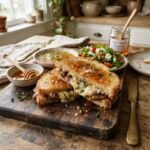
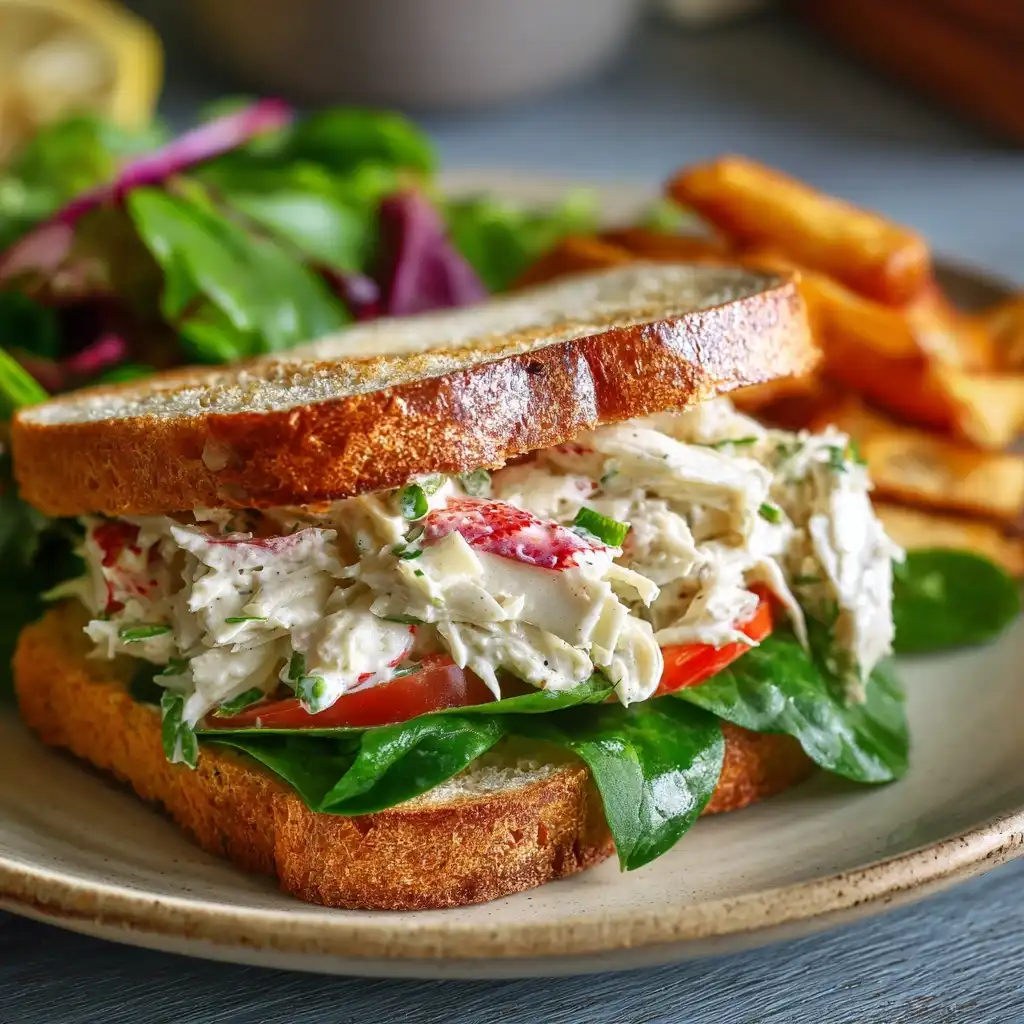
- Assemble with Precision: Place bottom slice, buttered-side down, on a clean board. Spoon chilled crab salad onto center—do not spread; let it mound naturally (approx. ¾ cup for standard sandwich). Top with optional extras: thinly sliced tomato, butter lettuce, microgreens, or avocado. Cap with top slice, buttered-side up. Press *gently* with fingertips—never smash.
- Final Touch & Serve: Slice diagonally with a serrated knife using light, sawing motion. Wipe blade between cuts. Serve immediately on chilled plates with lemon wedges, extra chives, and a small side of pickled vegetables or mixed greens dressed lightly with lemon vinaigrette.
Tips
- Temperature Control is Non-Negotiable: Keep crab meat, mayonnaise, and mixing bowl chilled (even refrigerate bowl 10 minutes beforehand). Warm ingredients cause fat to separate and accelerate moisture release.
- The “Less is More” Principle Applies Rigorously: Never exceed 1 cup total add-ins (celery, onion, herbs, capers) per 8 oz crab. Excess volume dilutes flavor and destabilizes texture.
- Salad Consistency Test: When lifted with a spoon, it should hold shape briefly before slowly settling—not runny, not stiff. If too wet, fold in 1 tsp very fine, dry breadcrumbs (panko) or crushed saltines. If too dry, add ½ tsp lemon juice + ½ tsp mayo, folded in gently.
- Bread Selection Science: Opt for bread with tight crumb and sturdy crust—brioche, challah, sourdough boule, or seeded rye. Avoid airy ciabatta or flimsy sandwich loaves that collapse under moisture. For gluten-free, choose dense almond-flour or tapioca-based artisanal loaves—not brittle rice cakes.
- Assembly Timing: Assemble no more than 5 minutes before serving. Even toasted bread absorbs ambient moisture quickly. If prepping ahead, store components separately: chilled salad in airtight container, toasted bread in paper bag (not plastic), toppings refrigerated.
- Cutting Technique Matters: Use a sharp, serrated knife dipped in cold water between cuts. Saw gently—pressing compresses the delicate crab and squeezes out dressing.
- Acidity Calibration: Taste *after chilling*. Cold suppresses acidity, so the salad may need a final ¼ tsp lemon juice or pinch of salt right before assembly.
- Leftover Wisdom: Unused crab salad keeps 1 day refrigerated (covered, no air exposure). Stir gently before reusing. Do not freeze—mayonnaise will break and crab becomes rubbery.
Variations and Customizations
The Crab Salad Sandwich is a masterclass in adaptable elegance. Below are thoughtfully developed variations—each preserving the core principles of balance, texture, and crab-forward integrity—while catering to diverse palates, seasons, and dietary frameworks:
- Coastal Citrus Twist: Replace lemon juice with equal parts blood orange and grapefruit juice; add 1 tsp grated blood orange zest and 2 tbsp finely diced fennel bulb (shaved thin with mandoline). Garnish with arugula and pickled red onions.
- Herbes de Provence Style: Omit dill/tarragon; use 1 tbsp chopped fresh thyme, 1 tsp lavender buds (food-grade), and 1 tsp herbes de Provence blend. Add 1 tbsp chopped sun-dried tomatoes (oil-packed, patted dry) and 1 oz crumbled goat cheese (folded in last, just before chilling).
- Spicy Remoulade Fusion: Swap Dijon for whole-grain mustard; replace ¼ cup mayo with Creole-style remoulade (homemade: mayo, stone-ground mustard, hot sauce, paprika, garlic, celery seed, green onions). Add 1 finely minced jalapeño (seeds removed) and 2 tbsp chopped roasted red peppers.
- Asian-Inspired Umami Boost: Substitute 2 tbsp toasted sesame oil + 1 tbsp rice vinegar for half the mayo and lemon; add 1 tsp grated fresh ginger, 1 scallion (thinly sliced), 1 tbsp toasted sesame seeds, and ½ tsp tamari. Serve in butter lettuce cups with quick-pickled daikon and carrot ribbons.
- Avocado-Cilantro Brightness: Fold in ½ ripe Hass avocado (diced small) *just before assembling* (not during chilling) to prevent browning. Add 2 tbsp chopped fresh cilantro and 1 tsp lime zest. Serve on grilled sourdough with radish sprouts.
- Low-Carb/Keto Wrapper: Skip bread entirely. Serve chilled salad in large butter lettuce leaves (Bibb or Boston), topped with crispy prosciutto shards and micro-cress. Or layer into halved, roasted endive spears for elegant presentation.
- Vegan “Crab” Alternative: Use hearts of palm (drained, rinsed, finely shredded) + king oyster mushrooms (pulled, sautéed with nori flakes, Old Bay–free spice blend, and kelp powder for oceanic depth). Bind with vegan aioli (aquafaba-based), lemon, dill, and capers. Texture and aroma closely mimic traditional experience.
- Brunch-Style Croissant: Use a split, warmed plain croissant. Spread interior with lemon-dill compound butter before filling. Top with a soft-poached egg and micro-chervil.
- Gourmet Deconstructed: Serve components family-style: chilled crab salad in center, toasted brioche points, heirloom tomato slices, shaved fennel, lemon wedges, and herb oil for drizzling. Guests assemble their own—maximizing freshness and interaction.
Health Considerations and Nutritional Value
A well-crafted Crab Salad Sandwich is nutritionally compelling—offering high-quality protein, heart-healthy fats, and bioactive micronutrients—though mindful preparation is key to optimizing benefits and minimizing drawbacks:
- Protein Powerhouse: 4 oz lump crab provides ~35g complete protein (all 9 essential amino acids), supporting muscle synthesis and satiety. Low in saturated fat (<0.2g per 4 oz), it’s among the leanest animal proteins available.
- Omega-3 Richness: Blue crab contains EPA and DHA omega-3 fatty acids—anti-inflammatory compounds linked to cardiovascular and cognitive health. Levels vary by harvest region and diet but remain significant compared to most finfish.
- Vitamin & Mineral Density: Exceptionally high in vitamin B12 (1,000%+ DV per serving), selenium (80% DV), zinc (25% DV), and copper (40% DV)—nutrients vital for energy metabolism, immune function, antioxidant defense, and neurological health.
- Calorie Consciousness: Base crab salad (8 oz crab + ¾ cup full-fat mayo) = ~750 kcal. Reduce to ~550 kcal by using ⅓ cup high-quality mayo + 2 tbsp Greek yogurt (adds creaminess, protein, and tang without diluting flavor). Avoid “fat-free” dressings—they increase sugar and chemical stabilizers.
- Sodium Awareness: Crab itself is naturally low-sodium (~200mg per 4 oz), but added salt, capers, Worcestershire, and bread contribute significantly. Control sodium by using unsalted butter on bread, low-sodium capers, and limiting added salt to ⅛ tsp—relying on lemon and herbs for flavor.
- Food Safety First: Pasteurized crab is safest for pregnant individuals, immunocompromised persons, and older adults. Always check “use-by” dates, refrigerate below 40°F, and consume within 24 hours of preparation. Never leave at room temperature >2 hours.
- Allergen Transparency: Crab is a major shellfish allergen. Clearly label if serving buffet-style. For nut allergies, ensure no cross-contact with walnut-based dressings or garnishes (some upscale versions use candied walnuts—avoid unless specified).
- Digestive Sensitivity Notes: High-fat mayo may trigger discomfort for those with gallbladder issues or IBS. Substitute with ½ cup mashed avocado + 2 tbsp lemon juice for creamy, fiber-rich binding. Increase soluble fiber via added jicama or shredded apple (tossed in lemon to prevent browning).
Per Standard Serving (8 oz lump crab, ¾ cup Duke’s mayo, ½ cup celery/onion/herbs, on 2 slices toasted brioche): Approx. 820 kcal, 42g protein, 62g fat (12g sat), 38g carbs (4g fiber, 5g sugars), 980mg sodium, 110% DV B12, 120% DV selenium.
Ingredients
- 8 ounces high-quality jumbo lump or backfin crab meat, picked over and patted very dry
- ¾ cup full-fat, high-quality mayonnaise (Duke’s, Hellmann’s Real, or homemade)
- 1 tablespoon Dijon mustard (smooth or grainy)
- 1½ tablespoons freshly squeezed lemon juice (plus extra for finishing)
- ¼ teaspoon Worcestershire sauce
- 2–3 drops Crystal or Tabasco hot sauce
- ¼ teaspoon kosher salt (Diamond Crystal), plus more to taste
- ⅛ teaspoon freshly ground white pepper
- ½ cup finely diced celery (¼-inch pieces, inner stalks preferred)
- ¼ cup finely minced red onion, soaked in ice water + ¼ tsp salt for 10 minutes, then thoroughly drained and squeezed dry
- 3 tablespoons finely chopped fresh flat-leaf parsley
- 1 tablespoon finely chopped fresh chives
- 1 teaspoon rinsed nonpareil capers OR 1 tablespoon finely minced cornichons
- 2 slices artisanal bread (brioche, challah, sourdough, or seeded rye), preferably day-old for sturdiness
- Unsalted butter, for toasting
- Optional garnishes: butter lettuce leaves, heirloom tomato slices, lemon wedges, microgreens, extra chives
Directions
- Inspect and Dry Crab: Place crab in a wide, shallow bowl. Carefully examine each piece under good light, removing any trace of shell or cartilage with tweezers or fingertips. If crab tastes overly salty, rinse *once* under cold water, then spread on triple-layered paper towels. Pat *vigorously* until completely dry—this step is critical for texture and stability.
- Prep Vegetables & Herbs: Dice celery uniformly. Soak minced red onion in ice water mixed with ¼ tsp salt for exactly 10 minutes. Drain, then squeeze firmly in paper towels to eliminate all excess moisture. Chop parsley and chives just before mixing to preserve brightness.
- Whisk Dressing Base: In a medium stainless-steel or glass bowl, combine mayonnaise, Dijon, lemon juice, Worcestershire, hot sauce, salt, and white pepper. Whisk vigorously for 45 seconds until thick, glossy, and fully emulsified—no streaks of oil or unmixed mustard.
- Integrate Aromatics: Add celery, drained red onion, parsley, chives, and capers (or cornichons) to the dressing. Using a flexible silicone spatula, fold gently 12–15 times with wide, upward strokes until evenly distributed but not homogenized.
- Enfold the Crab: Add half the crab to the bowl. Fold gently 6–8 times until just coated. Add remaining crab and fold exactly 4–5 more times—stop the moment crab is incorporated. You should still see distinct, plump lumps throughout.
- Chill with Intention: Cover bowl tightly with plastic wrap, pressing wrap directly onto salad surface. Refrigerate for 45–180 minutes. Do not exceed 3 hours—prolonged chilling draws out moisture and dulls flavor.
- Toast Bread to Perfection: Butter outer sides of bread slices generously. Heat a heavy-bottomed skillet over medium-low heat. Place bread butter-side down; toast 3–4 minutes until deeply golden and crisp. Flip and toast second side 2–3 minutes. Transfer to wire rack to cool slightly (maintains crispness).
- Assemble Thoughtfully: Place bottom slice on cutting board. Mound chilled crab salad (¾–1 cup) centrally—do not spread. Layer optional toppings (e.g., 2 thin tomato slices, 3 butter lettuce leaves). Cap with top slice, pressing gently once with fingertips.
- Finish & Serve: Cut diagonally with a serrated knife wiped clean between strokes. Arrange on chilled plate. Garnish with lemon wedge, extra chives, and a light dusting of white pepper. Serve immediately with a small side salad or kettle-cooked potato chips.
FAQ
- Can I use canned crab meat?
- Yes—but scrutinize labels. Choose “lump” or “special” crab packed in water (not brine), with no additives like starch or sodium tripolyphosphate. Drain thoroughly and rinse *once* in cold water, then pat *extremely* dry. Flavor and texture won’t match fresh/pasteurized, but it’s viable for budget-conscious or pantry-staple cooking.
- Why does my crab salad get watery?
- Three primary causes: 1) Insufficient drying of crab (most common), 2) Over-chilling (>3 hours), causing proteins to weep, or 3) Using watery ingredients (unsoaked onion, unwashed capers, un-drained cornichons). Always pat dry, soak aromatics, and chill precisely.
- Can I make it ahead for a party?
- Yes—with caveats. Prepare salad up to 3 hours ahead and keep chilled. Toast bread *immediately* before assembling. Set up a “build-your-own” station with chilled salad, toasted bread, garnishes, and lemon wedges—ensures peak freshness and texture for every guest.
- Is imitation crab (surimi) acceptable?
- It’s edible but nutritionally and sensorially inferior: highly processed, high in sodium and sugar, low in protein and omega-3s, with artificial “crab” flavor. Reserve for strict budget constraints or specific cultural preparations (e.g., Japanese-inspired rolls). It cannot replicate the delicate sweetness and tender chew of real crab.
- What’s the best bread for texture contrast?
- Brioche offers ideal balance—rich enough to complement crab, yet sturdy enough to resist sogginess when properly toasted. Challah provides similar luxury with slightly denser crumb. For rustic appeal, try a dense sourdough boule sliced ½-inch thick and griddled in clarified butter.
- How do I scale this for a crowd?
- Multiply ingredients proportionally, but mix in batches no larger than 16 oz crab per bowl to ensure even folding. Chill assembled mini-sandwiches (on slider buns or crostini) on parchment-lined sheet pans—cover loosely with damp paper towel + plastic wrap. Refresh toast under broiler 30 seconds before serving.
- Can I freeze crab salad?
- No. Freezing irreversibly breaks the mayonnaise emulsion, resulting in grainy, separated dressing, and turns crab rubbery and fibrous. However, you *can* freeze raw, shelled, uncooked crab meat for up to 6 months—thaw overnight in fridge before preparing.
- What wine or beverage pairs beautifully?
- Chilled, high-acid whites shine: Muscadet Sèvre-et-Maine (briny, citrusy), Albariño (peach, saline), or unoaked Chardonnay (apple, mineral). For non-alcoholic, try sparkling lemon-lavender water or chilled hibiscus-ginger shrub with soda.
Summary
The Crab Salad Sandwich is far more than a simple lunch—it’s a harmonious convergence of pristine seafood, intelligent technique, and thoughtful balance, where every ingredient exists to elevate, not obscure, the delicate sweetness and tender luxury of lump crab.
By mastering moisture control, respecting ingredient integrity, and embracing customizable elegance—from coastal citrus twists to keto lettuce wraps—this timeless dish transforms effortlessly from weeknight staple to celebratory centerpiece, always honoring its sun-kissed, bay-born soul.