Introduction
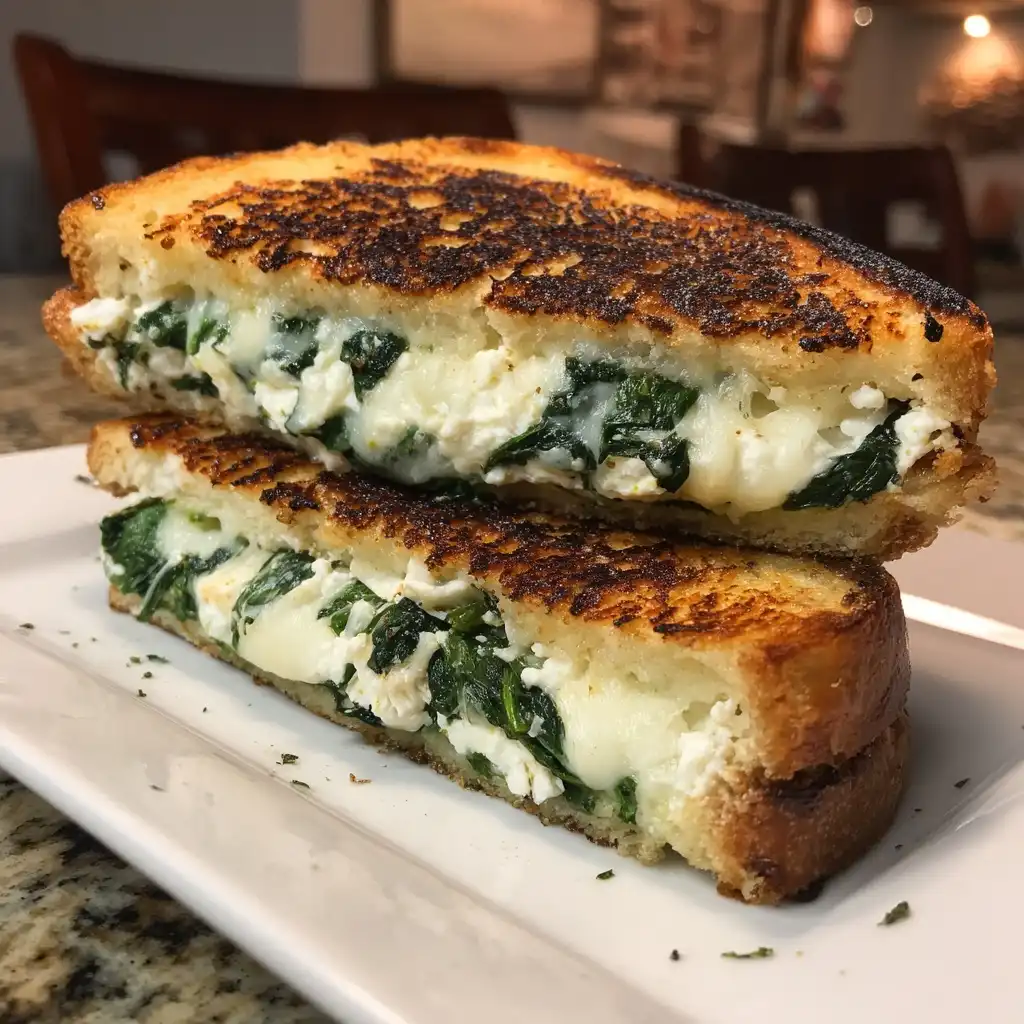
Spinach Feta Grilled Cheese is a gourmet twist on the beloved American comfort classic—elevating the humble grilled cheese sandwich with vibrant Mediterranean flavors, creamy tang, and nutrient-dense greens. This isn’t just a sandwich; it’s a harmonious fusion of textures and tastes: crisp golden-brown sourdough or artisanal bread encasing molten feta, sautéed spinach, caramelized onions (optional), and often a whisper of garlic, oregano, or lemon zest. Whether served as a cozy weeknight dinner, a satisfying lunchbox staple, or an unexpected crowd-pleaser at brunch or game-day gatherings, this variation delivers depth, brightness, and richness in every bite—without sacrificing the soul-soothing warmth and gooey satisfaction that defines the grilled cheese experience.
The History
The grilled cheese sandwich traces its roots to early 20th-century America, evolving from simple buttered bread-and-cheese combinations into a Depression- and wartime-era staple thanks to its affordability, shelf stability (especially with American cheese), and ease of preparation. By the 1940s and ’50s, it had become a fixture in school cafeterias and home kitchens alike. Meanwhile, feta cheese—crafted for over 3,000 years in the Mediterranean basin, particularly Greece—was traditionally made from sheep’s or goat’s milk and aged in brine, lending its signature salty, crumbly, and piquant character. Spinach, cultivated since ancient Persia and later embraced across Byzantine, Ottoman, and European cuisines, gained widespread popularity in Western diets after the mid-20th century, bolstered by nutritional advocacy and culinary globalization. The convergence of these three ingredients into a single sandwich emerged organically in the late 1990s and early 2000s, fueled by the farm-to-table movement, increased availability of high-quality imported feta, and growing consumer interest in globally inspired, health-conscious comfort food. Chefs and home cooks alike began experimenting—first in upscale diners and food trucks, then in cookbooks and viral food blogs—transforming the grilled cheese from nostalgic simplicity into a canvas for bold, regional storytelling. Today, Spinach Feta Grilled Cheese stands as a testament to culinary cross-pollination: an American icon reimagined through the sun-drenched lens of Greek and Levantine traditions.
Ingredients Breakdown
Each component in this sandwich plays a deliberate, synergistic role—not merely as filler, but as a contributor to structure, moisture balance, flavor layering, and textural contrast:
- Bread: A sturdy, medium-density loaf with a slight chew and open crumb—such as sourdough boule, whole-grain levain, ciabatta, or rustic rye—is essential. It must withstand generous filling without disintegrating, develop deep Maillard browning when grilled, and provide a neutral yet flavorful base that doesn’t compete with the feta’s intensity. Avoid ultra-soft, pre-sliced “sandwich bread” unless toasted first—it tends to steam rather than crisp and lacks structural integrity.
- Feta Cheese: Authentic Greek feta (PDO-certified, made from at least 70% sheep’s milk, aged in brine for minimum 2 months) offers unparalleled complexity—salty, lactic, slightly funky, and richly creamy when warmed. Its high moisture content helps create pockets of luxurious melt, while its crumbliness ensures even distribution. Domestic or Bulgarian feta can work, but avoid pre-crumbled feta from tubs—it’s often overly dry, coated in anti-caking starches, and lacks depth.
- Fresh Spinach: Baby spinach is preferred for its tender leaves, mild sweetness, and minimal fibrousness. Mature spinach works but requires careful stem removal and longer wilting to prevent excess water release. Spinach contributes earthy freshness, vibrant color, iron, folate, and antioxidants—and crucially, its natural moisture (when properly drained) aids gentle steaming of the cheese during grilling.
- Aromatics & Seasonings: Minced garlic (raw or lightly sautéed), finely diced red onion or shallots, and dried oregano or fresh dill are traditional enhancers. Lemon zest adds bright acidity to cut through feta’s saltiness; a splash of lemon juice stirred into the spinach just before assembling balances richness. A pinch of crushed red pepper flakes introduces subtle heat—a nod to Balkan spice traditions.
- Binders & Enhancers: A small amount of cream cheese, mascarpone, or Greek yogurt (1–2 tsp per sandwich) acts as a moisture buffer and emulsifier, helping the feta achieve a smoother, more cohesive melt without becoming greasy or separating. A light brush of olive oil or compound herb butter (garlic + parsley + lemon zest) on the exterior crust imparts aroma, sheen, and superior browning.
- Optional Luxe Additions: Caramelized onions (slow-cooked for 30+ minutes until jammy), sun-dried tomatoes (oil-packed, chopped), kalamata olives (pitted and minced), toasted pine nuts or walnuts, or a drizzle of high-quality extra-virgin olive oil post-grilling elevate complexity and mouthfeel.
Step-by-Step Recipe
- Prep the Spinach: Heat 1 tbsp extra-virgin olive oil in a wide skillet over medium heat. Add 1 small minced shallot or ¼ cup finely diced red onion; sauté 2–3 minutes until translucent. Stir in 1 clove finely minced garlic and cook 30 seconds until fragrant (do not brown). Add 5 oz (about 6 loosely packed cups) fresh baby spinach in batches, stirring constantly until wilted—about 90 seconds total. Remove from heat; season with ¼ tsp dried oregano, a pinch of black pepper, and optional zest of ½ lemon. Transfer to a fine-mesh strainer set over a bowl; press firmly with a spatula or clean kitchen towel to remove *all* excess liquid. Let cool completely—warm spinach will prematurely melt the feta and make the bread soggy.
- Prepare the Feta Mixture: In a small bowl, combine ¾ cup crumbled feta, 1 tbsp softened cream cheese (or full-fat Greek yogurt), and 1 tsp fresh lemon juice. Gently fold with a fork until just combined—do not overmix. The mixture should hold together when pressed but remain slightly crumbly. Optional: stir in 1 tbsp finely chopped kalamata olives or 1 tsp minced sun-dried tomato.
- Assemble Thoughtfully: Lay out 4 slices of bread (½-inch thick, ideally day-old for sturdiness). Spread 1 tsp softened, high-quality butter (or herb-infused compound butter) evenly on one side of each slice—the “outer” side that will contact the pan. On the *unbuttered* side of two slices, layer ¼ of the cooled, drained spinach mixture (approx. ⅓ cup), followed by ¼ of the feta mixture (about 3 tbsp), and optional additions (e.g., 1 tsp caramelized onions or 4–5 pine nuts). Top with remaining bread slices, buttered-side out.
- Grill with Precision: Preheat a heavy-bottomed skillet (cast iron preferred) or electric griddle over medium-low heat (325°F/163°C) for 5 minutes. Lightly grease surface with ½ tsp olive oil or clarified butter. Place sandwiches in pan; cover with a lid or inverted baking sheet for first 2 minutes—this traps gentle steam to begin melting the cheese without burning the bread. Uncover, and press gently with a spatula. Cook 3–4 minutes until deeply golden and crisp underneath, then carefully flip. Reduce heat to medium-low if browning too fast. Cover again for 1–2 minutes to finish melting. Total cook time: 8–10 minutes. Flip only once.
- Rest and Serve: Transfer sandwiches to a wire rack (not a plate—to prevent steaming the crust). Let rest 2 minutes—this allows residual heat to complete melting and lets fillings settle. Slice diagonally with a serrated knife. Serve immediately, optionally garnished with extra crumbled feta, a lemon wedge, fresh dill sprigs, or a final drizzle of EVOO.
Tips
- Bread Matters More Than You Think: Stale bread (12–24 hours old) absorbs less butter/oil and crisps better. If using fresh bread, lightly toast slices in a toaster oven at 350°F for 3 minutes before assembling.
- Drain Spinach Like Your Sandwich Depends on It: Squeeze spinach in a clean dish towel until no moisture remains—even a teaspoon of water can turn your crust limp and cause dangerous spattering in the hot pan.
- Temperature Control Is Non-Negotiable: Too hot = burnt bread, unmelted center. Too low = greasy, pale, gummy sandwiches. Use an infrared thermometer to verify pan surface temp stays between 300–350°F.
- Feta Needs Help Melting: Pure feta won’t “melt” like cheddar—it softens, pools, and becomes luxuriously creamy. The addition of cream cheese, yogurt, or a slice of mozzarella (1 thin strip per sandwich) provides casein proteins that improve stretch and cohesion.
- Pressing Technique: Use a bacon press, foil-wrapped brick, or second heavy skillet *only after flipping*—never press before flipping, as it forces filling out the sides. Press gently for 15 seconds, then release.
- Butter vs. Mayonnaise Debate: While mayo yields ultra-crisp, evenly browned crusts, it can mute delicate feta notes. For this recipe, cultured butter (like Kerrygold) or herb-oil blends offer superior flavor integration. Reserve mayo for bolder variations (e.g., with roasted peppers).
- Don’t Skip the Rest: Cutting too soon releases molten cheese and steam, resulting in a messy, cooler sandwich. Two minutes allows internal temperature to equalize and fillings to set just enough for clean slicing.
- Double-Batch Efficiency: Prepare spinach and feta mixtures ahead; store separately in airtight containers for up to 3 days refrigerated. Assemble sandwiches only 15 minutes before cooking.
Variations and Customizations
This recipe is inherently adaptable—celebrating regional interpretations and personal preferences without compromising its core identity:
- Greek-Inspired: Add 1 tsp chopped fresh dill + 1 tsp lemon zest to feta mixture; substitute arugula for half the spinach; top finished sandwich with crumbled dried oregano and a spoonful of tzatziki on the side.
- Mediterranean Mezze Style: Layer in 2 thin slices of grilled zucchini, 1 tbsp chopped roasted red peppers, and a sprinkle of capers. Finish with a dusting of sumac for tart, fruity brightness.
- Protein-Powered: Add 2 oz crumbled cooked lamb (seasoned with cumin and cinnamon) or shredded rotisserie chicken to the spinach mixture. A dollop of harissa paste adds North African heat.
- Vegan Adaptation: Use certified vegan feta (made from coconut oil, tofu, or almond base), massaged kale instead of spinach, and cashew-based “cream cheese.” Grill in refined coconut oil and finish with nutritional yeast and lemon juice.
- Breakfast Grilled Cheese: Incorporate 1 softly scrambled egg per sandwich (cool before assembling) and a thin slice of tomato. Swap oregano for fresh chives and add a pinch of smoked paprika.
- Gluten-Free Version: Choose a dense, high-protein GF bread (like Schär Artisan Baker or Three Bakers Sourdough) — toast first, then butter generously. Ensure all add-ins (e.g., sun-dried tomatoes) are GF-certified.
- Low-Carb/Keto Option: Replace bread with large portobello mushroom caps (stemmed, gills scraped, brushed with olive oil, roasted 10 mins at 400°F) or thick slices of grilled eggplant. Fill with feta-spinach mixture and broil 2–3 minutes until bubbly.
- Sweet-Savory Twist: Add 1 tsp fig jam or quince paste to the feta mixture; garnish with micro basil and a flaky sea salt finish. Pairs beautifully with a robust Cabernet Sauvignon.
Health Considerations and Nutritional Value
A single serving (one 2-slice sandwich made with 2 slices sourdough, ¾ cup feta, 5 oz spinach, 1 tbsp olive oil, and 1 tsp cream cheese) contains approximately:
- Calories: 520–580 kcal
- Protein: 22–26 g (feta and spinach contribute high-quality plant and dairy protein)
- Fat: 32–36 g (predominantly heart-healthy monounsaturated fats from olive oil and feta; ~12 g saturated fat—moderate intake recommended)
- Carbohydrates: 36–40 g (mostly complex carbs and fiber from whole-grain bread and spinach; glycemic load remains low)
- Fiber: 5–7 g (from spinach, whole grains, and optional additions like sun-dried tomatoes)
- Vitamins & Minerals: Exceptionally high in calcium (35% DV), vitamin K (over 300% DV from spinach), folate (60% DV), iron (25% DV non-heme, enhanced by vitamin C from lemon), and probiotics (if using fermented sourdough and brined feta).
Considerations: Sodium content is elevated (~950–1,200 mg) primarily from feta and brined ingredients—those on sodium-restricted diets can reduce feta to ½ cup and rinse it under cold water for 30 seconds before crumbling. For lactose sensitivity, authentic Greek feta contains minimal lactose (<0.1g per ounce) due to aging and whey drainage—most individuals tolerate it well. To boost omega-3s, add 1 tsp ground flaxseed or chia seeds to the feta mixture. Pairing with a mixed green salad dressed in lemon-tahini vinaigrette further enhances micronutrient density and digestive balance.
Ingredients
- 5 oz (about 6 cups loosely packed) fresh baby spinach
- 1 tbsp extra-virgin olive oil, plus more for brushing
- ¼ cup finely diced red onion or 1 small shallot, minced
- 2 cloves garlic, finely minced
- ¼ tsp dried oregano
- Pinch of freshly ground black pepper
- Zest of ½ lemon (optional but recommended)
- ¾ cup authentic Greek feta cheese, crumbled (PDO-certified preferred)
- 1 tbsp full-fat cream cheese or plain whole-milk Greek yogurt
- 1 tsp fresh lemon juice
- 4 slices artisan bread (sourdough, ciabatta, or whole-grain levain), ½-inch thick
- 4 tbsp unsalted cultured butter, softened (or herb compound butter)
- Optional: 2 tbsp caramelized onions, 1 tbsp chopped kalamata olives, 1 tsp chopped sun-dried tomatoes, 1 tsp toasted pine nuts
- For serving: Extra-virgin olive oil, lemon wedges, fresh dill or oregano
Directions
- In a large skillet over medium heat, warm 1 tbsp olive oil. Add red onion (or shallot) and sauté until soft and translucent, about 3 minutes. Stir in garlic and cook 30 seconds until fragrant.
- Add spinach in batches, stirring constantly until fully wilted—about 90 seconds total. Remove from heat and stir in oregano, black pepper, and lemon zest. Transfer to a fine-mesh strainer over a bowl; press vigorously with a spatula or clean towel to extract *all* moisture. Let cool completely.
- In a small bowl, combine feta, cream cheese (or yogurt), and lemon juice. Gently fold with a fork until just incorporated—do not overwork. Fold in optional add-ins if using.
- Butter one side of each bread slice. On the unbuttered side of two slices, evenly divide the cooled spinach, then top with feta mixture. Close sandwiches with remaining bread, buttered sides out.
- Heat a heavy skillet or griddle over medium-low heat (325°F) for 5 minutes. Lightly grease surface with olive oil. Place sandwiches in pan, cover, and cook 2 minutes. Uncover, press gently, and cook uncovered 3–4 minutes until golden. Flip carefully, reduce heat slightly if needed, cover again, and cook 3–4 more minutes until second side is deep golden and cheese is fully melted and bubbling at edges.
- Transfer to a wire rack. Rest 2 minutes. Slice diagonally and serve immediately with lemon wedges and a drizzle of high-quality olive oil.
FAQ
- Can I use frozen spinach?
- Yes—but thaw completely, then squeeze *aggressively* in a towel until bone-dry. Frozen spinach contains significantly more water than fresh and requires extra diligence to prevent sogginess. Expect milder flavor and softer texture.
- Why does my feta not melt smoothly?
- Feta is a brined, high-acid, low-moisture cheese designed to hold shape—not melt like cheddar. Its “melt” is actually softening and pooling. Adding cream cheese, yogurt, or a small amount of mozzarella improves cohesion and creaminess. Also ensure your pan isn’t too cool—the residual heat from proper grilling is key.
- Can I make this ahead for meal prep?
- The spinach and feta mixtures can be prepped and refrigerated separately for up to 3 days. However, *do not assemble sandwiches ahead*—bread will absorb moisture and become gummy. Assemble and grill within 15 minutes of serving for optimal texture.
- What’s the best bread for gluten-free versions?
- Look for dense, high-fiber GF loaves with xanthan gum and psyllium husk for binding—like Schar Artisan Baker Sourdough or Canyon Bakehouse Heritage Grain. Toast slices first to improve structure, then butter generously. Avoid light, airy GF breads—they disintegrate under heat and filling weight.
- Is there a way to make it lower in sodium?
- Rinse feta under cold water for 30 seconds before crumbling to remove surface brine (reduces sodium by ~15%). Use only ½ cup feta and supplement with 2 tbsp ricotta or mascarpone for creaminess. Skip added salt elsewhere—rely on lemon, herbs, and garlic for seasoning.
- Can I bake these instead of grilling?
- Air frying yields excellent results: preheat air fryer to 370°F, spray basket with oil, place assembled sandwiches inside (leave space), and cook 6–7 minutes, flipping halfway. For oven baking: place on parchment-lined sheet, bake at 375°F for 12–15 minutes, flipping at 7 minutes—though crust won’t be as crisp as pan-grilled.
- How do I prevent sticking?
- Use a well-seasoned cast iron or high-quality nonstick skillet. Ensure pan is fully preheated *before* adding oil, then let oil shimmer (not smoke) before placing sandwiches. Butter the *bread*, not the pan—this creates a natural nonstick barrier. Never move sandwiches during first 2–3 minutes of cooking.
- What wine or beverage pairs best?
- A crisp, high-acid white such as Assyrtiko (Greek), Vermentino (Sardinian), or Albariño complements the salt and tang beautifully. For red lovers, try a light-bodied, low-tannin Pinot Noir. Non-alcoholic options: sparkling lemon water with mint, chilled hibiscus tea, or a cucumber-dill infused sparkling water.
Summary
Spinach Feta Grilled Cheese masterfully bridges rustic American tradition and sun-kissed Mediterranean flair—transforming pantry staples into a sophisticated, nutrient-rich, and deeply comforting experience. With meticulous attention to moisture control, cheese selection, and layered seasoning, it delivers golden crispness, creamy-tangy richness, and garden-fresh vibrancy in every perfectly balanced bite.
Whether customized for dietary needs, elevated with seasonal produce, or prepared for a quiet solo lunch or lively gathering, this sandwich proves that the most beloved classics evolve not by abandoning their roots—but by embracing new flavors, textures, and intentions with authenticity and care.