Introduction
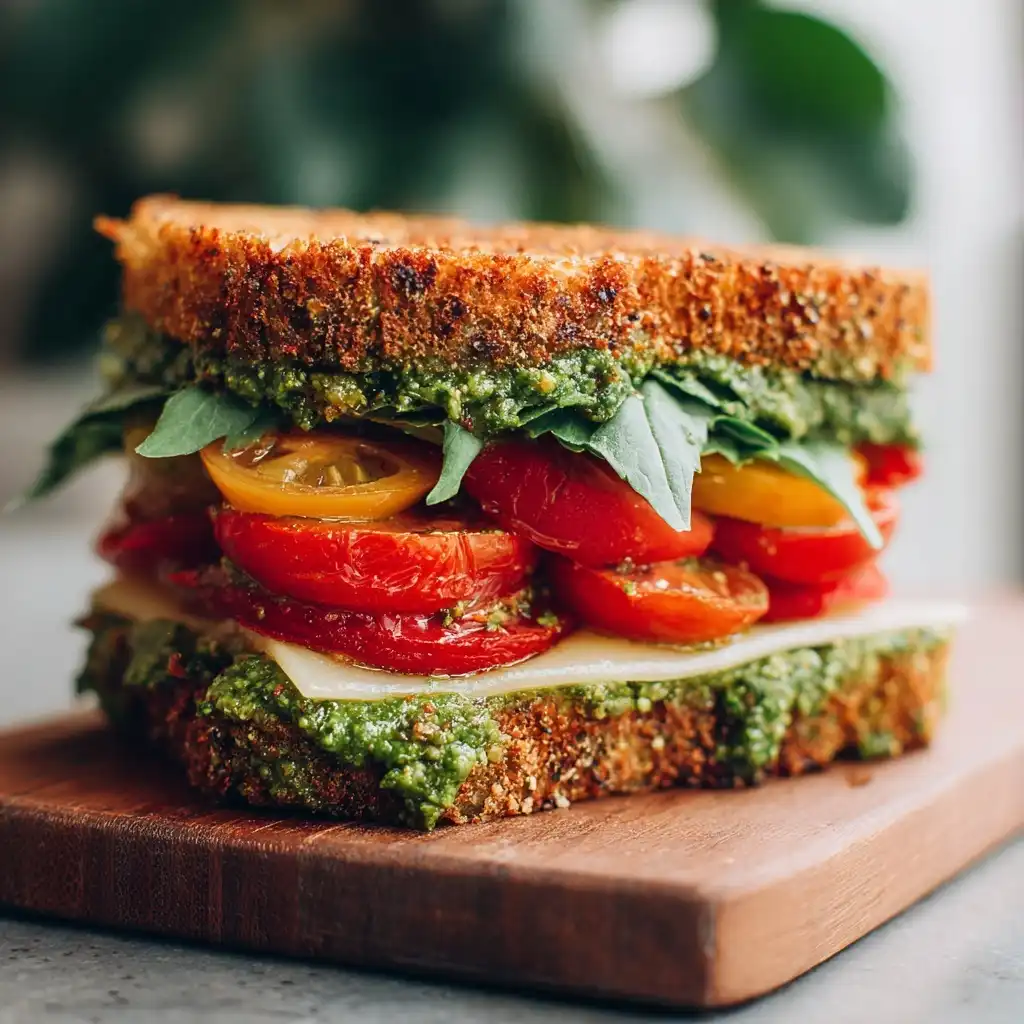
The Vegan Pesto Tomato Sandwich is a vibrant, nutrient-dense, and deeply satisfying plant-based meal that marries the bold, herbaceous richness of homemade vegan pesto with the juicy sweetness of ripe, in-season tomatoes—all nestled between slices of artisanal, toasted bread. Far from being a mere meatless alternative, this sandwich stands proudly on its own as a celebration of fresh, whole-food ingredients, thoughtful texture contrast, and layered flavor complexity. It’s equally at home as a quick weekday lunch, a picnic centerpiece, a sophisticated appetizer platter addition, or even a light yet fulfilling dinner option. Whether you’re a committed vegan, a flexitarian exploring more plant-forward meals, or simply someone who appreciates bright, garden-fresh flavors, this sandwich delivers freshness, heartiness, and culinary joy in every bite.
The History
Pesto’s origins trace back to Genoa, Italy, where traditional pesto alla genovese has been hand-ground for centuries using a mortar and pestle—its name derived from the Italian verb pestare, meaning “to crush” or “to pound.” The classic version features fresh basil, pine nuts, garlic, extra-virgin olive oil, and grated Parmigiano-Reggiano (a dairy-based cheese). As plant-based eating gained global momentum in the late 20th and early 21st centuries, chefs and home cooks began reimagining pesto to align with ethical, environmental, and dietary values—replacing cheese with nutritional yeast, miso, tofu, or soaked cashews to replicate umami depth and creamy body. Meanwhile, the tomato sandwich—a humble American staple born from the summer abundance of heirloom tomatoes, mayonnaise (often swapped for vegan versions), and soft white bread—has long been revered for its simplicity and seasonal purity. The fusion of these two iconic traditions—the Italian herbaceousness of pesto and the American reverence for peak-ripeness tomato—gave rise to the Vegan Pesto Tomato Sandwich: a cross-cultural, plant-powered homage that honors tradition while boldly evolving it for modern values and palates.
Ingredients Breakdown
Every element of this sandwich plays a deliberate role—not just in flavor, but in texture, nutrition, and sensory harmony:
- Fresh Basil Leaves: The aromatic soul of pesto—packed with antioxidants (vitamin K, A, and C), volatile oils like eugenol and linalool (with anti-inflammatory properties), and a bright, slightly peppery sweetness that lifts the entire composition.
- Vegan Parmesan Alternative: Typically made from nutritional yeast, raw cashews, garlic powder, and sea salt—this blend delivers the savory, cheesy, umami-rich notes essential to authentic pesto without dairy. Nutritional yeast is a complete protein source rich in B-complex vitamins (especially B12 when fortified).
- Raw Pine Nuts (or Substitutes): Toasted lightly for depth, they contribute buttery richness, magnesium, zinc, and heart-healthy monounsaturated fats. For affordability or allergy concerns, walnuts, almonds, sunflower seeds, or pepitas offer excellent textural and nutritional alternatives—each bringing its own subtle nuance (e.g., walnuts add earthiness; sunflower seeds lend mild nuttiness and extra vitamin E).
- Extra-Virgin Olive Oil: Cold-pressed and unrefined, it’s not just a binder—it’s a carrier of polyphenols (oleocanthal, known for its ibuprofen-like anti-inflammatory effects) and oleic acid, which supports cardiovascular health. Its fruity, grassy finish balances the pungency of garlic and the sweetness of tomato.
- Garlic & Lemon Juice: Garlic provides allicin (a potent immune-supportive compound activated upon crushing), while fresh lemon juice adds acidity that brightens the pesto, preserves its vibrant green color, and enhances mineral absorption (like non-heme iron from leafy greens or seeds).
- Ripe Heirloom Tomatoes: Not just any tomato will do—look for vine-ripened, locally grown varieties like Brandywine, Cherokee Purple, or Sun Gold cherry tomatoes for maximum sugar content, juiciness, and lycopene (a powerful carotenoid antioxidant whose bioavailability increases when paired with healthy fats like olive oil).
- Artisan Bread: Sourdough, ciabatta, or whole-grain rustic loaf provides structure, chew, and fermented tang. Sourdough offers prebiotic benefits and improved digestibility due to lactic acid bacteria activity; whole-grain options add fiber, B vitamins, and phytonutrients.
- Optional Enhancements: Baby arugula or spinach for peppery contrast and extra folate; thinly sliced red onion for sharpness and quercetin; avocado slices for creaminess and potassium; capers or kalamata olives for briny complexity; micro basil or edible flowers for visual elegance and delicate aroma.
Step-by-Step Recipe
- Toast the Nuts (5 min): Place ¼ cup raw pine nuts (or walnuts/almonds) in a dry skillet over medium-low heat. Stir constantly until fragrant and lightly golden—about 3–4 minutes. Transfer immediately to a cool plate to halt cooking and prevent bitterness. Let cool completely.
- Prepare the Vegan Pesto (8–10 min): In a food processor or high-speed blender, combine 2 cups packed fresh basil leaves (stems removed), cooled toasted nuts, 3 tbsp nutritional yeast, 1 small clove garlic (peeled and smashed), ¼ tsp fine sea salt, and a pinch of black pepper. Pulse 5–6 times to coarsely chop. With the motor running, slowly drizzle in ⅓ cup extra-virgin olive oil until emulsified and smooth. Add 1 tbsp fresh lemon juice and pulse once more. Taste and adjust: more salt for depth, lemon for brightness, or a splash of water (½ tsp at a time) if too thick. Set aside.
- Prep the Tomatoes (3 min): Select 2 large, ripe heirloom tomatoes (approx. 1 lb total). Rinse gently, pat dry, and slice ¼-inch thick. Arrange slices on a wire rack or paper towel-lined plate to drain excess surface moisture—critical for preventing soggy bread. Lightly season both sides with flaky sea salt and let sit 2 minutes to draw out juices and enhance sweetness.
- Toast the Bread (4 min): Preheat a panini press, griddle, or heavy skillet over medium heat. Lightly brush both sides of 4 slices of rustic bread (½ inch thick) with olive oil or vegan butter. Toast until deeply golden and crisp—about 2–3 minutes per side. Alternatively, bake at 375°F for 8–10 minutes, flipping halfway, for even, oven-toasted crunch.
- Assemble with Intention (2 min): Spread a generous 2 tbsp of pesto onto one toasted slice. Layer 3–4 tomato slices evenly, overlapping slightly. Optional: tuck in a small handful of baby arugula or a few thin red onion rings. Top with second slice of pesto-smeared toast. Press gently—not too hard—to encourage cohesion without squeezing out juices. Slice diagonally for presentation and ease of eating.
Tips
- Use Day-Old Bread: Slightly drier bread absorbs pesto and tomato juices without disintegrating. If using fresh loaves, toast them a bit longer—or let slices air-dry uncovered for 15 minutes before toasting.
- Chill Your Pesto Bowl: Before blending, place your food processor bowl and blade in the freezer for 5 minutes—this prevents heat-induced oxidation that can dull the pesto’s green hue and herbal brightness.
- Layer Strategically: Always place pesto directly on the bread—not on the tomato—to create a moisture barrier. This keeps the bread crisp and prevents dilution of the pesto’s flavor.
- Season Tomatoes Just Before Assembly: Salting too early draws out *too much* moisture and can make tomatoes mealy. Wait until 2 minutes before building.
- Press Gently, Serve Immediately: While a light press helps meld flavors, over-compressing squeezes out precious tomato nectar—the very essence of summer! Enjoy within 10 minutes of assembly for optimal texture.
- Scale Up Smartly: Double the pesto recipe and store in an airtight jar topped with a ¼-inch layer of olive oil in the fridge for up to 1 week—or freeze in ice cube trays for up to 3 months. Thaw overnight in the fridge and stir well before use.
- Acid Is Your Ally: If your pesto tastes flat, don’t reach for more salt first—try adding ½ tsp more lemon juice. Acidity awakens all other flavors and balances fat and umami.
Variations and Customizations
This sandwich is endlessly adaptable—here are inspired riffs for every season, pantry, and palate:
- Herb-Forward Summer Version: Swap half the basil for fresh mint, cilantro, or parsley. Add 1 tsp chopped chives and ½ tsp lemon zest to the pesto. Use heirloom cherry tomatoes halved and tossed with balsamic glaze.
- Autumn Roasted Veggie Twist: Replace raw tomatoes with roasted heirloom tomato halves (tossed in olive oil, thyme, and smoked paprika, roasted at 400°F for 20 mins until caramelized). Add a smear of white bean purée beneath the pesto for extra creaminess and protein.
- Mediterranean-Inspired: Blend sun-dried tomatoes (oil-packed, drained) into the pesto for deep umami. Layer with crumbled vegan feta (made from tofu or almond milk), kalamata olives, and roasted red peppers.
- Protein-Powered Power Sandwich: Add a thin layer of marinated baked tofu, spiced chickpea mash, or lentil-walnut pâté beneath the pesto. Sprinkle toasted hemp seeds or pumpkin seeds on top for crunch and omega-3s.
- Low-Carb/Keto-Friendly: Skip the bread entirely—serve pesto and tomato stacks wrapped in large butter lettuce leaves or grilled portobello mushroom caps. Drizzle with truffle oil and finish with Maldon salt.
- Gluten-Free Adaptation: Use certified GF sourdough, buckwheat crepes, or thick slices of grilled eggplant as the “bread.” Ensure nutritional yeast is GF-certified (most are, but always verify).
- Kid-Friendly Mild Version: Omit garlic from the pesto (or use just ½ clove), increase lemon juice slightly, and add 1 tsp maple syrup for gentle sweetness. Use mild basil and skip onions or arugula.
- Restaurant-Quality Presentation: Pipe pesto in a spiral using a piping bag with a star tip. Fan tomato slices like a flower, garnish with microgreens, edible pansies, and a delicate drizzle of aged balsamic reduction and chili oil.
Health Considerations and Nutritional Value
A single serving (2 slices, approx. 1 sandwich) provides approximately 420–480 calories, depending on bread choice and oil quantity—with a remarkably balanced macronutrient profile: ~22g healthy fats (primarily monounsaturated), ~10g plant-based protein, and ~45g complex carbohydrates (including 6–8g dietary fiber). From a micronutrient standpoint, it’s a powerhouse: delivering over 300% DV of vitamin K (essential for blood clotting and bone metabolism), 120% DV of vitamin C (immune support and collagen synthesis), significant lycopene (linked to reduced risk of prostate cancer and cardiovascular disease), ample magnesium (muscle and nerve function), and gut-supportive prebiotics from fermented sourdough and fiber-rich tomatoes and basil. The absence of cholesterol, added sugars, and refined oils makes it heart- and diabetes-friendly. For those monitoring sodium: choose low-sodium nutritional yeast and limit added salt—relying instead on lemon, herbs, and umami-rich ingredients for flavor. Those with nut allergies can confidently substitute seeds (sunflower, pumpkin, hemp) without sacrificing nutrition or texture. And because every ingredient is whole-food and minimally processed, this sandwich supports sustained energy, satiety, and systemic inflammation reduction—making it far more than lunch: it’s functional, joyful nourishment.
Ingredients
- ¼ cup raw pine nuts (or walnuts, almonds, or sunflower seeds)
- 2 cups packed fresh basil leaves, stems removed
- 3 tablespoons nutritional yeast (fortified with B12)
- 1 small clove garlic, peeled and smashed
- ¼ teaspoon fine sea salt, plus more for tomatoes
- Pinch of freshly ground black pepper
- ⅓ cup extra-virgin olive oil (high-quality, cold-pressed)
- 1 tablespoon fresh lemon juice (plus zest optional)
- 2 large ripe heirloom tomatoes (Brandywine, Cherokee Purple, or Beefsteak), approx. 1 lb
- 4 thick slices artisan sourdough, ciabatta, or whole-grain rustic bread (½ inch thick)
- Extra-virgin olive oil or vegan butter, for toasting bread
- Flaky sea salt (such as Maldon), for finishing
- Optional additions: Handful of baby arugula or spinach, 2–3 thin rings of red onion, ¼ avocado (sliced), 1 tsp capers, micro basil
Directions
- Toast the nuts: Heat a small skillet over medium-low heat. Add pine nuts and toast, stirring constantly, until golden and fragrant (3–4 minutes). Transfer to a plate to cool completely.
- Make the pesto: In a food processor, combine cooled nuts, basil, nutritional yeast, garlic, salt, and pepper. Pulse 5–6 times until coarsely chopped. With motor running, slowly stream in olive oil until smooth and emulsified. Add lemon juice and pulse once more. Taste and adjust seasoning. Transfer to a small bowl and cover.
- Prepare tomatoes: Slice tomatoes ¼-inch thick. Place slices on a wire rack or paper towels. Lightly sprinkle both sides with flaky sea salt and let rest 2 minutes.
- Toast bread: Brush both sides of each bread slice with olive oil or vegan butter. Toast in a skillet, panini press, or oven until deeply golden and crisp.
- Assemble: Spread 2 tablespoons pesto evenly on each of two toasted slices. Layer tomato slices on one slice. Add optional greens, onion, or avocado. Top with second pesto-smeared slice. Press gently. Slice diagonally and serve immediately.
FAQ
- Can I make this sandwich ahead of time?
- For best texture and flavor, assemble no more than 10 minutes before serving. However, you can prep components up to 3 days ahead: pesto (stored under olive oil in the fridge), toasted bread (cool completely and store airtight), and tomato slices (drained and chilled separately). Assemble just before eating.
- Why does my pesto turn brown?
- Oxidation—exposure to air and heat—causes basil’s chlorophyll to break down. Prevent it by chilling your equipment, using lemon juice (its acidity slows oxidation), covering pesto tightly with a thin layer of olive oil, and storing in glass (not plastic) containers.
- Is nutritional yeast necessary?
- It’s highly recommended for authentic umami and cheesy depth—but not strictly mandatory. Substitute 1 tsp white miso paste + 1 tbsp raw cashew butter for similar savoriness, though flavor profile shifts slightly. Avoid skipping entirely, as it balances the fat and herbs.
- Can I use dried basil?
- No—dried basil lacks the volatile oils and fresh vibrancy essential to true pesto. Its flavor is muted and medicinal. If fresh basil is unavailable, try a combination of fresh parsley, spinach, and a small amount of fresh mint—but label it “herb pesto,” not basil pesto.
- My sandwich is soggy—what went wrong?
- Three likely culprits: (1) Tomatoes weren’t properly drained before assembly; (2) Pesto was spread on tomatoes instead of bread, eliminating the moisture barrier; (3) Bread wasn’t toasted long enough or was too soft/fragile. Always drain, layer pesto-on-bread, and toast thoroughly.
- How do I store leftover pesto?
- Transfer to a clean, dry glass jar. Smooth the top, then pour a ¼-inch layer of olive oil over the surface to seal out air. Refrigerate for up to 7 days. Stir well before using. For longer storage, freeze in silicone ice cube trays—pop out cubes and store in a freezer bag for up to 3 months.
- Is this sandwich suitable for meal prep?
- While not ideal for full assembly, it’s excellent for component prep: make pesto, toast and cool bread, and wash/drain tomatoes the night before. Store each separately in airtight containers in the fridge. Assemble in under 90 seconds the next day.
- What wine or beverage pairs well?
- A crisp, herbaceous Sauvignon Blanc or dry Rosé complements the basil and tomato beautifully. For non-alcoholic options: sparkling water with lemon and fresh basil, chilled hibiscus iced tea, or a verdant green smoothie with cucumber, apple, and mint.
Summary
The Vegan Pesto Tomato Sandwich is a masterclass in minimalist, ingredient-driven excellence—where sun-ripened tomatoes, vibrant basil pesto, and crusty artisan bread converge into a symphony of freshness, umami, and texture. It’s a celebration of seasonality, compassion, and culinary intention—nourishing the body, delighting the senses, and honoring the earth—one extraordinary bite at a time.