Introduction
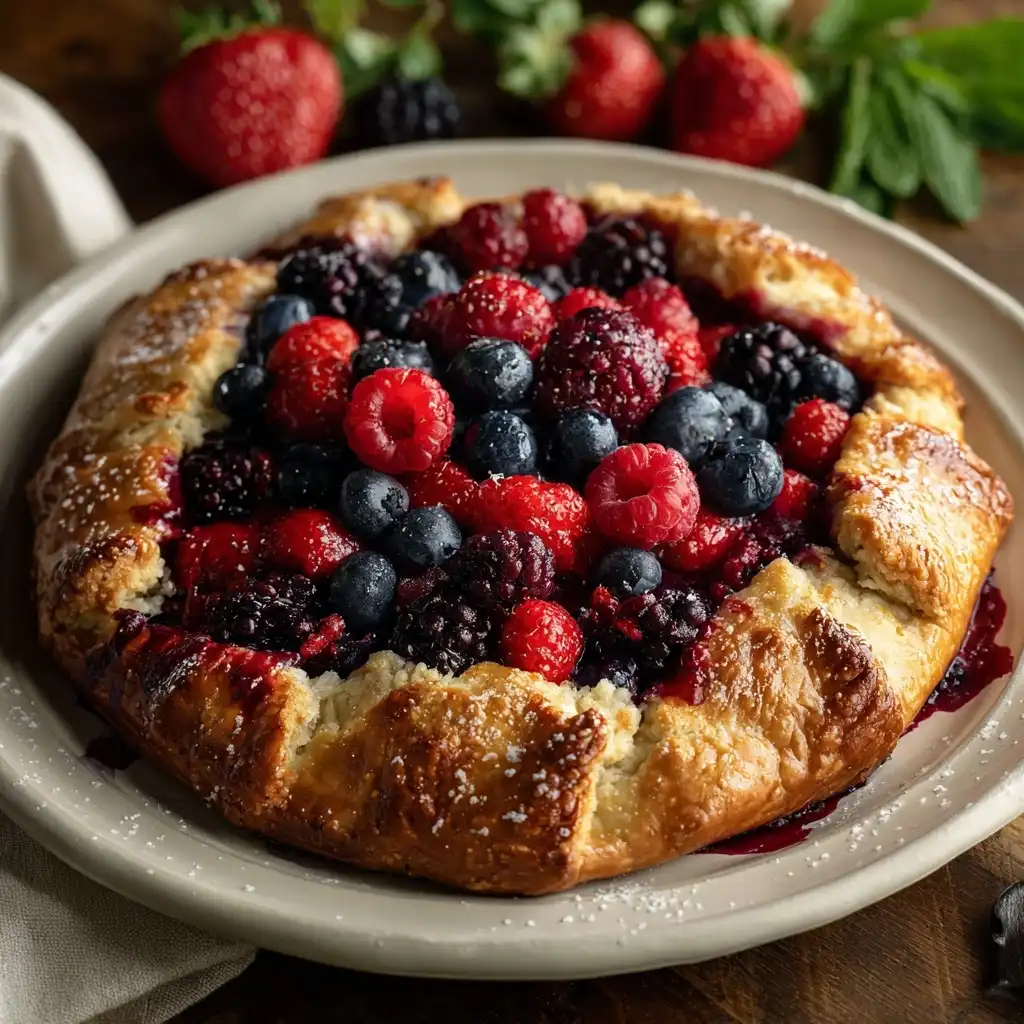
A Mixed Berry Galette is the rustic, free-form cousin of the classic pie—a celebration of simplicity, seasonal abundance, and unpretentious elegance. Unlike its meticulously crimped and double-crust counterpart, the galette embraces imperfection: a single sheet of tender, buttery pastry draped over a vibrant, jewel-toned filling of ripe berries, then gently folded up at the edges to cradle the fruit as it bubbles and caramelizes in the oven. It’s approachable for bakers of all levels—no pie plates, no fancy fluting tools, no pressure to achieve symmetry—yet delivers extraordinary depth of flavor, textural contrast (crisp, shatteringly flaky crust against jammy, slightly tart-sweet fruit), and visual charm that makes it equally at home on a Sunday brunch table, a summer picnic blanket, or an elegant dinner party dessert cart. More than just a recipe, the mixed berry galette embodies the spirit of mindful baking: honoring fresh, local ingredients, minimizing waste (stale pastry scraps become decorative cut-outs or cinnamon sugar twists), and inviting creativity with every fold and brush of egg wash.
The History
The galette traces its roots to rural France—specifically the Brittany region—where it began centuries ago as a humble, practical “flat cake” (galette derives from the Old French galet, meaning “pebble,” likely referencing its round, flat shape). Originally made with buckwheat flour (souchet) and cooked on hot stones or griddles, savory versions—like the iconic galette complète with ham, cheese, and egg—predominated. The sweet fruit galette evolved later, particularly in Normandy and the Loire Valley, where orchards and hedgerows offered abundant apples, pears, and wild berries. Its rise in popularity coincided with the democratization of refined wheat flour and the proliferation of home ovens in the 19th and early 20th centuries. In America, the galette gained widespread affection during the artisanal food movement of the 1990s and 2000s, championed by chefs like Alice Waters and baker Cheryl Day for its authenticity, flexibility, and emphasis on ingredient integrity. Today, the mixed berry galette stands as a transatlantic symbol of culinary minimalism—bridging French tradition with New World seasonality—and remains one of the most beloved expressions of summer’s fleeting sweetness.
Ingredients Breakdown
Every exceptional mixed berry galette begins with intentionality—not just in selection, but in understanding the functional role each component plays:
- All-Butter Pastry Dough: The foundation. Unsalted butter (preferably European-style, 82–84% fat) provides unparalleled flakiness and rich flavor; its cold temperature is non-negotiable for creating distinct, steam-driven layers. Pastry flour (low-protein, ~8–9%) yields tenderness, while a small amount of bread flour (10–12%) can add subtle structure if rolling thin. Vinegar or vodka (1–2 tsp) inhibits gluten formation, ensuring tenderness without toughness. A pinch of fine sea salt enhances all other flavors and balances sweetness.
- Mixed Berries: The soul. A dynamic blend is key—typically 2 parts tart (raspberries, blackberries) to 1 part sweet (blueberries, strawberries, golden raspberries). Fresh, peak-season berries offer optimal juiciness and acidity; frozen berries (unsweetened, thawed & drained) are a viable off-season alternative but require extra thickener and longer baking. Wild berries (salmonberries, huckleberries, cloudberries) add extraordinary nuance when available. Never skip the gentle toss with sugar and lemon juice—it draws out juices, jumpstarts maceration, and brightens flavor.
- Sweetener: Granulated sugar provides structure and caramelization; light brown sugar adds molasses depth and moisture retention. Honey or maple syrup (1–2 tbsp) can replace part of the sugar for complex floral notes and enhanced gloss, but reduce other liquids slightly.
- Thickener: Critical for preventing a soggy bottom. Cornstarch offers clarity and strong thickening power (1.5–2 tsp per cup of berries); tapioca starch (instant or pearls, pulsed fine) yields a glossy, chewier set ideal for juicy berries; arrowroot is neutral and freeze-thaw stable but less heat-stable. Flour works in a pinch but can mute flavor and create opacity.
- Acid & Aromatics: Fresh lemon juice (1–2 tsp) is essential—it cuts richness, heightens berry brightness, and prevents cloying sweetness. Lemon zest (from 1/2 lemon) adds volatile citrus oils for aromatic lift. A tiny pinch of ground cardamom, vanilla bean paste (½ tsp), or even a whisper of black pepper can elevate complexity without overpowering.
- Finishing Touches: An egg wash (1 egg + 1 tsp cream/milk) ensures deep golden color and shine. Coarse turbinado or demerara sugar sprinkled pre-bake delivers delightful crunch and sparkle. A final drizzle of warm honey or reduction of berry syrup post-bake adds luxurious sheen and intensified fruit essence.
Step-by-Step Recipe
- Prepare the Dough (30 minutes + 2+ hours chilling): In a food processor, pulse 1 ¼ cups (160g) chilled, cubed unsalted butter with 2 cups (250g) chilled all-purpose or pastry flour, 1 tbsp granulated sugar, and ½ tsp fine sea salt until mixture resembles coarse meal with pea-sized butter pieces. Add 3–4 tbsp ice water, 1 tbsp at a time, pulsing just until dough begins to clump. Add 1 tsp apple cider vinegar. Pulse once more. Turn onto parchment; gather into two discs (one slightly larger for base, one smaller for optional decorative top). Wrap tightly; refrigerate min. 2 hours (ideally overnight).
- Prep Berries (15 minutes, best done 1 hour ahead): In a large bowl, combine 4 cups (600g) mixed fresh berries (e.g., 1.5 cups blackberries, 1 cup raspberries, 1 cup blueberries, ½ cup sliced strawberries), ⅓ cup (65g) granulated sugar, 2 tbsp light brown sugar, 1 tbsp fresh lemon juice, 1 tsp lemon zest, ¼ tsp ground cardamom (optional), and 2 tbsp cornstarch (or 1.5 tbsp tapioca starch). Gently toss—avoid crushing. Let macerate at room temp for 30–60 minutes, stirring occasionally, until juices pool.
- Preheat & Prep Pan (10 minutes): Position rack in lower third of oven. Preheat to 400°F (200°C). Line a large rimmed baking sheet with parchment paper; lightly grease or use silicone mat.
- Roll & Shape Crust (10 minutes): On a lightly floured surface, roll larger dough disc into a 13–14 inch (33–36 cm) circle, ~⅛ inch thick. Carefully transfer to prepared sheet. Gently drape over parchment—no stretching. Chill 10 minutes.
- Filling & Folding (5 minutes): Using a slotted spoon, scoop berry mixture into center of dough, leaving a 2-inch (5 cm) border. Spoon excess liquid *over* berries (not around them) to ensure even distribution. Gently fold edges of dough over filling, pleating as you go—don’t worry about gaps! Brush exposed crust lightly with egg wash.
- Bake (45–55 minutes): Sprinkle folded edges generously with turbinado sugar. Bake 20 minutes. Reduce heat to 375°F (190°C). Rotate pan. Continue baking 25–35 minutes, until crust is deeply golden brown, filling is bubbling vigorously at edges, and berries are tender when pierced with a skewer. If edges brown too quickly, tent loosely with foil.
- Cool & Serve (1–2 hours): Remove from oven. Cool on sheet for 20 minutes. Carefully slide galette (with parchment) onto a wire rack. Cool completely (1–1.5 hours) for clean slicing—filling needs time to fully set. Serve warm or room temp, optionally with vanilla bean ice cream, crème fraîche, or a dollop of lemon-thyme mascarpone.
Tips
- Chill Relentlessly: Cold butter = flaky layers. Chill dough before rolling, after shaping, and even chill rolled dough on the sheet before filling. Warm dough melts in the oven, yielding greasy, tough crust.
- Don’t Skip Maceration: This 30–60 minute rest draws out natural pectin and concentrates flavor. Straining excess juice? Don’t discard it—simmer 5 mins with 1 tsp sugar to make a glaze.
- Measure Thickener Precisely: Too little = runny galette; too much = gummy, opaque filling. Weigh starch for accuracy. Adjust based on berry juiciness (e.g., add ½ tsp more for very ripe strawberries).
- Roll on Parchment: Roll dough directly on parchment paper. Lift and slide entire assembly onto baking sheet—eliminates sticking, tearing, and stretching.
- Embrace the Rustic Fold: Over-folding creates thick, doughy borders. Aim for 1–1.5 inch folds; pleat loosely. Gaps are charming and allow steam to escape.
- Watch the Oven, Not the Timer: Ovens vary wildly. Look for deep golden brown crust *and* vigorous bubbling at the edges—not just time elapsed. A dark, heavy baking sheet promotes bottom browning.
- Cool Completely for Clean Slices: Cutting too soon releases hot, liquidy filling. Patience yields defined wedges with intact crust.
- Freeze for Later: Assemble unbaked galette (filled and folded), freeze solid on sheet, then wrap tightly in plastic + foil. Bake from frozen—add 15–20 minutes to total bake time, covering edges with foil first 25 minutes.
Variations and Customizations
The mixed berry galette is a canvas for endless inspiration:
- Fruit Swaps: Stone fruit (peaches, plums, cherries) in late summer; roasted rhubarb-strawberry in spring; spiced pear-apple in fall; cranberry-orange in winter (add orange zest + ½ tsp ginger).
- Crust Twists: Add 2 tbsp toasted almond flour or ground hazelnuts to dough for nutty depth; substitute ¼ cup rye flour for earthy complexity; infuse butter with lavender or rosemary before chilling; mix in 2 tbsp finely chopped dark chocolate or candied ginger.
- Flavor Infusions: Steep 1 tsp loose-leaf Earl Grey tea in warm lemon juice before adding to berries; stir in 1 tbsp bourbon or amaretto with the sugar; fold ¼ cup crumbled goat cheese or ricotta into the berry mix for tangy contrast.
- Texture & Topping Upgrades: Scatter 2 tbsp chopped pistachios or toasted coconut over filling before folding; brush crust with honey-thyme syrup (2 tbsp honey + 1 tsp fresh thyme) before baking; top baked galette with a quenelle of basil-infused whipped cream.
- Dietary Adaptations: Gluten-Free: Use certified GF 1:1 baking blend + 1 tsp xanthan gum; increase vinegar to 2 tsp. Vegan: Substitute cold vegan butter (Miyoko’s) and ice water + 1 tsp vinegar; use maple syrup instead of honey; egg wash = almond milk + maple syrup. Low-Sugar: Reduce sugars by 25%, increase lemon juice/zest, and use erythritol-based blend designed for baking.
- Mini Galettes: Divide dough into 4–6 portions. Roll each into 5-inch circles. Fill with ¼ cup berries each. Bake 20–25 minutes at 400°F. Perfect for portion control or entertaining.
Health Considerations and Nutritional Value
A mixed berry galette, while undeniably indulgent, offers notable nutritional benefits rooted in its whole-food ingredients—especially when prepared mindfully:
- Berries: Nutrient Powerhouses: Rich in anthocyanins (potent antioxidants linked to reduced inflammation and improved cognitive function), vitamin C (immune support and collagen synthesis), fiber (promotes satiety and gut health), and manganese (bone health and metabolism). Blueberries rank among the highest ORAC (Oxygen Radical Absorbance Capacity) foods.
- Whole-Grain Option: Substituting up to ½ cup of the flour with whole wheat pastry flour or oat flour increases fiber, B vitamins, and phytonutrients without sacrificing tenderness.
- Healthy Fats: Butter contains conjugated linoleic acid (CLA) and fat-soluble vitamins (A, D, E, K2), especially in grass-fed varieties. For heart-health focus, replace ¼ of the butter with cold, unrefined coconut oil or avocado oil.
- Sugar Awareness: Traditional recipes use significant added sugar. Reducing by 20–30% is often imperceptible due to berries’ natural sweetness and acidity. Opt for unrefined sugars (coconut sugar, maple sugar) for trace minerals.
- Portion Mindfulness: A standard slice (1/8 of galette) contains approx. 320–380 kcal, 4–6g protein, 45–55g carbs (15–20g naturally occurring sugars, 10–15g added), 14–18g fat (9–12g saturated), and 4–6g fiber. Serving with plain Greek yogurt instead of ice cream reduces sugar and boosts protein.
- Considerations: High in natural sugars and refined carbs; not suitable for strict low-carb/keto diets. Contains gluten and dairy (unless adapted). Those with fructose malabsorption may need to limit high-fructose berries (blackberries, raspberries) or pair with glucose-rich foods.
Ingredients
- For the Pastry:
- 2 cups (250g) all-purpose or pastry flour, chilled
- 1 ¼ cups (280g) unsalted butter, very cold, cubed
- 1 tbsp granulated sugar
- ½ tsp fine sea salt
- 3–4 tbsp ice water
- 1 tsp apple cider vinegar
- For the Filling:
- 4 cups (600g) mixed fresh berries (e.g., blackberries, raspberries, blueberries, sliced strawberries)
- ⅓ cup (65g) granulated sugar
- 2 tbsp light brown sugar
- 1 tbsp fresh lemon juice
- 1 tsp lemon zest
- 2 tbsp cornstarch (or 1.5 tbsp instant tapioca starch)
- ¼ tsp ground cardamom (optional)
- For Finishing:
- 1 large egg + 1 tsp heavy cream or milk (egg wash)
- 2–3 tbsp turbinado or demerara sugar
- Optional: Vanilla bean ice cream, crème fraîche, or lemon-thyme mascarpone for serving
Directions
- Make the Dough: In a food processor, combine flour, sugar, and salt. Pulse to mix. Add cold butter cubes; pulse 10–12 times until mixture resembles coarse crumbs with visible pea-sized butter pieces. Drizzle in ice water, 1 tbsp at a time, pulsing briefly after each addition, until dough just begins to clump. Add vinegar; pulse once. Turn dough onto a clean surface; gather into a cohesive mass. Divide into two uneven discs (¾ for base, ¼ for optional decoration). Wrap each in plastic; refrigerate min. 2 hours (overnight preferred).
- Macerate Berries: In a large bowl, gently combine all filling ingredients. Stir well. Let sit at room temperature for 30–60 minutes, stirring gently every 15 minutes, until berries release abundant, syrupy juice.
- Preheat & Prep: Place oven rack in lower third. Preheat oven to 400°F (200°C). Line a large rimmed baking sheet with parchment paper.
- Roll Base Dough: On a lightly floured surface or parchment, roll larger dough disc into a 13–14 inch circle, ~⅛ inch thick. Carefully lift and drape over parchment-lined sheet. Chill 10 minutes.
- Fill & Fold: Using a slotted spoon, transfer berry mixture to center of dough, leaving 2-inch border. Spoon any accumulated liquid *over* berries. Gently fold edges up and over filling, pleating every 2–3 inches. Press seams lightly to seal. Brush folded crust with egg wash; sprinkle generously with turbinado sugar.
- Bake: Bake at 400°F for 20 minutes. Reduce heat to 375°F (190°C). Rotate pan. Bake 25–35 more minutes, until crust is deep golden brown and filling bubbles thickly at edges. Tent crust edges with foil if browning too fast.
- Cool & Serve: Cool on sheet 20 minutes. Slide galette (on parchment) to wire rack. Cool completely (1–1.5 hours) before slicing. Serve plain or with accompaniments.
FAQ
- Can I use frozen berries?
- Yes! Thaw completely in a colander, then press gently to remove *all* excess liquid (discard liquid or reduce for syrup). Increase cornstarch to 2.5 tbsp. Add 5–8 minutes to bake time. Do not thaw on counter—refrigerate overnight for best texture.
- Why is my galette soggy on the bottom?
- Common causes: 1) Insufficient thickener or under-maceration (juices didn’t concentrate), 2) Placing galette on a cold or non-preheated baking sheet, 3) Under-baking—filling must bubble vigorously at edges, 4) Cutting too soon—cooling time is essential for starch to set.
- Can I make the dough ahead?
- Absolutely. Dough keeps refrigerated for 3 days or frozen for 3 months. Thaw frozen dough overnight in fridge before rolling. Chilled dough is easier to handle and yields better flakiness.
- My crust shrinks or cracks when folding. What’s wrong?
- Overworked dough (too much gluten development) or dough that’s too warm. Ensure butter stays cold, handle minimally, and chill thoroughly before folding. If cracking, let dough rest 5 minutes—cold gluten relaxes.
- What’s the best way to reheat leftovers?
- For crisp crust: Place slice on parchment-lined baking sheet. Reheat in 350°F oven for 10–12 minutes. Avoid microwaving—it steams the crust. Best enjoyed fresh, but reheats beautifully.
- Can I omit the sugar entirely?
- Not recommended. Sugar is crucial for flavor balance, texture (prevents mushiness), and browning/caramelization. For low-sugar, use ¼ cup total and boost lemon juice/zest + cinnamon for perceived sweetness.
- How do I store leftovers?
- Cool completely. Store covered at room temperature for 1 day, or refrigerated for up to 4 days. Bring to room temp before serving for best texture. Freeze unbaked galette (see Tips) for longest shelf life.
Summary
The Mixed Berry Galette is a timeless, rustic dessert that transforms simple, seasonal ingredients—buttery pastry and vibrant, antioxidant-rich berries—into a stunning, deeply flavorful celebration of summer’s bounty.
With its forgiving technique, endless customization potential, and perfect balance of flaky elegance and juicy, tart-sweet comfort, it’s not just a recipe—it’s an invitation to bake with joy, share generously, and savor the beautiful imperfection of homemade magic.