Introduction
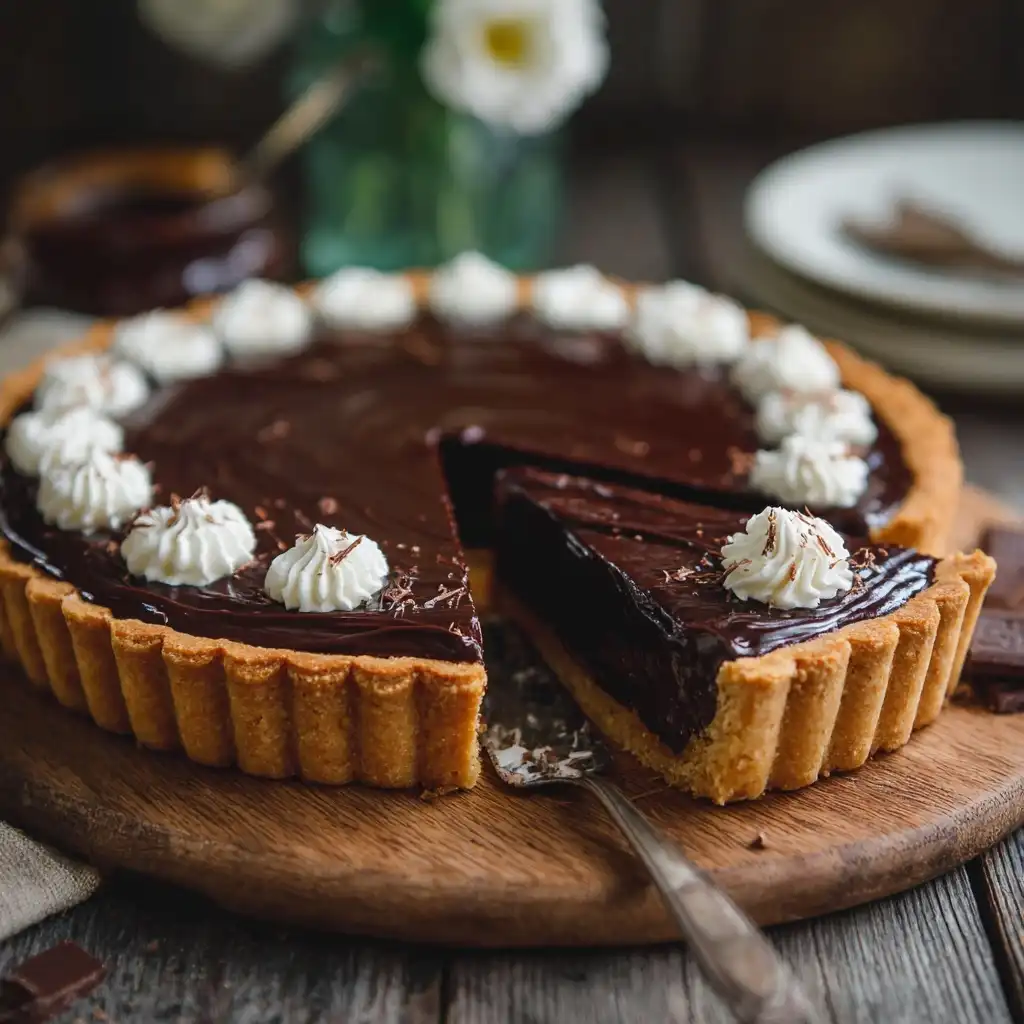
The Dark Chocolate Ganache Tart is an elegant, decadent dessert that marries the deep, complex bitterness of premium dark chocolate with the velvety smoothness of a rich ganache filling, all nestled in a crisp, buttery shortcrust or chocolate-tinged tart shell. Unlike traditional chocolate tarts that may rely on custard or mousse, this version centers on the pure, unadulterated luxury of chocolate and cream—emphasizing balance, texture contrast, and refined simplicity. It’s a dessert that feels both indulgent and sophisticated—equally at home on a holiday table, as a restaurant finale, or as a weekend treat for chocolate connoisseurs seeking depth over sweetness. Its minimalist ingredient list belies its luxurious mouthfeel and lingering finish, making it a true testament to the art of restraint in pastry.
The History
While the precise origin of the ganache-based tart remains undocumented in culinary archives, its lineage can be traced through several pivotal developments in European confectionery history. Ganache itself is widely believed to have been invented in Paris in the 1850s—legend attributes its accidental creation to a chef whose apprentice spilled hot cream into a bowl of chopped chocolate. The resulting silky emulsion was quickly adopted for truffles, glazes, and fillings. By the early 20th century, French pâtissiers began incorporating ganache into tarts and tartlets, particularly as chilled, set fillings in pre-baked pâte sucrée shells—a departure from the cooked custards (like crème pâtissière) dominant in earlier eras. The rise of high-cocoa chocolate post–World War II, coupled with the New Pastry movement of the 1970s–80s led by chefs like Pierre Hermé and Gaston Lenôtre, elevated ganache from a supporting element to a star ingredient—valued for its purity, sheen, and ability to showcase terroir-driven cocoa beans. The modern Dark Chocolate Ganache Tart, as we know it today—with its emphasis on single-origin 70%+ dark chocolate, minimal sweetening, and textural harmony between shell and filling—gained prominence in fine-dining patisseries across London, Tokyo, and Copenhagen in the early 2000s, and has since become a staple in artisanal bakeries and home baking communities worldwide.
Ingredients Breakdown
Every component of this tart serves a precise functional and sensory purpose—nothing is arbitrary:
- Dark Chocolate (70–85% cocoa solids): The soul of the tart. High-percentage chocolate delivers intense cocoa flavor, subtle fruit or earthy notes (depending on origin), and natural cocoa butter for structure. Avoid chocolates with soy lecithin overload or artificial vanillin—opt for bean-to-bar producers (e.g., Valrhona Guanaja, Domori Porcelana, or Raaka Ruby) for nuanced complexity. Cocoa butter content (ideally 32–40%) affects melt and gloss.
- Heavy Cream (36–40% fat): Provides richness, fluidity for emulsification, and a lush mouthfeel. Ultra-pasteurized cream works but may yield slightly less shine; pasteurized (not ultra-pasteurized) cream offers superior stability and sheen when cooled. Temperature control during pouring is critical—too hot, and you scorch the chocolate; too cool, and emulsification fails.
- Unsalted Butter (European-style, 82–84% fat): Adds silkiness, prevents graininess, and enhances sheen and snap. Clarified butter may be used for higher heat tolerance, but whole butter contributes dairy sweetness and body.
- Granulated Sugar (optional, minimal): Used only if your chocolate is extremely high (>85%) or naturally low in residual sugar. A pinch (5–10g) balances acidity without compromising bitterness. Never add sugar directly to warm ganache—dissolve fully in cream first.
- Fine Sea Salt: Not just for seasoning—it heightens chocolate’s fruity and roasted notes and tempers perceived bitterness. Flaky Maldon or Fleur de Sel sprinkled *after* setting adds a delightful textural and flavor contrast.
- Tart Shell Base: Typically pâte sucrée (sweet shortcrust), enriched with egg yolk and sometimes a touch of cocoa powder or ground toasted nuts (hazelnuts, almonds) for depth. Blind-baked until golden and fully dry—any residual moisture will cause sogginess upon ganache contact.
- Optional Flavor Infusions: A split vanilla bean (seeds + pod steeped in warm cream), orange zest, espresso powder (½ tsp), or a few drops of high-quality peppermint or bergamot essential oil—added *after* emulsification—to elevate without overpowering.
Step-by-Step Recipe
- Prepare the Tart Shell: Make or purchase a high-fat, low-moisture pâte sucrée. Chill dough for ≥2 hours, then roll to 3mm thickness and line a 9-inch (23 cm) fluted tart pan with removable bottom. Trim edges, prick base with fork, and freeze for 30 minutes. Blind bake at 375°F (190°C) for 18–22 minutes—until pale gold and dry to the touch. Remove weights, bake 5 more minutes. Cool completely on a wire rack (≥1 hour).
- Temper & Chop Chocolate: Finely chop chocolate using a serrated knife—uniform ¼-inch pieces ensure even melting. Let sit at room temperature (68–72°F / 20–22°C) for 15 minutes to stabilize.
- Heat the Cream: In a heavy-bottomed saucepan, bring heavy cream, salt, and any optional infusions (e.g., vanilla pod) to a gentle simmer—small bubbles should form around the edges. Do not boil vigorously. Remove from heat immediately.
- Steep (if infusing): Cover and let cream steep with aromatics for 15–30 minutes. Strain through a fine-mesh sieve, pressing solids to extract maximum flavor.
- Pour & Emulsify: Place chopped chocolate in a heatproof bowl. Reheat strained cream to 105–110°F (40–43°C)—use an instant-read thermometer. Pour warm cream over chocolate. Wait 2–3 minutes undisturbed (to allow chocolate to soften). Begin stirring slowly with a silicone spatula from center outward in circular motion—do not whisk or agitate. Once glossy and homogenous (~1–2 minutes), stir in softened butter (cut into small cubes) one piece at a time until fully incorporated.
- Strain & Rest: Pass ganache through a fine-mesh chinois or sieve into a clean bowl to remove any unmelted particles or zest residue. Cover surface directly with parchment or plastic wrap (to prevent skin formation) and cool at room temperature for 15 minutes.
- Fill the Tart: Gently pour ganache into the cooled tart shell. Tap pan sharply on counter 2–3 times to release air bubbles. Smooth surface with an offset spatula dipped in hot water and wiped dry.
- Chill & Set: Refrigerate uncovered for minimum 4 hours—or preferably overnight (8–12 hours)—at 38–40°F (3–4°C). This allows full crystallization of cocoa butter for clean slicing and optimal texture.
- Finish & Serve: Remove outer ring of tart pan. Run a warm, damp knife under hot water, dry thoroughly, and slice cleanly. Sprinkle with flaky sea salt and/or garnish with edible gold leaf, candied orange peel, or fresh raspberries just before serving. Allow tart to sit at room temperature for 10–15 minutes prior to serving for ideal melt-in-mouth consistency.
Tips
- Thermometer Essential: Invest in a reliable digital thermometer. Ganache stability hinges on precise temperatures—cream above 115°F risks seizing; below 100°F may not fully melt chocolate.
- Chocolate Quality Is Non-Negotiable: Do not substitute baking chips or compound chocolate—they lack sufficient cocoa butter and contain stabilizers that inhibit proper emulsification and sheen.
- Avoid Overmixing: Stirring too vigorously introduces air, causing dullness or graininess. Use slow, deliberate motions until glossy and uniform.
- Chill Time Matters: Rushing the set leads to smearing, poor slice definition, and a greasy film. Overnight chilling yields superior texture and flavor development.
- Room-Temp Serving: Cold ganache tastes muted and waxy. Always temper slices at room temperature for full aromatic expression.
- Prevent Sweating: If storing longer than 24 hours, place tart in an airtight container lined with paper towels to absorb condensation. Do not cover with plastic wrap while cold—trapped moisture clouds the surface.
- Fix Broken Ganache: If separation occurs (oil pooling), gently re-warm over double boiler to 95°F (35°C), then slowly whisk in 1 tsp warm cream until emulsified. Strain again.
- Shell Crispness Hack: Brush blind-baked shell interior with melted white chocolate or apricot jam (warmed & strained) before filling—it creates a moisture barrier against sogginess.
Variations and Customizations
This tart is remarkably adaptable—each variation maintains structural integrity while offering distinct sensory experiences:
- Smoked Salt & Caramel Swirl: Fold 2 tbsp salted caramel sauce (cooled to room temp) into half the ganache, then layer with plain ganache and swirl gently with a toothpick before chilling.
- Orange-Blood Orange Ganache: Steep cream with 1 tbsp finely grated blood orange zest + 1 tsp regular orange zest. Finish with ½ tsp Grand Marnier stirred in after emulsification.
- Espresso & Almond Crumb: Add 1 tsp instant espresso powder to warm cream; top set tart with toasted almond praline crumble and micro-basil.
- Vegan Dark Chocolate Ganache Tart: Substitute full-fat coconut cream (chilled, solid portion only) for dairy cream; use refined coconut oil (1 tbsp per 200g chocolate) instead of butter; choose certified vegan 72% dark chocolate. Chill 12+ hours for firm set.
- Spiced Aztec Style: Infuse cream with 1 cinnamon stick, 3 whole cloves, ¼ tsp freshly ground black pepper, and a 1-inch piece of dried ancho chile (remove before straining). Finish with flaky salt and cacao nibs.
- White Chocolate–Swirled Dark Ganache: Prepare separate white chocolate ganache (same method, using 32% cocoa butter white chocolate). Pipe alternating dollops into tart shell and marble gently with a skewer.
- Nut-Infused Shell: Replace 25g flour in pâte sucrée with toasted, finely ground hazelnuts or black sesame seeds for earthy depth and crunch contrast.
- Boozy Ganache: Stir in 1–1.5 tbsp aged rum, bourbon, or Armagnac *after* emulsification and cooling slightly—alcohol evaporates partially during chilling but leaves aromatic warmth.
Health Considerations and Nutritional Value
While inherently indulgent, the Dark Chocolate Ganache Tart offers notable nutritional advantages when crafted mindfully—especially compared to milk chocolate or sugar-laden desserts:
- Antioxidant Powerhouse: Dark chocolate (≥70% cocoa) is rich in flavanols—potent antioxidants linked to improved endothelial function, reduced oxidative stress, and modest blood pressure support. One 3-ounce (85g) serving provides ~15–20 mg of epicatechin—the bioactive compound most studied for cardiovascular benefits.
- Mineral Density: Per 100g of high-cocoa dark chocolate: 12–15% DV magnesium (muscle/nerve function), 25% DV iron (non-heme, enhanced by vitamin C pairing), 30% DV copper (collagen synthesis), and significant zinc and manganese.
- Lower Glycemic Impact: With significantly less added sugar than milk chocolate versions, this tart has a glycemic load of ~6–8 per standard slice (⅛ of 9-inch tart), making it more compatible with balanced blood sugar management—especially when paired with fiber-rich berries.
- Fat Profile: Cocoa butter contains stearic acid—a saturated fat shown in clinical studies to have neutral effect on LDL cholesterol—and oleic acid (heart-healthy monounsaturated fat), similar to olive oil.
- Dairy Considerations: Heavy cream contributes saturated fat and fat-soluble vitamins (A, D, K2), but lactose-intolerant individuals may tolerate small servings due to low lactose concentration in high-fat cream. Vegan versions using coconut cream offer lauric acid benefits but require mindful saturated fat moderation.
- Mindful Indulgence Notes: Portion control remains key—aim for ≤1.5 oz (40g) per serving. Avoid daily consumption if managing insulin resistance or high triglycerides. Those on blood thinners (e.g., warfarin) should monitor vitamin K intake from leafy green garnishes—not the tart itself, which is negligible in K.
- Allergen Awareness: Naturally gluten-free if shell uses GF flour blend (ensure certified GF oats or almond flour); always verify chocolate for soy, nut, or dairy cross-contact depending on brand and facility.
Ingredients
- For the Pâte Sucrée Tart Shell:
- 1¾ cups (220g) all-purpose flour (or gluten-free 1:1 blend)
- ¼ cup (25g) unsweetened cocoa powder (Dutch-process preferred)
- ½ cup (115g) unsalted European-style butter, cold and cubed
- ⅓ cup (65g) granulated sugar
- 1 large egg yolk
- 1 tsp cold water (add only if needed)
- Pinch of fine sea salt
- For the Dark Chocolate Ganache:
- 12 oz (340g) high-quality dark chocolate (70–82% cocoa solids), finely chopped
- 1 cup (240ml) heavy cream (36–40% fat)
- 2 tbsp (28g) unsalted butter, softened to room temperature
- ½ tsp fine sea salt
- Optional: 1 tsp pure vanilla extract or 1 vanilla bean, seeds scraped
- For Garnish (optional):
- Flaky sea salt (e.g., Maldon)
- Fresh raspberries or blackberries
- Candied orange peel
- Edible gold leaf
- Toasted cacao nibs or crushed hazelnuts
Directions
- Make the Tart Shell: In a food processor, pulse flour, cocoa powder, sugar, and salt. Add cold butter; pulse until mixture resembles coarse crumbs. Add egg yolk; pulse until clumps begin to form. Turn dough onto parchment; gather into a disc, wrap, and refrigerate ≥2 hours (or up to 3 days).
- Roll & Blind Bake: On lightly floured surface, roll dough to ⅛-inch thickness. Fit into 9-inch fluted tart pan with removable bottom. Trim excess; prick base. Freeze 30 min. Preheat oven to 375°F (190°C). Line with parchment and pie weights/dried beans. Bake 18 min. Remove weights; bake 5 min more until dry and pale gold. Cool completely.
- Prepare Ganache Base: Finely chop chocolate; place in heatproof bowl. In saucepan, combine cream, salt, and vanilla (if using); heat to simmer. Pour over chocolate. Wait 3 min.
- Emulsify: Stir gently with silicone spatula in concentric circles until smooth and glossy (~1.5 min). Stir in softened butter, one piece at a time, until fully absorbed.
- Strain & Fill: Strain ganache through fine-mesh sieve. Pour into cooled tart shell. Tap pan firmly. Smooth surface.
- Chill: Refrigerate uncovered ≥4 hours, preferably overnight (8–12 hrs).
- Serve: Release outer ring. Slice with warm, dry knife. Garnish with flaky salt and berries. Serve at cool room temperature (65–68°F).
FAQ
- Can I make this tart ahead of time?
- Yes—this tart improves with time. It keeps beautifully refrigerated (in airtight container) for up to 5 days. Flavor deepens and texture firms overnight. For events, prepare ganache up to 3 days ahead and store in fridge; re-warm gently to 90°F (32°C) before pouring into shell.
- Why did my ganache turn grainy?
- Graininess usually results from overheating the cream (causing cocoa solids to seize), adding cream too cool (incomplete melting), or using low-cocoa-butter chocolate. Always use thermometer, chop chocolate finely, and stir slowly without rushing the emulsification.
- Can I freeze the finished tart?
- Yes—but with caveats. Wrap tightly in plastic, then foil. Freeze up to 2 months. Thaw overnight in refrigerator, then bring to room temperature 20 minutes before serving. Texture remains excellent, though surface sheen may dull slightly.
- What’s the best chocolate brand for this recipe?
- Top-tier options include Valrhona (Guaja, Abinao), Callebaut (70/30 or 811), Scharffen Berger 82%, or single-origin bars from Raaka, Dandelion, or To’ak. Look for ingredient lists with only cocoa mass, cocoa butter, sugar, and vanilla—no emulsifiers beyond minimal lecithin.
- My tart shell got soggy—how do I prevent that?
- Sogginess means moisture migration. Ensure shell is *fully* cooled and *completely* dry before filling. Brush interior with melted chocolate or apricot jam glaze before ganache. Also, avoid humid storage environments.
- Can I use milk or white chocolate instead?
- You can—but it transforms the dessert entirely. Milk chocolate ganache is sweeter, softer, and less stable. White chocolate requires careful temperature control (max 90°F / 32°C) and often extra cocoa butter for stability. This recipe is optimized for dark chocolate’s unique chemistry.
- Is there a lower-fat version?
- Reducing fat compromises texture irreversibly. However, you can use 1% milk + 1 tbsp cornstarch (whisked into cold milk, then heated to thickened consistency) as partial cream substitute—but expect matte finish and less luxurious mouthfeel. Not recommended for purists.
- How do I get that mirror-like shine?
- Shine comes from perfect emulsification, high cocoa butter content, and controlled cooling. Use a thermometer, strain meticulously, chill slowly (room temp → fridge), and avoid rapid temperature swings. A final light brush with warmed, strained apricot glaze adds extra gloss—but alters flavor profile.
Summary
The Dark Chocolate Ganache Tart is a masterclass in minimalist luxury—where just three core ingredients (premium dark chocolate, high-fat cream, and butter) unite under precise technique to create a dessert of profound depth, silken texture, and elegant bitterness. Its enduring appeal lies in its versatility, nutritional nuance, and timeless ability to satisfy the most discerning chocolate lover with uncompromising integrity and quiet sophistication.
Whether served au naturel with a whisper of sea salt or elevated with thoughtful infusions and artisanal garnishes, this tart transcends trend—it is a celebration of craft, origin, and the elemental magic that happens when heat, fat, and cocoa converge in perfect equilibrium.