Introduction
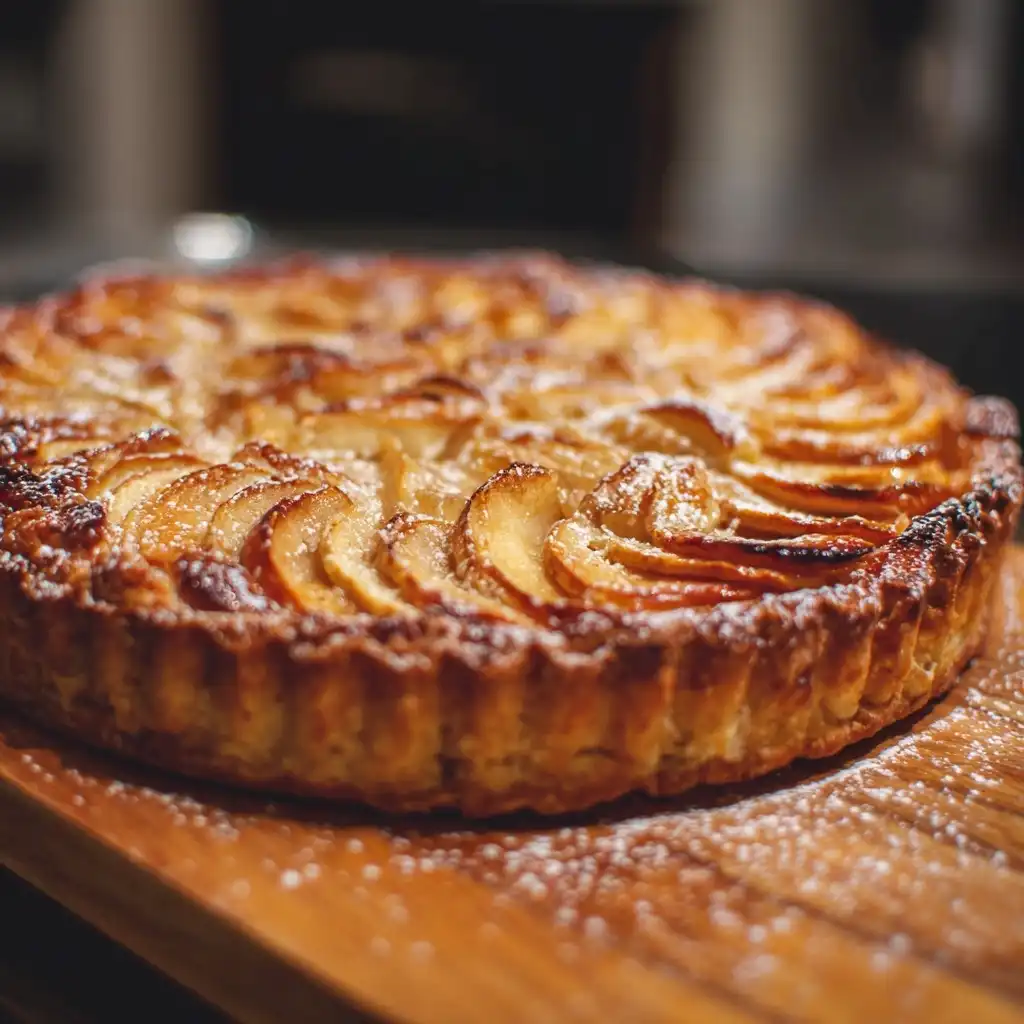
The French Apple Tart—known in its native land as Tarte aux Pommes—is a timeless emblem of French patisserie: elegant in simplicity, humble in origin, yet profoundly refined in execution. Unlike its richer, cream-laden cousins like tarte Tatin or apple galette, the classic French apple tart celebrates pristine seasonal apples nestled atop a buttery, flaky pâte brisée (shortcrust pastry), often crowned with a delicate lattice or free-form rustic glaze. It is not merely dessert—it’s a ritual of balance: sweet and tart, crisp and tender, structured and spontaneous. Whether served warm with crème fraîche at a Provence farmhouse table or reimagined with modern flour blends in a Parisian boulangerie, this tart embodies the French culinary philosophy of *terroir*, technique, and reverence for ingredient integrity.
The History
Apple tarts trace their lineage to medieval Europe, where early versions appeared in 14th-century English and French cookbooks such as Le Viandier de Taillevent (c. 1375), which included spiced fruit pastries baked in lard-based crusts. However, the modern French apple tart as we recognize it today evolved gradually over centuries, shaped by regional agriculture, technological shifts, and cultural refinement. In Normandy and Brittany—apple-growing heartlands—the abundance of cider apples (like Reinette and Calville) inspired countless variations, from savory-sweet tarts with camembert to deeply caramelized upside-down iterations. The 19th century marked a turning point: with the rise of professional pastry schools (notably under Antonin Carême and later Auguste Escoffier), standardized techniques for laminated and shortcrust doughs were codified, and tarte aux pommes became a foundational benchmark for apprentice pâtissiers. By the mid-20th century, Julia Child’s enthusiastic inclusion of a simplified version in Mastering the Art of French Cooking (1961) introduced American home cooks to its charm—sparking global fascination with its deceptive simplicity. Today, it remains a staple on café menus across France, frequently appearing alongside coffee at 4 p.m. “goûter” (afternoon tea), and continues to inspire Michelin-starred reinterpretations—from deconstructed versions with apple gelée and brown butter foam to gluten-free iterations using chestnut and rice flours.
Ingredients Breakdown
Every exceptional French apple tart begins with an intentional, layered understanding of its components—not just what goes in, but why each element matters:
- Pâte Brisée (Shortcrust Pastry): A 3:2:1 ratio foundation—3 parts all-purpose flour (or T55 French flour for optimal tenderness), 2 parts cold unsalted butter (preferably European-style, 82–84% fat), and 1 part ice water—plus a pinch of fine sea salt and optional ½ tsp sugar for subtle browning. The butter must remain cold (<10°C/50°F) to create discrete, steam-releasing pockets during baking—yielding flakiness without toughness. Some traditionalists add a spoonful of crème fraîche or egg yolk for added richness and pliability.
- Apples: The soul of the tart. Ideal varieties balance firmness, acidity, and aromatic complexity. Granny Smith offers bright tartness and structural integrity; Honeycrisp brings juiciness and honeyed sweetness; Braeburn and Jonagold deliver floral notes and balanced sugar-acid profiles. Avoid mealy types like Red Delicious or over-soft Golden Delicious unless blended for texture contrast. For authenticity, seek heritage French apples: Reinette du Canada (nutty, aromatic), Calville Blanc d’Hiver (intensely fragrant, high pectin), or Reine des Reinettes (complex spice and citrus top notes).
- Sugar: Granulated white sugar ensures even dissolution and clean sweetness. Light brown sugar or turbinado may be used sparingly (1–2 tbsp) in the apple layer for molasses depth—but never replace all white sugar, as excess moisture interferes with caramelization. A final dusting of powdered sugar post-baking adds ethereal sweetness and visual polish.
- Lemon Juice & Zest: Non-negotiable. Freshly squeezed lemon juice (1–2 tsp) prevents enzymatic browning *and* enhances apple brightness through acidulation; zest (½ tsp finely grated) introduces volatile citrus oils that lift the entire aromatic profile.
- Spices & Aromatics: Classic French preparations use only a whisper—¼ tsp ground cinnamon or a single strip of fresh vanilla bean scraped into the apple mixture. Nutmeg, cardamom, or star anise are modern deviations; purists omit them entirely to honor the apple’s terroir. A splash of calvados (apple brandy) or dry cider (1 tbsp) deepens complexity without overwhelming—added off-heat to preserve alcohol’s aromatic lift.
- Glaze: A luminous finish is essential. Traditional options include: (a) apricot jam (strained and warmed with ½ tsp water + ¼ tsp lemon juice) for glossy, neutral sweetness; (b) honey-thinned maple syrup for autumnal warmth; or (c) a simple egg wash (1 yolk + 1 tsp cream) brushed *only* on exposed pastry edges pre-bake for golden sheen. Never glaze before baking if using jam—reserve for post-bake application to prevent scorching.
Step-by-Step Recipe
- Prepare the Pâte Brisée (at least 1 hour ahead—or overnight): In a food processor, pulse 250g (2 cups) chilled all-purpose flour, 125g (½ cup + 1 tbsp) very cold cubed unsalted butter, 1 tsp fine sea salt, and 1 tsp granulated sugar until mixture resembles coarse meal with visible pea-sized butter pieces. Gradually add 60–80ml (¼–⅓ cup) ice water, 1 tbsp at a time, pulsing just until dough begins to clump. Turn onto parchment; gather into a disc, wrap tightly, and refrigerate ≥1 hour (or freeze up to 3 months). Chilling relaxes gluten, solidifies butter, and prevents shrinkage.
- Roll & Blind-Bake the Crust: On a lightly floured surface, roll chilled dough to a 30cm (12-inch) circle, 3–4mm thick. Gently transfer to a 26cm (10-inch) tart pan with removable bottom. Trim excess; press dough into fluted edges; prick base with fork. Freeze 15 minutes. Preheat oven to 190°C (375°F). Line crust with parchment and pie weights (or dried beans). Bake 18 minutes. Remove weights/parchment; bake 5–7 more minutes until pale gold and dry to touch. Cool slightly on wire rack.
- Prepare the Apple Filling: Peel, core, and slice 6–7 medium apples (≈900g/32 oz) into ¼-inch thick half-moons. Toss immediately in a large bowl with 60g (¼ cup) granulated sugar, 1½ tsp fresh lemon juice, ½ tsp lemon zest, ¼ tsp ground cinnamon, and a pinch of salt. Let macerate 15 minutes—this draws out excess moisture and concentrates flavor.
- Arrange Apples Artfully: Drain apples briefly (reserve 1 tbsp liquid). Starting from outer edge, tightly overlap apple slices in concentric circles—slightly fanned or stacked in gentle spirals. Slightly overlapping ensures no gaps while allowing steam escape. Tuck last slice into center. Optional: brush exposed apple surfaces lightly with reserved liquid to enhance shine.
- Bake with Precision: Place tart on lowest oven rack. Bake at 190°C (375°F) for 12 minutes. Reduce heat to 175°C (350°F); continue baking 35–45 minutes—until crust is deep amber, apples are tender when pierced with a skewer (but retain shape), and edges bubble gently. Rotate pan halfway for even browning.
- Glaze & Finish: Cool tart in pan on wire rack 15 minutes. Warm 60g (¼ cup) strained apricot jam with ½ tsp lemon juice and 1 tsp water until fluid. Using a pastry brush, evenly coat apple surface. Cool completely (≥2 hours) before removing ring—this sets juices and prevents slumping. Dust with powdered sugar just before serving.
Tips
- Butter Temperature Is Everything: If butter softens >12°C (54°F), dough becomes greasy and tough. Keep hands cool; work quickly; chill dough between steps. In hot climates, freeze butter cubes 10 minutes before mixing.
- Slice Uniformity Matters: Use a mandoline set to ¼-inch for even thickness—critical for consistent cooking and elegant presentation. Varying thicknesses cause uneven caramelization and sogginess.
- Prevent Soggy Bottoms: Blind-baking is non-negotiable. For extra insurance, brush pre-baked crust interior with beaten egg white and return to oven 2 minutes—creates a moisture barrier.
- Acid Balance: Too little lemon = dull, oxidized apples. Too much = sharp, unbalanced tartness. Taste macerated apples—they should taste vibrant, not sour.
- Oven Thermometer Required: Many ovens run hot or cold. An accurate thermometer prevents under-baked crusts or scorched apples. Convection fans? Reduce temp by 20°C (35°F) and check 5 minutes earlier.
- Cooling Discipline: Cutting too soon releases trapped steam and turns filling watery. Minimum 2-hour cooling allows pectin to fully set and flavors to harmonize.
- Storage Wisdom: Best eaten within 24 hours. Store uncovered at room temperature—if refrigerated, bring to room temp 1 hour before serving to restore crust crispness. Reheating? 5 minutes at 160°C (325°F) revives texture.
Variations and Customizations
The beauty of tarte aux pommes lies in its adaptability—honoring tradition while welcoming thoughtful innovation:
- Rustic Galette Style: Skip the tart pan. Roll dough into a 33cm (13-inch) round on parchment. Mound apple slices (tossed with 2 tbsp almond flour + 1 tbsp brown sugar) in center, leaving 6cm (2½-inch) border. Fold edges over filling, pleating as you go. Brush crust with egg wash; sprinkle with sliced almonds and coarse sugar. Bake on parchment-lined sheet.
- Normandy-Inspired: Replace 2 tbsp sugar with calvados; dot apples with 25g (1 oz) diced salted butter before baking; serve with crème fraîche infused with a grating of nutmeg.
- Whole Grain & Nutrient-Dense: Substitute 75g (¾ cup) of flour with toasted oat flour or spelt flour; add 2 tbsp ground flaxseed to dough; use maple syrup instead of granulated sugar; top with candied walnuts post-bake.
- Vegan Adaptation: Use plant-based butter (high-fat, European-style) and ice-cold almond milk + 1 tsp apple cider vinegar for dough. Fill with apples tossed in coconut sugar, lemon, and cardamom; glaze with warmed agave + apricot jam. Ensure tart pan is well-greased.
- Gluten-Free Version: Combine 120g (1 cup) brown rice flour, 60g (½ cup) tapioca starch, 30g (¼ cup) almond flour, ½ tsp xanthan gum, 1 tsp sugar, ½ tsp salt. Cut in 125g cold vegan or European butter. Add 60ml cold GF sparkling water. Chill 2 hours before rolling between parchment.
- Deconstructed “Tarte”: Bake individual apple roses in muffin tin cups lined with pastry rounds. Serve with vanilla crème anglaise, quenelle of brown butter ice cream, and micro mint.
- Herb-Infused: Steep 1 tsp fresh thyme leaves in warm lemon juice before tossing apples. Or add 1 tbsp finely chopped rosemary to sugar mixture—pairs beautifully with Honeycrisp.
Health Considerations and Nutritional Value
A 120g (≈1/8 of a standard 26cm tart) serving contains approximately 220–260 kcal, depending on butter and sugar quantities. While undeniably indulgent, mindful preparation elevates its functional nutrition:
- Fiber Powerhouse: Apples (with skin) contribute ≈3.5g dietary fiber per medium fruit—primarily pectin, a soluble fiber clinically shown to support LDL cholesterol reduction and gut microbiome diversity. Using organic, unwaxed apples maximizes skin nutrient retention.
- Phytonutrient Profile: Apples contain quercetin (anti-inflammatory flavonoid), catechin (antioxidant), and chlorogenic acid (linked to improved glucose metabolism). Red-skinned varieties offer higher anthocyanin levels—potent antioxidants associated with cardiovascular protection.
- Butter Nuance: Grass-fed butter contributes vitamin K2 (essential for calcium utilization in bones/arteries), butyrate (a short-chain fatty acid supporting colon health), and conjugated linoleic acid (CLA)—studied for anti-obesity and immune-modulating effects. Moderation remains key: total saturated fat per serving averages 9–11g.
- Glycemic Awareness: With a moderate glycemic load (~8–10), the tart’s natural sugars are tempered by fiber and fat. Pairing with plain Greek yogurt (providing protein and probiotics) further stabilizes blood sugar response—ideal for sustained energy.
- Considerations for Special Diets: Naturally dairy-free versions exist (vegan butter, nut milks); low-sugar adaptations (using erythritol + monk fruit blend, reducing sugar by 30%) maintain structure if paired with extra lemon juice and apple variety selection. Those with fructose malabsorption may tolerate cooked apples better than raw—heat breaks down some fructans.
- Portion Mindfulness: Rather than restricting, emphasize quality: choose heirloom apples, organic butter, unbleached flour. Savor slowly—a 100g slice with crème fraîche delivers greater satisfaction than larger portions of lower-quality versions.
Ingredients
- For the Pâte Brisée:
- 250g (2 cups) all-purpose flour (or French T55 flour), plus extra for dusting
- 125g (½ cup + 1 tbsp) unsalted European-style butter, very cold, cubed
- 1 tsp fine sea salt
- 1 tsp granulated sugar
- 60–80ml (¼–⅓ cup) ice water
- For the Apple Filling:
- 6–7 medium apples (≈900g / 32 oz), peeled, cored, and thinly sliced (Granny Smith, Honeycrisp, or Braeburn recommended)
- 60g (¼ cup) granulated sugar
- 1½ tsp fresh lemon juice
- ½ tsp finely grated lemon zest
- ¼ tsp ground cinnamon (optional)
- Pinch of fine sea salt
- For the Glaze:
- 60g (¼ cup) seedless apricot jam
- ½ tsp fresh lemon juice
- 1 tsp water
- For Finishing:
- Optional: Powdered sugar, for dusting
- Optional: Crème fraîche or vanilla ice cream, for serving
Directions
- Make the Dough: In a food processor, combine flour, salt, sugar, and cold butter. Pulse 10–12 times until mixture resembles coarse crumbs with visible butter pieces. Drizzle in ice water, 1 tablespoon at a time, pulsing after each addition, until dough just begins to clump together. Do not overmix. Turn dough onto a clean surface; gather into a disc. Wrap tightly in plastic wrap and refrigerate for at least 1 hour (or up to 3 days).
- Preheat Oven & Prepare Pan: Position oven rack in lower third. Preheat oven to 190°C (375°F). Lightly grease a 26cm (10-inch) tart pan with removable bottom.
- Roll & Fit the Crust: On a lightly floured surface, roll chilled dough into a 30cm (12-inch) circle, about 3–4mm thick. Carefully lift and drape over tart pan. Gently press into bottom and up sides. Trim excess dough with a knife or scissors, leaving a 1cm (½-inch) overhang. Tuck overhang under itself to reinforce rim; crimp or flute edges. Prick base all over with a fork. Freeze for 15 minutes.
- Blind-Bake: Line chilled crust with parchment paper and fill with pie weights or dried beans. Bake for 18 minutes. Carefully remove parchment and weights. Return crust to oven and bake 5–7 minutes more, until pale golden and dry to the touch. Remove and cool on a wire rack for 10 minutes.
- Prepare Apples: While crust cools, peel, core, and slice apples uniformly (¼-inch thick). In a large bowl, toss apple slices with sugar, lemon juice, lemon zest, cinnamon (if using), and salt. Let sit 15 minutes to macerate and release juices.
- Arrange Apples: Drain apples in a colander, reserving 1 tablespoon of liquid. Gently pat apple slices dry with paper towels (excess moisture causes sogginess). Starting at outer edge of tart shell, arrange apple slices in overlapping concentric circles, slightly fanned or stacked. Continue inward, slightly overlapping each row. Tuck final slice neatly into center. Lightly brush exposed apples with reserved liquid.
- Bake: Place tart on lowest oven rack. Bake at 190°C (375°F) for 12 minutes. Reduce oven temperature to 175°C (350°F). Continue baking for 35–45 minutes, rotating pan halfway through, until crust is deep golden brown, apples are tender (test with skewer—they should yield but hold shape), and filling bubbles gently at edges.
- Glaze & Cool: Cool tart in pan on wire rack for 15 minutes. Meanwhile, warm apricot jam, lemon juice, and water in a small saucepan over low heat until smooth and fluid. Strain if needed. Using a pastry brush, evenly coat apple surface. Cool completely (at least 2 hours) before carefully removing outer ring. Dust with powdered sugar just before serving.
- Serve: Slice with a sharp, serrated knife. Serve at room temperature, optionally accompanied by crème fraîche, lightly sweetened whipped cream, or high-quality vanilla ice cream.
FAQ
- Can I make the dough ahead of time?
- Yes—dough keeps refrigerated for up to 3 days or frozen for 3 months. Thaw overnight in fridge before rolling. Never freeze rolled-out dough—it will shatter.
- Why did my crust shrink during baking?
- Most commonly due to insufficient chilling (gluten relaxation), overworking dough (developing elasticity), or stretching dough while fitting pan (it snaps back). Always chill after shaping and avoid pulling dough taut.
- Can I use pre-sliced apples from the grocery store?
- Not recommended. Pre-sliced apples are often treated with calcium ascorbate (to prevent browning), which inhibits proper caramelization and yields a rubbery texture. Always slice fresh.
- My apples released too much liquid—what went wrong?
- Excess moisture stems from under-draining macerated apples, using overly juicy varieties (e.g., Fuji without blending), skipping the pat-dry step, or insufficient blind-baking. Next time, add 1 tsp cornstarch or arrowroot to apple mixture—but only if unavoidable.
- Is there a way to make this gluten-free without losing texture?
- Avoid single-flour GF blends. Use a tested 3-flour combo (brown rice + tapioca + almond) with xanthan gum and cold fat. Chill dough longer (2+ hours) and roll between parchment to prevent sticking. Expect slight tenderness—but excellent flavor.
- Can I freeze the baked tart?
- Yes—but only unfrosted and fully cooled. Wrap tightly in plastic, then foil; freeze up to 2 months. Thaw overnight in fridge, then re-crisp on a baking sheet at 175°C (350°F) for 10–12 minutes. Glaze after reheating.
- What’s the difference between tarte aux pommes and tarte Tatin?
- Tarte aux pommes features raw apples baked atop pre-baked crust; tarte Tatin inverts the process—apples are caramelized in butter/sugar *first*, then covered with pastry and baked upside-down, then flipped. Texture, structure, and sugar concentration differ significantly.
- Can I add nuts or oats to the crust?
- Absolutely—add 30g (¼ cup) finely ground toasted walnuts or rolled oats to flour before cutting in butter. Enhances nuttiness and adds fiber—but reduce water by 1 tsp, as nuts absorb moisture.
- How do I achieve that glossy, professional apple surface?
- Use a fine-mesh strainer to remove jam seeds; warm jam thoroughly (but don’t boil); apply with a soft-bristled pastry brush in thin, even strokes while tart is still warm—not hot—to allow absorption without melting.
- Can children help make this tart?
- Yes! Kids can safely assist with measuring ingredients, tossing apples, arranging slices (with guidance), brushing glaze, and dusting powdered sugar. It’s a wonderful lesson in patience, texture, and seasonal eating.
Summary
The French Apple Tart is a masterclass in restraint and resonance—where minimal, impeccable ingredients, precise technique, and deep respect for seasonal fruit converge to create something profoundly comforting and quietly magnificent. It is at once a humble country dessert and a canvas for culinary expression, equally at home in a sunlit village kitchen or a starred restaurant pass.
Whether you follow the classic recipe to the letter or explore gluten-free, vegan, or herb-infused interpretations, every bite reaffirms a timeless truth: greatness in pastry lies not in complication, but in clarity—of flavor, intention, and craft.