Introduction
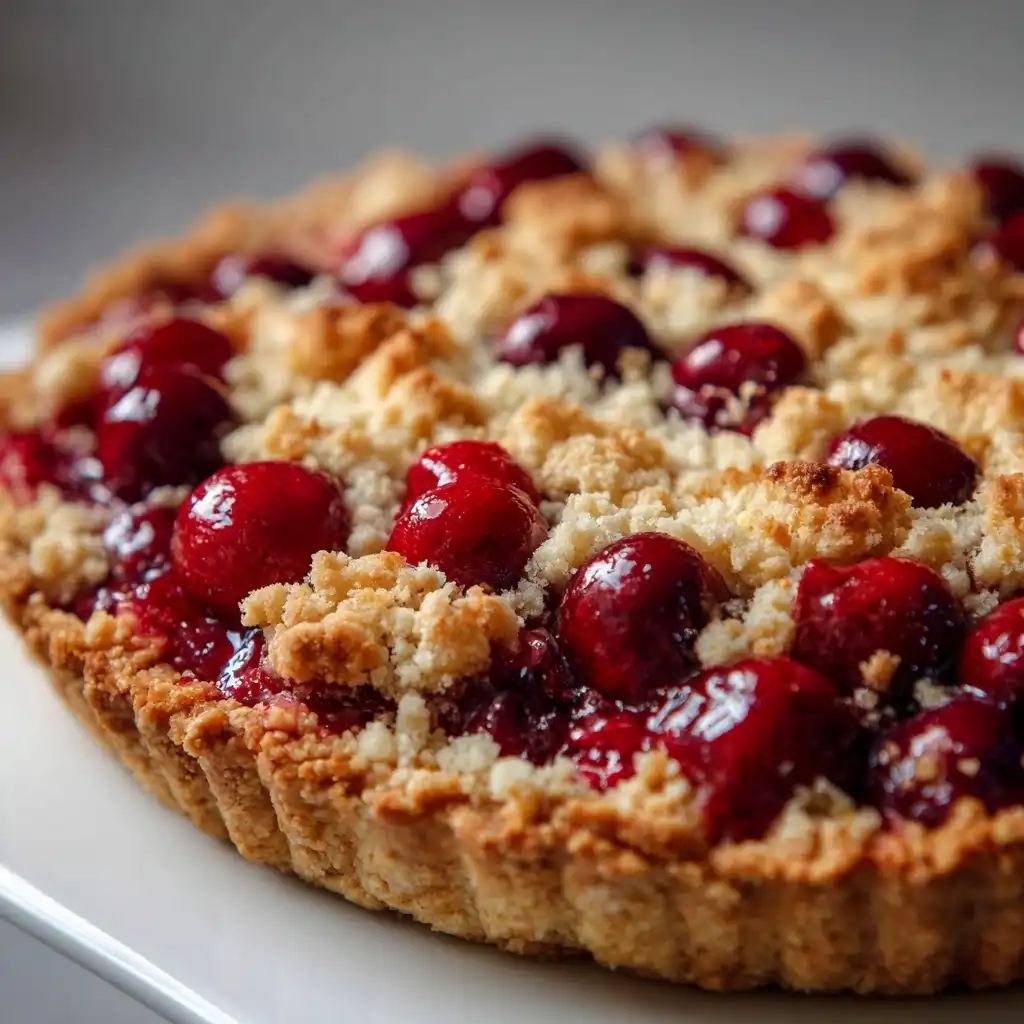
Sour Cherry Crumb Pie is a beloved American classic—a luscious, tangy-sweet dessert that strikes the perfect balance between vibrant fruitiness and buttery, golden-brown crumb topping. Unlike its smooth custard or lattice-topped cousins, this pie celebrates rustic simplicity: a tender, flaky bottom crust cradling a luxuriously thickened sour cherry filling, crowned with a generously textured, cinnamon-kissed crumb layer that bakes into crisp, melt-in-your-mouth clusters. It’s the kind of pie that evokes summer farmers’ markets, generations-old family recipes passed down in stained index cards, and the comforting aroma of warm cherries and brown sugar wafting through the kitchen. Whether served à la mode with vanilla bean ice cream, dusted with powdered sugar at a holiday gathering, or enjoyed slightly warmed with a dollop of crème fraîche on a quiet Sunday afternoon, Sour Cherry Crumb Pie is more than dessert—it’s nostalgia, craft, and seasonal reverence all baked into one glorious slice.
The History
The origins of Sour Cherry Crumb Pie trace back to early 20th-century America, where resourceful home bakers sought economical, flavorful ways to preserve and showcase seasonal fruits—particularly tart cherries, which thrived in cooler northern climates like Michigan, Wisconsin, and New York. While cherry pie itself has colonial roots (with early settlers adapting European fruit pie traditions using native and imported cherries), the “crumb” or “streusel” variation emerged as a pragmatic and textural innovation. In the 1920s–1940s, during periods of ingredient scarcity—including wartime rationing—bakers often substituted traditional top crusts with crumb toppings made from pantry staples: flour, butter, sugar, and spices. This not only conserved shortening and pastry dough but also added delightful contrast—crisp versus tender, rich versus bright. The term “crumb pie” gained wider traction through mid-century community cookbooks, church fundraisers, and iconic publications like The Joy of Cooking (1931) and Woman’s Day Encyclopedia of Cookery (1966), both of which featured variations under names like “Cherry Streusel Pie” or “Sour Cherry Crisp Pie.” Notably, Michigan—home to over 75% of the U.S. commercial tart cherry crop—has embraced this dessert as a cultural emblem; the Traverse City National Cherry Festival (founded in 1932) regularly features sour cherry crumb pie baking contests, heritage recipe showcases, and even a “Crumb Crown” competition for amateur bakers. Over time, the pie evolved beyond practicality into an art form: modern iterations emphasize local, organic, or frozen Montmorency cherries; artisanal butter and heirloom flours; and nuanced spice profiles—proving that tradition and innovation can coexist, one buttery crumb at a time.
Ingredients Breakdown
Understanding each component is essential to mastering Sour Cherry Crumb Pie—not just for flavor, but for texture, structure, and food safety. Below is a detailed, function-driven analysis:
For the Flaky All-Butter Bottom Crust:
- All-purpose flour (2½ cups): Provides gluten structure for tenderness without toughness; bleached flour yields a slightly softer crust, while unbleached offers more elasticity and browning control.
- Unsalted butter (1 cup, cold and cubed): The cornerstone of flakiness—cold fat creates steam pockets during baking. European-style butter (82–86% fat) enhances richness and laminated layers.
- Ice water (6–8 tbsp): Hydrates flour without activating excess gluten; always add gradually until shaggy dough forms—over-hydration leads to shrinkage and toughness.
- Granulated sugar (1 tbsp): Adds subtle sweetness and promotes browning via caramelization.
- Salt (½ tsp): Balances flavor and strengthens gluten just enough for workability.
- Vinegar or lemon juice (1 tsp): An optional but highly recommended acidity that inhibits gluten formation, yielding unparalleled tenderness and easier rolling.
For the Tart & Glossy Sour Cherry Filling:
- Fresh or frozen pitted sour cherries (4 cups, ~1.5 lbs): Montmorency is the gold standard—bright, assertively tart, and high in natural pectin. Frozen cherries (unsweetened, no syrup) are often superior to off-season fresh, as they’re flash-frozen at peak ripeness and retain firmness.
- Granulated sugar (¾–1¼ cups): Adjust based on cherry tartness and personal preference. Start with 1 cup and taste the macerated mixture before baking—remember that crumb topping adds sweetness too.
- Light brown sugar (¼ cup, packed): Adds molasses depth, moisture retention, and caramel notes that round out acidity.
- Quick-cooking tapioca (¼ cup) OR cornstarch (⅓ cup): Tapioca yields a glossy, clear, jewel-toned filling with excellent heat stability and freeze-thaw resilience; cornstarch offers clarity and a slightly silkier mouthfeel but may “weep” if overbaked or refrigerated too long.
- Lemon zest (1 tbsp) and juice (2 tbsp): Brightens flavor, balances sweetness, and enhances cherry’s natural aromatics without adding perceptible sourness.
- Ground cinnamon (½ tsp) and almond extract (½ tsp): Classic complements—cinnamon warms the profile, while almond extract echoes the subtle benzaldehyde notes naturally present in cherry pits (used safely here in trace culinary amounts).
- Salt (¼ tsp): Critical for flavor amplification—reduces perceived bitterness and lifts fruit essence.
For the Rich, Crunchy Crumb Topping:
- All-purpose flour (1¼ cups): Forms the base structure—too much yields dryness; too little causes greasiness. For extra depth, substitute up to ¼ cup with toasted oat flour or almond meal.
- Brown sugar (¾ cup, packed): Deepens color and flavor; dark brown sugar intensifies molasses notes, while light brown offers milder sweetness.
- Granulated sugar (¼ cup): Promotes crispness and surface caramelization.
- Cold unsalted butter (½ cup, cubed): Must be cold—not melted—to create distinct, clumpy crumbs. Work quickly with fingers or a pastry cutter until mixture resembles coarse peas with some pea-sized and some thumbnail-sized pieces.
- Ground cinnamon (1 tsp), ground nutmeg (¼ tsp), and salt (¼ tsp): Warm, aromatic backbone—nutmeg adds floral complexity, while salt prevents cloying sweetness.
- Chopped toasted walnuts or pecans (½ cup, optional but recommended): Adds crunch, richness, and textural counterpoint to soft cherries. Toast first to unlock oils and deepen flavor.
Step-by-Step Recipe
This meticulously tested, professional-grade method ensures structural integrity, balanced sweetness, and maximum flavor development—without shortcuts that compromise quality.
Day Before (Optional but Highly Recommended): Make & Chill the Dough
- In a large bowl, whisk together flour, sugar, and salt. Add cold cubed butter; use a pastry cutter or fingertips to cut in until mixture resembles coarse crumbs with visible pea-sized butter pieces.
- Sprinkle vinegar and 1 tablespoon ice water over mixture. Gently toss with a fork. Add remaining water 1 tsp at a time, tossing just until dough begins to clump. Do not overmix.
- Gather dough into two uneven disks—one slightly larger (for bottom crust), one smaller (for optional decorative edge). Wrap tightly in parchment-lined plastic wrap. Refrigerate at least 12 hours (up to 3 days) or freeze up to 3 months.
Day of Baking: Prepare Filling & Crumb
- Macerate the cherries: In a large nonreactive bowl, combine pitted sour cherries, granulated and brown sugars, lemon zest/juice, cinnamon, almond extract, salt, and thickener (tapioca or cornstarch). Stir gently but thoroughly. Let sit at room temperature for 30–45 minutes, stirring every 15 minutes, until juices pool and sugars dissolve. Taste and adjust sweetness if needed.
- Prepare crumb topping: In a medium bowl, whisk dry ingredients (flour, sugars, spices, salt). Add cold cubed butter. Using a pastry cutter or fingertips, work butter in until mixture forms mostly pea-sized crumbs with some larger, irregular clumps (about the size of small grapes). Fold in toasted nuts if using. Refrigerate until needed—this prevents premature melting and ensures crisp bake.
- Roll out bottom crust: On a lightly floured surface, roll larger dough disk into a 12-inch circle, ~⅛ inch thick. Carefully transfer to a 9-inch deep-dish pie plate (glass preferred for even heating). Gently press into bottom and sides without stretching. Trim overhang to ½ inch. Chill 20 minutes.
- Preheat oven & prepare pan: Position rack in lower third of oven. Preheat to 425°F (220°C). Place a heavy-duty baking sheet on the rack to preheat—it catches drips and radiates heat upward for crisp bottom crust.
Baking Sequence: Layer, Fill, Top, Bake
- Blind bake (optional but advised for ultra-crisp base): Line chilled crust with parchment and fill with pie weights or dried beans. Bake 15 minutes. Remove weights and parchment; prick bottom with fork. Bake 5–7 more minutes until pale golden. Cool 10 minutes.
- Fill & top: Pour drained (but not squeezed) cherry mixture into crust—reserve any excess liquid (it will thicken in oven). Evenly distribute crumb topping over filling, pressing gently to adhere but leaving airy texture intact. Avoid packing down—air pockets create lift and crunch.
- Final bake: Place pie on preheated baking sheet. Bake at 425°F for 20 minutes—this sets the crumb and jumpstarts filling thickening. Reduce heat to 375°F (190°C); continue baking 40–55 minutes, rotating halfway, until crust is deep golden, crumb is bubbling at edges and set in center, and filling is thickly bubbling *through* crumb layer (not just around edges). Internal filling temp should reach 210°F (99°C) for full starch gelatinization.
- Cool completely: Transfer pie to a wire rack. Cool *at least 4 hours*, preferably overnight. This allows filling to fully set—cutting too soon results in soupy slices. Crumb topping firms as it cools, achieving ideal textural contrast.
Tips
- Cherry Prep Matters: If using fresh sour cherries, pit them over a bowl lined with parchment—cherry juice stains easily. Freeze pits for homemade cherry pit syrup or infused vodka (toast first for safety). Never skip maceration—it draws out juice, dissolves sugar evenly, and jumpstarts thickening.
- Butter Temperature is Non-Negotiable: For both crust and crumb, butter must be *cold*, straight from the fridge (not frozen, not softened). Warm butter melts into flour instead of coating particles, yielding greasy, dense results. Chill bowls and tools for 10 minutes beforehand in hot kitchens.
- Thickener Wisdom: Tapioca gives glossy, jewel-like clarity and holds up beautifully when reheated or frozen. Cornstarch yields a smoother, more translucent finish but may break down if overbaked or stored >3 days. Arrowroot is a vegan-friendly alternative but lacks heat stability—best for no-bake or low-heat applications.
- Prevent Soggy Bottoms: Blind baking (even partially) is the single most effective technique. Alternatively, brush par-baked crust with lightly beaten egg white before filling—it creates a moisture barrier.
- Crumb Clump Control: For extra-large, dramatic crumbs, refrigerate topping 15 minutes after mixing, then break apart gently with fingertips just before sprinkling. For finer, more even coverage, pulse 2–3 times in a food processor—but stop before it becomes paste.
- Oven Thermometer Required: Built-in oven thermostats are notoriously inaccurate. A standalone thermometer ensures precise temperature control—critical for proper starch activation and crumb browning.
- Cooling Is Part of Baking: Resist slicing! Cutting into warm pie releases trapped steam and liquefies the thickener. Patience yields clean, structured slices with glossy filling and intact crumb peaks.
- Freezing Success: Unbaked pie freezes exceptionally well—wrap tightly in plastic + foil, label, and freeze up to 3 months. Bake from frozen: add 20 minutes to initial high-heat phase, then proceed. Baked pie freezes for up to 2 months—thaw overnight in fridge, re-crisp at 350°F for 15 minutes.
Variations and Customizations
While traditional Sour Cherry Crumb Pie is perfection itself, creative adaptations honor regional ingredients, dietary needs, and evolving palates—all while preserving the soul of the dessert.
Dietary Adaptations:
- Gluten-Free: Substitute 1:1 GF flour blend (like King Arthur or Bob’s Red Mill) in both crust and crumb. Add ½ tsp xanthan gum to crust if blend doesn’t include it. For filling, use GF quick-cooking tapioca or kudzu root starch.
- Vegan: Use plant-based butter (Miyoko’s or Earth Balance sticks), ice-cold coconut oil (¼ cup) + 2 tbsp aquafaba in crust, and flax “egg” (1 tbsp ground flax + 2.5 tbsp water) for binding. Replace brown sugar with coconut sugar or date sugar; ensure tapioca is certified vegan.
- Reduced-Sugar: Cut total sugar by ⅓, relying on ripe cherries and brown sugar’s molasses depth. Boost flavor with extra lemon zest, vanilla bean paste, and a pinch of cardamom. Use erythritol-blend sweeteners (like Swerve) for bulk and browning—avoid pure stevia.
Flavor & Texture Twists:
- Black Cherry-Bourbon: Replace 2 tbsp lemon juice with barrel-aged bourbon; add ¼ tsp orange zest. Use black cherries for deeper color and earthier notes.
- Cherry-Lavender: Infuse 1 tbsp culinary lavender in warm sugar for 1 hour; strain before mixing into filling. Pair with honey-sweetened crumb and crushed pistachios.
- Spiced Cherry-Pecan: Add ¼ tsp ground ginger and ⅛ tsp ground cloves to crumb; fold ⅓ cup chopped toasted pecans into filling as well as topping.
- Maple-Cherry Oat Crumb: Replace ½ cup flour in crumb with old-fashioned rolled oats (toasted first); use pure maple syrup (2 tbsp) + reduce granulated sugar by 2 tbsp in filling.
- Cherry-Rhubarb Swirl: Fold 1 cup diced, peeled rhubarb (tossed with 1 tbsp sugar) into cherry filling—adds rosy color, vegetal brightness, and natural pectin boost.
Format & Presentation Innovations:
- Mini Crumb Pies: Use muffin tins lined with pre-baked mini crusts. Fill with 2 tbsp cherry mixture + 1 tbsp crumb per cup. Bake at 400°F for 22–28 minutes. Perfect for parties or portion control.
- Skillet Cherry Crumb: Bake in a 10-inch cast-iron skillet—no bottom crust needed. Simply butter the skillet, pour in filling, top generously with crumb, and bake. Serve family-style with scoops of cinnamon ice cream.
- Deconstructed Parfait: Layer chilled cherry compote, crumbled baked crust, and crumb topping in glasses. Top with Greek yogurt or mascarpone whipped cream and fresh mint.
- Crumb Pie Bars: Press crust mixture into a 9×13 pan; bake 15 minutes. Spread cooled cherry filling over base; top with crumb. Bake 35–45 minutes. Cool completely before cutting into bars.
Health Considerations and Nutritional Value
A single generous slice (1/8 of a 9-inch pie, approx. 220g) contains approximately:
- Calories: 420–480 kcal
- Total Fat: 18–22g (11–14g saturated, primarily from butter)
- Carbohydrates: 62–70g (42–48g sugars, including natural fruit sugars)
- Fiber: 3–4g (from cherries, whole grain flour options, or added oats)
- Protein: 4–5g
- Vitamin C: ~12mg (20% DV) — cherries are rich in antioxidants, particularly anthocyanins (the pigments giving them deep red color), which exhibit anti-inflammatory, neuroprotective, and cardiovascular benefits in clinical studies.
- Potassium: ~280mg (8% DV) — supports healthy blood pressure and muscle function.
- Phytonutrients: Cherries contain quercetin, melatonin (supporting sleep regulation), and perillyl alcohol (studied for potential anticancer properties).
Key Considerations:
- Sugar Awareness: While fruit contributes natural sugars, added sugars dominate the profile (especially in crumb topping). Opting for reduced-sugar versions or pairing with unsweetened dairy (e.g., plain Greek yogurt) lowers glycemic impact.
- Gluten & Allergens: Traditional recipe contains gluten (wheat), dairy (butter), and tree nuts (if added). Always disclose allergens for shared settings.
- Portion Mindfulness: Due to calorie density and satiety factors, serving sizes of 1/10–1/12 yield 350–400 kcal—ideal for balanced indulgence. Pairing with a green salad or herbal tea enhances digestive harmony.
- Nutrient Enhancement Opportunities: Boost fiber and micronutrients by adding chia seeds to crumb (1 tbsp), using spelt or oat flour in crust, or folding in finely chopped spinach or zucchini into filling (undetectable but nutritionally meaningful).
- Not a “Health Food”—But a Wholesome Indulgence: When made with real, minimally processed ingredients—and enjoyed mindfully—Sour Cherry Crumb Pie delivers joy, cultural connection, and measurable phytonutrient benefits that extend far beyond the plate.
Ingredients
Makes one 9-inch deep-dish pie (8–10 servings)
For the All-Butter Pie Crust:
- 2½ cups (300g) all-purpose flour, plus extra for dusting
- 1 cup (227g / 2 sticks) unsalted butter, cold and cubed
- 1 tablespoon granulated sugar
- ½ teaspoon fine sea salt
- 1 teaspoon distilled white vinegar or fresh lemon juice
- 6–8 tablespoons ice-cold water
For the Sour Cherry Filling:
- 4 cups (about 1.5 lbs / 680g) pitted sour cherries (fresh or unsweetened frozen)
- 1 cup (200g) granulated sugar (adjust to taste)
- ¼ cup (50g) light brown sugar, packed
- ¼ cup (30g) quick-cooking tapioca (or ⅓ cup cornstarch)
- 2 tablespoons fresh lemon juice (about 1 lemon)
- 1 tablespoon lemon zest
- ½ teaspoon ground cinnamon
- ½ teaspoon pure almond extract
- ¼ teaspoon fine sea salt
For the Brown Sugar Crumb Topping:
- 1¼ cups (150g) all-purpose flour
- ¾ cup (150g) light brown sugar, packed
- ¼ cup (50g) granulated sugar
- ½ cup (113g / 1 stick) unsalted butter, cold and cubed
- 1 teaspoon ground cinnamon
- ¼ teaspoon ground nutmeg
- ¼ teaspoon fine sea salt
- ½ cup (60g) chopped toasted walnuts or pecans (optional but recommended)
Directions
- Make the crust: In a large bowl, whisk flour, sugar, and salt. Add cold butter cubes. Using a pastry cutter or fingertips, cut butter into flour until mixture resembles coarse crumbs with visible pea-sized butter pieces. Stir in vinegar. Add ice water 1 tablespoon at a time, tossing with a fork after each addition, until dough begins to clump and holds together when pinched. Gather into two disks (one ~60% larger for bottom crust), wrap in plastic, and refrigerate at least 12 hours or up to 3 days.
- Prepare filling: In a large bowl, combine cherries, granulated and brown sugars, tapioca, lemon juice and zest, cinnamon, almond extract, and salt. Stir gently. Let macerate at room temperature for 30–45 minutes, stirring occasionally, until juicy and sugar-dissolved. Drain excess liquid into a small saucepan; simmer 3–5 minutes until reduced by half, then stir back into cherries.
- Make crumb topping: In a medium bowl, whisk flour, brown sugar, granulated sugar, cinnamon, nutmeg, and salt. Add cold butter cubes. Using a pastry cutter or fingertips, work butter in until mixture forms coarse crumbs—mostly pea-sized, with some larger clumps. Stir in toasted nuts. Refrigerate until ready to use.
- Preheat oven & prep pan: Place oven rack in lower third. Preheat oven to 425°F (220°C). Place a heavy-duty baking sheet on rack to preheat.
- Roll crust: On a lightly floured surface, roll larger dough disk to a 12-inch circle, ~⅛ inch thick. Carefully transfer to a 9-inch deep-dish glass pie plate. Gently press into bottom and sides without stretching. Trim overhang to ½ inch. Fold edges under and crimp decoratively. Refrigerate 20 minutes.
- Blind bake (recommended): Line chilled crust with parchment and fill with pie weights or dried beans. Bake 15 minutes. Remove weights and parchment; prick bottom with fork. Bake 5–7 minutes more until pale golden. Cool 10 minutes.
- Assemble: Pour cherry filling into crust. Evenly sprinkle crumb topping over filling, gently pressing to adhere but preserving airy texture.
- Bake: Place pie on preheated baking sheet. Bake at 425°F for 20 minutes. Reduce heat to 375°F (190°C); bake 40–55 minutes more, rotating halfway, until crust and crumb are deep golden brown, filling is thickly bubbling through crumb layer, and internal temperature reaches 210°F (99°C).
- Cool completely: Transfer to a wire rack. Cool at least 4 hours—preferably overnight—before slicing. Serve at room temperature or slightly warmed.
FAQ
- Can I use sweet cherries instead of sour?
- No—sweet cherries lack the necessary acidity and pectin levels. They’ll yield a cloying, runny, and insipid filling. If sour cherries are unavailable, use a 3:1 blend of sweet cherries + red currants or raspberries for tartness and structure.
- Why did my filling bubble over?
- Overfilling, insufficient thickener, or opening the oven too early during initial high-heat phase causes boil-overs. Always place pie on a preheated baking sheet to catch spills, and avoid peeking before the 20-minute mark.
- My crumb topping sank into the filling. What went wrong?
- Butter was too warm, or topping wasn’t chilled before application. Also, pouring filling too high (within ¼ inch of rim) leaves no room for expansion. Maintain ½-inch headspace and chill crumb 15 minutes before sprinkling.
- Can I make this pie ahead for Thanksgiving?
- Absolutely. Assemble unbaked pie up to 2 days ahead—cover tightly and refrigerate. Or bake 2 days ahead, cool completely, cover loosely, and store at room temperature. Re-crisp in a 350°F oven for 12–15 minutes before serving.