Introduction
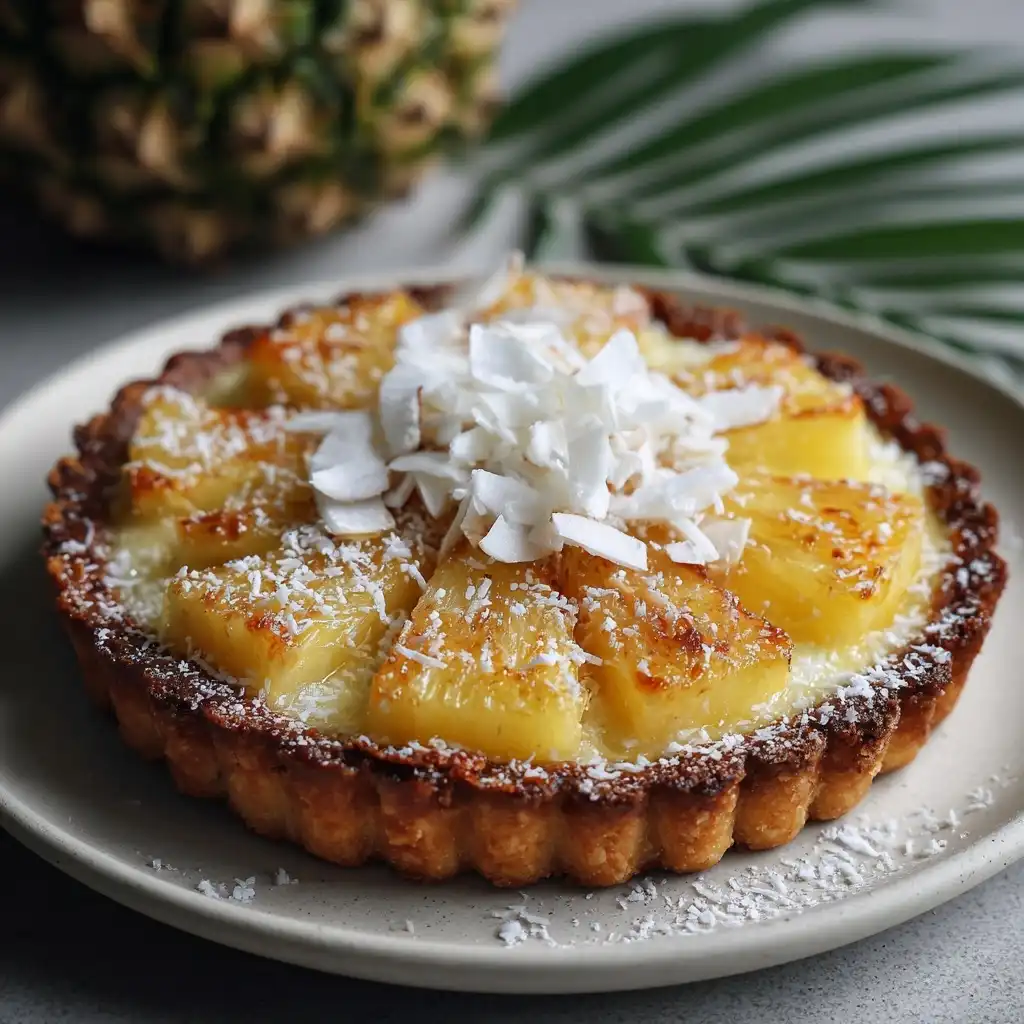
Welcome to the tropical delight that is the Pineapple Coconut Tart—a luscious, sun-kissed dessert that transports your taste buds straight to a breezy island shore. This elegant yet approachable tart marries the bright, tangy sweetness of ripe pineapple with the rich, creamy depth of toasted coconut, all nestled in a buttery, golden shortcrust or tender coconut-infused pastry shell. Whether served at summer brunches, holiday gatherings, or as an indulgent weeknight treat, the Pineapple Coconut Tart strikes a perfect balance between refreshing acidity and velvety richness. Its vibrant golden hue, fragrant aroma, and textural harmony—crisp crust, tender-crisp fruit layer, and delicate coconut crumble or glaze—make it as visually stunning as it is delicious. More than just a dessert, it’s a celebration of tropical abundance, culinary tradition, and modern creativity—all baked into one unforgettable slice.
The History
The Pineapple Coconut Tart is a relatively modern confection born from the global cross-pollination of baking traditions and tropical agriculture. While tarts themselves trace their lineage to medieval Europe—where “tart” originally referred to any open-faced pastry filled with fruit, meat, or cheese—the fusion of pineapple and coconut reflects colonial trade routes, post-war ingredient accessibility, and 20th-century American and Southeast Asian culinary innovation. Pineapple, native to South America and later cultivated across Hawaii, the Philippines, Thailand, and Costa Rica, became widely available in canned form after James Dole founded the Hawaiian Pineapple Company in 1901. Coconut—long revered in Ayurvedic, Polynesian, and South Indian cuisines for its versatility and nourishment—gained mainstream appeal in Western baking during the mid-1900s, especially as desiccated and sweetened coconut became pantry staples.
Early iterations appeared in mid-century community cookbooks—particularly in Hawaiian, Floridian, and Australian publications—as “tropical tarts” or “island pies,” often using canned crushed pineapple and flaked coconut atop a graham cracker or shortbread base. The 1970s saw the rise of “coconut cream pie” hybrids, while the 1990s and early 2000s brought refined versions emphasizing fresh pineapple, artisanal coconut milk reductions, and laminated or nut-based crusts. Today’s Pineapple Coconut Tart embodies a global gastronomic dialogue: French pâte sucrée technique meets Thai-inspired caramelized coconut, Filipino halo-halo textures, and Californian farm-to-table sensibility—making it less a relic and more a living, evolving expression of cultural connection through dessert.
Ingredients Breakdown
Every exceptional Pineapple Coconut Tart begins with intentionality—not just in measurement, but in sourcing, ripeness, and preparation method. Below is a comprehensive, chef-level breakdown of each component and why it matters:
- Pineapple: Fresh, fully ripe pineapple (preferably Golden Sweet or MD-2 varieties) delivers enzymatic brightness and natural fructose depth; avoid underripe fruit (too acidic) or overripe (mushy, fermented notes). Canned pineapple in juice (not syrup) is acceptable for consistency—but always drain thoroughly and pat dry to prevent soggy crusts. Grilled or lightly caramelized pineapple adds smoky complexity.
- Coconut: A triumvirate of forms creates layered flavor: unsweetened shredded coconut (toasted for nuttiness), full-fat coconut milk (for richness and emulsification), and coconut cream (the thick, fatty top layer skimmed from chilled canned coconut milk—for luxurious mouthfeel and glossy finish).
- Crust Base: A hybrid shortcrust—enriched with toasted coconut flour or finely ground dried coconut—adds subtle fiber and aroma. Butter must be cold and high-fat (82%+), while a touch of rice flour or tapioca starch improves tenderness and reduces gluten development.
- Sweeteners: A balanced blend of light brown sugar (for molasses nuance and moisture retention), organic coconut sugar (low glycemic, caramel notes), and a whisper of raw honey or local cane syrup enhances complexity without cloying sweetness.
- Binders & Thickeners: Cornstarch remains reliable, but for premium texture, consider a combination of arrowroot (for clarity and shine) and instant clearjel (heat-stable, freeze-thaw resistant). Freshly squeezed lime juice not only balances sweetness but also activates pectin in pineapple for natural setting.
- Aromatics: Vanilla bean paste (not extract) for floral-seed flecks; a grating of fresh nutmeg (not pre-ground) for warmth; and a pinch of flaky sea salt (e.g., Maldon) to elevate all other flavors.
- Optional Enhancements: Toasted macadamia nuts for crunch; candied ginger for zing; lemongrass-infused coconut milk for herbal lift; or edible orchid petals for visual elegance.
Step-by-Step Recipe
This meticulously tested, professional-grade method ensures structural integrity, even baking, and maximum flavor development—no soggy bottoms, no weeping fillings, no bland coconut.
- Prepare the Crust (minimum 2 hours ahead or overnight): Pulse 1 ¼ cups all-purpose flour, ¼ cup toasted coconut flour, 2 tbsp granulated sugar, and ½ tsp flaky salt in a food processor. Add ½ cup cold cubed butter and 2 tbsp very cold solid coconut oil; pulse until pea-sized crumbs form. Drizzle in 3–4 tbsp ice water mixed with ½ tsp apple cider vinegar, pulsing just until dough begins to clump. Turn onto parchment, flatten into a 1-inch disk, wrap tightly, and chill for at least 2 hours (or freeze for 30 minutes for ultra-sharp edges).
- Blind-Bake the Shell: Preheat oven to 375°F (190°C). Roll chilled dough on lightly floured surface to ⅛-inch thickness; gently fit into a 9-inch fluted tart pan with removable bottom. Trim excess, crimp edges, and prick base with fork. Line with parchment and fill with ceramic pie weights or dried beans. Bake 18 minutes. Carefully remove weights and parchment; bake 10–12 more minutes until golden and dry. Cool completely on wire rack.
- Toast Coconut Topping: In a dry skillet over medium-low heat, toast ¾ cup unsweetened shredded coconut, stirring constantly, until fragrant and golden (3–5 minutes). Transfer to plate to cool—do not stack or steam.
- Prepare Pineapple Filling: In a wide stainless-steel skillet, combine 3 cups finely diced fresh pineapple (¼-inch pieces), ⅓ cup light brown sugar, ¼ cup coconut sugar, 2 tbsp fresh lime juice, 1 tbsp grated lime zest, 1 vanilla bean scraped, and ¼ tsp freshly grated nutmeg. Cook over medium heat, stirring occasionally, until pineapple softens slightly but retains shape (~6–8 minutes). Reduce heat to low; stir in 2 tbsp cornstarch + 1 tbsp arrowroot slurry (mixed with 2 tbsp cold coconut milk). Simmer 3–4 minutes until thickened to a glossy, spoon-coating consistency. Remove from heat; stir in ¼ cup full-fat coconut cream and 1 tbsp cold butter. Cool to lukewarm (20 minutes).
- Assemble & Bake: Pour cooled filling into pre-baked tart shell. Smooth top with offset spatula. Sprinkle evenly with toasted coconut. Optional: Brush surface lightly with warmed coconut cream for extra sheen. Bake at 350°F (175°C) for 18–22 minutes—just until edges are set and center jiggles slightly (like custard). Do not overbake.
- Cool & Set: Cool on wire rack for 1 hour at room temperature, then refrigerate uncovered for at least 4 hours—or ideally overnight—for optimal sliceability and flavor melding.
- Final Garnish: Just before serving, dust with toasted coconut, micro mint, lime zest curls, and a delicate drizzle of reduced coconut-lime syrup (simmer ½ cup coconut water + 2 tbsp sugar + 1 tbsp lime juice until syrupy).
Tips
- Chill Everything: Cold butter, cold coconut oil, cold water, and even a chilled tart pan prevent gluten development and ensure flakiness. Never skip the dough chill time—even 15 extra minutes makes a difference.
- Drain Pineapple Like a Pro: After dicing fresh pineapple, place pieces in a fine-mesh strainer over a bowl. Gently press with the back of a spoon, then pat *thoroughly* with triple-layered paper towels. Excess water = soggy crust.
- Toasting Coconut Is Non-Negotiable: Raw coconut tastes dusty and bland. Toasting unlocks oils and deepens sweetness. Watch closely—it burns in seconds.
- Use a Tart Pan with Removable Bottom: Essential for clean release and presentation. Lightly grease the pan’s outer rim (not the base) to prevent sticking during unmolding.
- Test Doneness Correctly: The tart is done when the outer 2 inches are firm and the center has a gentle, slow wobble—like Jell-O, not liquid. It will continue to set as it cools.
- Room-Temp Serving: Refrigerated tarts can taste overly dense. Let sit at room temperature for 20–30 minutes before slicing for ideal texture and aroma release.
- Sharp Knife, Hot Water Dip: For clean slices, dip a thin-bladed knife in hot water and wipe dry between each cut.
- Make-Ahead Magic: Dough keeps frozen for 3 months; baked, unfilled shells stay crisp in airtight container for 5 days; cooked filling (unbaked) lasts 3 days refrigerated. Assemble day-of for best quality.
Variations and Customizations
The Pineapple Coconut Tart is a canvas for creativity—adaptable for dietary needs, seasonal shifts, global inspirations, and personal flair. Explore these thoughtfully curated variations:
- Vegan Version: Replace butter with cultured vegan butter (e.g., Miyoko’s), coconut oil for shortening, and flax “egg” (1 tbsp ground flax + 2.5 tbsp water) in crust. Use agar-agar (1 tsp dissolved in 2 tbsp warm coconut milk) instead of cornstarch for setting power. Top with coconut yogurt swirl and mango coulis.
- Gluten-Free Adaptation: Substitute crust with 1 ½ cups almond flour + ½ cup tapioca starch + ¼ cup coconut flour + ¼ tsp xanthan gum. Add 1 egg white for binding. Ensure all thickeners are certified GF.
- Tropical Fusion Tart: Fold ¼ cup diced mango and 2 tbsp passionfruit purée into the pineapple filling. Garnish with black sesame–toasted coconut and edible hibiscus.
- Grilled Pineapple Tart: Grill pineapple slices over charcoal or gas until caramelized and marked. Dice and use in place of raw; reduce added sugar by 1 tbsp. Add a hint of smoked sea salt.
- Coconut Cream Cheese Layer: Spread ½ cup whipped coconut cream cheese (blended soaked cashews + coconut cream + lemon) onto pre-baked shell before adding pineapple. Creates a luxuriously creamy barrier against moisture.
- Deconstructed Individual Tarts: Serve in mini tartlet shells with pineapple-coconut compote, coconut panna cotta quenelle, toasted coconut crumble, and pineapple “caviar” (spherified pineapple juice).
- Spiced Chai Variation: Infuse coconut milk with 1 cinnamon stick, 3 cardamom pods, 4 peppercorns, and 1 star anise for 20 minutes; strain before using. Add ¼ tsp ground ginger to filling.
- Brunch-Savory Twist: Omit sugar from crust; add 1 tbsp nutritional yeast and ½ tsp turmeric. Fill with pineapple-coconut chia jam and top with pickled red onion ribbons and cilantro.
Health Considerations and Nutritional Value
While undeniably indulgent, this Pineapple Coconut Tart can be mindfully enjoyed as part of a balanced diet—especially when prepared with whole-food ingredients and portion awareness. Here’s a detailed, evidence-informed analysis per standard slice (1/12 of 9-inch tart):
- Calories: ~285–320 kcal — moderate for a dessert, primarily from complex carbs (pineapple fiber), healthy fats (coconut MCTs, unsaturated fats from butter), and natural sugars.
- Macronutrients: ~4g protein (enhanced by coconut flour and eggs); ~16g fat (45% monounsaturated, 25% saturated—mostly lauric acid, which supports immune function and HDL cholesterol); ~34g carbohydrates (of which 22g are naturally occurring sugars; 3g dietary fiber from pineapple and coconut).
- Vitamins & Minerals: Exceptionally high in Vitamin C (110% DV from pineapple), manganese (75% DV—supports bone health and antioxidant enzymes), copper (35% DV—essential for collagen formation), and potassium (18% DV—supports electrolyte balance and blood pressure regulation).
- Phytonutrients & Enzymes: Bromelain (in fresh pineapple) offers anti-inflammatory and digestive benefits—best preserved when pineapple is added raw or minimally cooked. Ferulic acid (in coconut) and limonene (in lime zest) provide antioxidant protection.
- Dietary Notes: Naturally cholesterol-free (vegan version); low in sodium (<120mg/slice); contains no artificial colors, preservatives, or hydrogenated oils. Contains gluten (unless adapted), dairy (unless substituted), and tree nuts (if using macadamia topping).
- Mindful Enjoyment Tips: Pair with green tea (catechins enhance antioxidant uptake); serve with a side of Greek yogurt for protein satiety; limit to one slice; share with loved ones to reduce intake while increasing joy—proven to boost serotonin and oxytocin.
Ingredients
Makes one 9-inch tart (12 servings)
- For the Crust:
– 1 ¼ cups all-purpose flour
– ¼ cup coconut flour (unsweetened, finely milled)
– 2 tablespoons light brown sugar, packed
– ½ teaspoon flaky sea salt
– ½ cup (1 stick) cold unsalted butter, cubed
– 2 tablespoons cold unrefined coconut oil, solid
– 3–4 tablespoons ice water
– ½ teaspoon apple cider vinegar - For the Pineapple-Coconut Filling:
– 3 cups fresh pineapple, peeled, cored, and finely diced (¼-inch pieces)
– ⅓ cup light brown sugar, packed
– ¼ cup coconut sugar
– 2 tablespoons fresh lime juice (about 1 large lime)
– 1 tablespoon lime zest
– 1 vanilla bean, split and seeds scraped (or 1 ½ tsp pure vanilla bean paste)
– ¼ teaspoon freshly grated nutmeg
– 2 tablespoons cornstarch
– 1 tablespoon arrowroot powder
– 2 tablespoons full-fat coconut milk (cold)
– ¼ cup coconut cream (thick top layer from chilled can)
– 1 tablespoon cold unsalted butter, cubed - For Toasting & Garnish:
– ¾ cup unsweetened shredded coconut
– Flaky sea salt, for finishing
– Lime zest curls and fresh mint, optional
– Reduced coconut-lime syrup (½ cup coconut water + 2 tbsp sugar + 1 tbsp lime juice, simmered 8–10 mins until syrupy)
Directions
- In a food processor, combine flour, coconut flour, brown sugar, and salt. Pulse 3 times to blend. Add cold butter and coconut oil; pulse 10–12 times until mixture resembles coarse meal with some pea-sized butter pieces.
- In a small bowl, whisk ice water and apple cider vinegar. With machine running, slowly drizzle in 3 tablespoons of liquid. Pulse 4–5 times. Pinch dough—if it holds together, it’s ready. If crumbly, add remaining water ½ tsp at a time. Do not overmix.
- Turn dough onto a sheet of parchment paper. Shape into a 1-inch thick disk. Wrap tightly and refrigerate at least 2 hours (up to 3 days) or freeze 30 minutes.
- Preheat oven to 375°F (190°C). On a lightly floured surface, roll dough to ⅛-inch thickness. Gently transfer to a 9-inch fluted tart pan with removable bottom. Press into corners and up sides. Trim excess, then crimp edges decoratively. Prick base all over with fork. Line with parchment and fill with pie weights.
- Bake 18 minutes. Carefully lift out parchment and weights. Return shell to oven; bake 10–12 minutes more until golden and dry-looking. Cool completely on wire rack.
- Meanwhile, toast coconut: In a dry skillet over medium-low heat, stir coconut constantly until golden and fragrant, 3–5 minutes. Transfer to plate to cool completely.
- In a wide skillet over medium heat, combine pineapple, brown sugar, coconut sugar, lime juice, lime zest, vanilla seeds, and nutmeg. Cook 6–8 minutes, stirring occasionally, until pineapple softens slightly but holds shape.
- Reduce heat to low. In a small bowl, whisk cornstarch, arrowroot, and 2 tbsp cold coconut milk into smooth slurry. Stir into pineapple mixture. Simmer 3–4 minutes, stirring constantly, until thickened and glossy.
- Remove from heat. Stir in coconut cream and cold butter until melted and emulsified. Cool filling to lukewarm (20 minutes).
- Preheat oven to 350°F (175°C). Pour filling into cooled tart shell. Smooth top. Sprinkle evenly with toasted coconut.
- Bake 18–22 minutes—until edges are set and center has gentle jiggle. Cool on rack 1 hour. Refrigerate uncovered at least 4 hours (overnight preferred).
- Before serving, let sit at room temperature 20–30 minutes. Dust with extra toasted coconut and flaky salt. Drizzle with reduced coconut-lime syrup. Slice with hot-water-dipped knife.
FAQ
- Can I use canned pineapple?
- Yes—but choose pineapple packed in 100% juice (never syrup), drain *extremely* well, and pat every piece dry with paper towels. For best texture and flavor, fresh is strongly recommended.
- Why does my tart have a soggy bottom?
- Most commonly due to insufficient blind-baking, excess moisture in pineapple, or filling poured into a warm shell. Always fully cool the shell before filling, and ensure pineapple is impeccably drained and patted dry.
- Can I freeze this tart?
- Yes! Freeze *unfilled* baked shells for up to 3 months. For fully assembled tarts: freeze after chilling 4+ hours, wrapped tightly in plastic + foil. Thaw overnight in fridge, then bring to room temp 30 minutes before serving. Texture remains excellent.
- What if I don’t have a tart pan?
- You may use a 9-inch pie plate—but expect slightly thicker filling and less defined edges. Reduce baking time by 2–3 minutes. For a rustic look, try a 10-inch cast-iron skillet (preheated with crust) for a caramelized bottom crust.
- Is there a way to reduce the sugar without sacrificing texture?
- Absolutely. Replace up to half the brown sugar with mashed ripe banana (¼ cup) or unsweetened applesauce (3 tbsp)—both add natural pectin and moisture. Reduce cornstarch by ½ tsp to compensate. Flavor remains vibrant; texture stays firm.
- Can I make this nut-free?
- Yes—the recipe as written is naturally nut-free. Just verify that your coconut flour and shredded coconut are processed in a nut-free facility if allergies are severe.
- How do I store leftovers?
- Cover tightly with beeswax wrap or plastic and refrigerate up to 5 days. Do not freeze filled tart unless properly wrapped—coconut cream may separate slightly upon thawing (whisk gently to re-emulsify).
- Why toast the coconut *before* adding to filling?
- Toasting develops Maillard reaction compounds—deepening sweetness, adding nutty aroma, and improving shelf life. Untoasted coconut turns chewy and bland when baked.
- Can I add rum or coconut liqueur?
- Yes—add 1 tablespoon dark rum or Coco Lopez to the warm filling just before cooling. Reduce lime juice by ½ tsp to maintain acidity balance.
- My crust shrank while baking. What went wrong?
- Overworking dough, not chilling long enough, stretching dough while fitting into pan, or skipping the fork-pricking step. Always chill dough thoroughly and avoid stretching—let gravity do the work.
Summary
The Pineapple Coconut Tart is a masterclass in tropical harmony—where vibrant, enzyme-rich pineapple meets deeply aromatic, nutrient-dense coconut in a buttery, toasted-crumb crust, all elevated by mindful technique and global inspiration. It’s a dessert that delights the eye, awakens the senses, nourishes the body, and evokes the warmth of shared joy.
Whether you’re honoring tradition, adapting for wellness, or reinventing with bold fusion, this tart invites curiosity, care, and celebration—one golden, fragrant, perfectly balanced slice at a time.